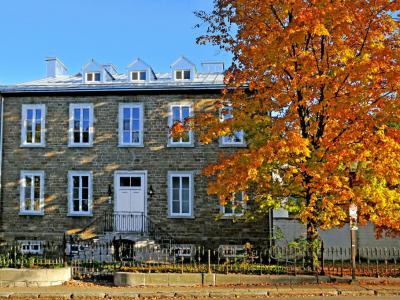


Maison Sewell (Sewell House), Quebec City
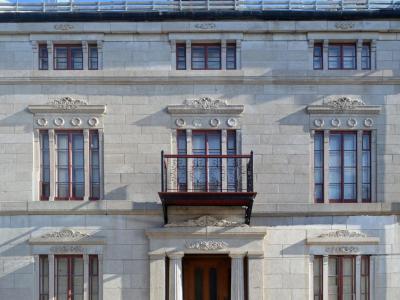
Standing in front of the Jonathan Sewell House, take a moment to notice its calm, balanced façade. Built in 1803–1804, the house reflects the taste of Quebec’s Anglophone upper middle class in the early 19th century, when British Classicism began to shape the appearance of Upper Town. Look for the symmetrical arrangement of the windows, the restrained stonework, and the low-pitched roofline-these are the features that give the building its dignified, orderly character.
The house originally belonged to Jonathan Sewell, a prominent lawyer, who later became Solicitor General, Attorney General of Lower Canada, Chief Justice, and Chairman of the Executive Council. This was not only a family residence-the Sewells raised and educated their 16 children here-but also a place where political discussions and debates took place, making it part of Quebec’s civic history as well as its domestic architecture.
As you move your gaze toward the rear of the property, note the adjoining Saint-Louis barracks, a reminder of the military presence that shaped this part of Upper Town. Their practical, disciplined appearance helps explain why Sewell House’s British classical style feels so at home in this neighborhood.
Along the west side of the property, identify the later service buildings: the Squash Ball Court, former workshop, garages, and warehouse. Built in different periods, they show how the site evolved over time from an elegant private residence into a more complex urban property. Together, these structures help visitors read the layers of Quebec’s history-domestic, political, military, and practical-all within one compact site.
The house originally belonged to Jonathan Sewell, a prominent lawyer, who later became Solicitor General, Attorney General of Lower Canada, Chief Justice, and Chairman of the Executive Council. This was not only a family residence-the Sewells raised and educated their 16 children here-but also a place where political discussions and debates took place, making it part of Quebec’s civic history as well as its domestic architecture.
As you move your gaze toward the rear of the property, note the adjoining Saint-Louis barracks, a reminder of the military presence that shaped this part of Upper Town. Their practical, disciplined appearance helps explain why Sewell House’s British classical style feels so at home in this neighborhood.
Along the west side of the property, identify the later service buildings: the Squash Ball Court, former workshop, garages, and warehouse. Built in different periods, they show how the site evolved over time from an elegant private residence into a more complex urban property. Together, these structures help visitors read the layers of Quebec’s history-domestic, political, military, and practical-all within one compact site.
Want to visit this sight? Check out these Self-Guided Walking Tours in Quebec City. Alternatively, you can download the mobile app "GPSmyCity: Walks in 1K+ Cities" from Apple App Store or Google Play Store. The app turns your mobile device to a personal tour guide and it works offline, so no data plan is needed when traveling abroad.
Download The GPSmyCity App



Maison Sewell (Sewell House) on Map
Sight Name: Maison Sewell (Sewell House)
Sight Location: Quebec City, Canada (See walking tours in Quebec City)
Sight Type: Attraction/Landmark
Guide(s) Containing This Sight:
Sight Location: Quebec City, Canada (See walking tours in Quebec City)
Sight Type: Attraction/Landmark
Guide(s) Containing This Sight:
Nearby Sights

Walking Tours in Quebec City, Quebec

Create Your Own Walk in Quebec City
Creating your own self-guided walk in Quebec City is easy and fun. Choose the city attractions that you want to see and a walk route map will be created just for you. You can even set your hotel as the start point of the walk.
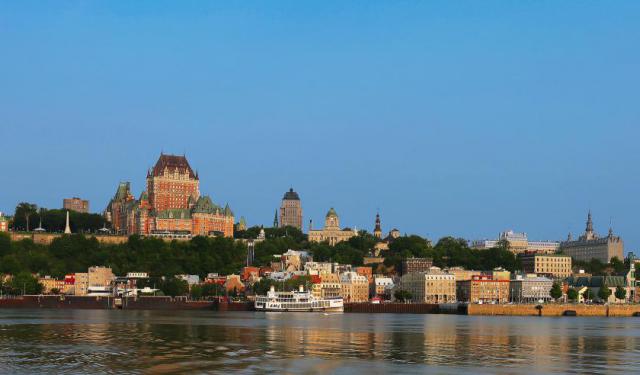
Quebec City Introduction Walking Tour
Cresting a cliff above the St. Lawrence River, Quebec City is the soul of the province of Quebec – a place all its own; a country within a country with its own traditions, architecture, and French-speaking population.
The Algonquian people had originally named this area Kébec, which means "where the river narrows", because the Saint Lawrence River indeed narrows proximate to the... view more
Tour Duration: 2 Hour(s)
Travel Distance: 3.2 Km or 2 Miles
The Algonquian people had originally named this area Kébec, which means "where the river narrows", because the Saint Lawrence River indeed narrows proximate to the... view more
Tour Duration: 2 Hour(s)
Travel Distance: 3.2 Km or 2 Miles
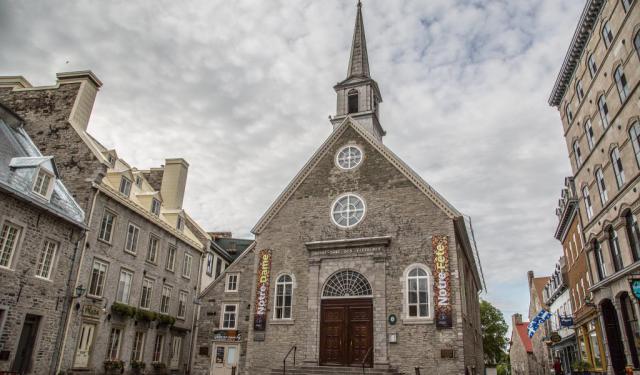
Qucbec City's Historical Churches Walking Tour
The first religious buildings in Canada were established by the Récollets and Jesuits, in 1615 and 1625, respectively, when they first arrived in New France. Later on, the French colonists brought along their culture and architectural traditions, and the establishment of British and evangelical society triggered further major developments in Quebec City.
Over the course of the 17th and 18th... view more
Tour Duration: 1 Hour(s)
Travel Distance: 2.9 Km or 1.8 Miles
Over the course of the 17th and 18th... view more
Tour Duration: 1 Hour(s)
Travel Distance: 2.9 Km or 1.8 Miles
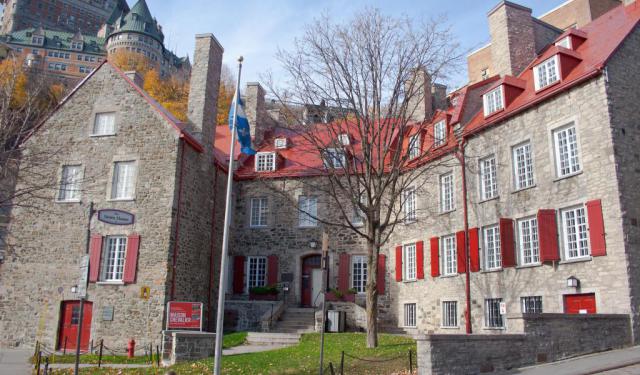
Historical Houses Walking Tour
Quebec City, particularly evocative of Europe in its atmosphere, is often referred to as the cradle of New France. The city boasts one of the richest architectural heritages in North America, though most of its buildings had to be adapted to harsh winters and the lack of specialized workers and materials in the colony. As such, the majority of local houses were designed as simple and efficient... view more
Tour Duration: 2 Hour(s)
Travel Distance: 2.5 Km or 1.6 Miles
Tour Duration: 2 Hour(s)
Travel Distance: 2.5 Km or 1.6 Miles
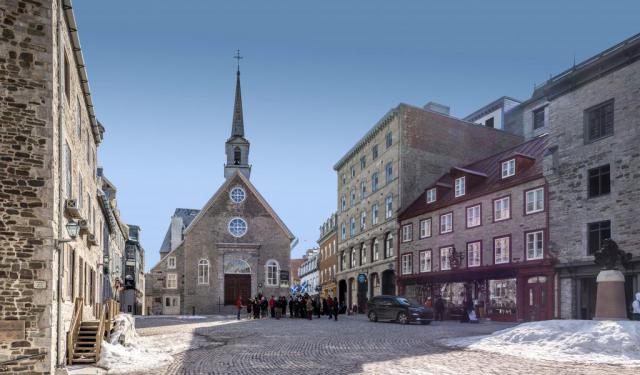
Old Quebec Walk
The historic part of Quebec City known as Old Quebec (French: Vieux-Québec), sometimes also referred to as the Latin Quarter (Quartier Latin), is the neighborhood centered around Cape Diamond (Cap Diamant), located on the eastern edge of Quebec hill promontory. The area comprises Upper Town (Haute-Ville) and Lower Town (Basse-Ville) and is currently listed among UNESCO’s World Heritage Sites.
... view more
Tour Duration: 2 Hour(s)
Travel Distance: 2.6 Km or 1.6 Miles
... view more
Tour Duration: 2 Hour(s)
Travel Distance: 2.6 Km or 1.6 Miles