

Nash House, Stratford-upon-Avon
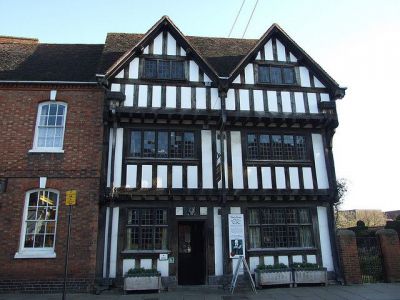
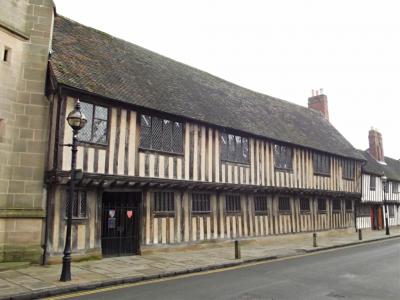
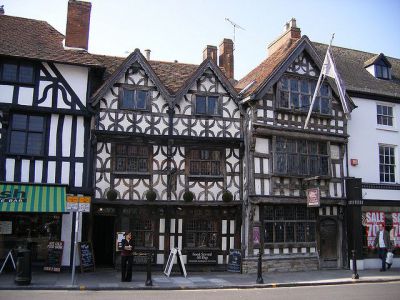
Standing on Chapel Street at number 22, immediately beside the site of Shakespeare’s New Place, is the tall black-and-white timber-framed building known as the Nash House. You can recognize it by its projecting upper floors, leaded windows, dark wooden beams, and two steep gables. The house dates from roughly the 16th century, although its street façade was reconstructed in 1912 during restoration work.
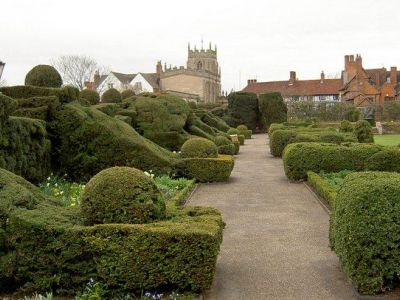
Before going inside, look immediately to the right of the house. Beyond the low wall and entrance lies New Place, where William Shakespeare spent the final years of his life. The original mansion no longer survives, but its site has been recreated with gardens, archaeological remains, and sculptures. The Nash House now serves as the entrance and exhibition space for the New Place site.
The house takes its name from Thomas Nash, who married Shakespeare’s only granddaughter, Elizabeth Hall, in 1626. Nash owned the property, although evidence indicates that he and Elizabeth actually lived next door at New Place rather than here. After Elizabeth died without children in 1670, Shakespeare’s direct line of descendants came to an end. The Shakespeare Birthplace Trust took responsibility for the Nash House and New Place in 1876.
As you enter the ground-floor exhibition, look for the displays explaining Shakespeare’s purchase of New Place and his family life in Stratford. One important document is an exemplification of a fine-an official copy of the legal transaction recording Shakespeare’s purchase of New Place on May 4, 1597. Nearby displays include a timeline of Shakespeare’s life, archaeological information about New Place, and objects illustrating domestic life in the household.
Continue upstairs, where displays have included a copy of Shakespeare’s 1616 will and objects connected with the archaeological excavations of New Place. Among the best-known items associated with the collection is a small gold signet ring bearing the initials “WS,” discovered near Holy Trinity Church. Its connection with Shakespeare has never been proven, but it remains an intriguing possible personal link to him.
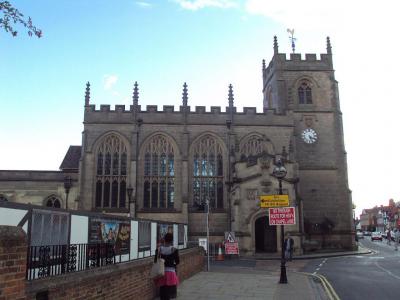
From the house, continue through toward the New Place gardens. Once outside, turn back for a good view of the Nash House from the garden side, then look across the site toward Guild Chapel and King Edward VI School, both closely associated with Shakespeare's Stratford.
Before going inside, look immediately to the right of the house. Beyond the low wall and entrance lies New Place, where William Shakespeare spent the final years of his life. The original mansion no longer survives, but its site has been recreated with gardens, archaeological remains, and sculptures. The Nash House now serves as the entrance and exhibition space for the New Place site.
The house takes its name from Thomas Nash, who married Shakespeare’s only granddaughter, Elizabeth Hall, in 1626. Nash owned the property, although evidence indicates that he and Elizabeth actually lived next door at New Place rather than here. After Elizabeth died without children in 1670, Shakespeare’s direct line of descendants came to an end. The Shakespeare Birthplace Trust took responsibility for the Nash House and New Place in 1876.
As you enter the ground-floor exhibition, look for the displays explaining Shakespeare’s purchase of New Place and his family life in Stratford. One important document is an exemplification of a fine-an official copy of the legal transaction recording Shakespeare’s purchase of New Place on May 4, 1597. Nearby displays include a timeline of Shakespeare’s life, archaeological information about New Place, and objects illustrating domestic life in the household.
Continue upstairs, where displays have included a copy of Shakespeare’s 1616 will and objects connected with the archaeological excavations of New Place. Among the best-known items associated with the collection is a small gold signet ring bearing the initials “WS,” discovered near Holy Trinity Church. Its connection with Shakespeare has never been proven, but it remains an intriguing possible personal link to him.
From the house, continue through toward the New Place gardens. Once outside, turn back for a good view of the Nash House from the garden side, then look across the site toward Guild Chapel and King Edward VI School, both closely associated with Shakespeare's Stratford.
Want to visit this sight? Check out these Self-Guided Walking Tours in Stratford-upon-Avon. Alternatively, you can download the mobile app "GPSmyCity: Walks in 1K+ Cities" from Apple App Store or Google Play Store. The app turns your mobile device to a personal tour guide and it works offline, so no data plan is needed when traveling abroad.
Download The GPSmyCity App



Nash House on Map
Sight Name: Nash House
Sight Location: Stratford-upon-Avon, England (See walking tours in Stratford-upon-Avon)
Sight Type: Museum/Gallery
Guide(s) Containing This Sight:
Sight Location: Stratford-upon-Avon, England (See walking tours in Stratford-upon-Avon)
Sight Type: Museum/Gallery
Guide(s) Containing This Sight:
Nearby Sights
Walking Tours in Stratford-upon-Avon, England

Create Your Own Walk in Stratford-upon-Avon
Creating your own self-guided walk in Stratford-upon-Avon is easy and fun. Choose the city attractions that you want to see and a walk route map will be created just for you. You can even set your hotel as the start point of the walk.
William Shakespeare Walking Tour
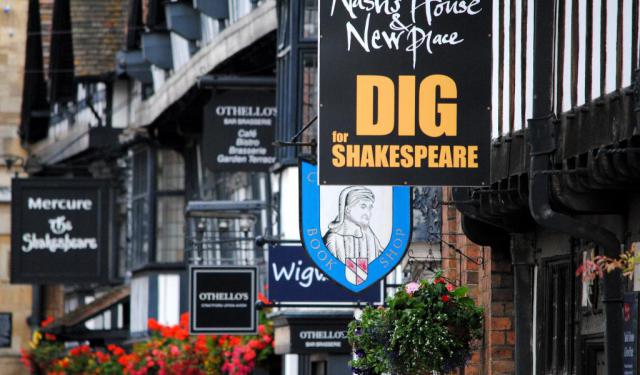
The picturesque town of Stratford-upon-Avon is steeped in the history of William Shakespeare. This is where the Bard was born in 1564, on April 23rd, and where he died exactly 52 years later, on April 23rd, 1616.
Many historic places connected with Shakespeare and his family have been preserved and are visited by millions of people who come to Stratford each year to celebrate his life and work.... view more
Tour Duration: 1 Hour(s)
Travel Distance: 1.4 Km or 0.9 Miles
Many historic places connected with Shakespeare and his family have been preserved and are visited by millions of people who come to Stratford each year to celebrate his life and work.... view more
Tour Duration: 1 Hour(s)
Travel Distance: 1.4 Km or 0.9 Miles
Stratford-upon-Avon Historic City Center Walking Tour
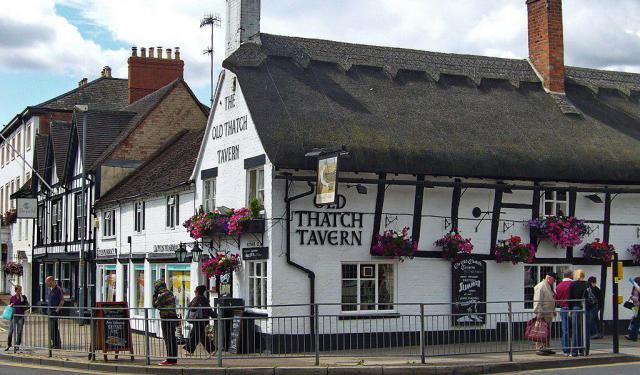
The name Stratford-upon-Avon tells you quite a lot about the town. “Strat” comes from an Old English word for a street or road, itself derived from the Latin “strata.” A “ford” is a shallow place where a river can be crossed, while “Avon” comes from an ancient Celtic word meaning simply “river.” String them all together, rather like sausages, and you get Stratford-upon-Avon.... view more
Tour Duration: 1 Hour(s)
Travel Distance: 1.9 Km or 1.2 Miles
Tour Duration: 1 Hour(s)
Travel Distance: 1.9 Km or 1.2 Miles
Historical Tudor Houses Walking Tour
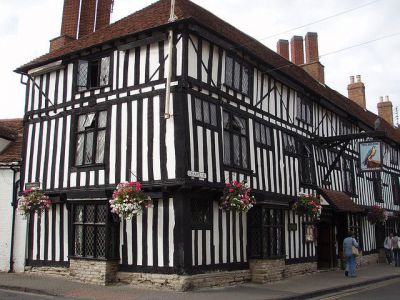
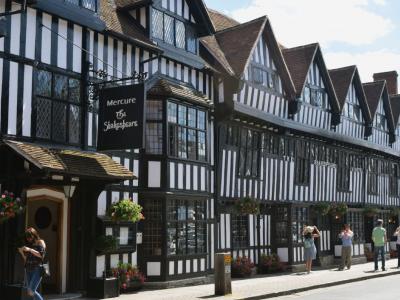
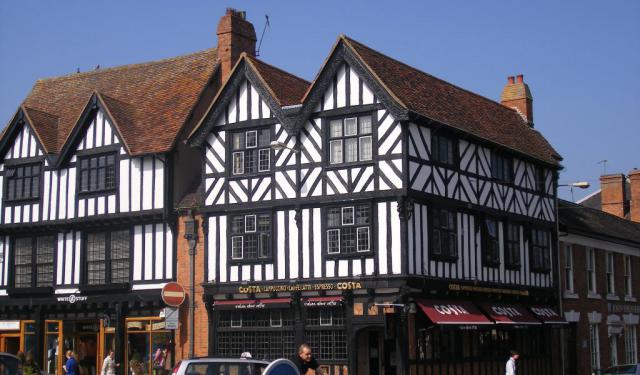
One of the first things you notice while walking through the historic centre of Stratford-upon-Avon is the abundance of timber-framed Tudor buildings. Their most recognizable feature is the exposed wooden framework, often combined with an upper story that projects slightly over the street. The spaces between the timbers were traditionally filled with materials such as brick, plaster, or wattle and... view more
Tour Duration: 1 Hour(s)
Travel Distance: 1.1 Km or 0.7 Miles
Tour Duration: 1 Hour(s)
Travel Distance: 1.1 Km or 0.7 Miles