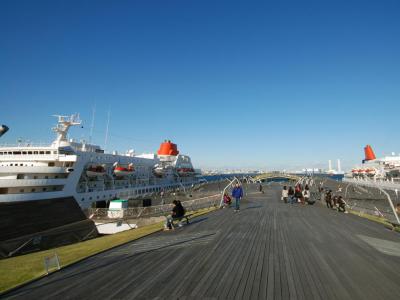


Osanbashi Pier, Yokohama
Osanbashi Pier is an important waterfront landmark and the primary dock for international passengers at the Port of Yokohama. Its history is closely tied to the city’s opening as a treaty port in 1859, after the signing of the Treaty of Amity and Commerce. At first, the port relied on small stone wharves that were too shallow for ocean vessels, so passengers and goods had to be transferred by barge. To make access to the shore more efficient, Osanbashi Pier was constructed in 1896. Designed by British military engineer Henry Spencer Palmer and funded by the Japanese government, it is the oldest existing pier in the city.
Over time, Osanbashi became a major point of arrival for ships connecting Japan with the wider world, helping shape Yokohama’s identity as an international port city. Its most recent reconstruction, completed in 2002, created the present Yokohama International Passenger Terminal, with customs areas, an immigration lobby, ticketing facilities, shops, and cafés.
Instead of looking like a conventional terminal, the modern pier resembles a landscaped deck folded into the waterfront, with broad wooden walkways, gentle slopes, and open public spaces. Tourists do not need to be boarding a ship to enjoy it. The rooftop observation deck, with planted grass areas, offers some of Yokohama’s best views, including Minato Mirai, the Red Brick Warehouse, Yamashita Park, Yokohama Bay Bridge, and the city’s famous Three Towers. Osanbashi Pier is especially appealing at sunset or after dark, when the harbour skyline lights up.
Over time, Osanbashi became a major point of arrival for ships connecting Japan with the wider world, helping shape Yokohama’s identity as an international port city. Its most recent reconstruction, completed in 2002, created the present Yokohama International Passenger Terminal, with customs areas, an immigration lobby, ticketing facilities, shops, and cafés.
Instead of looking like a conventional terminal, the modern pier resembles a landscaped deck folded into the waterfront, with broad wooden walkways, gentle slopes, and open public spaces. Tourists do not need to be boarding a ship to enjoy it. The rooftop observation deck, with planted grass areas, offers some of Yokohama’s best views, including Minato Mirai, the Red Brick Warehouse, Yamashita Park, Yokohama Bay Bridge, and the city’s famous Three Towers. Osanbashi Pier is especially appealing at sunset or after dark, when the harbour skyline lights up.
Want to visit this sight? Check out these Self-Guided Walking Tours in Yokohama. Alternatively, you can download the mobile app "GPSmyCity: Walks in 1K+ Cities" from Apple App Store or Google Play Store. The app turns your mobile device to a personal tour guide and it works offline, so no data plan is needed when traveling abroad.
Download The GPSmyCity App



Osanbashi Pier on Map
Sight Name: Osanbashi Pier
Sight Location: Yokohama, Japan (See walking tours in Yokohama)
Sight Type: Attraction/Landmark
Guide(s) Containing This Sight:
Sight Location: Yokohama, Japan (See walking tours in Yokohama)
Sight Type: Attraction/Landmark
Guide(s) Containing This Sight:
Nearby Sights

Walking Tours in Yokohama, Japan

Create Your Own Walk in Yokohama
Creating your own self-guided walk in Yokohama is easy and fun. Choose the city attractions that you want to see and a walk route map will be created just for you. You can even set your hotel as the start point of the walk.
Kamakura Temples Walking Tour
Kamakura’s temples are inseparable from the story of the city itself. Once a small fishing village on Japan’s Pacific coast, Kamakura rose to national prominence in 1185, when the military leader Minamoto no Yoritomo established Japan’s first warrior government here. For nearly 150 years, Kamakura served as the political center of Japan, and its temples became both spiritual sanctuaries and... view more
Tour Duration: 2 Hours
Travel Distance: 4.7 Km or 2.9 Miles
Tour Duration: 2 Hours
Travel Distance: 4.7 Km or 2.9 Miles
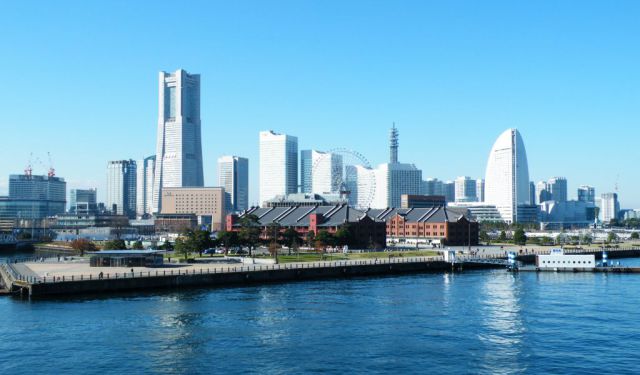
Yokohama Downtown Walking Tour
French writer Jules Verne featured Yokohama in his famous novel Around the World in Eighty Days. Even then, in 1873, Yokohama was seen as a symbol of modern, international Japan.
The city is Japan’s second-largest and one of its most important ports. The name Yokohama is derived from the words yoko, meaning “horizontal” or “sideways,” and hama, meaning “beach.” The name refers to... view more
Tour Duration: 2 Hours
Travel Distance: 3.7 Km or 2.3 Miles
The city is Japan’s second-largest and one of its most important ports. The name Yokohama is derived from the words yoko, meaning “horizontal” or “sideways,” and hama, meaning “beach.” The name refers to... view more
Tour Duration: 2 Hours
Travel Distance: 3.7 Km or 2.3 Miles
City Walks Overview
