

Phat Tich Temple, Vientiane
Phat Tich Temple is a Buddhist temple connected with the Vietnamese community in Laos. Unlike many temples in the country that follow Theravada Buddhism, it follows the Mahayana tradition common in Vietnam and East Asia. The temple serves as both a place for prayer and a gathering space for the local Vietnamese Buddhist community.
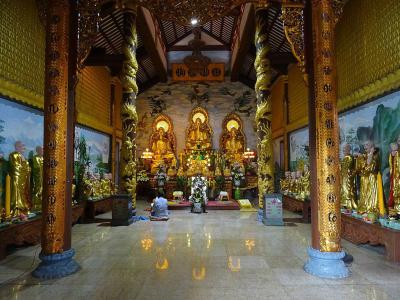
Inside the main prayer hall are several Buddha statues along with figures of bodhisattvas such as Avalokiteshvara, a symbol of compassion in Mahayana Buddhism. Incense altars stand in front of the statues, and visitors will often see people lighting incense or leaving offerings of flowers and fruit. The hall is usually quiet, with worshippers coming in throughout the day to pray or spend a few moments in reflection.
The temple buildings show Vietnamese influence, with roofs that curve upward at the corners and dragon decorations on some structures. Small courtyards and garden areas surround the main hall, offering quiet places to walk or sit. The temple becomes busier during festivals such as Vesak, when monks and worshippers gather for prayers marking the birth, enlightenment, and passing of the Buddha.
Inside the main prayer hall are several Buddha statues along with figures of bodhisattvas such as Avalokiteshvara, a symbol of compassion in Mahayana Buddhism. Incense altars stand in front of the statues, and visitors will often see people lighting incense or leaving offerings of flowers and fruit. The hall is usually quiet, with worshippers coming in throughout the day to pray or spend a few moments in reflection.
The temple buildings show Vietnamese influence, with roofs that curve upward at the corners and dragon decorations on some structures. Small courtyards and garden areas surround the main hall, offering quiet places to walk or sit. The temple becomes busier during festivals such as Vesak, when monks and worshippers gather for prayers marking the birth, enlightenment, and passing of the Buddha.
Want to visit this sight? Check out these Self-Guided Walking Tours in Vientiane. Alternatively, you can download the mobile app "GPSmyCity: Walks in 1K+ Cities" from Apple App Store or Google Play Store. The app turns your mobile device to a personal tour guide and it works offline, so no data plan is needed when traveling abroad.
Download The GPSmyCity App



Phat Tich Temple on Map
Sight Name: Phat Tich Temple
Sight Location: Vientiane, Laos (See walking tours in Vientiane)
Sight Type: Religious
Sight Location: Vientiane, Laos (See walking tours in Vientiane)
Sight Type: Religious
Nearby Sights




Walking Tours in Vientiane, Laos

Create Your Own Walk in Vientiane
Creating your own self-guided walk in Vientiane is easy and fun. Choose the city attractions that you want to see and a walk route map will be created just for you. You can even set your hotel as the start point of the walk.

Vientiane Temples Walk
The capital of Laos, Vientiane, is in the heart of the Buddhist world. This explains the presence in the city of numerous temples and shrines making up the bulk of local landmarks. Scattered across the city, these religious sites hold significant historical and spiritual importance, drawing visitors from all over the globe.
Indeed, some of the country's most notable sanctuaries are found... view more
Tour Duration: 2 Hours
Travel Distance: 3 Km or 1.9 Miles
Indeed, some of the country's most notable sanctuaries are found... view more
Tour Duration: 2 Hours
Travel Distance: 3 Km or 1.9 Miles
Vientiane Introduction Walking Tour
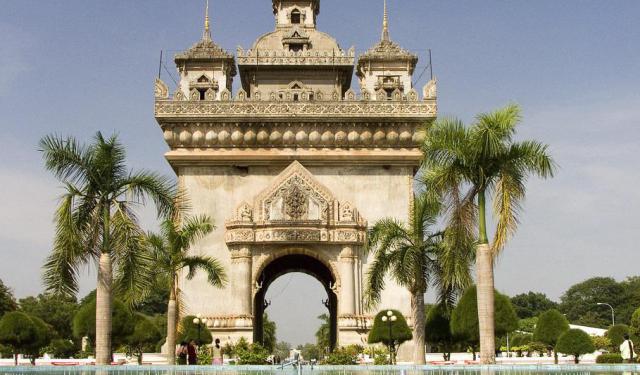
Vientiane, the capital of Laos, is a colorful city, the history of which is reflected in its centuries-old shrines, memorials, garden squares, and colonial architecture lining broad boulevards and leafy streets.
The name "Vientiane" is the French rendition of the Lao word viangchan, in which viang refers to a "walled city" and chan derives from Sanskrit candana, translating... view more
Tour Duration: 2 Hours
Travel Distance: 2.9 Km or 1.8 Miles
The name "Vientiane" is the French rendition of the Lao word viangchan, in which viang refers to a "walled city" and chan derives from Sanskrit candana, translating... view more
Tour Duration: 2 Hours
Travel Distance: 2.9 Km or 1.8 Miles