

Vientiane Introduction Walking Tour (Self Guided), Vientiane
Vientiane, the capital of Laos, is a colorful city, the history of which is reflected in its centuries-old shrines, memorials, garden squares, and colonial architecture lining broad boulevards and leafy streets.
The name "Vientiane" is the French rendition of the Lao word viangchan, in which viang refers to a "walled city" and chan derives from Sanskrit candana, translating as "sandalwood", thus meaning the "walled city of sandalwood".
Legend attributes the founding of Vientiane to Prince Thattaradtha, who established the city after leaving the fabled kingdom of Muong Inthapatha Maha Nakhone due to a succession dispute. Historically, however, Vientiane is believed to have been an early settlement of Mon people before falling under Khmer influence.
In 1354, Fa Ngum established the kingdom of Lan Xang, with Vientiane assuming administrative importance. However, it wasn't until 1563 that Vientiane became its capital, to deter Burmese incursions. Subsequently, it turned into an independent kingdom before falling to Siamese forces in 1779.
The city suffered devastation during King Anouvong's failed rebellion in 1827, leading to its decline until French intervention in the late 19th century. Under French rule, Vientiane underwent reconstruction, and significant Vietnamese migration occurred, altering the city's demographics.
World War II saw a brief Japanese occupation, followed by a French reoccupation. Vientiane eventually became the capital of independent Laos in 1953 amidst the turmoil of the civil war which ended in 1975.
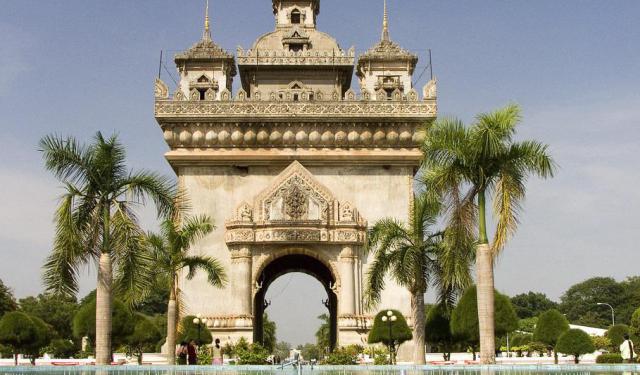
In contemporary times, Vientiane successfully blends historical legacy with modernity. One of the top local landmarks is the iconic Victory Gate (Patuxai). This grand monument pays homage to those who fought for Laos' independence from French colonial rule. Its intricate design, combining Western influences with traditional Laotian elements, and sweeping views of the city make it a must-visit site for tourists.
A stroll down the French-inspired Avenue Lane Xang offers a glimpse into Vientiane's colonial past.
Religious enthusiasts will find solace in Wat Si Saket, a tranquil temple complex renowned for its thousands of Buddha statues. Meanwhile, the Monastery of the Emerald Buddha offers a glimpse into Laos' spiritual heritage with its ornate decorations and serene ambiance.
That Dam, or the Black Stupa, is another noteworthy attraction in Vientiane. Legend has it that this ancient stupa was once covered in gold, only to be plundered by foreign invaders.
Vientiane is a city steeped in history, culture, and charm. From its ancient temples to its bustling markets and grand monuments, there is no shortage of sights to see and experiences to enjoy. So, take this self-guided introductory tour and discover the enchanting allure of Laos' capital city today!
The name "Vientiane" is the French rendition of the Lao word viangchan, in which viang refers to a "walled city" and chan derives from Sanskrit candana, translating as "sandalwood", thus meaning the "walled city of sandalwood".
Legend attributes the founding of Vientiane to Prince Thattaradtha, who established the city after leaving the fabled kingdom of Muong Inthapatha Maha Nakhone due to a succession dispute. Historically, however, Vientiane is believed to have been an early settlement of Mon people before falling under Khmer influence.
In 1354, Fa Ngum established the kingdom of Lan Xang, with Vientiane assuming administrative importance. However, it wasn't until 1563 that Vientiane became its capital, to deter Burmese incursions. Subsequently, it turned into an independent kingdom before falling to Siamese forces in 1779.
The city suffered devastation during King Anouvong's failed rebellion in 1827, leading to its decline until French intervention in the late 19th century. Under French rule, Vientiane underwent reconstruction, and significant Vietnamese migration occurred, altering the city's demographics.
World War II saw a brief Japanese occupation, followed by a French reoccupation. Vientiane eventually became the capital of independent Laos in 1953 amidst the turmoil of the civil war which ended in 1975.
In contemporary times, Vientiane successfully blends historical legacy with modernity. One of the top local landmarks is the iconic Victory Gate (Patuxai). This grand monument pays homage to those who fought for Laos' independence from French colonial rule. Its intricate design, combining Western influences with traditional Laotian elements, and sweeping views of the city make it a must-visit site for tourists.
A stroll down the French-inspired Avenue Lane Xang offers a glimpse into Vientiane's colonial past.
Religious enthusiasts will find solace in Wat Si Saket, a tranquil temple complex renowned for its thousands of Buddha statues. Meanwhile, the Monastery of the Emerald Buddha offers a glimpse into Laos' spiritual heritage with its ornate decorations and serene ambiance.
That Dam, or the Black Stupa, is another noteworthy attraction in Vientiane. Legend has it that this ancient stupa was once covered in gold, only to be plundered by foreign invaders.
Vientiane is a city steeped in history, culture, and charm. From its ancient temples to its bustling markets and grand monuments, there is no shortage of sights to see and experiences to enjoy. So, take this self-guided introductory tour and discover the enchanting allure of Laos' capital city today!
How it works: Download the app "GPSmyCity: Walks in 1K+ Cities" from Apple App Store or Google Play Store to your mobile phone or tablet. The app turns your mobile device into a personal tour guide and its built-in GPS navigation functions guide you from one tour stop to next. The app works offline, so no data plan is needed when traveling abroad.
Download The GPSmyCity App



Vientiane Introduction Walking Tour Map
Guide Name: Vientiane Introduction Walking Tour
Guide Location: Laos » Vientiane (See other walking tours in Vientiane)
Guide Type: Self-guided Walking Tour (Sightseeing)
Tour Duration: 2 Hours
Travel Distance: 2.9 Km or 1.8 Miles
Tour Best Suited For: First-time visit
Guide Location: Laos » Vientiane (See other walking tours in Vientiane)
Guide Type: Self-guided Walking Tour (Sightseeing)
Tour Duration: 2 Hours
Travel Distance: 2.9 Km or 1.8 Miles
Tour Best Suited For: First-time visit
Sights Featured in This Walk


Walking Tours in Vientiane, Laos

Create Your Own Walk in Vientiane
Creating your own self-guided walk in Vientiane is easy and fun. Choose the city attractions that you want to see and a walk route map will be created just for you. You can even set your hotel as the start point of the walk.

Vientiane Temples Walk
The capital of Laos, Vientiane, is in the heart of the Buddhist world. This explains the presence in the city of numerous temples and shrines making up the bulk of local landmarks. Scattered across the city, these religious sites hold significant historical and spiritual importance, drawing visitors from all over the globe.
Indeed, some of the country's most notable sanctuaries are found... view more
Tour Duration: 2 Hours
Travel Distance: 3 Km or 1.9 Miles
Indeed, some of the country's most notable sanctuaries are found... view more
Tour Duration: 2 Hours
Travel Distance: 3 Km or 1.9 Miles
City Walks Overview
