Vientiane Temples Walk (Self Guided), Vientiane
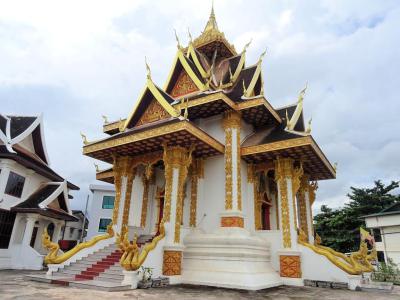
The capital of Laos, Vientiane, is in the heart of the Buddhist world. This explains the presence in the city of numerous temples and shrines making up the bulk of local landmarks. Scattered across the city, these religious sites hold significant historical and spiritual importance, drawing visitors from all over the globe.
Indeed, some of the country's most notable sanctuaries are found here, such as the temple of Wat Si Saket, filled with thousands of Buddha images, and the Monastery of the Emerald Buddha.
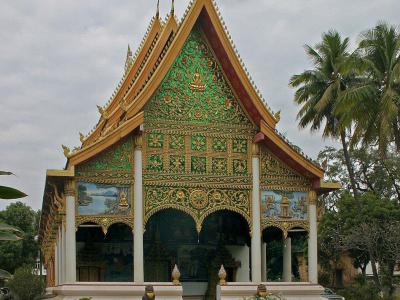
Also notable in this respect is the Temple of the Incarnation of Indra (Wat Inpeng). Believed to have originated with the assistance of the deity Indra himself, this sacred location is revered for its intricately carved wooden frescoes, mosaic façades, and tranquil gardens, highlighting the enduring reverence for Buddhism and the artistic prowess of Laotian craftsmen.
Another prominent temple is that of the Heavy Buddha (Wat Ong Teu), which houses a venerable statue of the Buddha known for its imposing presence. Devotees and tourists flock here to marvel at its grandeur and seek blessings.
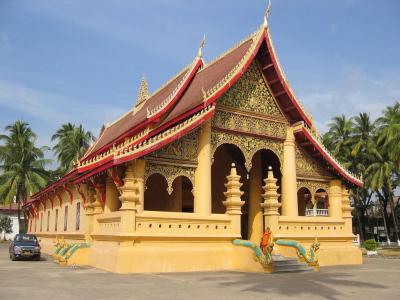
Wat Mixai, or Mixai Temple, stands out for its ornate blue mosaics and vibrant atmosphere. It serves as a hub for religious ceremonies and festivities, welcoming visitors into a sacred space where ancient Chinese funeral stupas and towering Niak guardians tell the stories of cultural richness.
Wat Chanthaburi, another noteworthy temple in Vientiane, has persevered through history's trials, boasting a majestic bronze Buddha, dominating its serene ambiance.
Other locations of note include the Vientiane City Pillar Shrine, Wat Si Muang, and Wat That Khao, each adding to the city's spiritual allure, offering visitors opportunities for introspection and reverence.
Exploring these temples in Vientiane can prove to be a journey of discovery and enlightenment, where one can immerse oneself in the rich tapestry of Laotian culture and spirituality. Whether you seek solace, cultural enrichment, or simply wish to marvel at the beauty of these locations, a visit here promises a memorable and fulfilling experience.
Indeed, some of the country's most notable sanctuaries are found here, such as the temple of Wat Si Saket, filled with thousands of Buddha images, and the Monastery of the Emerald Buddha.
Also notable in this respect is the Temple of the Incarnation of Indra (Wat Inpeng). Believed to have originated with the assistance of the deity Indra himself, this sacred location is revered for its intricately carved wooden frescoes, mosaic façades, and tranquil gardens, highlighting the enduring reverence for Buddhism and the artistic prowess of Laotian craftsmen.
Another prominent temple is that of the Heavy Buddha (Wat Ong Teu), which houses a venerable statue of the Buddha known for its imposing presence. Devotees and tourists flock here to marvel at its grandeur and seek blessings.
Wat Mixai, or Mixai Temple, stands out for its ornate blue mosaics and vibrant atmosphere. It serves as a hub for religious ceremonies and festivities, welcoming visitors into a sacred space where ancient Chinese funeral stupas and towering Niak guardians tell the stories of cultural richness.
Wat Chanthaburi, another noteworthy temple in Vientiane, has persevered through history's trials, boasting a majestic bronze Buddha, dominating its serene ambiance.
Other locations of note include the Vientiane City Pillar Shrine, Wat Si Muang, and Wat That Khao, each adding to the city's spiritual allure, offering visitors opportunities for introspection and reverence.
Exploring these temples in Vientiane can prove to be a journey of discovery and enlightenment, where one can immerse oneself in the rich tapestry of Laotian culture and spirituality. Whether you seek solace, cultural enrichment, or simply wish to marvel at the beauty of these locations, a visit here promises a memorable and fulfilling experience.
How it works: Download the app "GPSmyCity: Walks in 1K+ Cities" from Apple App Store or Google Play Store to your mobile phone or tablet. The app turns your mobile device into a personal tour guide and its built-in GPS navigation functions guide you from one tour stop to next. The app works offline, so no data plan is needed when traveling abroad.
Vientiane Temples Walk Map
Guide Name: Vientiane Temples Walk
Guide Location: Laos » Vientiane (See other walking tours in Vientiane)
Guide Type: Self-guided Walking Tour (Sightseeing)
# of Attractions: 9
Tour Duration: 2 Hour(s)
Travel Distance: 3.0 Km or 1.9 Miles
Author: sabrina
Sight(s) Featured in This Guide:
Guide Location: Laos » Vientiane (See other walking tours in Vientiane)
Guide Type: Self-guided Walking Tour (Sightseeing)
# of Attractions: 9
Tour Duration: 2 Hour(s)
Travel Distance: 3.0 Km or 1.9 Miles
Author: sabrina
Sight(s) Featured in This Guide:
- Wat Inpeng (Temple of the Incarnation of Indra)
- Wat Ong Teu (Temple of the Heavy Buddha)
- Wat Mixai (Mixai Temple)
- Wat Chanthaburi
- Wat Si Saket (Si Saket Temple)
- Haw Phra Kaew (Monastery of the Emerald Buddha)
- Vientiane City Pillar Shrine
- Wat Si Muang
- Wat That Khao
1) Wat Inpeng (Temple of the Incarnation of Indra)
Legend has it that Temple of the Incarnation of Indra traces its origins back to the 3rd century when the deity Indra descended to aid local artisans in crafting images of the Buddha. However, historical records suggest that the temple was constructed during the 16th century, reflecting the enduring reverence for Buddhism in the region.
One of the main attractions of Wat Inpeng is its exquisite architectural and decorative features. The temple is adorned with intricately carved wood frescoes and a mesmerizing mosaic façade, showcasing the artistic prowess of Laotian craftsmen. Visitors are captivated by the array of statues and images depicting mythological creatures, as well as the vibrant and ornate multilevel roofs that adorn the structure.
As visitors explore the temple grounds, they are greeted by a serene garden area nestled at the rear of the complex. Here, benches and meticulously trimmed topiary trees offer a peaceful retreat where visitors can reflect and immerse themselves in the tranquil ambiance.
One of the main attractions of Wat Inpeng is its exquisite architectural and decorative features. The temple is adorned with intricately carved wood frescoes and a mesmerizing mosaic façade, showcasing the artistic prowess of Laotian craftsmen. Visitors are captivated by the array of statues and images depicting mythological creatures, as well as the vibrant and ornate multilevel roofs that adorn the structure.
As visitors explore the temple grounds, they are greeted by a serene garden area nestled at the rear of the complex. Here, benches and meticulously trimmed topiary trees offer a peaceful retreat where visitors can reflect and immerse themselves in the tranquil ambiance.
2) Wat Ong Teu (Temple of the Heavy Buddha)
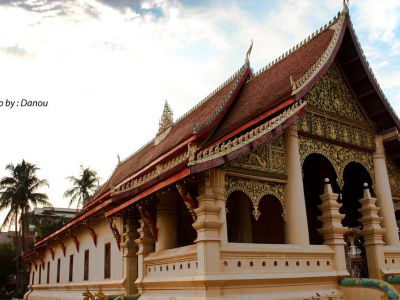
Temple of the Heavy Buddha stands as a prominent Buddhist monastery in the heart of Vientiane. The temple derives its name from the colossal bronze Phra Ong Teu Buddha statue housed within its walls, which is renowned as the largest Buddha image in Vientiane.
Originally constructed during the 16th century under the reign of King Settathirat I, Wat Ong Teu has weathered the storms of history, enduring periods of foreign invasion and subsequent reconstruction. The temple's inception coincided with Laos' golden age of Buddhism, a time of cultural and religious flourishing amidst external pressures.
Despite potential demolitions and reconstructions over the centuries, Wat Ong Teu maintains its architectural significance, embodying the distinctive features of the Luang Prabang I style. Characterized by its sparing use of brickwork and rectangular structure, the temple stands as a testament to Laos' rich cultural heritage.
Legend has it that Wat Ong Teu was strategically positioned along a cardinal point in alignment with three other temples, although whether this arrangement was intentional or coincidental remains a subject of speculation. Today, the temple continues to attract visitors and worshippers alike, offering a glimpse into Laos' spiritual traditions and historical legacy.
Originally constructed during the 16th century under the reign of King Settathirat I, Wat Ong Teu has weathered the storms of history, enduring periods of foreign invasion and subsequent reconstruction. The temple's inception coincided with Laos' golden age of Buddhism, a time of cultural and religious flourishing amidst external pressures.
Despite potential demolitions and reconstructions over the centuries, Wat Ong Teu maintains its architectural significance, embodying the distinctive features of the Luang Prabang I style. Characterized by its sparing use of brickwork and rectangular structure, the temple stands as a testament to Laos' rich cultural heritage.
Legend has it that Wat Ong Teu was strategically positioned along a cardinal point in alignment with three other temples, although whether this arrangement was intentional or coincidental remains a subject of speculation. Today, the temple continues to attract visitors and worshippers alike, offering a glimpse into Laos' spiritual traditions and historical legacy.
3) Wat Mixai (Mixai Temple)
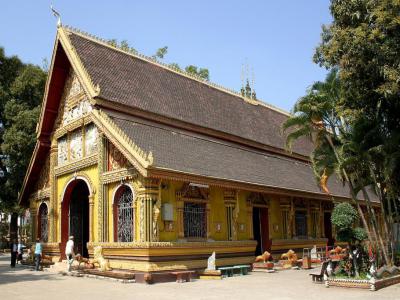
Renowned for its ornate blue mosaic designs and intricate wooden carvings, Wat Mixai beckons visitors with its colorful façade and exquisite craftsmanship. As visitors approach, they are greeted by towering Niak, or giant guardians, flanking the entrance gate, welcoming them into the sacred space.
The temple's façade is adorned with gold-coated wooden carvings, meticulously crafted in the finest traditions of Laotian architecture. Each detail reflects the artistry and dedication of the craftsmen who brought the temple to life, offering a glimpse into the cultural richness of the region. The vibrant hues and intricate patterns captivate the eye, inviting visitors to explore further and uncover the temple's hidden treasures.
One of the main highlights of Wat Mixai is its collection of old Chinese funeral stupas, which line the main hall or sim of the temple. These ancient structures serve as a poignant reminder of the temple's historical significance and the diverse influences that have shaped its identity over the centuries. Stepping inside the temple, visitors are enveloped in a sense of tranquility and reverence, as they admire the sacred relics and architectural wonders housed within its walls.
The temple's façade is adorned with gold-coated wooden carvings, meticulously crafted in the finest traditions of Laotian architecture. Each detail reflects the artistry and dedication of the craftsmen who brought the temple to life, offering a glimpse into the cultural richness of the region. The vibrant hues and intricate patterns captivate the eye, inviting visitors to explore further and uncover the temple's hidden treasures.
One of the main highlights of Wat Mixai is its collection of old Chinese funeral stupas, which line the main hall or sim of the temple. These ancient structures serve as a poignant reminder of the temple's historical significance and the diverse influences that have shaped its identity over the centuries. Stepping inside the temple, visitors are enveloped in a sense of tranquility and reverence, as they admire the sacred relics and architectural wonders housed within its walls.
4) Wat Chanthaburi
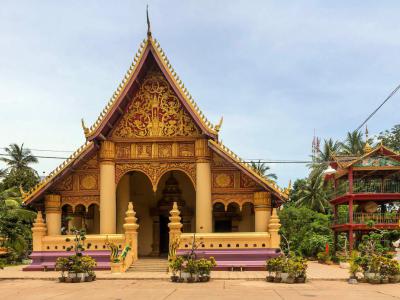
Wat Chanthaburi, also known as Wat Chan, stands as a testament to Laos' rich Buddhist heritage. Constructed in the middle of the 16th century, this magnificent temple has weathered the storms of history, including destruction during the Siam invasion of 1928. However, through numerous restorations, Wat Chanthaburi has retained its splendor and continues to be revered by locals and visitors alike.
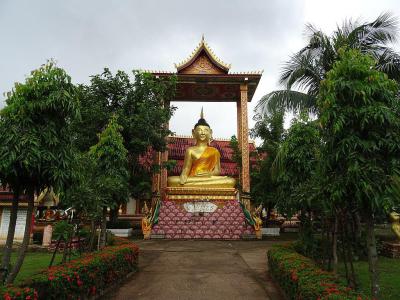
One of the highlights of Wat Chanthaburi is its elaborate decorative features, including intricately carved wood designs that adorn the temple's architecture. These intricate details reflect the skill and craftsmanship of Laotian artisans and add to the temple's aesthetic appeal. Additionally, Wat Chanthaburi is renowned for its colossal seated Buddha sculpture, crafted from bronze in the 16th century.
Despite facing numerous calamities over the centuries, this iconic image has endured, symbolizing resilience and spiritual significance for believers. Visitors to Wat Chanthaburi can immerse themselves in the serene ambiance of the temple grounds while marveling at its historical and artistic treasures.
One of the highlights of Wat Chanthaburi is its elaborate decorative features, including intricately carved wood designs that adorn the temple's architecture. These intricate details reflect the skill and craftsmanship of Laotian artisans and add to the temple's aesthetic appeal. Additionally, Wat Chanthaburi is renowned for its colossal seated Buddha sculpture, crafted from bronze in the 16th century.
Despite facing numerous calamities over the centuries, this iconic image has endured, symbolizing resilience and spiritual significance for believers. Visitors to Wat Chanthaburi can immerse themselves in the serene ambiance of the temple grounds while marveling at its historical and artistic treasures.
5) Wat Si Saket (Si Saket Temple) (must see)
Wat Si Saket is the oldest surviving Buddhist temple in its original form in the Lao capital. It was built in 1818 during the reign of King Anouvong, the last king of the Kingdom of Vientiane. The temple was designed with architectural features influenced by Siam, which was unusual in the area at the time. This style may have helped it survive the Siamese attack in 1828, when many other temples were destroyed.
The complex includes a main ordination hall, a cloister around the courtyard, and several smaller buildings. The cloister walls contain rows of niches filled with Buddha images. In total, the temple holds about 6,840 statues, made from materials such as ceramic, wood, stone, and metals including bronze, silver, and tin. Some of these sculptures date from the sixteenth to nineteenth centuries.
The main hall stands on a raised platform with a tiled roof and shaded verandas supported by wooden columns. Inside, visitors can see wall paintings that show scenes from the Jataka stories, which describe the earlier lives of the Buddha. Although parts of the paintings have faded with time, many details remain visible. Several large Buddha statues stand on decorated altars inside the hall.
Today the temple is both an active place of worship and a historical site open to visitors. Monks live and study in the complex, and local residents come to pray and make offerings. Visitors often walk through the quiet courtyard and the cloister lined with Buddha images, where the large number of statues creates a distinctive atmosphere.
The complex includes a main ordination hall, a cloister around the courtyard, and several smaller buildings. The cloister walls contain rows of niches filled with Buddha images. In total, the temple holds about 6,840 statues, made from materials such as ceramic, wood, stone, and metals including bronze, silver, and tin. Some of these sculptures date from the sixteenth to nineteenth centuries.
The main hall stands on a raised platform with a tiled roof and shaded verandas supported by wooden columns. Inside, visitors can see wall paintings that show scenes from the Jataka stories, which describe the earlier lives of the Buddha. Although parts of the paintings have faded with time, many details remain visible. Several large Buddha statues stand on decorated altars inside the hall.
Today the temple is both an active place of worship and a historical site open to visitors. Monks live and study in the complex, and local residents come to pray and make offerings. Visitors often walk through the quiet courtyard and the cloister lined with Buddha images, where the large number of statues creates a distinctive atmosphere.
6) Haw Phra Kaew (Monastery of the Emerald Buddha) (must see)
Haw Phra Kaew is a historic Buddhist monastery that once served as the royal temple of the Lao kingdom. It was built in 1565 during the reign of King Setthathirath to house the Emerald Buddha, a sacred statue brought from the Lan Na kingdom. For more than two centuries the monastery functioned as a royal chapel and an important religious center.
The building’s history reflects periods of conflict in the region. In 1779 Siamese forces captured the area and carried the Emerald Buddha to Bangkok, where it remains today. The temple was later damaged in nineteenth-century military campaigns and stood in ruins for many years. It was reconstructed in the 1930s during the French colonial period using traditional designs and historical records.
The monastery follows the layout of classical Lao religious buildings. The main hall stands on a raised stone terrace and is surrounded by carved stone balustrades shaped like nāga serpents, figures from Buddhist and local mythology. The roof has several descending tiers with long curved edges, a style often seen in Lao temple architecture. Along the outer walls are rows of windows framed with carved wood and decorative panels that show floral patterns and religious motifs.
Today the building functions as a museum of religious art rather than an active monastery. Inside, visitors can see many Buddha statues made from bronze, wood, silver, and stone, dating from the sixteenth to nineteenth centuries. Stone carvings, inscriptions, and fragments from earlier temples are also displayed, showing the development of Buddhist art and royal religious culture in Laos.
The building’s history reflects periods of conflict in the region. In 1779 Siamese forces captured the area and carried the Emerald Buddha to Bangkok, where it remains today. The temple was later damaged in nineteenth-century military campaigns and stood in ruins for many years. It was reconstructed in the 1930s during the French colonial period using traditional designs and historical records.
The monastery follows the layout of classical Lao religious buildings. The main hall stands on a raised stone terrace and is surrounded by carved stone balustrades shaped like nāga serpents, figures from Buddhist and local mythology. The roof has several descending tiers with long curved edges, a style often seen in Lao temple architecture. Along the outer walls are rows of windows framed with carved wood and decorative panels that show floral patterns and religious motifs.
Today the building functions as a museum of religious art rather than an active monastery. Inside, visitors can see many Buddha statues made from bronze, wood, silver, and stone, dating from the sixteenth to nineteenth centuries. Stone carvings, inscriptions, and fragments from earlier temples are also displayed, showing the development of Buddhist art and royal religious culture in Laos.
7) Vientiane City Pillar Shrine
The Vientiane City Pillar Shrine is a modest yet profoundly significant shrine serves as a hallowed symbol of the city's very foundation It captures the essence of its heritage and spirituality. This sacred edifice, completed in 2012, stands under the dedicated guardianship of the Department of Information within the Ministry of Tourism and Culture.
What renders the Vientiane City Pillar Shrine particularly captivating is the historical narrative woven into its very location. This site, chosen with great reverence, is graced by the presence of over 400 ancient stone pillars dating back to the 5th century. These pillars, remnants of a bygone era, are nothing less than the bedrock upon which the city of Vientiane was established, underscoring the shrine's central role in commemorating the city's genesis.
For the local populace, the Vientiane City Pillar Shrine stands as a sanctified locus of devotion and aspiration. A place where wishes are whispered, dreams are nurtured, and blessings are sought with unwavering faith. Devotees flock to this holy site, bearing offerings of fragrant flowers, ripe fruits, and aromatic incense, all tendered in supplication for prosperity and fortune. It is in this sacred space that the spiritual and material realms converge, forging an unbreakable bond between the people and their city.
The Vientiane City Pillar Shrine also plays host to a rich tapestry of traditional ceremonies and rituals, celebrated with great fervor on auspicious Buddhist days. These gatherings serve to further solidify the cultural and religious heritage of the city, reaffirming its deep-rooted connection with the spiritual world.
What renders the Vientiane City Pillar Shrine particularly captivating is the historical narrative woven into its very location. This site, chosen with great reverence, is graced by the presence of over 400 ancient stone pillars dating back to the 5th century. These pillars, remnants of a bygone era, are nothing less than the bedrock upon which the city of Vientiane was established, underscoring the shrine's central role in commemorating the city's genesis.
For the local populace, the Vientiane City Pillar Shrine stands as a sanctified locus of devotion and aspiration. A place where wishes are whispered, dreams are nurtured, and blessings are sought with unwavering faith. Devotees flock to this holy site, bearing offerings of fragrant flowers, ripe fruits, and aromatic incense, all tendered in supplication for prosperity and fortune. It is in this sacred space that the spiritual and material realms converge, forging an unbreakable bond between the people and their city.
The Vientiane City Pillar Shrine also plays host to a rich tapestry of traditional ceremonies and rituals, celebrated with great fervor on auspicious Buddhist days. These gatherings serve to further solidify the cultural and religious heritage of the city, reaffirming its deep-rooted connection with the spiritual world.
8) Wat Si Muang
Founded in 1566, Wat Si Muang, also known as Simuong, is another lovely Buddhist temple that is popular among both locals and visitors for its stunning bronze Buddha statues. The temple is famous for bringing good luck and wealth, particularly to those trying to have children. Wat Si Muang’s relatively modest construction is complemented beautifully by the elaborate wooden carvings and paintings. The temple is surrounded by ornate gates.
Tourists willing to check out the altar and the rest of the temple’s interior are advised to purchase flowers, incense sticks and candles from outside vendors to be used later at the altar. The entrance is from Setthathirath Road. Near the temple, there is a statue of King Srisavang Vong (1885-1959), who is known to have fathered 50 children.
Why You Should Visit:
Entrance is free and you can see how locals get blessed by the monks in the temple.
The architecture is just beautiful and there are a number of incredible gongs you are able to chime.
Tip:
Best time to visit is early in the morning and, if possible, on the 'Buddha Days' which occur every 14 days in accordance with the lunar calendar.
Look out for important relics, the pillar of Vientiane surrounded by Buddhas; including the Emerald Buddha and a melted Buddha that survived the fire which has destroyed the original temple.
Tourists willing to check out the altar and the rest of the temple’s interior are advised to purchase flowers, incense sticks and candles from outside vendors to be used later at the altar. The entrance is from Setthathirath Road. Near the temple, there is a statue of King Srisavang Vong (1885-1959), who is known to have fathered 50 children.
Why You Should Visit:
Entrance is free and you can see how locals get blessed by the monks in the temple.
The architecture is just beautiful and there are a number of incredible gongs you are able to chime.
Tip:
Best time to visit is early in the morning and, if possible, on the 'Buddha Days' which occur every 14 days in accordance with the lunar calendar.
Look out for important relics, the pillar of Vientiane surrounded by Buddhas; including the Emerald Buddha and a melted Buddha that survived the fire which has destroyed the original temple.
9) Wat That Khao
Nestled beside the revered Vat That Luang, which holds the esteemed relic of Buddha's breastbone, lies Wat That Khao. While it may not boast the same historical significance as its neighbor, Wat That Khao holds its own unique charm and spiritual allure.
Vat That Luang, dating back to 300 BC, is considered one of the most sacred places in Laos. Pilgrims from near and far visit this hallowed site to pay homage to the sacred relic it houses. The presence of such a significant religious monument sets the stage for the serene beauty and spiritual significance that surrounds Wat That Khao.
What makes Wat That Khao stand out is its magnificent reclining Buddha, one of the largest in Laos. Though it may not rival the grandeur of Wat Pho in Bangkok, it is nonetheless an awe-inspiring sight. This colossal Buddha figure, with its tranquil expression and graceful posture, beckons visitors to contemplate its serenity and reflect on their own spiritual journey.
While Thailand may boast a plethora of tourist attractions that draw visitors from around the world, Wat That Khao takes a different approach. It doesn't rely on bustling markets or flashy shows to captivate tourists. Instead, it offers a tranquil respite from the noise and chaos of modern life.
Situated across the road in Royal Park, Wat That Khao is primarily known for its Buddhist temple. Tourists who find themselves drawn to this place are those seeking a moment of introspection, a connection with spirituality, or simply a peaceful escape from the fast-paced world outside.
The temple's architecture showcases the traditional Lao style, with its graceful lines and intricate details. Surrounding gardens add to the sense of tranquility, inviting visitors to stroll leisurely and soak in the peaceful atmosphere.
Vat That Luang, dating back to 300 BC, is considered one of the most sacred places in Laos. Pilgrims from near and far visit this hallowed site to pay homage to the sacred relic it houses. The presence of such a significant religious monument sets the stage for the serene beauty and spiritual significance that surrounds Wat That Khao.
What makes Wat That Khao stand out is its magnificent reclining Buddha, one of the largest in Laos. Though it may not rival the grandeur of Wat Pho in Bangkok, it is nonetheless an awe-inspiring sight. This colossal Buddha figure, with its tranquil expression and graceful posture, beckons visitors to contemplate its serenity and reflect on their own spiritual journey.
While Thailand may boast a plethora of tourist attractions that draw visitors from around the world, Wat That Khao takes a different approach. It doesn't rely on bustling markets or flashy shows to captivate tourists. Instead, it offers a tranquil respite from the noise and chaos of modern life.
Situated across the road in Royal Park, Wat That Khao is primarily known for its Buddhist temple. Tourists who find themselves drawn to this place are those seeking a moment of introspection, a connection with spirituality, or simply a peaceful escape from the fast-paced world outside.
The temple's architecture showcases the traditional Lao style, with its graceful lines and intricate details. Surrounding gardens add to the sense of tranquility, inviting visitors to stroll leisurely and soak in the peaceful atmosphere.
Walking Tours in Vientiane, Laos

Create Your Own Walk in Vientiane
Creating your own self-guided walk in Vientiane is easy and fun. Choose the city attractions that you want to see and a walk route map will be created just for you. You can even set your hotel as the start point of the walk.
Vientiane Introduction Walking Tour
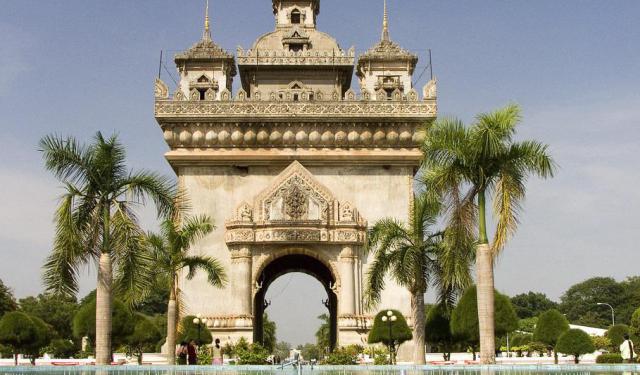
Vientiane, the capital of Laos, is a colorful city, the history of which is reflected in its centuries-old shrines, memorials, garden squares, and colonial architecture lining broad boulevards and leafy streets.
The name "Vientiane" is the French rendition of the Lao word viangchan, in which viang refers to a "walled city" and chan derives from Sanskrit candana, translating... view more
Tour Duration: 2 Hour(s)
Travel Distance: 2.9 Km or 1.8 Miles
The name "Vientiane" is the French rendition of the Lao word viangchan, in which viang refers to a "walled city" and chan derives from Sanskrit candana, translating... view more
Tour Duration: 2 Hour(s)
Travel Distance: 2.9 Km or 1.8 Miles
The Most Popular Cities
/ view all