

Shankill Road Memorial Gardens, Belfast
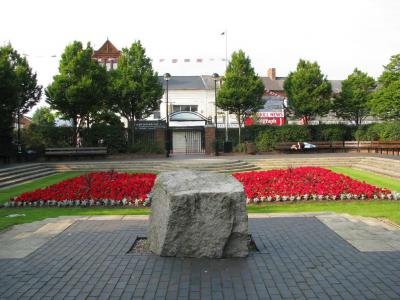
The Shankill Road Memorial Gardens offer a quiet place of remembrance in the heart of one of Belfast’s most historically significant unionist communities. Located on Shankill Road beside West Kirk Presbyterian Church, the gardens commemorate victims of the Troubles as well as local people who died in the First and Second World Wars and other conflicts.
The site took on particular significance following the Shankill Road bombing of 23 October 1993. Two Provisional IRA members entered Frizzell’s fish shop carrying a bomb intended to target members of the loyalist Ulster Defence Association (or UDA), but the device exploded prematurely. Eight civilians and one UDA member were killed, along with one of the bombers, while more than 50 people were injured. The attack became one of the most notorious incidents of the Troubles.
The memorial garden was officially opened on 29 May 1994. Inside, at the opposite end of the garden from the entrance, visitors will find a central memorial stone. Another memorial honours members of the 36th Division, which suffered devastating losses during the Battle of the Somme in 1916. Facing the central memorial stone, you’ll find it slightly to the right and behind. A restored Belfast street lamp, commemorating those killed in the bombing and other victims from the Shankill community, rises in the garden’s north-western corner. Ashes from the thousands of floral tributes left in the aftermath of the attack were preserved within memorial features in the garden.
With its flower beds, trees and benches, the gated garden provides a peaceful place for reflection. Take a seat on one of the wooden benches lining the perimeter to make the most of the contemplative atmosphere. For visitors exploring the Shankill Road, the garden also offers an important counterpart to the republican memorials encountered around the Falls Road, illustrating how different communities have commemorated their losses and preserved memories of the conflict.
The site took on particular significance following the Shankill Road bombing of 23 October 1993. Two Provisional IRA members entered Frizzell’s fish shop carrying a bomb intended to target members of the loyalist Ulster Defence Association (or UDA), but the device exploded prematurely. Eight civilians and one UDA member were killed, along with one of the bombers, while more than 50 people were injured. The attack became one of the most notorious incidents of the Troubles.
The memorial garden was officially opened on 29 May 1994. Inside, at the opposite end of the garden from the entrance, visitors will find a central memorial stone. Another memorial honours members of the 36th Division, which suffered devastating losses during the Battle of the Somme in 1916. Facing the central memorial stone, you’ll find it slightly to the right and behind. A restored Belfast street lamp, commemorating those killed in the bombing and other victims from the Shankill community, rises in the garden’s north-western corner. Ashes from the thousands of floral tributes left in the aftermath of the attack were preserved within memorial features in the garden.
With its flower beds, trees and benches, the gated garden provides a peaceful place for reflection. Take a seat on one of the wooden benches lining the perimeter to make the most of the contemplative atmosphere. For visitors exploring the Shankill Road, the garden also offers an important counterpart to the republican memorials encountered around the Falls Road, illustrating how different communities have commemorated their losses and preserved memories of the conflict.
Want to visit this sight? Check out these Self-Guided Walking Tours in Belfast. Alternatively, you can download the mobile app "GPSmyCity: Walks in 1K+ Cities" from Apple App Store or Google Play Store. The app turns your mobile device to a personal tour guide and it works offline, so no data plan is needed when traveling abroad.
Download The GPSmyCity App



Shankill Road Memorial Gardens on Map
Sight Name: Shankill Road Memorial Gardens
Sight Location: Belfast, Ireland (See walking tours in Belfast)
Sight Type: Attraction/Landmark
Guide(s) Containing This Sight:
Sight Location: Belfast, Ireland (See walking tours in Belfast)
Sight Type: Attraction/Landmark
Guide(s) Containing This Sight:
Nearby Sights
Walking Tours in Belfast, Ireland

Create Your Own Walk in Belfast
Creating your own self-guided walk in Belfast is easy and fun. Choose the city attractions that you want to see and a walk route map will be created just for you. You can even set your hotel as the start point of the walk.
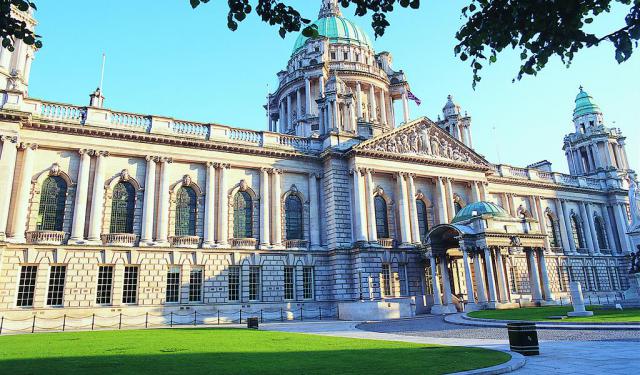
Belfast Victorian Architecture Jewels
Described as “modestly scaled, undemonstrative, somewhat solid in aspect, and usually restrained (sometimes even austere) in its use of external decoration”, the urban landscape of Belfast has been influenced by the demands of shipbuilding and linen industry, much as transitioning between culture, arts, commerce, and education. Still, the architectural spectrum of the city is quite broad and... view more
Tour Duration: 2 Hours
Travel Distance: 2.9 Km or 1.8 Miles
Tour Duration: 2 Hours
Travel Distance: 2.9 Km or 1.8 Miles
Belfast Introduction Walking Tour
Clive Staples Lewis, the author behind the hugely successful Chronicles of Narnia series, was born in Belfast in 1898. The city and the surrounding landscapes of Northern Ireland proved crucial in shaping his imagination and the fantastical worlds he would later create.
Sitting on the River Lagan near where it meets the Irish Sea, Belfast's name comes from the Irish Béal Feirste, meaning... view more
Tour Duration: 2 Hours
Travel Distance: 3.8 Km or 2.4 Miles
Sitting on the River Lagan near where it meets the Irish Sea, Belfast's name comes from the Irish Béal Feirste, meaning... view more
Tour Duration: 2 Hours
Travel Distance: 3.8 Km or 2.4 Miles
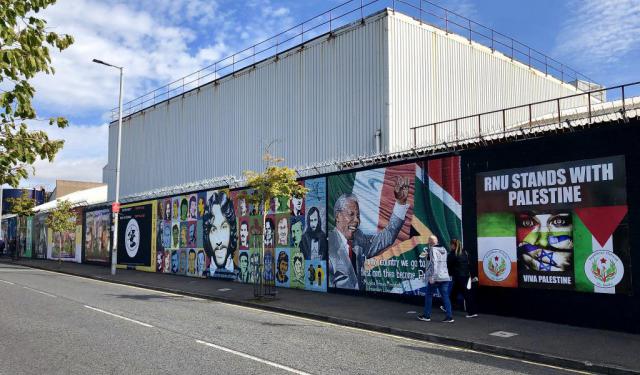
The Troubles and Peace Process Landmarks
For almost three decades, Belfast was at the centre of the Troubles, a conflict that profoundly shaped Northern Ireland and left lasting marks on the city. Although its roots stretch much further back, the Troubles are generally dated from the late 1960s to the Good Friday Agreement of 1998.
At the heart of the conflict were competing visions of Northern Ireland’s future. Unionists and... view more
Tour Duration: 1 Hour
Travel Distance: 2.1 Km or 1.3 Miles
At the heart of the conflict were competing visions of Northern Ireland’s future. Unionists and... view more
Tour Duration: 1 Hour
Travel Distance: 2.1 Km or 1.3 Miles