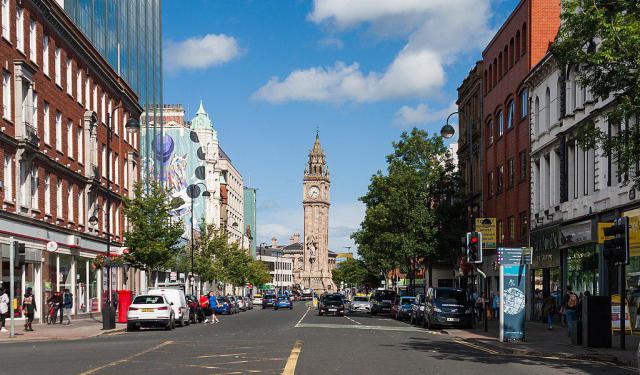


Belfast Introduction Walking Tour (Self Guided), Belfast
For over a century, the political situation of Belfast, the capital of Northern Ireland, has been the source of strife, first between the Crown-loyal Protestants and Irish Catholics, and more recently between the United Kingdom and the European Union.
Sitting on the banks of the River Lagan where it meets the Irish Sea, the city owes its name to this coastal condition, with "Belfast" derived from the Irish phrase “Beal Feirste” which means “Mouth of the Sand-bank Ford.”
Belfast was established as a town in 1613 and was mainly settled by the English and Manx Anglicans. Later, they were joined by Scottish Presbyterians and French Huguenot refugees, who introduced the production of linen, an industry that carried Belfast trade to the Americas.
In the 19th century Belfast rapidly evolved from a market town to a major industrial port, and was eventually granted a city status by Queen Victoria in 1888. The plentiful supply of cheap Catholic labor from outlying rural districts helped attract the English and Scottish settlers to the city. While the investment they brought was welcomed, the rich newcomers were Protestants, which was also the cause of insecurity and had helped trigger deadly sectarian riots between the Catholic and Protestant populations in 1864 and 1886.
In 1920–21, as the two parts of Ireland drew apart, Belfast suffered greatly during the violence accompanied that partition, as well as during the more recent conflict, known as the Troubles, from the late 1960s to 1998. Although heavily bombed during World War II and despite various episodes of sectarian conflict, Belfast has retained much of its historical heritage: 19th- & 20th-century architecture, beautiful landscapes, and more. There are plenty of spots in the city for tourists to marvel at, including:
Belfast City Hall – finished in 1906 in the Edwardian style which later influenced the Victoria Memorial in Calcutta, India, and Durban City Hall in South Africa.
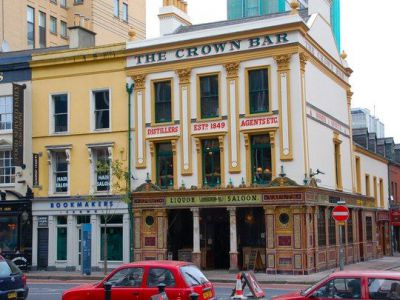
Crown Liquor Saloon – internationally famous as the setting for the classic film, Odd Man Out, starring James Mason. The restaurant panels in the Crown Bar were originally made for Britannic, the sister ship of Titanic, built in Belfast.
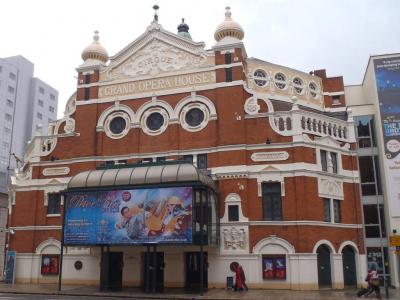
Grand Opera House – completed in 1895 and bombed several times during the Troubles; now restored to its former glory and oriental theme.
Belfast Cathedral – aka St Anne's Cathedral, unusual in serving two separate dioceses.
For a closer acquaintance with these and other grand attractions of Belfast, take this self-guided introductory tour.
Sitting on the banks of the River Lagan where it meets the Irish Sea, the city owes its name to this coastal condition, with "Belfast" derived from the Irish phrase “Beal Feirste” which means “Mouth of the Sand-bank Ford.”
Belfast was established as a town in 1613 and was mainly settled by the English and Manx Anglicans. Later, they were joined by Scottish Presbyterians and French Huguenot refugees, who introduced the production of linen, an industry that carried Belfast trade to the Americas.
In the 19th century Belfast rapidly evolved from a market town to a major industrial port, and was eventually granted a city status by Queen Victoria in 1888. The plentiful supply of cheap Catholic labor from outlying rural districts helped attract the English and Scottish settlers to the city. While the investment they brought was welcomed, the rich newcomers were Protestants, which was also the cause of insecurity and had helped trigger deadly sectarian riots between the Catholic and Protestant populations in 1864 and 1886.
In 1920–21, as the two parts of Ireland drew apart, Belfast suffered greatly during the violence accompanied that partition, as well as during the more recent conflict, known as the Troubles, from the late 1960s to 1998. Although heavily bombed during World War II and despite various episodes of sectarian conflict, Belfast has retained much of its historical heritage: 19th- & 20th-century architecture, beautiful landscapes, and more. There are plenty of spots in the city for tourists to marvel at, including:
Belfast City Hall – finished in 1906 in the Edwardian style which later influenced the Victoria Memorial in Calcutta, India, and Durban City Hall in South Africa.
Crown Liquor Saloon – internationally famous as the setting for the classic film, Odd Man Out, starring James Mason. The restaurant panels in the Crown Bar were originally made for Britannic, the sister ship of Titanic, built in Belfast.
Grand Opera House – completed in 1895 and bombed several times during the Troubles; now restored to its former glory and oriental theme.
Belfast Cathedral – aka St Anne's Cathedral, unusual in serving two separate dioceses.
For a closer acquaintance with these and other grand attractions of Belfast, take this self-guided introductory tour.
How it works: Download the app "GPSmyCity: Walks in 1K+ Cities" from Apple App Store or Google Play Store to your mobile phone or tablet. The app turns your mobile device into a personal tour guide and its built-in GPS navigation functions guide you from one tour stop to next. The app works offline, so no data plan is needed when traveling abroad.
Download The GPSmyCity App



Belfast Introduction Walking Tour Map
Guide Name: Belfast Introduction Walking Tour
Guide Location: Ireland » Belfast (See other walking tours in Belfast)
Guide Type: Self-guided Walking Tour (Sightseeing)
Tour Duration: 2 Hour(s)
Travel Distance: 3.8 Km or 2.4 Miles
Guide Location: Ireland » Belfast (See other walking tours in Belfast)
Guide Type: Self-guided Walking Tour (Sightseeing)
Tour Duration: 2 Hour(s)
Travel Distance: 3.8 Km or 2.4 Miles
Sights Featured in This Walk
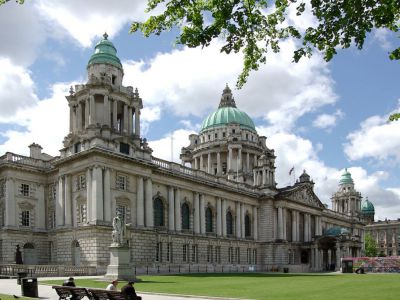
1) Belfast City Hall (must see)
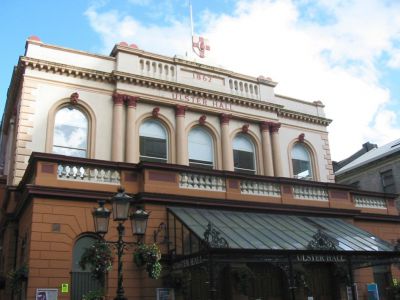
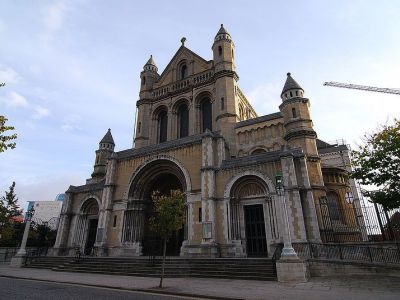
6) Belfast Cathedral (must see)


Walking Tours in Belfast, Ireland

Create Your Own Walk in Belfast
Creating your own self-guided walk in Belfast is easy and fun. Choose the city attractions that you want to see and a walk route map will be created just for you. You can even set your hotel as the start point of the walk.
The Troubles and Peace Process Landmarks
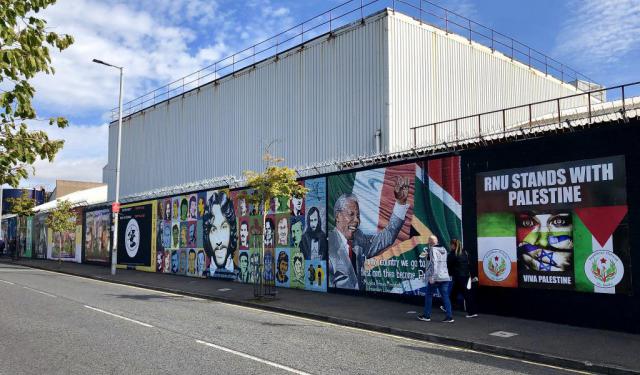
Decades past the official end of The Troubles in Belfast, the price of peace in Northern Ireland remains high. One of the means with which to secure it, back in 1969, was erecting a wall to physically separate the capital's warring Protestant and Catholic communities. Known since as the Peace Wall, the structure has become a popular tourist attraction for the multiple murals painted thereon... view more
Tour Duration: 1 Hour(s)
Travel Distance: 2.1 Km or 1.3 Miles
Tour Duration: 1 Hour(s)
Travel Distance: 2.1 Km or 1.3 Miles
Belfast Victorian Architecture Jewels
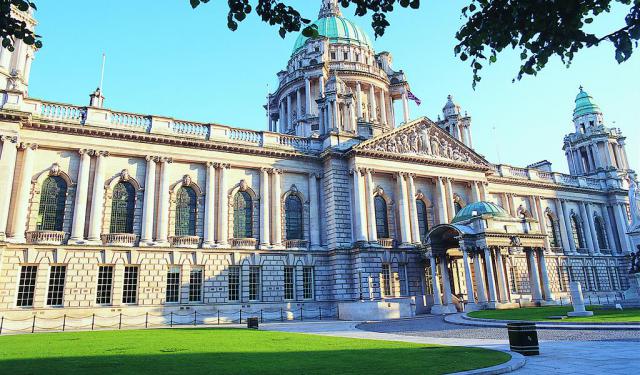
Described as “modestly scaled, undemonstrative, somewhat solid in aspect, and usually restrained (sometimes even austere) in its use of external decoration”, the urban landscape of Belfast has been influenced by the demands of shipbuilding and linen industry, much as transitioning between culture, arts, commerce, and education. Still, the architectural spectrum of the city is quite broad and... view more
Tour Duration: 2 Hour(s)
Travel Distance: 2.9 Km or 1.8 Miles
Tour Duration: 2 Hour(s)
Travel Distance: 2.9 Km or 1.8 Miles
The Most Popular Cities
/ view all