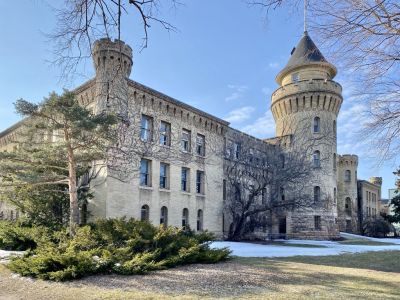


University of Minnesota Armory, Minneapolis
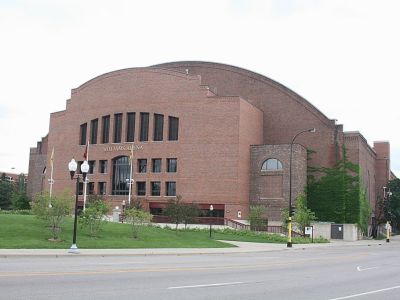
The University of Minnesota opened its doors in 1869, aided by federal subsidies and adhering to the Land Grant Act of 1862’s mandate for military instruction. From 1884 onward, the facilities for teaching military tactics also pulled double duty for other University needs. After a fire destroyed the Coliseum auditorium and drill hall, architecture professor Charles Aldrich gave the building a fortress-like appearance, designing it to handle not just military drills, but also athletic training and a variety of University events. When it opened in 1896, it was the largest building on campus.
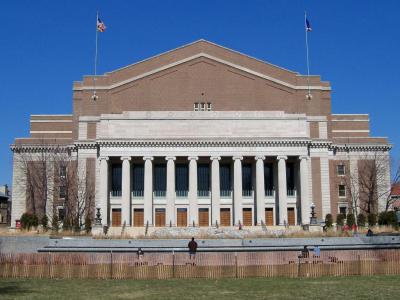
The Armory featured a ramp and sally port entrance that led into a spacious two-story assembly and drill hall. With suspended galleries and adjustable partitions, the space could transform to suit its audience: as an auditorium, it seated 3,700; as a ballroom, it offered room for over 300 couples to dance the night away. Even after Northrop Auditorium was completed in 1929, the Armory remained a go-to venue for military ceremonies, final exams, and all sorts of campus happenings.
Today, the building serves as the headquarters for the University’s three ROTC units, as well as offices for the University’s high school programs. The gymnasium still gets a workout, hosting various campus events.
Tip: Just outside the Armory, you will find a nine-foot-tall statue known as “Iron Mike,” standing on a six-foot-high Vermont granite pedestal that tips the scales at seven tons. This striking figure honors the University’s students who served in the Spanish-American War. The statue was the brainchild of a committee originally formed to send Christmas gifts to student soldiers stationed in Manila. Committee chair Professor Arthur E. Haynes suggested a more lasting tribute, donated the first ten dollars, and spearheaded the fundraising and design effort. The statue was unveiled in 1906 and continues to stand as a reminder of the University’s past.
The Armory featured a ramp and sally port entrance that led into a spacious two-story assembly and drill hall. With suspended galleries and adjustable partitions, the space could transform to suit its audience: as an auditorium, it seated 3,700; as a ballroom, it offered room for over 300 couples to dance the night away. Even after Northrop Auditorium was completed in 1929, the Armory remained a go-to venue for military ceremonies, final exams, and all sorts of campus happenings.
Today, the building serves as the headquarters for the University’s three ROTC units, as well as offices for the University’s high school programs. The gymnasium still gets a workout, hosting various campus events.
Tip: Just outside the Armory, you will find a nine-foot-tall statue known as “Iron Mike,” standing on a six-foot-high Vermont granite pedestal that tips the scales at seven tons. This striking figure honors the University’s students who served in the Spanish-American War. The statue was the brainchild of a committee originally formed to send Christmas gifts to student soldiers stationed in Manila. Committee chair Professor Arthur E. Haynes suggested a more lasting tribute, donated the first ten dollars, and spearheaded the fundraising and design effort. The statue was unveiled in 1906 and continues to stand as a reminder of the University’s past.
Want to visit this sight? Check out these Self-Guided Walking Tours in Minneapolis. Alternatively, you can download the mobile app "GPSmyCity: Walks in 1K+ Cities" from Apple App Store or Google Play Store. The app turns your mobile device to a personal tour guide and it works offline, so no data plan is needed when traveling abroad.
Download The GPSmyCity App



University of Minnesota Armory on Map
Sight Name: University of Minnesota Armory
Sight Location: Minneapolis, USA (See walking tours in Minneapolis)
Sight Type: Attraction/Landmark
Guide(s) Containing This Sight:
Sight Location: Minneapolis, USA (See walking tours in Minneapolis)
Sight Type: Attraction/Landmark
Guide(s) Containing This Sight:
Nearby Sights

Walking Tours in Minneapolis, Minnesota

Create Your Own Walk in Minneapolis
Creating your own self-guided walk in Minneapolis is easy and fun. Choose the city attractions that you want to see and a walk route map will be created just for you. You can even set your hotel as the start point of the walk.
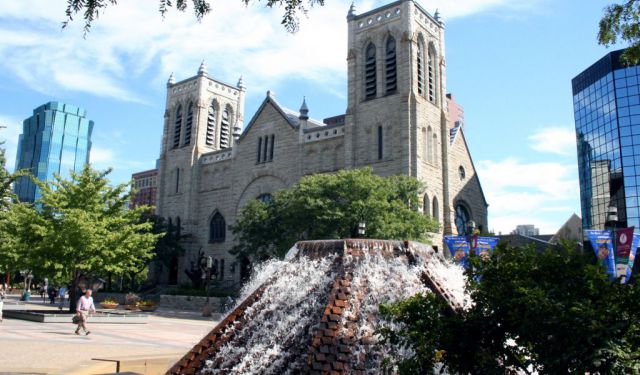
Discover Minneapolis' Historical Churches on Foot
The "City of Lakes”, Minneapolis, doesn't pride itself solely on the lakes. In fact, you will be amazed by how many churches, cathedrals, and other places of worship are found throughout the city. These sacred structures have played a significant role in the development of Minneapolis and continue to serve as pillars of faith and community. Let's take a look at some of the most... view more
Tour Duration: 1 Hour(s)
Travel Distance: 2.8 Km or 1.7 Miles
Tour Duration: 1 Hour(s)
Travel Distance: 2.8 Km or 1.7 Miles

Saint Paul Downtown Walking Tour
Saint Paul is a city shaped by a rich tapestry of cultures, its roots stretching back to the Dakota Sioux who first called the area home. Nestled along the Mississippi River, the city emerged as a thriving trade center, attracting French-Canadian fur traders and Catholic missionaries in the early19th century.
As the city grew, the Great Northern Railway played a pivotal role in transforming... view more
Tour Duration: 2 Hour(s)
Travel Distance: 3.4 Km or 2.1 Miles
As the city grew, the Great Northern Railway played a pivotal role in transforming... view more
Tour Duration: 2 Hour(s)
Travel Distance: 3.4 Km or 2.1 Miles
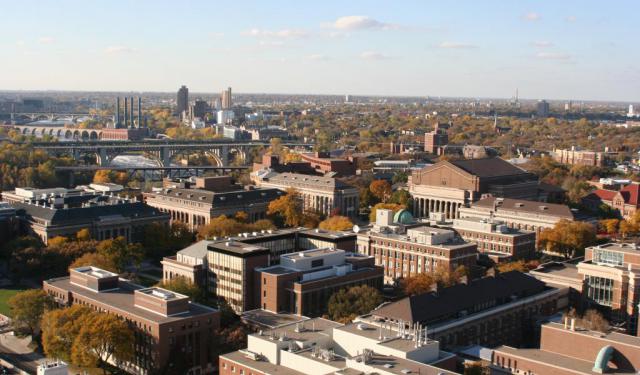
University of Minnesota - Minneapolis Campus Walking Tour
Founded in 1851, seven years before Minnesota became a state, the University of Minnesota is one of the largest educational institutions in the United States. The university campus in the “Twin Cities” of Minneapolis and Saint Paul, spread along the bank of the Mississippi River, is a sprawling hub renowned for its rich academic environment and vibrant life.
One of the central gathering... view more
Tour Duration: 2 Hour(s)
Travel Distance: 2.9 Km or 1.8 Miles
One of the central gathering... view more
Tour Duration: 2 Hour(s)
Travel Distance: 2.9 Km or 1.8 Miles

Minneapolis Downtown Walking Tour
Minneapolis, straddling the mighty Mississippi River, forms half of Minnesota’s renowned “Twin Cities” alongside its neighbor and state capital, Saint Paul. This vibrant metropolis is steeped in history, having first been home to the Dakota people long before European settlers arrived. Early development centered around Saint Anthony Falls, the river’s sole natural waterfall, which provided... view more
Tour Duration: 2 Hour(s)
Travel Distance: 4.2 Km or 2.6 Miles
Tour Duration: 2 Hour(s)
Travel Distance: 4.2 Km or 2.6 Miles