Custom Walk in Vienna, Austria by jennking9_5a75d created on 2023-05-15
Guide Location: Austria » Vienna
Guide Type: Custom Walk
# of Sights: 15
Tour Duration: 7 Hour(s)
Travel Distance: 18.4 Km or 11.4 Miles
Share Key: 6BSNS
Guide Type: Custom Walk
# of Sights: 15
Tour Duration: 7 Hour(s)
Travel Distance: 18.4 Km or 11.4 Miles
Share Key: 6BSNS
How It Works
Please retrieve this walk in the GPSmyCity app. Once done, the app will guide you from one tour stop to the next as if you had a personal tour guide. If you created the walk on this website or come to the page via a link, please follow the instructions below to retrieve the walk in the app.
Retrieve This Walk in App
Step 1. Download the app "GPSmyCity: Walks in 1K+ Cities" on Apple App Store or Google Play Store.



Step 2. In the GPSmyCity app, download(or launch) the guide "Vienna Map and Walking Tours".
Step 3. Tap the menu button located at upper right corner of the "Walks" screen and select "Retrieve custom walk". Enter the share key: 6BSNS
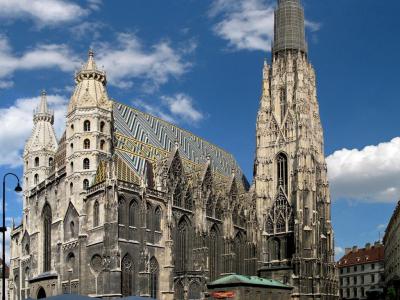
1) Stephansdom (St. Stephen's Cathedral) (must see)
In a city where “stunning architecture” is practically the dress code, Saint Stephen’s Cathedral still manages to steal the spotlight-and possibly your neck muscles too, as you crane to admire that towering spire. Known locally as Stephansdom, this Gothic-Romanesque powerhouse has stood at the heart of Vienna’s skyline and soul since 1147, rising on the bones of two earlier churches like the overachiever it is.
In the 14th century, Duke Rudolf IV decided the cathedral needed a serious makeover. The idea worked. As a result, today we have the building stretching 107 meters long, 40 meters wide, and topped by the South Tower-or “Steffl,” if you're on nickname terms-a 136-meter-high feat of medieval determination that took 65 years to complete. It even moonlighted as a lookout post during Vienna’s sieges, complete with a live-in watchman until 1955. One heck of a long shift...
Meanwhile, the North Tower never quite hit its growth spurt. It stalled at 68 meters and got a Renaissance hat in 1578-basically the architectural equivalent of saying “this is fine” and walking away.
But the real showstopper here is the roof. A kaleidoscope of 230,000 glazed tiles arranged into imperial emblems like the double-headed eagle of the Habsburgs and the crests of Vienna and Austria. After being torched in World War II, it was rebuilt with steel instead of wood-600 metric tons of it-making the new roof not just durable, but also self-cleaning. Because even cathedrals love low-maintenance routines...
Inside, things get just as grand. There’s Pummerin, Europe’s second-largest swinging bell, forged from Turkish cannons in 1711 and recast in 1951-because nothing says peace like a bell made from wartime leftovers. Oh, and she lives in the North Tower, ringing out for special moments and daily rituals.
Musical legends haunt these hallowed halls too: Beethoven figured out he was deaf here (tragic), Haydn sang here as a kid (sweet), Strauss got married here-twice (bold), and Mozart? He got married and buried here. Yes, Saint Stephen's is basically the VIP lounge of Viennese music history.
Inside, you’ll find 18 altars, miraculous icons, bone relics-including those of Saint Valentine-and a maze of crypts holding 11,000 souls, including Habsburg royalty.
Tip:
Do a lap around the outside. Gargoyles, engravings, medieval graffiti-you never know what stories the stones will whisper...
In the 14th century, Duke Rudolf IV decided the cathedral needed a serious makeover. The idea worked. As a result, today we have the building stretching 107 meters long, 40 meters wide, and topped by the South Tower-or “Steffl,” if you're on nickname terms-a 136-meter-high feat of medieval determination that took 65 years to complete. It even moonlighted as a lookout post during Vienna’s sieges, complete with a live-in watchman until 1955. One heck of a long shift...
Meanwhile, the North Tower never quite hit its growth spurt. It stalled at 68 meters and got a Renaissance hat in 1578-basically the architectural equivalent of saying “this is fine” and walking away.
But the real showstopper here is the roof. A kaleidoscope of 230,000 glazed tiles arranged into imperial emblems like the double-headed eagle of the Habsburgs and the crests of Vienna and Austria. After being torched in World War II, it was rebuilt with steel instead of wood-600 metric tons of it-making the new roof not just durable, but also self-cleaning. Because even cathedrals love low-maintenance routines...
Inside, things get just as grand. There’s Pummerin, Europe’s second-largest swinging bell, forged from Turkish cannons in 1711 and recast in 1951-because nothing says peace like a bell made from wartime leftovers. Oh, and she lives in the North Tower, ringing out for special moments and daily rituals.
Musical legends haunt these hallowed halls too: Beethoven figured out he was deaf here (tragic), Haydn sang here as a kid (sweet), Strauss got married here-twice (bold), and Mozart? He got married and buried here. Yes, Saint Stephen's is basically the VIP lounge of Viennese music history.
Inside, you’ll find 18 altars, miraculous icons, bone relics-including those of Saint Valentine-and a maze of crypts holding 11,000 souls, including Habsburg royalty.
Tip:
Do a lap around the outside. Gargoyles, engravings, medieval graffiti-you never know what stories the stones will whisper...
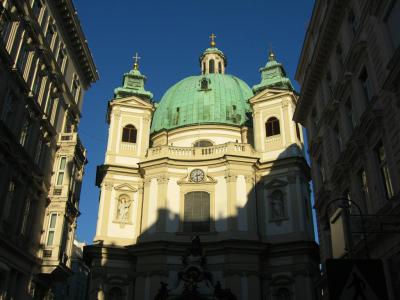
2) Peterskirche (St. Peter's Church) (must see)
Tucked snugly among Vienna’s Baroque showpieces like a pearl in a pastry, Saint Peter’s Church has a front-row seat to history, and not much else, thanks to the buildings crowding around it. You’ll mostly catch it head-on, which, honestly, is its best angle.
This spot has seen churches come and go like emperors with changing tastes. Some say the very first church here dates back to the early 4th century AD, making it one of the oldest in Vienna-yes, back when sandals were in and Rome was still a big deal. In 792, none other than King Charlemagne is said to have popped by and said, “Let’s build.” There’s even a plaque on the façade bragging about it. Historical records, ever the skeptics, first mention the church in 1137, but who’s counting?
By the late 1100s, the church cozied up to the newly founded Schottenstift monastery. Then came fire, plague, and drama. After the 1661 fire, it got a bit of a patch job… until the plague of 1679 cleared the streets and cleared the way for Emperor Leopold I, who swore a divine vow to rebuild. And he did...
Construction began around 1701, drawing heavy inspiration from Saint Peter’s Basilica in Rome-because if you’re going to imitate, imitate the best. By 1733, Vienna had its first domed Baroque beauty, cleverly built with a compact, oval layout to fit the tight space.
Outside, it sports a neat combo of white and barely-there yellow, flanked by two towers that curve ever so slightly inward-apparently a cheeky nod to Turkish tent poles from the 1683 siege.
Step inside, and there you have it: gold stucco, opulent frescoes, and Johann Michael Rottmayr’s artistic fireworks overhead, including the Coronation of Our Lady. The high altar gets dramatic with a healing scene, starring Saint Peter and Saint John, and around the edges, you'll spot relics of Roman martyrs, reclining in crystal coffins like glittering saints on display.
The church was polished up in a major 1998–2004 renovation, and today it’s still a Baroque gem in Vienna’s crown.
Hot tip:
Drop in any day from 3 to 3:30 pm for a free organ concert-divine music, no ticket required (but donations are saintly). And if you're lucky, catch a choir in the crypts. Now that’s a holy experience...
This spot has seen churches come and go like emperors with changing tastes. Some say the very first church here dates back to the early 4th century AD, making it one of the oldest in Vienna-yes, back when sandals were in and Rome was still a big deal. In 792, none other than King Charlemagne is said to have popped by and said, “Let’s build.” There’s even a plaque on the façade bragging about it. Historical records, ever the skeptics, first mention the church in 1137, but who’s counting?
By the late 1100s, the church cozied up to the newly founded Schottenstift monastery. Then came fire, plague, and drama. After the 1661 fire, it got a bit of a patch job… until the plague of 1679 cleared the streets and cleared the way for Emperor Leopold I, who swore a divine vow to rebuild. And he did...
Construction began around 1701, drawing heavy inspiration from Saint Peter’s Basilica in Rome-because if you’re going to imitate, imitate the best. By 1733, Vienna had its first domed Baroque beauty, cleverly built with a compact, oval layout to fit the tight space.
Outside, it sports a neat combo of white and barely-there yellow, flanked by two towers that curve ever so slightly inward-apparently a cheeky nod to Turkish tent poles from the 1683 siege.
Step inside, and there you have it: gold stucco, opulent frescoes, and Johann Michael Rottmayr’s artistic fireworks overhead, including the Coronation of Our Lady. The high altar gets dramatic with a healing scene, starring Saint Peter and Saint John, and around the edges, you'll spot relics of Roman martyrs, reclining in crystal coffins like glittering saints on display.
The church was polished up in a major 1998–2004 renovation, and today it’s still a Baroque gem in Vienna’s crown.
Hot tip:
Drop in any day from 3 to 3:30 pm for a free organ concert-divine music, no ticket required (but donations are saintly). And if you're lucky, catch a choir in the crypts. Now that’s a holy experience...
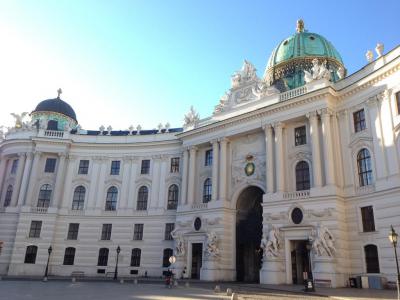
3) Michaelerplatz (Saint Michael's Square)
Saint Michael’s Square-or Michaelerplatz if you're feeling extra Austrian-is by far more than just a pretty roundabout. This baroque, star-shaped showstopper is the northeastern gateway to the Hofburg Palace-the kind of place where Roman legions, imperial drama, and architectural snobbery all collide in delightful chaos...
Let’s rewind a couple millennia: underneath your feet once stood Vindobona, a Roman military camp. You can still peek at the excavated remains in the center of the square-because Vienna doesn’t just bury its history, it displays it like a badge of honor.
Marching into view is the grand Michael’s Gate, a triumph of Neo-Baroque drama. It’s flanked by two dramatic 19th-century fountains sculpted by Rudolf Weyer-imagine “Roman gods doing acrobatics in water.” This is your official entrance into the imperial Hofburg, via Saint Michael’s Wing, which sounds like a fancy dessert but is actually just as rich in stone.
Across from all this pageantry stands the Church of Saint Michael, namesake of the square. Parts of it go back to 1221, though what you see now mostly dates from a sprucing-up in 1792. The church’s porch features a wild Baroque sculpture of the Fall of the Angels-very metal. Step inside and you’ll find 14th-century frescoes, Vienna’s largest gilded organ (once played by Haydn, no less), and a crypt that’s equal parts eerie and fascinating. Yes, they still have open coffins with mummified parishioners in full funeral chic. Welcome to Vienna...
Now turn your gaze to the Looshaus, a stark modernist rebel built in 1912 by architect Adolf Loos. At the time, it scandalized polite society-and Emperor Franz Joseph so hated its minimalist vibe, he refused to walk through Michael’s Gate ever again. Today, it's a working bank with a lavish interior clad in marble and mirrors. Moral of the story? Never judge a building by its cover.
Other star attractions ring the square like jewels, including the Spanish Riding School, the Sisi Museum, the Herberstein Palace, and a pair of 18th-century homes-one of which once belonged to Haydn himself.
Insider tip: spring for a horse-drawn carriage tour from here. This ride is a true slow-motion glide through centuries of imperial flair...
Let’s rewind a couple millennia: underneath your feet once stood Vindobona, a Roman military camp. You can still peek at the excavated remains in the center of the square-because Vienna doesn’t just bury its history, it displays it like a badge of honor.
Marching into view is the grand Michael’s Gate, a triumph of Neo-Baroque drama. It’s flanked by two dramatic 19th-century fountains sculpted by Rudolf Weyer-imagine “Roman gods doing acrobatics in water.” This is your official entrance into the imperial Hofburg, via Saint Michael’s Wing, which sounds like a fancy dessert but is actually just as rich in stone.
Across from all this pageantry stands the Church of Saint Michael, namesake of the square. Parts of it go back to 1221, though what you see now mostly dates from a sprucing-up in 1792. The church’s porch features a wild Baroque sculpture of the Fall of the Angels-very metal. Step inside and you’ll find 14th-century frescoes, Vienna’s largest gilded organ (once played by Haydn, no less), and a crypt that’s equal parts eerie and fascinating. Yes, they still have open coffins with mummified parishioners in full funeral chic. Welcome to Vienna...
Now turn your gaze to the Looshaus, a stark modernist rebel built in 1912 by architect Adolf Loos. At the time, it scandalized polite society-and Emperor Franz Joseph so hated its minimalist vibe, he refused to walk through Michael’s Gate ever again. Today, it's a working bank with a lavish interior clad in marble and mirrors. Moral of the story? Never judge a building by its cover.
Other star attractions ring the square like jewels, including the Spanish Riding School, the Sisi Museum, the Herberstein Palace, and a pair of 18th-century homes-one of which once belonged to Haydn himself.
Insider tip: spring for a horse-drawn carriage tour from here. This ride is a true slow-motion glide through centuries of imperial flair...
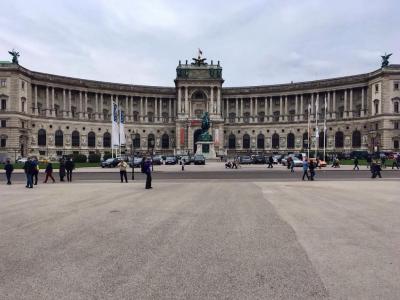
4) Hofburg Imperial Palace (must see)
The Hofburg-or as it’s known in more regal circles, the “Castle of the Court”-is a sprawling architectural beast of a palace, a centuries-old flex of Habsburg power, pageantry, and perfectly symmetrical courtyards.
It all began back in 1279, when the Dukes of Austria needed a nice little place to call home. Fast forward a few empires and renovations later, and you've got the winter playground of the Holy Roman Emperors (until 1806) and the Emperors of Austria (until 1918). Today, the palace has swapped imperial intrigue for political paperwork-it’s now the official residence of the Austrian President and hosts the headquarters of the OSCE. Less crown, more conference...
Now, brace yourself: the Hofburg covers more than 240,000 square meters of space, comprising 18 wings, 19 courtyards, and a whopping 2,600 rooms. That’s not really a palace-it’s a small city. It houses everything from the elegant Amalienburg and Albertina museum, to the Imperial Chapel, the Court Library, the Treasure Chamber, and even the Spanish Riding School, where horses have more training than most people’s resumes.
The Swiss Wing is one of the oldest parts of the palace, dating back to the 13th century-yes, it’s older than your great-great-anything. Emperor Ferdinand I added the Swiss Gate in the 1550s, with his personal insignia on full display, just in case anyone forgot who was in charge.
The 17th-century Leopoldine Wing, built and later re-styled in Late Renaissance flair, adds even more imperial swagger, while the Court Library is basically a Baroque fever dream-with its majestic Prunksaal hall, frescoed ceilings, and emperors carved in stone, looking as dramatic as ever.
And it doesn’t stop there: the Winter Riding School, the Imperial Chancellery Wing (once home to Napoleon himself), and the elegant Redoute Wing-a former opera house-round out the complex. Even the Imperial Mews got a glow-up and now host those classy Lipizzaner horses.
Tip:
On Sundays, pop into the Imperial Chapel for Mass and catch the Vienna Boys Choir-angelic voices echoing through centuries of history. Because when in Vienna, you don’t just visit a palace… you enter a whole imperial universe.
It all began back in 1279, when the Dukes of Austria needed a nice little place to call home. Fast forward a few empires and renovations later, and you've got the winter playground of the Holy Roman Emperors (until 1806) and the Emperors of Austria (until 1918). Today, the palace has swapped imperial intrigue for political paperwork-it’s now the official residence of the Austrian President and hosts the headquarters of the OSCE. Less crown, more conference...
Now, brace yourself: the Hofburg covers more than 240,000 square meters of space, comprising 18 wings, 19 courtyards, and a whopping 2,600 rooms. That’s not really a palace-it’s a small city. It houses everything from the elegant Amalienburg and Albertina museum, to the Imperial Chapel, the Court Library, the Treasure Chamber, and even the Spanish Riding School, where horses have more training than most people’s resumes.
The Swiss Wing is one of the oldest parts of the palace, dating back to the 13th century-yes, it’s older than your great-great-anything. Emperor Ferdinand I added the Swiss Gate in the 1550s, with his personal insignia on full display, just in case anyone forgot who was in charge.
The 17th-century Leopoldine Wing, built and later re-styled in Late Renaissance flair, adds even more imperial swagger, while the Court Library is basically a Baroque fever dream-with its majestic Prunksaal hall, frescoed ceilings, and emperors carved in stone, looking as dramatic as ever.
And it doesn’t stop there: the Winter Riding School, the Imperial Chancellery Wing (once home to Napoleon himself), and the elegant Redoute Wing-a former opera house-round out the complex. Even the Imperial Mews got a glow-up and now host those classy Lipizzaner horses.
Tip:
On Sundays, pop into the Imperial Chapel for Mass and catch the Vienna Boys Choir-angelic voices echoing through centuries of history. Because when in Vienna, you don’t just visit a palace… you enter a whole imperial universe.
5) Austrian National Library
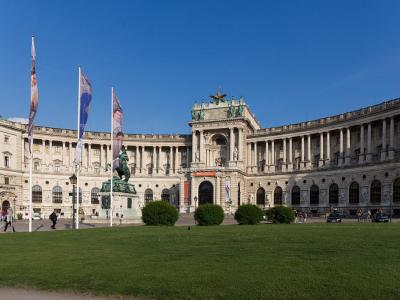
The Austrian National Library stands as the largest library in Austria, housing an extensive collection of over 12 million items across various categories. This remarkable institution is situated in the Neue Burg Wing of the Hofburg, right in the heart of Vienna. Since 2005, some portions of its collections have been relocated to the splendid Baroque setting of the Palais Mollard-Clary.
Originally named the "Imperial Court Library" by the Habsburg dynasty, it became the "Austrian National Library" in 1920 after the Habsburg Monarchy dissolved and the Austrian Republic was established. Today, it houses extensive collections, four museums, and various special collections and archives.
This institution's roots go back to the medieval imperial library, founded by Albert III, Duke of Austria (1349–1395). He moved books from Vienna's vaults into a dedicated library and supported translating Latin works into German. The library was located in the Hofburg, safeguarding Archduke Albert III's treasures in the south tower of the imperial chapel. The oldest book in the library is the 1368 golden Holy Gospels, transcribed by Johannes of Troppau with intricate Burgundian-style illustrations.
One of the key responsibilities of the Austrian National Library involves the collection and preservation of all publications originating in Austria, including those in electronic format. According to relevant laws, periodic publications in Austria must deliver four copies to the National Library, and other print materials must provide two obligation copies each.
The library collects Austrian works published abroad and foreign publications, especially in the humanities. It offers services for borrowing, searching, information, and reproductions to ensure material accessibility and availability.
Originally named the "Imperial Court Library" by the Habsburg dynasty, it became the "Austrian National Library" in 1920 after the Habsburg Monarchy dissolved and the Austrian Republic was established. Today, it houses extensive collections, four museums, and various special collections and archives.
This institution's roots go back to the medieval imperial library, founded by Albert III, Duke of Austria (1349–1395). He moved books from Vienna's vaults into a dedicated library and supported translating Latin works into German. The library was located in the Hofburg, safeguarding Archduke Albert III's treasures in the south tower of the imperial chapel. The oldest book in the library is the 1368 golden Holy Gospels, transcribed by Johannes of Troppau with intricate Burgundian-style illustrations.
One of the key responsibilities of the Austrian National Library involves the collection and preservation of all publications originating in Austria, including those in electronic format. According to relevant laws, periodic publications in Austria must deliver four copies to the National Library, and other print materials must provide two obligation copies each.
The library collects Austrian works published abroad and foreign publications, especially in the humanities. It offers services for borrowing, searching, information, and reproductions to ensure material accessibility and availability.
6) Augustinerkirche (Augustinian Church)
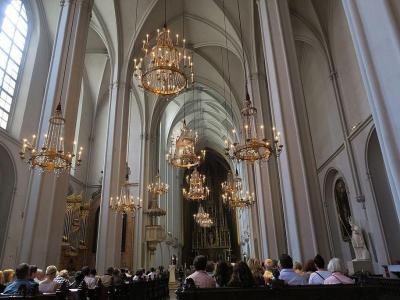
The Augustinerkirche, also known as the Augustinian Church, was originally constructed to serve the royal court of the Habsburg dynasty. It was built in 1339, initially situated within the palace grounds. Over time, as the palace expanded, the church became integrated into the Hofburg complex. Notably, the church boasts an exquisite steeple that distinguishes it from the rest of the Hofburg.
This church also includes a cloister intended for Augustinian friars. Presently, it is tended to by six monks who cater to the spiritual needs of the local congregation. Throughout its history, this church has been the venue for numerous royal events, including the marriage of Archduchess Marie-Louise to Napoleon Bonaparte in 1810. Interestingly, Napoleon himself did not attend the wedding, and it was conducted by proxy.
Upon entering the Gothic church, one is immediately struck by its austere yet captivating beauty. It features tall, slender windows and magnificent chandeliers. Of particular note is the cenotaph dedicated to Maria Christina of Austria, located near the rear entrance. This poignant memorial, sculpted in 1805, portrays the entire family entering a temple.
The church also houses several chapels, with two of them open to visitors on a limited basis. The Loreto chapel is notable for its collection of 54 silver urns containing the hearts of departed Habsburg rulers, which can be glimpsed through a windowed door. The physical remains of these rulers are entombed in the Kapuzinerkirche.
For those interested in visiting these chapels, the optimal time is after the Sunday mass. During the summer, the mass includes awe-inspiring organ music that resonates beautifully within this setting. It's advisable to arrive no later than 10:15 to secure a seat for the 11 am mass, as it tends to be very popular.
This church also includes a cloister intended for Augustinian friars. Presently, it is tended to by six monks who cater to the spiritual needs of the local congregation. Throughout its history, this church has been the venue for numerous royal events, including the marriage of Archduchess Marie-Louise to Napoleon Bonaparte in 1810. Interestingly, Napoleon himself did not attend the wedding, and it was conducted by proxy.
Upon entering the Gothic church, one is immediately struck by its austere yet captivating beauty. It features tall, slender windows and magnificent chandeliers. Of particular note is the cenotaph dedicated to Maria Christina of Austria, located near the rear entrance. This poignant memorial, sculpted in 1805, portrays the entire family entering a temple.
The church also houses several chapels, with two of them open to visitors on a limited basis. The Loreto chapel is notable for its collection of 54 silver urns containing the hearts of departed Habsburg rulers, which can be glimpsed through a windowed door. The physical remains of these rulers are entombed in the Kapuzinerkirche.
For those interested in visiting these chapels, the optimal time is after the Sunday mass. During the summer, the mass includes awe-inspiring organ music that resonates beautifully within this setting. It's advisable to arrive no later than 10:15 to secure a seat for the 11 am mass, as it tends to be very popular.
7) State Opera House (must see)
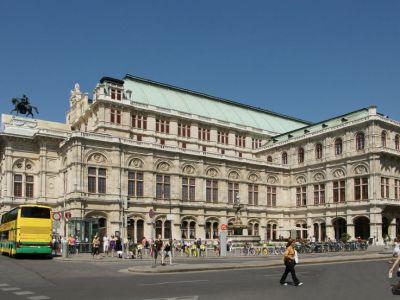
The State Opera House stands as an impressive architectural marvel, complemented by an equally remarkable ensemble of performing artists. Its historical roots trace back to approximately the 1860s when it was initially known as the Vienna Court Opera. However, the name underwent a transformation in 1920, orchestrated by the Habsburgs, during the early stages of the formation of the first Austrian Republic.
Numerous members of the Opera company eventually find themselves on stage with the renowned Vienna Philharmonic, showcasing a vast repertoire of celebrated compositions, including but not limited to, La Traviata, La Clemenza di Tito, and Verdi's Don Carlo. This venue frequently hosts performances by world-famous vocalists, and it has served as the launching pad for the careers of illustrious directors, ranging from Gustav Mahler to Herbert von Karajan and Claudio Abbado.
Beyond the captivating performances of singers and orchestra, the Opera House itself boasts architectural splendor that merits exploration. The State Opera offers guided tours of this remarkable edifice, conducted in 12 different languages. These tours are available daily and typically span approximately 40 minutes, providing visitors with a deeper understanding of this cultural gem.
Tip:
Do not buy opera tickets from the dressed up people outside on the street – they don't sell real tickets!
Numerous members of the Opera company eventually find themselves on stage with the renowned Vienna Philharmonic, showcasing a vast repertoire of celebrated compositions, including but not limited to, La Traviata, La Clemenza di Tito, and Verdi's Don Carlo. This venue frequently hosts performances by world-famous vocalists, and it has served as the launching pad for the careers of illustrious directors, ranging from Gustav Mahler to Herbert von Karajan and Claudio Abbado.
Beyond the captivating performances of singers and orchestra, the Opera House itself boasts architectural splendor that merits exploration. The State Opera offers guided tours of this remarkable edifice, conducted in 12 different languages. These tours are available daily and typically span approximately 40 minutes, providing visitors with a deeper understanding of this cultural gem.
Tip:
Do not buy opera tickets from the dressed up people outside on the street – they don't sell real tickets!
8) Naschmarkt (must see)
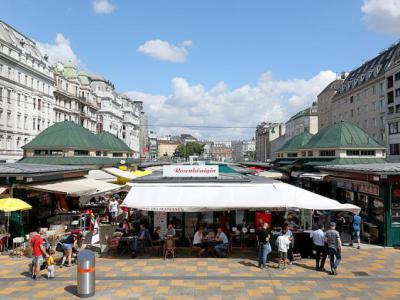
Vienna's most famous market boasts approximately 120 market stalls and restaurants, offering a diverse range of culinary delights that span from traditional Viennese dishes to Indian, Vietnamese, and Italian cuisine. The Naschmarkt has evolved into a popular gathering spot for both young and old alike. The Saturday Flea Market has even attained a cult-like status.
At the Naschmarkt, a vibrant mix of people can be seen purchasing fresh produce, vegetables, and various gourmet treats from around the world, from the early morning until sunset. In recent times, an increasing number of trendy establishments have found their place among the market's 120 or so stalls.
Do-An and Naschmarkt Deli were among the pioneering gastronomic ventures that succeeded in making the Naschmarkt an attractive destination for the young, urban crowd. On weekends, DJs provide entertainment at these locations. Consequently, numerous traditional market stalls have also garnered popularity due to their modern architectural designs.
Tewa at the Naschmarkt offers organic cuisine, while Neni serves Israeli-Oriental specialties ranging from shakshuka (eggs with vegetables) to taboulleh (a Lebanese salad). Orient & Occident, on the other hand, features Turkish home cooking prepared by the owner's wives. Umar is a haven for seafood enthusiasts and is often regarded as the best fish restaurant in Vienna.
Urbanek, initially a fine food and cheese store, doubles as a legendary wine bar-a quintessentially Viennese experience. The delicacies on offer here are simply a must-try. Kilgers am Naschmarkt also functions as a wine bar and gourmet grocery store, while the little market kitchen serves up delightful dishes. For a taste of traditional Viennese fare, Eiserne Zeit is an excellent choice; dining here is an experience in itself.
Many dining and drinking spots surround Naschmarkt. Drechsler offers all-day breakfast, Market serves Asian-inspired cuisine from morning to late night with colorful decor, and ChinaBar an der Wien serves Sichuan cuisine. Naschmarkt is vibrant, especially on Saturdays, with a diverse crowd and outdoor dining in the summer for food, drinks, and people-watching.
At the Naschmarkt, a vibrant mix of people can be seen purchasing fresh produce, vegetables, and various gourmet treats from around the world, from the early morning until sunset. In recent times, an increasing number of trendy establishments have found their place among the market's 120 or so stalls.
Do-An and Naschmarkt Deli were among the pioneering gastronomic ventures that succeeded in making the Naschmarkt an attractive destination for the young, urban crowd. On weekends, DJs provide entertainment at these locations. Consequently, numerous traditional market stalls have also garnered popularity due to their modern architectural designs.
Tewa at the Naschmarkt offers organic cuisine, while Neni serves Israeli-Oriental specialties ranging from shakshuka (eggs with vegetables) to taboulleh (a Lebanese salad). Orient & Occident, on the other hand, features Turkish home cooking prepared by the owner's wives. Umar is a haven for seafood enthusiasts and is often regarded as the best fish restaurant in Vienna.
Urbanek, initially a fine food and cheese store, doubles as a legendary wine bar-a quintessentially Viennese experience. The delicacies on offer here are simply a must-try. Kilgers am Naschmarkt also functions as a wine bar and gourmet grocery store, while the little market kitchen serves up delightful dishes. For a taste of traditional Viennese fare, Eiserne Zeit is an excellent choice; dining here is an experience in itself.
Many dining and drinking spots surround Naschmarkt. Drechsler offers all-day breakfast, Market serves Asian-inspired cuisine from morning to late night with colorful decor, and ChinaBar an der Wien serves Sichuan cuisine. Naschmarkt is vibrant, especially on Saturdays, with a diverse crowd and outdoor dining in the summer for food, drinks, and people-watching.
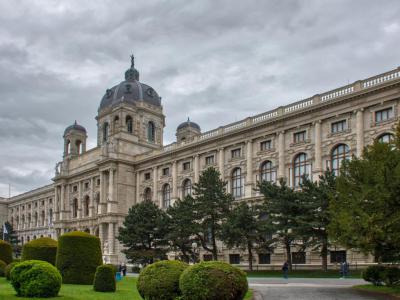
9) Kunsthistorisches Museum (Art History Museum) (must see)
Fuel up with a cup of coffee or tea and head to one of the world-class museums along the Ring. The Kunsthistorisches Museum's galleries house vast collections of fine art and antiquities, based largely on those accumulated over the centuries by generations of Habsburg monarchs. Lavishly decorated interiors, ornate cupolas and sweeping Neo-Classical stairways create a fitting setting for the treasures housed here, with many of the works on display – particularly the Old Masters (Bruegel, Rembrandt, Michelangelo, Caravaggio, Titian, etc.) – being considered among the most spectacular in the world. Not only that, but the museum is among the most visitor-friendly you're likely to visit, with comfortable sofas available in most exhibition rooms and long closing hours on Thursdays.
The galleries occupy the top three floors (although the uppermost is not nearly as extensive), with an entrance hall, shop and cloakroom below. The ground floor contains ancient objects on one side – starting with the age of the Pharaohs in Egypt, then proceeding through ancient Greece and Rome while touching on other cultures along the way – which are joined by rare Renaissance and Baroque treasures collected by and/or made for the Hapsburg monarchs on the other side. The quality and quantity of the material presented is simply astounding, but items are generally labeled simply in German, so you'll want to spring for the audio guide (available in English) to get a more detailed commentary on highlighted objects. The second gallery floor (or "1" level) houses the Picture Gallery, which is again a huge collection of just plain amazing works by every famous artist from the 17th through the 19th centuries. The top floor (or "2" level) only houses a coin and medal gallery along with what are listed as the "Vermeyen Cartoons" – a series of impressive life-sized tapestries that portray Charles V's Tunis campaign of 1535.
The museum's grand central staircase is adorned with murals by the Klimt brothers and others, which depict the history of art from ancient Egypt to Florence. Gustav Klimt's especially ornate gilded frescoes are probably his best works, although they are illustrative, which in the critical art world loses you points (indeed, they were criticized for being "too erotic"). Diagrams point out which mural was painted by which artist, and sometimes a viewing scope is provided for visitors to see them up close.
Tip:
An adult ticket entitles you to a one-time pass to the museum, as well as, the Neue Burg located at Heldenplatz, which has amazing collections of imperial armoury, historic musical instruments, etc. – well worth a visit.
The galleries occupy the top three floors (although the uppermost is not nearly as extensive), with an entrance hall, shop and cloakroom below. The ground floor contains ancient objects on one side – starting with the age of the Pharaohs in Egypt, then proceeding through ancient Greece and Rome while touching on other cultures along the way – which are joined by rare Renaissance and Baroque treasures collected by and/or made for the Hapsburg monarchs on the other side. The quality and quantity of the material presented is simply astounding, but items are generally labeled simply in German, so you'll want to spring for the audio guide (available in English) to get a more detailed commentary on highlighted objects. The second gallery floor (or "1" level) houses the Picture Gallery, which is again a huge collection of just plain amazing works by every famous artist from the 17th through the 19th centuries. The top floor (or "2" level) only houses a coin and medal gallery along with what are listed as the "Vermeyen Cartoons" – a series of impressive life-sized tapestries that portray Charles V's Tunis campaign of 1535.
The museum's grand central staircase is adorned with murals by the Klimt brothers and others, which depict the history of art from ancient Egypt to Florence. Gustav Klimt's especially ornate gilded frescoes are probably his best works, although they are illustrative, which in the critical art world loses you points (indeed, they were criticized for being "too erotic"). Diagrams point out which mural was painted by which artist, and sometimes a viewing scope is provided for visitors to see them up close.
Tip:
An adult ticket entitles you to a one-time pass to the museum, as well as, the Neue Burg located at Heldenplatz, which has amazing collections of imperial armoury, historic musical instruments, etc. – well worth a visit.
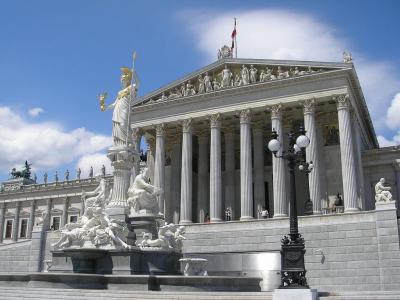
10) Hohes Haus
Hohes Haus ( Parliament Building) in Vienna stands proudly on the Ringstraße boulevard within the first district, known as Innere Stadt. It's situated in close proximity to the Hofburg Palace and the Palace of Justice. The construction of this iconic building began in 1874, with its completion occurring in 1883. The brilliant architect behind its Greek revival style was Theophil Edvard Hansen. Hansen took a holistic approach to design, ensuring architectural elements and interior decorations harmonized. His exceptional work earned him the title of Baron from Emperor Franz Joseph upon project completion.
One of the most famous features of the building is the Pallas Athena fountain positioned in front of the main entrance. This fountain, crafted by Hansen from 1898 to 1902, remains a prominent attraction for visitors to Vienna.
The parliament building sprawls across an impressive 13,500 square meters, ranking it as one of the largest structures along the Ringstraße. Inside, it houses more than one hundred rooms, with the Chambers of the National Council, the Federal Council, and the former Imperial House of Representatives (Abgeordnetenhaus) being among the most significant.
In addition, the building accommodates various committee rooms, libraries, lobbies, dining areas, bars, and even gymnasiums. It serves as a site of great importance for state ceremonies, notably hosting the swearing-in ceremony of the President of Austria and the annual state speech on National Day, which takes place every October 26th. The building is inextricably linked to the two parliamentary bodies, exemplified by the use of the term "Hohes Haus" as a metonym for the "Parliament."
One of the most famous features of the building is the Pallas Athena fountain positioned in front of the main entrance. This fountain, crafted by Hansen from 1898 to 1902, remains a prominent attraction for visitors to Vienna.
The parliament building sprawls across an impressive 13,500 square meters, ranking it as one of the largest structures along the Ringstraße. Inside, it houses more than one hundred rooms, with the Chambers of the National Council, the Federal Council, and the former Imperial House of Representatives (Abgeordnetenhaus) being among the most significant.
In addition, the building accommodates various committee rooms, libraries, lobbies, dining areas, bars, and even gymnasiums. It serves as a site of great importance for state ceremonies, notably hosting the swearing-in ceremony of the President of Austria and the annual state speech on National Day, which takes place every October 26th. The building is inextricably linked to the two parliamentary bodies, exemplified by the use of the term "Hohes Haus" as a metonym for the "Parliament."
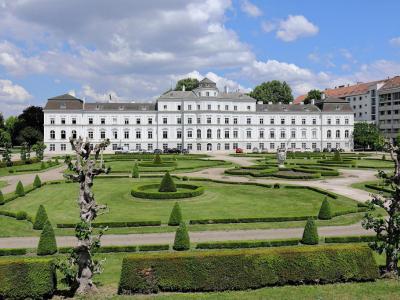
11) Augarten Palace
Despite extensive damage suffered during World War II, the 17-century Palais Augarten, built on the site of a hunting château, has been maintained almost in its original appearance, with many sumptuous furnishings still in place. Located in the 130-acre Augarten Park, Vienna's oldest Baroque garden, the palace is now home (and rehearsal space) of the world-famous Vienna Boys' Choir (Wiener Sängerknaben) who perform music that ranges from classical to world music to pop.
As early as 1772, so-called Morgenkonzerte ("morning concerts") were conducted or performed by Wolfgang Amadeus Mozart in the Garden Hall of the Palais Augarten; but the house was also used for many other festivals and concerts. The morning concerts were for a time conducted exclusively by Mozart himself, then alternated between different conductors until 1795 when concert management was transferred to famous violinist Ignaz Schuppanzigh. Ludwig van Beethoven in 1803 also had several of his works performed under the direction of Schuppanzigh, and in 1824 it was Franz Schubert's turn to have his song "The Nightingale" performed.
In the years 1820 to 1847, the 1 May concerts also took place in the Garden Hall, where mainly works by Johann Strauss Sr. were presented. In the second half of the 19th century, Augarten became much less popular than before. The Baroque park, the palace and the remaining part of the original park wall, dating from the early 18th century, are since 2000 listed as historic monuments.
As early as 1772, so-called Morgenkonzerte ("morning concerts") were conducted or performed by Wolfgang Amadeus Mozart in the Garden Hall of the Palais Augarten; but the house was also used for many other festivals and concerts. The morning concerts were for a time conducted exclusively by Mozart himself, then alternated between different conductors until 1795 when concert management was transferred to famous violinist Ignaz Schuppanzigh. Ludwig van Beethoven in 1803 also had several of his works performed under the direction of Schuppanzigh, and in 1824 it was Franz Schubert's turn to have his song "The Nightingale" performed.
In the years 1820 to 1847, the 1 May concerts also took place in the Garden Hall, where mainly works by Johann Strauss Sr. were presented. In the second half of the 19th century, Augarten became much less popular than before. The Baroque park, the palace and the remaining part of the original park wall, dating from the early 18th century, are since 2000 listed as historic monuments.
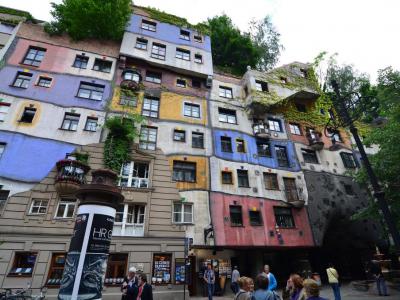
12) Hundertwasser House
A relatively recent addition to Vienna's architectural heritage, the Hundertwasser House is a great example of 20th-century urban experimentation. If the surrounding architecture whispers "classical elegance," this one belts out "psychedelic daydream" through a megaphone!!!
Sitting as an antithetical statement about what architecture can be-a sort of riotous rebuttal to boring buildings- this gloriously eclectic (if not, say, surreal) block of flats explodes with color and curve. From a distance, it looks almost like a lovechild of Gaudí, a Lego set, and a fever dream combined. Consisting of a frenzy of oriel windows, loggias, gilded onion domes, ceramic columns, glass sparkles, roof gardens-and yes, even a salvaged slice of what stood here before 1983-it’s part sculpture, part protest, and part urban jungle. A rainbow having a rave, basically...
Designed in 1985 by the ever-unconventional, avant-garde artist Friedensreich Hundertwasser, this idiosyncratic building was his answer to what he perceived as the rather soulless modern concrete monotony sprouting across Vienna's suburbs. Further to his credit, and just to make sure his message landed, Hundertwasser refused payment for his work, declaring that the investment was worth it to "prevent something ugly from going up in its place". Mission absolutely accomplished...
So, whenever you're in Vienna, make sure to swing by this photogenic rebel-pure architectural exuberance, gleefully thumbing its nose at the capital’s polished palaces and baroque facades. Because your eyes deserve a holiday too...
Tip:
While the building itself is residential-so no snooping inside is possible-across the street you’ll find Hundertwasser Village. Open daily, from 9 am to 6 pm, this is a quirky marketplace-turned-art piece with shops, cafés, and enough eccentricity to keep your camera and curiosity well-fed.
Sitting as an antithetical statement about what architecture can be-a sort of riotous rebuttal to boring buildings- this gloriously eclectic (if not, say, surreal) block of flats explodes with color and curve. From a distance, it looks almost like a lovechild of Gaudí, a Lego set, and a fever dream combined. Consisting of a frenzy of oriel windows, loggias, gilded onion domes, ceramic columns, glass sparkles, roof gardens-and yes, even a salvaged slice of what stood here before 1983-it’s part sculpture, part protest, and part urban jungle. A rainbow having a rave, basically...
Designed in 1985 by the ever-unconventional, avant-garde artist Friedensreich Hundertwasser, this idiosyncratic building was his answer to what he perceived as the rather soulless modern concrete monotony sprouting across Vienna's suburbs. Further to his credit, and just to make sure his message landed, Hundertwasser refused payment for his work, declaring that the investment was worth it to "prevent something ugly from going up in its place". Mission absolutely accomplished...
So, whenever you're in Vienna, make sure to swing by this photogenic rebel-pure architectural exuberance, gleefully thumbing its nose at the capital’s polished palaces and baroque facades. Because your eyes deserve a holiday too...
Tip:
While the building itself is residential-so no snooping inside is possible-across the street you’ll find Hundertwasser Village. Open daily, from 9 am to 6 pm, this is a quirky marketplace-turned-art piece with shops, cafés, and enough eccentricity to keep your camera and curiosity well-fed.

13) Barockmuseum
The Austrian Baroque Museum was established in conjunction with the restructuring of the Austrian museum system, with a particular focus on the Austrian Gallery. It officially opened its doors in 1923 within the Lower Belvedere, serving as an integral part of the Austrian Gallery. The museum displayed artworks from multiple sources, including loans from museums like the Art History Museum and the Austrian Museum of Applied Arts, as well as private collectors.
Initially, the museum occupied the west wing and the central marble hall of the Belvedere but underwent significant expansion in 1934, encompassing the entire building following the departure of ancient artifacts from Ephesus. After the necessary repairs due to war damage, the museum welcomed visitors once again on February 4, 1953. A further reorganization and expansion took place in 1974.
The museum's primary focus centered on Austrian art from the Baroque era, specifically from the years 1630 to 1780. Notably, the architectural design and interior decor of certain halls within the museum itself were significant works of the Baroque period. These included the Grotesque Hall, Marble Gallery, Hall of Mirrors, and Marble Hall.
Among the museum's most prominent works were sculptures created by Franz Xaver Messerschmidt, renowned for his "character heads." Additionally, the collection featured artworks by Johann Michael Rottmayr, Franz Anton Maulbertsch, Paul Troger, and Martin Johann Schmidt, often referred to as "Kremser Schmidt." Noteworthy sculptures by Georg Raphael Donner, including "Prinzen Eugen" by Balthasar Permoser, were also on display.
Initially, the museum occupied the west wing and the central marble hall of the Belvedere but underwent significant expansion in 1934, encompassing the entire building following the departure of ancient artifacts from Ephesus. After the necessary repairs due to war damage, the museum welcomed visitors once again on February 4, 1953. A further reorganization and expansion took place in 1974.
The museum's primary focus centered on Austrian art from the Baroque era, specifically from the years 1630 to 1780. Notably, the architectural design and interior decor of certain halls within the museum itself were significant works of the Baroque period. These included the Grotesque Hall, Marble Gallery, Hall of Mirrors, and Marble Hall.
Among the museum's most prominent works were sculptures created by Franz Xaver Messerschmidt, renowned for his "character heads." Additionally, the collection featured artworks by Johann Michael Rottmayr, Franz Anton Maulbertsch, Paul Troger, and Martin Johann Schmidt, often referred to as "Kremser Schmidt." Noteworthy sculptures by Georg Raphael Donner, including "Prinzen Eugen" by Balthasar Permoser, were also on display.
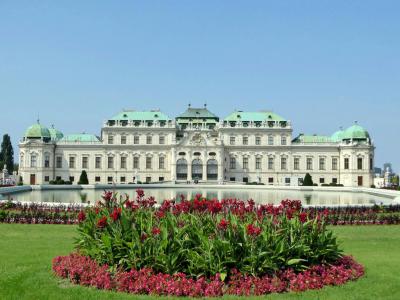
14) Belvedere Palace (must see)
Originally designed as a summer residence for Prince Eugene of Savoy, who apparently felt a standard palace simply wouldn't cut it, this lavish complex was built after Vienna stopped fending off Ottoman invasions and started flexing its imperial muscles in stone, stucco, and cascading fountains.
The Belvedere isn’t just one palace-it’s a full-on ensemble performance: Upper and Lower Belvedere, an Orangery for your fancy citrus needs, and palace stables fit for horses with noble bloodlines. All of it is wrapped in a park so meticulously designed, you’d think every hedge was hand-trimmed by a powdered wig.
Construction kicked off in 1712 with the Lower Belvedere, but things really got dramatic in 1717 when the Upper Belvedere was added-basically a Baroque ballroom with serious diplomatic swagger. Frescoes, gilded ceilings, and artwork by the who’s who of 18th-century painters helped Eugene throw parties that whispered, “empire” with every flute of champagne.
After Prince Eugene passed in 1736, the place got a second act as a Habsburg hangout, hosting royal refugees escaping the French Revolution and later transforming into one of Europe’s earliest public museums, thanks to Maria Theresa and Joseph II.
Fast forward to the 20th century: the Belvedere went national after World War I, becoming the proud home of Austria’s classical and modern art collections. World War II wasn’t kind to it-bombings left their mark-but meticulous restoration from 1945 through the '90s brought the glory back, detail by plastered detail.
Today, the Belvedere is a major world-class museum. Its galleries span centuries, from medieval devotionals to cutting-edge modernism. And yes, Gustav Klimt’s "The Kiss" lives here too, alongside his equally iconic "Judith." You’ll also find a respectable crowd of French Impressionists and Biedermeier charmers holding court on the walls.
It's in equal measure for those who appreciate architecture, arts, or just seek to pretend they’re 18th-century nobility strolling through your summer garden... The Belvedere delivers all of this with a flourish. So go ahead-wander, gaze, and maybe channel your inner prince or princess.
Tip:
If you don’t enjoy queuing in the sun, grab your tickets online. And for the love of Baroque opulence, don’t skip the gardens-those cascading fountains and smug statues have been waiting centuries for your admiration...
The Belvedere isn’t just one palace-it’s a full-on ensemble performance: Upper and Lower Belvedere, an Orangery for your fancy citrus needs, and palace stables fit for horses with noble bloodlines. All of it is wrapped in a park so meticulously designed, you’d think every hedge was hand-trimmed by a powdered wig.
Construction kicked off in 1712 with the Lower Belvedere, but things really got dramatic in 1717 when the Upper Belvedere was added-basically a Baroque ballroom with serious diplomatic swagger. Frescoes, gilded ceilings, and artwork by the who’s who of 18th-century painters helped Eugene throw parties that whispered, “empire” with every flute of champagne.
After Prince Eugene passed in 1736, the place got a second act as a Habsburg hangout, hosting royal refugees escaping the French Revolution and later transforming into one of Europe’s earliest public museums, thanks to Maria Theresa and Joseph II.
Fast forward to the 20th century: the Belvedere went national after World War I, becoming the proud home of Austria’s classical and modern art collections. World War II wasn’t kind to it-bombings left their mark-but meticulous restoration from 1945 through the '90s brought the glory back, detail by plastered detail.
Today, the Belvedere is a major world-class museum. Its galleries span centuries, from medieval devotionals to cutting-edge modernism. And yes, Gustav Klimt’s "The Kiss" lives here too, alongside his equally iconic "Judith." You’ll also find a respectable crowd of French Impressionists and Biedermeier charmers holding court on the walls.
It's in equal measure for those who appreciate architecture, arts, or just seek to pretend they’re 18th-century nobility strolling through your summer garden... The Belvedere delivers all of this with a flourish. So go ahead-wander, gaze, and maybe channel your inner prince or princess.
Tip:
If you don’t enjoy queuing in the sun, grab your tickets online. And for the love of Baroque opulence, don’t skip the gardens-those cascading fountains and smug statues have been waiting centuries for your admiration...
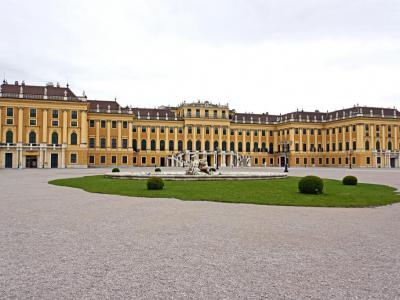
15) Schonbrunn Palace (must see)
Schönbrunn Palace, also known as Schloss Schönbrunn in German, used to be the primary summer residence for the Habsburg monarchs. Its name, Schönbrunn, which means "beautiful spring" in English, comes from a well that used to be on the property and provided water to the royal court.
The palace has a rich history spanning over 300 years and reflects the changing tastes and interests of the Habsburg dynasty. It took its present form during the 1740s and 1750s under the rule of Empress Maria Theresa, who received it as a wedding gift. The neoclassical exterior we see today was the result of renovations ordered by Franz I.
Franz Joseph, the longest-reigning emperor of Austria, was born at Schönbrunn and spent most of his life there. He passed away in the palace on November 21, 1916, at the age of 86. After the Habsburg monarchy fell in November 1918, the palace became property of the newly-established Austrian Republic and was preserved as a museum.
During World War II and the Allied Occupation of Austria from 1945 to 1955, Schönbrunn was used as office space for the British Delegation to the Allied Commission for Austria and the headquarters of the British Military Garrison in Vienna. It returned to its museum status when the Austrian republic was re-established in 1955. Occasionally, it's still used for important events, like the meeting between U.S. President John F. Kennedy and Soviet Premier Nikita Khrushchev in 1961.
A significant part of the palace grounds is occupied by gardens, including the French and English gardens in the western section. You can also find the Ruin of Carthage, a Roman-style feature added in 1778, which includes a rectangular pool with a massive arch and stone fragments symbolizing the rivers Vltava and Elbe.
Schönbrunn, with its impressive Baroque architecture and gardens, earned UNESCO World Heritage status in 1996. Along with attractions like the Tiergarten Schönbrunn (Schönbrunn Zoo), Palmenhaus (a greenhouse with exotic plants), Wüstenhaus (a desert botanical exhibit), the Wagenburg (The Imperial Carriage Museum), and the Schoenbrunn Palace Concerts (an annual summer concert series on the grounds), the entire complex is a vital part of Vienna's architectural, cultural, and historical heritage and draws over five million visitors each year.
The palace has a rich history spanning over 300 years and reflects the changing tastes and interests of the Habsburg dynasty. It took its present form during the 1740s and 1750s under the rule of Empress Maria Theresa, who received it as a wedding gift. The neoclassical exterior we see today was the result of renovations ordered by Franz I.
Franz Joseph, the longest-reigning emperor of Austria, was born at Schönbrunn and spent most of his life there. He passed away in the palace on November 21, 1916, at the age of 86. After the Habsburg monarchy fell in November 1918, the palace became property of the newly-established Austrian Republic and was preserved as a museum.
During World War II and the Allied Occupation of Austria from 1945 to 1955, Schönbrunn was used as office space for the British Delegation to the Allied Commission for Austria and the headquarters of the British Military Garrison in Vienna. It returned to its museum status when the Austrian republic was re-established in 1955. Occasionally, it's still used for important events, like the meeting between U.S. President John F. Kennedy and Soviet Premier Nikita Khrushchev in 1961.
A significant part of the palace grounds is occupied by gardens, including the French and English gardens in the western section. You can also find the Ruin of Carthage, a Roman-style feature added in 1778, which includes a rectangular pool with a massive arch and stone fragments symbolizing the rivers Vltava and Elbe.
Schönbrunn, with its impressive Baroque architecture and gardens, earned UNESCO World Heritage status in 1996. Along with attractions like the Tiergarten Schönbrunn (Schönbrunn Zoo), Palmenhaus (a greenhouse with exotic plants), Wüstenhaus (a desert botanical exhibit), the Wagenburg (The Imperial Carriage Museum), and the Schoenbrunn Palace Concerts (an annual summer concert series on the grounds), the entire complex is a vital part of Vienna's architectural, cultural, and historical heritage and draws over five million visitors each year.
