Custom Walk in San Francisco, California by patrik_seiler_85cb8 created on 2023-09-25
Guide Location: USA » San Francisco
Guide Type: Custom Walk
# of Sights: 15
Tour Duration: 3 Hour(s)
Travel Distance: 4.6 Km or 2.9 Miles
Share Key: G8F7E
Guide Type: Custom Walk
# of Sights: 15
Tour Duration: 3 Hour(s)
Travel Distance: 4.6 Km or 2.9 Miles
Share Key: G8F7E
How It Works
Please retrieve this walk in the GPSmyCity app. Once done, the app will guide you from one tour stop to the next as if you had a personal tour guide. If you created the walk on this website or come to the page via a link, please follow the instructions below to retrieve the walk in the app.
Retrieve This Walk in App
Step 1. Download the app "GPSmyCity: Walks in 1K+ Cities" on Apple App Store or Google Play Store.



Step 2. In the GPSmyCity app, download(or launch) the guide "San Francisco Map and Walking Tours".
Step 3. Tap the menu button located at upper right corner of the "Walks" screen and select "Retrieve custom walk". Enter the share key: G8F7E
1) Union Square (must see)
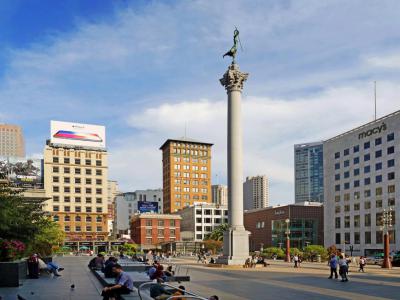
While there are lots of tourist sights in San Francisco to behold, there is none more representative of the city's spirit than the iconic Union Square. With so many layers of history, cuisine, commerce, and culture gathered in one spot, it is no wonder that this place has appeared in film and television scores of times over the years! One could teach a master class on the goings on at Union Square through the decades.
Starting from the pro-US rallies during the Civil War (hence the "Union" name) to the red-light district on (ironically) Maiden Lane, the Dewey Monument, and Alma Spreckels, the Saint Francis Hotel and its famous guests, the 1960s protests, the Theater District, the Powell cable car line, the Flood Building, and the Woolworth's counter – the list is long. Add to this the rooftop amusement park, the concerts, the window displays, and key appearances in famous movies – and you get the place that is quintessentially San Francisco in much of the same way as Times Square is for New York City.
Nowadays, the square is known as a sanctuary for the shopaholic at heart, ringed by premium boutiques, high-end department stores, and mega-brands – but also as one of maybe two places in the city where you can go ice-skating outdoors during the winter.
If you're looking for the best cheap eats, consider Sear's Fine Food or the Pinecrest Diner. For mid-range – there's Cheesecake Factory with a spectacular view of the square and the unforgettable Rotunda at Neiman Marcus. And if you want to go posh, there are too many choices, but Scala's Bistro at the Sir Francis Drake Hotel is ideal; also, The Oak Room, if you have the means.
Finally, no tour of Union Square is complete without visiting the venerable Hotel Saint Francis, where kings, presidents, movie stars, and other historical figures from every field have stayed. In its grand lobby stands an antique clock, and the phrase "Meet me at the clock" is known to most San Franciscans. During holidays, the hotel is decked out in festive décor, with a giant chocolate castle diorama to salivate over. It feels like stepping into a bygone era of luxury and superb service.
Given the range of delights available at Union Square (stores, restaurants, theaters, as well as the famous cable cars), it is safe to say it is at the heart of it all and makes a logical starting point for the exploration of San Francisco.
Tip:
Take the Powell/Hyde cable car ride (which starts and ends at Union Square) for the best views of the city. And don't mind the line if there is one – it can move quickly.
Starting from the pro-US rallies during the Civil War (hence the "Union" name) to the red-light district on (ironically) Maiden Lane, the Dewey Monument, and Alma Spreckels, the Saint Francis Hotel and its famous guests, the 1960s protests, the Theater District, the Powell cable car line, the Flood Building, and the Woolworth's counter – the list is long. Add to this the rooftop amusement park, the concerts, the window displays, and key appearances in famous movies – and you get the place that is quintessentially San Francisco in much of the same way as Times Square is for New York City.
Nowadays, the square is known as a sanctuary for the shopaholic at heart, ringed by premium boutiques, high-end department stores, and mega-brands – but also as one of maybe two places in the city where you can go ice-skating outdoors during the winter.
If you're looking for the best cheap eats, consider Sear's Fine Food or the Pinecrest Diner. For mid-range – there's Cheesecake Factory with a spectacular view of the square and the unforgettable Rotunda at Neiman Marcus. And if you want to go posh, there are too many choices, but Scala's Bistro at the Sir Francis Drake Hotel is ideal; also, The Oak Room, if you have the means.
Finally, no tour of Union Square is complete without visiting the venerable Hotel Saint Francis, where kings, presidents, movie stars, and other historical figures from every field have stayed. In its grand lobby stands an antique clock, and the phrase "Meet me at the clock" is known to most San Franciscans. During holidays, the hotel is decked out in festive décor, with a giant chocolate castle diorama to salivate over. It feels like stepping into a bygone era of luxury and superb service.
Given the range of delights available at Union Square (stores, restaurants, theaters, as well as the famous cable cars), it is safe to say it is at the heart of it all and makes a logical starting point for the exploration of San Francisco.
Tip:
Take the Powell/Hyde cable car ride (which starts and ends at Union Square) for the best views of the city. And don't mind the line if there is one – it can move quickly.
2) Curran Theater
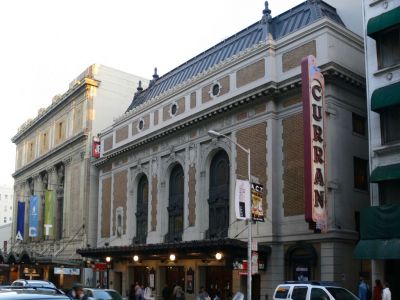
If you enjoy watching Broadways, operas and live performances, the Curran Theater is a must visit in San Francisco. One does not have to be a diehard opera fan to visit and be charmed by the Curran.
Its brilliant presence and majestic look is sure to take any onlookers breath away. This magnificent building stands on Geary Street, where it welcomes its audience into a world far away from the hustle bustle of city life. Known as one of the finest Broadway theaters in the country, the Curran Theater makes the experience of watching live performances memorable with its intimate auditoriums and well-crafted interiors. One of the noted features of the interiors of the building is the ceiling above the main lobby which is hand painted to make it look like wood. As a matter of fact, the interiors and exteriors of the theater were even featured in a movie named ‘All about Eve’.
The Curran Theater was opened in 1922 and was named after its first owner Homer Curran. He owned several other theaters but only this theater retains its original name to this date. Homer Curran is most noted for writing a book for the musical ‘Song of Norway’ and the lesser known ‘Magdalena’. Today this theater belongs to Carole Shorenstein Hays who has produced many award winning Broadway plays.
Curran Theater is a beautiful and historic theater in the heart of San Francisco, only steps away from Union Square, so there is no excuse not to stop by to see what it has on offer.
Its brilliant presence and majestic look is sure to take any onlookers breath away. This magnificent building stands on Geary Street, where it welcomes its audience into a world far away from the hustle bustle of city life. Known as one of the finest Broadway theaters in the country, the Curran Theater makes the experience of watching live performances memorable with its intimate auditoriums and well-crafted interiors. One of the noted features of the interiors of the building is the ceiling above the main lobby which is hand painted to make it look like wood. As a matter of fact, the interiors and exteriors of the theater were even featured in a movie named ‘All about Eve’.
The Curran Theater was opened in 1922 and was named after its first owner Homer Curran. He owned several other theaters but only this theater retains its original name to this date. Homer Curran is most noted for writing a book for the musical ‘Song of Norway’ and the lesser known ‘Magdalena’. Today this theater belongs to Carole Shorenstein Hays who has produced many award winning Broadway plays.
Curran Theater is a beautiful and historic theater in the heart of San Francisco, only steps away from Union Square, so there is no excuse not to stop by to see what it has on offer.
3) 450 Sutter Building
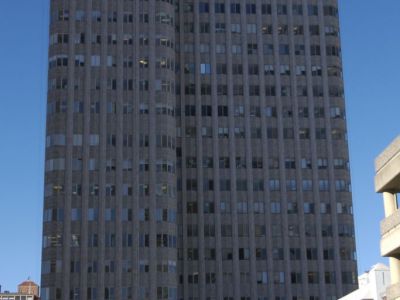
The 450 Sutter Building, constructed in 1929, is a prominent twenty-six-floor skyscraper in San Francisco, standing at a height of 105 meters (344 feet). Its remarkable architectural style combines elements of "Neo-Mayan" and Art Deco, showcasing the visionary design of architect Timothy L. Pflueger. Notably, this building's distinctive vertically faceted exterior served as an inspiration for Pietro Belluschi when he created the similarly faceted exterior of the 555 California, formerly known as the Bank of America Center, completed in 1969.
The primary occupants of the building consist of dental and medical professionals, who operate their practices within its premises. In the 1960s, Dr. Harry Benjamin, an endocrinologist and sexologist renowned for his groundbreaking clinical work with transgender individuals, established a summer practice in the building. Many of Dr. Benjamin's patients came from the nearby Tenderloin neighborhood, highlighting the building's significance within the medical community.
Notably, in the director's commentary of the influential 3D adventure game Grim Fandango, game designer Tim Schafer acknowledges the building's profound impact on the game's aesthetics. Schafer reveals that his exposure to 450 Sutter came about due to his dentist's office being situated on one of the upper floors. Inspired by the building's grandeur, Schafer incorporated its essence into the game's Department of Death, a pivotal location. Additionally, the building served as a model for the fictional "Vu Financial" commercial office tower in the 2003 Maxis video game SimCity 4, further showcasing its enduring influence across different mediums.
The primary occupants of the building consist of dental and medical professionals, who operate their practices within its premises. In the 1960s, Dr. Harry Benjamin, an endocrinologist and sexologist renowned for his groundbreaking clinical work with transgender individuals, established a summer practice in the building. Many of Dr. Benjamin's patients came from the nearby Tenderloin neighborhood, highlighting the building's significance within the medical community.
Notably, in the director's commentary of the influential 3D adventure game Grim Fandango, game designer Tim Schafer acknowledges the building's profound impact on the game's aesthetics. Schafer reveals that his exposure to 450 Sutter came about due to his dentist's office being situated on one of the upper floors. Inspired by the building's grandeur, Schafer incorporated its essence into the game's Department of Death, a pivotal location. Additionally, the building served as a model for the fictional "Vu Financial" commercial office tower in the 2003 Maxis video game SimCity 4, further showcasing its enduring influence across different mediums.
4) Maiden Lane
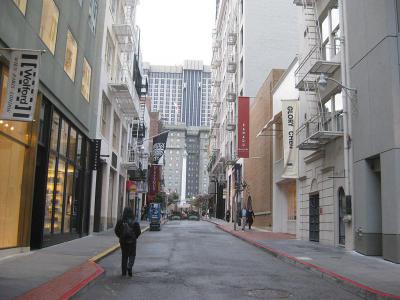
From rags to riches, from tacky to elegant, classy and fashionable, the Maiden Lane is one street that has undergone an extreme make over after the 1906 earthquake. Presently laden with high end gift shops, couture salons, expensive boutiques and designer outlets, there is nothing in the fashion and luxury world that the Maiden Lane does not offer.
Although the present may seem glittery and filled with glamour and elegance, a century back the lane didn’t quite have the reputation it holds today. The street was then called the Morton Street and it was one of the most prominent red-light district of San Francisco. The Morton Street was filled with brothels and exotic dancers and was said to hold the record for reporting at least one murder every week. The 1906 earthquake, however, changed the fate of the Street. The rubbles of the Morton Street were transformed into the present day Maiden Lane.
Apart from its very colorful history, the street is also known to be an pedestrian only street, with two gates at either end that bar any automobile traffic from getting in. Whether you love to shop or just like to take a lazy walk down the road, or simply enjoy a city’s past- the Maiden Lane has something to offer to every passer-by.
Although the present may seem glittery and filled with glamour and elegance, a century back the lane didn’t quite have the reputation it holds today. The street was then called the Morton Street and it was one of the most prominent red-light district of San Francisco. The Morton Street was filled with brothels and exotic dancers and was said to hold the record for reporting at least one murder every week. The 1906 earthquake, however, changed the fate of the Street. The rubbles of the Morton Street were transformed into the present day Maiden Lane.
Apart from its very colorful history, the street is also known to be an pedestrian only street, with two gates at either end that bar any automobile traffic from getting in. Whether you love to shop or just like to take a lazy walk down the road, or simply enjoy a city’s past- the Maiden Lane has something to offer to every passer-by.
5) Phelan Building
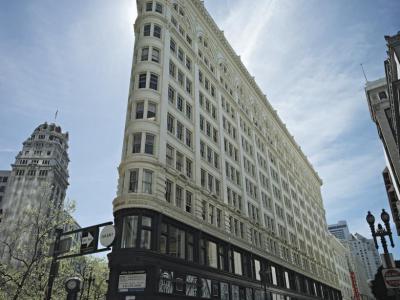
The Phelan Building, situated in San Francisco's Financial District on Market Street, is an 11-story office building renowned for its distinctive triangular shape. Resembling the iconic Flatiron Building in Manhattan, New York City, it gracefully converges at the intersection of Market Street, O'Farrell Street, and Grant Avenue. This architectural gem has garnered recognition as a San Francisco Designated Landmark.
Originally envisioned by William Curlett and commissioned by James D. Phelan, construction of the Phelan Building took place in 1908. Its predecessor, the initial Phelan Building, suffered severe damage during the 1906 earthquake and subsequent fire. James D. Phelan, son of James Phelan, the original building's constructor, spearheaded the reconstruction efforts.
Work on the new Phelan Building commenced on October 7, 1907, culminating in its completion on September 1, 1908, with retail stores opening their doors. Office spaces became available on January 1, 1909. Notably, it stood as one of the earliest office buildings to be reconstructed following the devastating earthquake.
The Phelan Building boasts a facade adorned with cream-glazed terra-cotta and metal-framed windows. Originally designed to accommodate 13 floors, the final structure comprises eleven floors.
Upon its grand opening, the building featured an assembly hall on the 11th floor, second-floor arcade stores, and a basement café. For numerous decades, the Phelan Building served as a hub for the jewelry industry, housing numerous jewelers and even hosting a jewelry school.
Originally envisioned by William Curlett and commissioned by James D. Phelan, construction of the Phelan Building took place in 1908. Its predecessor, the initial Phelan Building, suffered severe damage during the 1906 earthquake and subsequent fire. James D. Phelan, son of James Phelan, the original building's constructor, spearheaded the reconstruction efforts.
Work on the new Phelan Building commenced on October 7, 1907, culminating in its completion on September 1, 1908, with retail stores opening their doors. Office spaces became available on January 1, 1909. Notably, it stood as one of the earliest office buildings to be reconstructed following the devastating earthquake.
The Phelan Building boasts a facade adorned with cream-glazed terra-cotta and metal-framed windows. Originally designed to accommodate 13 floors, the final structure comprises eleven floors.
Upon its grand opening, the building featured an assembly hall on the 11th floor, second-floor arcade stores, and a basement café. For numerous decades, the Phelan Building served as a hub for the jewelry industry, housing numerous jewelers and even hosting a jewelry school.
6) Flood Building
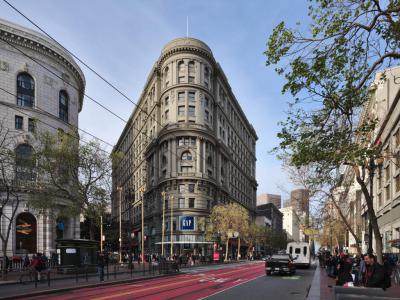
The Flood Building in downtown San Francisco at Powell and Market Streets is a historic highrise with unique architecture. Built in 1904 by Albert Pissis, it's a 12-story structure that survived the 1906 earthquake. The building features attractive storefronts, a sandstone façade with intricate windows, and elegant ornamentation, adding to its grandeur.
The site where the Flood Building now stands was previously occupied by Baldwin's Hotel and Theatre, which tragically fell victim to a fire in 1898. James L. Flood, who acquired the property, decided to erect the building as a tribute to his father, James Clair Flood, a Comstock Lode millionaire. Remarkably, as of 2003, the Flood Building remained in the ownership of the Flood family.
After renovations post-1906 earthquake, Southern Pacific Railroad HQ moved to Flood Building until 1917 when it relocated to One Market Plaza. The basement and lower floors housed F.W. Woolworth flagship store. In more recent years, the Flood Building has accommodated notable tenants such as leading retailers Gap, Urban Outfitters, and Anthropologie.
The Flood Building's historical significance extends beyond its commercial tenants. Notably, Room 314 housed the office of the Pinkerton Detective Agency, which employed Dashiell Hammett, an acclaimed author renowned for his hard-boiled detective novels. This connection to the literary world further enhances the building's cultural and historical allure.
The site where the Flood Building now stands was previously occupied by Baldwin's Hotel and Theatre, which tragically fell victim to a fire in 1898. James L. Flood, who acquired the property, decided to erect the building as a tribute to his father, James Clair Flood, a Comstock Lode millionaire. Remarkably, as of 2003, the Flood Building remained in the ownership of the Flood family.
After renovations post-1906 earthquake, Southern Pacific Railroad HQ moved to Flood Building until 1917 when it relocated to One Market Plaza. The basement and lower floors housed F.W. Woolworth flagship store. In more recent years, the Flood Building has accommodated notable tenants such as leading retailers Gap, Urban Outfitters, and Anthropologie.
The Flood Building's historical significance extends beyond its commercial tenants. Notably, Room 314 housed the office of the Pinkerton Detective Agency, which employed Dashiell Hammett, an acclaimed author renowned for his hard-boiled detective novels. This connection to the literary world further enhances the building's cultural and historical allure.
7) Children's Creativity Museum
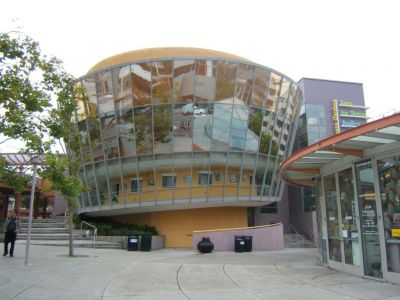
The Children's Creativity Museum, situated in San Francisco's Yerba Buena Gardens, is a dynamic and engaging interactive space designed exclusively for kids aged 2 to 12 years. Here, children immerse themselves in various workshops and exhibits that foster their creativity through interactive processes like stop-motion animation, robot programming, music video production, design challenges, art projects, and much more.
Originally known as Zeum, the museum was established on October 31, 1998, as a vital component of a large-scale urban renewal initiative in the South of Market area, covering 87 acres (350,000 square meters). It resides in a two-story building atop the Moscone Convention Center, boasting a 200-seat theater and 3,000 square feet of exhibition space. A cherished attraction within the museum is the 1906 carousel by Charles I. D. Looff. In 2011, Zeum underwent a name change to the Children's Creativity Museum to better communicate its purpose to the public.
The Animation Studio offers a fun platform for children to create stop-motion films with clay characters. Educators guide young filmmakers through storytelling, character construction, and animation production. In the Tech Lab, kids learn coding by programming robots for tasks, mazes, and interactive games, fostering creative problem-solving. The Innovation Lab challenges visitors to solve real-world problems using basic materials to create prototypes. At the Making Music Studio, visitors experiment with diverse instruments, composing their own unique music. Families will uncover music in unexpected places, embarking on a delightful musical journey.
Tip:
Affordable (and good) food options can be found just across the street at the Metreon Food Court.
Originally known as Zeum, the museum was established on October 31, 1998, as a vital component of a large-scale urban renewal initiative in the South of Market area, covering 87 acres (350,000 square meters). It resides in a two-story building atop the Moscone Convention Center, boasting a 200-seat theater and 3,000 square feet of exhibition space. A cherished attraction within the museum is the 1906 carousel by Charles I. D. Looff. In 2011, Zeum underwent a name change to the Children's Creativity Museum to better communicate its purpose to the public.
The Animation Studio offers a fun platform for children to create stop-motion films with clay characters. Educators guide young filmmakers through storytelling, character construction, and animation production. In the Tech Lab, kids learn coding by programming robots for tasks, mazes, and interactive games, fostering creative problem-solving. The Innovation Lab challenges visitors to solve real-world problems using basic materials to create prototypes. At the Making Music Studio, visitors experiment with diverse instruments, composing their own unique music. Families will uncover music in unexpected places, embarking on a delightful musical journey.
Tip:
Affordable (and good) food options can be found just across the street at the Metreon Food Court.
8) St. Patrick's Catholic Church
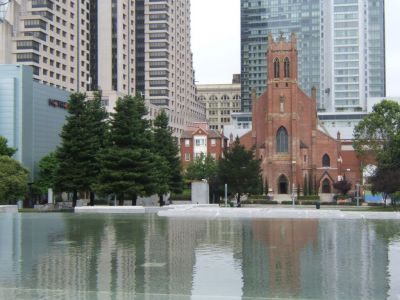
Amidst all the changes the city of San Francisco has seen, Saint Patrick’s Catholic Church has stood unmoved. Standing on Mission Street, the Church was founded in 1851 and has borne many winds of change. The white and gold Botticino marble and the green Connemara marble distinctly bring out the Irish colors in the building's architecture. The high ceilings and the tall ornate altar of the Church captivate every visitor of the Church.
Since its consecration, the Church has seen many changes in the city of San Francisco. It saw the fire and earthquake of 1906, but stood unperturbed and served the Irish immigrants in the area. With the intrusion of the Spanish speaking population, the Church served them alike, just the way it now treats its Fillipino community. Certain weekdays, the Church organizers arrange for lunchtime concerts for those who like chamber music. For tourists and city dwellers alike, the Church is a place to find solace from the hustle and bustle of the area surrounding it.
Weddings and Baptisms are common in the Church. However, the Latin Mass on Sundays is popular and soothing. The richness of the Church can be seen on the green stained Tiffany styled windows which were imported from Ireland and display thirty-two patron saints, each belonging to a county in Ireland.
Why You Should Visit:
Combined with the Yerba Buena gardens just across the street, this church provides a small piece of tranquility, as well as an interesting contrast to the city's landscape.
Since its consecration, the Church has seen many changes in the city of San Francisco. It saw the fire and earthquake of 1906, but stood unperturbed and served the Irish immigrants in the area. With the intrusion of the Spanish speaking population, the Church served them alike, just the way it now treats its Fillipino community. Certain weekdays, the Church organizers arrange for lunchtime concerts for those who like chamber music. For tourists and city dwellers alike, the Church is a place to find solace from the hustle and bustle of the area surrounding it.
Weddings and Baptisms are common in the Church. However, the Latin Mass on Sundays is popular and soothing. The richness of the Church can be seen on the green stained Tiffany styled windows which were imported from Ireland and display thirty-two patron saints, each belonging to a county in Ireland.
Why You Should Visit:
Combined with the Yerba Buena gardens just across the street, this church provides a small piece of tranquility, as well as an interesting contrast to the city's landscape.

9) San Francisco Museum of Modern Art (must see)
San Francisco Museum of Modern Art (SFMOMA) is an exclusive haven for 20th-century art enthusiasts. Founded in 1935, SFMOMA holds the distinction of being the pioneering museum dedicated to showcasing modern and contemporary art to the world.
Throughout its illustrious history, SFMOMA has evolved into a treasure trove of groundbreaking modern art. Boasting an impressive collection of over twenty-six thousand pieces, the museum presents an eclectic array of artistic forms, including photography, sculptures, paintings, architecture, design, and media.
Initially situated on the fourth floor of the War Memorial Veterans Building in the Civic Centre, SFMOMA has now found its grand home in an architecturally magnificent building designed by the renowned Swiss architect, Mario Botta. This iconic structure perfectly complements the exceptional art it houses. Additionally, SFMOMA takes pride in its research library, featuring an extensive collection of books, documents, artists' files, and lecture recordings.
Within the museum, visitors can marvel at masterpieces that defy conventions. Notable works include Richard Diebenkorn's captivating 'Ocean Park,' Frida Kahlo's emotive portrayal in 'Frieda and Diego Rivera,' and Louise Bourgeois' intriguing creation, 'The Nest.' SFMOMA also pays homage to contemporary legends such as Gerhard Richter, Richard Serra, Ellsworth Kelly, and numerous others.
If you share a passion for modern art, SFMOMA is an absolute must-visit destination that promises to inspire and captivate you with its rich and diverse artistic treasures.
Why You Should Visit:
A paradise for modern art enthusiasts that invites multiple visits to do it justice.
The flow is excellent and no exhibit ever feels too crowded. There are some great special exhibits, too, which make it even more special.
Tip:
Definitely make a stop at the rooftop café for a cool view of San Fran, organic Blue Bottle Coffee, and modern art-themed treats (Mondrian cake, Barnett Newman cookies). Or you can bring lunch to eat outside amid the sculptures.
Throughout its illustrious history, SFMOMA has evolved into a treasure trove of groundbreaking modern art. Boasting an impressive collection of over twenty-six thousand pieces, the museum presents an eclectic array of artistic forms, including photography, sculptures, paintings, architecture, design, and media.
Initially situated on the fourth floor of the War Memorial Veterans Building in the Civic Centre, SFMOMA has now found its grand home in an architecturally magnificent building designed by the renowned Swiss architect, Mario Botta. This iconic structure perfectly complements the exceptional art it houses. Additionally, SFMOMA takes pride in its research library, featuring an extensive collection of books, documents, artists' files, and lecture recordings.
Within the museum, visitors can marvel at masterpieces that defy conventions. Notable works include Richard Diebenkorn's captivating 'Ocean Park,' Frida Kahlo's emotive portrayal in 'Frieda and Diego Rivera,' and Louise Bourgeois' intriguing creation, 'The Nest.' SFMOMA also pays homage to contemporary legends such as Gerhard Richter, Richard Serra, Ellsworth Kelly, and numerous others.
If you share a passion for modern art, SFMOMA is an absolute must-visit destination that promises to inspire and captivate you with its rich and diverse artistic treasures.
Why You Should Visit:
A paradise for modern art enthusiasts that invites multiple visits to do it justice.
The flow is excellent and no exhibit ever feels too crowded. There are some great special exhibits, too, which make it even more special.
Tip:
Definitely make a stop at the rooftop café for a cool view of San Fran, organic Blue Bottle Coffee, and modern art-themed treats (Mondrian cake, Barnett Newman cookies). Or you can bring lunch to eat outside amid the sculptures.
10) Palace Hotel
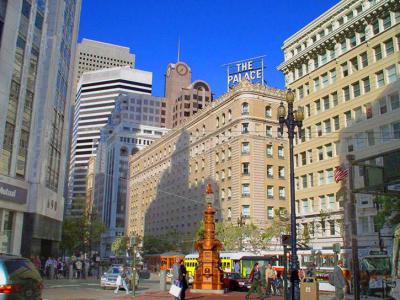
The Palace Hotel in San Francisco is a historical landmark that has stood the test of time. Referred to as the "new" Palace Hotel, it was built to replace the original Palace Hotel, which was unfortunately destroyed in the devastating fire caused by the 1906 San Francisco earthquake.
On December 19, 1909, the present structure of the Palace Hotel opened its doors to the public on the same site as its predecessor. This grand hotel underwent a significant renovation and seismic retrofit from January 1989 to April 1991, during which it was temporarily closed for two years. This extensive refurbishment aimed to preserve its historical charm while ensuring its structural integrity for future generations to enjoy.
Situated on a vast city block, the Palace Hotel's main building has stood for over a century, proudly boasting nine stories. Its location is unparalleled, adjacent to both the BART Montgomery Street Station and the Monadnock Building. Across the bustling Market Street, one can find Lotta's Fountain, a historic landmark itself, making the Palace Hotel a central and easily accessible hub for visitors and locals alike.
Stepping into the Palace Hotel is like stepping back in time, as guests are greeted by elegant decor and a sense of old-world charm. The hotel offers a luxurious and memorable experience, combining classic style with modern amenities. From opulent guest rooms to sophisticated dining options, the Palace Hotel strives to provide an unforgettable stay for its guests.
On December 19, 1909, the present structure of the Palace Hotel opened its doors to the public on the same site as its predecessor. This grand hotel underwent a significant renovation and seismic retrofit from January 1989 to April 1991, during which it was temporarily closed for two years. This extensive refurbishment aimed to preserve its historical charm while ensuring its structural integrity for future generations to enjoy.
Situated on a vast city block, the Palace Hotel's main building has stood for over a century, proudly boasting nine stories. Its location is unparalleled, adjacent to both the BART Montgomery Street Station and the Monadnock Building. Across the bustling Market Street, one can find Lotta's Fountain, a historic landmark itself, making the Palace Hotel a central and easily accessible hub for visitors and locals alike.
Stepping into the Palace Hotel is like stepping back in time, as guests are greeted by elegant decor and a sense of old-world charm. The hotel offers a luxurious and memorable experience, combining classic style with modern amenities. From opulent guest rooms to sophisticated dining options, the Palace Hotel strives to provide an unforgettable stay for its guests.
11) Hobart Building
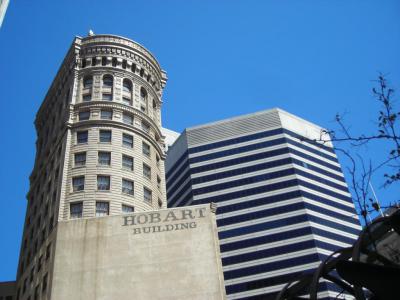
Situated in San Francisco's financial district, the Hobart Building stands tall as a prominent office high-rise on Market Street, near Montgomery and 2nd Streets. Its construction was finalized in 1914, making it the city's second tallest building at that time, boasting an impressive stature of 21 floors and reaching a height of 87 meters (285 feet). The visionary behind its design was Willis Polk.
Originally commissioned by the Hobart Estate Company, the building took shape on the very spot where the company's previous offices stood. In the 1880s, founder Walter S. Hobart carefully selected this location due to its strategic position at the head of 2nd Street, which once served as a vital artery leading to the fashionable Rincon Hill neighborhood. Willis Polk, the esteemed architect, held the Hobart Building dear, considering it his favorite commercial creation. The structure's exterior features sculpted terra cotta adorned with Baroque ornamentation, while the interior showcases handcrafted brass and Italian marble, serving as a remarkable testament to neoclassical architecture.
The distinctive shape of the building arose from the asymmetrical polygonal nature of the site. Over time, its allure grew as a neighboring structure was demolished in 1967, exposing one side and lending the Hobart Building an even more idiosyncratic and striking appearance. Recognizing its architectural significance, the City of San Francisco designated the Hobart Building as a landmark in 1983. Furthermore, it earned a well-deserved place on the National Register of Historic Places in 2021.
Originally commissioned by the Hobart Estate Company, the building took shape on the very spot where the company's previous offices stood. In the 1880s, founder Walter S. Hobart carefully selected this location due to its strategic position at the head of 2nd Street, which once served as a vital artery leading to the fashionable Rincon Hill neighborhood. Willis Polk, the esteemed architect, held the Hobart Building dear, considering it his favorite commercial creation. The structure's exterior features sculpted terra cotta adorned with Baroque ornamentation, while the interior showcases handcrafted brass and Italian marble, serving as a remarkable testament to neoclassical architecture.
The distinctive shape of the building arose from the asymmetrical polygonal nature of the site. Over time, its allure grew as a neighboring structure was demolished in 1967, exposing one side and lending the Hobart Building an even more idiosyncratic and striking appearance. Recognizing its architectural significance, the City of San Francisco designated the Hobart Building as a landmark in 1983. Furthermore, it earned a well-deserved place on the National Register of Historic Places in 2021.
12) Hallidie Building
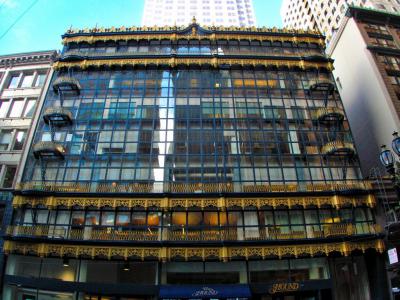
Located in the Financial District of San Francisco, the Hallidie Building stands proudly on Sutter Street, positioned between Montgomery Street and Kearny Street. This office building, designed by architect Willis Polk, was dedicated to the memory of Andrew Smith Hallidie, a notable figure in San Francisco's cable car history. Its doors first opened in 1918. While often acknowledged as the first American building to showcase glass curtain walls, it was preceded by the Boley Clothing Company building in Kansas City, Missouri, designed by Louis Curtiss and completed in 1909.
In the early 1900s, lightweight and transparent glass curtain walls were not popular for skyscrapers. Willis Polk took a bold step by creating an all-glass facade for the Hallidie Building. He wanted more natural light, worked within budget constraints, and aimed for simpler construction. Polk's design maximized reinforced concrete's cantilevering capacity, producing an impressive result.
In April 2013, the Hallidie Building underwent a comprehensive two-year restoration after the City of San Francisco's Department of Building Inspection deemed its sheet metal friezes, cornices, balconies, and fire escapes unsafe.
Among its occupants, the Hallidie Building is home to the San Francisco chapter of the American Institute of Architects. Currently, the chapter is renovating the building's original concrete street-level retail space, predating the rest of the structure. The renovation aims to transform the space into a gallery, lecture hall, and cafe. Additionally, the building houses AIGA, the Center for Architecture + Design, Charles M. Salter Associates, Inc., and Coordinated Resources, Inc.
In the early 1900s, lightweight and transparent glass curtain walls were not popular for skyscrapers. Willis Polk took a bold step by creating an all-glass facade for the Hallidie Building. He wanted more natural light, worked within budget constraints, and aimed for simpler construction. Polk's design maximized reinforced concrete's cantilevering capacity, producing an impressive result.
In April 2013, the Hallidie Building underwent a comprehensive two-year restoration after the City of San Francisco's Department of Building Inspection deemed its sheet metal friezes, cornices, balconies, and fire escapes unsafe.
Among its occupants, the Hallidie Building is home to the San Francisco chapter of the American Institute of Architects. Currently, the chapter is renovating the building's original concrete street-level retail space, predating the rest of the structure. The renovation aims to transform the space into a gallery, lecture hall, and cafe. Additionally, the building houses AIGA, the Center for Architecture + Design, Charles M. Salter Associates, Inc., and Coordinated Resources, Inc.
13) 555 California Street
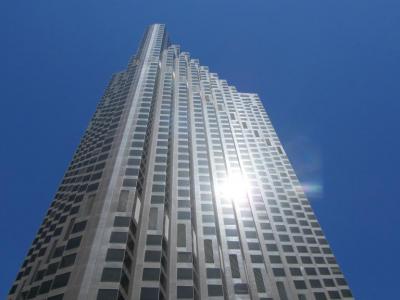
555 California Street in San Francisco stands as the city's second tallest building, symbolizing the wealth and influence of the Bank of America. Originally named the Bank of America Centre, this impressive 52-story skyscraper graces the Financial District, commonly known as "FiDi," a bustling commercial hub in San Francisco. Constructed in 1969, the architectural genius Pietro Belluschi collaborated with renowned firms Skidmore, Owings, and Merrill, as well as Wurster, Bernardi, and Emmons, to design this remarkable structure.
To the north of the building, a grand plaza serves as a tribute to A.P. Giannini, the founder of the Bank of America. Within this plaza, one can find the captivating granite sculpture titled 'Transcendence,' crafted by Masayuki Nagare. Ascending through a high-speed elevator, visitors once enjoyed the exclusive 'Carnelian Room,' a renowned restaurant located on the 52nd floor, named after the carnelian granite that adorns the building. Additionally, the distinctive bay windows, a common sight throughout the city, contribute to the magnificence of this architectural marvel.
555 California Street not only houses the offices of prominent business entities like Goldman Sachs, Kirkland and Ellis, Barclays Capital, and Morgan Stanley but has also graced the silver screen, appearing in films such as 'An Eye for an Eye' and 'The Towering Inferno.' Following the 1998 merger with Nations Bank, the Bank of America relocated its headquarters to Charlotte, and the building underwent a $1.05 billion sale in 2005, leading to its present-day name, 555 California Street.
To the north of the building, a grand plaza serves as a tribute to A.P. Giannini, the founder of the Bank of America. Within this plaza, one can find the captivating granite sculpture titled 'Transcendence,' crafted by Masayuki Nagare. Ascending through a high-speed elevator, visitors once enjoyed the exclusive 'Carnelian Room,' a renowned restaurant located on the 52nd floor, named after the carnelian granite that adorns the building. Additionally, the distinctive bay windows, a common sight throughout the city, contribute to the magnificence of this architectural marvel.
555 California Street not only houses the offices of prominent business entities like Goldman Sachs, Kirkland and Ellis, Barclays Capital, and Morgan Stanley but has also graced the silver screen, appearing in films such as 'An Eye for an Eye' and 'The Towering Inferno.' Following the 1998 merger with Nations Bank, the Bank of America relocated its headquarters to Charlotte, and the building underwent a $1.05 billion sale in 2005, leading to its present-day name, 555 California Street.
14) Transamerica Pyramid
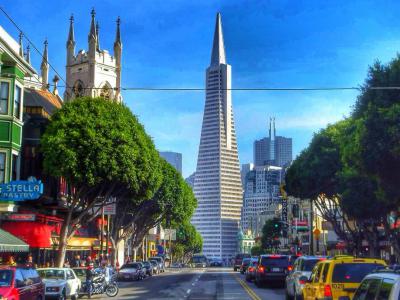
Rising above the dense cluster of Victorian and early-20th-century buildings, the Transamerica Pyramid stands as San Francisco’s most striking symbol of modernity. Located at 600 Montgomery Street in the Financial District, the 48-story skyscraper represents a defining moment in the city’s architectural evolution. Conceived in the late 1960s by architect William L. Pereira for Transamerica Corporation’s CEO, John R. Beckett, the building was intended to create a headquarters unlike any other—a bold structure that would project progress and innovation rather than conformity. When first proposed, however, the design was met with fierce debate. Detractors called it alien and incompatible with the city’s historic skyline, while supporters recognized its audacious vision.
Construction began in 1969 and concluded in 1972. At 853 feet (or 260 meters), the building briefly held the title of the tallest skyscraper west of Chicago and even ranked among the world’s top ten. Its distinctive form—a tapering pyramid capped with a spire—was not purely aesthetic. Pereira’s design allowed more natural light to reach the streets below, reducing the canyon-like shadows typical of high-rises, while maintaining stability during earthquakes through a deep, reinforced foundation. Two angular wings along the façade house elevators and stairwells without interrupting the sleek symmetry of the core. The exterior, clad in white quartz aggregate panels, gives the tower its iconic brightness that shifts subtly with the city’s fog and sun.
Despite initial controversy, the Transamerica Pyramid came to define San Francisco’s skyline. Even after Transamerica Corporation relocated its headquarters in 1999, the tower’s silhouette remained so closely tied to the brand that it continues to appear in the company’s logo. Over time, public perception transformed from skepticism to admiration; what was once considered an eyesore became an emblem of the city’s spirit of reinvention. From vantage points like Coit Tower or the Embarcadero, the Pyramid now feels inseparable from the cityscape, harmonizing with the eclectic mix of hills, light, and architecture that define San Francisco.
In recent years, a renovation project led by architect Norman Foster has aimed to restore and modernize the complex. The plans include revitalizing the lobby, expanding the small Redwood Park at its base, and upgrading the surrounding block to reflect contemporary sustainability standards. More than half a century after its debut, the Transamerica Pyramid remains both a historical landmark and a living testament to architectural daring in the face of doubt.
Construction began in 1969 and concluded in 1972. At 853 feet (or 260 meters), the building briefly held the title of the tallest skyscraper west of Chicago and even ranked among the world’s top ten. Its distinctive form—a tapering pyramid capped with a spire—was not purely aesthetic. Pereira’s design allowed more natural light to reach the streets below, reducing the canyon-like shadows typical of high-rises, while maintaining stability during earthquakes through a deep, reinforced foundation. Two angular wings along the façade house elevators and stairwells without interrupting the sleek symmetry of the core. The exterior, clad in white quartz aggregate panels, gives the tower its iconic brightness that shifts subtly with the city’s fog and sun.
Despite initial controversy, the Transamerica Pyramid came to define San Francisco’s skyline. Even after Transamerica Corporation relocated its headquarters in 1999, the tower’s silhouette remained so closely tied to the brand that it continues to appear in the company’s logo. Over time, public perception transformed from skepticism to admiration; what was once considered an eyesore became an emblem of the city’s spirit of reinvention. From vantage points like Coit Tower or the Embarcadero, the Pyramid now feels inseparable from the cityscape, harmonizing with the eclectic mix of hills, light, and architecture that define San Francisco.
In recent years, a renovation project led by architect Norman Foster has aimed to restore and modernize the complex. The plans include revitalizing the lobby, expanding the small Redwood Park at its base, and upgrading the surrounding block to reflect contemporary sustainability standards. More than half a century after its debut, the Transamerica Pyramid remains both a historical landmark and a living testament to architectural daring in the face of doubt.
15) Columbus Tower
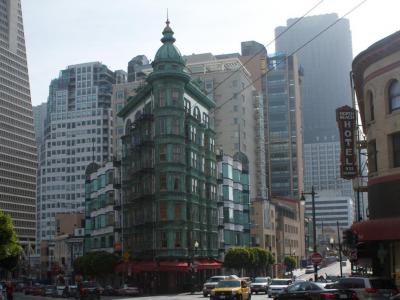
The Columbus Tower—also known as the Sentinel Building—has seen more drama than most Hollywood sets. It was built between 1905 and 1907 under the watchful eye (and wallet) of lawyer-politician Abe Reuf, who felt that San Francisco needed a showpiece. The gleaming project barely got off the ground, though, when the 1906 earthquake struck. The quake and the fires that followed reduced it to a lonely steel skeleton.
But San Francisco doesn’t stay down for long. Undeterred, Reuf rebuilt the tower in 1907, wrapping it in gleaming copper and setting up his office at the very top—until karma called... Just two years later, Reuf was convicted of bribery and sentenced to 14 years in prison. While he served time, the building’s copper cladding quietly aged into that now-iconic green patina.
Over the decades, the building’s story only got juicier. Legend has it that the first Caesar salad was tossed right here at Caesar’s restaurant, located inside the tower, until Prohibition shut it down in 1919. The building’s creative streak returned in the 1960s, when folk group The Kingston Trio turned the basement into their recording studio.
By the 1970s, the tower looked tired—until filmmaker Francis Ford Coppola stepped in like a cinematic savior. He bought it, restored its vintage glow, and installed his American Zoetrope studio. Today, as San Francisco Landmark No. 33, the Columbus Tower stands proud—part movie history, part culinary myth, and part copper-clad survivor—presently serving Napa Valley wine instead of scandal at the charming Zoetrope Café on the ground floor...
But San Francisco doesn’t stay down for long. Undeterred, Reuf rebuilt the tower in 1907, wrapping it in gleaming copper and setting up his office at the very top—until karma called... Just two years later, Reuf was convicted of bribery and sentenced to 14 years in prison. While he served time, the building’s copper cladding quietly aged into that now-iconic green patina.
Over the decades, the building’s story only got juicier. Legend has it that the first Caesar salad was tossed right here at Caesar’s restaurant, located inside the tower, until Prohibition shut it down in 1919. The building’s creative streak returned in the 1960s, when folk group The Kingston Trio turned the basement into their recording studio.
By the 1970s, the tower looked tired—until filmmaker Francis Ford Coppola stepped in like a cinematic savior. He bought it, restored its vintage glow, and installed his American Zoetrope studio. Today, as San Francisco Landmark No. 33, the Columbus Tower stands proud—part movie history, part culinary myth, and part copper-clad survivor—presently serving Napa Valley wine instead of scandal at the charming Zoetrope Café on the ground floor...
