Custom Walk in Zagreb, Croatia by alejandro_rodriguez_san_jose_b28c4 created on 2024-08-23
Guide Location: Croatia » Zagreb
Guide Type: Custom Walk
# of Sights: 19
Tour Duration: 4 Hour(s)
Travel Distance: 8 Km or 5 Miles
Share Key: HY8YV
Guide Type: Custom Walk
# of Sights: 19
Tour Duration: 4 Hour(s)
Travel Distance: 8 Km or 5 Miles
Share Key: HY8YV
How It Works
Please retrieve this walk in the GPSmyCity app. Once done, the app will guide you from one tour stop to the next as if you had a personal tour guide. If you created the walk on this website or come to the page via a link, please follow the instructions below to retrieve the walk in the app.
Retrieve This Walk in App
Step 1. Download the app "GPSmyCity: Walks in 1K+ Cities" on Apple App Store or Google Play Store.



Step 2. In the GPSmyCity app, download(or launch) the guide "Zagreb Map and Walking Tours".
Step 3. Tap the menu button located at upper right corner of the "Walks" screen and select "Retrieve custom walk". Enter the share key: HY8YV

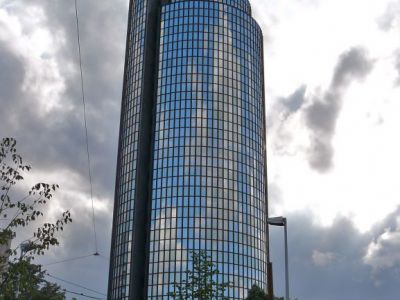
2) Cibona Tower
The Cibona Tower is a tall building situated in the heart of Zagreb, specifically on Dražen Petrović Square, near the intersection of Savska and Kranjčevićeva streets. It was constructed in 1987 in preparation for the Universiade event hosted in Zagreb that year. The tower's architectural design was the work of Marijan Hržić. It stands at a height of 92 meters (approximately 307 feet) and boasts 25 levels above ground. At its roof, there is a radio mast that extends its total height to 105 meters (about 350 feet). The tower is part of a larger complex that includes various commercial buildings, a basketball hall with a seating capacity of 5,400, and an art installation.
The skyscraper itself takes on a cylindrical shape with a diameter of 25 meters (approximately 83 feet). It gradually tapers in diameter through four stages, culminating with the radio mast. Its facade is constructed using dark steel, fully reflective glass, and black granite. Interestingly, the windows are not fixed in place. The first stage reduction occurs at the 21st floor, followed by the second at the 23rd floor, the third at the 24th floor, and the final reduction at the 25th floor. The stability of the tower is ensured by 26 reinforced concrete pylons along its rim, making it resilient against a Richter scale earthquake with a magnitude of 7° and even the impact of a smaller aircraft.
The skyscraper itself takes on a cylindrical shape with a diameter of 25 meters (approximately 83 feet). It gradually tapers in diameter through four stages, culminating with the radio mast. Its facade is constructed using dark steel, fully reflective glass, and black granite. Interestingly, the windows are not fixed in place. The first stage reduction occurs at the 21st floor, followed by the second at the 23rd floor, the third at the 24th floor, and the final reduction at the 25th floor. The stability of the tower is ensured by 26 reinforced concrete pylons along its rim, making it resilient against a Richter scale earthquake with a magnitude of 7° and even the impact of a smaller aircraft.
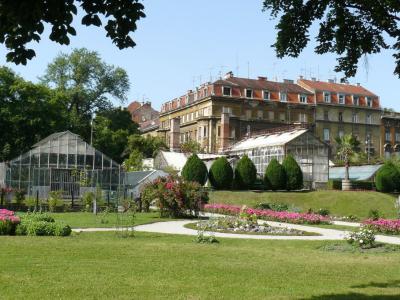
3) Botanical Garden
The Botanical Garden in Zagreb is a carefully designed green space at the southern edge of the Lower Town, forming part of the city’s Green Horseshoe. It was founded in 1889 by Antun Heinz as part of the Faculty of Science at the University of Zagreb and officially opened in 1891. Covering around five hectares at an elevation of about 120 metres, the garden was established to support botanical research and teaching while remaining accessible to the public.
Today, it hosts more than 10,000 plant species, including around 1,800 exotic varieties. The layout is organized into themed sections that reflect both botanical classification and geographic origin. Visitors can explore native Croatian flora arranged to mirror natural habitats, including rock gardens, alongside collections of alpine, aquatic, and exotic plants. A systematic field is also included for educational use, particularly for university teaching.
The garden’s design incorporates a variety of landscape styles. Its arboretum follows the principles of English landscape gardening, with a wide range of trees and shrubs, while the western section near the glasshouses features a formal French-style flower parterre with geometric patterns. Fourteen greenhouses contain tropical and subtropical species, as well as plants used for research.
Man-made lakes and pools support marsh vegetation and attract birdlife, adding to the garden’s calm atmosphere.
Today, it hosts more than 10,000 plant species, including around 1,800 exotic varieties. The layout is organized into themed sections that reflect both botanical classification and geographic origin. Visitors can explore native Croatian flora arranged to mirror natural habitats, including rock gardens, alongside collections of alpine, aquatic, and exotic plants. A systematic field is also included for educational use, particularly for university teaching.
The garden’s design incorporates a variety of landscape styles. Its arboretum follows the principles of English landscape gardening, with a wide range of trees and shrubs, while the western section near the glasshouses features a formal French-style flower parterre with geometric patterns. Fourteen greenhouses contain tropical and subtropical species, as well as plants used for research.
Man-made lakes and pools support marsh vegetation and attract birdlife, adding to the garden’s calm atmosphere.
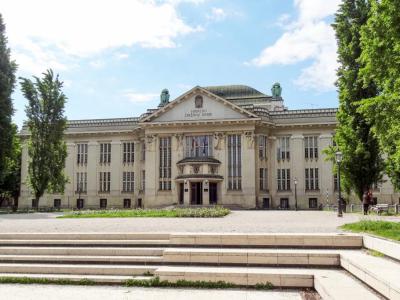
4) Croatian State Archives
The Croatian State Archives in Zagreb is both a central institution for preserving the country’s documentary heritage and one of the most distinctive buildings in the Lower Town. Its origins date back to 1643, when the Croatian Parliament instructed treasurer Ivan Zakmardi to compile and safeguard legal documents, leading to the creation of an early archival system.
Over time, this evolved into the national archive, holding materials that trace the political, administrative, and cultural history of Croatia. In 1744, Ladislaus Kiraly became the first official archivist, and by 1763, the growing collection had been relocated to Saint Mark’s Square before finding its permanent home.
Today, the archives are housed in an imposing building on Marulić Square, completed in 1913 and recognized as a notable example of Art Nouveau architecture. Considered one of Zagreb’s architectural highlights, the structure features a carefully designed exterior set within a landscaped park. To find the first notable highlight, look up at the four corners of the roof; you can see symbolic owl sculptures, each carrying a globe representing various sciences. This architectural detail is complemented by the monument to Marko Marulić, the father of Croatian literature, by Ivan Meštrović, prominently positioned in front of the main entrance.
Inside, the building reveals a richly decorated interior, with a grand lobby and atrium adorned with mosaics, intricate ironwork, leaded glass, and polished marble. These spaces often host temporary exhibitions.
The central highlight, the Great Reading Room, is located on the first floor of the building. To find it, follow the grand marble staircase upward; once inside, look for the original 1913 custom-designed desks, the massive chandeliers, and the monumental paintings by Vlaho Bukovac and other Croatian masters. This room, with its high ceilings and refined decorative details, is among the most impressive interiors in the city.
While the written collections primarily serve researchers, the building itself draws visitors through its architectural quality and artistic detail, offering insight into both Croatia’s institutional history and early 20th-century design. Visitors should note that because the building is an active research facility, access to the Great Reading Room may be limited during quiet study hours, so checking the guided tour schedule ahead of time is recommended.
Over time, this evolved into the national archive, holding materials that trace the political, administrative, and cultural history of Croatia. In 1744, Ladislaus Kiraly became the first official archivist, and by 1763, the growing collection had been relocated to Saint Mark’s Square before finding its permanent home.
Today, the archives are housed in an imposing building on Marulić Square, completed in 1913 and recognized as a notable example of Art Nouveau architecture. Considered one of Zagreb’s architectural highlights, the structure features a carefully designed exterior set within a landscaped park. To find the first notable highlight, look up at the four corners of the roof; you can see symbolic owl sculptures, each carrying a globe representing various sciences. This architectural detail is complemented by the monument to Marko Marulić, the father of Croatian literature, by Ivan Meštrović, prominently positioned in front of the main entrance.
Inside, the building reveals a richly decorated interior, with a grand lobby and atrium adorned with mosaics, intricate ironwork, leaded glass, and polished marble. These spaces often host temporary exhibitions.
The central highlight, the Great Reading Room, is located on the first floor of the building. To find it, follow the grand marble staircase upward; once inside, look for the original 1913 custom-designed desks, the massive chandeliers, and the monumental paintings by Vlaho Bukovac and other Croatian masters. This room, with its high ceilings and refined decorative details, is among the most impressive interiors in the city.
While the written collections primarily serve researchers, the building itself draws visitors through its architectural quality and artistic detail, offering insight into both Croatia’s institutional history and early 20th-century design. Visitors should note that because the building is an active research facility, access to the Great Reading Room may be limited during quiet study hours, so checking the guided tour schedule ahead of time is recommended.
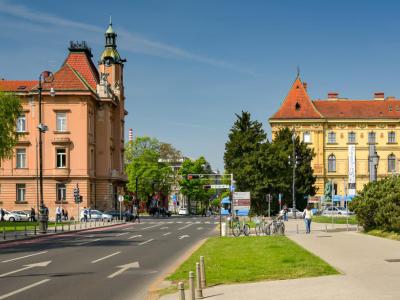
5) Republic of Croatia Square
Republic of Croatia Square is one of the largest and most prominent open spaces in Zagreb’s Lower Town, often regarded as one of the city’s most refined squares. It forms part of the western section of Lenuci’s Horseshoe and belongs to a trio of interconnected spaces that define this area of the city.
The square developed gradually between 1856, when a former hospital was built on its northern side, and 1964, with the construction of the Ferimport building on the western edge. Most of the surrounding structures date to the late 19th century, reflecting the historicist architectural styles typical of Zagreb’s expansion during the period of the Austro-Hungarian Empire. Its current name, adopted in 2017, replaced earlier names associated with different political eras.
At the centre of the square stands the Croatian National Theatre, a Neo-Baroque landmark that serves as its main visual anchor. Nearby, the University of Zagreb and several faculty buildings reinforce the square’s academic and cultural character.
The square developed gradually between 1856, when a former hospital was built on its northern side, and 1964, with the construction of the Ferimport building on the western edge. Most of the surrounding structures date to the late 19th century, reflecting the historicist architectural styles typical of Zagreb’s expansion during the period of the Austro-Hungarian Empire. Its current name, adopted in 2017, replaced earlier names associated with different political eras.
At the centre of the square stands the Croatian National Theatre, a Neo-Baroque landmark that serves as its main visual anchor. Nearby, the University of Zagreb and several faculty buildings reinforce the square’s academic and cultural character.
6) Croatian National Theater
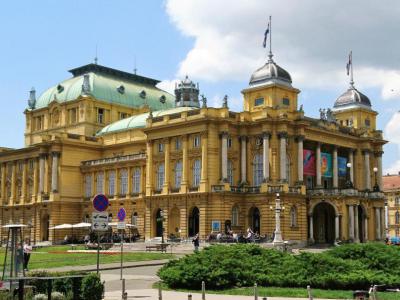
The Croatian National Theater in Zagreb stands as one of the city’s principal cultural landmarks and a leading institution for drama, opera, and ballet. Its origins date back to 1834, when the first city theatre was established in what is now the Old City Hall. It officially became the Croatian National Theatre in 1860 and gained government support the following year, aligning it with other major European national theatres.
The current building, opened in 1895 during the era of the Austro-Hungarian Empire, was inaugurated in the presence of Franz Joseph I. It was designed by the Viennese architects Fellner & Helmer, known for their theatre designs across Central Europe. Over the decades, as Zagreb expanded, the structure itself became a crown jewel of the city’s Green Horseshoe parks.
The structure is an example of Neo-Baroque architecture, defined by its symmetrical façade, decorative ornamentation, and prominent central entrance. Its bright yellow exterior makes it a focal point within the surrounding square. The first highlight, the fountain “The Well of Life,” is located directly in front of the theatre. To find it, stand at the base of the main entrance steps and look down into the circular bronze basin created in 1905 by Ivan Meštrović; look for the ten figures representing the different stages of life as they cling to the water’s edge.
Inside, the richly decorated auditorium, with its red and gold tones and painted ceiling, reflects late 19th-century design. The central focal point is the Ceremonial Curtain, located on the main stage. Once you find yourself inside the hall, look for Vlaho Bukovac’s masterpiece titled The Reformation of Croatian Literature and Art, which depicts famous 19th-century cultural figures. Directly opposite the stage, find the final highlight: the Emperor’s Box. Look for the most ornate, centrally positioned balcony in the first tier, which still features the plush gold and red velvet reserved for royalty since the building’s opening.
The theatre continues to host a wide program of performances. Visitors should note that access to the auditorium is usually restricted during rehearsals and performances, so checking guided tour times or performance schedules in advance is advisable.
The current building, opened in 1895 during the era of the Austro-Hungarian Empire, was inaugurated in the presence of Franz Joseph I. It was designed by the Viennese architects Fellner & Helmer, known for their theatre designs across Central Europe. Over the decades, as Zagreb expanded, the structure itself became a crown jewel of the city’s Green Horseshoe parks.
The structure is an example of Neo-Baroque architecture, defined by its symmetrical façade, decorative ornamentation, and prominent central entrance. Its bright yellow exterior makes it a focal point within the surrounding square. The first highlight, the fountain “The Well of Life,” is located directly in front of the theatre. To find it, stand at the base of the main entrance steps and look down into the circular bronze basin created in 1905 by Ivan Meštrović; look for the ten figures representing the different stages of life as they cling to the water’s edge.
Inside, the richly decorated auditorium, with its red and gold tones and painted ceiling, reflects late 19th-century design. The central focal point is the Ceremonial Curtain, located on the main stage. Once you find yourself inside the hall, look for Vlaho Bukovac’s masterpiece titled The Reformation of Croatian Literature and Art, which depicts famous 19th-century cultural figures. Directly opposite the stage, find the final highlight: the Emperor’s Box. Look for the most ornate, centrally positioned balcony in the first tier, which still features the plush gold and red velvet reserved for royalty since the building’s opening.
The theatre continues to host a wide program of performances. Visitors should note that access to the auditorium is usually restricted during rehearsals and performances, so checking guided tour times or performance schedules in advance is advisable.
7) Gavella Theater
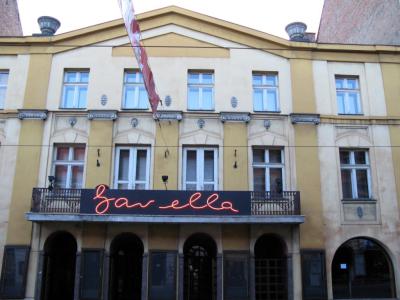
Gavella Drama Theatre, along with the Croatian National Theatre's Drama, stands as a unique cultural institution in Zagreb, dedicated explicitly to dramatic arts. This theater balances local Croatian plays with global dramatic classics, embracing a variety of genres and perspectives. They aim to develop shows that not only entertain but also challenge societal norms and artistic values, continuing the legacy of their founder, Dr. Branko Gavella.
The Gavella Drama Theater, originally known as the Zagreb Drama Theater, was established in 1953 by a group of young actors and directors in collaboration with the local branch of the Croatian National Theater. Their primary goal was to introduce a fresh approach to theater, distinct from the traditional productions of the parent theater. This innovative idea was conceived by Dr. Branko Gavella (1885–1962), a multi-talented figure in the world of theater who served as a director, manager, educator, theatrologist, theater critic, and translator.
Over the years, Gavella Drama Theater has become one of Croatia's most esteemed theater companies, known for its "collective acting" concept inherited from its founder, Dr. Branko Gavella. The theater's well-designed venue allows actors to express themselves fully on stage. In 1992, the theater was renamed in Dr. Gavella's honor, cementing its status in Croatian culture.
Since 1953, Gavella Theatre has been a fixture in Frankopanska street, debuting around 400 plays, with some remaining popular for over a decade. Known beyond Croatia, they regularly perform at other venues and have gained acclaim at major international theater festivals. The ensemble, comprising 38 talented actors, has recently welcomed new, younger members, adding fresh dynamics to their performances.
The Gavella Drama Theater, originally known as the Zagreb Drama Theater, was established in 1953 by a group of young actors and directors in collaboration with the local branch of the Croatian National Theater. Their primary goal was to introduce a fresh approach to theater, distinct from the traditional productions of the parent theater. This innovative idea was conceived by Dr. Branko Gavella (1885–1962), a multi-talented figure in the world of theater who served as a director, manager, educator, theatrologist, theater critic, and translator.
Over the years, Gavella Drama Theater has become one of Croatia's most esteemed theater companies, known for its "collective acting" concept inherited from its founder, Dr. Branko Gavella. The theater's well-designed venue allows actors to express themselves fully on stage. In 1992, the theater was renamed in Dr. Gavella's honor, cementing its status in Croatian culture.
Since 1953, Gavella Theatre has been a fixture in Frankopanska street, debuting around 400 plays, with some remaining popular for over a decade. Known beyond Croatia, they regularly perform at other venues and have gained acclaim at major international theater festivals. The ensemble, comprising 38 talented actors, has recently welcomed new, younger members, adding fresh dynamics to their performances.
8) Zagreb Funicular
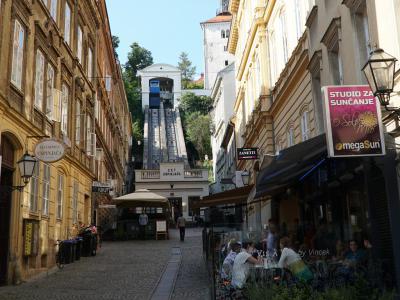
The Zagreb Funicular is one of the city’s most distinctive yet modest landmarks, linking the Lower Town with the historic Upper Town in just over a minute. Commissioned in 1888 by contractor D. W. Klein from Osijek and opened in 1890, it is the oldest form of public transport in Zagreb and has operated continuously ever since. Measuring only about 66 meters, it is often described as one of the shortest public funiculars in the world.
Initially powered by steam, the system struggled with low pressure and frequent breakdowns until it was electrified in 1934—greatly improving reliability. Today, two wagons operate on parallel tracks, each with 16 seats and standing room for 12 passengers, moving at a steady pace of about 1.5 meters per second. The lower station sits on Tomićeva Street, just off Ilica Street, while the upper station is located at the foot of Lotrščak Tower, along Strossmayer Promenade, replacing earlier wooden steps.
The short ride offers a quick transition between two contrasting parts of the city, along with a glimpse over rooftops. Despite its size, it has carried an impressive range of passengers over time, from local residents to visiting dignitaries, including members of royalty such as King Charles III and Queen Camilla.
Initially powered by steam, the system struggled with low pressure and frequent breakdowns until it was electrified in 1934—greatly improving reliability. Today, two wagons operate on parallel tracks, each with 16 seats and standing room for 12 passengers, moving at a steady pace of about 1.5 meters per second. The lower station sits on Tomićeva Street, just off Ilica Street, while the upper station is located at the foot of Lotrščak Tower, along Strossmayer Promenade, replacing earlier wooden steps.
The short ride offers a quick transition between two contrasting parts of the city, along with a glimpse over rooftops. Despite its size, it has carried an impressive range of passengers over time, from local residents to visiting dignitaries, including members of royalty such as King Charles III and Queen Camilla.
9) Museum of Broken Relationships (must see)
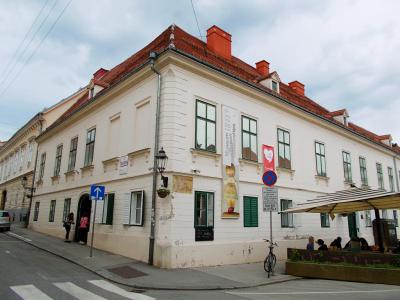
Museum of Broken Relationships is one of Zagreb’s most distinctive cultural spaces, located in the Upper Town within the Baroque Kulmer Palace. Founded in 2010 by Croatian artists Olinka Vištica and Dražen Grubišić, the museum grew out of a traveling collection inspired by the end of their own relationship.
It is dedicated to failed love relationships, preserving personal objects left behind by former partners, each accompanied by a brief, anonymous story. The institution's innovative approach was recognized globally in 2011, when it received the Kenneth Hudson Award for the most innovative museum in Europe.
The collection is made up almost entirely of donations from around the world. Everyday items—photographs, letters, messages, clothing, and more unusual objects—are presented as part of what the museum describes as a “material remains” layout, where each piece is linked to a specific time, place, and emotional context. Among the most famous items on display is an “ex-axe,” used by a donor to dismantle their former partner's furniture, illustrating the visceral nature of heartbreak.
Annotations by donors provide insight into each relationship, creating a sequence of personal narratives that range from humorous to deeply reflective. Due to limited exhibition space, some earlier contributions are archived and transferred to the museum’s virtual platform.
This virtual web museum extends the concept beyond the physical space, allowing registered users to upload their own items and stories and even share personal collections with others. Within the museum itself, visitors can engage more directly through an interactive area known as the “confessional,” where they may leave messages, record thoughts, or contribute their own experiences in a more private setting.
It is dedicated to failed love relationships, preserving personal objects left behind by former partners, each accompanied by a brief, anonymous story. The institution's innovative approach was recognized globally in 2011, when it received the Kenneth Hudson Award for the most innovative museum in Europe.
The collection is made up almost entirely of donations from around the world. Everyday items—photographs, letters, messages, clothing, and more unusual objects—are presented as part of what the museum describes as a “material remains” layout, where each piece is linked to a specific time, place, and emotional context. Among the most famous items on display is an “ex-axe,” used by a donor to dismantle their former partner's furniture, illustrating the visceral nature of heartbreak.
Annotations by donors provide insight into each relationship, creating a sequence of personal narratives that range from humorous to deeply reflective. Due to limited exhibition space, some earlier contributions are archived and transferred to the museum’s virtual platform.
This virtual web museum extends the concept beyond the physical space, allowing registered users to upload their own items and stories and even share personal collections with others. Within the museum itself, visitors can engage more directly through an interactive area known as the “confessional,” where they may leave messages, record thoughts, or contribute their own experiences in a more private setting.
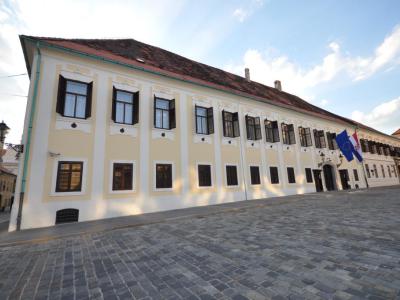
10) Banski Dvori (Presidential Palace)
Presidential Palace is a historic structure situated on the western side of Saint Mark's Square in Zagreb. It has played several important roles throughout its history. Initially, it served as the official residence for the Croatian Bans (viceroys), but today it serves as the residence of the Croatian Government.
The Presidential Palace is a two-story baroque building that was constructed by Ignaz Gyulai in the first half of the 19th century. It served as the residence for Croatian bans from 1809 to 1918, which is why it acquired the name "Banski Dvori," meaning "Ban's Court." During this period, it also housed the Tabula Banalis and later the Royal Court Table. Notably, Ban Josip Jelačić, after whom Ban Jelačić Square is named, resided in Ban's Court.
During World War II and the period known as the Independent State of Croatia (1941–1945), it served as the office for Poglavnik Ante Pavelić and was referred to as Poglavnik's Court. From 1945 to 1991, during the existence of the Socialist Federal Republic of Yugoslavia (SFR Yugoslavia), Ban's Court was the official residence for the Presidency of the Socialist Republic of Croatia.
In May 1990, it became the official residence for the President and the Government of Croatia. An important historical event occurred on October 7, 1991, when the Yugoslav People's Army carried out an airstrike targeting President Franjo Tuđman, President of the Presidency of Yugoslavia Stipe Mesić, and President of the Federal Executive Council of Yugoslavia Ante Marković. Fortunately, all of them survived the attack. The following day, the Croatian Parliament declared Croatia's independence from Yugoslavia. In 1992, the President's residence was moved to the Presidential Palace, marking an important chapter in the building's history.
The Presidential Palace is a two-story baroque building that was constructed by Ignaz Gyulai in the first half of the 19th century. It served as the residence for Croatian bans from 1809 to 1918, which is why it acquired the name "Banski Dvori," meaning "Ban's Court." During this period, it also housed the Tabula Banalis and later the Royal Court Table. Notably, Ban Josip Jelačić, after whom Ban Jelačić Square is named, resided in Ban's Court.
During World War II and the period known as the Independent State of Croatia (1941–1945), it served as the office for Poglavnik Ante Pavelić and was referred to as Poglavnik's Court. From 1945 to 1991, during the existence of the Socialist Federal Republic of Yugoslavia (SFR Yugoslavia), Ban's Court was the official residence for the Presidency of the Socialist Republic of Croatia.
In May 1990, it became the official residence for the President and the Government of Croatia. An important historical event occurred on October 7, 1991, when the Yugoslav People's Army carried out an airstrike targeting President Franjo Tuđman, President of the Presidency of Yugoslavia Stipe Mesić, and President of the Federal Executive Council of Yugoslavia Ante Marković. Fortunately, all of them survived the attack. The following day, the Croatian Parliament declared Croatia's independence from Yugoslavia. In 1992, the President's residence was moved to the Presidential Palace, marking an important chapter in the building's history.
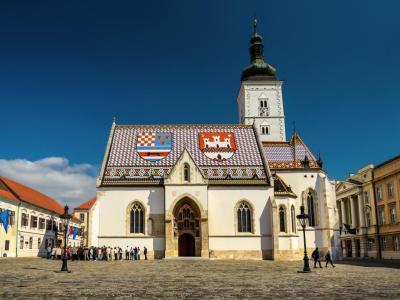
11) Saint Mark's Church and Square (must see)
Saint Mark's Church and Saint Mark’s Square form the political and historical heart of Zagreb’s Upper Town, occupying the space where the medieval settlement of Gradec once governed itself. The square developed as a civic centre after the 1242 Golden Bull of King Béla IV granted Gradec the status of a free royal city. Over time, it became the focal point for administration and public life—a role it continues to hold today.
Saint Mark’s Church is often described as one of the oldest architectural monuments in Zagreb, with elements such as a Romanesque window on the south façade and the semicircular plan of Saint Mary’s Chapel pointing to a 13th-century origin. However, the church was largely rebuilt in the 14th century as a three-nave Gothic structure, with ribbed vaults supported by sturdy columns.
The central highlight, the richly decorated southern portal, is located on the exterior right side of the church as you face it from the square. Considered among the finest Gothic portals in Central Europe, it features fifteen sculpted figures of the Holy Family, Saint Mark, and the Apostles. To find this detail, walk toward the right-hand entrance of the building; once there, look for the intricate shallow niches that house these medieval statues.
The church’s most recognizable feature—the colorful tiled roof—was added in 1880 and represents the building’s crowning glory. Visible from across the Upper Town, the roof displays two distinct coats of arms: the emblem of the Triune Kingdom of Croatia, Dalmatia, and Slavonia on the left, and the city of Zagreb on the right. To find the best view, stand in the center of the square and look for the vibrant red, white, and blue tiles that form these large heraldic shields.
Inside, the atmosphere becomes more intimate, defined by works by Croatian artists Ivan Meštrović, Jozo Kljaković, and Ljubo Babić. Sculptures by Ivan Meštrović are located primarily within the chancel and near the altars; look for his powerful, modern interpretations of religious figures, which contrast with the church’s restored frescoes and gilded ceiling finished in gold leaf.
The square surrounding the church is framed by key state institutions, including the seat of the Croatian Government, the Parliament building, and the Constitutional Court, while the Old City Hall stands at one corner. Renovated in 2006, the square has also served as a stage for modern political life, including presidential inaugurations until 2020. Security measures introduced after a 2020 attack have at times limited access, affecting the usual flow of visitors, so checking current access to the square and church in advance is advisable.
Saint Mark’s Church is often described as one of the oldest architectural monuments in Zagreb, with elements such as a Romanesque window on the south façade and the semicircular plan of Saint Mary’s Chapel pointing to a 13th-century origin. However, the church was largely rebuilt in the 14th century as a three-nave Gothic structure, with ribbed vaults supported by sturdy columns.
The central highlight, the richly decorated southern portal, is located on the exterior right side of the church as you face it from the square. Considered among the finest Gothic portals in Central Europe, it features fifteen sculpted figures of the Holy Family, Saint Mark, and the Apostles. To find this detail, walk toward the right-hand entrance of the building; once there, look for the intricate shallow niches that house these medieval statues.
The church’s most recognizable feature—the colorful tiled roof—was added in 1880 and represents the building’s crowning glory. Visible from across the Upper Town, the roof displays two distinct coats of arms: the emblem of the Triune Kingdom of Croatia, Dalmatia, and Slavonia on the left, and the city of Zagreb on the right. To find the best view, stand in the center of the square and look for the vibrant red, white, and blue tiles that form these large heraldic shields.
Inside, the atmosphere becomes more intimate, defined by works by Croatian artists Ivan Meštrović, Jozo Kljaković, and Ljubo Babić. Sculptures by Ivan Meštrović are located primarily within the chancel and near the altars; look for his powerful, modern interpretations of religious figures, which contrast with the church’s restored frescoes and gilded ceiling finished in gold leaf.
The square surrounding the church is framed by key state institutions, including the seat of the Croatian Government, the Parliament building, and the Constitutional Court, while the Old City Hall stands at one corner. Renovated in 2006, the square has also served as a stage for modern political life, including presidential inaugurations until 2020. Security measures introduced after a 2020 attack have at times limited access, affecting the usual flow of visitors, so checking current access to the square and church in advance is advisable.
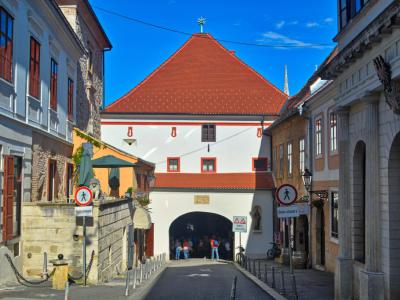
12) Kamenita Vrata (The Stone Gate)
The Stone Gate is the only preserved medieval city gate of Zagreb’s Upper Town, marking the eastern entrance to the former fortified settlement of Gradec. In 1242, Gradec was declared a free royal city with the right to self-government, prompting the construction of defensive walls and fortified gates; the Stone Gate, believed to date from 1266, is the sole survivor.
It takes the form of a rectangular entrance tower, once integrated into the town walls. Narrow loopholes on its northern and western sides, added in the 16th century, hint at its defensive past, while the central passage still functions as a route through the structure.
In 1731, a fire destroyed much of Gradec, but a painting of the Virgin Mary with the Infant Jesus, housed inside the gate, was found untouched. This event transformed the passage into a place of devotion, and a chapel was established within the gateway, with the painting set behind a wrought-iron grille. Whether viewed as a miracle or not, the site remains active, with visitors and locals alike lighting candles and offering prayers.
Rows of candles line the walls, and among the details is a small figure of Dora Krupićeva, a character from The Goldsmith's Gold, shown holding the keys to the city.
It takes the form of a rectangular entrance tower, once integrated into the town walls. Narrow loopholes on its northern and western sides, added in the 16th century, hint at its defensive past, while the central passage still functions as a route through the structure.
In 1731, a fire destroyed much of Gradec, but a painting of the Virgin Mary with the Infant Jesus, housed inside the gate, was found untouched. This event transformed the passage into a place of devotion, and a chapel was established within the gateway, with the painting set behind a wrought-iron grille. Whether viewed as a miracle or not, the site remains active, with visitors and locals alike lighting candles and offering prayers.
Rows of candles line the walls, and among the details is a small figure of Dora Krupićeva, a character from The Goldsmith's Gold, shown holding the keys to the city.
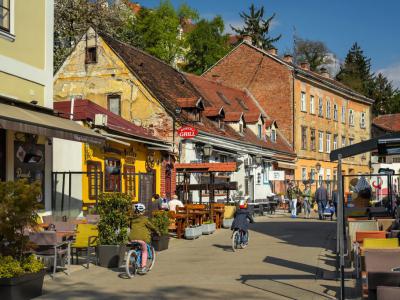
13) Tkalčićeva Street (must see)
Tkalčićeva Street in Zagreb follows the former course of the Medveščak Creek, which once formed the boundary between the medieval settlements of Gradec and Kaptol. From the earliest days of the city, the creek powered a line of watermills that supported local industry, producing cloth, paper, soap, liquor, and leather. Competition over these mills often led to disputes between the two communities, prompting a treaty in 1392 that limited further construction and left only two mills within the city, both owned by the Cistercian Monastery.
By 1898, the polluted creek was covered over and the mills demolished, giving way to a new street called Creek Street. In 1913, it was renamed after the historian and priest Ivan Tkalčić. Most of the buildings lining the street today date from the 18th and 19th centuries. In the early 20th century, Tkalčićeva also became Zagreb’s main red-light district, where prostitution was legal and regulated, and brothels occupied many of the houses, including the well-known Green Lantern. This phase ended with the upheavals of the Second World War, while earlier trades, such as leather production, had already declined by 1938.
Today, Tkalčićeva Street is one of the most animated parts of central Zagreb, known for its cafés, bars, and restaurants that line the pedestrian route. Small businesses have replaced the old mills, and the street functions as a social corridor connecting key areas of the historic centre. Visitors will notice preserved facades, along with details such as the statue of writer Marija Jurić Zagorka and a traditional sundial.
The former creek now runs beneath as part of the city’s sewer system, but above ground, the street offers a steady rhythm of terraces and everyday activity, making it an easy place to pause for coffee, people-watching, or a relaxed meal.
By 1898, the polluted creek was covered over and the mills demolished, giving way to a new street called Creek Street. In 1913, it was renamed after the historian and priest Ivan Tkalčić. Most of the buildings lining the street today date from the 18th and 19th centuries. In the early 20th century, Tkalčićeva also became Zagreb’s main red-light district, where prostitution was legal and regulated, and brothels occupied many of the houses, including the well-known Green Lantern. This phase ended with the upheavals of the Second World War, while earlier trades, such as leather production, had already declined by 1938.
Today, Tkalčićeva Street is one of the most animated parts of central Zagreb, known for its cafés, bars, and restaurants that line the pedestrian route. Small businesses have replaced the old mills, and the street functions as a social corridor connecting key areas of the historic centre. Visitors will notice preserved facades, along with details such as the statue of writer Marija Jurić Zagorka and a traditional sundial.
The former creek now runs beneath as part of the city’s sewer system, but above ground, the street offers a steady rhythm of terraces and everyday activity, making it an easy place to pause for coffee, people-watching, or a relaxed meal.
14) Ban Jelačić Square (must see)
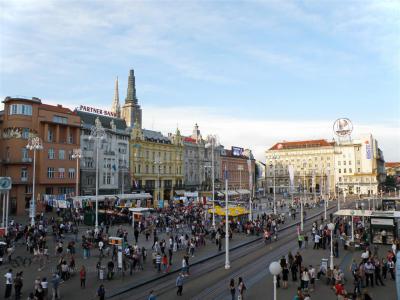
Ban Jelačić Square forms the central gathering point of Zagreb. The square takes its name from Josip Jelačić, a 19th-century governor remembered for his role in resisting Hungarian authority within the Habsburg Monarchy. His equestrian statue, erected in the 19th century, remains the square’s focal point, though it has had a complex history: removed in 1947 by Communist authorities—who renamed the space Republic Square—it was returned in 1990 as Croatia moved toward independence.
The square’s origins date to 1641, when a new marketplace was established outside the medieval cores of Gradec and Kaptol, near the Manduševac spring. Initially known as Manduševac, it later became Harmica which means "thirtieth”. Historically, the square was the place where merchants paid a tax of about 1/30 levied on goods brought into a town In 1848, it was renamed Ban Jelačić Square. Over time, it developed into Zagreb’s main commercial and social hub, framed by buildings that reflect a mix of Classicist, Secessionist, and Modernist styles.
In the late 20th century, the square underwent significant transformation. Ahead of the 1987 World University Games, it was repaved with stone blocks and pedestrianized, while the Manduševac Fountain—whose spring had been buried in 1898—was uncovered and restored.
Splavnica Street can be found on the northern side of the square and it leads to Dolac Market. The market is easily recognized by its rows of red umbrellas, where locals shop for fresh produce, cheese, and flowers. Throughout the year, the square functions as a lively urban stage, but in winter it takes on a more festive character, with Christmas trees and lights illuminating the surrounding façades.
The square’s origins date to 1641, when a new marketplace was established outside the medieval cores of Gradec and Kaptol, near the Manduševac spring. Initially known as Manduševac, it later became Harmica which means "thirtieth”. Historically, the square was the place where merchants paid a tax of about 1/30 levied on goods brought into a town In 1848, it was renamed Ban Jelačić Square. Over time, it developed into Zagreb’s main commercial and social hub, framed by buildings that reflect a mix of Classicist, Secessionist, and Modernist styles.
In the late 20th century, the square underwent significant transformation. Ahead of the 1987 World University Games, it was repaved with stone blocks and pedestrianized, while the Manduševac Fountain—whose spring had been buried in 1898—was uncovered and restored.
Splavnica Street can be found on the northern side of the square and it leads to Dolac Market. The market is easily recognized by its rows of red umbrellas, where locals shop for fresh produce, cheese, and flowers. Throughout the year, the square functions as a lively urban stage, but in winter it takes on a more festive character, with Christmas trees and lights illuminating the surrounding façades.

15) Nikola Šubić Zrinski Square
Nikola Šubić Zrinski Square is one of the most recognizable and refined public spaces in Zagreb’s Lower Town. Covering about 12,540 square metres, it forms part of the city’s planned Green Horseshoe, a network of seven interconnected squares.
The square is named after Nikola Šubić Zrinski, a 16th-century ban of Croatia and member of the influential Zrinski family, remembered for his role in the defense of Szigetvár against the Ottoman Empire. At the northern end of the square stands the Meteorological Column, installed in 1884 as a gift from Dr. Adolf Holzer, which continues to display temperature, local time, and atmospheric pressure.
Originally designed as a landscaped park, Zrinjevac was part of a broader effort to create a balanced urban environment that combined greenery with cultural institutions. Tree-lined paths, symmetrical lawns, and carefully maintained flowerbeds define the layout, while surrounding buildings house key institutions such as the Croatian Academy of Sciences and Arts, the Supreme Court, the Ministry of Foreign Affairs, and the Zagreb Archaeological Museum.
A distinctive feature of the square is its music pavilion, established in 1891 as a gift from wealthy trader Eduard Prister, which continues to host concerts and public events. The southern section includes busts of notable Croatian figures, including a bust of Zrinski himself.
The square is named after Nikola Šubić Zrinski, a 16th-century ban of Croatia and member of the influential Zrinski family, remembered for his role in the defense of Szigetvár against the Ottoman Empire. At the northern end of the square stands the Meteorological Column, installed in 1884 as a gift from Dr. Adolf Holzer, which continues to display temperature, local time, and atmospheric pressure.
Originally designed as a landscaped park, Zrinjevac was part of a broader effort to create a balanced urban environment that combined greenery with cultural institutions. Tree-lined paths, symmetrical lawns, and carefully maintained flowerbeds define the layout, while surrounding buildings house key institutions such as the Croatian Academy of Sciences and Arts, the Supreme Court, the Ministry of Foreign Affairs, and the Zagreb Archaeological Museum.
A distinctive feature of the square is its music pavilion, established in 1891 as a gift from wealthy trader Eduard Prister, which continues to host concerts and public events. The southern section includes busts of notable Croatian figures, including a bust of Zrinski himself.

16) King Tomislav Square
King Tomislav Square is one of the key open spaces in Zagreb’s Lower Town and forms the southern starting point of the city’s planned Green Horseshoe. It is named after King Tomislav, who ruled in the early 10th century and is credited with unifying the regions of Dalmatia and Pannonia into the early Croatian state. Originally named after Franz Joseph I, the square was renamed following the dissolution of the Austro-Hungarian Empire.
The square’s broad lawns and formal layout were designed to create a dignified entrance into the city centre, especially for those arriving at the nearby main railway station, which faces the square. Today, it remains a meticulously maintained public space, framed by tree-lined paths, vibrant flowerbeds, and the impressive yellow façade of the Art Pavilion at its northern edge.
At the centre stands the equestrian statue of King Tomislav, unveiled in 1947, anchoring the space visually. Benches and pathways invite visitors to pause, whether near the central fountain or along the perimeter, while the adjacent underground shopping centre and steady flow of pedestrians add to the square’s everyday rhythm.
In warmer months, the lawns become a popular place to relax, while in winter the square transforms with an ice rink and illuminated trees. At night, the softly lit Art Pavilion casts a warm glow across the northern end of the square.
The square’s broad lawns and formal layout were designed to create a dignified entrance into the city centre, especially for those arriving at the nearby main railway station, which faces the square. Today, it remains a meticulously maintained public space, framed by tree-lined paths, vibrant flowerbeds, and the impressive yellow façade of the Art Pavilion at its northern edge.
At the centre stands the equestrian statue of King Tomislav, unveiled in 1947, anchoring the space visually. Benches and pathways invite visitors to pause, whether near the central fountain or along the perimeter, while the adjacent underground shopping centre and steady flow of pedestrians add to the square’s everyday rhythm.
In warmer months, the lawns become a popular place to relax, while in winter the square transforms with an ice rink and illuminated trees. At night, the softly lit Art Pavilion casts a warm glow across the northern end of the square.
17) Fascism Victims Square and Meštrović Pavilion
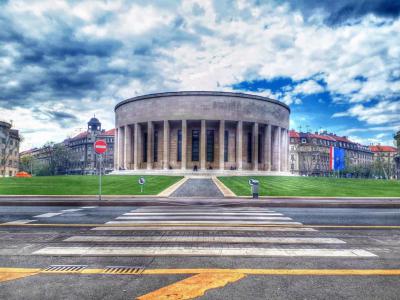
Fascism Victims Square (Trg Žrtava Fašizma) holds a prominent position in Zagreb, serving as a central hub. This square is located at the crossroads of six different streets. It stands as a symbol of the intense struggle for Croatia's independence following World War II, a period marked by significant loss of life. The square retains its name in honor of the more than 16,000 Croatians who were tragically sent to concentration camps during that time.
The square's layout is defined by four distinctive residential and partially commercial buildings. Vehicle and tram traffic circulates counterclockwise, with a tram roundabout encircling the square's perimeter. At the heart of the square lies a green area, featuring a structure known as the Meštrović Pavilion. This building boasts a circular design with a colonnade surrounding its outer edge and a low dome, making it a distinctive landmark within the square.
The Meštrović Pavilion, also referred to as the Home of Croatian Artists and informally known as the Mosque, serves as a cultural venue and the official headquarters of the Croatian Society of Fine Artists (HDLU). Designed by Ivan Meštrović and constructed in 1938, it has had various roles over the years. Initially functioning as an art gallery before World War II, it was repurposed as a mosque during the Independent State of Croatia and later became the Museum of the Revolution during post-war Yugoslavia. In 1990, ownership was returned to the Croatian Association of Artists. Following extensive renovation, it has been used as a space for exhibitions and events since 2006.
The square's layout is defined by four distinctive residential and partially commercial buildings. Vehicle and tram traffic circulates counterclockwise, with a tram roundabout encircling the square's perimeter. At the heart of the square lies a green area, featuring a structure known as the Meštrović Pavilion. This building boasts a circular design with a colonnade surrounding its outer edge and a low dome, making it a distinctive landmark within the square.
The Meštrović Pavilion, also referred to as the Home of Croatian Artists and informally known as the Mosque, serves as a cultural venue and the official headquarters of the Croatian Society of Fine Artists (HDLU). Designed by Ivan Meštrović and constructed in 1938, it has had various roles over the years. Initially functioning as an art gallery before World War II, it was repurposed as a mosque during the Independent State of Croatia and later became the Museum of the Revolution during post-war Yugoslavia. In 1990, ownership was returned to the Croatian Association of Artists. Following extensive renovation, it has been used as a space for exhibitions and events since 2006.
18) Zagreb Cathedral (must see)
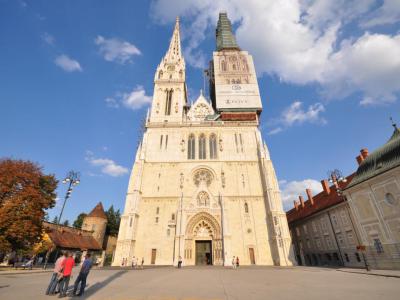
Rising above the historic Kaptol district, Zagreb Cathedral is the most prominent landmark in Zagreb and a key reference point within the city’s skyline. Its origins date to 1093, when Ladislaus I of Hungary moved the bishopric from Sisak to Zagreb and declared the existing church a cathedral. Reconstruction began immediately and continued after his death, with the building consecrated in 1217 by King Andrew II of Hungary.
The cathedral was destroyed during the Mongol invasion of 1242 and rebuilt soon after, while later threats from the Ottoman Empire led to the addition of defensive walls and a watchtower. Over time, the structure underwent several transformations—serving as a fortified religious center and a symbol of national resilience—most notably after the 1880 earthquake, when it was rebuilt in a Neo-Gothic style. Today, dedicated to the Assumption of the Blessed Virgin Mary, it remains the tallest sacral building in Croatia, its twin spires defining the skyline.
The central altar area is located at the front of the nave, serving as the liturgical heart of the building. To find it, walk straight down the main aisle toward the east end of the church. There, you will see the High Altar, which portrays the Holy Family and draws focus along the central axis of the interior. Visitors can observe the intricate Neo-Gothic details that anchor the sanctuary, often illuminated by light filtering through the tall windows.
Beneath the towering arches, and located behind the main altar level, a major historical shrine represents a relic of Croatia's 20th-century history. After you walk around the high altar to the rear of the chancel, you will reach the tomb of Cardinal Alojzije Stepinac. Once you are behind the altar, look for the relief by sculptor Ivan Meštrović, which depicts the cardinal with Christ. The tomb is a place of deep pilgrimage and is one of the most evocative sections of the cathedral’s interior.
The main façade is rich in sculptural detail and serves as the primary entrance to the cathedral. To find this highlight, stand directly in front of the Neo-Gothic West Portal before entering the building. The tympanum between the towers depicts the Virgin and Child with angels, while statues of saints—including Methodius, George, Barbara, Catherine, Florian, and Cyril—line the entrance. Above the doorway, look for the figure of Christ flanked by the Hungarian kings Stephen and Ladislaus.
Alongside these elements, the cathedral also features a series of chapels containing unique artworks. Visitors should note that the cathedral has recently faced periods of reconstruction and reorganization due to earthquake damage, so checking ahead for access updates is advisable.
The cathedral was destroyed during the Mongol invasion of 1242 and rebuilt soon after, while later threats from the Ottoman Empire led to the addition of defensive walls and a watchtower. Over time, the structure underwent several transformations—serving as a fortified religious center and a symbol of national resilience—most notably after the 1880 earthquake, when it was rebuilt in a Neo-Gothic style. Today, dedicated to the Assumption of the Blessed Virgin Mary, it remains the tallest sacral building in Croatia, its twin spires defining the skyline.
The central altar area is located at the front of the nave, serving as the liturgical heart of the building. To find it, walk straight down the main aisle toward the east end of the church. There, you will see the High Altar, which portrays the Holy Family and draws focus along the central axis of the interior. Visitors can observe the intricate Neo-Gothic details that anchor the sanctuary, often illuminated by light filtering through the tall windows.
Beneath the towering arches, and located behind the main altar level, a major historical shrine represents a relic of Croatia's 20th-century history. After you walk around the high altar to the rear of the chancel, you will reach the tomb of Cardinal Alojzije Stepinac. Once you are behind the altar, look for the relief by sculptor Ivan Meštrović, which depicts the cardinal with Christ. The tomb is a place of deep pilgrimage and is one of the most evocative sections of the cathedral’s interior.
The main façade is rich in sculptural detail and serves as the primary entrance to the cathedral. To find this highlight, stand directly in front of the Neo-Gothic West Portal before entering the building. The tympanum between the towers depicts the Virgin and Child with angels, while statues of saints—including Methodius, George, Barbara, Catherine, Florian, and Cyril—line the entrance. Above the doorway, look for the figure of Christ flanked by the Hungarian kings Stephen and Ladislaus.
Alongside these elements, the cathedral also features a series of chapels containing unique artworks. Visitors should note that the cathedral has recently faced periods of reconstruction and reorganization due to earthquake damage, so checking ahead for access updates is advisable.
19) Gornji Grad (Upper Town)
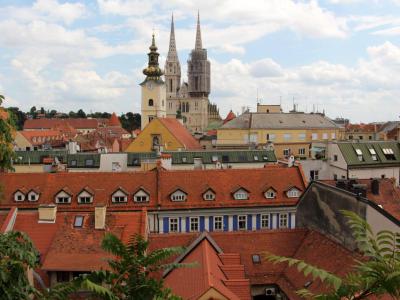
Gornji Grad–Medveščak (Upper Town–Medveščak ), one of Zagreb districts, is known as "Upper Town" for its elevated position above the "Lower Town" or Donji Grad. Centrally located, it had a population of 30,962 across an area of 10.19 square kilometers.
This district is notable for its many historical landmarks and tourist spots. It includes Gradec and Kaptol, two medieval areas that now make up the Upper Town. Key sites in Upper Town include the city's Cathedral, Saint Mark's Church, and the Croatian Parliament, alongside Tkalčićeva, a popular café-lined pedestrian street. The district also houses significant sites like the Mirogoj cemetery, established in 1876, located further north.
The main road in the district runs from south to north, starting as Ribnjak street near Ribnjak park, becoming wider and renamed as Medveščak street, and later becoming Ksaver in the north. This road is a key tram route for the district, with lines 8 and 14 serving Medveščak. Other important tram lines run along Ilica, Jurišićeva, and Vlaška streets in the southern part. The historic Zagreb funicular connects the Lower and Upper towns, and there are also bus routes, though less frequent, through the hillier, sparsely populated northern areas.
Why You Should Visit:
Gornji Grad is the oldest part of Zagreb, a must-see for anyone visiting the city. There is a lot to see and do here so take your time to explore the area.
This district is notable for its many historical landmarks and tourist spots. It includes Gradec and Kaptol, two medieval areas that now make up the Upper Town. Key sites in Upper Town include the city's Cathedral, Saint Mark's Church, and the Croatian Parliament, alongside Tkalčićeva, a popular café-lined pedestrian street. The district also houses significant sites like the Mirogoj cemetery, established in 1876, located further north.
The main road in the district runs from south to north, starting as Ribnjak street near Ribnjak park, becoming wider and renamed as Medveščak street, and later becoming Ksaver in the north. This road is a key tram route for the district, with lines 8 and 14 serving Medveščak. Other important tram lines run along Ilica, Jurišićeva, and Vlaška streets in the southern part. The historic Zagreb funicular connects the Lower and Upper towns, and there are also bus routes, though less frequent, through the hillier, sparsely populated northern areas.
Why You Should Visit:
Gornji Grad is the oldest part of Zagreb, a must-see for anyone visiting the city. There is a lot to see and do here so take your time to explore the area.
