Custom Walk in Venice, Italy by amandagrace_king_78479 created on 2025-04-12
Guide Location: Italy » Venice
Guide Type: Custom Walk
# of Sights: 17
Tour Duration: 3 Hour(s)
Travel Distance: 6.1 Km or 3.8 Miles
Share Key: QDCFS
Guide Type: Custom Walk
# of Sights: 17
Tour Duration: 3 Hour(s)
Travel Distance: 6.1 Km or 3.8 Miles
Share Key: QDCFS
How It Works
Please retrieve this walk in the GPSmyCity app. Once done, the app will guide you from one tour stop to the next as if you had a personal tour guide. If you created the walk on this website or come to the page via a link, please follow the instructions below to retrieve the walk in the app.
Retrieve This Walk in App
Step 1. Download the app "GPSmyCity: Walks in 1K+ Cities" on Apple App Store or Google Play Store.



Step 2. In the GPSmyCity app, download(or launch) the guide "Venice Map and Walking Tours".
Step 3. Tap the menu button located at upper right corner of the "Walks" screen and select "Retrieve custom walk". Enter the share key: QDCFS
1) Basilica di San Marco (St. Mark's Basilica) (must see)
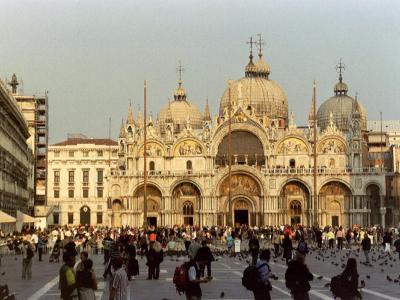
By far, the main draw for tourists visiting Venice is Saint Mark's Basilica. Its construction dates back to 832 AD when it was built to house the remains of Saint Mark, the city's patron saint. Legend has it that the holy man's body was brought from Alexandria, Egypt, hidden in barrels of pork meat, which the Venetian merchants believed the Muslim guards would never touch. Upon arrival in the lagoon, Saint Mark was said to be greeted by an angel who proclaimed that his body would find rest in that place. This legend has inspired numerous works of art throughout the centuries.
Two hundred years later, a magnificent temple was erected on the foundations of an earlier church and consecrated when Saint Mark's body was laid to rest beneath the high altar. The new basilica was designed after the renowned Church of the Apostles in Constantinople. To enhance its splendor, the structure was adorned with marble and mosaics depicting scenes from the Old and New Testaments, as well as the lives of Christ, the Virgin Mary, and Saint Mark himself.
Over time, many of the mosaics were retouched or replaced as artistic tastes evolved and damaged mosaics needed restoration. As a result, the current mosaics represent a span of 800 years of artistic styles. Some mosaics reflect traditional Byzantine representations and stand as masterpieces of medieval art, while others were based on preparatory drawings by renowned Renaissance artists from Venice and Florence, such as Paolo Veronese, Tintoretto, Titian, Paolo Uccello, and Andrea del Castagno.
Andrea del Castagno, active at San Marco in the mid-15th century, introduced a sense of perspective largely achieved with architectural settings. One of his notable contributions is the mosaic in the Mascoli Chapel, depicting the "Dormition of the Virgin". Tintoretto, on the other hand, created the mosaic in the central nave depicting the "Presentation of Jesus at the Temple" in the 16th century, while Titian designed and executed the mosaic decoration of the Sacristy vault between 1524 and 1530, depicting Old Testament prophets.
Inside the basilica, there are additional spots that can be visited for a separate fee, including the Golden Altar, the Museum, the Treasury, and the Crypt. It is highly recommended to pay for access to the first level, offering elevated views of the interior and the square outside. Alternatively, consider taking a night tour when the basilica is closed to the public, allowing you to have the entire place to yourself.
Entry to the basilica is free, but for a small fee, you can skip the line and book a time slot.
Why You Should Visit:
To witness the exceptional blend of Byzantine and Western art, showcased through the grandeur of the mosaics and the richness of the 'treasure room', offering insights into the immense power and wealth of Venice during its golden era.
Tip:
The best time to visit is around midday when the golden mosaics adorning the vaults, walls, and cupolas are illuminated and at their most spectacular. The lights are only turned on for a limited time (11:30am-12:30pm), so be sure to plan your visit accordingly to witness and appreciate the mosaics at their best.
Two hundred years later, a magnificent temple was erected on the foundations of an earlier church and consecrated when Saint Mark's body was laid to rest beneath the high altar. The new basilica was designed after the renowned Church of the Apostles in Constantinople. To enhance its splendor, the structure was adorned with marble and mosaics depicting scenes from the Old and New Testaments, as well as the lives of Christ, the Virgin Mary, and Saint Mark himself.
Over time, many of the mosaics were retouched or replaced as artistic tastes evolved and damaged mosaics needed restoration. As a result, the current mosaics represent a span of 800 years of artistic styles. Some mosaics reflect traditional Byzantine representations and stand as masterpieces of medieval art, while others were based on preparatory drawings by renowned Renaissance artists from Venice and Florence, such as Paolo Veronese, Tintoretto, Titian, Paolo Uccello, and Andrea del Castagno.
Andrea del Castagno, active at San Marco in the mid-15th century, introduced a sense of perspective largely achieved with architectural settings. One of his notable contributions is the mosaic in the Mascoli Chapel, depicting the "Dormition of the Virgin". Tintoretto, on the other hand, created the mosaic in the central nave depicting the "Presentation of Jesus at the Temple" in the 16th century, while Titian designed and executed the mosaic decoration of the Sacristy vault between 1524 and 1530, depicting Old Testament prophets.
Inside the basilica, there are additional spots that can be visited for a separate fee, including the Golden Altar, the Museum, the Treasury, and the Crypt. It is highly recommended to pay for access to the first level, offering elevated views of the interior and the square outside. Alternatively, consider taking a night tour when the basilica is closed to the public, allowing you to have the entire place to yourself.
Entry to the basilica is free, but for a small fee, you can skip the line and book a time slot.
Why You Should Visit:
To witness the exceptional blend of Byzantine and Western art, showcased through the grandeur of the mosaics and the richness of the 'treasure room', offering insights into the immense power and wealth of Venice during its golden era.
Tip:
The best time to visit is around midday when the golden mosaics adorning the vaults, walls, and cupolas are illuminated and at their most spectacular. The lights are only turned on for a limited time (11:30am-12:30pm), so be sure to plan your visit accordingly to witness and appreciate the mosaics at their best.
2) Piazza San Marco (St. Mark's Square) (must see)
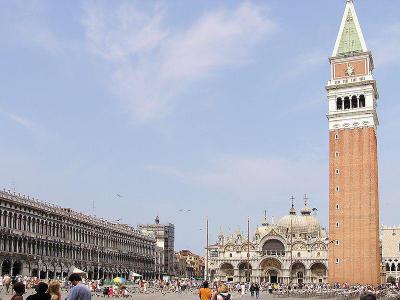
No visit to Venice – not even a recurring one – is truly complete without setting foot on Saint Mark's Square, replete with the sense of history and art. Long before the arrival of tourists, it served as the religious, commercial, and political hub of the city, where the Venetian Republic reigned for centuries. The area was initially chosen by the city's founders to establish a citadel – the Doge's Palace (Palazzo Ducale) – complete with the city's most precious place of worship, Saint Mark's Basilica. Over the centuries, these two magnificent structures have shaped a public space so distinguished and majestic that no other square in Venice was deemed worthy of the title "piazza", thus leading to all other Venetian squares being called "campi" or "campielli."
Today, Saint Mark's Square remains the heart of the city, bustling with an abundance of luxurious hotels, elegant and exorbitant cafes, extravagant seafood offerings, and luxurious shops. Evenings here are particularly enchanting, with atmospheric lighting and live music setting a romantic mood. If you don't mind paying €15 for a cup of coffee or €25 for a cocktail, take your time savoring the experience while soaking in the ambiance. However, if these prices exceed your budget, venture into the side streets of the San Marco quarter, where there is plenty of activity and more affordable options for colorful boutiques, bars, and food outlets.
Otherwise, enjoy this famous square for what it is and keep breathing its air... in and out. For you're in Venice!!!
Tips:
If your schedule allows, consider arriving in the late afternoon as it gets darker. This time offers a charming and romantic atmosphere with fewer crowds. During the day, you may come across stalls selling souvenirs, bags (including knock-offs), and other items at surprisingly reasonable prices.
Another piece of advice: if you plan to take a gondola ride, avoid the gondolas moored by the square. Seek out those located outside the main tourist areas to experience the side-canal views that photograph much better and provide a more romantic overall experience.
Today, Saint Mark's Square remains the heart of the city, bustling with an abundance of luxurious hotels, elegant and exorbitant cafes, extravagant seafood offerings, and luxurious shops. Evenings here are particularly enchanting, with atmospheric lighting and live music setting a romantic mood. If you don't mind paying €15 for a cup of coffee or €25 for a cocktail, take your time savoring the experience while soaking in the ambiance. However, if these prices exceed your budget, venture into the side streets of the San Marco quarter, where there is plenty of activity and more affordable options for colorful boutiques, bars, and food outlets.
Otherwise, enjoy this famous square for what it is and keep breathing its air... in and out. For you're in Venice!!!
Tips:
If your schedule allows, consider arriving in the late afternoon as it gets darker. This time offers a charming and romantic atmosphere with fewer crowds. During the day, you may come across stalls selling souvenirs, bags (including knock-offs), and other items at surprisingly reasonable prices.
Another piece of advice: if you plan to take a gondola ride, avoid the gondolas moored by the square. Seek out those located outside the main tourist areas to experience the side-canal views that photograph much better and provide a more romantic overall experience.
3) Campanile di San Marco (St. Mark's Bell Tower)
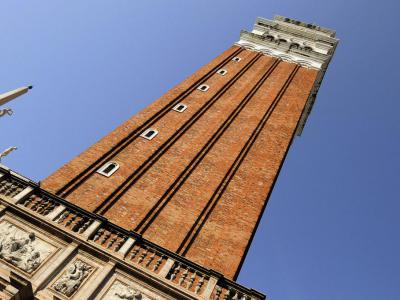
Venice's tallest bell tower was originally constructed in the 12th century. It served as a combined lighthouse and belfry and underwent continuous modifications until the 16th century when the golden angel was installed on its summit. Back in the day, each of the five bells served a specific purpose: the largest tolled to mark the beginning and end of the workday, another rang at midday, two others announced sessions of the Senate or called members of the Grand Council to meetings, and the smallest signaled an impending execution.
It was from the top of this belfry that Galileo Galilei famously showcased his telescope to the Venetian Doge in 1609 – a significant event commemorated by a plaque at the tower's observation deck. Still, the most dramatic episode associated with the Campanile occurred on July 14, 1902, when the tower collapsed shortly after giving a warning sound, causing the leisurely coffee drinkers below in the piazza to flee for their lives.
The Venetians put the Campanile back "where it was and how it was", and the tower is now safe to ascend all the way to the top. Unlike other belfries that require navigating narrow, steep spiral staircases, the Venetian one has an elevator allowing to effortlessly enjoy a pigeon's-eye view for a fee.
Rising 99 meters (325 feet) in height, the Campanile stands as the tallest structure in Venice, providing an ideal vantage point to admire the domes of Saint Mark's Basilica ("Basilica San Marco") and the surrounding lagoon. In the evenings, when the view is exceptionally clear, one can even observe distant landscapes for miles. However, even from the base of this historic bell tower, gazing up at its summit can be an equally thrilling experience.
It was from the top of this belfry that Galileo Galilei famously showcased his telescope to the Venetian Doge in 1609 – a significant event commemorated by a plaque at the tower's observation deck. Still, the most dramatic episode associated with the Campanile occurred on July 14, 1902, when the tower collapsed shortly after giving a warning sound, causing the leisurely coffee drinkers below in the piazza to flee for their lives.
The Venetians put the Campanile back "where it was and how it was", and the tower is now safe to ascend all the way to the top. Unlike other belfries that require navigating narrow, steep spiral staircases, the Venetian one has an elevator allowing to effortlessly enjoy a pigeon's-eye view for a fee.
Rising 99 meters (325 feet) in height, the Campanile stands as the tallest structure in Venice, providing an ideal vantage point to admire the domes of Saint Mark's Basilica ("Basilica San Marco") and the surrounding lagoon. In the evenings, when the view is exceptionally clear, one can even observe distant landscapes for miles. However, even from the base of this historic bell tower, gazing up at its summit can be an equally thrilling experience.
4) Ponte dei Sospiri (Bridge of Sighs)
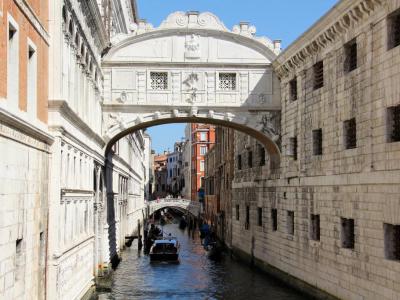
Despite its relatively small size compared to other bridges in Venice, the Bridge of Sighs holds great significance as one of the city's most renowned and frequently visited structures. Constructed in 1600, this historical landmark spans across the Palace River ("Rio di Palazzo"), connecting the New Prison ("Prigioni Nuove") to the interrogation rooms in the Doge's Palace ("Palazzo Ducale"). Crafted from white limestone, it was designed by Antonio Contino, whose uncle Antonio da Ponte was the mastermind behind the iconic Rialto Bridge.
The bridge acquired its English name, the Bridge of Sighs, in the 19th century, bestowed by Lord Byron as a translation of the Italian "Ponte dei sospiri". The name stems from the notion that prisoners would sigh as they glimpsed their final view of the enchanting city of Venice through the windows before being led to their cells. In reality, by the time the bridge was constructed, the days of inquisitions and summary executions were gone, and the cells beneath the palace's roof primarily held minor offenders. Furthermore, little could be seen from inside the bridge due to the stone grills covering the windows.
According to local legend, couples who share a kiss on a gondola beneath the Bridge of Sighs at sunset, accompanied by the chimes of Saint Mark's bell tower, are destined to experience eternal love and happiness.
The bridge acquired its English name, the Bridge of Sighs, in the 19th century, bestowed by Lord Byron as a translation of the Italian "Ponte dei sospiri". The name stems from the notion that prisoners would sigh as they glimpsed their final view of the enchanting city of Venice through the windows before being led to their cells. In reality, by the time the bridge was constructed, the days of inquisitions and summary executions were gone, and the cells beneath the palace's roof primarily held minor offenders. Furthermore, little could be seen from inside the bridge due to the stone grills covering the windows.
According to local legend, couples who share a kiss on a gondola beneath the Bridge of Sighs at sunset, accompanied by the chimes of Saint Mark's bell tower, are destined to experience eternal love and happiness.
5) Palazzo Ducale (Doge's Palace) (must see)
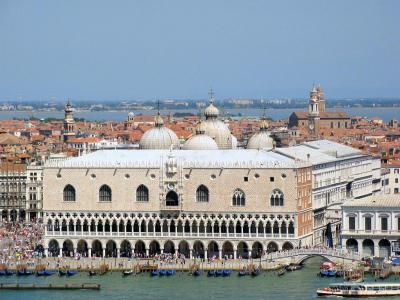
Built on the foundations of a 9th-century fortress, this palace is unquestionably the finest secular European building of its time. Over the course of centuries, it has served many purposes, including Doge residence, seat of the Venetian government, court of law, civil office, and even a prison.
First built in the 14th century, much of the edifice was destroyed by fire in the 16th century, reducing to ashes most of the art treasures held inside. Some of the greatest Venetian masters of the time, such as Tintoretto, Veronese, Titian, Bellini, and Tiepolo, contributed to the restoration efforts, recreating gilded stucco, sculptures, frescoes, and canvases that returned the palace to its former glory.
Externally, the palace exhibits a blend of Byzantine and Gothic architectural styles, while the interior exudes Classical elements, leading art critic John Ruskin to proclaim it "the central building of the world". Inside, visitors are treated to a lavish display of furnishings, paintings, and elaborately adorned ceilings. Of notable grandeur is the Grand Council chamber, featuring Tintoretto's monumental "Paradise", reputedly the largest oil painting in the world. Equally magnificent is the Sala dello Scrutinio, or "Voting Hall," adorned with paintings depicting Venice's glorious past.
In stark contrast, the opposite side of the canal reveals the grim remnants of medieval justice-the prison cells. Linked to the outside world by the Bridge of Sighs ("Ponte dei Sospiri"), these cells serve as a haunting reminder of the horrors endured by prisoners who faced torture and potential death at the hands of the city's appointed state inquisitors. The term "sighs" refers to the lamentations of countless victims forced across the bridge.
To get the most of your time at the Doge's Palace, consider using the infrared audio guide available at the entrance, which provides a captivating narrative of the 1,000-year-old maritime republic of Venice and the intricacies of its former government.
***CASANOVA TOUR***
At the age of 30, on the fateful night of 25 July 1755, Casanova found himself arrested, accused of offending religion and common decency. Shockingly, he was sentenced to five years of imprisonment without even being granted a trial. His confinement took place in the Doge's Palace, where he was confined to a cell beneath the lead-covered roof. In the sweltering summer months, the oppressive heat turned his place of incarceration into an unbearable oven, further exacerbated by the torment of countless fleas infesting the premises.
Physically, Casanova was not far from the opulence of Venice and the seat of power, yet the psychological distance between his confinement and the world outside was immeasurable. Enduring 15 months of torment and despair, he finally hatched a daring plan to escape. Creating a hole in the ceiling, he ingeniously fashioned ropes from bed sheets and descended to freedom. This remarkable escape made Casanova the only person ever to break free from the prison of the Doge's Palace. Seeking sanctuary, he first sought refuge in Munich, then continued his journey to Strasbourg, eventually concluding his odyssey by coach to Paris, where he would start a new life.
Tip:
Make sure to book in advance for the guided "Secret Itinerary" tour – an exclusive experience grants access to otherwise restricted quarters and hidden passageways, including the Doge's private chambers, the interrogation rooms where prisoners were questioned, and the two cells once occupied by Casanova.
First built in the 14th century, much of the edifice was destroyed by fire in the 16th century, reducing to ashes most of the art treasures held inside. Some of the greatest Venetian masters of the time, such as Tintoretto, Veronese, Titian, Bellini, and Tiepolo, contributed to the restoration efforts, recreating gilded stucco, sculptures, frescoes, and canvases that returned the palace to its former glory.
Externally, the palace exhibits a blend of Byzantine and Gothic architectural styles, while the interior exudes Classical elements, leading art critic John Ruskin to proclaim it "the central building of the world". Inside, visitors are treated to a lavish display of furnishings, paintings, and elaborately adorned ceilings. Of notable grandeur is the Grand Council chamber, featuring Tintoretto's monumental "Paradise", reputedly the largest oil painting in the world. Equally magnificent is the Sala dello Scrutinio, or "Voting Hall," adorned with paintings depicting Venice's glorious past.
In stark contrast, the opposite side of the canal reveals the grim remnants of medieval justice-the prison cells. Linked to the outside world by the Bridge of Sighs ("Ponte dei Sospiri"), these cells serve as a haunting reminder of the horrors endured by prisoners who faced torture and potential death at the hands of the city's appointed state inquisitors. The term "sighs" refers to the lamentations of countless victims forced across the bridge.
To get the most of your time at the Doge's Palace, consider using the infrared audio guide available at the entrance, which provides a captivating narrative of the 1,000-year-old maritime republic of Venice and the intricacies of its former government.
***CASANOVA TOUR***
At the age of 30, on the fateful night of 25 July 1755, Casanova found himself arrested, accused of offending religion and common decency. Shockingly, he was sentenced to five years of imprisonment without even being granted a trial. His confinement took place in the Doge's Palace, where he was confined to a cell beneath the lead-covered roof. In the sweltering summer months, the oppressive heat turned his place of incarceration into an unbearable oven, further exacerbated by the torment of countless fleas infesting the premises.
Physically, Casanova was not far from the opulence of Venice and the seat of power, yet the psychological distance between his confinement and the world outside was immeasurable. Enduring 15 months of torment and despair, he finally hatched a daring plan to escape. Creating a hole in the ceiling, he ingeniously fashioned ropes from bed sheets and descended to freedom. This remarkable escape made Casanova the only person ever to break free from the prison of the Doge's Palace. Seeking sanctuary, he first sought refuge in Munich, then continued his journey to Strasbourg, eventually concluding his odyssey by coach to Paris, where he would start a new life.
Tip:
Make sure to book in advance for the guided "Secret Itinerary" tour – an exclusive experience grants access to otherwise restricted quarters and hidden passageways, including the Doge's private chambers, the interrogation rooms where prisoners were questioned, and the two cells once occupied by Casanova.
6) Giardinetti Reali (Royal Gardens)
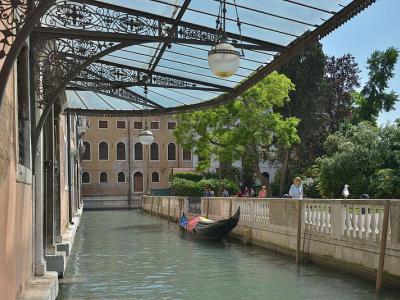
Tucked away behind a row of postcard and toy gondola vendors lies a charming public garden known as the Royal Gardens ("Giardinetti Reali"). Originally conceived by Eugène Beauharnais as part of his ambitious urban improvement project for the New Procuracies ("Procuratie Nuove"), this serene oasis was established on the former site of state granaries.
In 2018, landscape architect Paolo Pejrone revitalized the garden, ensuring it remains a peaceful retreat, complete with benches and the comforting shade of trees. However, during the summer months, the garden's tranquility is somewhat disrupted, resembling more of a lively school playground.
Adjacent to the garden, you'll find the renovated structure at the base of the nearby bridge, known as the Casino da Caffè. This historical building harkens back to the Napoleonic era and is currently undergoing restoration. For many years, it served as the primary tourist office, welcoming visitors to the area.
Wed, Thu, Fri: 8:30am–7 pm; Sat, Sun: 8:30am–7:30 pm
In 2018, landscape architect Paolo Pejrone revitalized the garden, ensuring it remains a peaceful retreat, complete with benches and the comforting shade of trees. However, during the summer months, the garden's tranquility is somewhat disrupted, resembling more of a lively school playground.
Adjacent to the garden, you'll find the renovated structure at the base of the nearby bridge, known as the Casino da Caffè. This historical building harkens back to the Napoleonic era and is currently undergoing restoration. For many years, it served as the primary tourist office, welcoming visitors to the area.
Wed, Thu, Fri: 8:30am–7 pm; Sat, Sun: 8:30am–7:30 pm
7) Museo Correr (Correr Museum)
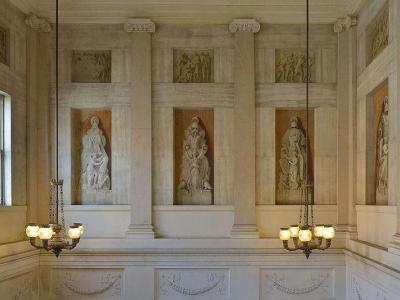
This museum showcases Venetian art and history, featuring a notable collection of sculptures by Antonio Canova and significant paintings by renowned local artists such as Giovanni Bellini and Vittore Carpaccio (including the latter's famous painting of Venetian courtesans). Among its attractions are the nine lavishly adorned Imperial Rooms, once used by the Empress of Austria, and several rooms that vividly depict the city's proud naval history through descriptive paintings and numerous maritime artifacts, including cannons from ships and surprisingly large iron mast-top navigation lights.
Additionally, the museum presents intriguing curiosities like the extravagantly high-soled shoes worn by 16th-century Venetian ladies (who relied on servants for assistance) and houses a notable collection of antique gems. It serves as the primary repository for Venetian drawings and prints, although access to these treasures is limited to special arrangements or special exhibitions.
The exhibition rooms of the Correr Museum seamlessly lead into the Archaeological Museum ("Museo Archeologico"), which hosts the Grimani collection-a significant assemblage of Greek and Roman art from the 16th and 17th centuries. Despite the transfer of numerous objects to Paris and Vienna during the Napoleonic and Austrian occupations, the collection remains impressive. Visitors can also explore the Stanza del Sansovino, the only accessible part of the Marciana National Library ("Biblioteca Nazionale Marciana"), providing a glimpse into Venetian literary history.
Additionally, the museum presents intriguing curiosities like the extravagantly high-soled shoes worn by 16th-century Venetian ladies (who relied on servants for assistance) and houses a notable collection of antique gems. It serves as the primary repository for Venetian drawings and prints, although access to these treasures is limited to special arrangements or special exhibitions.
The exhibition rooms of the Correr Museum seamlessly lead into the Archaeological Museum ("Museo Archeologico"), which hosts the Grimani collection-a significant assemblage of Greek and Roman art from the 16th and 17th centuries. Despite the transfer of numerous objects to Paris and Vienna during the Napoleonic and Austrian occupations, the collection remains impressive. Visitors can also explore the Stanza del Sansovino, the only accessible part of the Marciana National Library ("Biblioteca Nazionale Marciana"), providing a glimpse into Venetian literary history.
8) Procuratie Vecchie (Old Procuracies)
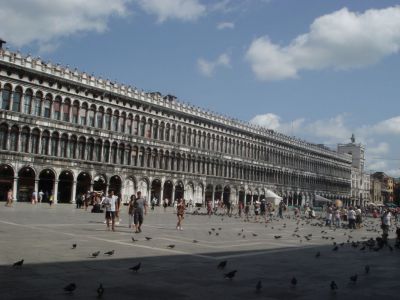
Located to the left of the Clock Tower ("Torre dell'Orologio"), the Old Procuracies building stretches forth. This magnificent structure was once the residence of the Procurators of San Marco, a prestigious position responsible for overseeing the maintenance of San Marco and the management of other government-owned properties. The number of procurators never exceeded nine, and they held the second-highest position in the Venetian hierarchy, following only the Doge, who often rose from their ranks. Alongside the Doge and the Grand Chancellor, who headed the civil service, the procurators held the exclusive distinction of being the only state officials elected for life.
Since the time of Doge Ziani, the procurators and their accompanying bureaucracies were situated on this side of Saint Mark's Square. The current building, however, was initiated around 1500 by Codussi, continued after a fire in 1512, and eventually completed around 1532 by Sansovino. Its most captivating architectural feature is the presence of 100 small round arches adorning the windows and the archways along the expansive veranda. Within these archways, you will now discover some of Venice's most renowned, historic, and upscale cafes.
Since the time of Doge Ziani, the procurators and their accompanying bureaucracies were situated on this side of Saint Mark's Square. The current building, however, was initiated around 1500 by Codussi, continued after a fire in 1512, and eventually completed around 1532 by Sansovino. Its most captivating architectural feature is the presence of 100 small round arches adorning the windows and the archways along the expansive veranda. Within these archways, you will now discover some of Venice's most renowned, historic, and upscale cafes.
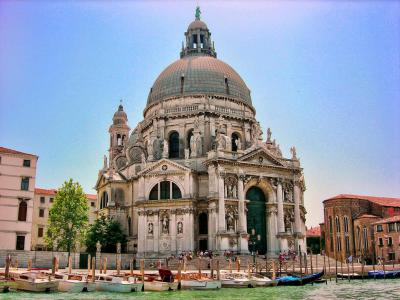
9) Basilica di Santa Maria della Salute (Basilica of Our Lady of Good Health) (must see)
While San Marco may hold the title of Venice's most famous church in name, it is Santa Maria della Salute that claims the city's most iconic image and silhouette. Affectionately known as La Salute, this grand historical church is largely recognized as the pinnacle of the city's Baroque movement.
La Salute is the youngest among the so-called "plague churches". Back in the early 1630s, Venice was ravaged by a plague that claimed the lives of nearly 100,000 people, roughly one-third of the lagoon's population. In gratitude for deliverance from this calamity, the Republic of Venice made a vow to construct and dedicate a church to Our Lady of Good Health (or Deliverance), hence the name "Salute" in Italian. Resting on a foundation of over 100,000 wooden piles, the church was designed in the fashionable Baroque style of the time by Baldassare Longhena, who devoted half a century to this grand project and lived long enough to witness its completion in 1681.
The dome of La Salute became an important addition to the Venetian skyline and soon became emblematic of the city, inspiring painters both local, such as Canaletto and Francesco Guardi, and foreign, such as J. M. W. Turner, Claude Monet and John Singer Sargent.
The basilica itself offers an intriguing visit. Its sacristy houses a small art gallery featuring notable works such as Tintoretto's "Marriage Feast of Cana" and allegorical ceiling paintings by Titian, the eminent figure of the 16th-century Venetian school. These include masterpieces like "David and Goliath", "Abraham and Isaac", "Cain and Abel", as well as eight circular paintings depicting the "Doctors of the Church and the Evangelists". Also by Titian are "The Descent of the Holy Ghost", located in the third altar to the left of the entrance, and the altarpiece of the sacristy portraying "Saint Mark Enthroned with Saints Cosmas, Damian, Sebastian, and Roch."
A highly symbolic statuary group called "The Queen of Heaven expelling the Plague" (1670) by the Flemish sculptor Josse de Corte stands out at the high altar. This theatrical Baroque masterpiece depicts the Virgin (portrayed as a kneeling young woman) and Child rescuing Venice from the clutches of the plague (portrayed as an old woman).
Entrance to the Basilica is always free during the opening hours, although a ticket is required to enter the main sacristy (museum). It is advisable to secure your tickets in advance to avoid long queues. Once inside, you can indulge in a unique view of the adjoining square from the balcony and, if fortunate, attend a 30-minute organ recital following the service. Be sure to check the events program in advance for schedules and enjoy this special experience.
Tip:
As there are limited cafes in the vicinity, it is advisable to bring a drink with you during your visit.
La Salute is the youngest among the so-called "plague churches". Back in the early 1630s, Venice was ravaged by a plague that claimed the lives of nearly 100,000 people, roughly one-third of the lagoon's population. In gratitude for deliverance from this calamity, the Republic of Venice made a vow to construct and dedicate a church to Our Lady of Good Health (or Deliverance), hence the name "Salute" in Italian. Resting on a foundation of over 100,000 wooden piles, the church was designed in the fashionable Baroque style of the time by Baldassare Longhena, who devoted half a century to this grand project and lived long enough to witness its completion in 1681.
The dome of La Salute became an important addition to the Venetian skyline and soon became emblematic of the city, inspiring painters both local, such as Canaletto and Francesco Guardi, and foreign, such as J. M. W. Turner, Claude Monet and John Singer Sargent.
The basilica itself offers an intriguing visit. Its sacristy houses a small art gallery featuring notable works such as Tintoretto's "Marriage Feast of Cana" and allegorical ceiling paintings by Titian, the eminent figure of the 16th-century Venetian school. These include masterpieces like "David and Goliath", "Abraham and Isaac", "Cain and Abel", as well as eight circular paintings depicting the "Doctors of the Church and the Evangelists". Also by Titian are "The Descent of the Holy Ghost", located in the third altar to the left of the entrance, and the altarpiece of the sacristy portraying "Saint Mark Enthroned with Saints Cosmas, Damian, Sebastian, and Roch."
A highly symbolic statuary group called "The Queen of Heaven expelling the Plague" (1670) by the Flemish sculptor Josse de Corte stands out at the high altar. This theatrical Baroque masterpiece depicts the Virgin (portrayed as a kneeling young woman) and Child rescuing Venice from the clutches of the plague (portrayed as an old woman).
Entrance to the Basilica is always free during the opening hours, although a ticket is required to enter the main sacristy (museum). It is advisable to secure your tickets in advance to avoid long queues. Once inside, you can indulge in a unique view of the adjoining square from the balcony and, if fortunate, attend a 30-minute organ recital following the service. Be sure to check the events program in advance for schedules and enjoy this special experience.
Tip:
As there are limited cafes in the vicinity, it is advisable to bring a drink with you during your visit.
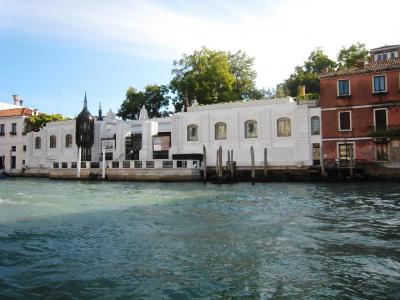
10) Peggy Guggenheim Collection (must see)
Regarded as one of the most comprehensive and brilliant modern-art collections in the Western world, this is also one of Venice's glossiest cultural destinations. Second only to the Gallery of the Academy in popularity, it serves as a prime venue for touring exhibitions. The Venier dei Leoni Palace, located on the Grand Canal, is the stunning setting for the museum, once the Venetian home of Peggy Guggenheim. Following in her family's tradition, Peggy was a lifelong patron of contemporary artists, impressing critics not only with the exceptional quality of their works but also with her innovative presentation methods.
As Peggy Guggenheim's private collection continued to grow with more and more masterpieces from the Cubist, Futurist, Metaphysical, Surrealist, and Abstract Expressionist movements, she decided to find a larger showcase and chose Venice as the ideal location. Her husband, Max Ernst, was one of her early favorite artists, and she also supported Jackson Pollock by providing him with a farmhouse to develop his artistic technique. The museum proudly displays works not only by Pollock and Ernst but also by Picasso, Duchamp, Chagall, Mondrian, Brancusi, and Dalí. Additionally, modern sculpture pieces by Giacometti and Paolozzi are placed in the garden, where Peggy's ashes are laid to rest.
Since her passing in 1979, the collection has been managed by the same foundation operating New York's Guggenheim Museum. Visitors are welcome to wander freely and explore the collection in an informal and relaxed manner. Alternatively, they can opt for a 90-minute private tour to gain insider insights into the art and Peggy's history. The regular multilingual crowd of well-versed individuals bubbling around the property with free information are quite fascinating in their own right.
Why You Should Visit:
To admire a treasure trove of works up close and personal – all in one fabulous mansion on the toniest stretch of the Grand Canal.
Tip:
Within a new wing of the museum, you'll find a shop and a café, providing a perfect space to take a break, reflect on what you've seen and heard, and recharge for further exploration.
As Peggy Guggenheim's private collection continued to grow with more and more masterpieces from the Cubist, Futurist, Metaphysical, Surrealist, and Abstract Expressionist movements, she decided to find a larger showcase and chose Venice as the ideal location. Her husband, Max Ernst, was one of her early favorite artists, and she also supported Jackson Pollock by providing him with a farmhouse to develop his artistic technique. The museum proudly displays works not only by Pollock and Ernst but also by Picasso, Duchamp, Chagall, Mondrian, Brancusi, and Dalí. Additionally, modern sculpture pieces by Giacometti and Paolozzi are placed in the garden, where Peggy's ashes are laid to rest.
Since her passing in 1979, the collection has been managed by the same foundation operating New York's Guggenheim Museum. Visitors are welcome to wander freely and explore the collection in an informal and relaxed manner. Alternatively, they can opt for a 90-minute private tour to gain insider insights into the art and Peggy's history. The regular multilingual crowd of well-versed individuals bubbling around the property with free information are quite fascinating in their own right.
Why You Should Visit:
To admire a treasure trove of works up close and personal – all in one fabulous mansion on the toniest stretch of the Grand Canal.
Tip:
Within a new wing of the museum, you'll find a shop and a café, providing a perfect space to take a break, reflect on what you've seen and heard, and recharge for further exploration.
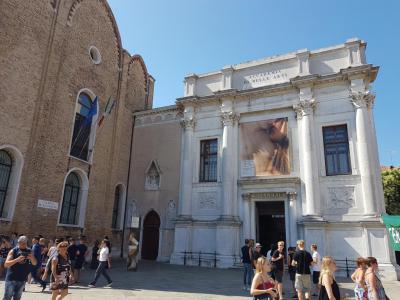
11) Gallerie dell'Accademia (Gallery of the Academy)
Experience the enduring splendor of Venice through the expansive collection of paintings housed in the renowned Academy ("Accademia"). This remarkable gallery showcases artworks from the Middle Ages to the Renaissance, representing the vibrant Venetian painting school known for its exuberant use of color. Within its walls, masterpieces by Venice's glorious sons – from Veronese to Titian to Tintoretto – come to life.
Among other highlights, you'll discover the works of 14th-century maestros Paolo and Lorenzo Veneziano, who bridged the gap between Byzantine and Gothic art. Giovanni Bellini, the creator of the captivating paintings "Madonna and Saint" and "Madonnas and Bambini", also commands attention. Vittore Carpaccio's evocative depictions of mass crucifixion and narrative scenes of Saint Ursula offer a mesmerizing glimpse into the domestic architecture, costumes, and decorative arts of late 15th-century Venice, while Giorgione's iconic painting "The Tempest", featuring a nursing baby overlooked by a man with a staff, adds to the gallery's allure.
Rooms 6 to 8 pay homage to the heavyweight figures of the Venetian High Renaissance, such as Tintoretto, Titian, Veronese, and Lotto. While these works would enrich any art collection worldwide, they serve as mere "appetizers" compared to the grandeur awaiting visitors in the vast Room #10. Within this space, a single canvas named "Christ in the House of Levi" by Paolo Veronese dominates an entire wall, leaving spectators awestruck.
As you conclude your visit, don't miss the opportunity to behold Titian's "Presentation of the Virgin" – a fitting farewell to the pantheon of esteemed Venetian artists.
Why You Should Visit:
Large, spacious and clean; the rooms are well planned and the layout beautiful.
Tip:
The entry fee for the gallery is reasonable, and during major local festivals, admission may even be free. Additionally, if you purchase a ticket, take note that it grants you access to the recently renovated Grimani Palace, conveniently located just a short walk away.
Among other highlights, you'll discover the works of 14th-century maestros Paolo and Lorenzo Veneziano, who bridged the gap between Byzantine and Gothic art. Giovanni Bellini, the creator of the captivating paintings "Madonna and Saint" and "Madonnas and Bambini", also commands attention. Vittore Carpaccio's evocative depictions of mass crucifixion and narrative scenes of Saint Ursula offer a mesmerizing glimpse into the domestic architecture, costumes, and decorative arts of late 15th-century Venice, while Giorgione's iconic painting "The Tempest", featuring a nursing baby overlooked by a man with a staff, adds to the gallery's allure.
Rooms 6 to 8 pay homage to the heavyweight figures of the Venetian High Renaissance, such as Tintoretto, Titian, Veronese, and Lotto. While these works would enrich any art collection worldwide, they serve as mere "appetizers" compared to the grandeur awaiting visitors in the vast Room #10. Within this space, a single canvas named "Christ in the House of Levi" by Paolo Veronese dominates an entire wall, leaving spectators awestruck.
As you conclude your visit, don't miss the opportunity to behold Titian's "Presentation of the Virgin" – a fitting farewell to the pantheon of esteemed Venetian artists.
Why You Should Visit:
Large, spacious and clean; the rooms are well planned and the layout beautiful.
Tip:
The entry fee for the gallery is reasonable, and during major local festivals, admission may even be free. Additionally, if you purchase a ticket, take note that it grants you access to the recently renovated Grimani Palace, conveniently located just a short walk away.
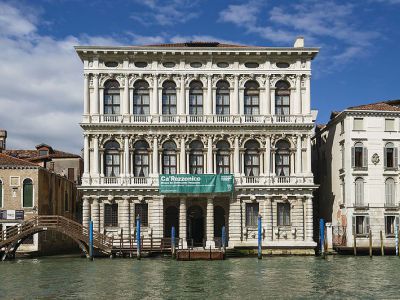
12) Ca' Rezzonico – Museum of 18th-century Venice (must see)
A visit to Ca' Rezzonico offers a unique opportunity to explore one of the most splendid palaces on the Grand Canal. Impeccably restored, the building houses a fascinating collection of 18th-century art, including paintings by Tiepolo and Tintoretto, exquisite tapestries, porcelain, and period furnishings. In fact, the palace was specifically acquired to house this collection and, as such, its contents are in perfect harmony with the outside appearance that is rarely seen elsewhere.
Upon entering, you will be greeted by the grand Ballroom adorned with chandeliers and ceiling paintings that create a genuine 3D effect. As you continue through the palace, you'll encounter a series of lavishly embellished rooms that lead to the Throne Hall, where Tiepolo's allegorical ceilings take center stage. From the first floor balcony, you can enjoy a view of the Grand Canal, reminiscent of the privilege once enjoyed by the palace's aristocratic residents in the 18th century.
The low-ceiling 3rd and 4th floors house a collection of Venetian art from the 15th century, donated by a private collector. However, the main highlight of these floors is the pharmacy – a sequence of wood-paneled rooms heavily stocked with glass bottles and ceramic jars. Complementing this is a tremendous view opening to the rooftops of Venice below.
Neither large nor small, and not too crowded either, Ca' Rezzonico is a wonderful place to visit after you've had your share of Venice's main highlights and developed a taste for the opulent lifestyle enjoyed by the local high society of yesteryear. Advance tickets can be purchased from the official website.
Tip:
The on-site audio guide is quite good, much as the bookshop and terraced cafe directly facing onto the Grand Canal. Further to that, there's a quiet little side garden free to walk in with some seats in the shade that you may want to use for a welcome break after long hours of walking around Venice.
Upon entering, you will be greeted by the grand Ballroom adorned with chandeliers and ceiling paintings that create a genuine 3D effect. As you continue through the palace, you'll encounter a series of lavishly embellished rooms that lead to the Throne Hall, where Tiepolo's allegorical ceilings take center stage. From the first floor balcony, you can enjoy a view of the Grand Canal, reminiscent of the privilege once enjoyed by the palace's aristocratic residents in the 18th century.
The low-ceiling 3rd and 4th floors house a collection of Venetian art from the 15th century, donated by a private collector. However, the main highlight of these floors is the pharmacy – a sequence of wood-paneled rooms heavily stocked with glass bottles and ceramic jars. Complementing this is a tremendous view opening to the rooftops of Venice below.
Neither large nor small, and not too crowded either, Ca' Rezzonico is a wonderful place to visit after you've had your share of Venice's main highlights and developed a taste for the opulent lifestyle enjoyed by the local high society of yesteryear. Advance tickets can be purchased from the official website.
Tip:
The on-site audio guide is quite good, much as the bookshop and terraced cafe directly facing onto the Grand Canal. Further to that, there's a quiet little side garden free to walk in with some seats in the shade that you may want to use for a welcome break after long hours of walking around Venice.
13) Scuola Grande di San Rocco (Great School of St. Roch) (must see)
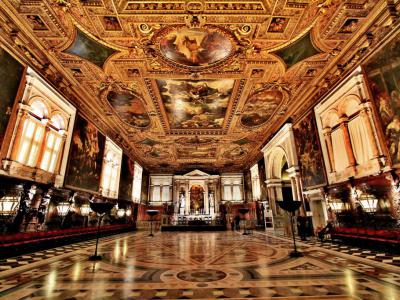
The religious fraternity ("scuola") of Saint Roch was set up in Venice in 1478. Seven years later, the saint's remains were brought from Germany, resulting in a surge of donations so great that in 1489, the fraternity attained the status of a "Scuola Grande". In 1527, the city was struck by a plague outbreak, causing the scuola's revenue to skyrocket as people desperately sought Saint Roch's protection from the disease. The funds generated eventually financed the construction of the current building, complete with the remarkable paintings inside.
Indeed, no other Venetian fraternity is as lavishly decorated as this one. The artist responsible for its decoration is Venice's own 16th-century painter, Tintoretto. Born Jacopo Robusti, he acquired his nickname, which means "little dyer" or "dyer's boy", due to his father's profession as a dyer ("tintore"). Also known as Il Furioso ("The Furious") for his phenomenal energy in painting, Tintoretto was both admired and criticized by his contemporaries for the unprecedented boldness of his brushwork and his incredible speed. Nonetheless, it took him three decades to complete this project, starting at the age of 46 and continuing until his death in 1594 at the age of 76.
During this time, Tintoretto created over 50 epic canvases for the walls and ceilings of the Scuola Grande, earning it high praise from critics as "one of the three most precious buildings in Italy" due to its overwhelming impact. While the Tintoretto cycle begins with the "Annunciation" in the lower room, to truly appreciate his artistic progression, it is best to start in the smaller room on the upper floor, known as the Sala dell'Albergo, which houses the "Crucifixion" painting, showcasing the full magnitude of Tintoretto's mastery.
Other notable highlights include the New Testament scenes in the main upper hall, which defy conventions of perspective, lighting, and color-a testament to Tintoretto's relentless inventiveness that has few parallels in Western art. Despite being in his late 60s when he painted these scenes, they are considered some of his finest creations.
Why You Should Visit:
Rarely busy or crowded, offering a peaceful oasis of culture and Venetian history.
Photos do not do justice to the overwhelming experience of seeing it in person.
Tip:
Don't forget to pick up an audio guide since there are no descriptions available.
Dress warmly as it can get quite cold inside, and don't forget to bring your camera.
Take advantage of the mirrors in the chapter room to study the ceiling art without straining your neck.
Indeed, no other Venetian fraternity is as lavishly decorated as this one. The artist responsible for its decoration is Venice's own 16th-century painter, Tintoretto. Born Jacopo Robusti, he acquired his nickname, which means "little dyer" or "dyer's boy", due to his father's profession as a dyer ("tintore"). Also known as Il Furioso ("The Furious") for his phenomenal energy in painting, Tintoretto was both admired and criticized by his contemporaries for the unprecedented boldness of his brushwork and his incredible speed. Nonetheless, it took him three decades to complete this project, starting at the age of 46 and continuing until his death in 1594 at the age of 76.
During this time, Tintoretto created over 50 epic canvases for the walls and ceilings of the Scuola Grande, earning it high praise from critics as "one of the three most precious buildings in Italy" due to its overwhelming impact. While the Tintoretto cycle begins with the "Annunciation" in the lower room, to truly appreciate his artistic progression, it is best to start in the smaller room on the upper floor, known as the Sala dell'Albergo, which houses the "Crucifixion" painting, showcasing the full magnitude of Tintoretto's mastery.
Other notable highlights include the New Testament scenes in the main upper hall, which defy conventions of perspective, lighting, and color-a testament to Tintoretto's relentless inventiveness that has few parallels in Western art. Despite being in his late 60s when he painted these scenes, they are considered some of his finest creations.
Why You Should Visit:
Rarely busy or crowded, offering a peaceful oasis of culture and Venetian history.
Photos do not do justice to the overwhelming experience of seeing it in person.
Tip:
Don't forget to pick up an audio guide since there are no descriptions available.
Dress warmly as it can get quite cold inside, and don't forget to bring your camera.
Take advantage of the mirrors in the chapter room to study the ceiling art without straining your neck.
14) Canal Grande (Grand Canal) (must see)
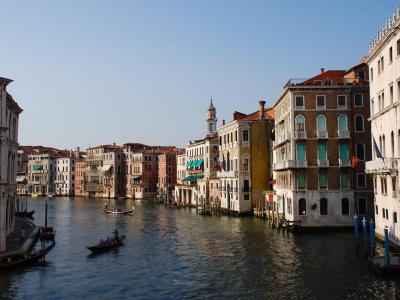
Paris may have its Champs-Elysées, New York City its 5th Avenue, Rome its Via del Corso – but Venice, for uniqueness, tops them all with its Grand Canal ("Canal Grande"). This winding waterway, resembling an inverted S shape, traverses the city and is spanned by four bridges. Along its banks stand nearly 200 palaces, many of which were constructed between the 13th and 18th centuries. The grand aquatic thoroughfare is a bustling passage for motorboats, vaporetti (water buses), and the iconic gondolas.
Some of the most impressive buildings along the Grand Canal have been transformed into galleries and museums. Reflecting the Venetian Gothic architectural style, these structures were intended to showcase the opulence and artistic achievements of the Republic of Venice, with noble Venetian families having spared no expense in displaying their wealth. As most of these palaces stand directly on the water without walkways, the only way to appreciate their facades is from a boat, allowing for a journey free of potholes, traffic congestion, and traffic lights-quite literally the best mode to travel anyway!....
Stretching nearly four kilometers (or 2.5 miles) in length, the Grand Canal varies in width between 30 and 70 meters; it is, however, surprisingly shallow, with depths rarely exceeding 5 meters (16.5 feet).
The best way to explore the canal is by boarding vaporetto no. 1; though you'll have to be prepared to navigate the crowd and secure a seat anywhere on the exterior. The most coveted spots are at the bow, offering unobstructed views of the shimmering water.
If you'd rather rent a gondola for added romance, a word to the wise would be to schedule your ride during high tide so as to avoid encountering unsightly debris along the canal's edges, which low tide often exposes in detail. The gondoliers may even steer you into the quieter, narrower canals, where tranquility reigns and the only sounds you'll hear are the gentle lapping of water. In this serene atmosphere, you can fully appreciate the unique perspective offered by the gondola. In other words, if you're going to splurge on a tourist attraction, this is the one to choose.
It is also easy to get glimpses of the Grand Canal as you wander through the city's maze-like alleyways, granting you enchanting vistas of historic buildings, picturesque bridges, and the everyday rhythm of Venetian life.
Tip:
Investing in unlimited passes for 1 to 3 or 7 days for vaporettos is one of the wisest choices during your stay in Venice.
Some of the most impressive buildings along the Grand Canal have been transformed into galleries and museums. Reflecting the Venetian Gothic architectural style, these structures were intended to showcase the opulence and artistic achievements of the Republic of Venice, with noble Venetian families having spared no expense in displaying their wealth. As most of these palaces stand directly on the water without walkways, the only way to appreciate their facades is from a boat, allowing for a journey free of potholes, traffic congestion, and traffic lights-quite literally the best mode to travel anyway!....
Stretching nearly four kilometers (or 2.5 miles) in length, the Grand Canal varies in width between 30 and 70 meters; it is, however, surprisingly shallow, with depths rarely exceeding 5 meters (16.5 feet).
The best way to explore the canal is by boarding vaporetto no. 1; though you'll have to be prepared to navigate the crowd and secure a seat anywhere on the exterior. The most coveted spots are at the bow, offering unobstructed views of the shimmering water.
If you'd rather rent a gondola for added romance, a word to the wise would be to schedule your ride during high tide so as to avoid encountering unsightly debris along the canal's edges, which low tide often exposes in detail. The gondoliers may even steer you into the quieter, narrower canals, where tranquility reigns and the only sounds you'll hear are the gentle lapping of water. In this serene atmosphere, you can fully appreciate the unique perspective offered by the gondola. In other words, if you're going to splurge on a tourist attraction, this is the one to choose.
It is also easy to get glimpses of the Grand Canal as you wander through the city's maze-like alleyways, granting you enchanting vistas of historic buildings, picturesque bridges, and the everyday rhythm of Venetian life.
Tip:
Investing in unlimited passes for 1 to 3 or 7 days for vaporettos is one of the wisest choices during your stay in Venice.
15) Ponte di Rialto (Rialto Bridge) (must see)
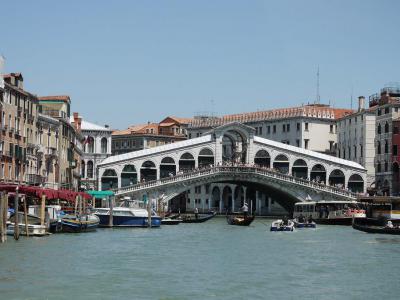
There are only four bridges in Venice spanning the Grand Canal, and if you explore the city on foot, you will inevitably find yourself crossing at least one of them. The Rialto Bridge, the oldest and certainly most renowned among the four, connects the Eastern and Western quarters of Venice, specifically the districts of San Marco ("Saint Mark") and San Polo ("Saint Paul").
Originally constructed of wood in the 12th century, it was later replaced by the current stone version four centuries later. The engineering solution employed seemed so audacious at the time that certain architects predicted its future ruin. However, the bridge has defied critics to become one of Venice's architectural marvels. Until the construction of the Accademia bridge in 1854, it remained the sole pedestrian crossing over the Grand Canal.
If you're comfortable navigating through the throngs of tourists bustling across the bridge, you'll be rewarded with spectacular views of the canal opening in both directions. Beyond the souvenir stalls are the centuries-old markets that traditionally showcase the abundance of fruits and vegetables harvested on the lagoon islands, as well as the fish freshly caught in the bordering Adriatic Sea. You may even catch sight of boats unloading their daily catch from the islands of Burano and Pellestrina.
The Rialto Bridge area also offers numerous shops and restaurants, usually on the pricier side, but masterfully tucked in so as not to disrupt the heritage exterior. Additionally, near the bridge, not to mention persuasive gondoliers who just happen to have a vacant gondola with your name on it, in case you're in for a boat ride.
Tip:
Evening is by far the best time to visit – much quieter and looks stunning.
Originally constructed of wood in the 12th century, it was later replaced by the current stone version four centuries later. The engineering solution employed seemed so audacious at the time that certain architects predicted its future ruin. However, the bridge has defied critics to become one of Venice's architectural marvels. Until the construction of the Accademia bridge in 1854, it remained the sole pedestrian crossing over the Grand Canal.
If you're comfortable navigating through the throngs of tourists bustling across the bridge, you'll be rewarded with spectacular views of the canal opening in both directions. Beyond the souvenir stalls are the centuries-old markets that traditionally showcase the abundance of fruits and vegetables harvested on the lagoon islands, as well as the fish freshly caught in the bordering Adriatic Sea. You may even catch sight of boats unloading their daily catch from the islands of Burano and Pellestrina.
The Rialto Bridge area also offers numerous shops and restaurants, usually on the pricier side, but masterfully tucked in so as not to disrupt the heritage exterior. Additionally, near the bridge, not to mention persuasive gondoliers who just happen to have a vacant gondola with your name on it, in case you're in for a boat ride.
Tip:
Evening is by far the best time to visit – much quieter and looks stunning.
16) Fondaco dei Tedeschi (Shopping, Art and Culture) (must see)
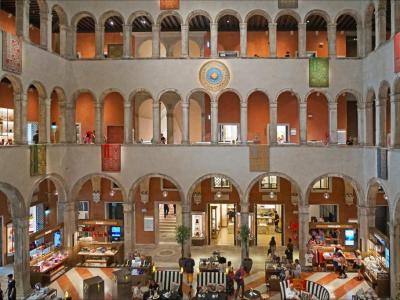
Once headquarters of the German merchant community in Venice, Fondaco dei Tedeschi is an immense building standing just beside the Rialto Bridge. During its heyday, German traders were the most influential foreign group in the city and had rented this centrally-located building from as early as the 13th century. After being ravaged by fire, the Fondaco was rebuilt in the 16th century as a functional four-story building with a grand inner courtyard. While architecturally it is typically Italian Renaissance, the fundamental concept of the building, much like the word "fondaco" itself, derives from Arabic origins. Similar to the Fondaco dei Turchi, the Fondaco dei Tedeschi encompassed a palace, a warehouse, and restricted living quarters for its inhabitants – mainly merchants from German cities such as Nuremberg, Judenburg, and Augsburg.
Today, this grand establishment has transformed into one of Venice's largest and resplendent shopping centers, specialized in high-end luxury goods. It comes as no surprise that prices here tend to be on the higher side, but the place is still a popular hangout, always teeming with tourists.
But don't let the crowd put you off – at least not before you experience the views from the Fondaco's rooftop terrace, fit to blow anyone away. The 4th-floor Event Pavilion serves as an exhibition space and grants free access to the terrace, affording one of the best panoramas of the Grand Canal, a downward view of the Rialto Bridge, and a distant glimpse of Saint Mark's Basilica, situated a kilometer or so away – quite a different angle from what you can see at ground-level!
Tip:
To access the rooftop terrace, you will need a ticket, which is provided for free but issued for a specific time slot to manage visitor numbers and prevent overcrowding. It is advisable to obtain your ticket on the top floor first and then explore the shopping mall below. Otherwise, you can book your ticket in advance online through the Fondaco's website. If you happen to catch a sunset while up on the roof, your efforts will be well rewarded!
Today, this grand establishment has transformed into one of Venice's largest and resplendent shopping centers, specialized in high-end luxury goods. It comes as no surprise that prices here tend to be on the higher side, but the place is still a popular hangout, always teeming with tourists.
But don't let the crowd put you off – at least not before you experience the views from the Fondaco's rooftop terrace, fit to blow anyone away. The 4th-floor Event Pavilion serves as an exhibition space and grants free access to the terrace, affording one of the best panoramas of the Grand Canal, a downward view of the Rialto Bridge, and a distant glimpse of Saint Mark's Basilica, situated a kilometer or so away – quite a different angle from what you can see at ground-level!
Tip:
To access the rooftop terrace, you will need a ticket, which is provided for free but issued for a specific time slot to manage visitor numbers and prevent overcrowding. It is advisable to obtain your ticket on the top floor first and then explore the shopping mall below. Otherwise, you can book your ticket in advance online through the Fondaco's website. If you happen to catch a sunset while up on the roof, your efforts will be well rewarded!
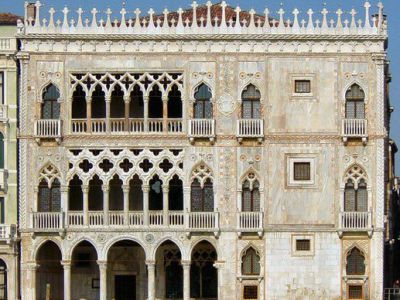
17) Ca' d'Oro / Galleria Giorgio Franchetti (House of Gold / Giorgio Franchetti Gallery)
Located along the majestic Grand Canal, the Ca' d'Oro, or "House of Gold", stands as a splendid representation of Venetian Gothic architecture. Its facade boasts intricately carved ogee windows, soaring pinnacles, and striking marble tracery, evoking a distinct Eastern influence.
Throughout the 16th century, the house underwent successive remodeling by various owners. By the early 18th century, it had fallen into a state of semi-neglect. In 1846, the Russian Prince Troubetzkoy purchased it for the renowned ballerina Marie Taglioni, under whose ownership the Ca' d'Oro endured a drastic and unfortunate remodeling in 1894. Fortunately, Baron Giorgio Franchetti came to its rescue, lovingly restoring it to its former glory. Today, the facade stands as a testament to its intricate and captivating design, making it one of the most remarkable palaces along the banks of the Grand Canal.
Beyond the palace's stunning Gothic tracery lies a courtyard paved with vibrant tiles, or "tesserae". Inside, one can explore the Galleria Giorgio Franchetti, a collection of paintings, sculptures, and ceramics generously donated to the state by Baron Franchetti in 1916, along with the building itself. Notable highlights include Andrea Mantegna's masterpiece, "Saint Sebastian" (1506), showcased in the portico that leads to a loggia overlooking the Grand Canal. Ascending an ornate 15th-century staircase, visitors can also admire 16th-century Flemish tapestries on the 2nd floor.
Throughout the 16th century, the house underwent successive remodeling by various owners. By the early 18th century, it had fallen into a state of semi-neglect. In 1846, the Russian Prince Troubetzkoy purchased it for the renowned ballerina Marie Taglioni, under whose ownership the Ca' d'Oro endured a drastic and unfortunate remodeling in 1894. Fortunately, Baron Giorgio Franchetti came to its rescue, lovingly restoring it to its former glory. Today, the facade stands as a testament to its intricate and captivating design, making it one of the most remarkable palaces along the banks of the Grand Canal.
Beyond the palace's stunning Gothic tracery lies a courtyard paved with vibrant tiles, or "tesserae". Inside, one can explore the Galleria Giorgio Franchetti, a collection of paintings, sculptures, and ceramics generously donated to the state by Baron Franchetti in 1916, along with the building itself. Notable highlights include Andrea Mantegna's masterpiece, "Saint Sebastian" (1506), showcased in the portico that leads to a loggia overlooking the Grand Canal. Ascending an ornate 15th-century staircase, visitors can also admire 16th-century Flemish tapestries on the 2nd floor.
