Custom Walk in Brisbane, Australia by kanngoble_22335 created on 2025-04-17
Guide Location: Australia » Brisbane
Guide Type: Custom Walk
# of Sights: 7
Tour Duration: 5 Hour(s)
Travel Distance: 14 Km or 8.7 Miles
Share Key: HPNYK
Guide Type: Custom Walk
# of Sights: 7
Tour Duration: 5 Hour(s)
Travel Distance: 14 Km or 8.7 Miles
Share Key: HPNYK
How It Works
Please retrieve this walk in the GPSmyCity app. Once done, the app will guide you from one tour stop to the next as if you had a personal tour guide. If you created the walk on this website or come to the page via a link, please follow the instructions below to retrieve the walk in the app.
Retrieve This Walk in App
Step 1. Download the app "GPSmyCity: Walks in 1K+ Cities" on Apple App Store or Google Play Store.



Step 2. In the GPSmyCity app, download(or launch) the guide "Brisbane Map and Walking Tours".
Step 3. Tap the menu button located at upper right corner of the "Walks" screen and select "Retrieve custom walk". Enter the share key: HPNYK
1) South Bank Parklands (must see)
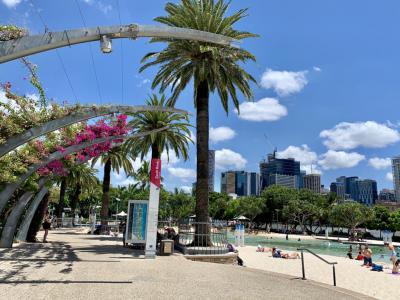
The South Bank Parklands is a large leisure area on the southern bank of the Brisbane River. It is a popular area for both local and visitors to relax, play or experience local festivities. Open since 1992, the parklands are located on the site of the Brisbane World Expo 88.
The area features free swimming facilities, public picnic areas and walking tracks. The riverfront promenade, the Queensland Conservatorium, the Grand Arbour Walkway and Street Beach are all part of the South Banks Promenade. Visitors will also see rainforest, grassy areas and the Brisbane River while they spend time in the parklands.
This is arguably the most visited areas in Brisbane thanks to the festivals that take place throughout the year. Many festivals take place in the South Bank Piazza amphitheater. Even when not being used for festivals and community celebrations, the amphitheater utilizes its screens to show sports and news.
Another popular feature in South Bank Parklands is the Nepalese Peace Pagoda. The pagoda was constructed in a traditional architecture by architect Jochen Reier with approval of the Kingdom of Nepal. Indigenous Nepalese timber and authentic Nepalese artwork was used in the building and decor of the pagoda. All construction was overseen by Nepalese supervisors.
Those who wish to spend time at the beach in Brisbane can head to Streets Beach. The man-made beach was designed by Desmond Brookes International in 1992. It uses chlorinated fresh water and sand that is sourced from Moreton Bay. It is a safe beach for families as it is very clean and always patrolled by lifeguards.
Why You Should Visit:
- To spend some leisure time in the midst of the city
- To access a number of culturally significant areas in Brisbane
- To ride the Wheel of Brisbane
Tips:
Arrive hungry! Little Stanley Street and Grey Street both have a large number of cafes, bars and restaurants that feature local eats and cuisines from around the globe.
The area features free swimming facilities, public picnic areas and walking tracks. The riverfront promenade, the Queensland Conservatorium, the Grand Arbour Walkway and Street Beach are all part of the South Banks Promenade. Visitors will also see rainforest, grassy areas and the Brisbane River while they spend time in the parklands.
This is arguably the most visited areas in Brisbane thanks to the festivals that take place throughout the year. Many festivals take place in the South Bank Piazza amphitheater. Even when not being used for festivals and community celebrations, the amphitheater utilizes its screens to show sports and news.
Another popular feature in South Bank Parklands is the Nepalese Peace Pagoda. The pagoda was constructed in a traditional architecture by architect Jochen Reier with approval of the Kingdom of Nepal. Indigenous Nepalese timber and authentic Nepalese artwork was used in the building and decor of the pagoda. All construction was overseen by Nepalese supervisors.
Those who wish to spend time at the beach in Brisbane can head to Streets Beach. The man-made beach was designed by Desmond Brookes International in 1992. It uses chlorinated fresh water and sand that is sourced from Moreton Bay. It is a safe beach for families as it is very clean and always patrolled by lifeguards.
Why You Should Visit:
- To spend some leisure time in the midst of the city
- To access a number of culturally significant areas in Brisbane
- To ride the Wheel of Brisbane
Tips:
Arrive hungry! Little Stanley Street and Grey Street both have a large number of cafes, bars and restaurants that feature local eats and cuisines from around the globe.
2) Brisbane City Hall and Museum of Brisbane
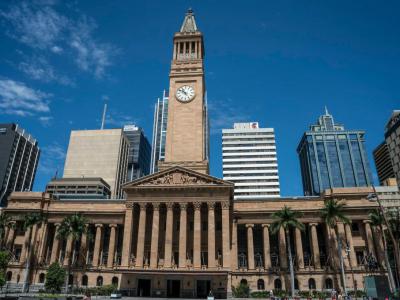
Brisbane City Hall is located in King George Square. The building is widely considered to be one of the most ornate and beautiful of Australia’s city halls. The foundation stone of the building was laid in 1920 and construction was completed by 1930. For many years the hall was Brisbane’s tallest building and to this day you can take the elevator to the top of the clock tower and get an impressive panoramic view over the city. The viewing platform is open 10am to 3pm every day, and there is no admission fee. The clock tower is 91 meters above the ground and was inspired by Saint Mark’s Campanile in Venice, Italy.
Built in the Italian Renaissance style, there is much to see in the building. Above the Corinthian columns at the entrance to the building is the ornately carved tympanum, which was carved by Sculptor Daphne Mayo in the 1930s. It features scenes of the settlement of Queensland with cattle drovers extending out into the lands filled with kangaroos. Inside there are many beautiful rooms, but the highlight is the main auditorium inspired by the Pantheon in Rome.
On the city hall's third floor, you will find the Museum of Brisbane which is dedicated to showcase the different facets, historical and contemporary, of this sub-tropical state capital city. You will find fascinating displays of all aspects of the city. The ethos of the museum is to guide visitors towards developing an understanding of Brisbane’s people and communities and how they have worked together to create the city that you see today. It also encourages visitors to envisage the city that will become in the future.
Built in the Italian Renaissance style, there is much to see in the building. Above the Corinthian columns at the entrance to the building is the ornately carved tympanum, which was carved by Sculptor Daphne Mayo in the 1930s. It features scenes of the settlement of Queensland with cattle drovers extending out into the lands filled with kangaroos. Inside there are many beautiful rooms, but the highlight is the main auditorium inspired by the Pantheon in Rome.
On the city hall's third floor, you will find the Museum of Brisbane which is dedicated to showcase the different facets, historical and contemporary, of this sub-tropical state capital city. You will find fascinating displays of all aspects of the city. The ethos of the museum is to guide visitors towards developing an understanding of Brisbane’s people and communities and how they have worked together to create the city that you see today. It also encourages visitors to envisage the city that will become in the future.
3) Brisbane Parliament House
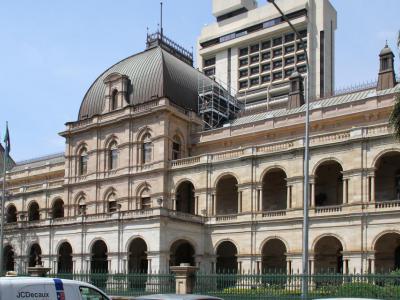
Brisbane Parliament House is the seat of the Queensland State Parliament, which is a unicameral institution and the only parliament of its kind in Australia. Following the separation of Queensland from New South Wales in 1859, a grand building was ordered to be built. Robert Tiffin’s design was selected in 1863 following an Australia wide competition. The French Renaissance style construction was inaugurated in 1868 although additions such as the colonnades were not completed until 1878.
When you enter the main entrance you are greeted by a Minton tile European imported foyer and grand staircase, which leads up to the Chambers and the Reading Room. In the Red Chamber, which was the Upper House until it was abolished in 1922, you find Waterford crystal chandeliers, which were presented to the parliament by Queen Victoria. Stained glass in both the Green and Red Chambers depict the monarch. On a Parliament House tour you can view the mace, which is a stunning gold and silver creation one meter long and weighing 7.7 kilograms. It features many Queensland opals and sapphires and is placed in the Green Chamber when the Parliament is in session. There are guided tours held every Saturday and Sunday between 10am and 2pm.
When you enter the main entrance you are greeted by a Minton tile European imported foyer and grand staircase, which leads up to the Chambers and the Reading Room. In the Red Chamber, which was the Upper House until it was abolished in 1922, you find Waterford crystal chandeliers, which were presented to the parliament by Queen Victoria. Stained glass in both the Green and Red Chambers depict the monarch. On a Parliament House tour you can view the mace, which is a stunning gold and silver creation one meter long and weighing 7.7 kilograms. It features many Queensland opals and sapphires and is placed in the Green Chamber when the Parliament is in session. There are guided tours held every Saturday and Sunday between 10am and 2pm.
4) City Botanic Gardens
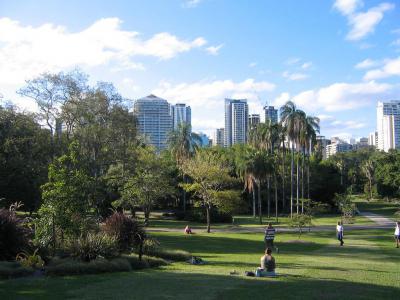
The City Botanic Gardens in Brisbane were opened in 1855 after about 15 years of construction. The gardens, located on the shore of the Brisbane River, are home to ornamental ponds, a bamboo grove, sculptures, trees and an outdoor entertainment venue.
The gardens originated as a farm for the Moreton Bay penal settlement. Convicts of Moreton Bay used the area to raise food crops like cabbage, pineapple, cauliflower, peas, beans and potatoes. There were also a number of banana, apple and orange trees.
Moreton Bay closed in 1842 and became the basis for Brisbane. The City Botanic Gardens were divided into a Botanic Reserve and an experimental area. Plants like mango, ginger, tobacco, sugar, coffee, tea and grapes were planted to find if they could survive in the Australian climate. This proved to be an economic boon for those settlers in the area.
The gardens are open 24 hours per day. The fairy trees, fig trees in the gardens strung with lights, are lit from 7 PM to 10 PM daily.
The City Botanic Gardens were placed on the Queensland Heritage Register in 1997.
The gardens originated as a farm for the Moreton Bay penal settlement. Convicts of Moreton Bay used the area to raise food crops like cabbage, pineapple, cauliflower, peas, beans and potatoes. There were also a number of banana, apple and orange trees.
Moreton Bay closed in 1842 and became the basis for Brisbane. The City Botanic Gardens were divided into a Botanic Reserve and an experimental area. Plants like mango, ginger, tobacco, sugar, coffee, tea and grapes were planted to find if they could survive in the Australian climate. This proved to be an economic boon for those settlers in the area.
The gardens are open 24 hours per day. The fairy trees, fig trees in the gardens strung with lights, are lit from 7 PM to 10 PM daily.
The City Botanic Gardens were placed on the Queensland Heritage Register in 1997.
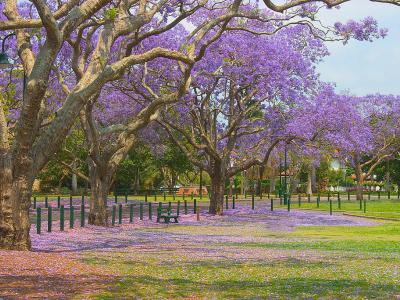
5) New Farm Park
New Farm Park, located at 137 Sydney Street in New Farm, Brisbane, is a well-preserved public park with historical significance. It was skillfully designed by Albert Herbert Foster and constructed between 1914 and 1950 by Gladwin Legge & Company. This park was officially recognized for its heritage value and added to the Queensland Heritage Register on February 7, 2005.
Spanning an area of 15 hectares (equivalent to 37 acres), the park occupies the southeastern tip of the New Farm peninsula along a bend in the Brisbane River. It encompasses the New Farm Park ferry wharf and provides access to the Brisbane Riverwalk, which stretches from Newstead to Toowong. New Farm Park is highly regarded as one of Brisbane's premier parklands and is a favored destination for tourists.
New Farm Park holds the distinction of being one of the oldest, most majestic, and largest parks in Brisbane, drawing more than 18,000 visitors from across the globe every week. It is equally beloved by local families, thanks to its various amusements that can captivate young ones all day long.
For many people, New Farm Park holds cherished family memories, serving as the backdrop for numerous special moments, both big and small. The park has been the venue for countless weddings, birthdays, baby showers, and engagements, whether on its sprawling green lawns, within the charming rotunda, or amidst the beautiful rose gardens. Equally significant are the hours families spend bonding over activities like playground adventures, soccer matches, cricket games, or leisurely strolls along the riverwalk.
Adjacent to New Farm Park, the historic Brisbane Powerhouse is another noteworthy attraction. It hosts live arts performances, weekend farmers markets, and seasonal moonlight cinema screenings, making it a must-visit destination for visitors and locals alike.
Spanning an area of 15 hectares (equivalent to 37 acres), the park occupies the southeastern tip of the New Farm peninsula along a bend in the Brisbane River. It encompasses the New Farm Park ferry wharf and provides access to the Brisbane Riverwalk, which stretches from Newstead to Toowong. New Farm Park is highly regarded as one of Brisbane's premier parklands and is a favored destination for tourists.
New Farm Park holds the distinction of being one of the oldest, most majestic, and largest parks in Brisbane, drawing more than 18,000 visitors from across the globe every week. It is equally beloved by local families, thanks to its various amusements that can captivate young ones all day long.
For many people, New Farm Park holds cherished family memories, serving as the backdrop for numerous special moments, both big and small. The park has been the venue for countless weddings, birthdays, baby showers, and engagements, whether on its sprawling green lawns, within the charming rotunda, or amidst the beautiful rose gardens. Equally significant are the hours families spend bonding over activities like playground adventures, soccer matches, cricket games, or leisurely strolls along the riverwalk.
Adjacent to New Farm Park, the historic Brisbane Powerhouse is another noteworthy attraction. It hosts live arts performances, weekend farmers markets, and seasonal moonlight cinema screenings, making it a must-visit destination for visitors and locals alike.
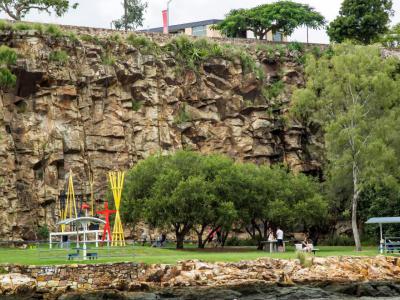
6) Kangaroo Point Cliffs
Kangaroo Point Cliffs, close to Brisbane's city center in Queensland, are well-known historical landmarks. These cliffs, just across the Brisbane River from the city's main commercial area, are popular for activities such as rock climbing and running. They can be reached easily from the city and South Bank Parklands using the Pacific Motorway, South East Busway, or by ferry to Thornton Street.
The cliffs came into being through quarrying that extracted volcanic rock, specifically ignimbrite or welded tuff, by prisoners. These rocks, dating to about 230 million years ago in the Triassic Period, filled an ancient river valley. Initially called porphyry, they're now known as Brisbane tuff.
Historical documents indicate that Captain Patrick Logan, head of the Moreton Bay penal colony, first used this quarry around 1826 for his building projects. Existing structures from that era include The Old Windmill and the Commissariat Store. By 1842, private stonemasons like John Petrie, Brisbane's first mayor, leased the quarry, until the Brisbane Municipal Council took over in 1860. It was then used for stone for sailing ballast. In 1864, the Queensland government took control due to concerns over stone waste.
In the 1880s, coal docks were built at the cliffs' southern end, connected by rail. A military defense depot was also established at the northern end for storage and training. The quarry's stone was used for building river walls in Brisbane, the Manly Boat Harbour, and the new Port of Brisbane. Quarrying stopped in 1976.
The cliffs came into being through quarrying that extracted volcanic rock, specifically ignimbrite or welded tuff, by prisoners. These rocks, dating to about 230 million years ago in the Triassic Period, filled an ancient river valley. Initially called porphyry, they're now known as Brisbane tuff.
Historical documents indicate that Captain Patrick Logan, head of the Moreton Bay penal colony, first used this quarry around 1826 for his building projects. Existing structures from that era include The Old Windmill and the Commissariat Store. By 1842, private stonemasons like John Petrie, Brisbane's first mayor, leased the quarry, until the Brisbane Municipal Council took over in 1860. It was then used for stone for sailing ballast. In 1864, the Queensland government took control due to concerns over stone waste.
In the 1880s, coal docks were built at the cliffs' southern end, connected by rail. A military defense depot was also established at the northern end for storage and training. The quarry's stone was used for building river walls in Brisbane, the Manly Boat Harbour, and the new Port of Brisbane. Quarrying stopped in 1976.
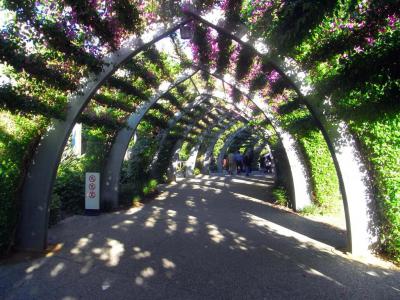
7) South Bank Grand Arbour
South Bank Grand Arbour is a pedestrian walkway between Vulture Street, near Griffith Film School, and the Queensland Performing Arts Centre. The Arbour Walkway, as it is often called, cuts through South Brisbane War Memorial Park, past the Griffith University Art Museum and by many shops and eateries.
The arbour walk is about 1 kilometer in length, making it only a little more than half a mile. Tourists can use the walkway to reach the Queensland Maritime Museum, the Picnic Island Playground, the Clem Jones Promenade and Streets Beach.
The walkway was designed by Denton Corker Marshall architectural firm. It is composed of 443 steel columns that curl overhead. The columns are lined with bright pink bougainvillea. Thanks to the climate in Brisbane, the bougainvillea vines bloom for most of the year.
South Bank Grand Arbour is open to pedestrian traffic 24 hours per day. The flowers are best viewed in the daylight but multicolor lights create a safe and lovely walk even once the sun has set.
The arbour walk is about 1 kilometer in length, making it only a little more than half a mile. Tourists can use the walkway to reach the Queensland Maritime Museum, the Picnic Island Playground, the Clem Jones Promenade and Streets Beach.
The walkway was designed by Denton Corker Marshall architectural firm. It is composed of 443 steel columns that curl overhead. The columns are lined with bright pink bougainvillea. Thanks to the climate in Brisbane, the bougainvillea vines bloom for most of the year.
South Bank Grand Arbour is open to pedestrian traffic 24 hours per day. The flowers are best viewed in the daylight but multicolor lights create a safe and lovely walk even once the sun has set.
