Custom Walk in Vienna, Austria by birch-boson96_e299d created on 2025-04-20
Guide Location: Austria » Vienna
Guide Type: Custom Walk
# of Sights: 13
Tour Duration: 4 Hour(s)
Travel Distance: 7.8 Km or 4.8 Miles
Share Key: 26DZR
Guide Type: Custom Walk
# of Sights: 13
Tour Duration: 4 Hour(s)
Travel Distance: 7.8 Km or 4.8 Miles
Share Key: 26DZR
How It Works
Please retrieve this walk in the GPSmyCity app. Once done, the app will guide you from one tour stop to the next as if you had a personal tour guide. If you created the walk on this website or come to the page via a link, please follow the instructions below to retrieve the walk in the app.
Retrieve This Walk in App
Step 1. Download the app "GPSmyCity: Walks in 1K+ Cities" on Apple App Store or Google Play Store.



Step 2. In the GPSmyCity app, download(or launch) the guide "Vienna Map and Walking Tours".
Step 3. Tap the menu button located at upper right corner of the "Walks" screen and select "Retrieve custom walk". Enter the share key: 26DZR
1) Liechtenstein Museum
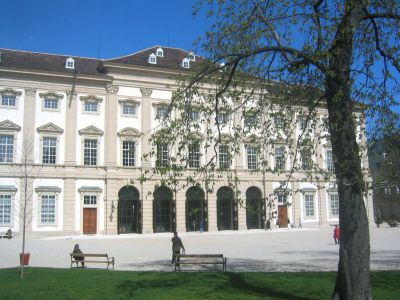
This establishment is dedicated to the renowned noble family known as the Liechtensteins, who hold the distinction of being one of the oldest and most distinguished royal families in all of Europe. Within these premises, you'll encounter an impressive collection of artifacts directly sourced from the family's cherished treasures, shedding light on the illustrious history of this famous lineage. Furthermore, this institution boasts an extensive private art collection, ranking among the largest worldwide.
To explore the entirety of the museum, one must navigate multiple locations, as it has evolved into a complex entity over the years. The primary venues worth visiting are the Garden Palace, situated in the Ninth District, and the City Palace, which can be found on Bankgasse.
Of the two, the Liechtenstein Garden Palace stands out as the more exceptional option. If your schedule permits only one visit, this should be your destination of choice. Prince Johann von Liechtenstein commissioned the construction of this residence in the early 1700s, enlisting the talents of renowned artisans of the 18th century, including Rossi, Felucca, and Giuliani, to contribute to its design.
It's worth noting that the estate's caretakers maintain strict regulations, so it is imperative to respect areas designated as off-limits and refrain from walking on the grass within the park. However, it's worth mentioning that the facilities are fully accessible for individuals with disabilities.
To explore the entirety of the museum, one must navigate multiple locations, as it has evolved into a complex entity over the years. The primary venues worth visiting are the Garden Palace, situated in the Ninth District, and the City Palace, which can be found on Bankgasse.
Of the two, the Liechtenstein Garden Palace stands out as the more exceptional option. If your schedule permits only one visit, this should be your destination of choice. Prince Johann von Liechtenstein commissioned the construction of this residence in the early 1700s, enlisting the talents of renowned artisans of the 18th century, including Rossi, Felucca, and Giuliani, to contribute to its design.
It's worth noting that the estate's caretakers maintain strict regulations, so it is imperative to respect areas designated as off-limits and refrain from walking on the grass within the park. However, it's worth mentioning that the facilities are fully accessible for individuals with disabilities.
2) Sigmund Freud House Museum
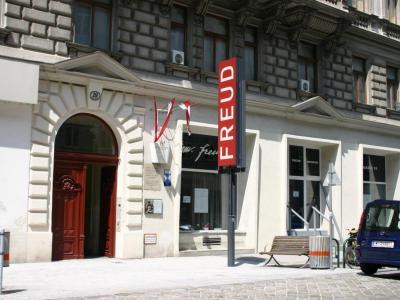
A Vienna resident for more than five decades, Sigmund Freud is as synonymous with the Austrian capital as coffee houses and the waltz. His former 19th-century apartment at Berggasse 19, where he wrote many of his greatest works, is now something of a shrine and place of pilgrimage, though he took almost all his possessions – except his library, which he hurriedly sold – into exile (where they are displayed in London's Freud Museum).
The father of psychoanalysis, Sigmund Freud lived, worked and received patients here from 1891 until his unwilling departure from Vienna in 1938, to escape Nazi persecution. There are more than 420 items of memorabilia on display, including letters, telegrams and original editions of books, photos documenting Freud's long life, waiting-room furniture and various antiquities. A few rooms feature Freud-inspired art, a library and a shop, while a video room shows unique home-movie footage of the Freud family in the 1930s with a commentary by none other than Anna Freud.
The father of psychoanalysis, Sigmund Freud lived, worked and received patients here from 1891 until his unwilling departure from Vienna in 1938, to escape Nazi persecution. There are more than 420 items of memorabilia on display, including letters, telegrams and original editions of books, photos documenting Freud's long life, waiting-room furniture and various antiquities. A few rooms feature Freud-inspired art, a library and a shop, while a video room shows unique home-movie footage of the Freud family in the 1930s with a commentary by none other than Anna Freud.
3) Josephinum-Museum des Instituts für Geschichte der Medizin
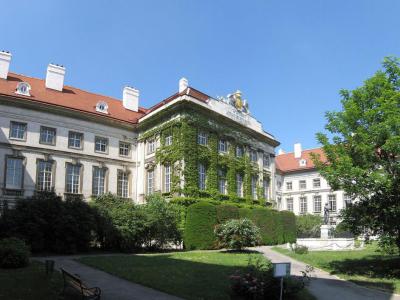
The Josephinum Museum is a true one of a kind place to visit. It was built in 1783, by a commission from the Emperor of the time, to be part of a medical teaching academy. In more recent times, the institution has been turned into a place to house the medical collection of the University of Vienna. The structure was designed by Isidore Canevale.
Joseph II had the place built as a school to teach physicians, nurses, and midwives how to care for people. One of the unique things about the place is the wax models that are housed here. They were originally used to teach anatomy to new students. Paolo Mascagni designed them. There are over 1100 different models to see, which are housed in six different display rooms.
Besides the main attraction, though, you can also find out a lot about the 600 year history of medicine in Austria, which has been so meticulously documented here over the years. You will need to take a guided tour to see the majority of the museum though. Only a few rooms are open to just browsing by the general public.
Joseph II had the place built as a school to teach physicians, nurses, and midwives how to care for people. One of the unique things about the place is the wax models that are housed here. They were originally used to teach anatomy to new students. Paolo Mascagni designed them. There are over 1100 different models to see, which are housed in six different display rooms.
Besides the main attraction, though, you can also find out a lot about the 600 year history of medicine in Austria, which has been so meticulously documented here over the years. You will need to take a guided tour to see the majority of the museum though. Only a few rooms are open to just browsing by the general public.
4) Votivkirche
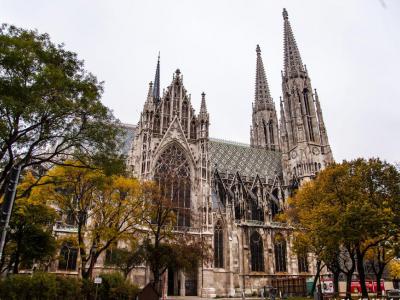
The Votive Church, known as Votivkirche in German, is a neo-Gothic church situated on the Ringstraße. Its construction was initiated in the aftermath of an assassination attempt on Emperor Franz Joseph in 1853. Archduke Ferdinand Maximilian, the Emperor's brother, launched a campaign to build the church as a gesture of gratitude to God for saving the Emperor's life. Funds for the construction were collected from across the Empire, and the church was consecrated in 1879, marking the 25th anniversary of Emperor Franz Joseph and Empress Elisabeth.
The architectural design of the Votivkirche follows the typical Gothic cathedral structure, featuring a front facade with two slender towers, three gabled entrances with ornate archivolts, a gallery adorned with statues above the entrances, a central entrance that is twice as wide as the side entrances, a rose window, and a roof gable over the nave. The church also includes belfries, a transept spire, buttresses, abutments, and flying buttresses. The overall design of the church is visually cohesive, characterized by well-proportioned elements, a thoughtfully arranged layout, spaciousness, and a consistent Gothic style.
One notable feature was the Emperor window, a gift from the City of Vienna, which originally depicted the Emperor's rescue from assassination by Maximilian Graf O'Donnell von Tyrconnell. Unfortunately, during World War II, the original windows were destroyed, leading to the creation of replacement windows in 1964, sponsored by the City of Vienna. Although these replacement windows retained the original design in most aspects, they shifted away from a strictly monarchical theme and took on a more religious tone. Regrettably, the precise depiction of the Emperor's rescue was lost in the process.
The architectural design of the Votivkirche follows the typical Gothic cathedral structure, featuring a front facade with two slender towers, three gabled entrances with ornate archivolts, a gallery adorned with statues above the entrances, a central entrance that is twice as wide as the side entrances, a rose window, and a roof gable over the nave. The church also includes belfries, a transept spire, buttresses, abutments, and flying buttresses. The overall design of the church is visually cohesive, characterized by well-proportioned elements, a thoughtfully arranged layout, spaciousness, and a consistent Gothic style.
One notable feature was the Emperor window, a gift from the City of Vienna, which originally depicted the Emperor's rescue from assassination by Maximilian Graf O'Donnell von Tyrconnell. Unfortunately, during World War II, the original windows were destroyed, leading to the creation of replacement windows in 1964, sponsored by the City of Vienna. Although these replacement windows retained the original design in most aspects, they shifted away from a strictly monarchical theme and took on a more religious tone. Regrettably, the precise depiction of the Emperor's rescue was lost in the process.
5) Cafe Central (must see)
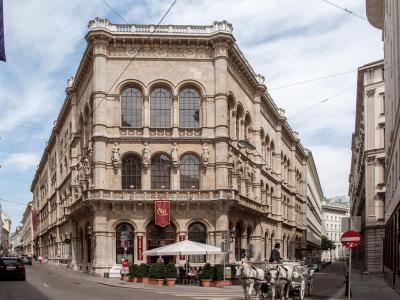
Café Central stands as a quintessential Viennese coffeehouse, nestled on the ground floor of the Palais Ferstel, formerly known as the Bank and Stockmarket Building, designed by architect Heinrich von Ferstel.
Established back in 1876, this café gained significant prominence during the late 19th century, evolving into a pivotal hub for Vienna's intellectual elite. Distinguished regulars included luminaries such as Peter Altenberg, Theodor Herzl, Alfred Adler, Egon Friedell, Hugo von Hofmannsthal, Anton Kuh, Adolf Loos, Leo Perutz, Robert Musil, Stefan Zweig, Alfred Polgar, Adolf Hitler, and Leon Trotsky. Remarkably, in January 1913 alone, notable figures like Josip Broz Tito, Sigmund Freud, and the ever-present Trotsky frequented this establishment.
It was often colloquially referred to as the "Chess school" (Die Schachhochschule), owing to the prevalence of chess enthusiasts who gathered on the first floor to engage in their games. The Vienna Circle, a group of logical positivists, convened numerous meetings here both before and after World War I.
One intriguing anecdote recalls a conversation between Victor Adler and Count Berchtold, the foreign minister of Austria-Hungary, where Adler warned that war might incite revolution in Russia, if not within the Habsburg monarchy itself. In response, Berchtold facetiously queried, "And who will lead this revolution? Perhaps Mr. Bronstein (Leon Trotsky) sitting over there at the Cafe Central?"
Following the conclusion of World War II, the café ceased its operations. However, in 1975, the Palais Ferstel underwent a renovation, and Café Central was resurrected in a different part of the building. Subsequently, in 1986, it underwent another comprehensive renovation.
Today, Café Central remains a cherished tourist attraction and a popular coffeehouse, revered for its enduring place in literary history.
Established back in 1876, this café gained significant prominence during the late 19th century, evolving into a pivotal hub for Vienna's intellectual elite. Distinguished regulars included luminaries such as Peter Altenberg, Theodor Herzl, Alfred Adler, Egon Friedell, Hugo von Hofmannsthal, Anton Kuh, Adolf Loos, Leo Perutz, Robert Musil, Stefan Zweig, Alfred Polgar, Adolf Hitler, and Leon Trotsky. Remarkably, in January 1913 alone, notable figures like Josip Broz Tito, Sigmund Freud, and the ever-present Trotsky frequented this establishment.
It was often colloquially referred to as the "Chess school" (Die Schachhochschule), owing to the prevalence of chess enthusiasts who gathered on the first floor to engage in their games. The Vienna Circle, a group of logical positivists, convened numerous meetings here both before and after World War I.
One intriguing anecdote recalls a conversation between Victor Adler and Count Berchtold, the foreign minister of Austria-Hungary, where Adler warned that war might incite revolution in Russia, if not within the Habsburg monarchy itself. In response, Berchtold facetiously queried, "And who will lead this revolution? Perhaps Mr. Bronstein (Leon Trotsky) sitting over there at the Cafe Central?"
Following the conclusion of World War II, the café ceased its operations. However, in 1975, the Palais Ferstel underwent a renovation, and Café Central was resurrected in a different part of the building. Subsequently, in 1986, it underwent another comprehensive renovation.
Today, Café Central remains a cherished tourist attraction and a popular coffeehouse, revered for its enduring place in literary history.
6) Hofburg Imperial Palace (must see)
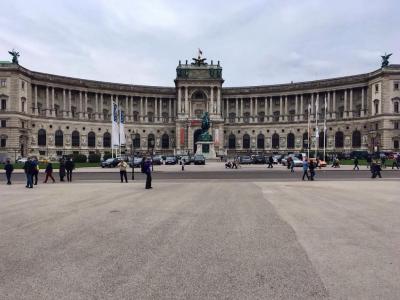
The Hofburg-or as it’s known in more regal circles, the “Castle of the Court”-is a sprawling architectural beast of a palace, a centuries-old flex of Habsburg power, pageantry, and perfectly symmetrical courtyards.
It all began back in 1279, when the Dukes of Austria needed a nice little place to call home. Fast forward a few empires and renovations later, and you've got the winter playground of the Holy Roman Emperors (until 1806) and the Emperors of Austria (until 1918). Today, the palace has swapped imperial intrigue for political paperwork-it’s now the official residence of the Austrian President and hosts the headquarters of the OSCE. Less crown, more conference...
Now, brace yourself: the Hofburg covers more than 240,000 square meters of space, comprising 18 wings, 19 courtyards, and a whopping 2,600 rooms. That’s not really a palace-it’s a small city. It houses everything from the elegant Amalienburg and Albertina museum, to the Imperial Chapel, the Court Library, the Treasure Chamber, and even the Spanish Riding School, where horses have more training than most people’s resumes.
The Swiss Wing is one of the oldest parts of the palace, dating back to the 13th century-yes, it’s older than your great-great-anything. Emperor Ferdinand I added the Swiss Gate in the 1550s, with his personal insignia on full display, just in case anyone forgot who was in charge.
The 17th-century Leopoldine Wing, built and later re-styled in Late Renaissance flair, adds even more imperial swagger, while the Court Library is basically a Baroque fever dream-with its majestic Prunksaal hall, frescoed ceilings, and emperors carved in stone, looking as dramatic as ever.
And it doesn’t stop there: the Winter Riding School, the Imperial Chancellery Wing (once home to Napoleon himself), and the elegant Redoute Wing-a former opera house-round out the complex. Even the Imperial Mews got a glow-up and now host those classy Lipizzaner horses.
Tip:
On Sundays, pop into the Imperial Chapel for Mass and catch the Vienna Boys Choir-angelic voices echoing through centuries of history. Because when in Vienna, you don’t just visit a palace… you enter a whole imperial universe.
It all began back in 1279, when the Dukes of Austria needed a nice little place to call home. Fast forward a few empires and renovations later, and you've got the winter playground of the Holy Roman Emperors (until 1806) and the Emperors of Austria (until 1918). Today, the palace has swapped imperial intrigue for political paperwork-it’s now the official residence of the Austrian President and hosts the headquarters of the OSCE. Less crown, more conference...
Now, brace yourself: the Hofburg covers more than 240,000 square meters of space, comprising 18 wings, 19 courtyards, and a whopping 2,600 rooms. That’s not really a palace-it’s a small city. It houses everything from the elegant Amalienburg and Albertina museum, to the Imperial Chapel, the Court Library, the Treasure Chamber, and even the Spanish Riding School, where horses have more training than most people’s resumes.
The Swiss Wing is one of the oldest parts of the palace, dating back to the 13th century-yes, it’s older than your great-great-anything. Emperor Ferdinand I added the Swiss Gate in the 1550s, with his personal insignia on full display, just in case anyone forgot who was in charge.
The 17th-century Leopoldine Wing, built and later re-styled in Late Renaissance flair, adds even more imperial swagger, while the Court Library is basically a Baroque fever dream-with its majestic Prunksaal hall, frescoed ceilings, and emperors carved in stone, looking as dramatic as ever.
And it doesn’t stop there: the Winter Riding School, the Imperial Chancellery Wing (once home to Napoleon himself), and the elegant Redoute Wing-a former opera house-round out the complex. Even the Imperial Mews got a glow-up and now host those classy Lipizzaner horses.
Tip:
On Sundays, pop into the Imperial Chapel for Mass and catch the Vienna Boys Choir-angelic voices echoing through centuries of history. Because when in Vienna, you don’t just visit a palace… you enter a whole imperial universe.
7) Ephesos Museum
The Ephesos Museum in Vienna showcases ancient artifacts from the city of Ephesus, located in present-day Turkey. This collection, which began in the late 19th century, includes original sculptures and architectural pieces and is part of the Kunsthistorisches Museum.
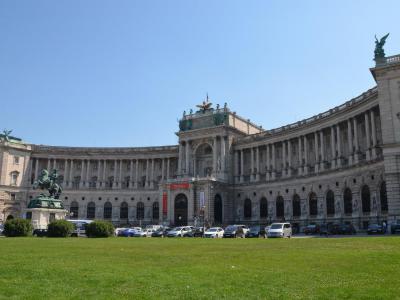
Between 1896 and 1906, seven expeditions transported discoveries from Ephesus to Vienna. In the early 20th century, these findings were exhibited at various locations, including Belvedere Palace and the antiques collection of the Kunsthistorisches Museum. Ephesean sculptures were showcased in the Neue Burg's colonnade from 1947 until 1978, when the entire collection finally found a permanent home in the newly established Ephesos Museum.
Among the museum's treasures are remnants from the late-Classical Altar of Artemis, including a sculpture of an Amazon. Visitors can ascend staircases from the entrance hall to a spacious chamber that houses the frieze from the Parthian Monument of Ephesus. Other significant exhibits include a 1:500 scale model of ancient Ephesus, numerous sculptures, such as a bronze statue of an athlete, and architectural and sculptural artifacts from the Sanctuary of the Great Gods on the Greek island of Samothrace.
Situated on the Turkish Aegean coast, Ephesus was once among the largest cities in the ancient world and remains a highly popular tourist destination in Turkey today. The Austrian Archaeological Institute has been conducting research in the city's ruins since 1895, with interruptions during the two world wars. The museum's collection began when Sultan Abdul Hamid II donated some archaeological findings to Emperor Franz Joseph I.
Between 1896 and 1906, seven expeditions transported discoveries from Ephesus to Vienna. In the early 20th century, these findings were exhibited at various locations, including Belvedere Palace and the antiques collection of the Kunsthistorisches Museum. Ephesean sculptures were showcased in the Neue Burg's colonnade from 1947 until 1978, when the entire collection finally found a permanent home in the newly established Ephesos Museum.
Among the museum's treasures are remnants from the late-Classical Altar of Artemis, including a sculpture of an Amazon. Visitors can ascend staircases from the entrance hall to a spacious chamber that houses the frieze from the Parthian Monument of Ephesus. Other significant exhibits include a 1:500 scale model of ancient Ephesus, numerous sculptures, such as a bronze statue of an athlete, and architectural and sculptural artifacts from the Sanctuary of the Great Gods on the Greek island of Samothrace.
Situated on the Turkish Aegean coast, Ephesus was once among the largest cities in the ancient world and remains a highly popular tourist destination in Turkey today. The Austrian Archaeological Institute has been conducting research in the city's ruins since 1895, with interruptions during the two world wars. The museum's collection began when Sultan Abdul Hamid II donated some archaeological findings to Emperor Franz Joseph I.
8) Mozart Monument
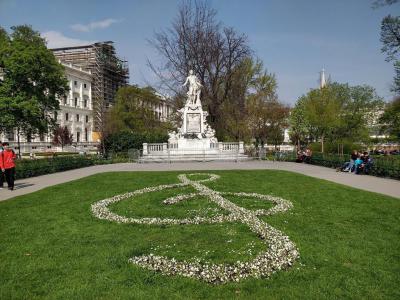
In the quiet oasis of Burggarten stands an elegant statue of Mozart, moved here from the Albertinaplatz after the war, when the city's charred ruins were being rebuilt. This intimate place is an excellent spot for Mozart lovers to have a photo with the 7.5-meter-high statue made by architect Karl König (1841–1915) and sculptor Viktor Tilgner (1844–96) which features Mozart with a music stand. The putti on the socle, representing the power of Mozart's music, are stylistically suggestive of Art Nouveau.
On the front, a relief refers to two scenes of Mozart's opera "Don Giovanni", while above it are a stone keyboard, masks, instruments and music-making cherubs. The rear side relief shows the six-year-old prodigy at the piano, with beloved sister Maria Anna ("Nannerl") and father Leopold by his side. Unfortunately, the siblings' partnership would experience a sudden and severe fracture in 1769, when Nannerl turned 18, meaning she was of marriageable age, which, as far as father Leopold was concerned, signaled the end of her performing career. As father and son continued to travel Europe and play to distinguished audiences, Nannerl remained at home with her mother.
From spring to autumn, the statue is surrounded by a small manicured lawn with a trebleclef-shaped flower bed. The steeples of Saint Stephen's and the Augustinerkirche, old trees and blooming shrubs add to the atmosphere. Noteworthy, also, is the nice sculpture of famous philosopher Goethe in the same area.
On the front, a relief refers to two scenes of Mozart's opera "Don Giovanni", while above it are a stone keyboard, masks, instruments and music-making cherubs. The rear side relief shows the six-year-old prodigy at the piano, with beloved sister Maria Anna ("Nannerl") and father Leopold by his side. Unfortunately, the siblings' partnership would experience a sudden and severe fracture in 1769, when Nannerl turned 18, meaning she was of marriageable age, which, as far as father Leopold was concerned, signaled the end of her performing career. As father and son continued to travel Europe and play to distinguished audiences, Nannerl remained at home with her mother.
From spring to autumn, the statue is surrounded by a small manicured lawn with a trebleclef-shaped flower bed. The steeples of Saint Stephen's and the Augustinerkirche, old trees and blooming shrubs add to the atmosphere. Noteworthy, also, is the nice sculpture of famous philosopher Goethe in the same area.
9) Albertina Museum (must see)
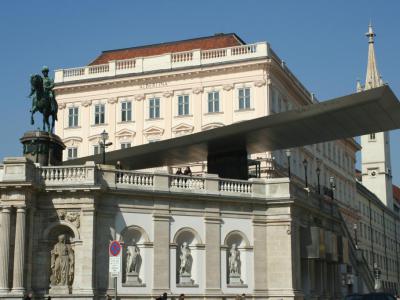
If you’re an art lover roaming Vienna with stars in your eyes and time to spare-stop right there. You’ve just found your holy grail: the Albertina. Housed in the largest residential palace of the ever-fancy Habsburgs, this museum is the heavyweight champ of graphic art. We’re talking over 65,000 watercolors and drawings, 70,000 photographs, and a stack of priceless prints that would make even da Vinci blush-and yes, he’s in the collection too, alongside Michelangelo, Raphael, Rembrandt, and the rest of the Renaissance dream team.
But wait, it’s not all parchment and powdered wigs. The Batliner Collection brings you straight into the bold world of modernism. Here, Monet, Degas, Cézanne, and Picasso throw a visual party with their impressionist pals, while Fauvism, Brücke, Cubism, and Surrealism crash the scene. It’s the perfect wild counterpoint to the orderly elegance of the Art History Museum-think of it as Vienna’s more rebellious cousin.
If Klimt or Schiele makes your heart flutter-well, good news. The Albertina’s got them too, in all their golden, tormented glory.
And speaking of atmosphere, recent renovations gave the place back its shine, from regal façades to a grand central courtyard. When you’re ready for a break from art-staring, the onsite DO & CO café offers delicious distractions-coffee, desserts, light meals, and unbeatable views over Vienna’s historic center. Don’t skip the nearby Burggarten either for a breezy pause among the greenery. And yes, there’s a gift shop on your way out-books, souvenirs, and Vienna-themed treasures to prove to your friends that you have excellent taste.
So, the answer to “Why swing by?” here is very simple. Because it’s stunning. Because the collection is world-class. Because you can skip the lines with an online ticket and feel like a VIP. And because the top-floor balcony is the ultimate selfie spot-Vienna’s historic skyline included.
Hot tip:
Block out at least 2.5 hours-you’ll need it. And if you want the full experience, grab the audio guide. It’s not just informative-it’s your witty, well-read companion through centuries of genius.
Now go, and let the masters blow your mind...
But wait, it’s not all parchment and powdered wigs. The Batliner Collection brings you straight into the bold world of modernism. Here, Monet, Degas, Cézanne, and Picasso throw a visual party with their impressionist pals, while Fauvism, Brücke, Cubism, and Surrealism crash the scene. It’s the perfect wild counterpoint to the orderly elegance of the Art History Museum-think of it as Vienna’s more rebellious cousin.
If Klimt or Schiele makes your heart flutter-well, good news. The Albertina’s got them too, in all their golden, tormented glory.
And speaking of atmosphere, recent renovations gave the place back its shine, from regal façades to a grand central courtyard. When you’re ready for a break from art-staring, the onsite DO & CO café offers delicious distractions-coffee, desserts, light meals, and unbeatable views over Vienna’s historic center. Don’t skip the nearby Burggarten either for a breezy pause among the greenery. And yes, there’s a gift shop on your way out-books, souvenirs, and Vienna-themed treasures to prove to your friends that you have excellent taste.
So, the answer to “Why swing by?” here is very simple. Because it’s stunning. Because the collection is world-class. Because you can skip the lines with an online ticket and feel like a VIP. And because the top-floor balcony is the ultimate selfie spot-Vienna’s historic skyline included.
Hot tip:
Block out at least 2.5 hours-you’ll need it. And if you want the full experience, grab the audio guide. It’s not just informative-it’s your witty, well-read companion through centuries of genius.
Now go, and let the masters blow your mind...
10) Osterreichische Nationalbibliothek (Austrian National Library)
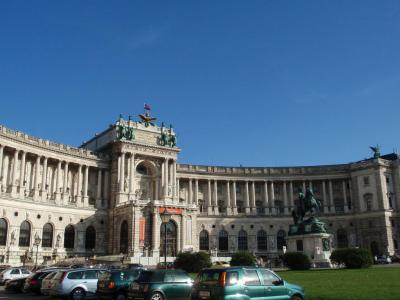
The Austrian National Library stands as the largest library in Austria, boasting a vast collection of over 12 million items across various categories. This institution is situated within the Neue Burg Wing of the Hofburg, which is located in the heart of Vienna. Since 2005, a portion of its collections has been housed in the splendid Baroque surroundings of the Palais Mollard-Clary.
Originally established by the Habsburgs, this library was initially known as the Imperial Court Library. However, the name was altered in 1920, following the dissolution of the Habsburg Monarchy and the establishment of the Austrian Republic. The library complex is not limited to its expansive collection; it also encompasses four museums along with numerous specialized collections and archives.
The Prunksaal, or State Hall, at the Hofburg palace was the core of the former imperial library. Divided into "war" and "peace" sections, it reflects the original book categorization. The hall features striking wall frescoes by Daniel Gran and a central dome with a fresco of Emperor Charles VI, supported by Hercules and Apollo. It houses marble statues of emperors, with Emperor Charles VI at the center, sculpted by Peter and Paul Strudel, as well as four large globes by Vincenzo Coronelli.
One of the primary functions of the Austrian National Library is to systematically gather and preserve all publications originating in Austria, encompassing electronic media as well. Furthermore, it diligently collects the works of Austrian authors published abroad, as well as literature related to Austria or reflecting its cultural essence and spirit. Foreign publications are also acquired, with a focus on the humanities.
Why You Should Visit:
One of the most picturesque libraries in the world, and reminiscent of 'Beauty and the Beast' with its Baroque style.
Tip:
It is best to go there early in the morning or lunchtime so you don't have a lot of visitors obstructing your photographs.
Unlike some other historic libraries, you’re allowed to wander around taking photos without paying for a permit (just turn off your flash).
Originally established by the Habsburgs, this library was initially known as the Imperial Court Library. However, the name was altered in 1920, following the dissolution of the Habsburg Monarchy and the establishment of the Austrian Republic. The library complex is not limited to its expansive collection; it also encompasses four museums along with numerous specialized collections and archives.
The Prunksaal, or State Hall, at the Hofburg palace was the core of the former imperial library. Divided into "war" and "peace" sections, it reflects the original book categorization. The hall features striking wall frescoes by Daniel Gran and a central dome with a fresco of Emperor Charles VI, supported by Hercules and Apollo. It houses marble statues of emperors, with Emperor Charles VI at the center, sculpted by Peter and Paul Strudel, as well as four large globes by Vincenzo Coronelli.
One of the primary functions of the Austrian National Library is to systematically gather and preserve all publications originating in Austria, encompassing electronic media as well. Furthermore, it diligently collects the works of Austrian authors published abroad, as well as literature related to Austria or reflecting its cultural essence and spirit. Foreign publications are also acquired, with a focus on the humanities.
Why You Should Visit:
One of the most picturesque libraries in the world, and reminiscent of 'Beauty and the Beast' with its Baroque style.
Tip:
It is best to go there early in the morning or lunchtime so you don't have a lot of visitors obstructing your photographs.
Unlike some other historic libraries, you’re allowed to wander around taking photos without paying for a permit (just turn off your flash).
11) Peterskirche (St. Peter's Church) (must see)
Tucked snugly among Vienna’s Baroque showpieces like a pearl in a pastry, Saint Peter’s Church has a front-row seat to history, and not much else, thanks to the buildings crowding around it. You’ll mostly catch it head-on, which, honestly, is its best angle.
This spot has seen churches come and go like emperors with changing tastes. Some say the very first church here dates back to the early 4th century AD, making it one of the oldest in Vienna-yes, back when sandals were in and Rome was still a big deal. In 792, none other than King Charlemagne is said to have popped by and said, “Let’s build.” There’s even a plaque on the façade bragging about it. Historical records, ever the skeptics, first mention the church in 1137, but who’s counting?
By the late 1100s, the church cozied up to the newly founded Schottenstift monastery. Then came fire, plague, and drama. After the 1661 fire, it got a bit of a patch job… until the plague of 1679 cleared the streets and cleared the way for Emperor Leopold I, who swore a divine vow to rebuild. And he did...
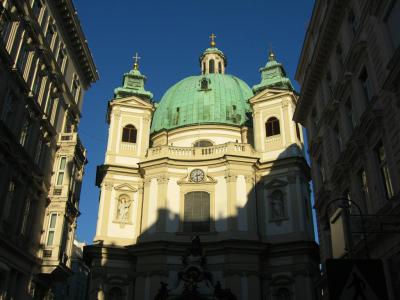
Construction began around 1701, drawing heavy inspiration from Saint Peter’s Basilica in Rome-because if you’re going to imitate, imitate the best. By 1733, Vienna had its first domed Baroque beauty, cleverly built with a compact, oval layout to fit the tight space.
Outside, it sports a neat combo of white and barely-there yellow, flanked by two towers that curve ever so slightly inward-apparently a cheeky nod to Turkish tent poles from the 1683 siege.
Step inside, and there you have it: gold stucco, opulent frescoes, and Johann Michael Rottmayr’s artistic fireworks overhead, including the Coronation of Our Lady. The high altar gets dramatic with a healing scene, starring Saint Peter and Saint John, and around the edges, you'll spot relics of Roman martyrs, reclining in crystal coffins like glittering saints on display.
The church was polished up in a major 1998–2004 renovation, and today it’s still a Baroque gem in Vienna’s crown.
Hot tip:
Drop in any day from 3 to 3:30 pm for a free organ concert-divine music, no ticket required (but donations are saintly). And if you're lucky, catch a choir in the crypts. Now that’s a holy experience...
This spot has seen churches come and go like emperors with changing tastes. Some say the very first church here dates back to the early 4th century AD, making it one of the oldest in Vienna-yes, back when sandals were in and Rome was still a big deal. In 792, none other than King Charlemagne is said to have popped by and said, “Let’s build.” There’s even a plaque on the façade bragging about it. Historical records, ever the skeptics, first mention the church in 1137, but who’s counting?
By the late 1100s, the church cozied up to the newly founded Schottenstift monastery. Then came fire, plague, and drama. After the 1661 fire, it got a bit of a patch job… until the plague of 1679 cleared the streets and cleared the way for Emperor Leopold I, who swore a divine vow to rebuild. And he did...
Construction began around 1701, drawing heavy inspiration from Saint Peter’s Basilica in Rome-because if you’re going to imitate, imitate the best. By 1733, Vienna had its first domed Baroque beauty, cleverly built with a compact, oval layout to fit the tight space.
Outside, it sports a neat combo of white and barely-there yellow, flanked by two towers that curve ever so slightly inward-apparently a cheeky nod to Turkish tent poles from the 1683 siege.
Step inside, and there you have it: gold stucco, opulent frescoes, and Johann Michael Rottmayr’s artistic fireworks overhead, including the Coronation of Our Lady. The high altar gets dramatic with a healing scene, starring Saint Peter and Saint John, and around the edges, you'll spot relics of Roman martyrs, reclining in crystal coffins like glittering saints on display.
The church was polished up in a major 1998–2004 renovation, and today it’s still a Baroque gem in Vienna’s crown.
Hot tip:
Drop in any day from 3 to 3:30 pm for a free organ concert-divine music, no ticket required (but donations are saintly). And if you're lucky, catch a choir in the crypts. Now that’s a holy experience...
12) Stadtpark
Germans refer to this location as Wiener Stadtpark, and it holds a prominent status among the city's renowned parks. This park encompasses an expansive area, stretching from Parking to Heumarkt, traversing two distinct districts within Vienna. The total expanse of this public recreational space exceeds 65,000 square meters.
Mayor Andreas Zelinka played a pivotal role in earmarking this land for a public park during his tenure. At that time, the entire area was undergoing renovations to accommodate the now-famous Ringstrabe. The responsibility of designing this space was entrusted to Josef Selleny. In August 1862, the park was inaugurated for the first time, marking its inauguration as Vienna's very first outdoor communal gathering area.
Venturing to the park's southernmost extremity, along the Weinfub, you'll encounter a delightful children's playground affectionately known to locals as the Kinderpark. This space is also utilized by Viennese families for their youngsters' sporting activities.
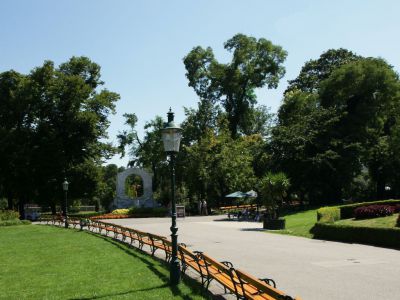
While visiting, a must-see is the Caroline Bridge, which leads through enchanting garden sections. However, the most renowned attraction within these grounds is undeniably the gold-plated statue of Johann Strauss, positioned at the center of a picturesque stone archway. It stands as, unequivocally, the most photographed spot in all of Stadtpark.
Why You Should Visit:
Aside for being a little haven of tranquility, this park has the largest number of monuments and sculptures in Vienna.
Tip:
Johann Strauss' statue looks much more beautiful at night when lights are turned on.
Mayor Andreas Zelinka played a pivotal role in earmarking this land for a public park during his tenure. At that time, the entire area was undergoing renovations to accommodate the now-famous Ringstrabe. The responsibility of designing this space was entrusted to Josef Selleny. In August 1862, the park was inaugurated for the first time, marking its inauguration as Vienna's very first outdoor communal gathering area.
Venturing to the park's southernmost extremity, along the Weinfub, you'll encounter a delightful children's playground affectionately known to locals as the Kinderpark. This space is also utilized by Viennese families for their youngsters' sporting activities.
While visiting, a must-see is the Caroline Bridge, which leads through enchanting garden sections. However, the most renowned attraction within these grounds is undeniably the gold-plated statue of Johann Strauss, positioned at the center of a picturesque stone archway. It stands as, unequivocally, the most photographed spot in all of Stadtpark.
Why You Should Visit:
Aside for being a little haven of tranquility, this park has the largest number of monuments and sculptures in Vienna.
Tip:
Johann Strauss' statue looks much more beautiful at night when lights are turned on.
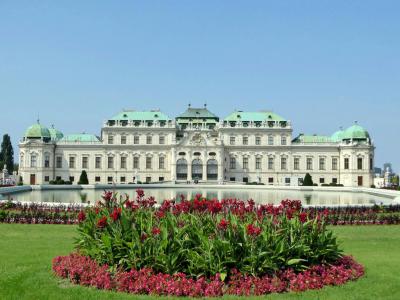
13) Belvedere Palace (must see)
Originally designed as a summer residence for Prince Eugene of Savoy, who apparently felt a standard palace simply wouldn't cut it, this lavish complex was built after Vienna stopped fending off Ottoman invasions and started flexing its imperial muscles in stone, stucco, and cascading fountains.
The Belvedere isn’t just one palace-it’s a full-on ensemble performance: Upper and Lower Belvedere, an Orangery for your fancy citrus needs, and palace stables fit for horses with noble bloodlines. All of it is wrapped in a park so meticulously designed, you’d think every hedge was hand-trimmed by a powdered wig.
Construction kicked off in 1712 with the Lower Belvedere, but things really got dramatic in 1717 when the Upper Belvedere was added-basically a Baroque ballroom with serious diplomatic swagger. Frescoes, gilded ceilings, and artwork by the who’s who of 18th-century painters helped Eugene throw parties that whispered, “empire” with every flute of champagne.
After Prince Eugene passed in 1736, the place got a second act as a Habsburg hangout, hosting royal refugees escaping the French Revolution and later transforming into one of Europe’s earliest public museums, thanks to Maria Theresa and Joseph II.
Fast forward to the 20th century: the Belvedere went national after World War I, becoming the proud home of Austria’s classical and modern art collections. World War II wasn’t kind to it-bombings left their mark-but meticulous restoration from 1945 through the '90s brought the glory back, detail by plastered detail.
Today, the Belvedere is a major world-class museum. Its galleries span centuries, from medieval devotionals to cutting-edge modernism. And yes, Gustav Klimt’s "The Kiss" lives here too, alongside his equally iconic "Judith." You’ll also find a respectable crowd of French Impressionists and Biedermeier charmers holding court on the walls.
It's in equal measure for those who appreciate architecture, arts, or just seek to pretend they’re 18th-century nobility strolling through your summer garden... The Belvedere delivers all of this with a flourish. So go ahead-wander, gaze, and maybe channel your inner prince or princess.
Tip:
If you don’t enjoy queuing in the sun, grab your tickets online. And for the love of Baroque opulence, don’t skip the gardens-those cascading fountains and smug statues have been waiting centuries for your admiration...
The Belvedere isn’t just one palace-it’s a full-on ensemble performance: Upper and Lower Belvedere, an Orangery for your fancy citrus needs, and palace stables fit for horses with noble bloodlines. All of it is wrapped in a park so meticulously designed, you’d think every hedge was hand-trimmed by a powdered wig.
Construction kicked off in 1712 with the Lower Belvedere, but things really got dramatic in 1717 when the Upper Belvedere was added-basically a Baroque ballroom with serious diplomatic swagger. Frescoes, gilded ceilings, and artwork by the who’s who of 18th-century painters helped Eugene throw parties that whispered, “empire” with every flute of champagne.
After Prince Eugene passed in 1736, the place got a second act as a Habsburg hangout, hosting royal refugees escaping the French Revolution and later transforming into one of Europe’s earliest public museums, thanks to Maria Theresa and Joseph II.
Fast forward to the 20th century: the Belvedere went national after World War I, becoming the proud home of Austria’s classical and modern art collections. World War II wasn’t kind to it-bombings left their mark-but meticulous restoration from 1945 through the '90s brought the glory back, detail by plastered detail.
Today, the Belvedere is a major world-class museum. Its galleries span centuries, from medieval devotionals to cutting-edge modernism. And yes, Gustav Klimt’s "The Kiss" lives here too, alongside his equally iconic "Judith." You’ll also find a respectable crowd of French Impressionists and Biedermeier charmers holding court on the walls.
It's in equal measure for those who appreciate architecture, arts, or just seek to pretend they’re 18th-century nobility strolling through your summer garden... The Belvedere delivers all of this with a flourish. So go ahead-wander, gaze, and maybe channel your inner prince or princess.
Tip:
If you don’t enjoy queuing in the sun, grab your tickets online. And for the love of Baroque opulence, don’t skip the gardens-those cascading fountains and smug statues have been waiting centuries for your admiration...
