Custom Walk in Washington D.C., USA by represcott11_3922f created on 2025-04-30
Guide Location: USA » Washington D.C.
Guide Type: Custom Walk
# of Sights: 8
Tour Duration: 3 Hour(s)
Travel Distance: 7.8 Km or 4.8 Miles
Share Key: ZZV2A
Guide Type: Custom Walk
# of Sights: 8
Tour Duration: 3 Hour(s)
Travel Distance: 7.8 Km or 4.8 Miles
Share Key: ZZV2A
How It Works
Please retrieve this walk in the GPSmyCity app. Once done, the app will guide you from one tour stop to the next as if you had a personal tour guide. If you created the walk on this website or come to the page via a link, please follow the instructions below to retrieve the walk in the app.
Retrieve This Walk in App
Step 1. Download the app "GPSmyCity: Walks in 1K+ Cities" on Apple App Store or Google Play Store.



Step 2. In the GPSmyCity app, download(or launch) the guide "Washington D.C. Map and Walking Tours".
Step 3. Tap the menu button located at upper right corner of the "Walks" screen and select "Retrieve custom walk". Enter the share key: ZZV2A
1) Lincoln Memorial (must see)
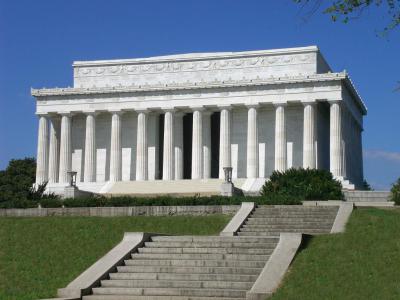
The Lincoln Memorial is one of the most famous monuments and historical places in the United States. It is a nationally recognized location that was built in honor of Abraham Lincoln, who was the 16th President of the United States during the bloody years of the Civil War. The monument is a fine example of a classic Greek Doric temple. Even the sculpture of the President is done in Olympic Godlike fashion. Two well-known speeches of the former President are also engraved there: the Gettysburg Address and Lincoln’s Second Inaugural Address.
The Lincoln Monument Association was formed two years after the death of the President. Planning for the memorial, though, stretched out until 1901. The Lincoln Memorial Bill was signed by President Taft in 1911. Interestingly, the entire monument was built for just $2 million. Today, the site is famous as the location for many historic speeches, like the “I have a dream” speech by the Rev. Martin Luther King. It has also been the site for many famous protests. The Monument is cared for by the National Park Service and is listed on the National Register of Historic Places. The monument is open 24 hours a day.
Why You Should Visit:
The most visited memorial in the National Mall for a reason; it is beautiful and offers a fantastic view of the reflecting pool and the Washington Monument.
Tip:
Go first thing in the morning (probably before 9am) or later in the evening (when the lights are on) to avoid the crowds.
Right on the steps, look down on the floor for the "I have a dream" block. It's where MLK, Jr. stood when he gave his most famous speech.
Pack your food and water (in the summer) because the food at the refreshment stands is not very good and somewhat overpriced.
The Lincoln Monument Association was formed two years after the death of the President. Planning for the memorial, though, stretched out until 1901. The Lincoln Memorial Bill was signed by President Taft in 1911. Interestingly, the entire monument was built for just $2 million. Today, the site is famous as the location for many historic speeches, like the “I have a dream” speech by the Rev. Martin Luther King. It has also been the site for many famous protests. The Monument is cared for by the National Park Service and is listed on the National Register of Historic Places. The monument is open 24 hours a day.
Why You Should Visit:
The most visited memorial in the National Mall for a reason; it is beautiful and offers a fantastic view of the reflecting pool and the Washington Monument.
Tip:
Go first thing in the morning (probably before 9am) or later in the evening (when the lights are on) to avoid the crowds.
Right on the steps, look down on the floor for the "I have a dream" block. It's where MLK, Jr. stood when he gave his most famous speech.
Pack your food and water (in the summer) because the food at the refreshment stands is not very good and somewhat overpriced.
2) Korean War Veterans Memorial (must see)
The Korean War Veterans Memorial stands in West Potomac Park within Washington, D.C. Its purpose is to pay tribute to all those who served during the Korean conflict. The United States provided assistance to South Korea when it was invaded by North Korea at the behest of the United Nations. The U.S. had divided opinions about the conflict, often referring to it as a "conflict" rather than a full-fledged war. The Korean War was a grueling battle that took place in extremely harsh conditions, with temperatures dropping to as low as -40°F during the Chosin Reservoir battle.
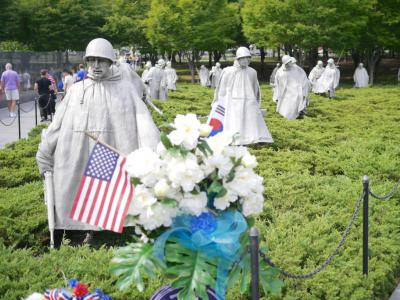
The memorial is designed in the shape of a triangle and is constructed using juniper and strips of concrete to mimic the rugged terrain of the battlefield. This triangular shape symbolizes the Field of Service. Within this landscape, you'll find 19 statues of soldiers dressed in military attire, their clothing appearing to be windblown, evoking memories of the brutal weather conditions endured. These soldier statues are crafted from stainless steel. On the south side of the memorial, there's a black granite wall that reflects the statues in such a way that it creates the illusion of a total of 38 soldiers, paying homage to the 38th parallel, which separates North Korea from South Korea.
At the end of the Field of Service, there's a triangular reflecting pool. Along the northern side, there's a low granite wall bearing the names of the 22 United Nations member countries that participated in the Korean War. The memorial is open for visitors around the clock, and park rangers are on hand from 8 a.m. to 12 a.m. daily, except for major holidays.
Why You Should Visit:
The company of soldiers depicted as moving through hostile terrain is a bit eerie and very lifelike, making this one of the most remarkable war memorials you'll ever see.
Tip:
Truly better to visit after dark; the lighting is so very dramatic, you can almost hear the soldiers' boots sloshing through the mud.
Additionally, use your phone flashlight to look carefully at the black wall that has images of soldiers laser-etched onto the black surface.
The memorial is designed in the shape of a triangle and is constructed using juniper and strips of concrete to mimic the rugged terrain of the battlefield. This triangular shape symbolizes the Field of Service. Within this landscape, you'll find 19 statues of soldiers dressed in military attire, their clothing appearing to be windblown, evoking memories of the brutal weather conditions endured. These soldier statues are crafted from stainless steel. On the south side of the memorial, there's a black granite wall that reflects the statues in such a way that it creates the illusion of a total of 38 soldiers, paying homage to the 38th parallel, which separates North Korea from South Korea.
At the end of the Field of Service, there's a triangular reflecting pool. Along the northern side, there's a low granite wall bearing the names of the 22 United Nations member countries that participated in the Korean War. The memorial is open for visitors around the clock, and park rangers are on hand from 8 a.m. to 12 a.m. daily, except for major holidays.
Why You Should Visit:
The company of soldiers depicted as moving through hostile terrain is a bit eerie and very lifelike, making this one of the most remarkable war memorials you'll ever see.
Tip:
Truly better to visit after dark; the lighting is so very dramatic, you can almost hear the soldiers' boots sloshing through the mud.
Additionally, use your phone flashlight to look carefully at the black wall that has images of soldiers laser-etched onto the black surface.
3) Thomas Jefferson Memorial (must see)
The Thomas Jefferson Memorial can be found in Washington, D.C., situated along the banks of the Potomac River. Interestingly, it tends to receive fewer visitors compared to other memorials, possibly due to its location outside of the National Mall. Consequently, a visit here is typically quite tranquil. Moreover, it enjoys a picturesque setting, positioned just to the south of the White House.
The concept for this memorial was conceived in 1901. Following extensive deliberation and multiple design revisions, it was ultimately dedicated on April 13, 1943, which is significant because it marked the 200th anniversary of Thomas Jefferson's birth. One of the primary points of contention during discussions about the memorial was its size. There were differing opinions regarding whether it should be grand in scale, comparable to the Washington Monument or the Lincoln Memorial, in recognition of Thomas Jefferson's role as one of the Founding Fathers.
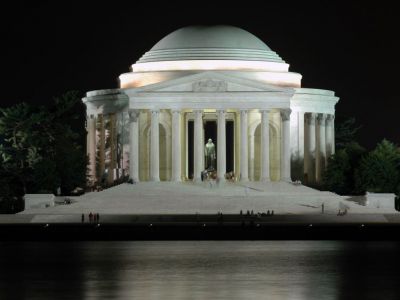
Ultimately, the proponents of Jefferson's affinity for classical architecture prevailed, leading to the construction of this imposing classical edifice. The open structure features a magnificent sweeping portico and houses a 19-foot tall bronze statue of President Jefferson beneath its dome. Notably, the statue that stands there today is not the original one from the dedication. Due to wartime shortages of bronze, the original statue was crafted from plaster and painted to resemble bronze. The current bronze statue was installed four years later.
Adorning the walls surrounding the statue are inscriptions of Jefferson's writings. An intriguing historical tidbit is the difference in wording between Jefferson's original "inalienable rights" and the final document's "unalienable rights" in the Declaration of Independence. At the Jefferson Memorial, the inscription adheres to Jefferson's original wording. While the site's beauty is ever-present, it is particularly breathtaking during cherry blossom season. The cherry trees adorning the area were a gift from the people of Japan.
The Jefferson Memorial remains accessible 24 hours a day, with park rangers on duty from 9 am to 11:30 pm, excluding major holidays.
Why You Should Visit:
Terrific spot to people watch and take in the DC skyline while sitting on the memorial's many steps.
Its backsides are often forgotten about but are also good for taking in the views and architecture.
Located at the back of the Tidal Basin, this is one of the most iconic and calming sites in DC.
Tip:
Make sure to check out the bookstore and educational displays downstairs. Restrooms available there too.
The concept for this memorial was conceived in 1901. Following extensive deliberation and multiple design revisions, it was ultimately dedicated on April 13, 1943, which is significant because it marked the 200th anniversary of Thomas Jefferson's birth. One of the primary points of contention during discussions about the memorial was its size. There were differing opinions regarding whether it should be grand in scale, comparable to the Washington Monument or the Lincoln Memorial, in recognition of Thomas Jefferson's role as one of the Founding Fathers.
Ultimately, the proponents of Jefferson's affinity for classical architecture prevailed, leading to the construction of this imposing classical edifice. The open structure features a magnificent sweeping portico and houses a 19-foot tall bronze statue of President Jefferson beneath its dome. Notably, the statue that stands there today is not the original one from the dedication. Due to wartime shortages of bronze, the original statue was crafted from plaster and painted to resemble bronze. The current bronze statue was installed four years later.
Adorning the walls surrounding the statue are inscriptions of Jefferson's writings. An intriguing historical tidbit is the difference in wording between Jefferson's original "inalienable rights" and the final document's "unalienable rights" in the Declaration of Independence. At the Jefferson Memorial, the inscription adheres to Jefferson's original wording. While the site's beauty is ever-present, it is particularly breathtaking during cherry blossom season. The cherry trees adorning the area were a gift from the people of Japan.
The Jefferson Memorial remains accessible 24 hours a day, with park rangers on duty from 9 am to 11:30 pm, excluding major holidays.
Why You Should Visit:
Terrific spot to people watch and take in the DC skyline while sitting on the memorial's many steps.
Its backsides are often forgotten about but are also good for taking in the views and architecture.
Located at the back of the Tidal Basin, this is one of the most iconic and calming sites in DC.
Tip:
Make sure to check out the bookstore and educational displays downstairs. Restrooms available there too.
4) International Spy Museum
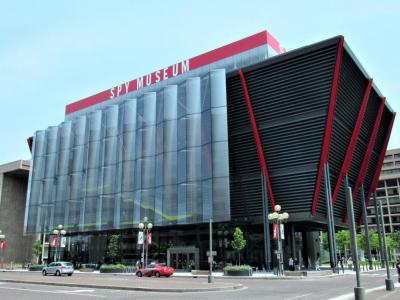
The International Spy Museum is a must-see for all who find the spy business intriguing. It is the only museum of its kind in America. It may also be one of the most fun museums in Washington. When entering the museum, guests are asked to assume an identity and enter the spy game.
In the museum are exhibits on tiny buttonhole cameras, microdots, bugs and disguises. Stories about famous and not so famous spies – even a nod to Julia Child – are all part of the intrigue. Civil War spies and Cold War spies, the exhibits will open up some of the most interesting secrets. Along the way, guests will learn how to keep their cover and work with the tools of spycraft. New gadgets are also discovered in the modern spy game, the Cyberspies.
In addition to the exhibits, there are some spy experiences. No, not really going on a mission, but it almost feels that real. For an extra fee, there are four experiences that a budding spy can participate in. These adventures take from one to two hours and some can be purchased without purchasing a museum ticket. There will be a time on the ticket as to when the experience starts; do not show up late, or the ticket will be forfeited.
There are some rules to visit the museum – no strollers; no photography or videography; no food, drink, gum, or smoking; no use of phones of any kind. There is also an entrance charge for this museum; even so, tickets are assigned an entry time because the crowds can be large. Plan to be there early to get a ticket with a good time.
In the museum are exhibits on tiny buttonhole cameras, microdots, bugs and disguises. Stories about famous and not so famous spies – even a nod to Julia Child – are all part of the intrigue. Civil War spies and Cold War spies, the exhibits will open up some of the most interesting secrets. Along the way, guests will learn how to keep their cover and work with the tools of spycraft. New gadgets are also discovered in the modern spy game, the Cyberspies.
In addition to the exhibits, there are some spy experiences. No, not really going on a mission, but it almost feels that real. For an extra fee, there are four experiences that a budding spy can participate in. These adventures take from one to two hours and some can be purchased without purchasing a museum ticket. There will be a time on the ticket as to when the experience starts; do not show up late, or the ticket will be forfeited.
There are some rules to visit the museum – no strollers; no photography or videography; no food, drink, gum, or smoking; no use of phones of any kind. There is also an entrance charge for this museum; even so, tickets are assigned an entry time because the crowds can be large. Plan to be there early to get a ticket with a good time.
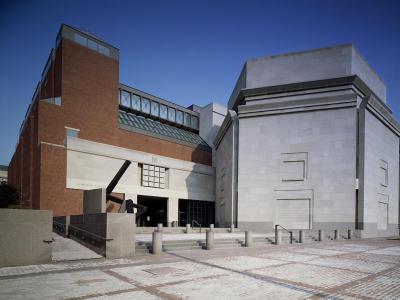
5) Holocaust Memorial Museum (must see)
The United States Holocaust Memorial Museum (USHMM) stands as the official American tribute to the Holocaust. Situated near the National Mall in Washington, D.C., this institution serves as a hub for the preservation, analysis, and understanding of Holocaust history. Its primary mission is to assist global leaders and citizens in confronting hatred, preventing genocide, championing human dignity, and fortifying democratic values.
The USHMM, conceived by architect James Ingo Freed, was purposefully designed as a "memory amplifier." Its exterior seamlessly blends into the surrounding Neoclassical, Georgian, and modern architectural landscape of Washington, D.C. However, upon entering the museum, each architectural element transforms into a poignant reference to the Holocaust. In crafting the building, Freed meticulously studied post-World War II German architecture and made visits to Holocaust sites across Europe. The museum's physical structure and the exhibits within it are intentionally crafted to evoke emotions of deceit, fear, and solemnity-contrasting with the typical comfort and grandeur associated with public buildings in Washington, D.C.
The collections within the USHMM encompass an impressive array of historical materials: over 12,750 artifacts, 49 million pages of archival documents, 85,000 historical photographs, a registry of more than 200,000 survivors and their families, 1,000 hours of archival footage, 93,000 library items, and 9,000 oral history testimonies. Additionally, the museum has appointed teacher fellows in every U.S. state and, since 1994, nearly 400 university fellows from 26 countries.
Researchers affiliated with the United States Holocaust Memorial Museum have meticulously documented a staggering 42,500 ghettos and concentration camps established by the Nazis across German-controlled regions of Europe during the years 1933 to 1945.
While geographically situated in the same vicinity as the Smithsonian museums, it's important to note that the United States Holocaust Memorial Museum operates independently, boasting its own governance structure. Nevertheless, the museum and the Smithsonian frequently collaborate on joint projects.
Tip:
To get tickets (needed Mar-Sep), log in at 6am on the day you wish to go. You'll probably get them. They are free but there's a small convenience charge. You can show the tickets on your phone, so no need to print them. Once you have your arrival time, be prepared to wait outside for at least an hour, so make sure you build that into your time table.
The USHMM, conceived by architect James Ingo Freed, was purposefully designed as a "memory amplifier." Its exterior seamlessly blends into the surrounding Neoclassical, Georgian, and modern architectural landscape of Washington, D.C. However, upon entering the museum, each architectural element transforms into a poignant reference to the Holocaust. In crafting the building, Freed meticulously studied post-World War II German architecture and made visits to Holocaust sites across Europe. The museum's physical structure and the exhibits within it are intentionally crafted to evoke emotions of deceit, fear, and solemnity-contrasting with the typical comfort and grandeur associated with public buildings in Washington, D.C.
The collections within the USHMM encompass an impressive array of historical materials: over 12,750 artifacts, 49 million pages of archival documents, 85,000 historical photographs, a registry of more than 200,000 survivors and their families, 1,000 hours of archival footage, 93,000 library items, and 9,000 oral history testimonies. Additionally, the museum has appointed teacher fellows in every U.S. state and, since 1994, nearly 400 university fellows from 26 countries.
Researchers affiliated with the United States Holocaust Memorial Museum have meticulously documented a staggering 42,500 ghettos and concentration camps established by the Nazis across German-controlled regions of Europe during the years 1933 to 1945.
While geographically situated in the same vicinity as the Smithsonian museums, it's important to note that the United States Holocaust Memorial Museum operates independently, boasting its own governance structure. Nevertheless, the museum and the Smithsonian frequently collaborate on joint projects.
Tip:
To get tickets (needed Mar-Sep), log in at 6am on the day you wish to go. You'll probably get them. They are free but there's a small convenience charge. You can show the tickets on your phone, so no need to print them. Once you have your arrival time, be prepared to wait outside for at least an hour, so make sure you build that into your time table.
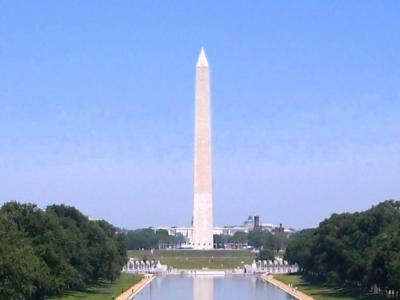
6) Washington Monument (must see)
The Washington Monument was built to honor George Washington. It stands in the center of the US Capital to symbolize the importance of President Washington to the country. The idea to build the monument was first discussed in 1783. It wasn’t until 1847 that a design was agreed upon. However, that design was very different from the monument that stands today.
The obelisk was to rise above a temple that would house artifacts of American presidents and heroes. Over the years that plan was dropped, and today the obelisk is rather plain. The first cornerstone was laid in a Masonic ceremony on July 4, 1848. The same Masonic trowel that President Washington used to lay the cornerstone for the Capitol was used.
Work on the Washington Monument was slow and eventually stopped altogether during the Civil War. Modifications were made to the design and the work resumed in 1880, with the capstone placed on December 6, 1884. The hollow shaft of the monument contains an elevator to the top plus a staircase with 897 steps. There are 188 interesting, carved blocks of stone to be viewed along the staircase, quarried of native stones brought from all the 50 states. These stones were originally supposed to arrive with a donation attached to raise funds. Eventually, the stones arrived but the donation did not.
Go to the top of the monument to get the amazing views of Washington DC. It will be a highlight of your trip.
Tip:
Entry is free, but a ticket is a must for everyone going into the monument.
One person from your party can obtain up to 6 tickets and pick a time to go up in the monument. Tickets can also be ordered ahead of time for a fee.
The obelisk was to rise above a temple that would house artifacts of American presidents and heroes. Over the years that plan was dropped, and today the obelisk is rather plain. The first cornerstone was laid in a Masonic ceremony on July 4, 1848. The same Masonic trowel that President Washington used to lay the cornerstone for the Capitol was used.
Work on the Washington Monument was slow and eventually stopped altogether during the Civil War. Modifications were made to the design and the work resumed in 1880, with the capstone placed on December 6, 1884. The hollow shaft of the monument contains an elevator to the top plus a staircase with 897 steps. There are 188 interesting, carved blocks of stone to be viewed along the staircase, quarried of native stones brought from all the 50 states. These stones were originally supposed to arrive with a donation attached to raise funds. Eventually, the stones arrived but the donation did not.
Go to the top of the monument to get the amazing views of Washington DC. It will be a highlight of your trip.
Tip:
Entry is free, but a ticket is a must for everyone going into the monument.
One person from your party can obtain up to 6 tickets and pick a time to go up in the monument. Tickets can also be ordered ahead of time for a fee.
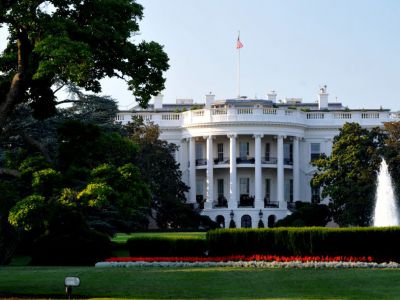
7) White House (must see)
The White House address on Pennsylvania Avenue, Washington, D.C. is both home and office of the American President, much as the symbol of the United States. While this is not the first home of American presidents, it has been the home of every American President since John Adams moved in here during his presidency in 1800. The design was made by James Hoban and the construction started with the laying of the cornerstone in 1792. Each president ever since has added their own touch to the people’s house, some big and some small.
The original White House was burned, almost to the ground, by British troops in 1814 during the War of 1812. Rebuilding soon began and was finished by 1817. The South Portico was added in 1824 and the North Portico followed in 1830. The West Wing came during an addition in 1901 and then later the Oval Office was added. A fire of 1929 damaged the West Wing but the damage was repaired, and in the 1930s, a second story and basement were added, upon which the Oval Office was moved to its present location.
By 1948 the building was in need of a serious repair prompted by numerous additions made over the years. Load bearing beams were installed and a complete dismantling of the interior was undertaken. Sadly, most of the glorious handcrafted work was lost during that process. In the 1960s Jacqueline Kennedy oversaw another extensive redecoration of the White House whereby some of the artifacts, previously lost, were brought back and the building returned to its grander days.
Today, the White House has six stories, 132 rooms and various amenities including a tennis court, swimming pool, bowling alley and, of course, the First Garden. Following the attacks of 9/11, the White House is no longer open for tours, except on a very limited basis. All those wanting a tour must ask their Congressional representatives to put them on a list and have background checks completed prior to the visit.
Tip:
The entire tour is self-paced, so you might want to brush up on your White House history (War of 1812, etc) ahead of time, so as to maximize the experience. You will only be visiting the East Wing, so that will limit how much you need to research.
If you're you don't get a tour time, don't be heartbroken. Stand in front of the White House and take a group photo, then head over to the Visitor Center and use the interactive displays where you can see the same rooms.
The original White House was burned, almost to the ground, by British troops in 1814 during the War of 1812. Rebuilding soon began and was finished by 1817. The South Portico was added in 1824 and the North Portico followed in 1830. The West Wing came during an addition in 1901 and then later the Oval Office was added. A fire of 1929 damaged the West Wing but the damage was repaired, and in the 1930s, a second story and basement were added, upon which the Oval Office was moved to its present location.
By 1948 the building was in need of a serious repair prompted by numerous additions made over the years. Load bearing beams were installed and a complete dismantling of the interior was undertaken. Sadly, most of the glorious handcrafted work was lost during that process. In the 1960s Jacqueline Kennedy oversaw another extensive redecoration of the White House whereby some of the artifacts, previously lost, were brought back and the building returned to its grander days.
Today, the White House has six stories, 132 rooms and various amenities including a tennis court, swimming pool, bowling alley and, of course, the First Garden. Following the attacks of 9/11, the White House is no longer open for tours, except on a very limited basis. All those wanting a tour must ask their Congressional representatives to put them on a list and have background checks completed prior to the visit.
Tip:
The entire tour is self-paced, so you might want to brush up on your White House history (War of 1812, etc) ahead of time, so as to maximize the experience. You will only be visiting the East Wing, so that will limit how much you need to research.
If you're you don't get a tour time, don't be heartbroken. Stand in front of the White House and take a group photo, then head over to the Visitor Center and use the interactive displays where you can see the same rooms.
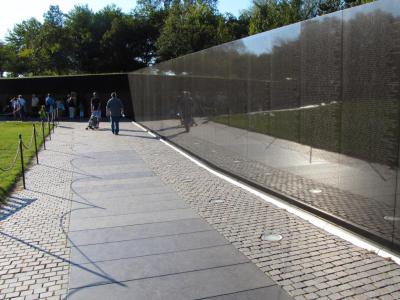
8) Vietnam Veterans Memorial
When most people think of the Vietnam Veterans Memorial (VVM), they typically envision the Vietnam Veterans Memorial Wall. There are two other components to the memorial, however: The Vietnam Women’s Memorial and the Three Soldiers statue. All three components are located in Constitution Gardens of the National Mall.
The U.S. involvement in Vietnam began in 1959. The last US serviceman died in Vietnam on May 15, 1975. Throughout this time the country had varying degrees of support for the war. One of the precepts of the Vietnam Veterans Memorial was to not let any of the controversy mar the honoring of the service men and women who served during that time. Even though the memorial itself has had some controversy, time is healing the wounds. The somber reflecting wall with all the names etched into stone lets visitors to the Vietnam Veterans Memorial focus on the sacrifice that has been made. There are currently 58,267 names listed on the wall of service personnel that was either killed or missing in action. There are no civilian names listed on The Wall.
The Vietnam Women’s Memorial is situated just south of The Wall. It shows three uniformed women helping a wounded soldier. The women’s names are Faith, Hope, and Charity. A total of 67 women died during the Vietnam War – 8 were servicewomen, and 59 were civilians in a support role.
The Three Soldiers portion of the Vietnam Veterans Memorial was created amid the controversy that surrounded The Wall. Some members of Congress wanted a more traditional memorial. The bronze statues of the service members depict soldiers wearing the common gear of the Vietnam War. They are positioned so they are looking at the names on The Wall.
The Vietnam Veterans Memorial is open 24 hours a day with rangers available to answer questions from 9:30am to 11:30pm. There are directories at the entrance to The Wall to help you find a specific name. There are also several websites that list the names on The Wall.
Why You Should Visit:
The gravity of the Vietnam War is not truly understood until you see all the names etched for eternity on the memorial's wall.
Tip:
Do it on a clear day if you can. On a wet day, there is nowhere much to shelter.
If you want unobstructed photographs or more peaceful, quiet visits, it is best to visit very early in the morning, just after daybreak.
The U.S. involvement in Vietnam began in 1959. The last US serviceman died in Vietnam on May 15, 1975. Throughout this time the country had varying degrees of support for the war. One of the precepts of the Vietnam Veterans Memorial was to not let any of the controversy mar the honoring of the service men and women who served during that time. Even though the memorial itself has had some controversy, time is healing the wounds. The somber reflecting wall with all the names etched into stone lets visitors to the Vietnam Veterans Memorial focus on the sacrifice that has been made. There are currently 58,267 names listed on the wall of service personnel that was either killed or missing in action. There are no civilian names listed on The Wall.
The Vietnam Women’s Memorial is situated just south of The Wall. It shows three uniformed women helping a wounded soldier. The women’s names are Faith, Hope, and Charity. A total of 67 women died during the Vietnam War – 8 were servicewomen, and 59 were civilians in a support role.
The Three Soldiers portion of the Vietnam Veterans Memorial was created amid the controversy that surrounded The Wall. Some members of Congress wanted a more traditional memorial. The bronze statues of the service members depict soldiers wearing the common gear of the Vietnam War. They are positioned so they are looking at the names on The Wall.
The Vietnam Veterans Memorial is open 24 hours a day with rangers available to answer questions from 9:30am to 11:30pm. There are directories at the entrance to The Wall to help you find a specific name. There are also several websites that list the names on The Wall.
Why You Should Visit:
The gravity of the Vietnam War is not truly understood until you see all the names etched for eternity on the memorial's wall.
Tip:
Do it on a clear day if you can. On a wet day, there is nowhere much to shelter.
If you want unobstructed photographs or more peaceful, quiet visits, it is best to visit very early in the morning, just after daybreak.
