Custom Walk in Galway, Ireland by diane_t_toner_82784 created on 2025-05-08
Guide Location: Ireland » Galway
Guide Type: Custom Walk
# of Sights: 15
Tour Duration: 5 Hour(s)
Travel Distance: 10.8 Km or 6.7 Miles
Share Key: GS6AM
Guide Type: Custom Walk
# of Sights: 15
Tour Duration: 5 Hour(s)
Travel Distance: 10.8 Km or 6.7 Miles
Share Key: GS6AM
How It Works
Please retrieve this walk in the GPSmyCity app. Once done, the app will guide you from one tour stop to the next as if you had a personal tour guide. If you created the walk on this website or come to the page via a link, please follow the instructions below to retrieve the walk in the app.
Retrieve This Walk in App
Step 1. Download the app "GPSmyCity: Walks in 1K+ Cities" on Apple App Store or Google Play Store.



Step 2. In the GPSmyCity app, download(or launch) the guide "Galway Map and Walking Tours".
Step 3. Tap the menu button located at upper right corner of the "Walks" screen and select "Retrieve custom walk". Enter the share key: GS6AM
1) Galway Cathedral (must see)
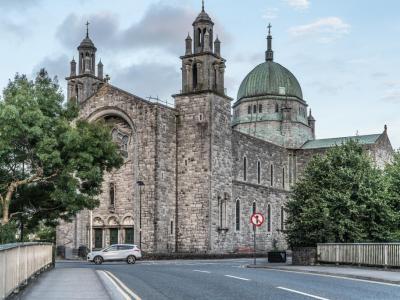
The Cathedral of Our Lady Assumed into Heaven and Saint Nicholas, commonly known as Galway Cathedral, is one of the city’s most prominent landmarks. Though it lacks a medieval past, it holds a unique distinction as the last major stone cathedral built in Europe. Construction began in 1958 on the site of Galway’s former county jail, and the building was completed and dedicated on 15 August 1965.
Designed by architect John J. Robinson, Galway Cathedral combines Renaissance and Romanesque Revival influences with mid-20th-century architectural sensibilities. Its 145-foot dome rises prominently above the city, creating a striking silhouette along the River Corrib.
Inside, the cathedral features octagonal pillars supporting rounded arches, intricate marble flooring and altars, and detailed stonework that frames the nave and side chapels. Stained glass windows depict religious scenes, casting colorful light across the interior, while the high vaulted ceilings enhance acoustics for music and worship. Decorative elements include carved capitals, mosaic accents, and elegant wooden pews, reflecting both craftsmanship and modern design.
Music has been integral to the cathedral since its opening. The cathedral choir, active since 1965, performs sacred works ranging from 16th-century polyphony to contemporary choral music, as well as Gregorian chant and traditional Irish melodies. The main pipe organ, built by Rushworth & Dreaper of Liverpool in 1966 and later restored by Trevor Crowe, features three manuals and 59 stops. A smaller portable organ supports services and concerts in the side chapels.
Located on Nun’s Island beside the Salmon Weir Bridge, the cathedral stands where the old city jail once stood. Open daily for worship and visitors, Galway Cathedral remains both a place of prayer and a symbol of resilience and renewal in the heart of the city.
Designed by architect John J. Robinson, Galway Cathedral combines Renaissance and Romanesque Revival influences with mid-20th-century architectural sensibilities. Its 145-foot dome rises prominently above the city, creating a striking silhouette along the River Corrib.
Inside, the cathedral features octagonal pillars supporting rounded arches, intricate marble flooring and altars, and detailed stonework that frames the nave and side chapels. Stained glass windows depict religious scenes, casting colorful light across the interior, while the high vaulted ceilings enhance acoustics for music and worship. Decorative elements include carved capitals, mosaic accents, and elegant wooden pews, reflecting both craftsmanship and modern design.
Music has been integral to the cathedral since its opening. The cathedral choir, active since 1965, performs sacred works ranging from 16th-century polyphony to contemporary choral music, as well as Gregorian chant and traditional Irish melodies. The main pipe organ, built by Rushworth & Dreaper of Liverpool in 1966 and later restored by Trevor Crowe, features three manuals and 59 stops. A smaller portable organ supports services and concerts in the side chapels.
Located on Nun’s Island beside the Salmon Weir Bridge, the cathedral stands where the old city jail once stood. Open daily for worship and visitors, Galway Cathedral remains both a place of prayer and a symbol of resilience and renewal in the heart of the city.
2) Galway Courthouse
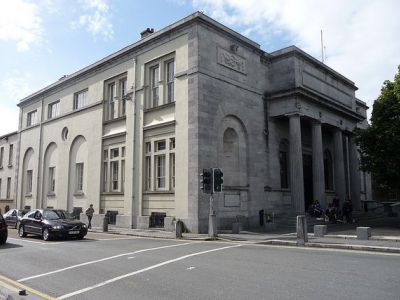
Galway Courthouse is a remarkable architectural masterpiece located in the heart of Galway City. The impressive building was constructed in 1812 by Sir Richard Morrison, who was also responsible for the building of the county jail on the same site. This Georgian-style courthouse is a magnificent example of Irish architecture, showcasing some of the most striking features of the era.
The varied roofscape and the unique façade make the courthouse an interesting building to behold. The courthouse has different facades, and each of them has different cut-stone details, doorways, and window types. The most prominent feature of the main façade is the blank arches, which are enlivened by the niches set in them. Additionally, the fine lions' masks on the façade adds an exquisite touch to the overall appearance of the building.
The courthouse has played a vital role in the administration of justice in Galway City for over two centuries, and its striking features and imposing presence continue to draw admiration from all who see it.
The varied roofscape and the unique façade make the courthouse an interesting building to behold. The courthouse has different facades, and each of them has different cut-stone details, doorways, and window types. The most prominent feature of the main façade is the blank arches, which are enlivened by the niches set in them. Additionally, the fine lions' masks on the façade adds an exquisite touch to the overall appearance of the building.
The courthouse has played a vital role in the administration of justice in Galway City for over two centuries, and its striking features and imposing presence continue to draw admiration from all who see it.
3) Hotel Meyrick
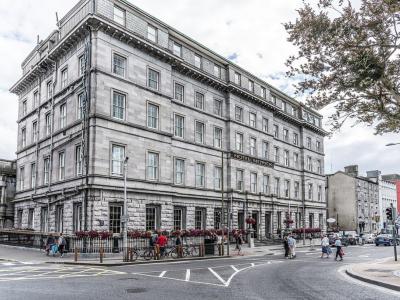
The Hotel Meyrick in Galway, Ireland, is steeped in history and has been an integral part of the city's landscape since it opened its doors in 1852 as the Railway Hotel. The building's architect, John Skipton Mulvany, also designed the Galway railway station, and the hotel's façade features his favorite motif, wreaths.
Built using limestone ashlar with a cornice over the heavily rusticated ground floor, the Hotel Meyrick's architecture is unique and distinguishes it from other buildings in Galway. The ground floor boasts recessed and architrave windows and a heavy string course, and the original façade was topped by a shelf-like Doric cornice. Inside, guests can find a beautiful marble fireplace incorporating a pair of bronze discs with the Midland and Great Western Railway arms, dated 1845.
Notable figures have also stayed at the Hotel Meyrick. One of its most famous guests was the future Emperor Napoleon III of France, who visited shortly after landing in Galway docks on board his steam yacht La Reine Hortense. His visit, along with his tour of the country, caused fear among the administrative and military circles in Dublin and London due to the growing apprehension of French imperial expansionism.
Overall, the Hotel Meyrick in Galway is a historical landmark that has stood the test of time. It is a must-see destination for anyone interested in its unique architecture and rich cultural heritage.
Built using limestone ashlar with a cornice over the heavily rusticated ground floor, the Hotel Meyrick's architecture is unique and distinguishes it from other buildings in Galway. The ground floor boasts recessed and architrave windows and a heavy string course, and the original façade was topped by a shelf-like Doric cornice. Inside, guests can find a beautiful marble fireplace incorporating a pair of bronze discs with the Midland and Great Western Railway arms, dated 1845.
Notable figures have also stayed at the Hotel Meyrick. One of its most famous guests was the future Emperor Napoleon III of France, who visited shortly after landing in Galway docks on board his steam yacht La Reine Hortense. His visit, along with his tour of the country, caused fear among the administrative and military circles in Dublin and London due to the growing apprehension of French imperial expansionism.
Overall, the Hotel Meyrick in Galway is a historical landmark that has stood the test of time. It is a must-see destination for anyone interested in its unique architecture and rich cultural heritage.
4) Lynch's Castle
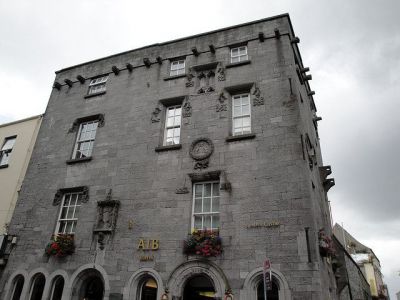
Lynch was one of the powerful merchant “tribes” who ruled Galway from around 1450 until 1690. The Lynch family lived in the fortified townhouse that still stands today at the corner of Shop Street and Abbeygate Street. Until 1690, members of the family provided no fewer than eighty mayors of the city, a testament to their influence and prominence in Galway’s civic life.
In 1690, following the defeat of Catholic King James II by Protestant King William of Orange at the Battle of the Boyne, Catholic-owned properties, including Lynch’s Castle, were confiscated. Yet the dark legend surrounding the castle dates back much earlier. In 1493, Mayor James Lynch had a son named Walter, who murdered a Spanish sailor—reportedly for winking at a local woman. Irish women, it was said, had a fondness for Spanish sailors, and perhaps young Walter overreacted.
As mayor, it fell to James to deliver justice. When an angry mob prevented him from taking his son to the gallows, James took the law into his own hands. He brought Walter upstairs in the castle, tied a rope around his neck, and hanged him from a window—giving rise, according to legend, to the term “lynching.”
The building was later extended in 1808 and, in 1930, became a branch of Allied Irish Banks, which it remains today. The four-story limestone structure features elaborately carved windows, gargoyles, and ornamental cornices. The facade displays the Lynch family coat of arms, alongside those of King Henry VII and the Fitzgeralds of Kildare. The ground floor may be visited during business hours, allowing visitors a glimpse into the city’s most storied medieval residence.
In 1690, following the defeat of Catholic King James II by Protestant King William of Orange at the Battle of the Boyne, Catholic-owned properties, including Lynch’s Castle, were confiscated. Yet the dark legend surrounding the castle dates back much earlier. In 1493, Mayor James Lynch had a son named Walter, who murdered a Spanish sailor—reportedly for winking at a local woman. Irish women, it was said, had a fondness for Spanish sailors, and perhaps young Walter overreacted.
As mayor, it fell to James to deliver justice. When an angry mob prevented him from taking his son to the gallows, James took the law into his own hands. He brought Walter upstairs in the castle, tied a rope around his neck, and hanged him from a window—giving rise, according to legend, to the term “lynching.”
The building was later extended in 1808 and, in 1930, became a branch of Allied Irish Banks, which it remains today. The four-story limestone structure features elaborately carved windows, gargoyles, and ornamental cornices. The facade displays the Lynch family coat of arms, alongside those of King Henry VII and the Fitzgeralds of Kildare. The ground floor may be visited during business hours, allowing visitors a glimpse into the city’s most storied medieval residence.
5) Lynch Memorial Window
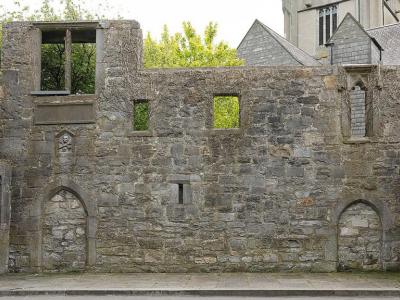
Beside the graveyard of Saint Nicholas’ Collegiate Church in Galway stands the Lynch Memorial Window, a stone-framed opening that recalls one of the city’s most famous legends. According to local tradition, in 1493 the mayor of Galway, James Lynch FitzStephen, condemned his own son, Walter, for the murder of a young Spanish sailor. The crime was said to have been committed in a fit of jealousy, and when the townspeople gathered to prevent the execution, the mayor reportedly took justice into his own hands — hanging his son from a window of his house to uphold the law.
The Lynches were one of Galway’s Fourteen Tribes, wealthy merchant families who governed the city for centuries. Their name remains etched into Galway’s history, most visibly in Lynch’s Castle on Shop Street, a 16th-century fortified townhouse that still bears the Lynch coat of arms.
The site of the supposed execution, known today as the Lynch Memorial Window, features a carved skull and crossbones and a plaque recounting the tale. While there is no historical proof that the hanging took place, the story has endured for centuries as a powerful symbol of justice, duty, and tragedy.
The legend of James Lynch FitzStephen is often retold to visitors as a uniquely Galwegian tale, blending history and folklore. Though the English word “lynching” arose much later and from unrelated origins, the story of the mayor who hanged his son continues to capture imaginations as one of Galway’s most enduring myths.
The Lynches were one of Galway’s Fourteen Tribes, wealthy merchant families who governed the city for centuries. Their name remains etched into Galway’s history, most visibly in Lynch’s Castle on Shop Street, a 16th-century fortified townhouse that still bears the Lynch coat of arms.
The site of the supposed execution, known today as the Lynch Memorial Window, features a carved skull and crossbones and a plaque recounting the tale. While there is no historical proof that the hanging took place, the story has endured for centuries as a powerful symbol of justice, duty, and tragedy.
The legend of James Lynch FitzStephen is often retold to visitors as a uniquely Galwegian tale, blending history and folklore. Though the English word “lynching” arose much later and from unrelated origins, the story of the mayor who hanged his son continues to capture imaginations as one of Galway’s most enduring myths.
6) Saint Nicholas Church (must see)
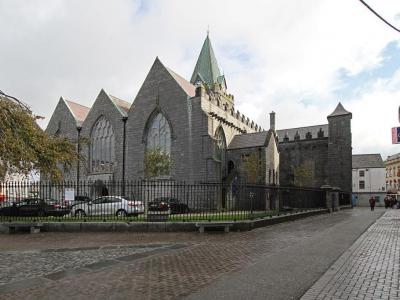
For over seven centuries, the Collegiate Church of Saint Nicholas has stood at the heart of Galway, serving as both a place of worship and a witness to the city’s history. Constructed around 1320, the church was originally built in the Gothic style and has remained a central part of civic and religious life ever since.
In the 16th century, the church was expanded by two of Galway’s leading families, the Lynches and the Frenches, who added side aisles to the nave. This created a distinctive square interior with three parallel roofs. The interior also contains historical memorials, including a gravestone of Adam Bures, a Crusader who died in the 13th century. High above the north aisle, a lepers’ gallery recalls the church’s role in medieval healthcare and social support.
The exterior is adorned with carved figures, including mermaids, a dragon, a lion, and an ape, as well as numerous gargoyles, which were both decorative and functional, channeling rainwater away from the building.
Saint Nicholas’ Church also holds significance beyond Galway. Christopher Columbus is traditionally believed to have visited in 1477, pausing to pray before his later voyages to the Americas. While records of this visit are limited, the connection reflects Galway’s status as an important port city during the late Middle Ages.
The church survived the Cromwellian conquest of Ireland in 1652, when many religious buildings were damaged or destroyed. Over the centuries, Saint Nicholas has continued to serve as an active parish church, maintaining both its spiritual and cultural importance.
In the 16th century, the church was expanded by two of Galway’s leading families, the Lynches and the Frenches, who added side aisles to the nave. This created a distinctive square interior with three parallel roofs. The interior also contains historical memorials, including a gravestone of Adam Bures, a Crusader who died in the 13th century. High above the north aisle, a lepers’ gallery recalls the church’s role in medieval healthcare and social support.
The exterior is adorned with carved figures, including mermaids, a dragon, a lion, and an ape, as well as numerous gargoyles, which were both decorative and functional, channeling rainwater away from the building.
Saint Nicholas’ Church also holds significance beyond Galway. Christopher Columbus is traditionally believed to have visited in 1477, pausing to pray before his later voyages to the Americas. While records of this visit are limited, the connection reflects Galway’s status as an important port city during the late Middle Ages.
The church survived the Cromwellian conquest of Ireland in 1652, when many religious buildings were damaged or destroyed. Over the centuries, Saint Nicholas has continued to serve as an active parish church, maintaining both its spiritual and cultural importance.
7) The Latin Quarter
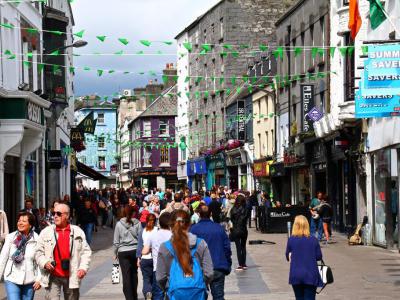
The Latin Quarter in Galway is a maze of medieval streets and alleys that have been transformed into a lively entertainment and shopping district. It is a friendly and vibrant place that exudes a unique charm and atmosphere that captures the essence of Galway.
The area is also a shopper's paradise, with many shops offering unique and authentic Irish souvenirs. Visitors can purchase everything from silver jewellery to Irish sweaters, Claddagh rings, postcards, and musical instruments.
For those who love music, The Latin Quarter is the place to be. Many establishments offer live Irish music sessions in the evenings, where local groups come to perform great classics from the Irish repertoire. It is a fantastic opportunity to immerse oneself in the heart of Irish culture and dance the night away.
The Latin Quarter has an exciting and vibrant nightlife scene, with a range of pubs and restaurants to suit all tastes. It is the perfect place to enjoy a pint of Guinness or a delicious cocktail while enjoying the lively atmosphere.
In conclusion, the Latin Quarter in Galway is a fantastic destination to experience the best of Irish culture, nightlife, and shopping. Its unique charm and atmosphere make it one of the top spots to visit in Galway, and a must-see for anyone who wants to experience the city's rich heritage and lively atmosphere.
The area is also a shopper's paradise, with many shops offering unique and authentic Irish souvenirs. Visitors can purchase everything from silver jewellery to Irish sweaters, Claddagh rings, postcards, and musical instruments.
For those who love music, The Latin Quarter is the place to be. Many establishments offer live Irish music sessions in the evenings, where local groups come to perform great classics from the Irish repertoire. It is a fantastic opportunity to immerse oneself in the heart of Irish culture and dance the night away.
The Latin Quarter has an exciting and vibrant nightlife scene, with a range of pubs and restaurants to suit all tastes. It is the perfect place to enjoy a pint of Guinness or a delicious cocktail while enjoying the lively atmosphere.
In conclusion, the Latin Quarter in Galway is a fantastic destination to experience the best of Irish culture, nightlife, and shopping. Its unique charm and atmosphere make it one of the top spots to visit in Galway, and a must-see for anyone who wants to experience the city's rich heritage and lively atmosphere.
8) Quay Street (must see)
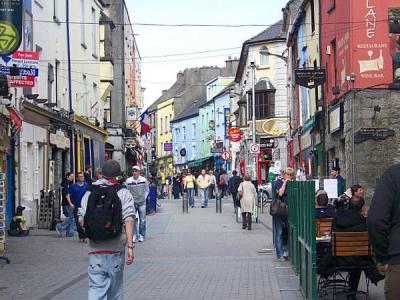
Galway has often been described as “rustically modern,” a phrase that perfectly captures its mix of medieval atmosphere and contemporary flair. Nowhere is this blend more vivid than on Quay Street, where cobbled lanes are alive with music, laughter, and the hum of conversation. It’s a place made for strolling, people-watching, pub hopping, and enjoying good food in good company.
Quay Street is part of a lively sequence of pedestrianized streets that stretches from Eyre Square through Shop Street and High Street, finally leading to the waterfront by the Spanish Arch. As you leave the broad, modern shopping centers near Eyre Square, the streets narrow and the mood becomes distinctly old-world—stone shopfronts, colorful facades, and the sound of fiddles drifting from nearby pubs.
While visitors often speak of the whole area as Quay Street, locals tend to distinguish between its parts: Shop Street as the shopping hub, High Street for its blend of boutiques and bars, and Quay Street at the heart of the Latin Quarter, Galway’s cultural and entertainment district.
Along the way stands the King’s Head Pub, dating from 1649 and steeped in legend. One of its early owners, Colonel Peter Stubbers of Cromwell’s army, is rumored—though never proven—to have been involved in the execution of King Charles I. Further along, visitors can browse the Galway Woollen Market, leaf through cozy bookshops, or settle into one of the many pubs such as Feeney’s, Malloy’s Irish Whiskey Bar, or the Quay Street Pub, where traditional music fills the air.
At the southern end, the walk opens onto the River Corrib and the historic Spanish Arch, once part of the old city walls that sheltered traders and ships. Here, Galway’s past and present meet—a fitting finale to one of Ireland’s most vibrant and atmospheric streets.
Quay Street is part of a lively sequence of pedestrianized streets that stretches from Eyre Square through Shop Street and High Street, finally leading to the waterfront by the Spanish Arch. As you leave the broad, modern shopping centers near Eyre Square, the streets narrow and the mood becomes distinctly old-world—stone shopfronts, colorful facades, and the sound of fiddles drifting from nearby pubs.
While visitors often speak of the whole area as Quay Street, locals tend to distinguish between its parts: Shop Street as the shopping hub, High Street for its blend of boutiques and bars, and Quay Street at the heart of the Latin Quarter, Galway’s cultural and entertainment district.
Along the way stands the King’s Head Pub, dating from 1649 and steeped in legend. One of its early owners, Colonel Peter Stubbers of Cromwell’s army, is rumored—though never proven—to have been involved in the execution of King Charles I. Further along, visitors can browse the Galway Woollen Market, leaf through cozy bookshops, or settle into one of the many pubs such as Feeney’s, Malloy’s Irish Whiskey Bar, or the Quay Street Pub, where traditional music fills the air.
At the southern end, the walk opens onto the River Corrib and the historic Spanish Arch, once part of the old city walls that sheltered traders and ships. Here, Galway’s past and present meet—a fitting finale to one of Ireland’s most vibrant and atmospheric streets.
9) Mutton Island Lighthouse
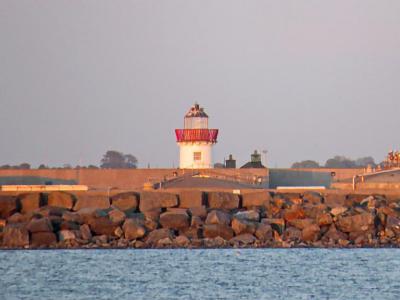
Mutton Island Lighthouse is situated in Galway Harbor, on a tiny two-acre island that was home to a lighthouse keeper and his family for over a century. The lighthouse was built in 1815, and two years later, on 25th October 1817, it was first exhibited. This historic structure was one of the last landmarks of the city seen by emigrants leaving on the 'coffin ships' bound for the United States during the Great Famine.
The lighthouse is characterized by a domed lantern on a polygonal plan, which has corbelled stone supports to walkway with a painted cast-iron handrail. The lantern also features a copper ogee dome with a finial.
In the 1940s and 1950s, the Scanlan Family manned the lighthouse, and they recounted how another family, the Flemings, was contracted to provide relief to Mutton Island in their púcan boat. A series of flags were used to illustrate the island's requirements to the mainland.
The last keepers left the island in 1958 when the light became automated. In December 1977, after 160 years of service, the light was turned off and replaced by a candlestick-like lighthouse close to nearby Hare Island and a light buoy off Mutton Island itself.
The lighthouse complex is currently being restored by Galway Civic Trust, preserving the island's rich history and maintaining its visual appeal.
The lighthouse is characterized by a domed lantern on a polygonal plan, which has corbelled stone supports to walkway with a painted cast-iron handrail. The lantern also features a copper ogee dome with a finial.
In the 1940s and 1950s, the Scanlan Family manned the lighthouse, and they recounted how another family, the Flemings, was contracted to provide relief to Mutton Island in their púcan boat. A series of flags were used to illustrate the island's requirements to the mainland.
The last keepers left the island in 1958 when the light became automated. In December 1977, after 160 years of service, the light was turned off and replaced by a candlestick-like lighthouse close to nearby Hare Island and a light buoy off Mutton Island itself.
The lighthouse complex is currently being restored by Galway Civic Trust, preserving the island's rich history and maintaining its visual appeal.
10) Quincentennial Park
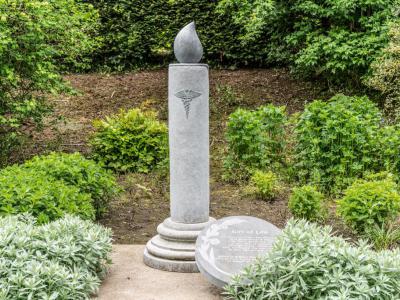
Quincentennial Park is a public park directly accessible from the Salthill Promenade. The park is a beautiful green space with a walking path, an ornamental pond and many shade trees. The most well-known portion of Quincentennial Park is the Circle of Life, a stone garden that honors organ donors.
The garden and the park itself were designed to combine Ireland's history and heritage through representational stone work. The goal of the park, created by Strange Boat Donor Foundation and the Galway City Council, was to provide a peaceful spot that focuses on healing. The circle of stones represents the cycle of nature. The Circle of Life Garden opened in May 2014.
The park also features a heritage walk. This walkway features heritage stones from each of the five continents featured throughout the design of the park and its gardens. The purpose of the heritage walk is to convey a sense of inclusion to all visitors.
Quincentennial Park is open 24 hours.
The garden and the park itself were designed to combine Ireland's history and heritage through representational stone work. The goal of the park, created by Strange Boat Donor Foundation and the Galway City Council, was to provide a peaceful spot that focuses on healing. The circle of stones represents the cycle of nature. The Circle of Life Garden opened in May 2014.
The park also features a heritage walk. This walkway features heritage stones from each of the five continents featured throughout the design of the park and its gardens. The purpose of the heritage walk is to convey a sense of inclusion to all visitors.
Quincentennial Park is open 24 hours.
11) Salthill Promenade (must see)
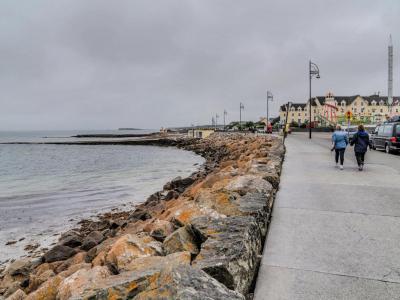
Salthill Promenade is arguably one of the most famous spaces in Galway. The promenade runs along the coastline of Galway Bay for about two miles. It stretches from the Claddagh Quay to the Blackrock diving board. At any given time, one will see locals and visitors alike walking along the Salthill Prom.
There are a large number of attractions on the Salthill Promenade. One of these is Salthill Beach. It is comprised of several other small beaches that are separated by outcroppings of rock. Beach-goers can swim, go for a walk or just relax on the rocks and pebbles.
Another feature along the Salthill Promenade is the Circle of Life National Organ Donor Commemorative Garden. This space is a stone-sculpted national garden that was built in honor of organ donors. It is part of Quincentennial Park.
Other spots along the Salthill Promenade are Curry's Fun Park, Leisureland, the Salthill Public Park and the Galway Atlantaquaria. The Midway Point of the Wild Atlantic Way is a popular place for taking photos. A tradition that cannot be forgotten is to kick the wall at the end of the walk located next to the Blackrock diving board.
Visitors will find restaurants and shopping opportunities along with the regular tourist attractions near the promenade. However, the most beloved part of the walk is not shopping or dining but sight-seeing. Salthill Promenade offers excellent views of the hills of Burren across the bay. It is also an excellent place to watch sunsets from one of the many comfortable benches places along the walk.
There are a large number of attractions on the Salthill Promenade. One of these is Salthill Beach. It is comprised of several other small beaches that are separated by outcroppings of rock. Beach-goers can swim, go for a walk or just relax on the rocks and pebbles.
Another feature along the Salthill Promenade is the Circle of Life National Organ Donor Commemorative Garden. This space is a stone-sculpted national garden that was built in honor of organ donors. It is part of Quincentennial Park.
Other spots along the Salthill Promenade are Curry's Fun Park, Leisureland, the Salthill Public Park and the Galway Atlantaquaria. The Midway Point of the Wild Atlantic Way is a popular place for taking photos. A tradition that cannot be forgotten is to kick the wall at the end of the walk located next to the Blackrock diving board.
Visitors will find restaurants and shopping opportunities along with the regular tourist attractions near the promenade. However, the most beloved part of the walk is not shopping or dining but sight-seeing. Salthill Promenade offers excellent views of the hills of Burren across the bay. It is also an excellent place to watch sunsets from one of the many comfortable benches places along the walk.
12) Galway City Museum (must see)
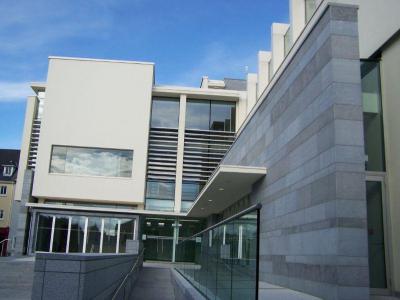
Standing beside the historic Spanish Arch, the Galway City Museum offers visitors a fascinating journey through the story of Galway—from its medieval beginnings to its vibrant present-day culture. Opened in 2007, the museum occupies a striking modern building designed by architects Ciarán O’Connor and Gar Harvey. Its sleek, light-filled design contrasts beautifully with the centuries-old stonework of the nearby arch and city walls, creating a setting where Galway’s past and present meet.
Before the construction of the new building, the museum was housed in Comerford House, a fine Georgian residence built around 1800 that still stands beside the Spanish Arch. The house once belonged to the Comerford and Greenwood families and later became home to sculptor and writer Clare Consuelo Sheridan, a cousin of Winston Churchill. In the 1970s, it became the first home of the Galway City Museum, displaying collections of medieval stones, folk artefacts, and military relics—many of which formed the foundation of the museum’s present-day exhibits.
Inside the museum today, visitors can explore a wide range of displays highlighting Galway’s rich heritage. Exhibitions span topics such as archaeology, maritime traditions, folk life, and the city’s development through the centuries. Highlights include artefacts from medieval Galway, objects from the fishing village of the Claddagh, and exhibits exploring the city’s role in trade and the arts. Interactive displays and temporary exhibitions ensure there’s always something new to discover, making the museum appealing to visitors of all ages.
Outside, the plaza between the museum and the Spanish Arch serves as a lively public space for festivals, performances, and community gatherings, with scenic views of the River Corrib and Galway Bay.
Before the construction of the new building, the museum was housed in Comerford House, a fine Georgian residence built around 1800 that still stands beside the Spanish Arch. The house once belonged to the Comerford and Greenwood families and later became home to sculptor and writer Clare Consuelo Sheridan, a cousin of Winston Churchill. In the 1970s, it became the first home of the Galway City Museum, displaying collections of medieval stones, folk artefacts, and military relics—many of which formed the foundation of the museum’s present-day exhibits.
Inside the museum today, visitors can explore a wide range of displays highlighting Galway’s rich heritage. Exhibitions span topics such as archaeology, maritime traditions, folk life, and the city’s development through the centuries. Highlights include artefacts from medieval Galway, objects from the fishing village of the Claddagh, and exhibits exploring the city’s role in trade and the arts. Interactive displays and temporary exhibitions ensure there’s always something new to discover, making the museum appealing to visitors of all ages.
Outside, the plaza between the museum and the Spanish Arch serves as a lively public space for festivals, performances, and community gatherings, with scenic views of the River Corrib and Galway Bay.
13) Spanish Arch (must see)
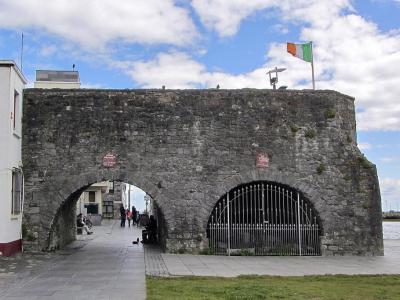
On the east bank of the River Corrib, two historic arches stand as reminders of Galway’s medieval past: the Spanish Arch and its adjacent structure, sometimes referred to as the Caoc Arch. These arches are the surviving remnants of Galway’s old Front Wall, which stretched from Martin’s Tower to the river, forming part of the city’s fortifications. The wall, including these arches, was constructed around 1504 to protect the town from potential attacks and to regulate access to the waterfront, which was essential for trade and defense.
The name “Spanish Arch” reflects Galway’s long-standing trade connections with Spain during the late Middle Ages. Galway’s merchants imported wine, salt, and other goods, establishing the city as a vital trading port.
In the 18th century, the prominent Eyre family extended the quays along the river in an area now known as the Long Walk. To improve access from the town to the new quay, they constructed an additional arch, initially called the “Eyre Arch,” though the popular name “Spanish Arch” eventually took hold.
In 1755, the Lisbon earthquake generated a tsunami that reached the west coast of Ireland, affecting the arches. Though damaged, the structures survived and continued to play a role in the city’s maritime and civic life.
Over time, the Spanish Arch grew into a cultural landmark, appearing in films such as the 1957 Irish classic “The Rising of the Moon.” Today, the arches remain a popular location for both locals and visitors, serving as a gathering point, a place for exhibitions and festivals, and a window into Galway’s rich history of trade, defense, and community life along the Corrib.
The name “Spanish Arch” reflects Galway’s long-standing trade connections with Spain during the late Middle Ages. Galway’s merchants imported wine, salt, and other goods, establishing the city as a vital trading port.
In the 18th century, the prominent Eyre family extended the quays along the river in an area now known as the Long Walk. To improve access from the town to the new quay, they constructed an additional arch, initially called the “Eyre Arch,” though the popular name “Spanish Arch” eventually took hold.
In 1755, the Lisbon earthquake generated a tsunami that reached the west coast of Ireland, affecting the arches. Though damaged, the structures survived and continued to play a role in the city’s maritime and civic life.
Over time, the Spanish Arch grew into a cultural landmark, appearing in films such as the 1957 Irish classic “The Rising of the Moon.” Today, the arches remain a popular location for both locals and visitors, serving as a gathering point, a place for exhibitions and festivals, and a window into Galway’s rich history of trade, defense, and community life along the Corrib.
14) Kirwans Lane
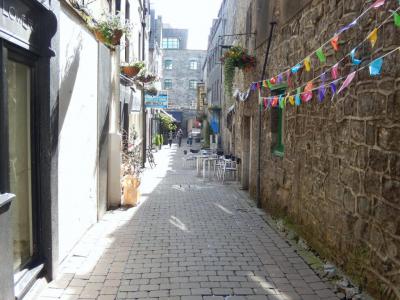
Cobblestoned and atmospheric, Kirwan’s Lane is one of Galway’s most beautifully preserved medieval streets. Dating back to the 16th and 17th centuries, the lane takes its name from the Kirwan family—one of the fourteen merchant “Tribes of Galway” who dominated the city’s political and commercial life from the Middle Ages until the late 17th century. Originally located within the old city walls, Kirwan’s Lane retains its historic charm, with narrow passageways, stone façades, and hidden courtyards that evoke the Galway of centuries past.
Once one of fourteen medieval lanes in the walled city, Kirwan’s Lane is among the few that survive today—only about five remain intact. In 1783, the area became home to a small 100-seat theatre established by Dick Martin, a local landlord and Member of Parliament, whose wife, a Kirwan, was an actress. The theatre became a lively cultural venue where several notable performers appeared, including the Irish revolutionary Theobald Wolfe Tone, who is said to have performed there.
Today, Kirwan’s Lane is a vibrant mix of Galway’s past and present. Its stone buildings now house artisan shops, cafés, and restaurants. Visitors can enjoy Goya’s Bakery for freshly baked pastries, McDonagh’s Fish and Chip Shop for traditional fare, or a drink at Busker Browne’s Pub. Judy Greene Pottery and Craft Shop showcases local craftsmanship, while Kirwan’s Lane Creative Cuisine offers fine dining in an intimate, historic setting. Nearby, 2 Wild Geese on Cross Street highlights Irish art and design, and the Galway Woollen Market continues the city’s long-standing tradition of trade.
Once one of fourteen medieval lanes in the walled city, Kirwan’s Lane is among the few that survive today—only about five remain intact. In 1783, the area became home to a small 100-seat theatre established by Dick Martin, a local landlord and Member of Parliament, whose wife, a Kirwan, was an actress. The theatre became a lively cultural venue where several notable performers appeared, including the Irish revolutionary Theobald Wolfe Tone, who is said to have performed there.
Today, Kirwan’s Lane is a vibrant mix of Galway’s past and present. Its stone buildings now house artisan shops, cafés, and restaurants. Visitors can enjoy Goya’s Bakery for freshly baked pastries, McDonagh’s Fish and Chip Shop for traditional fare, or a drink at Busker Browne’s Pub. Judy Greene Pottery and Craft Shop showcases local craftsmanship, while Kirwan’s Lane Creative Cuisine offers fine dining in an intimate, historic setting. Nearby, 2 Wild Geese on Cross Street highlights Irish art and design, and the Galway Woollen Market continues the city’s long-standing tradition of trade.
15) O'Briens Bridge
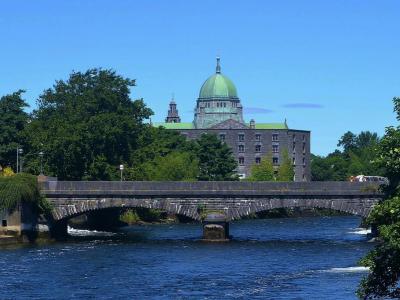
Until the Salmon Weir bridge was built in 1819, the way to cross the Corrib River in Galway was via the Old West Bridge, built in 1342. The Corrib is a short but lively current that passes through Galway to Galway Bay. This bridge was the one way to cross into the car-Connaught suburb of Galway.
In 1558 a gate and tower were built on the west end and a second gate and tower in the middle. In 1852 the old West Bridge was taken down. Strong walls were built on either side of the river and O'Brien's Bridge was built in its place. It has two main arches spanning the river channel. Patrick Nugent was the bridge contractor.
In 1889 the bridge was named in honor of William Smith O'Brien, a deceased MP once a leader of the Young Irelanders, a revolutionary group. The bridge is a vital link between the north and south sides of Galway. Going "west" is an expression long used by Galwegians for their adventures in the wild old West End of the city.
In 1558 a gate and tower were built on the west end and a second gate and tower in the middle. In 1852 the old West Bridge was taken down. Strong walls were built on either side of the river and O'Brien's Bridge was built in its place. It has two main arches spanning the river channel. Patrick Nugent was the bridge contractor.
In 1889 the bridge was named in honor of William Smith O'Brien, a deceased MP once a leader of the Young Irelanders, a revolutionary group. The bridge is a vital link between the north and south sides of Galway. Going "west" is an expression long used by Galwegians for their adventures in the wild old West End of the city.
