Custom Walk in Birmingham, England by suebobcox_7fb63 created on 2025-05-15
Guide Location: England » Birmingham
Guide Type: Custom Walk
# of Sights: 15
Tour Duration: 6 Hour(s)
Travel Distance: 12.6 Km or 7.8 Miles
Share Key: PH7BJ
Guide Type: Custom Walk
# of Sights: 15
Tour Duration: 6 Hour(s)
Travel Distance: 12.6 Km or 7.8 Miles
Share Key: PH7BJ
How It Works
Please retrieve this walk in the GPSmyCity app. Once done, the app will guide you from one tour stop to the next as if you had a personal tour guide. If you created the walk on this website or come to the page via a link, please follow the instructions below to retrieve the walk in the app.
Retrieve This Walk in App
Step 1. Download the app "GPSmyCity: Walks in 1K+ Cities" on Apple App Store or Google Play Store.



Step 2. In the GPSmyCity app, download(or launch) the guide "Birmingham Map and Walking Tours".
Step 3. Tap the menu button located at upper right corner of the "Walks" screen and select "Retrieve custom walk". Enter the share key: PH7BJ
1) Victoria Square
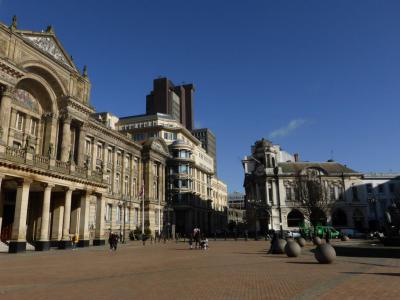
Often considered to be the center of the City, Victoria Square is a pedestrianized square. It is the location of Town Hall and the Council House and neighboring Chamberlain Square. Saint Philip's Cathedral is nearby on Colnore Row. And it is within walking distance of the Bull Ring and Brindleyplace.
Once known as the Council House Square, it was renamed Victoria Square in 1901. Unfortunately the Queen died about a week later.
During the last century the Square became an ongoing traffic jam. It was determined to redevelop the square, making it a pedestrianized area. It was opened by Diana, Princess of Wales in 1994. A fountain in the Square designed by Dhruva Mistry was called, "The River." It was a nude in a fountain. Locals called it "The Floozy in the Jacuzzi."
Other statues were in the square before redevelopment. Queen Victoria is the only one that remains. It was created by Thomas Brock in 1901 and recast in bronze in 1951 by William Blove.
During the Christmas season the square becomes the venue for the Frankfort Christmas Market and craft Fair. The craft fair connects to another similar fair in Chamberlain Square. The Frankfort fair features wooden huts as stalls selling Jewelry, artwork, ornaments, and German food.
In July 2012 the Square was visited by Queen Elizabeth and Prince Philip while on the West Midland Diamond Jubilee Tour. They had a royal walkabout and accepted gifts from the City.
Once known as the Council House Square, it was renamed Victoria Square in 1901. Unfortunately the Queen died about a week later.
During the last century the Square became an ongoing traffic jam. It was determined to redevelop the square, making it a pedestrianized area. It was opened by Diana, Princess of Wales in 1994. A fountain in the Square designed by Dhruva Mistry was called, "The River." It was a nude in a fountain. Locals called it "The Floozy in the Jacuzzi."
Other statues were in the square before redevelopment. Queen Victoria is the only one that remains. It was created by Thomas Brock in 1901 and recast in bronze in 1951 by William Blove.
During the Christmas season the square becomes the venue for the Frankfort Christmas Market and craft Fair. The craft fair connects to another similar fair in Chamberlain Square. The Frankfort fair features wooden huts as stalls selling Jewelry, artwork, ornaments, and German food.
In July 2012 the Square was visited by Queen Elizabeth and Prince Philip while on the West Midland Diamond Jubilee Tour. They had a royal walkabout and accepted gifts from the City.
2) Birmingham Back to Backs (must see)
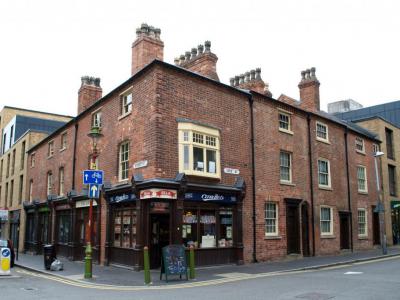
Following the industrial revolution in Britain, there were great migrations of landless people flocking to the cities for work. Birmingham, always the foremost city of industry, built thousands of so-called back-to-back houses to accommodate the influx. The houses were overcrowded and built around shared courtyards, "back-to-back."
Also known as British terraced housing, the back-to-backs were declared unsatisfactory. No more such housing was built after the Public Health Act of 1875. They were replaced by byelaw terraced houses that were not much better.
The back-to-back houses were two to three stories high. They were found mostly in depressed inner-city areas of Birmingham. In the early 1970s most of the back-to-backs had been demolished. Many tenants were moved to council houses and flats. Most of them however settled in housing estates.
The combination of two houses back to back and sharing a common yard was referred to as a "court." Many of the courts were occupied by workers who worked at home in specialized tasks. They labored at such things as button making, glasswork, woodwork, and leather tailoring. There were also skilled trades including jewelry.
Overcrowding was common. In Court 15 for instance, now on display, there had been over 500 families. (Not all at one time, naturally.)
Ground floors were often converted into shops. Trades practiced included cycle maker, hairdresser, ticket writer, fruiter seller, and furniture dealer. A pearl button driller, working at home in court 15 shared her workplace/home with her mother and five children. A glass eye maker also lived in court 15 with his wife and eight children.
This type of housing remained in use until 1966. The buildings were finally declared unfit for human habitation and the tenants were forced to leave.
Heating would come from fireplaces, water from a pump in the yard, and sanitary needs from an outhouse. All things considered, perhaps the tenants did not mind leaving.
Why You Should Visit:
To see how far ordinary people have come and appreciate the blessings we enjoy.
Also known as British terraced housing, the back-to-backs were declared unsatisfactory. No more such housing was built after the Public Health Act of 1875. They were replaced by byelaw terraced houses that were not much better.
The back-to-back houses were two to three stories high. They were found mostly in depressed inner-city areas of Birmingham. In the early 1970s most of the back-to-backs had been demolished. Many tenants were moved to council houses and flats. Most of them however settled in housing estates.
The combination of two houses back to back and sharing a common yard was referred to as a "court." Many of the courts were occupied by workers who worked at home in specialized tasks. They labored at such things as button making, glasswork, woodwork, and leather tailoring. There were also skilled trades including jewelry.
Overcrowding was common. In Court 15 for instance, now on display, there had been over 500 families. (Not all at one time, naturally.)
Ground floors were often converted into shops. Trades practiced included cycle maker, hairdresser, ticket writer, fruiter seller, and furniture dealer. A pearl button driller, working at home in court 15 shared her workplace/home with her mother and five children. A glass eye maker also lived in court 15 with his wife and eight children.
This type of housing remained in use until 1966. The buildings were finally declared unfit for human habitation and the tenants were forced to leave.
Heating would come from fireplaces, water from a pump in the yard, and sanitary needs from an outhouse. All things considered, perhaps the tenants did not mind leaving.
Why You Should Visit:
To see how far ordinary people have come and appreciate the blessings we enjoy.
3) Bullring & Grand Central
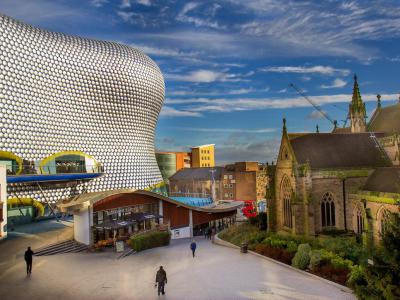
Two major shopping malls in Birmingham are connected by a link bridge. They combine to form the United Kingdom's largest city shopping area, the Bull Ring (currently Bullring) and Grand Central.
Big things start modestly. The area originally was called Corn Cheaping. The was a corn market here and there was the bull ring. In the ring bulls were tied to await baiting by dogs and slaughter. This was a savage but popular spectator sport for everyone except for bulls or dogs.
The market became a legal market in 1154 when Peter de Bermingham was granted marketing rights by King Henry II. By the 18th century food, cattle and corn markets were located there.
The market areas had their ups and downs, but world War II was devastating. Revival efforts began in 1955. In 1964 The Birmingham Bull Ring Centre was complete. The Centre extended to some 23 acres with 350.000 square feet devoted to retail trade, and the complex was visited by the Queen.
After more major development Bull Ring and Grand Central opened in 2003 and 2015 respectively. The malls are connected by a link street. Shoppers can move from one to the other without stepping outside.
The Bullring Bull is a bronze sculpture of an aggressive looking bull, as yet unbaited. The sculpture is the work of Laurence Broderick.
The malls are the site of an annual Christmas Market in the streets. The best time to visit is around four pm, when the malls light up in color.
Big things start modestly. The area originally was called Corn Cheaping. The was a corn market here and there was the bull ring. In the ring bulls were tied to await baiting by dogs and slaughter. This was a savage but popular spectator sport for everyone except for bulls or dogs.
The market became a legal market in 1154 when Peter de Bermingham was granted marketing rights by King Henry II. By the 18th century food, cattle and corn markets were located there.
The market areas had their ups and downs, but world War II was devastating. Revival efforts began in 1955. In 1964 The Birmingham Bull Ring Centre was complete. The Centre extended to some 23 acres with 350.000 square feet devoted to retail trade, and the complex was visited by the Queen.
After more major development Bull Ring and Grand Central opened in 2003 and 2015 respectively. The malls are connected by a link street. Shoppers can move from one to the other without stepping outside.
The Bullring Bull is a bronze sculpture of an aggressive looking bull, as yet unbaited. The sculpture is the work of Laurence Broderick.
The malls are the site of an annual Christmas Market in the streets. The best time to visit is around four pm, when the malls light up in color.
4) Thinktank Museum
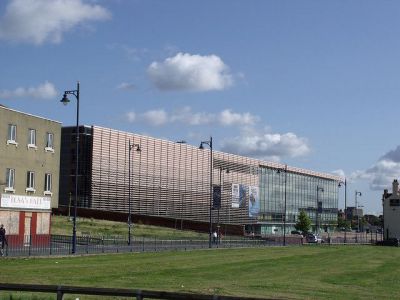
Thinktank Museum, located in Birmingham, is a dynamic science museum that opened its doors on September 29, 2001, within the modern Millennium Point complex. This museum is part of the Birmingham Museums Trust and succeeds the Museum of Science and Industry, which began in the mid-19th century. Initially, the collections primarily included weapons from Birmingham’s notable gun trade and the Birmingham Proof House, evolving to encompass a broader array of science and industry artifacts.
Thinktank is notable for its vast array of exhibits that engage visitors of all ages. It houses over 200 hands-on displays that explore various aspects of science and technology, from industrial history to biological processes. The museum includes historical collections and modern interactive exhibits spread across four floors. Highlights of Thinktank include MiniBrum, a scaled-down interactive city for children under eight, a planetarium, and a Science Garden that offers outdoor learning experiences.
The museum also underwent a significant upgrade in 2005 that included the installation of a planetarium. By 2007, it had attracted over 1 million visitors. In March 2015, the museum added a Spitfire gallery, connecting the displayed aircraft with local production stories and honoring figures such as Helen Kerly, one of the few British civilian women commended for flying during the Second World War.
Thinktank provides a stimulating environment that blends educational opportunities with fun, making it a premier destination for discovering the science of everyday life and the technological advancements that shape our world.
Thinktank is notable for its vast array of exhibits that engage visitors of all ages. It houses over 200 hands-on displays that explore various aspects of science and technology, from industrial history to biological processes. The museum includes historical collections and modern interactive exhibits spread across four floors. Highlights of Thinktank include MiniBrum, a scaled-down interactive city for children under eight, a planetarium, and a Science Garden that offers outdoor learning experiences.
The museum also underwent a significant upgrade in 2005 that included the installation of a planetarium. By 2007, it had attracted over 1 million visitors. In March 2015, the museum added a Spitfire gallery, connecting the displayed aircraft with local production stories and honoring figures such as Helen Kerly, one of the few British civilian women commended for flying during the Second World War.
Thinktank provides a stimulating environment that blends educational opportunities with fun, making it a premier destination for discovering the science of everyday life and the technological advancements that shape our world.
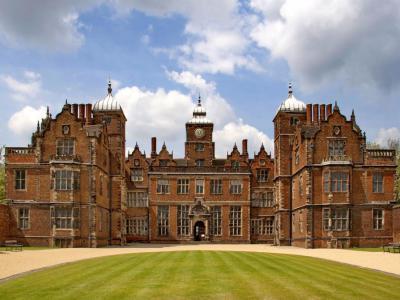
5) Aston Hall
Aston Hall, located in Aston, Birmingham, is a notable example of a Jacobean prodigy house. This Grade I listed building was designed by John Thorpe and constructed between 1618 and 1635 for Sir Thomas Holte, who moved in during 1631. The house embodies the grandeur of its era and is surrounded by a substantial park, parts of which now host the Aston Villa Football Club's Villa Park.
The hall's history is marked by significant events, including damage inflicted by Parliamentary troops in 1643 during the English Civil War, evidence of which remains visible, such as a cannonball hole in the staircase. Ownership remained with the Holte family until 1817, after which it passed through various hands, including James Watt Jr., before being acquired by a private company in 1858 and then by Birmingham Corporation in 1864, making it the first historic country house to transition into municipal ownership.
Aston Hall has a rich cultural heritage, having inspired Washington Irving's writings about traditional English Christmas celebrations, which he experienced while staying there. The hall also temporarily housed Birmingham's art and Museum of Arms collections following a fire in 1879 that affected other city buildings.
The house underwent significant renovations, particularly between 2006 and 2009, and is now a community museum managed by the Birmingham Museums Trust. It opens to the public seasonally, featuring period rooms adorned with furnishings, textiles, and artworks from the Birmingham Museum & Art Gallery. Additionally, the surrounding park and formal gardens, enhanced in the 1920s with features like fountains and a statue of Pan, add to the estate's historical and aesthetic appeal.
Aston Hall not only serves as a museum but also as a testament to Birmingham's historical evolution and its commitment to preserving and celebrating its rich cultural heritage.
The hall's history is marked by significant events, including damage inflicted by Parliamentary troops in 1643 during the English Civil War, evidence of which remains visible, such as a cannonball hole in the staircase. Ownership remained with the Holte family until 1817, after which it passed through various hands, including James Watt Jr., before being acquired by a private company in 1858 and then by Birmingham Corporation in 1864, making it the first historic country house to transition into municipal ownership.
Aston Hall has a rich cultural heritage, having inspired Washington Irving's writings about traditional English Christmas celebrations, which he experienced while staying there. The hall also temporarily housed Birmingham's art and Museum of Arms collections following a fire in 1879 that affected other city buildings.
The house underwent significant renovations, particularly between 2006 and 2009, and is now a community museum managed by the Birmingham Museums Trust. It opens to the public seasonally, featuring period rooms adorned with furnishings, textiles, and artworks from the Birmingham Museum & Art Gallery. Additionally, the surrounding park and formal gardens, enhanced in the 1920s with features like fountains and a statue of Pan, add to the estate's historical and aesthetic appeal.
Aston Hall not only serves as a museum but also as a testament to Birmingham's historical evolution and its commitment to preserving and celebrating its rich cultural heritage.
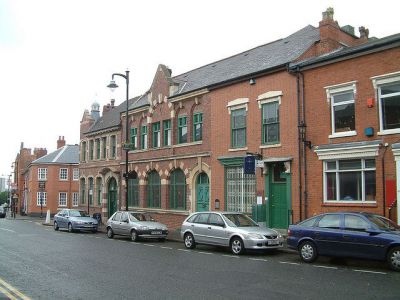
6) Museum of the Jewellery Quarter (must see)
The Smith and Pepper jewelry factory was a family-run business specializing in gold. When the owners retired in 1981, they simply locked the doors and left. Everything, including tools, teacups, coats and jars of jam and marmite were left on the benches.
The museum opened in 1992. It is the factory itself as it was left eleven years earlier. It is a "time capsule" of the old workshop, and the 200 years of the Birmingham Jewelry Quarter. The Museum is the starting point of a walking tour of the quarter.
There is guided tour that takes visitors around the Smith and Pepper workshop. The 12 seater workbench where some of the skilled craftsmen worked. The names of three of them were Joseph Gee, John Web, and Brian Ravenhill. They were the "mounters." They would build up the "mount" or body of the jewelry using hand-crafting techniques.
There were also Big Eide, Little Eide and Anna Foster worked the polishing lathes while Marjorie and Valery stamped out the gold medallions and broaches on the hand presses.
The museum opened in 1992. It is the factory itself as it was left eleven years earlier. It is a "time capsule" of the old workshop, and the 200 years of the Birmingham Jewelry Quarter. The Museum is the starting point of a walking tour of the quarter.
There is guided tour that takes visitors around the Smith and Pepper workshop. The 12 seater workbench where some of the skilled craftsmen worked. The names of three of them were Joseph Gee, John Web, and Brian Ravenhill. They were the "mounters." They would build up the "mount" or body of the jewelry using hand-crafting techniques.
There were also Big Eide, Little Eide and Anna Foster worked the polishing lathes while Marjorie and Valery stamped out the gold medallions and broaches on the hand presses.
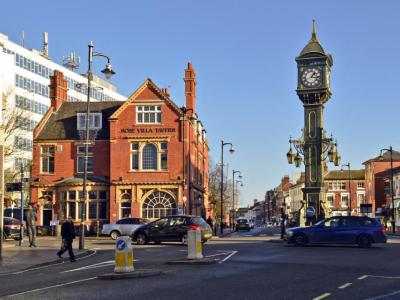
7) Jewellery Quarter
The Jewellery Quarter, situated in the north-western part of Birmingham City Centre, is a notable area combining historical charm with a modern twist. Spanning 1.07 square kilometers and home to around 19,000 residents, this quarter is renowned for being Europe's largest concentration of businesses dedicated to the jewelry trade, contributing 40% of the UK’s jewelry production.
Historically, the Quarter has been an epicenter for the jewelry industry since its peak employment of over 30,000 workers in the early 1900s. Despite facing declines due to international competition and diminishing demand throughout the 20th century, the area has transformed into an urban village that preserves its rich industrial heritage while promoting contemporary creative enterprises. It's also an Anchor Point of the European Route of Industrial Heritage, highlighting its significance in industrial history.
The area hosts the world's largest Assay Office, hallmarking about 12 million items annually, underscoring its pivotal role in the global jewelry business. The Quarter comprises over 100 retail shops, diamond dealerships, and specialized workshops, including a noteworthy museum that houses a preserved 1980s jewelry workshop.
Beyond its industrial significance, the Jewellery Quarter boasts Georgian architecture around Saint Paul’s Square and the 18th-century Saint Paul's Church. The modern resurgence of the area has brought in indie stores, trendy bars, art galleries, and a variety of eateries, blending traditional craftsmanship with modern urban culture.
Today, the Jewellery Quarter stands as a vibrant, multi-faceted part of Birmingham, embodying both its industrial past and its dynamic present, making it a unique and culturally rich area within the city.
Historically, the Quarter has been an epicenter for the jewelry industry since its peak employment of over 30,000 workers in the early 1900s. Despite facing declines due to international competition and diminishing demand throughout the 20th century, the area has transformed into an urban village that preserves its rich industrial heritage while promoting contemporary creative enterprises. It's also an Anchor Point of the European Route of Industrial Heritage, highlighting its significance in industrial history.
The area hosts the world's largest Assay Office, hallmarking about 12 million items annually, underscoring its pivotal role in the global jewelry business. The Quarter comprises over 100 retail shops, diamond dealerships, and specialized workshops, including a noteworthy museum that houses a preserved 1980s jewelry workshop.
Beyond its industrial significance, the Jewellery Quarter boasts Georgian architecture around Saint Paul’s Square and the 18th-century Saint Paul's Church. The modern resurgence of the area has brought in indie stores, trendy bars, art galleries, and a variety of eateries, blending traditional craftsmanship with modern urban culture.
Today, the Jewellery Quarter stands as a vibrant, multi-faceted part of Birmingham, embodying both its industrial past and its dynamic present, making it a unique and culturally rich area within the city.
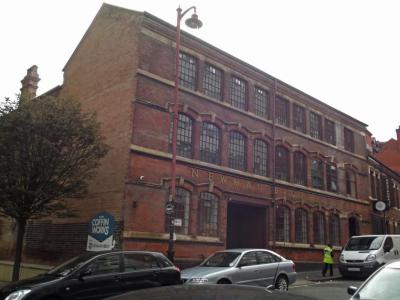
8) Newman Brothers Coffin Furniture Factory
Newman Brothers at The Coffin Works is a museum located in the historical Newman Brothers Coffin Furniture Factory building in Birmingham's Jewellery Quarter. This unique museum serves as a gateway to the past, offering insights into the social and industrial history of a site that functioned as a coffin furniture factory from 1894 until its closure in 1998.
The factory was initially established in 1882 as a brass foundry by Alfred and Edwin Newman. By 1894, the business relocated to a new factory on Fleet Street, designed by Roger Harley in 1892, situated in the bustling Jewellery Quarter. This move marked a significant pivot in the company’s focus, as Newman Brothers transitioned to exclusively manufacturing coffin furniture. This niche market encompassed a variety of products essential for coffins, such as handles, crucifixes, nameplates, ornaments, and soft goods like shrouds and coffin linings, leveraging similar manufacturing techniques used in brass foundry.
After ceasing operations in 1998, the factory building faced the risk of oblivion. However, thanks to a determined fifteen-year campaign by the Birmingham Conservation Trust, substantial funds were raised to preserve and transform this piece of industrial heritage into a museum. The museum officially opened its doors in October 2014, dedicated to educating the public about the factory's pivotal role in the funerary industry.
Today, Newman Brothers at The Coffin Works not only offers guided tours around the meticulously restored factory, revealing rich personal narratives of its former workers, but it also supports the local economy by providing office spaces for small businesses. This museum stands as a testament to the enduring legacy of the Newman Brothers and their contribution to the historical and cultural fabric of Birmingham.
The factory was initially established in 1882 as a brass foundry by Alfred and Edwin Newman. By 1894, the business relocated to a new factory on Fleet Street, designed by Roger Harley in 1892, situated in the bustling Jewellery Quarter. This move marked a significant pivot in the company’s focus, as Newman Brothers transitioned to exclusively manufacturing coffin furniture. This niche market encompassed a variety of products essential for coffins, such as handles, crucifixes, nameplates, ornaments, and soft goods like shrouds and coffin linings, leveraging similar manufacturing techniques used in brass foundry.
After ceasing operations in 1998, the factory building faced the risk of oblivion. However, thanks to a determined fifteen-year campaign by the Birmingham Conservation Trust, substantial funds were raised to preserve and transform this piece of industrial heritage into a museum. The museum officially opened its doors in October 2014, dedicated to educating the public about the factory's pivotal role in the funerary industry.
Today, Newman Brothers at The Coffin Works not only offers guided tours around the meticulously restored factory, revealing rich personal narratives of its former workers, but it also supports the local economy by providing office spaces for small businesses. This museum stands as a testament to the enduring legacy of the Newman Brothers and their contribution to the historical and cultural fabric of Birmingham.
9) National Sea Life Centre
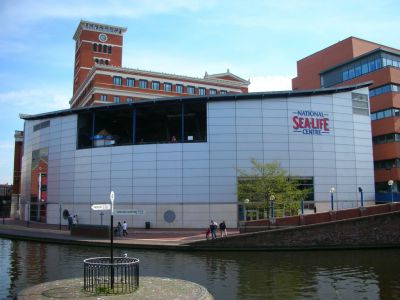
The National Sea Life Centre in Birmingham is a premier aquarium nestled in the vibrant area of Brindleyplace, by the Birmingham Canal Navigations Main Line Canal and opposite Arena Birmingham. Since its inauguration on July 5, 1996, the center has distinguished itself as the only inland sea life center in the UK at that time, offering a unique glimpse into the aquatic world.
Designed by the renowned Sir Norman Foster, the center features over 60 different displays of both freshwater and marine life, showcasing more than 2,000 creatures from various global habitats. A standout feature of the National Sea Life Centre is its impressive ocean tank, which holds 1,000,000 liters of water and includes species such as giant green sea turtles, blacktip reef sharks, and an array of tropical reef fish. This tank is notably encircled by the UK's only fully transparent 360-degree underwater tunnel, providing an immersive viewing experience.
The site itself holds historical significance, located at what was once the Oozells Street Wharf during the Victorian era. Over the years, the Sea Life Centre has expanded its attractions, including the introduction of the "Sensorama 4-D Cinema" in 2009, which enhances 3-D films with physical effects like wind and salt spray, and the "Penguin Ice Adventure" in 2014, a habitat for a colony of gentoo penguins.
Conservation is a key focus of the center with initiatives such as the 'Breed, Rescue, and Protect' program. The aquarium has undertaken significant efforts in species conservation, including a comprehensive seahorse breeding program that allows visitors to view several newly reared species in specialized tanks.
The National Sea Life Centre has earned recognition for its educational and conservation efforts, featured in several documentaries, and was visited by Sir David Attenborough in 2010. It has been named Aquarium of the Year and Warwickshire Family Attraction of the Year by the Good Britain Guide 2004, making it a celebrated destination in the West Midlands that attracts hundreds of thousands of visitors annually.
Designed by the renowned Sir Norman Foster, the center features over 60 different displays of both freshwater and marine life, showcasing more than 2,000 creatures from various global habitats. A standout feature of the National Sea Life Centre is its impressive ocean tank, which holds 1,000,000 liters of water and includes species such as giant green sea turtles, blacktip reef sharks, and an array of tropical reef fish. This tank is notably encircled by the UK's only fully transparent 360-degree underwater tunnel, providing an immersive viewing experience.
The site itself holds historical significance, located at what was once the Oozells Street Wharf during the Victorian era. Over the years, the Sea Life Centre has expanded its attractions, including the introduction of the "Sensorama 4-D Cinema" in 2009, which enhances 3-D films with physical effects like wind and salt spray, and the "Penguin Ice Adventure" in 2014, a habitat for a colony of gentoo penguins.
Conservation is a key focus of the center with initiatives such as the 'Breed, Rescue, and Protect' program. The aquarium has undertaken significant efforts in species conservation, including a comprehensive seahorse breeding program that allows visitors to view several newly reared species in specialized tanks.
The National Sea Life Centre has earned recognition for its educational and conservation efforts, featured in several documentaries, and was visited by Sir David Attenborough in 2010. It has been named Aquarium of the Year and Warwickshire Family Attraction of the Year by the Good Britain Guide 2004, making it a celebrated destination in the West Midlands that attracts hundreds of thousands of visitors annually.
10) Gas Street Basin (must see)
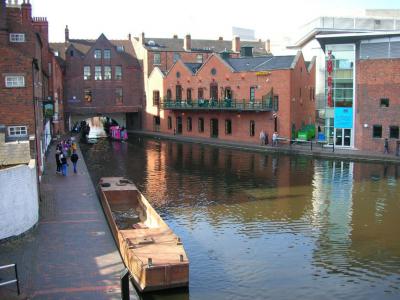
The squares, the shops, the crowds, the traffic and all the rest of it burns you out. What to do? Don't want to toss it in just yet. Take a tranquil stroll along the canal towpath into Gas Street Basin. When the Basin is reached there are shops and restaurants to visit, away from the hassle and the mobs.
Want to give the canal a try? There are water taxis. Cruise through the heart of the city hidden behind a screen of trees and shrubs. Factoid: Birmingham has more canal boats than Venice. They're less expensive too.
Gas Street Basin is the place where the Main Line meets the Worcester and Birmingham Canal. They meet at Worcester Bar, A barrier seven feet high installed in 1795 to keep the Worcester and Birmingham Canal company from "stealing" water from the Main Line.
The walk follows a circular pattern: Soho Loop, Smethwick Locks, Engine Arm and Spin Lane Locks and then returning to Bromford Junction to those old friends, Main Line and Worcester and Birmingham.
Want to give the canal a try? There are water taxis. Cruise through the heart of the city hidden behind a screen of trees and shrubs. Factoid: Birmingham has more canal boats than Venice. They're less expensive too.
Gas Street Basin is the place where the Main Line meets the Worcester and Birmingham Canal. They meet at Worcester Bar, A barrier seven feet high installed in 1795 to keep the Worcester and Birmingham Canal company from "stealing" water from the Main Line.
The walk follows a circular pattern: Soho Loop, Smethwick Locks, Engine Arm and Spin Lane Locks and then returning to Bromford Junction to those old friends, Main Line and Worcester and Birmingham.
11) Symphony Hall (must see)
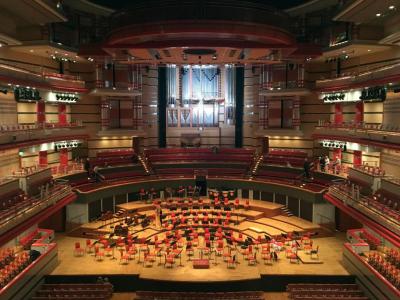
Symphony Hall, located in Birmingham, is a premier 2,262-seat concert venue celebrated for its exceptional acoustics and architectural design. Officially opened by Queen Elizabeth II on June 12, 1991, it began hosting events as early as April 15 of that same year. It serves as the home for the City of Birmingham Symphony Orchestra and accommodates approximately 270 events annually, spanning genres from classical music to jazz, and functions including conferences and business gatherings as part of the International Convention Centre.
The hall was constructed with a budget of £30 million and is aesthetically and acoustically modeled after prestigious venues such as Vienna's Musikverein and Amsterdam's Concertgebouw. Acclaimed by acoustics expert Leo Beranek in 2016, Symphony Hall is rated as having the finest acoustics in the United Kingdom and the seventh-best globally. A testament to its sound quality, during pre-opening tests, a pin dropped on stage could be heard from any seat within the hall.
Designed by the Percy Thomas Partnership and Renton Howard Wood Levin, the hall features innovative acoustic elements. These include a large reverberation chamber that increases the hall's volume by 50%, an adjustable acoustic canopy, and dampening panels that tailor the acoustics to the performance. Further, the structure is built with concrete walls and a ceiling 200 millimeters thick, and it rests on rubber cushions to isolate it from nearby railway vibrations and traffic noise on Broad Street.
An outstanding feature of Symphony Hall is its 6,000-pipe symphony organ, the largest mechanical action organ in the UK, installed in 2001 and crafted by Johannes Klais Orgelbau. Managed by B Limited, Symphony Hall not only entertains but also engages in extensive community and educational outreach, impacting thousands of young people and adults across the region annually. Through its diverse programming and architectural excellence, Symphony Hall stands as a beacon of cultural enrichment and architectural ingenuity in Birmingham.
The hall was constructed with a budget of £30 million and is aesthetically and acoustically modeled after prestigious venues such as Vienna's Musikverein and Amsterdam's Concertgebouw. Acclaimed by acoustics expert Leo Beranek in 2016, Symphony Hall is rated as having the finest acoustics in the United Kingdom and the seventh-best globally. A testament to its sound quality, during pre-opening tests, a pin dropped on stage could be heard from any seat within the hall.
Designed by the Percy Thomas Partnership and Renton Howard Wood Levin, the hall features innovative acoustic elements. These include a large reverberation chamber that increases the hall's volume by 50%, an adjustable acoustic canopy, and dampening panels that tailor the acoustics to the performance. Further, the structure is built with concrete walls and a ceiling 200 millimeters thick, and it rests on rubber cushions to isolate it from nearby railway vibrations and traffic noise on Broad Street.
An outstanding feature of Symphony Hall is its 6,000-pipe symphony organ, the largest mechanical action organ in the UK, installed in 2001 and crafted by Johannes Klais Orgelbau. Managed by B Limited, Symphony Hall not only entertains but also engages in extensive community and educational outreach, impacting thousands of young people and adults across the region annually. Through its diverse programming and architectural excellence, Symphony Hall stands as a beacon of cultural enrichment and architectural ingenuity in Birmingham.
12) Central Library (must see)
The Brutalist Central Library of Birmingham is no more. The building was brought down and replaced by the new Library of Birmingham. The inverted Ziggurat of the Central Library ended its 41-year career as it began. Some cheered, some were horrified by its looks. The Central was never truly accepted by the city.
The Central was designed by architect John Madin in the Brutalist style. It was part of an ambitious project of the City Council to build a civic center on the new Inner Ring Road. The Library replaced by the Central of John Madin was designed by John Henry Chamberlain. Chamberlain's building opened in 1883. It was demolished in 1974.
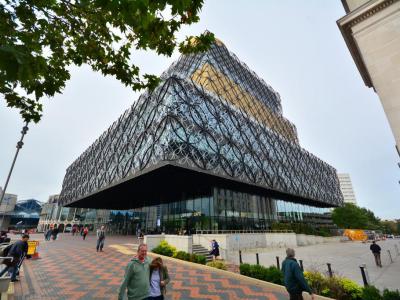
All hail the Library of Birmingham. Architectural design is by Francine Houben. Structural Engineering is by Buro Happold. The new Library has been described as the largest regional library in Europe. The library nestles between and connects to the Birmingham Rep and Baskerville House at Centenary Square.
The Shakespeare Memorial Room, designed by John Chamberlain in 1882 has been reincarnated with each demolition. It has been carefully dismantled and reassembled three times. It is constructed in a Lombardic Renaissance style with a clerestoried reading area. The collection houses 43,000 books, including the First Folio of 1623.
The library was opened in September, 2013 by Malala Youafzai, who was savagely attacked by the Taliban for attending school. She said, "Let us not forget that even one book, one pen, one teacher can change the world."
The Central was designed by architect John Madin in the Brutalist style. It was part of an ambitious project of the City Council to build a civic center on the new Inner Ring Road. The Library replaced by the Central of John Madin was designed by John Henry Chamberlain. Chamberlain's building opened in 1883. It was demolished in 1974.
All hail the Library of Birmingham. Architectural design is by Francine Houben. Structural Engineering is by Buro Happold. The new Library has been described as the largest regional library in Europe. The library nestles between and connects to the Birmingham Rep and Baskerville House at Centenary Square.
The Shakespeare Memorial Room, designed by John Chamberlain in 1882 has been reincarnated with each demolition. It has been carefully dismantled and reassembled three times. It is constructed in a Lombardic Renaissance style with a clerestoried reading area. The collection houses 43,000 books, including the First Folio of 1623.
The library was opened in September, 2013 by Malala Youafzai, who was savagely attacked by the Taliban for attending school. She said, "Let us not forget that even one book, one pen, one teacher can change the world."
13) Birmingham Museum & Art Gallery (must see)
In 1829 the Birmingham Society of Artists opened a private exhibition venue on New Street. The Factory Act of 1833 initiated government funding for education. In June 1880, Allen E. Everitt became the curator of the Free Art Gallery, the precursor of the Birmingham Museum and Art Gallery.
The Prince of Wales officiated at the opening of the new Museum and Art Gallery in 1885. The building occupied the Council House, above the Gas Department (gas was a coming thing in the 1880s). Elaborate metalwork covered both the interior and exterior of the building, including the impressive cast-iron columns in the main gallery space.
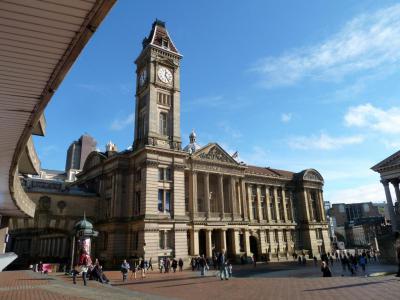
The most stand out features of the exterior were the clock tower and the high portico and a pediment demonstrating Birmingham's contributions to the arts. The main entrance is in Chamberlain Square under the clocktower, referred to locally as "Big Brun." The entrance hall plaque reads, "By the gains of Industry we promote Art."
The Arts promoted by Industry include the Gallery collections, ranging from the 14th to the 21st century. The Gallery holds works by the legendary Pre-Raphelite Brotherhood, including the largest collection of paintings by Edward Burne-Jones.
Schools of art expression in oils in the Gallery are: The English School, with Gainsborough, Hogarth, Turner, and Constable; the Flemish School; the French School; Impressionists Degas, Pisarro, and Renoir. German, Italian and Spanish artists are also represented.
The Prince of Wales officiated at the opening of the new Museum and Art Gallery in 1885. The building occupied the Council House, above the Gas Department (gas was a coming thing in the 1880s). Elaborate metalwork covered both the interior and exterior of the building, including the impressive cast-iron columns in the main gallery space.
The most stand out features of the exterior were the clock tower and the high portico and a pediment demonstrating Birmingham's contributions to the arts. The main entrance is in Chamberlain Square under the clocktower, referred to locally as "Big Brun." The entrance hall plaque reads, "By the gains of Industry we promote Art."
The Arts promoted by Industry include the Gallery collections, ranging from the 14th to the 21st century. The Gallery holds works by the legendary Pre-Raphelite Brotherhood, including the largest collection of paintings by Edward Burne-Jones.
Schools of art expression in oils in the Gallery are: The English School, with Gainsborough, Hogarth, Turner, and Constable; the Flemish School; the French School; Impressionists Degas, Pisarro, and Renoir. German, Italian and Spanish artists are also represented.
14) Birmingham Town Hall
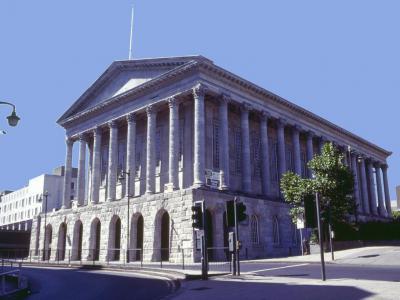
The Birmingham Town Hall, opened in 1834, looks very like the Temple of Castor and Pollux. The Temple once stood in the center of the ancient Forum. The look-alike Town Hall also stands in the center of things, on Paradise Street at Victoria Square.
It rests on a podium of rusticated stone. The columns are finished on top with carved Acanthus leaves below a simple architrave and dentil cornices. The Great Hall has high windows with eared architraves. At the south end of the podium there is an arcade as the main entrance.
The Town Hall was built as a venue for concerts and popular assemblies. It offers more events of jazz, folk, rock, pop and classical music, recitals, dance and educational performances. Not content with that, it goes on to general meetings, product launches, dinners, fashion shows and graduations.
Two construction workers, John Heap and William Badger were killed on the site by a falling crane in January 1833. They were buried in Saint Philip's churchyard. Their memorial was a pillar base originally made for the Town Hall.
In 1853 Charles Dickens gave his first reading in the Hall. The visit of David Lloyd George triggered a riot. Mendelssohn's Elija received its premiere. It was the home of the City of Birmingham Symphony Orchestra until it moved in 1991.
Popular headline acts made their appearance. There has been Buddy Holly, The Beatles, Led Zeppelin, Queen (!), Pink Floyd, Black Sabbath, The rolling Stones and naturally, Bob Dylan (perpetually touring).
It rests on a podium of rusticated stone. The columns are finished on top with carved Acanthus leaves below a simple architrave and dentil cornices. The Great Hall has high windows with eared architraves. At the south end of the podium there is an arcade as the main entrance.
The Town Hall was built as a venue for concerts and popular assemblies. It offers more events of jazz, folk, rock, pop and classical music, recitals, dance and educational performances. Not content with that, it goes on to general meetings, product launches, dinners, fashion shows and graduations.
Two construction workers, John Heap and William Badger were killed on the site by a falling crane in January 1833. They were buried in Saint Philip's churchyard. Their memorial was a pillar base originally made for the Town Hall.
In 1853 Charles Dickens gave his first reading in the Hall. The visit of David Lloyd George triggered a riot. Mendelssohn's Elija received its premiere. It was the home of the City of Birmingham Symphony Orchestra until it moved in 1991.
Popular headline acts made their appearance. There has been Buddy Holly, The Beatles, Led Zeppelin, Queen (!), Pink Floyd, Black Sabbath, The rolling Stones and naturally, Bob Dylan (perpetually touring).
15) St. Philip's Cathedral
The Cathedral Church of Saint Philip, commonly known as Saint Philip's Cathedral, is a Church of England cathedral located on Colmore Row in central Birmingham. Originally built as a parish church, it was designed in the Baroque style by Thomas Archer and consecrated in 1715. The church became the cathedral of the newly formed Diocese of Birmingham in 1905.
Saint Philip's Cathedral is a Grade I listed building. The church's construction began in 1711 and was completed by 1715, with the tower finished by 1725 and additional urns added to the parapet in 1756. Archer's design was influenced by Italian Baroque architecture, specifically the churches of Borromini, and features a rectangular hall church interior with fluted pillars and Tuscan capitals supporting an arcade with a prominent cornice. Wooden galleries span the pillars, a common feature in English Baroque churches.
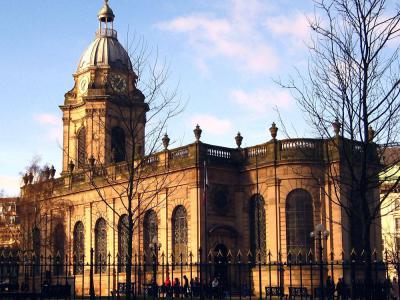
The cathedral's exterior is characterized by tall windows separated by pilasters, a roof-level balustrade, and a single tower with a lead-covered dome and lantern. The building is brick and faced with stone from Archer's estate at Umberslade. In the late 19th century, the eastern apse was extended by J. A. Chatwin, who also refaced the exterior due to the softness of the original stone. Chatwin's design included strongly projecting Corinthian columns and richly marbled surfaces.
Edward Burne-Jones, a local artist, contributed several stained glass windows to the cathedral, including three at the eastern end and one at the west end dedicated to Henry Bowlby. The cathedral also features several heritage-listed monuments, including those commemorating workers who died during the construction of Birmingham Town Hall and victims of the 1974 Birmingham pub bombings. A statue of Charles Gore, the first Bishop of Birmingham, stands at the west entrance.
Saint Philip's Cathedral is a Grade I listed building. The church's construction began in 1711 and was completed by 1715, with the tower finished by 1725 and additional urns added to the parapet in 1756. Archer's design was influenced by Italian Baroque architecture, specifically the churches of Borromini, and features a rectangular hall church interior with fluted pillars and Tuscan capitals supporting an arcade with a prominent cornice. Wooden galleries span the pillars, a common feature in English Baroque churches.
The cathedral's exterior is characterized by tall windows separated by pilasters, a roof-level balustrade, and a single tower with a lead-covered dome and lantern. The building is brick and faced with stone from Archer's estate at Umberslade. In the late 19th century, the eastern apse was extended by J. A. Chatwin, who also refaced the exterior due to the softness of the original stone. Chatwin's design included strongly projecting Corinthian columns and richly marbled surfaces.
Edward Burne-Jones, a local artist, contributed several stained glass windows to the cathedral, including three at the eastern end and one at the west end dedicated to Henry Bowlby. The cathedral also features several heritage-listed monuments, including those commemorating workers who died during the construction of Birmingham Town Hall and victims of the 1974 Birmingham pub bombings. A statue of Charles Gore, the first Bishop of Birmingham, stands at the west entrance.
