Custom Walk in Charleston, South Carolina by ppollock2_3dba3 created on 2025-05-22
Guide Location: USA » Charleston
Guide Type: Custom Walk
# of Sights: 20
Tour Duration: 4 Hour(s)
Travel Distance: 7.3 Km or 4.5 Miles
Share Key: 64UKY
Guide Type: Custom Walk
# of Sights: 20
Tour Duration: 4 Hour(s)
Travel Distance: 7.3 Km or 4.5 Miles
Share Key: 64UKY
How It Works
Please retrieve this walk in the GPSmyCity app. Once done, the app will guide you from one tour stop to the next as if you had a personal tour guide. If you created the walk on this website or come to the page via a link, please follow the instructions below to retrieve the walk in the app.
Retrieve This Walk in App
Step 1. Download the app "GPSmyCity: Walks in 1K+ Cities" on Apple App Store or Google Play Store.



Step 2. In the GPSmyCity app, download(or launch) the guide "Charleston Map and Walking Tours".
Step 3. Tap the menu button located at upper right corner of the "Walks" screen and select "Retrieve custom walk". Enter the share key: 64UKY
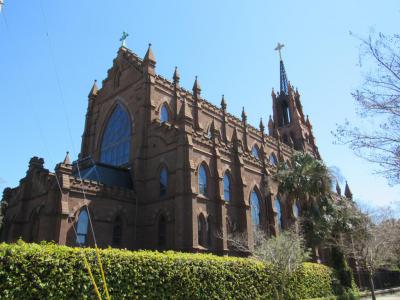
1) Cathedral of St. John the Baptist
The first Cathedral of Saint John the Baptist, completed in 1854, stood as a remarkable specimen of Gothic architecture. Crafted from Connecticut sandstone and crowned by a 200-foot spire, it tragically succumbed to the devastating fire of 1861. However, by 1890, the reconstruction of an almost exact replica of the original edifice had commenced. The design, attributed to Patrick Kelly of Brooklyn, New York, closely adhered to the plans of its predecessor, except for the substitution of a square tower due to budgetary constraints.
It wasn't until 103 years later that a new spire, along with three bells, was finally added atop the tower, culminating the restoration of the historic structure. Comprising Connecticut brownstone, the newer building was eventually completed in 2010. The spacious nave, measuring 150 by 80 feet, is adorned with exquisite stained-glass windows and has a seating capacity for 700 individuals.
Why You Should Visit:
To admire one of North America's most splendid churches, with its unique stained-glass windows, altar, and architectural grandeur.
Tip:
Try to visit on a sunny day to fully appreciate the intricate patterns and colors of the stained-glass windows.
It wasn't until 103 years later that a new spire, along with three bells, was finally added atop the tower, culminating the restoration of the historic structure. Comprising Connecticut brownstone, the newer building was eventually completed in 2010. The spacious nave, measuring 150 by 80 feet, is adorned with exquisite stained-glass windows and has a seating capacity for 700 individuals.
Why You Should Visit:
To admire one of North America's most splendid churches, with its unique stained-glass windows, altar, and architectural grandeur.
Tip:
Try to visit on a sunny day to fully appreciate the intricate patterns and colors of the stained-glass windows.
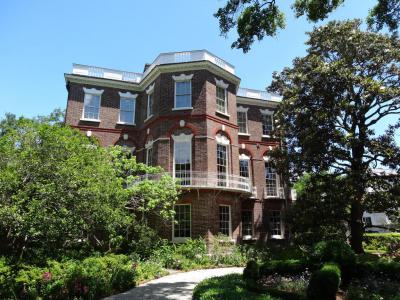
2) Nathaniel Russell House (must see)
Nathaniel Russell, a prominent shipping merchant, chose to erect his grand "mansionhouse" on Meeting Street, strategically located within view of the busy wharves that fueled his prosperity. In 1808, at the age of 71, Russell's opulent residence was completed, at a reported cost of $80,000-an astronomical sum for its time. Inspired by the architectural style of English designer Robert Adam, who drew influence from the recently unearthed classical designs discovered in the Italian excavations of Pompeii and Herculaneum, Russell's new abode showcased a blend of elegance and classical influence.
Visitors today are immediately captivated by the breathtaking elliptical staircase, seemingly floating through three floors without any apparent support, set against a backdrop of golden walls in the stair hall. The Adamesque embellishments adorning the mantels and cornices of the fireplaces here also rank among the most intricate in the city.
Elegantly proportioned rooms exhibit a splendid array of Charleston, English, and French furnishings, including precious china, silver, and paintings. The oval drawing room on the second floor stands out as the most lavishly adorned space, and served as the retreat for women after dinner. Draped in an apricot palette, it features ornate plaster moldings coated with 24-karat gold leaf.
Unlike most other Charleston house museums, the Russell House has never been through a sad period of decline and disrepair. First as a fine town house, then as the home of a South Carolina governor, and later as a school for girls and even a convent, 51 Meeting Street has always been a respected and cared-for landmark. Today it is owned and operated by Historic Charleston Foundation, an organization that has done much to preserve and illuminate the city's architectural heritage.
To the south of the house lies a formal English garden with gravel paths, boxwood hedges, and 19th-century botanical favorites. At the rear, you'll find the two-story slave quarters that once accommodated the 18 enslaved individuals who lived and worked on the property.
Tip:
It's a good idea to arrive early, especially if you're planning a weekend tour. Online tickets don't come with specific time slots, and on-site tours are assigned on a first-come-first-served basis. While you're in the area, consider exploring the nearby old graveyard before or after your visit to the house. If you're interested, you can also opt for an additional fee to access the sister Aiken-Rhett House, farther uptown.
Visitors today are immediately captivated by the breathtaking elliptical staircase, seemingly floating through three floors without any apparent support, set against a backdrop of golden walls in the stair hall. The Adamesque embellishments adorning the mantels and cornices of the fireplaces here also rank among the most intricate in the city.
Elegantly proportioned rooms exhibit a splendid array of Charleston, English, and French furnishings, including precious china, silver, and paintings. The oval drawing room on the second floor stands out as the most lavishly adorned space, and served as the retreat for women after dinner. Draped in an apricot palette, it features ornate plaster moldings coated with 24-karat gold leaf.
Unlike most other Charleston house museums, the Russell House has never been through a sad period of decline and disrepair. First as a fine town house, then as the home of a South Carolina governor, and later as a school for girls and even a convent, 51 Meeting Street has always been a respected and cared-for landmark. Today it is owned and operated by Historic Charleston Foundation, an organization that has done much to preserve and illuminate the city's architectural heritage.
To the south of the house lies a formal English garden with gravel paths, boxwood hedges, and 19th-century botanical favorites. At the rear, you'll find the two-story slave quarters that once accommodated the 18 enslaved individuals who lived and worked on the property.
Tip:
It's a good idea to arrive early, especially if you're planning a weekend tour. Online tickets don't come with specific time slots, and on-site tours are assigned on a first-come-first-served basis. While you're in the area, consider exploring the nearby old graveyard before or after your visit to the house. If you're interested, you can also opt for an additional fee to access the sister Aiken-Rhett House, farther uptown.
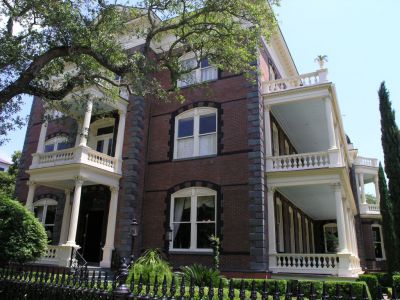
3) Williams Mansion (fka Calhoun Mansion) (must see)
This house museum stands out as one of Charleston's few grand Victorian-era palaces; a remarkable example of the Italianate style that gained popularity in America during the latter half of the 19th century. In Charleston's diverse architectural landscape, this style is somewhat rare, possibly because it emerged at a time when the city was still grappling with the economic aftermath of the Civil War. During the postwar Reconstruction period, there was limited construction of grand mansions in Charleston; however, George Walton Williams, a wholesale grocer and banker, was undeterred by the city's economic challenges. Unlike many wealthy Southerners, he had made substantial investments in England and the North before the war.
Upon its completion in 1876, the grand Charleston residence garnered extravagant praise in newspapers from New York, Atlanta, and Charleston, which all touted it as "the handsomest and most-complete home in the South, if not the country." To this day, it remains Charleston's largest privately owned home, with its 35 rooms, 24,000 square feet of living space, 23 fireplaces, a three-tiered piazza, Italian water gardens adorned with fountains, and a towering cupola that rises 90 feet above Charleston Harbor.
The name "Calhoun" is associated with the house because Williams's son-in-law, Patrick Calhoun (grandson of John C. Calhoun, known as "The Great Nullifier"), resided here until 1929, when he lost the house and his fortune in the stock market crash. Subsequent owners struggled to find a suitable use for the historic mansion, leading to its gradual decline and eventual condemnation in the 1970s. However, a young local attorney acquired the property and spent a considerable fortune and 25 years restoring its structural and artistic grandeur.
Today, the mansion showcases the extensive personal collection of the new owner, featuring English and American furniture from the 18th and 19th centuries, with a focus on Southern decorative arts. There's also an impressive collection of impressionist art, Chinese ceramics, and various art objects that seamlessly blend with the Victorian-era ambiance originally designed to create an impressive display. The mansion has gained national recognition, appearing in numerous magazines and serving as a set for the notable television miniseries "North and South". While photography is not permitted inside, visitors can enjoy a 35-minute tour that provides informative insights into the mansion's history and significance. The grounds also offer charming garden spaces adorned with statues and fountains.
Upon its completion in 1876, the grand Charleston residence garnered extravagant praise in newspapers from New York, Atlanta, and Charleston, which all touted it as "the handsomest and most-complete home in the South, if not the country." To this day, it remains Charleston's largest privately owned home, with its 35 rooms, 24,000 square feet of living space, 23 fireplaces, a three-tiered piazza, Italian water gardens adorned with fountains, and a towering cupola that rises 90 feet above Charleston Harbor.
The name "Calhoun" is associated with the house because Williams's son-in-law, Patrick Calhoun (grandson of John C. Calhoun, known as "The Great Nullifier"), resided here until 1929, when he lost the house and his fortune in the stock market crash. Subsequent owners struggled to find a suitable use for the historic mansion, leading to its gradual decline and eventual condemnation in the 1970s. However, a young local attorney acquired the property and spent a considerable fortune and 25 years restoring its structural and artistic grandeur.
Today, the mansion showcases the extensive personal collection of the new owner, featuring English and American furniture from the 18th and 19th centuries, with a focus on Southern decorative arts. There's also an impressive collection of impressionist art, Chinese ceramics, and various art objects that seamlessly blend with the Victorian-era ambiance originally designed to create an impressive display. The mansion has gained national recognition, appearing in numerous magazines and serving as a set for the notable television miniseries "North and South". While photography is not permitted inside, visitors can enjoy a 35-minute tour that provides informative insights into the mansion's history and significance. The grounds also offer charming garden spaces adorned with statues and fountains.
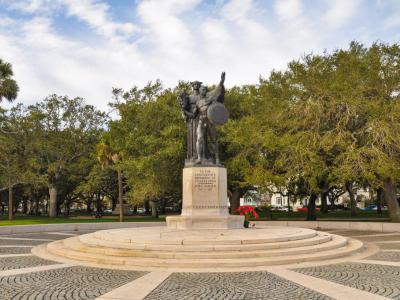
4) The Battery (must see)
Charleston's White Point Garden, commonly known as the Battery, may not fit the traditional definition of an "attraction" like a museum or a fort, but it holds a unique place in the hearts of visitors and residents alike. While it's not an official attraction, it's almost a rite of passage for first-time visitors to stroll through this historic site. In a city where nearly every building and street holds historical significance, few places offer a more comprehensive glimpse into Charleston's 300-year history.
This picturesque spot at the eastern end of East Bay Street is now a serene park adorned with statues, monuments, ancient cannons, and majestic live oak trees-though the ambiance has not always been so tranquil. This site has been a prominent feature in Charleston since the early days of English settlement when it was known as Oyster Point due to its marshy beach covered in white oyster shells. Initially, it mainly served as a navigational aid for ships entering and leaving the harbor and only gained notoriety in the 1720s when infamous pirate Stede Bonnet and his crew were hanged here from makeshift gallows. These executions effectively put an end to pirate activities that had plagued the Carolina coast. Then, during the War of 1812, a fort was built in the area, giving rise to the popular name "the Battery".
The site was officially designated as a park in 1837 when the city reconfigured certain streets to create White Point Garden. It was from this vantage point that Charlestonians witnessed the opening shots of the Civil War on April 12, 1861, as Confederate fortifications across the river exchanged fire with Union troops stationed in Fort Sumter. Once the war started, this peaceful garden was dramatically transformed into two massive earthwork batteries as part of Charleston's inner defense line. While the end of the Civil War marked the conclusion of the Battery's military role, poignant reminders of subsequent wars remain in the form of cannons and monuments, each accompanied by informative plaques or markers.
As a tourist destination, the Battery is also famous for its collection of elegant, predominantly antebellum homes.
This picturesque spot at the eastern end of East Bay Street is now a serene park adorned with statues, monuments, ancient cannons, and majestic live oak trees-though the ambiance has not always been so tranquil. This site has been a prominent feature in Charleston since the early days of English settlement when it was known as Oyster Point due to its marshy beach covered in white oyster shells. Initially, it mainly served as a navigational aid for ships entering and leaving the harbor and only gained notoriety in the 1720s when infamous pirate Stede Bonnet and his crew were hanged here from makeshift gallows. These executions effectively put an end to pirate activities that had plagued the Carolina coast. Then, during the War of 1812, a fort was built in the area, giving rise to the popular name "the Battery".
The site was officially designated as a park in 1837 when the city reconfigured certain streets to create White Point Garden. It was from this vantage point that Charlestonians witnessed the opening shots of the Civil War on April 12, 1861, as Confederate fortifications across the river exchanged fire with Union troops stationed in Fort Sumter. Once the war started, this peaceful garden was dramatically transformed into two massive earthwork batteries as part of Charleston's inner defense line. While the end of the Civil War marked the conclusion of the Battery's military role, poignant reminders of subsequent wars remain in the form of cannons and monuments, each accompanied by informative plaques or markers.
As a tourist destination, the Battery is also famous for its collection of elegant, predominantly antebellum homes.
5) Edmondston-Alston House (must see)
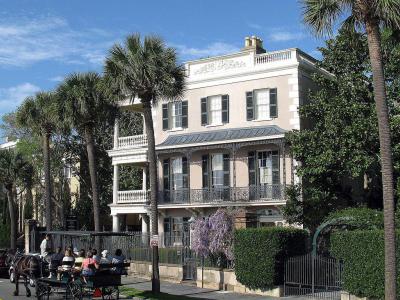
In 1825, Charles Edmondston, a wealthy merchant and wharf owner, constructed this impressive three-story residence (originally of English Regency style) where he could enjoy unobstructed views of Charleston Harbor. The front staircase led to two drawing rooms on the second floor, with smaller rooms behind them serving as withdrawing spaces-one for ladies and one for gentlemen. The house featured 14-foot-high ceilings, large window and door openings for better airflow during the summer, and a library room. Additionally, the property featured a kitchen, servants' quarters, horse stables, and carriage facilities.
However, economic hardships stemming from the Panic of 1837 led Edmondston to sell the house to Charles Alston, a member of a prominent Low Country rice-planting family. Alston promptly renovated the architecture in the fashionable Greek Revival style. Additions included a third-story piazza with Corinthian columns, a cast-iron balcony across the front, and a rooftop railing displaying the Alston coat of arms. The Alstons received their visitors on the first floor, while social gatherings were held on the second floor.
Remarkably, many family documents, portraits, silver items, and fine furnishings from the 1830s, including Charles Alston's nearly intact library, can still be found today. Known for its unique Regency woodwork and uncompromising views of the harbor, the house's intimate atmosphere and authentic details may make visitors feel as though the Alstons only recently departed, perhaps for a countryside visit.
However, economic hardships stemming from the Panic of 1837 led Edmondston to sell the house to Charles Alston, a member of a prominent Low Country rice-planting family. Alston promptly renovated the architecture in the fashionable Greek Revival style. Additions included a third-story piazza with Corinthian columns, a cast-iron balcony across the front, and a rooftop railing displaying the Alston coat of arms. The Alstons received their visitors on the first floor, while social gatherings were held on the second floor.
Remarkably, many family documents, portraits, silver items, and fine furnishings from the 1830s, including Charles Alston's nearly intact library, can still be found today. Known for its unique Regency woodwork and uncompromising views of the harbor, the house's intimate atmosphere and authentic details may make visitors feel as though the Alstons only recently departed, perhaps for a countryside visit.
6) Rainbow Row (must see)
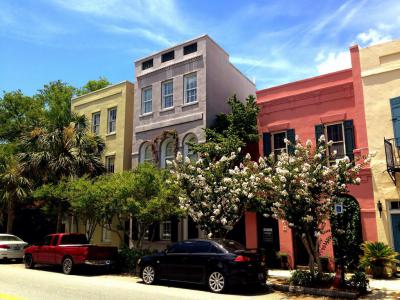
Rainbow Row, a series of thirteen pastel-colored mansions facing the Cooper River, is one of the most iconic and photographed sights in the United States. The vibrant, historically accurate colors are a testament to Charleston's Caribbean heritage, a legacy of the English settlers from Barbados who were among the city's earliest residents.
These homes are exceptionally old, considering Charleston's history of fires, hurricanes, and earthquakes. Most of them were built between 1730 and 1750 when they were located right along the Cooper River, serving as storefronts on the wharf. Later, the street was built on top of landfill, creating the current landscape.
Various myths surround the choice of colors. Some claim that intoxicated sailors returning from the port could remember their lodgings based on color, while others suggest that the colors were chosen to indicate the buildings' purpose as stores, making it easier for illiterate slaves to identify where they could shop.
One way or another, each of these houses has a fascinating story to tell about its origin and inhabitants. Despite facing natural calamities and the Civil War, they have remarkably remained intact and have weathered the test of time. If you examine them closely, you can see signs of renovations, including earthquake rods reinforcing the structures to ensure their stability.
Rainbow Row also holds significant importance in American historic preservation. These were the first Charleston homes to undergo restoration and recovery from early-20th-century deterioration. The restoration efforts on Rainbow Row directly inspired the creation of the Preservation Society of Charleston, the first organization of its kind in the United States.
These homes are exceptionally old, considering Charleston's history of fires, hurricanes, and earthquakes. Most of them were built between 1730 and 1750 when they were located right along the Cooper River, serving as storefronts on the wharf. Later, the street was built on top of landfill, creating the current landscape.
Various myths surround the choice of colors. Some claim that intoxicated sailors returning from the port could remember their lodgings based on color, while others suggest that the colors were chosen to indicate the buildings' purpose as stores, making it easier for illiterate slaves to identify where they could shop.
One way or another, each of these houses has a fascinating story to tell about its origin and inhabitants. Despite facing natural calamities and the Civil War, they have remarkably remained intact and have weathered the test of time. If you examine them closely, you can see signs of renovations, including earthquake rods reinforcing the structures to ensure their stability.
Rainbow Row also holds significant importance in American historic preservation. These were the first Charleston homes to undergo restoration and recovery from early-20th-century deterioration. The restoration efforts on Rainbow Row directly inspired the creation of the Preservation Society of Charleston, the first organization of its kind in the United States.
7) Heyward-Washington House (must see)
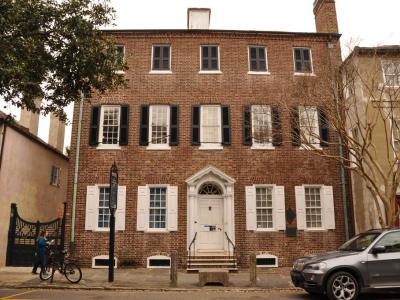
This early Charleston "dwelling house" is known by two names, thanks to the two notable Americans associated with it: one, the owner, and the other, a distinguished guest. Constructed in 1772 by Daniel Heyward, a prosperous rice planter and the father of Thomas Heyward Jr., a South Carolina signer of the Declaration of Independence (who resided in the house until 1794), the house has a rich history.
In 1791, President George Washington embarked on a grand tour of the fledgling nation, which included a stop in Charleston. In anticipation of the President's visit, the city arranged to rent Heyward's house for Washington's accommodations, temporarily displacing Heyward to his country house. In his diary, Washington recorded his visit to the property, stating: "The lodgings provided for me in this place were very good, being the furnished house of a gentleman at present residing in the country; but occupied by a person placed there on purpose to accommodate me."
Today, the house is beautifully furnished with a remarkable collection of period antiques, including exquisite 18th-century Charleston-made furniture. A highlight is the priceless 1770 Chippendale-style Holmes bookcase, hailed by BBC Antiques Roadshow experts as the "finest example of American-made furniture", still bearing the marks of a British mortar strike from the American Revolution days.
Notably, this is the only 18th-century house museum in the city that retains its original outbuildings, such as the carriage shed and the 1740s kitchen building. You'll also discover a quaint formal garden, showcasing plants commonly cultivated in the South Carolina Lowcountry during the late 18th century.
Why You Should Visit:
Knowledgeable guides will point you in all the right directions, allowing you to admire the amazing craftsmanship of furniture makers and the second-floor ballroom-a delightful surprise to many, offering a glimpse into the country's early days. Not to mention that standing in the very room where George Washington stayed is an unforgettable experience!
Tip:
Consider looking into the Charleston Heritage Passport, which grants access to 5 houses, 2 museums, and 2 plantations. You can acquire it at the Visitors Center on John Street.
In 1791, President George Washington embarked on a grand tour of the fledgling nation, which included a stop in Charleston. In anticipation of the President's visit, the city arranged to rent Heyward's house for Washington's accommodations, temporarily displacing Heyward to his country house. In his diary, Washington recorded his visit to the property, stating: "The lodgings provided for me in this place were very good, being the furnished house of a gentleman at present residing in the country; but occupied by a person placed there on purpose to accommodate me."
Today, the house is beautifully furnished with a remarkable collection of period antiques, including exquisite 18th-century Charleston-made furniture. A highlight is the priceless 1770 Chippendale-style Holmes bookcase, hailed by BBC Antiques Roadshow experts as the "finest example of American-made furniture", still bearing the marks of a British mortar strike from the American Revolution days.
Notably, this is the only 18th-century house museum in the city that retains its original outbuildings, such as the carriage shed and the 1740s kitchen building. You'll also discover a quaint formal garden, showcasing plants commonly cultivated in the South Carolina Lowcountry during the late 18th century.
Why You Should Visit:
Knowledgeable guides will point you in all the right directions, allowing you to admire the amazing craftsmanship of furniture makers and the second-floor ballroom-a delightful surprise to many, offering a glimpse into the country's early days. Not to mention that standing in the very room where George Washington stayed is an unforgettable experience!
Tip:
Consider looking into the Charleston Heritage Passport, which grants access to 5 houses, 2 museums, and 2 plantations. You can acquire it at the Visitors Center on John Street.
8) Pink House
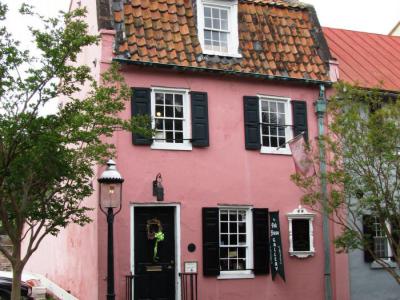
Distinct from the Olde Pinke House in Savannah, GA, this picturesque abode claims to be the oldest masonry residence in Charleston and the second oldest in the nation, constructed between 1694 and 1712. The applied 18-inch-thick Bermuda Stone, a coral stone from West India, gave it an innate pink hue. Although it has been repainted since, the current color retains its distinctive character.
The building's architectural peculiarity is also evident in its design, featuring low ceilings and just one room on each of the three floors. The roof, crafted from pantiles akin to those on the Powder Magazine, dates to the 18th century when the house functioned as a tavern (rumored to have had a brothel upstairs) catering to sailors, merchants, and pirates passing through Charleston's port in search of "whiskey, wenches, and wittles". This area of Charleston, now fashionable, back in the day was rather disreputable, known for rowdy nights.
The Pink House continued its role as a tavern throughout the 1700s until the neighborhood underwent revitalization, transforming into a predominantly residential area in the 1800s. Since then, the building has served various purposes, including as a publishing house, a law office, and the studio of the renowned Charleston artist, Alice Ravenel Huger Smith. For two decades, it also housed an art gallery.
Why You Should Visit:
There are few remaining cobblestone streets in town, and none is more delightful than this one. Lovely setting!
The building's architectural peculiarity is also evident in its design, featuring low ceilings and just one room on each of the three floors. The roof, crafted from pantiles akin to those on the Powder Magazine, dates to the 18th century when the house functioned as a tavern (rumored to have had a brothel upstairs) catering to sailors, merchants, and pirates passing through Charleston's port in search of "whiskey, wenches, and wittles". This area of Charleston, now fashionable, back in the day was rather disreputable, known for rowdy nights.
The Pink House continued its role as a tavern throughout the 1700s until the neighborhood underwent revitalization, transforming into a predominantly residential area in the 1800s. Since then, the building has served various purposes, including as a publishing house, a law office, and the studio of the renowned Charleston artist, Alice Ravenel Huger Smith. For two decades, it also housed an art gallery.
Why You Should Visit:
There are few remaining cobblestone streets in town, and none is more delightful than this one. Lovely setting!
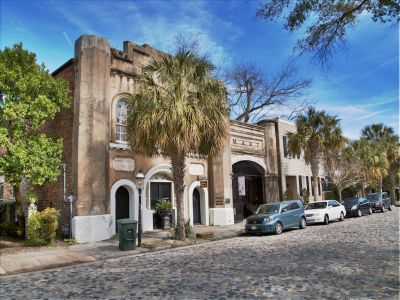
9) Old Slave Mart (must see)
Constructed in 1859, this building, designed in the Gothic Revival and Romanesque styles with a stuccoed façade, originally formed part of the slave market known as Ryan's Mart. Named after city alderman and slave profiteer, Thomas Ryan, it occupied a large enclosed area between Chalmers and Queen Streets, consisting of a four-story slave jail, a kitchen, and a morgue referred to as the "dead house". With slave quarters having been demolished at most antebellum plantations, it is believed to be the last surviving site of a slave auction house.
Since 1938, it has been home to the Old Slave Mart Museum, a highly informative institution portraying the slave trading that occurred here between 1856 and 1863. The museum's knowledgeable staff is well-equipped to answer any questions that may arise while exploring the various exhibits. These delve into the transcontinental and domestic slave trade through large storyboards, personal narratives, and authentic artifacts, including shackles worn by slaves, the whips used to beat them, and even a deed of sale for auctioned slaves.
Among the self-guided educational materials is a firsthand audio account by former slave Elijah Green, born in 1843, who recounted his life's story in 1937. His account offers a sobering, realistic, and educational perspective on the nation's history, with a particular focus on Charleston's African-American heritage, spanning from slavery to emancipation.
Since 1938, it has been home to the Old Slave Mart Museum, a highly informative institution portraying the slave trading that occurred here between 1856 and 1863. The museum's knowledgeable staff is well-equipped to answer any questions that may arise while exploring the various exhibits. These delve into the transcontinental and domestic slave trade through large storyboards, personal narratives, and authentic artifacts, including shackles worn by slaves, the whips used to beat them, and even a deed of sale for auctioned slaves.
Among the self-guided educational materials is a firsthand audio account by former slave Elijah Green, born in 1843, who recounted his life's story in 1937. His account offers a sobering, realistic, and educational perspective on the nation's history, with a particular focus on Charleston's African-American heritage, spanning from slavery to emancipation.

10) Old Exchange and Provost Dungeon (must see)
A public building has occupied the site at East Bay and Broad Streets since Charles Towne's relocation from its original settlement in 1680. The early settlers constructed a court of guard on this spot, using the lower level to imprison pirates and Native Americans, while holding town meetings in the upper hall. The British later erected the current building with striking Palladian architecture to make a grand statement in the bustling colonial port. Completed in 1771, the Exchange quickly became the social, political, and economic center of the growing city. From its steps, the independent colony of South Carolina was officially declared in March 1776.
During the Revolutionary War, the building was transformed into a British prison where signers of the Declaration of Independence were held. In 1788, the convention to ratify the U.S. Constitution convened at the Exchange, and President Washington was lavishly entertained here during his Southern tour. From 1815 to 1896, the Exchange served as both the Charleston post office for the Federal and Confederate governments. An excavation of the dungeon in 1965 revealed part of Charles Towne's original seawall, dating as early as 1698.
Now a National Historic Landmark, the building is open to the public as a museum and offers two halls available for private events. Guided tours, led by costumed guides on each floor, include a visit to the Provost Dungeon, where tales of pirates and colonial days come to life. The experience is both entertaining and educational, shedding light on the building's history and Charleston's unique past. If exploring a real dungeon is high on your bucket list, this place is a must-visit!
Tip:
Aside from delving into the property's rich history, there are engaging activities to enjoy, such as reenactments of the signing of the Declaration of Independence, allowing visitors to immerse themselves in the atmosphere of the 1700s.
During the Revolutionary War, the building was transformed into a British prison where signers of the Declaration of Independence were held. In 1788, the convention to ratify the U.S. Constitution convened at the Exchange, and President Washington was lavishly entertained here during his Southern tour. From 1815 to 1896, the Exchange served as both the Charleston post office for the Federal and Confederate governments. An excavation of the dungeon in 1965 revealed part of Charles Towne's original seawall, dating as early as 1698.
Now a National Historic Landmark, the building is open to the public as a museum and offers two halls available for private events. Guided tours, led by costumed guides on each floor, include a visit to the Provost Dungeon, where tales of pirates and colonial days come to life. The experience is both entertaining and educational, shedding light on the building's history and Charleston's unique past. If exploring a real dungeon is high on your bucket list, this place is a must-visit!
Tip:
Aside from delving into the property's rich history, there are engaging activities to enjoy, such as reenactments of the signing of the Declaration of Independence, allowing visitors to immerse themselves in the atmosphere of the 1700s.
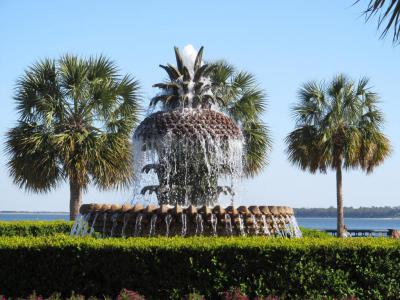
11) Joe Riley Waterfront Park (must see)
Historically, the waterfront area of Charleston, just off the Cooper River, has been a center of maritime traffic, housing wharves and shipping terminals. Refurbished in 1990, it has received numerous accolades, including the Landmark Award from the American Society of Landscape Architects and the National Trust for Historic Preservation.
Waterfront Park is split into sections. At the northern entrance, near the base of Vendue Range, you'll encounter a large fountain that serves as a prominent focal point. From there, Venue Wharf, a wide wooden pier with sheltered swings, extends into the Cooper River.
The park's largest portion consists of two prominent features: a lush canopy of oak trees lining Concord and Prioleau streets for about a quarter-mile; and a 1,200-foot palmetto-lined esplanade that gracefully follows the natural waterline, ensuring public access to the water's edge.
Nestled within the expansive grassy lawn is the famous Pineapple Fountain, located directly in front of the City Gallery and surrounded by trees and benches.
You can pack a picnic lunch, relax on the benches, witness the cruise ships come and go, marvel at the colossal cargo vessels entering one of the nation's busiest ports, and savor the breathtaking sunsets while catching a refreshing breeze on a sunny day.
Why You Should Visit:
Beautifully landscaped areas for picnics; spectacular unobstructed views of Charleston Harbor, the Ravenel Bridge, Patriots Point, and Fort Sumter; a magnificent fountain, a dense oak tree canopy, and numerous benches to engage in the art of people-watching. Sunrises and sunsets here are consistently stunning, and you might even spot dolphins here. There is no admission fee.
Waterfront Park is split into sections. At the northern entrance, near the base of Vendue Range, you'll encounter a large fountain that serves as a prominent focal point. From there, Venue Wharf, a wide wooden pier with sheltered swings, extends into the Cooper River.
The park's largest portion consists of two prominent features: a lush canopy of oak trees lining Concord and Prioleau streets for about a quarter-mile; and a 1,200-foot palmetto-lined esplanade that gracefully follows the natural waterline, ensuring public access to the water's edge.
Nestled within the expansive grassy lawn is the famous Pineapple Fountain, located directly in front of the City Gallery and surrounded by trees and benches.
You can pack a picnic lunch, relax on the benches, witness the cruise ships come and go, marvel at the colossal cargo vessels entering one of the nation's busiest ports, and savor the breathtaking sunsets while catching a refreshing breeze on a sunny day.
Why You Should Visit:
Beautifully landscaped areas for picnics; spectacular unobstructed views of Charleston Harbor, the Ravenel Bridge, Patriots Point, and Fort Sumter; a magnificent fountain, a dense oak tree canopy, and numerous benches to engage in the art of people-watching. Sunrises and sunsets here are consistently stunning, and you might even spot dolphins here. There is no admission fee.
12) The Rooftop at The Vendue
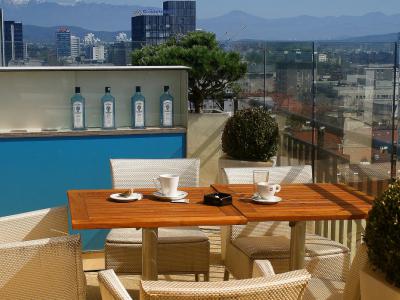
Apart from staying guests, The Vendue art hotel lures in a regular crowd of cocktail-drinkers with a two-tiered rooftop experience, known as The Rooftop Bar. Charleston's original watering hole, this place stands out from typical rooftop bars by offering not just two levels, but two distinct bars, with lovers of live music welcomed every Sunday from April through October.
Both levels feature different atmospheres, including covered and fully open areas enlivened by lively pop-art installations that are sure to keep the Instagram-savvy crowd snapping away. Wooden decking, sun-shaded wicker furniture, chic lighting, and gleaming bar tops create the perfect backdrop for an upscale rooftop adventure.
The dual-level setup is a big draw, as are the sweeping views of Charleston Harbor, Waterfront Park, The Arthur Ravenel Jr. Bridge, and other landmarks, providing an ideal setting for mingling with friends and fellow patrons over an al fresco lunch or refreshing drinks in a lively atmosphere. The cocktail list is just quirky enough without being intimidating, while beers and wines run a reassuring gamut of international and local. As with the drinks, the food offering is also impressively diverse with a little extra to satisfy various tastes.
Why You Should Visit:
In addition to its breathtaking rooftop terrace and bar, the hotel provides a treat for art enthusiasts. Throughout the property, you'll find gallery spaces hosting rotating exhibitions curated by Robert Lange Studios, a respected local art gallery.
Tips:
To access the bar, you'll need to enter the hotel and take the elevator up. Don't miss the chance to take a photo in the interactive display near the elevator doors, where you can pose as the couple from the famous "American Gothic" painting. If you're headed to the upper-level bar, turn left immediately after exiting the elevator, and then walk up the stairs.
Both levels feature different atmospheres, including covered and fully open areas enlivened by lively pop-art installations that are sure to keep the Instagram-savvy crowd snapping away. Wooden decking, sun-shaded wicker furniture, chic lighting, and gleaming bar tops create the perfect backdrop for an upscale rooftop adventure.
The dual-level setup is a big draw, as are the sweeping views of Charleston Harbor, Waterfront Park, The Arthur Ravenel Jr. Bridge, and other landmarks, providing an ideal setting for mingling with friends and fellow patrons over an al fresco lunch or refreshing drinks in a lively atmosphere. The cocktail list is just quirky enough without being intimidating, while beers and wines run a reassuring gamut of international and local. As with the drinks, the food offering is also impressively diverse with a little extra to satisfy various tastes.
Why You Should Visit:
In addition to its breathtaking rooftop terrace and bar, the hotel provides a treat for art enthusiasts. Throughout the property, you'll find gallery spaces hosting rotating exhibitions curated by Robert Lange Studios, a respected local art gallery.
Tips:
To access the bar, you'll need to enter the hotel and take the elevator up. Don't miss the chance to take a photo in the interactive display near the elevator doors, where you can pose as the couple from the famous "American Gothic" painting. If you're headed to the upper-level bar, turn left immediately after exiting the elevator, and then walk up the stairs.

13) Kaminsky's Dessert Cafe
Kaminsky's is consistently recognized for serving the finest desserts in the city, and their cakes alone justify a visit to the City Market area. The top three best sellers are the fresh fruit torte, the red velvet, and the decadent "Mountain of Chocolate". In addition to their delectable desserts, Kaminsky's offers an array of exceptional coffees and spirits to complement your sweet indulgence.
The cafe's intimate ambiance is enhanced by its handsome brick walls, which serve as an artful backdrop showcasing local artwork. Don't miss the opportunity to pair your dessert with an exotic coffee or a refreshing nonalcoholic beverage; their milkshakes are particularly renowned. With a menu offering 150 other beverage choices, you may find it challenging to make a selection. Whether you prefer to unwind with a martini or a hot toddy, Kaminsky's has you covered.
The cafe's intimate ambiance is enhanced by its handsome brick walls, which serve as an artful backdrop showcasing local artwork. Don't miss the opportunity to pair your dessert with an exotic coffee or a refreshing nonalcoholic beverage; their milkshakes are particularly renowned. With a menu offering 150 other beverage choices, you may find it challenging to make a selection. Whether you prefer to unwind with a martini or a hot toddy, Kaminsky's has you covered.
14) Historic City Market (must see)
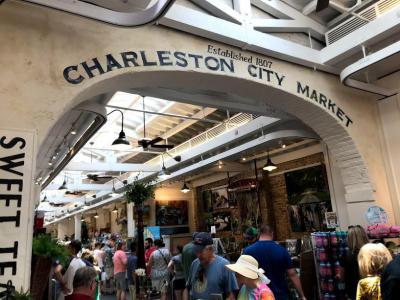
A visit to Charleston would be incomplete without exploring the Historic City Market. Established in the 1790s, it spans four city blocks, covering a vast 33-acre area, starting from the temple-like Market Hall, which now houses the Confederate Museum.
Back in its prime during the early 20th century, the market provided a livelihood for thousands of African-American entrepreneurs and vendors. Today, it remains operational with dozens of vendors offering a wide range of souvenirs and goods, including clothing, jewelry, chocolates, artwork, Gullah sweetgrass baskets, and regional keepsakes.
Places of note include Callie's Hot Little Biscuit, Carolina Rice, Carolina Tea, and other eateries within the market. The surrounding area also has numerous shops, ice cream parlors, and restaurants, making it worthwhile to plan for several hours of exploration and enjoyment.
An excellent option for a rainy day visit (since it offers shelter), the market allows you to browse comfortably, stay dry, and hopefully discover some great deals. While credit cards are accepted, it's advisable to carry some cash as you might receive discounts for cash payments. Additionally, from April through December, the Night Market hosts local artists and food vendors on weekends.
The entire market complex was declared a National Historic Landmark and added to the National Register of Historic Places in 1973.
Back in its prime during the early 20th century, the market provided a livelihood for thousands of African-American entrepreneurs and vendors. Today, it remains operational with dozens of vendors offering a wide range of souvenirs and goods, including clothing, jewelry, chocolates, artwork, Gullah sweetgrass baskets, and regional keepsakes.
Places of note include Callie's Hot Little Biscuit, Carolina Rice, Carolina Tea, and other eateries within the market. The surrounding area also has numerous shops, ice cream parlors, and restaurants, making it worthwhile to plan for several hours of exploration and enjoyment.
An excellent option for a rainy day visit (since it offers shelter), the market allows you to browse comfortably, stay dry, and hopefully discover some great deals. While credit cards are accepted, it's advisable to carry some cash as you might receive discounts for cash payments. Additionally, from April through December, the Night Market hosts local artists and food vendors on weekends.
The entire market complex was declared a National Historic Landmark and added to the National Register of Historic Places in 1973.

15) Civil War Museum at Market Hall
Designed in the dignified Greek Revival style and currently restored to its original grandeur, the Market Hall building was renowned for its exceptional architectural quality when it was constructed in the 1840s. Modeled after the Temple of the Wingless Victory in Athens, Greece, this structure features a single elevated story resting upon a rusticated open ground-level arcade. Its portico contains four Roman-style Doric columns supporting the pediment and can be accessed via a double flight of stairs with intricate ironwork.
In a way, the building continues to fulfill its original purpose by serving as the front entrance to the adjoining six blocks of covered market space where a variety of fruits, meats, vegetables, and fish were historically sold. However, in 1899, the United Daughters of the Confederacy repurposed the Hall's second floor to establish a museum showcasing Confederate artifacts and other memorabilia from Charleston's Civil War era. While it may not rival the Museum of the Confederacy in Richmond, Virginia, this museum presents a remarkable collection of intriguing relics. Among the exhibits are cannons, uniforms, battle flags, swords, sabres, muskets, and even South Carolina's secession flag. Given the abundance of fascinating items on display, the nominal admission fee is well worth it.
Tip:
Don't forget to peruse the newspapers on display, as they provide a unique perspective on the Civil War.
In a way, the building continues to fulfill its original purpose by serving as the front entrance to the adjoining six blocks of covered market space where a variety of fruits, meats, vegetables, and fish were historically sold. However, in 1899, the United Daughters of the Confederacy repurposed the Hall's second floor to establish a museum showcasing Confederate artifacts and other memorabilia from Charleston's Civil War era. While it may not rival the Museum of the Confederacy in Richmond, Virginia, this museum presents a remarkable collection of intriguing relics. Among the exhibits are cannons, uniforms, battle flags, swords, sabres, muskets, and even South Carolina's secession flag. Given the abundance of fascinating items on display, the nominal admission fee is well worth it.
Tip:
Don't forget to peruse the newspapers on display, as they provide a unique perspective on the Civil War.
16) King Street
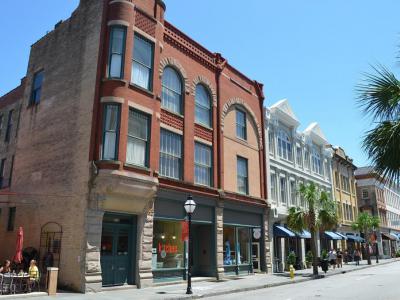
King Street and its surroundings are, perhaps, the most happening areas in Charleston. It is also the second most historically and architecturally significant downtown lane, (after Meeting Street), where the city's past and present converge. With a history spanning more than three centuries, this thoroughfare was named for King Charles II of England and soon thrived as a retail corridor, commercial center, and a major shopping district, hosting a diverse array of high-end specialty shops.
Do you like it upscale? Even if not for shopping, a leisurely stroll down this street's pedestrian-friendly sidewalks impresses with stores offering unique and handmade jewelry, antiques, gifts, shoes, and fine clothing; as well as galleries showcasing the work of local artists and artisans. Peculiar enough, many local stores still "dress" their windows as they did back in the old days. There's also no shortage of trendy restaurants and cool little coffee and dessert shops here either, worth stopping by and taking a break.
With such an abundance of options, you may find yourself wondering where to begin your exploration. As you plan your visit, it's worth noting that King Street can be divided into three sections: the lower section, known for its top-notch antiques and jewelry boutiques; the middle section, home to upscale brand-name stores and some exceptional shoe shops; and the upper section, characterized by more cutting-edge boutiques and housewares stores (often locally owned and with a personal touch), along with a vibrant restaurant scene. Feel free to explore at your own pace and delight in the offerings of each section.
Tip:
Keep an eye out for "Second Sundays on King," an event where the street is closed to cars throughout the afternoon, spanning from Calhoun Street to Queen Street. Plus, don't miss the Saturday farmers' market in Marion Square during the spring and summer months.
Do you like it upscale? Even if not for shopping, a leisurely stroll down this street's pedestrian-friendly sidewalks impresses with stores offering unique and handmade jewelry, antiques, gifts, shoes, and fine clothing; as well as galleries showcasing the work of local artists and artisans. Peculiar enough, many local stores still "dress" their windows as they did back in the old days. There's also no shortage of trendy restaurants and cool little coffee and dessert shops here either, worth stopping by and taking a break.
With such an abundance of options, you may find yourself wondering where to begin your exploration. As you plan your visit, it's worth noting that King Street can be divided into three sections: the lower section, known for its top-notch antiques and jewelry boutiques; the middle section, home to upscale brand-name stores and some exceptional shoe shops; and the upper section, characterized by more cutting-edge boutiques and housewares stores (often locally owned and with a personal touch), along with a vibrant restaurant scene. Feel free to explore at your own pace and delight in the offerings of each section.
Tip:
Keep an eye out for "Second Sundays on King," an event where the street is closed to cars throughout the afternoon, spanning from Calhoun Street to Queen Street. Plus, don't miss the Saturday farmers' market in Marion Square during the spring and summer months.
17) Joseph Manigault House (must see)
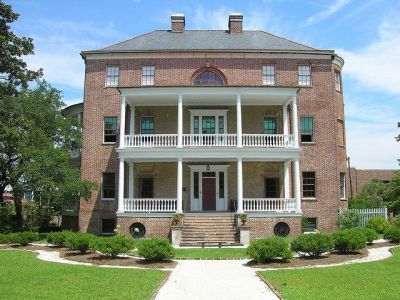
The Manigault House, designed and constructed in 1803 by Charleston architect Gabriel Manigault for his brother Joseph, is a striking example of the elegant Adam style that dominated Charleston's architecture during the early 19th century. Both Manigault brothers, wealthy rice planters, had refined tastes influenced by their travels and education. Gabriel, who had studied in Geneva and London, maintained an extensive architectural library, and the house reflects his sophisticated architectural sensibilities.
This remarkable edifice features one of the most graceful staircases in Charleston and showcases an exceptional collection of period furniture from Charleston, America, England, and France. Additionally, the gatehouse near the entrance serves as a fascinating conversation piece, exemplifying the trend of wealthy homeowners striving to outdo their neighbors.
As a whole, the structure and its gatehouse have been initially considered an architectural folly. A bigger folly, however, almost occurred in 1920 when it was threatened with demolition to make way for a gas station. Fortunately, a preservation group, which later became the Preservation Society of Charleston, successfully prevented its destruction.
The 45-minute tour of the interior is enlightening as it explains why the house was built the way it was; as a plus, you'll get to see the delicately refined woodwork in the fireplace mantels, door and window moldings, and cornices, reflective of the style promoted by Robert Adam, which differentiated the scale of these elements in domestic and civic architecture.
Why You Should Visit:
This is where you go if you are an architecture fan, not an artifact lover. The fine detail in this house will delight and amaze!
This remarkable edifice features one of the most graceful staircases in Charleston and showcases an exceptional collection of period furniture from Charleston, America, England, and France. Additionally, the gatehouse near the entrance serves as a fascinating conversation piece, exemplifying the trend of wealthy homeowners striving to outdo their neighbors.
As a whole, the structure and its gatehouse have been initially considered an architectural folly. A bigger folly, however, almost occurred in 1920 when it was threatened with demolition to make way for a gas station. Fortunately, a preservation group, which later became the Preservation Society of Charleston, successfully prevented its destruction.
The 45-minute tour of the interior is enlightening as it explains why the house was built the way it was; as a plus, you'll get to see the delicately refined woodwork in the fireplace mantels, door and window moldings, and cornices, reflective of the style promoted by Robert Adam, which differentiated the scale of these elements in domestic and civic architecture.
Why You Should Visit:
This is where you go if you are an architecture fan, not an artifact lover. The fine detail in this house will delight and amaze!

18) Music Farm
A beloved fixture on the Peninsula for over three decades, the Music Farm is a cherished gathering spot for contemporary music enthusiasts. Once a train depot, it has become an iconic venue known affectionately by regulars as "the Farm". Live music pulses through its walls on nearly every night, featuring performances by various bands. Notably, even the hometown favorites, Hootie and the Blowfish, have graced its stage in the past.
You can find more details about upcoming entertainment and ticket prices on the Farm's website. While the venue is a magnet for the college crowd, you'll also encounter a diverse mix of patrons, including folks in their 30s, 40s, and beyond, all vying for a spot at the bar. Keep in mind that the venue is not particularly large, and during the summer, it tends to reach capacity, creating a lively and, at times, sweaty atmosphere.
You can find more details about upcoming entertainment and ticket prices on the Farm's website. While the venue is a magnet for the college crowd, you'll also encounter a diverse mix of patrons, including folks in their 30s, 40s, and beyond, all vying for a spot at the bar. Keep in mind that the venue is not particularly large, and during the summer, it tends to reach capacity, creating a lively and, at times, sweaty atmosphere.

19) Redux Contemporary Art Center
The Redux Contemporary Art Center holds a significant role as a single venue for the arts. This nonprofit organization is dedicated to showcasing modernistic artwork across various mediums, including illustration, video installations, blueprints, performance art, and graffiti. Beyond exhibitions, Redux places a strong emphasis on outreach through lecture series, classes, workshops, and internships.
Inside the center, you'll discover three galleries and several dozen studios, some of which offer items for purchase. All in all, this venture serves as an excellent hub for discovering emerging local artistic talents across a wide range of creative works and mediums.
Inside the center, you'll discover three galleries and several dozen studios, some of which offer items for purchase. All in all, this venture serves as an excellent hub for discovering emerging local artistic talents across a wide range of creative works and mediums.
20) College of Charleston
The College of Charleston, the oldest college in South Carolina and the nation's first municipal college, is not only a custodian of the city's history but also injects a modern and youthful energy with its diverse student body of over 12,000. While the campus features contemporary buildings, a leisurely walk around its picturesque grounds unveils some historical treasures.
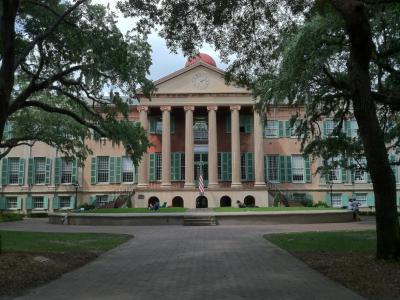
One such gem is the Bishop Robert Smith House, dating back to the college's founding year of 1770, which now serves as the president's residence. (You can find it on Glebe Street, between Wentworth and George streets). Dominating the surroundings is the stately Greek revival portico of Randolph Hall, an 1828 structure designed by Philadelphia architect William Strickland and constructed with the labor of enslaved individuals. This iconic building overlooks the college's central Cistern Yard, where lush oak trees provide a picturesque backdrop for events such as graduation ceremonies and concerts, including performances during the Spoleto Festival USA. The campus has also been a backdrop for scenes in movies like 'Cold Mountain' and 'The Notebook'.
Tip:
For those looking to enhance their visit, an iPhone app called "College of Charleston Tour" is available for a self-guided tour, complete with videos (free on the App Store). Additionally, if you're interested in exploring traveling exhibitions featuring artists from around the world, make sure to visit the Halsey Institute of Contemporary Art, which adds a unique dimension to Charleston's museum offerings.
One such gem is the Bishop Robert Smith House, dating back to the college's founding year of 1770, which now serves as the president's residence. (You can find it on Glebe Street, between Wentworth and George streets). Dominating the surroundings is the stately Greek revival portico of Randolph Hall, an 1828 structure designed by Philadelphia architect William Strickland and constructed with the labor of enslaved individuals. This iconic building overlooks the college's central Cistern Yard, where lush oak trees provide a picturesque backdrop for events such as graduation ceremonies and concerts, including performances during the Spoleto Festival USA. The campus has also been a backdrop for scenes in movies like 'Cold Mountain' and 'The Notebook'.
Tip:
For those looking to enhance their visit, an iPhone app called "College of Charleston Tour" is available for a self-guided tour, complete with videos (free on the App Store). Additionally, if you're interested in exploring traveling exhibitions featuring artists from around the world, make sure to visit the Halsey Institute of Contemporary Art, which adds a unique dimension to Charleston's museum offerings.
