Custom Walk in Oxford, England by johnkiteshepherd_6a454 created on 2025-05-24
Guide Location: England » Oxford
Guide Type: Custom Walk
# of Sights: 8
Tour Duration: 2 Hour(s)
Travel Distance: 2.9 Km or 1.8 Miles
Share Key: TY37G
Guide Type: Custom Walk
# of Sights: 8
Tour Duration: 2 Hour(s)
Travel Distance: 2.9 Km or 1.8 Miles
Share Key: TY37G
How It Works
Please retrieve this walk in the GPSmyCity app. Once done, the app will guide you from one tour stop to the next as if you had a personal tour guide. If you created the walk on this website or come to the page via a link, please follow the instructions below to retrieve the walk in the app.
Retrieve This Walk in App
Step 1. Download the app "GPSmyCity: Walks in 1K+ Cities" on Apple App Store or Google Play Store.



Step 2. In the GPSmyCity app, download(or launch) the guide "Oxford Map and Walking Tours".
Step 3. Tap the menu button located at upper right corner of the "Walks" screen and select "Retrieve custom walk". Enter the share key: TY37G
1) Magdalen College (must see)
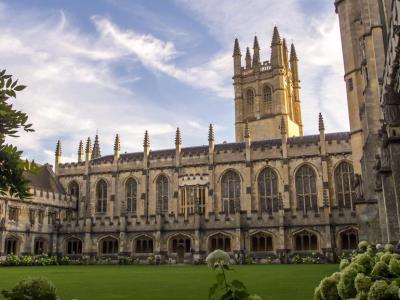
Magdalen College, one of Oxford University's prestigious institutions, is widely regarded as the most beautiful among its colleges. Established in 1458 by William of Waynflete, the Bishop of Winchester, it occupies a picturesque location next to the River Cherwell and the Oxford Botanic Garden. The college boasts a charming campus with the Meadow, Fellows Garden, and the Grove, where you can see deer in winter and spring. Addison's Walk links the Meadow to Fellows Garden, and a bridge connects it to the main campus.
Magdalen College's history is rooted in the dissolution of Saint John the Baptist Hospital in 1457, whose buildings were repurposed for the college. The Old Kitchen Bar, now serving as the college bar, was once the hospital's kitchen. Construction work commenced in 1470 under the guidance of mason William Orchard. He oversaw the creation of various structures, including the Chapel, the Hall, and the Cloister, which includes the Muniment and Founder's Towers.
A prominent feature of Magdalen College is the Magdalen Tower, a well-known landmark. Since the reign of King Henry VII, the college choir has performed at the top of the tower every May Day at 6 am. The Great Quad, constructed in 1474, showcases architectural grandeur, although the north side was reconstructed in 1822. The New Building, dating back to 1733, adds to the college's architectural diversity. In 1990, the Grove Buildings were erected as the most recent addition to the college's facilities.
Today, Magdalen College stands as one of Oxford's wealthiest and academically renowned colleges. It boasts a legacy of educating members of various royal families, including King Edward VIII of England in 1912–1914, King Jigme Khesar Namgyel Wangchuck of Bhutan in 2000, and Crown Prince Haji Al-Muhtadee Billah, the heir to the throne of Brunei, in 1995. Notable recent alumni include Malcolm Fraser, the former Prime Minister of Australia, and John Turner, the former Prime Minister of Canada.
In the world of literature and academia, Oscar Wilde studied "Greats" at Magdalen College from 1874 to 1878, earning a double first-class degree. C. S. Lewis, a celebrated writer and University College alumnus, was a Fellow and English tutor at Magdalen from 1925 to 1954. Lewis was a member of the Inklings, a literary group that included J. R. R. Tolkien, and they held their meetings in Lewis' Magdalen College rooms.
Magdalen College's history is rooted in the dissolution of Saint John the Baptist Hospital in 1457, whose buildings were repurposed for the college. The Old Kitchen Bar, now serving as the college bar, was once the hospital's kitchen. Construction work commenced in 1470 under the guidance of mason William Orchard. He oversaw the creation of various structures, including the Chapel, the Hall, and the Cloister, which includes the Muniment and Founder's Towers.
A prominent feature of Magdalen College is the Magdalen Tower, a well-known landmark. Since the reign of King Henry VII, the college choir has performed at the top of the tower every May Day at 6 am. The Great Quad, constructed in 1474, showcases architectural grandeur, although the north side was reconstructed in 1822. The New Building, dating back to 1733, adds to the college's architectural diversity. In 1990, the Grove Buildings were erected as the most recent addition to the college's facilities.
Today, Magdalen College stands as one of Oxford's wealthiest and academically renowned colleges. It boasts a legacy of educating members of various royal families, including King Edward VIII of England in 1912–1914, King Jigme Khesar Namgyel Wangchuck of Bhutan in 2000, and Crown Prince Haji Al-Muhtadee Billah, the heir to the throne of Brunei, in 1995. Notable recent alumni include Malcolm Fraser, the former Prime Minister of Australia, and John Turner, the former Prime Minister of Canada.
In the world of literature and academia, Oscar Wilde studied "Greats" at Magdalen College from 1874 to 1878, earning a double first-class degree. C. S. Lewis, a celebrated writer and University College alumnus, was a Fellow and English tutor at Magdalen from 1925 to 1954. Lewis was a member of the Inklings, a literary group that included J. R. R. Tolkien, and they held their meetings in Lewis' Magdalen College rooms.
2) Merton College (must see)
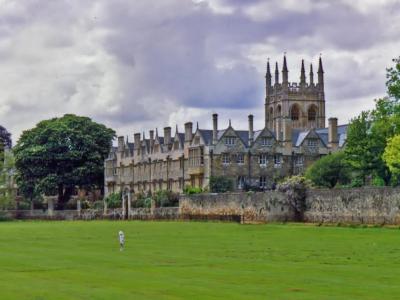
Merton College, established in 1264 by Walter de Merton, who served as the Lord Chancellor to King Henry III and later to King Edward I, has a rich history. Among its original buildings, the Hall and the Chapel were completed in 1297, but today, only the chapel remains. The chapel is a splendid example of early English Gothic architecture, featuring an imposing east window. Subsequent additions to the college include the South Transept in the 14th century and the North Transept and the Tower in the mid-15th century.
After the dissolution of monasteries in 1548, the college acquired Saint Alban Hall from the Littlemore Convent, although it remained a distinct institution until 1881.
During the English Civil War, Merton College served as the Royalist headquarters and hosted members of Charles I's court, as well as foreign dignitaries like Queen Henrietta Maria of France, who stayed in what is now known as the Queen's Room, situated above the arch between the Fellows and the Front Quads.
Over time, the college expanded its holdings along Merton Street, acquiring the former Parish Church of Saint John and three adjacent houses, forming the north range of the Front Quad.
At one point, Merton College owned extensive land, stretching from the current site of Christ Church in the southeast part of the city to the eastern garden. Corpus Christi College now occupies the land at the west end, under a lease from Merton.
Merton College boasts an impressive list of alumni and academics, including four Nobel laureates and the renowned writer J. R. R. Tolkien, who held the position of Merton Professor of English Language and Literature from 1945 to 1959. Known for its academic excellence, Merton College consistently ranks at the top of the Norrington Table and is recognized as one of the wealthiest colleges in Oxford.
After the dissolution of monasteries in 1548, the college acquired Saint Alban Hall from the Littlemore Convent, although it remained a distinct institution until 1881.
During the English Civil War, Merton College served as the Royalist headquarters and hosted members of Charles I's court, as well as foreign dignitaries like Queen Henrietta Maria of France, who stayed in what is now known as the Queen's Room, situated above the arch between the Fellows and the Front Quads.
Over time, the college expanded its holdings along Merton Street, acquiring the former Parish Church of Saint John and three adjacent houses, forming the north range of the Front Quad.
At one point, Merton College owned extensive land, stretching from the current site of Christ Church in the southeast part of the city to the eastern garden. Corpus Christi College now occupies the land at the west end, under a lease from Merton.
Merton College boasts an impressive list of alumni and academics, including four Nobel laureates and the renowned writer J. R. R. Tolkien, who held the position of Merton Professor of English Language and Literature from 1945 to 1959. Known for its academic excellence, Merton College consistently ranks at the top of the Norrington Table and is recognized as one of the wealthiest colleges in Oxford.
3) Christ Church Cathedral (must see)
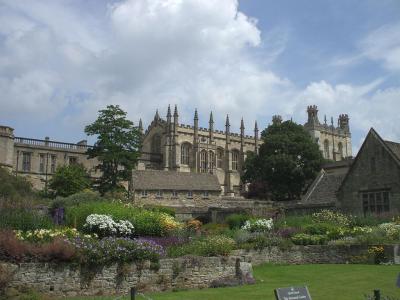
Christ Church Cathedral holds a unique position as both a college chapel and the cathedral of the Diocese of Oxford. Prior to the 20th century, it was also the smallest cathedral in the United Kingdom.
Its historical roots trace back to before the Norman Conquest when a shrine was constructed on the site in memory of Saint Frideswide, a 7th-century priestess who faced persecution and sought to protect her chastity from King Algar, one of the rulers of the Seven Kingdoms of Saxony.
By 1122, the cathedral became a part of Saint Frideswide Priory. However, in 1520, Cardinal Wolsey seized the buildings and lands to establish Cardinal College. To make room for what is now Tom Quad, five bays in the western part of the nave were demolished. Eventually, King Henry VIII took over and had Christ Church College constructed upon the foundation.
The remainder of the cathedral was built in the Perpendicular or English Gothic style. The eastern part of the nave, the choir, and the tower retained the original Norman appearance.
Notable features include the exquisite rose window in the Botanical style with ten petals around the central glass. Other noteworthy windows are the Becket Window from 1320, which survived the Reformation, and the Jonah Window, depicting the City of Nineveh, created in 1632.
The shrine of Saint Frideswide has been restored and stands before a stunning stained glass window with 16 panels recounting her life. An interesting detail is the 16th panel, which includes a water-closet, a clear indication of its Victorian origin, certainly not present in the 8th century.
The Cathedral Shop, where visitors can purchase souvenirs, books, CDs, and other gift items, is located in the 12th-century Chapter House. While perusing the shelves, be sure to admire the vaulted ceiling adorned with 13th-century medallions depicting the Saints.
Its historical roots trace back to before the Norman Conquest when a shrine was constructed on the site in memory of Saint Frideswide, a 7th-century priestess who faced persecution and sought to protect her chastity from King Algar, one of the rulers of the Seven Kingdoms of Saxony.
By 1122, the cathedral became a part of Saint Frideswide Priory. However, in 1520, Cardinal Wolsey seized the buildings and lands to establish Cardinal College. To make room for what is now Tom Quad, five bays in the western part of the nave were demolished. Eventually, King Henry VIII took over and had Christ Church College constructed upon the foundation.
The remainder of the cathedral was built in the Perpendicular or English Gothic style. The eastern part of the nave, the choir, and the tower retained the original Norman appearance.
Notable features include the exquisite rose window in the Botanical style with ten petals around the central glass. Other noteworthy windows are the Becket Window from 1320, which survived the Reformation, and the Jonah Window, depicting the City of Nineveh, created in 1632.
The shrine of Saint Frideswide has been restored and stands before a stunning stained glass window with 16 panels recounting her life. An interesting detail is the 16th panel, which includes a water-closet, a clear indication of its Victorian origin, certainly not present in the 8th century.
The Cathedral Shop, where visitors can purchase souvenirs, books, CDs, and other gift items, is located in the 12th-century Chapter House. While perusing the shelves, be sure to admire the vaulted ceiling adorned with 13th-century medallions depicting the Saints.
4) Christ Church College (must see)
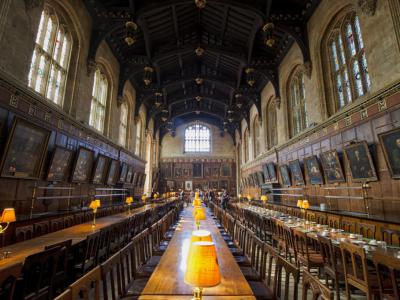
Founded in 1546 by King Henry VIII, Christ Church stands as one of the University of Oxford's largest and most affluent colleges. Noteworthy for its distinctive architecture, the college boasts several significant structures, including Tom Tower, designed by Sir Christopher Wren, Tom Quad, Oxford's largest quadrangle, and the Great Dining Hall, which also served as the gathering place for King Charles I's parliament during the English Civil War.
Christ Church boasts an impressive list of alumni, counting thirteen British prime ministers, more than any other Oxbridge college, as well as King Edward VII, King William II of the Netherlands, seventeen Archbishops, and the renowned author Lewis Carroll, known for penning "Alice in Wonderland."
Christ Church houses one of the UK's most significant private collections of drawings, featuring artworks by renowned artists such as Leonardo da Vinci, Raphael, and Michelangelo. This collection consists of approximately 300 paintings and 2,000 drawings, and a curated selection of these pieces is accessible to the general public at the specially designed Christ Church Picture Gallery. Most of these artworks were generously donated by a former college member, General John Guise (16823-1765), which paved the way for the establishment of the first-ever public art gallery in Britain.
The college's buildings and grounds have featured prominently in literary works such as Evelyn Waugh's "Brideshead Revisited" and in a minor capacity in Lewis Carroll's "Alice's Adventures in Wonderland." More recently, it has served as a backdrop for the film adaptations of J. K. Rowling's "Harry Potter" series and Philip Pullman's novel "Northern Lights" (released in the United States as "The Golden Compass"). These appearances have catapulted Christ Church to its status as the most frequented Oxford college by tourists, attracting nearly half a million visitors each year.
***Harry Potter Walk***
Christ Church Dining Hall
Contrary to belief, no filming actually took place inside the famous Christ Church Dining Hall. Still, it did provide an immense inspiration for Hogwart’s very own Great Hall. Founded in the time of King Henry VII and being alma mater to thirteen British Prime Ministers, it's no wonder that the filmmakers opted to replicate this historical location at their own Warner Bros. studios. Matchingly magnificent, both the Christ Church Dining Hall and its studio copy are worth visiting, even if only to compare, all the same.
Bodley Tower Staircase
Probably one of the most famous filming spots, the grand stone staircase, located inside Bodley Tower at Christ Church College, is a prominent feature in the first two Harry Potter movies. Among the several memorable scenes filmed here are Harry’s first day at Hogwarts; a flashback sequence between Tom Riddle and Dumbledore; and a scene near the end of the first film where Harry is reunited with Ron and Hermione after being released from Hogwarts Infirmary – the one many Potterheads, no doubt, hold dear to their hearts.
Christ Church Cloisters
The Cloisters played a starring role in Harry Potter and the Philosopher’s Stone, as Hogwarts Hallways.
Another notable scene associated with the hallways is that when Harry has just been made seeker for the Gryffindor quidditch team. In it, Hermione tells him that being a seeker is “in his blood,” upon which she goes on to show him a display case containing a quidditch trophy with his father’s name inscription.
Christ Church boasts an impressive list of alumni, counting thirteen British prime ministers, more than any other Oxbridge college, as well as King Edward VII, King William II of the Netherlands, seventeen Archbishops, and the renowned author Lewis Carroll, known for penning "Alice in Wonderland."
Christ Church houses one of the UK's most significant private collections of drawings, featuring artworks by renowned artists such as Leonardo da Vinci, Raphael, and Michelangelo. This collection consists of approximately 300 paintings and 2,000 drawings, and a curated selection of these pieces is accessible to the general public at the specially designed Christ Church Picture Gallery. Most of these artworks were generously donated by a former college member, General John Guise (16823-1765), which paved the way for the establishment of the first-ever public art gallery in Britain.
The college's buildings and grounds have featured prominently in literary works such as Evelyn Waugh's "Brideshead Revisited" and in a minor capacity in Lewis Carroll's "Alice's Adventures in Wonderland." More recently, it has served as a backdrop for the film adaptations of J. K. Rowling's "Harry Potter" series and Philip Pullman's novel "Northern Lights" (released in the United States as "The Golden Compass"). These appearances have catapulted Christ Church to its status as the most frequented Oxford college by tourists, attracting nearly half a million visitors each year.
***Harry Potter Walk***
Christ Church Dining Hall
Contrary to belief, no filming actually took place inside the famous Christ Church Dining Hall. Still, it did provide an immense inspiration for Hogwart’s very own Great Hall. Founded in the time of King Henry VII and being alma mater to thirteen British Prime Ministers, it's no wonder that the filmmakers opted to replicate this historical location at their own Warner Bros. studios. Matchingly magnificent, both the Christ Church Dining Hall and its studio copy are worth visiting, even if only to compare, all the same.
Bodley Tower Staircase
Probably one of the most famous filming spots, the grand stone staircase, located inside Bodley Tower at Christ Church College, is a prominent feature in the first two Harry Potter movies. Among the several memorable scenes filmed here are Harry’s first day at Hogwarts; a flashback sequence between Tom Riddle and Dumbledore; and a scene near the end of the first film where Harry is reunited with Ron and Hermione after being released from Hogwarts Infirmary – the one many Potterheads, no doubt, hold dear to their hearts.
Christ Church Cloisters
The Cloisters played a starring role in Harry Potter and the Philosopher’s Stone, as Hogwarts Hallways.
Another notable scene associated with the hallways is that when Harry has just been made seeker for the Gryffindor quidditch team. In it, Hermione tells him that being a seeker is “in his blood,” upon which she goes on to show him a display case containing a quidditch trophy with his father’s name inscription.
5) Carfax Tower (must see)
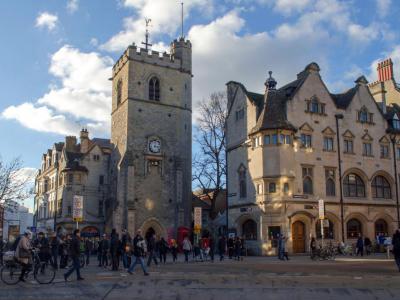
Carfax Tower stands at the junction of four streets – Cornmarket Street to the north, Saint Aldate’s to the south, High Street to the east, and Queen Street to the west – which is probably the exact geographical centre of Oxford.
The tower stands on the north-east corner of the junction and is the only remnant of the 13th century Saint Martin’s Church. From 1122 to 1896, this had been the City Church of Oxford until it was partially demolished to make way for a new road. Further road widening led to the rest of the church being pulled down in 1900.
The tower stands 23 metres high and no other building in the city is allowed to be higher. It has a ring of six bells that were cast in 1676 by Richard Keene. They still ring out the quarter hour, but the two quarter boys that used to strike them are no longer in use. The bells are rung on special occasions by the Oxford Society of Change Ringers.
Behind the tower you will see a solitary tombstone. It is that of William Butler, who was once the mayor of Oxford. He was buried here in 1865, but when the church was demolished, the tombstone was forgotten and, together with the tower, it is now classed as a Grade II listed building.
The tower stands on the north-east corner of the junction and is the only remnant of the 13th century Saint Martin’s Church. From 1122 to 1896, this had been the City Church of Oxford until it was partially demolished to make way for a new road. Further road widening led to the rest of the church being pulled down in 1900.
The tower stands 23 metres high and no other building in the city is allowed to be higher. It has a ring of six bells that were cast in 1676 by Richard Keene. They still ring out the quarter hour, but the two quarter boys that used to strike them are no longer in use. The bells are rung on special occasions by the Oxford Society of Change Ringers.
Behind the tower you will see a solitary tombstone. It is that of William Butler, who was once the mayor of Oxford. He was buried here in 1865, but when the church was demolished, the tombstone was forgotten and, together with the tower, it is now classed as a Grade II listed building.
6) Trinity College (must see)
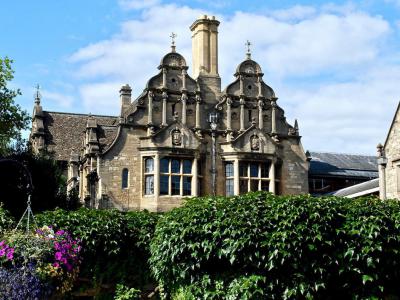
Oxford University had its origins in academic institutions and monastery buildings where theology was the primary subject of study. However, these early establishments did not survive the Reformation period. Trinity College, located on Broad Street, now occupies the site where Durham College Monastery was established back in 1268.
The only remaining part of the original monastery is the east section of Durham Quad, which now houses the college library. In 1555, Sir Thomas Pope purchased the buildings and land with the intent of creating a college. He hoped that future generations would remember him through their prayers since he had no children to carry on his legacy. His final resting place is within the chapel, next to the altar.
The college's West Tower is adorned with four statues representing Astronomy, Geometry, Medicine, and Music. In 1688, a two-story building designed by Sir Christopher Wren was constructed in the Garden Quad to accommodate students. The neoclassical chapel, designed by Henry Aldrich, was added in 1694.
In 1883, the college underwent expansion, with the construction of the Front Quad overseen by Sir Thomas Jackson. In 1928, the Memorial Library was erected to honor the members who had lost their lives during World War I. Further expansion took place in the 1960s when several cottages and 17th-century houses were acquired, and the Cumberbatch Building was built in 1966.
Despite its considerable physical footprint, the college maintains a relatively modest student population of around 400. Initially established as a men's college, it became coeducational in 1979. Trinity College boasts the distinction of having produced three British Prime Ministers: Spencer Compton (1742–1743), William Pitt the Elder (1766–1768), and Frederick North (1770–1782). This places it third in terms of former students who have held the prestigious office, following Christ Church and Balliol College in that regard.
The only remaining part of the original monastery is the east section of Durham Quad, which now houses the college library. In 1555, Sir Thomas Pope purchased the buildings and land with the intent of creating a college. He hoped that future generations would remember him through their prayers since he had no children to carry on his legacy. His final resting place is within the chapel, next to the altar.
The college's West Tower is adorned with four statues representing Astronomy, Geometry, Medicine, and Music. In 1688, a two-story building designed by Sir Christopher Wren was constructed in the Garden Quad to accommodate students. The neoclassical chapel, designed by Henry Aldrich, was added in 1694.
In 1883, the college underwent expansion, with the construction of the Front Quad overseen by Sir Thomas Jackson. In 1928, the Memorial Library was erected to honor the members who had lost their lives during World War I. Further expansion took place in the 1960s when several cottages and 17th-century houses were acquired, and the Cumberbatch Building was built in 1966.
Despite its considerable physical footprint, the college maintains a relatively modest student population of around 400. Initially established as a men's college, it became coeducational in 1979. Trinity College boasts the distinction of having produced three British Prime Ministers: Spencer Compton (1742–1743), William Pitt the Elder (1766–1768), and Frederick North (1770–1782). This places it third in terms of former students who have held the prestigious office, following Christ Church and Balliol College in that regard.
7) Bridge of Sighs (must see)
Unfortunately, if you are not a student of Hertford College, you won’t be able to cross the Bridge of Sighs, but you can certainly admire it from street level and add a photo of it to your collection of Oxford’s marvellous structures.
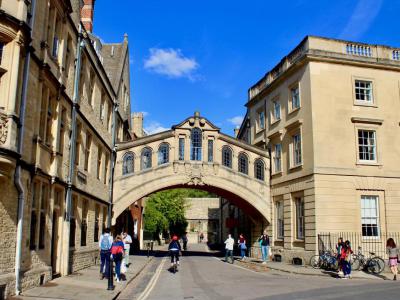
The real name of the bridge is the Hertford Bridge and it was built in 1914 by Sir Thomas Jackson. It took its popular name from the fact that it is supposed to look just like the bridge of the same name in Venice. Actually, it resembles the Rialto Bridge more than anything else, but the Bridge of Sighs sounds more romantic.
The bridge is a fine example of the Quadrature of the Parabola, developed by Archimedes in the 3rd century BC – a rather difficult geometrical concept in that the area of a parabolic segment is 4/3 of a certain inscribed triangle. It all comes down to the triangle (top) of the bridge being supported by the arch (parabola) because they are of the same base length and height.
Leaving the Maths lesson behind, the bridge is covered and glass panelled and links the college’s Old Quad with the New Quad. According to popular legend, the college once closed the bridge to overweight students, forcing them to get some exercise by taking the long route from one building to another.
***Harry Potter Walk***
Conveniently easy to spot behind Oxford’s very own Bridge of Sighs, the ancient (almost 200-year-old) giant Oak Tree, featured during a duel between Harry Potter and Draco Malfoy in Harry Potter and the Goblet of Fire, can be seen in New College Cloisters. And while the cloisters themselves are closed to the public, a photo of the tree can still be snapped from the roadside!
The real name of the bridge is the Hertford Bridge and it was built in 1914 by Sir Thomas Jackson. It took its popular name from the fact that it is supposed to look just like the bridge of the same name in Venice. Actually, it resembles the Rialto Bridge more than anything else, but the Bridge of Sighs sounds more romantic.
The bridge is a fine example of the Quadrature of the Parabola, developed by Archimedes in the 3rd century BC – a rather difficult geometrical concept in that the area of a parabolic segment is 4/3 of a certain inscribed triangle. It all comes down to the triangle (top) of the bridge being supported by the arch (parabola) because they are of the same base length and height.
Leaving the Maths lesson behind, the bridge is covered and glass panelled and links the college’s Old Quad with the New Quad. According to popular legend, the college once closed the bridge to overweight students, forcing them to get some exercise by taking the long route from one building to another.
***Harry Potter Walk***
Conveniently easy to spot behind Oxford’s very own Bridge of Sighs, the ancient (almost 200-year-old) giant Oak Tree, featured during a duel between Harry Potter and Draco Malfoy in Harry Potter and the Goblet of Fire, can be seen in New College Cloisters. And while the cloisters themselves are closed to the public, a photo of the tree can still be snapped from the roadside!
8) University College (must see)
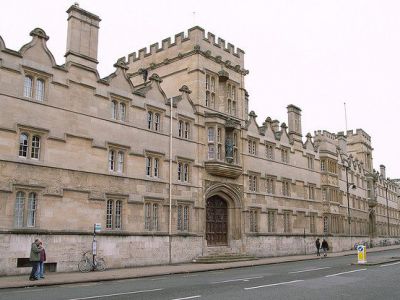
Many of the colleges at Oxford University claim to be the oldest, but in reality, University College holds that distinction. Its main entrance is on the High Street. Legend has it that King Alfred, famous for the burnt cakes incident, founded the college in 872. However, the actual foundations were laid in 1249, with funding provided by William of Durham.
Unfortunately, very few of the medieval buildings from that era exist today. They were replaced in the 17th century by the Main Quad, which was constructed starting in 1634 but not completed until 1676. The Radcliffe Quad was built in 1719, the New Building in 1842, and the Library in 1861.
The college is divided by Logic Lane, a cobbled street, which features a short covered bridge over the entrance on High Street. On the eastern side of the lane, you'll find the students' lodgings, while on the western side are the Library, the Hall, the Chapel, and the two college quads.
University College has strong connections with several influential individuals. Notable alumni include Clement Attlee, who served as the British Prime Minister from 1945 to 1951; Harold Wilson, who was British Prime Minister in two non-consecutive terms (1964-1970 and 1974-1976); Bill Clinton, the 42nd President of the United States (1993-2001); Stephen Hawking, the renowned English theoretical physicist, cosmologist, and author; C. S. Lewis, the British writer and lay theologian best known for "The Chronicles of Narnia"; and Percy Bysshe Shelley, one of the major English Romantic poets, widely recognized as one of the greatest lyric and philosophical poets in the English language.
In 1892, a small domed room was constructed by Basil Chambers to house the Shelley Memorial. The statue of the great poet lying on an Italian beach, commissioned by Lady Shelley and sculpted by Edward Ford, was placed there. At one point, the room was humorously filled with water and goldfish, and the Rector had to install railings around the statue to prevent students from painting Shelley's private parts in vivid colors. Unfortunately, the attempts to remove the paint caused the marble to dissolve.
Unfortunately, very few of the medieval buildings from that era exist today. They were replaced in the 17th century by the Main Quad, which was constructed starting in 1634 but not completed until 1676. The Radcliffe Quad was built in 1719, the New Building in 1842, and the Library in 1861.
The college is divided by Logic Lane, a cobbled street, which features a short covered bridge over the entrance on High Street. On the eastern side of the lane, you'll find the students' lodgings, while on the western side are the Library, the Hall, the Chapel, and the two college quads.
University College has strong connections with several influential individuals. Notable alumni include Clement Attlee, who served as the British Prime Minister from 1945 to 1951; Harold Wilson, who was British Prime Minister in two non-consecutive terms (1964-1970 and 1974-1976); Bill Clinton, the 42nd President of the United States (1993-2001); Stephen Hawking, the renowned English theoretical physicist, cosmologist, and author; C. S. Lewis, the British writer and lay theologian best known for "The Chronicles of Narnia"; and Percy Bysshe Shelley, one of the major English Romantic poets, widely recognized as one of the greatest lyric and philosophical poets in the English language.
In 1892, a small domed room was constructed by Basil Chambers to house the Shelley Memorial. The statue of the great poet lying on an Italian beach, commissioned by Lady Shelley and sculpted by Edward Ford, was placed there. At one point, the room was humorously filled with water and goldfish, and the Rector had to install railings around the statue to prevent students from painting Shelley's private parts in vivid colors. Unfortunately, the attempts to remove the paint caused the marble to dissolve.
