Custom Walk in New Orleans, Louisiana by d_lobel1_ddc44 created on 2025-06-01
Guide Location: USA » New Orleans
Guide Type: Custom Walk
# of Sights: 10
Tour Duration: 3 Hour(s)
Travel Distance: 4.9 Km or 3 Miles
Share Key: HPP2U
Guide Type: Custom Walk
# of Sights: 10
Tour Duration: 3 Hour(s)
Travel Distance: 4.9 Km or 3 Miles
Share Key: HPP2U
How It Works
Please retrieve this walk in the GPSmyCity app. Once done, the app will guide you from one tour stop to the next as if you had a personal tour guide. If you created the walk on this website or come to the page via a link, please follow the instructions below to retrieve the walk in the app.
Retrieve This Walk in App
Step 1. Download the app "GPSmyCity: Walks in 1K+ Cities" on Apple App Store or Google Play Store.



Step 2. In the GPSmyCity app, download(or launch) the guide "New Orleans Map and Walking Tours".
Step 3. Tap the menu button located at upper right corner of the "Walks" screen and select "Retrieve custom walk". Enter the share key: HPP2U
1) Cafe du Monde (must see)
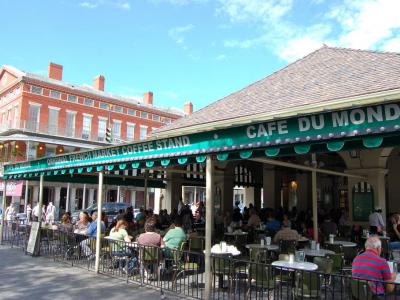
Open around the clock, the open-air Café du Monde (French for "Café of the World" or "the People's Café") holds a special place in the heart of New Orleans. Established in the 1860s, it has gained fame for its uniquely flavored café au lait (coffee with added hot milk) paired with the warm, sugar-dusted beignets. It’s the perfect spot to unwind at a table while enjoying the melodies of street musicians.
Coffee was introduced by the French settlers who began inhabiting the Gulf Coast and the Mississippi River region around 1700. During the American Civil War, due to a coffee shortage, New Orleans Creoles devised a blend of coffee and chicory, imparting a chocolate-like flavor to the café au lait. This version has since become a signature offering at Café du Monde and other New Orleans eateries.
In the 18th century, French settlers from Nova Scotia brought various traditions to Louisiana, including the beloved beignet. Unlike most doughnuts, these are square pieces of dough without a central hole, served with toppings like fruit, jam, maple syrup, or even savory fillings. At Café du Monde, the fried delights are served warm, generously dusted with powdered sugar and come in orders of three.
The café draws a diverse crowd, including late-night revelers, socialites, students, locals, tourists, and people from all corners of the globe, resulting in a lively atmosphere filled with a multitude of accents.
Tips:
Keep in mind that the café operates on a cash-only basis. If you find it too crowded, consider going around to the take-out window in the back and enjoying your treats along the picturesque Mississippi riverfront.
Coffee was introduced by the French settlers who began inhabiting the Gulf Coast and the Mississippi River region around 1700. During the American Civil War, due to a coffee shortage, New Orleans Creoles devised a blend of coffee and chicory, imparting a chocolate-like flavor to the café au lait. This version has since become a signature offering at Café du Monde and other New Orleans eateries.
In the 18th century, French settlers from Nova Scotia brought various traditions to Louisiana, including the beloved beignet. Unlike most doughnuts, these are square pieces of dough without a central hole, served with toppings like fruit, jam, maple syrup, or even savory fillings. At Café du Monde, the fried delights are served warm, generously dusted with powdered sugar and come in orders of three.
The café draws a diverse crowd, including late-night revelers, socialites, students, locals, tourists, and people from all corners of the globe, resulting in a lively atmosphere filled with a multitude of accents.
Tips:
Keep in mind that the café operates on a cash-only basis. If you find it too crowded, consider going around to the take-out window in the back and enjoying your treats along the picturesque Mississippi riverfront.
2) French Market (must see)
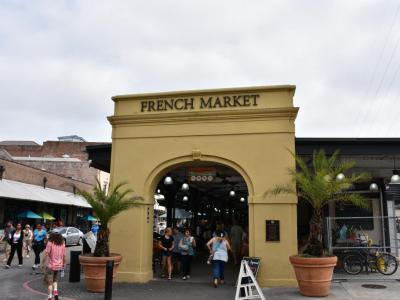
Spanning six blocks along the Mississippi River, the French Market dates back to 1791, making it the oldest public market in the United States. This open-air emporium has evolved from a Native American trading post into a lively multi-purpose venue encompassing food stalls, flea markets, and artisanal boutiques.
The French Market draws visitors with its blend of aromas from Creole eateries, the sounds of street musicians, and the sight of an eclectic mix of local artwork, crafts, and souvenirs. With a history that reflects the city's French and Spanish colonial past and its diverse cultural influences, this place has played a pivotal role in New Orleans' commercial and social life for over two centuries.
Today, it continues to be a place where the local community and tourists alike come to sample New Orleans' unique culinary delights, find a unique gift, and soak in an atmosphere that's as lively as it is historic. From chicory coffee and beignets to fresh produce and seafood, the French Market is a gastronomic paradise reflecting the city's culinary fusion.
The French Market draws visitors with its blend of aromas from Creole eateries, the sounds of street musicians, and the sight of an eclectic mix of local artwork, crafts, and souvenirs. With a history that reflects the city's French and Spanish colonial past and its diverse cultural influences, this place has played a pivotal role in New Orleans' commercial and social life for over two centuries.
Today, it continues to be a place where the local community and tourists alike come to sample New Orleans' unique culinary delights, find a unique gift, and soak in an atmosphere that's as lively as it is historic. From chicory coffee and beignets to fresh produce and seafood, the French Market is a gastronomic paradise reflecting the city's culinary fusion.
3) Frenchmen Street (must see)
The Frenchmen Street entertainment district began to take shape during the 1980s, establishing itself as a destination where locals could indulge in authentic New Orleans music and cuisine, setting it apart from other urban areas in the United States.
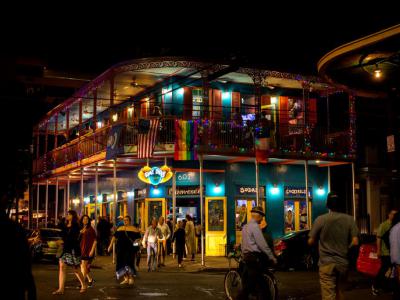
Strolling along Frenchmen Street today, one can't help but be captivated by the unique architecture that defines New Orleans and distinguishes it from other American cities. The street showcases a plethora of Creole cottages, a classic architectural style in New Orleans dating back to the period between 1790 and 1850, as well as Creole townhouses.
The oldest and most renowned section of Frenchmen Street is nestled in the Faubourg Marigny neighborhood, just a short walk downriver from the French Quarter. This three-block stretch is home to some of the city's most beloved live-music venues, including Cafe Negril, Blue Nile, Snug Harbor, the Spotted Cat, and The Maison. In addition to these musical hotspots, the area boasts a vibrant array of restaurants, bars, coffee shops, record and book stores, and various local businesses.
Frenchmen Street gained national recognition in 2010 following the New Orleans Saints' Super Bowl victory when it hosted one of the city's largest and most memorable celebrations in history, cementing its status as a quintessential New Orleans destination.
Strolling along Frenchmen Street today, one can't help but be captivated by the unique architecture that defines New Orleans and distinguishes it from other American cities. The street showcases a plethora of Creole cottages, a classic architectural style in New Orleans dating back to the period between 1790 and 1850, as well as Creole townhouses.
The oldest and most renowned section of Frenchmen Street is nestled in the Faubourg Marigny neighborhood, just a short walk downriver from the French Quarter. This three-block stretch is home to some of the city's most beloved live-music venues, including Cafe Negril, Blue Nile, Snug Harbor, the Spotted Cat, and The Maison. In addition to these musical hotspots, the area boasts a vibrant array of restaurants, bars, coffee shops, record and book stores, and various local businesses.
Frenchmen Street gained national recognition in 2010 following the New Orleans Saints' Super Bowl victory when it hosted one of the city's largest and most memorable celebrations in history, cementing its status as a quintessential New Orleans destination.
4) Lafitte's Blacksmith Shop Bar (must see)
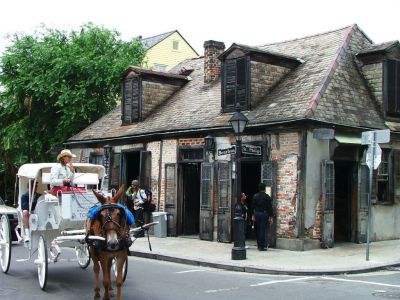
Lafitte's Blacksmith Shop Bar on Bourbon Street is one of the city's most storied landmarks, a tangible piece of history that doubles as a popular watering hole. Touted as one of the oldest surviving structures in New Orleans and reputed to be the oldest continuously operating bar in the United States, this building harks back to the early 18th century. The bar's namesake, Jean Lafitte, was a pirate and privateer who, along with his brother Pierre, purportedly used the location as a cover for their smuggling operations.
Constructed sometime between 1722 and 1732, the building is a rare example of French Colonial "briquette-entre-poteaux" architecture (brick between posts), surviving fires and battles that have reshaped the city over centuries. Its thick-walled, weather-beaten façade and dimly lit interior, with a fireplace and candlelight providing much of the illumination, offer an ambiance that seemingly transports patrons back to the era of pirates and privateers.
Frequented by locals and tourists alike, Lafitte's combines the allure of historical legend with the charm of Old New Orleans. The bar, aside from its drinks and unique atmosphere, is an informal museum of sorts, with its architecture and mystique speaking volumes of the past. It is this blending of lore and architecture, the promise of ghosts, and the glow of flickering lights that make Lafitte's a must-visit destination for anyone looking to experience the essence of the Crescent City's storied past.
Constructed sometime between 1722 and 1732, the building is a rare example of French Colonial "briquette-entre-poteaux" architecture (brick between posts), surviving fires and battles that have reshaped the city over centuries. Its thick-walled, weather-beaten façade and dimly lit interior, with a fireplace and candlelight providing much of the illumination, offer an ambiance that seemingly transports patrons back to the era of pirates and privateers.
Frequented by locals and tourists alike, Lafitte's combines the allure of historical legend with the charm of Old New Orleans. The bar, aside from its drinks and unique atmosphere, is an informal museum of sorts, with its architecture and mystique speaking volumes of the past. It is this blending of lore and architecture, the promise of ghosts, and the glow of flickering lights that make Lafitte's a must-visit destination for anyone looking to experience the essence of the Crescent City's storied past.
5) Preservation Hall (must see)
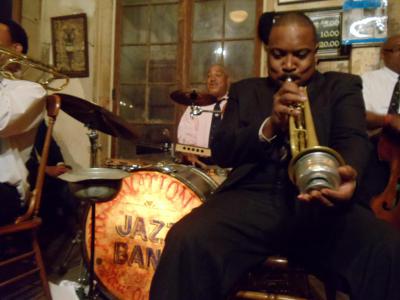
Just a short stroll from the banks of the Mississippi River, nestled in the heart of the renowned French Quarter, the aptly named Preservation Hall is a true cultural landmark. Much of its charm lies in its rustic, intimate, old-school atmosphere: weathered walls with paintings of local musicians, bench seating, a strict no-phone policy, and a commitment to preserving the essence of New Orleans jazz through authentic means, such as eschewing amplifiers and a bar.
The focus here is on keeping New Orleans jazz vibrant and alive, though, in recent years, the house band has expanded its horizons by collaborating on tours and recordings with artists from various genres, including gospel, hip hop, rock, and other inventive blends. The venue features a roster of seasoned musicians, as well as a few younger talents, all delivering outstanding performances.
Seating is limited, often leading many patrons to settle on the floor or stand at the back. While beverages are not served within the hall, you are welcome to bring your own drink in a plastic cup. Despite these limitations, countless music enthusiasts consider an evening at this all-ages venue an essential and quintessential New Orleans experience.
Tip:
To ensure you secure a spot, plan to arrive 45-60 minutes before one of the daily shows at 5, 6, 8, 9, and 10 pm; alternatively, you can opt for a "Big Shot" ticket, which guarantees you a seat and allows you to skip the line. The good news is that this venue stands just around the corner from Pat O'Brien's, where you can enjoy a hurricane cocktail to go while you wait.
The focus here is on keeping New Orleans jazz vibrant and alive, though, in recent years, the house band has expanded its horizons by collaborating on tours and recordings with artists from various genres, including gospel, hip hop, rock, and other inventive blends. The venue features a roster of seasoned musicians, as well as a few younger talents, all delivering outstanding performances.
Seating is limited, often leading many patrons to settle on the floor or stand at the back. While beverages are not served within the hall, you are welcome to bring your own drink in a plastic cup. Despite these limitations, countless music enthusiasts consider an evening at this all-ages venue an essential and quintessential New Orleans experience.
Tip:
To ensure you secure a spot, plan to arrive 45-60 minutes before one of the daily shows at 5, 6, 8, 9, and 10 pm; alternatively, you can opt for a "Big Shot" ticket, which guarantees you a seat and allows you to skip the line. The good news is that this venue stands just around the corner from Pat O'Brien's, where you can enjoy a hurricane cocktail to go while you wait.
6) St. Louis Cemetery No. 1 (must see)
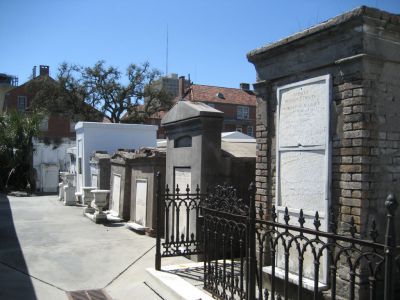
Quite possibly the oldest and most renowned among New Orleans' "cities of the dead", Saint Louis Cemetery Number One was established in 1789, following the devastating Great Fire of 1788, and was located just beyond the city's boundaries at the time. Due to the city's location below sea level and a high water table, the decision was made to bury bodies aboveground, as previous attempts at underground burials had resulted in caskets floating to the surface during floods.
Today, this cemetery houses more than 700 tombs and has been the final resting place for thousands of individuals. It features crypts designed by renowned architects and artists, creating a somewhat eerie labyrinth. Most of these aboveground structures are owned by families and designed to hold multiple sets of remains. While constructed primarily of brick, many of the elaborate tombs are often covered in concrete or stucco. Some of the oldest tombs have succumbed to time, reduced to little more than crumbling ruins and piles of brick dust. One intriguing feature is the segregated Protestant section, situated at the rear of the predominantly Catholic cemetery.
Among the famous residents are civil rights activist Homer Plessy (known for the landmark case Plessy v. Ferguson) and the beloved Voodoo priestess Marie Laveau. Her supposed tomb is a frequent stop on daily tours, although it's worth noting that she is believed to be actually buried in two separate tombs. Both graves bear the iconic XXX symbol, used to invoke Laveau's spirit for favors. Visitors often decorate them with Mardi Gras beads, bananas, flowers, bones, bottles of rum, and signed notes.
To enter the cemetery, tourists (those not related to the deceased) are required to be accompanied by a licensed tour guide, as mandated by the Archdiocese of New Orleans. Several organizations offer guided tours, with one of the most reputable being Save Our Cemeteries. They conduct hour-long excursions, with tours commencing from the lobby of Basin Street Station nearby.
Today, this cemetery houses more than 700 tombs and has been the final resting place for thousands of individuals. It features crypts designed by renowned architects and artists, creating a somewhat eerie labyrinth. Most of these aboveground structures are owned by families and designed to hold multiple sets of remains. While constructed primarily of brick, many of the elaborate tombs are often covered in concrete or stucco. Some of the oldest tombs have succumbed to time, reduced to little more than crumbling ruins and piles of brick dust. One intriguing feature is the segregated Protestant section, situated at the rear of the predominantly Catholic cemetery.
Among the famous residents are civil rights activist Homer Plessy (known for the landmark case Plessy v. Ferguson) and the beloved Voodoo priestess Marie Laveau. Her supposed tomb is a frequent stop on daily tours, although it's worth noting that she is believed to be actually buried in two separate tombs. Both graves bear the iconic XXX symbol, used to invoke Laveau's spirit for favors. Visitors often decorate them with Mardi Gras beads, bananas, flowers, bones, bottles of rum, and signed notes.
To enter the cemetery, tourists (those not related to the deceased) are required to be accompanied by a licensed tour guide, as mandated by the Archdiocese of New Orleans. Several organizations offer guided tours, with one of the most reputable being Save Our Cemeteries. They conduct hour-long excursions, with tours commencing from the lobby of Basin Street Station nearby.
7) Bourbon Street (must see)
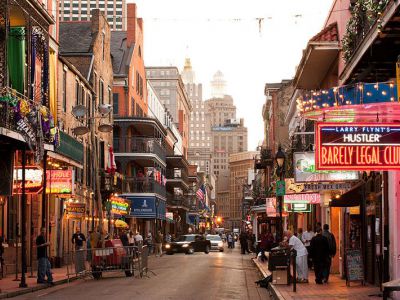
If you're feeling adventurous, set aside your reservations and take a leisurely stroll down the infamous Bourbon Street, known for its vibrant mix of bars, restaurants, music clubs, adult stores, and novelty shops, earning its reputation as the playground of the South. In the aftermath of Hurricane Katrina, the bars of Bourbon Street were among the first businesses in the city to reopen, and they played a crucial role in revitalizing the area. Today, the spirit of unbridled revelry thrives here, with raucous crowds and a lively jazz scene.
However, this street is not just about partying; it also boasts historic sights and iconic venues. Here you will find some of the city's most luxurious spots, including the timeless Royal Sonesta Hotel and the Galatoire's fine-dining institution, where you can savor the best of French Creole cuisine in a festive yet elegant atmosphere (note that jackets are required).
Among the iconic bars on Bourbon Street, Lafitte's Blacksmith Shop on the corner of Saint Philip Street stands out, as does the Old Absinthe House – the birthplace of the famous Absinthe House Frappe. You'll also find the Lafitte in Exile, the oldest gay bar in the United States, where famed American playwrights Tennessee Williams and Truman Capote were regular patrons. For those with a penchant for jazz, head to Fritzel's European Jazz Pub, an almost 200-year-old building that hosts live jazz performances every night of the week.
Why You Should Visit:
During the day, the street offers a pleasant experience with its art shops and food options; however, when night falls, it transforms into a wild and vibrant place. Be prepared for sensory overload, with the bright lights, loud music, and various scents permeating the air. This street has a knack for surprising even the most unflappable visitors.
Tip:
Don't miss the famous hand grenade drink! Also, be mindful not to take pictures of street performers if you don't intend to tip them.
However, this street is not just about partying; it also boasts historic sights and iconic venues. Here you will find some of the city's most luxurious spots, including the timeless Royal Sonesta Hotel and the Galatoire's fine-dining institution, where you can savor the best of French Creole cuisine in a festive yet elegant atmosphere (note that jackets are required).
Among the iconic bars on Bourbon Street, Lafitte's Blacksmith Shop on the corner of Saint Philip Street stands out, as does the Old Absinthe House – the birthplace of the famous Absinthe House Frappe. You'll also find the Lafitte in Exile, the oldest gay bar in the United States, where famed American playwrights Tennessee Williams and Truman Capote were regular patrons. For those with a penchant for jazz, head to Fritzel's European Jazz Pub, an almost 200-year-old building that hosts live jazz performances every night of the week.
Why You Should Visit:
During the day, the street offers a pleasant experience with its art shops and food options; however, when night falls, it transforms into a wild and vibrant place. Be prepared for sensory overload, with the bright lights, loud music, and various scents permeating the air. This street has a knack for surprising even the most unflappable visitors.
Tip:
Don't miss the famous hand grenade drink! Also, be mindful not to take pictures of street performers if you don't intend to tip them.
8) Royal Street (must see)
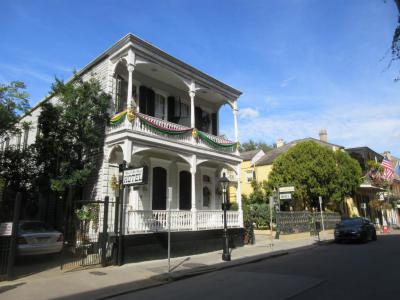
If you're seeking a taste of the finer things in life, look no further than one of New Orleans' most exquisite streets. In stark contrast to the nearby Bourbon Street, this thoroughfare exudes a more sedate culture and refinement, offering a plethora of upscale galleries, boutiques, dining establishments, and charming local touches, such as potted ferns hanging from balcony railings. As one of the city's oldest arteries, it's a place where you can indulge in some fantastic people-watching while having easy access to all the major attractions.
Lining this street, you'll find an array of 18th- and 19th-century buildings, each with their ornate and beautiful designs, showcasing first-class selections of antiques and artworks that rival those exhibited in prominent museums. Make sure to explore the sublime collection at the historic M.S. Rau store at 630 Royal, which welcomes casual observers. Other notable stores specialize in jewelry and decorative carnival masks, ranging from simple feather-and-ceramic styles to handcrafted, locally-made varieties with heftier price tags.
Royal Street is so unique that you may find it challenging to decide where to begin and where to end your exploration. Whether you choose to visit the Gallier House, explore the Historic New Orleans Collection, or dine at restaurants adorned with scenic gardens, ornate fountains, and beautiful courtyards, there's an abundance to see and do here.
Why You Should Visit:
A refreshing escape from NOLA's bustling bar and party scene, as the vibe here is more family-friendly, and the shops have many souvenirs appropriate for family and friends, particularly as you approach the highly trafficked areas near the river. Several blocks are closed to vehicles between 11 am to 4 pm, creating a pedestrian-friendly space where colorful street performers entertain and engage with visitors in exchange for tips.
Lining this street, you'll find an array of 18th- and 19th-century buildings, each with their ornate and beautiful designs, showcasing first-class selections of antiques and artworks that rival those exhibited in prominent museums. Make sure to explore the sublime collection at the historic M.S. Rau store at 630 Royal, which welcomes casual observers. Other notable stores specialize in jewelry and decorative carnival masks, ranging from simple feather-and-ceramic styles to handcrafted, locally-made varieties with heftier price tags.
Royal Street is so unique that you may find it challenging to decide where to begin and where to end your exploration. Whether you choose to visit the Gallier House, explore the Historic New Orleans Collection, or dine at restaurants adorned with scenic gardens, ornate fountains, and beautiful courtyards, there's an abundance to see and do here.
Why You Should Visit:
A refreshing escape from NOLA's bustling bar and party scene, as the vibe here is more family-friendly, and the shops have many souvenirs appropriate for family and friends, particularly as you approach the highly trafficked areas near the river. Several blocks are closed to vehicles between 11 am to 4 pm, creating a pedestrian-friendly space where colorful street performers entertain and engage with visitors in exchange for tips.
9) St. Louis Cathedral (must see)
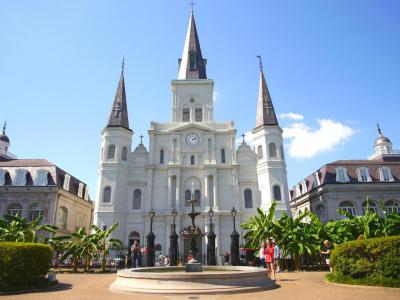
Saint Louis Cathedral's triple spires are instantly recognizable to most tourists as the main symbol of the French Quarter. Many have taken photos of the gleaming white facade set against a clear blue sky from across the picturesque Jackson Square; however, relatively few have ventured inside to witness the glorious mural and statuary, transporting visitors nearly 300 years back in time to the cathedral's founding. Along the first floor, stained glass windows depict the life of King Louis IX, the French monarch who led two crusades.
Saint Louis proudly holds the title of the oldest continuously active Roman Catholic Cathedral in the United States. The existing structure, which replaced two previous buildings destroyed by fires, dates back to 1794, though it underwent remodeling and expansion in 1851. The influences of both Spanish and French cultures are readily apparent in both the artwork and the flags displayed near the chandeliers in the main aisle of the sanctuary.
Notably, Pope John Paul II conducted a prayer service for clergy here during his visit to New Orleans in 1987; in commemoration of the event, the nearby pedestrian mall was renamed in his honor. Of particular interest is his portrait in a Jackson Square setting, displayed on the cathedral's inner sidewall.
Visitors can often enjoy free tours conducted by docents, or they can opt for a self-guided tour using brochures when there are no church events taking place. A fine pipe organ is frequently played for the delight of guests, and there is also a small gift shop to explore.
Tip:
Take note of the sloping floor, a clever architectural design that somehow manages to keep the building upright even as the ground beneath it continues to sink.
Saint Louis proudly holds the title of the oldest continuously active Roman Catholic Cathedral in the United States. The existing structure, which replaced two previous buildings destroyed by fires, dates back to 1794, though it underwent remodeling and expansion in 1851. The influences of both Spanish and French cultures are readily apparent in both the artwork and the flags displayed near the chandeliers in the main aisle of the sanctuary.
Notably, Pope John Paul II conducted a prayer service for clergy here during his visit to New Orleans in 1987; in commemoration of the event, the nearby pedestrian mall was renamed in his honor. Of particular interest is his portrait in a Jackson Square setting, displayed on the cathedral's inner sidewall.
Visitors can often enjoy free tours conducted by docents, or they can opt for a self-guided tour using brochures when there are no church events taking place. A fine pipe organ is frequently played for the delight of guests, and there is also a small gift shop to explore.
Tip:
Take note of the sloping floor, a clever architectural design that somehow manages to keep the building upright even as the ground beneath it continues to sink.
10) Jackson Square (must see)
Due to its close proximity to the Mississippi River, the Saint Louis Cathedral, and the Cabildo, Jackson Square has always been and remains a well-liked gathering place at the heart of the French Quarter. Named after Andrew Jackson, hero of the Battle of New Orleans (who went on to become the 7th US president), it has been a hubbub of activity since colonial times, when the militia conducted drills, vendors peddled their goods at the open-air market, and public executions were carried out.
Modeled after the famous 17th-century Place des Vosges in Paris, the square has been transformed into a beautifully landscaped park with neat lawns and flowerbeds. Despite the constant flow of tourists taking photos, school groups, and waitstaff on their breaks, it somehow maintains a sense of tranquility. During the day, numerous artists display their paintings on the park's fence and set up outdoor studios where they create artworks or offer to sketch portraits of passersby. Musicians, mimes, tarot card readers, and magicians entertain on the paved pedestrian mall, many of them performing both day and night.
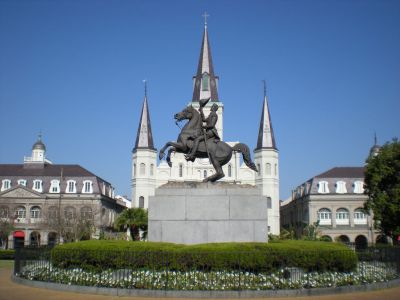
The view of the square is quite iconic, with an equestrian statue of Andrew Jackson at its center and the beautifully designed Saint Louis Cathedral as a backdrop, while the Cabildo and Presbytère, two Spanish colonial structures, flank the church. The elegant brick buildings on either side of the square are known as the Pontalba Buildings. All in all, an excellent spot for capturing memorable photos, enjoying a respite on the benches, and taking it all in. It's amazing how much of New Orleans can be experienced from just this small location.
Modeled after the famous 17th-century Place des Vosges in Paris, the square has been transformed into a beautifully landscaped park with neat lawns and flowerbeds. Despite the constant flow of tourists taking photos, school groups, and waitstaff on their breaks, it somehow maintains a sense of tranquility. During the day, numerous artists display their paintings on the park's fence and set up outdoor studios where they create artworks or offer to sketch portraits of passersby. Musicians, mimes, tarot card readers, and magicians entertain on the paved pedestrian mall, many of them performing both day and night.
The view of the square is quite iconic, with an equestrian statue of Andrew Jackson at its center and the beautifully designed Saint Louis Cathedral as a backdrop, while the Cabildo and Presbytère, two Spanish colonial structures, flank the church. The elegant brick buildings on either side of the square are known as the Pontalba Buildings. All in all, an excellent spot for capturing memorable photos, enjoying a respite on the benches, and taking it all in. It's amazing how much of New Orleans can be experienced from just this small location.
