Custom Walk in Atlanta, Georgia by fcasey1001_5ecda created on 2025-06-02
Guide Location: USA » Atlanta
Guide Type: Custom Walk
# of Sights: 11
Tour Duration: 3 Hour(s)
Travel Distance: 6.8 Km or 4.2 Miles
Share Key: BDP5B
Guide Type: Custom Walk
# of Sights: 11
Tour Duration: 3 Hour(s)
Travel Distance: 6.8 Km or 4.2 Miles
Share Key: BDP5B
How It Works
Please retrieve this walk in the GPSmyCity app. Once done, the app will guide you from one tour stop to the next as if you had a personal tour guide. If you created the walk on this website or come to the page via a link, please follow the instructions below to retrieve the walk in the app.
Retrieve This Walk in App
Step 1. Download the app "GPSmyCity: Walks in 1K+ Cities" on Apple App Store or Google Play Store.



Step 2. In the GPSmyCity app, download(or launch) the guide "Atlanta Map and Walking Tours".
Step 3. Tap the menu button located at upper right corner of the "Walks" screen and select "Retrieve custom walk". Enter the share key: BDP5B
1) Martin Luther King, Jr. National Historic Site (must see)
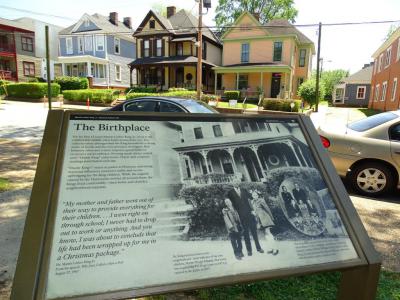
Dedicated to preserving and interpreting the legacy of Dr. Martin Luther King Jr., one of the most influential civil rights leaders in American history, this national historic site is located in the Sweet Auburn neighborhood, where Dr. King was born and raised, and features a variety of exhibits, memorials, and historic landmarks.
Visitors can tour Dr. King's birth home, which has been restored to its original condition and is furnished with period pieces to reflect the time when Dr. King lived there. The site also includes the historic Ebenezer Baptist Church, where Dr. King and his father served as pastors, and where many of his most famous speeches were delivered. The church has been restored to its 1960s appearance, and visitors can attend Sunday services or take guided tours.
The Visitor Center features a museum with a variety of interactive exhibits, artifacts, and multimedia presentations that provide an in-depth look at Dr. King's life and work. Exhibits cover his childhood, education, activism, and leadership in the civil rights movement. There are also exhibits on the history of African Americans in the United States and the struggle for civil rights.
The site includes several other historic landmarks, including Dr. King's grave and tomb, the International Civil Rights Walk of Fame, and the King Center for Nonviolent Social Change, which was founded by Dr. King's wife, Coretta Scott King. The King Center includes a library, archives, and museum, as well as the tomb of Dr. King and his wife.
Why You Should Visit:
To gain a deeper understanding of Dr. King's life, legacy, and contributions to American history.
Tip:
If you want to tour MLK's birth home, arrive early (9 am/11am) to get a ticket at the visitor center.
All of the historical displays and programming are free of charge, but you can spend money in the various gifts shops.
Visitors can tour Dr. King's birth home, which has been restored to its original condition and is furnished with period pieces to reflect the time when Dr. King lived there. The site also includes the historic Ebenezer Baptist Church, where Dr. King and his father served as pastors, and where many of his most famous speeches were delivered. The church has been restored to its 1960s appearance, and visitors can attend Sunday services or take guided tours.
The Visitor Center features a museum with a variety of interactive exhibits, artifacts, and multimedia presentations that provide an in-depth look at Dr. King's life and work. Exhibits cover his childhood, education, activism, and leadership in the civil rights movement. There are also exhibits on the history of African Americans in the United States and the struggle for civil rights.
The site includes several other historic landmarks, including Dr. King's grave and tomb, the International Civil Rights Walk of Fame, and the King Center for Nonviolent Social Change, which was founded by Dr. King's wife, Coretta Scott King. The King Center includes a library, archives, and museum, as well as the tomb of Dr. King and his wife.
Why You Should Visit:
To gain a deeper understanding of Dr. King's life, legacy, and contributions to American history.
Tip:
If you want to tour MLK's birth home, arrive early (9 am/11am) to get a ticket at the visitor center.
All of the historical displays and programming are free of charge, but you can spend money in the various gifts shops.
2) Flatiron Building
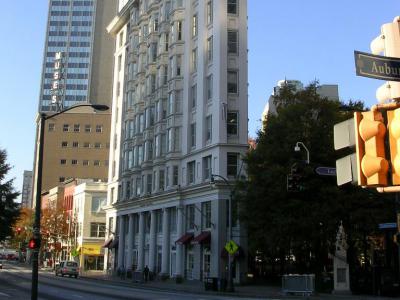
Built in 1897, Atlanta's Flatiron Building is one of the oldest buildings in the city and is known for its distinctive triangular shape that resembles the famous Flatiron Building in New York City. The building's design was influenced by the Chicago School of Architecture, with a steel frame and terra cotta cladding.
Originally named the English-American Building, the Flatiron Building has had several uses over the years, including as a hotel, office building, and currently as a mixed-use space that includes offices, retail stores, and restaurants. The building was added to the National Register of Historic Places in 1983.
Today, the Flatiron Building is a popular attraction for visitors to Atlanta, with its unique architecture and prime location at the intersection of Peachtree Street and Broad Street. The building's exterior has been restored to its original condition, with the distinctive terra cotta tiles, arched windows, and ornate details that make it a standout feature of the downtown skyline.
Visitors can also explore the building's interior, which features a beautiful marble staircase and vintage elevator. The Flatiron Building is also home to several popular restaurants, including a rooftop bar that offers stunning views of the city.
Overall, the Flatiron Building is a must-see for architecture enthusiasts and anyone interested in exploring the history and culture of Atlanta.
Originally named the English-American Building, the Flatiron Building has had several uses over the years, including as a hotel, office building, and currently as a mixed-use space that includes offices, retail stores, and restaurants. The building was added to the National Register of Historic Places in 1983.
Today, the Flatiron Building is a popular attraction for visitors to Atlanta, with its unique architecture and prime location at the intersection of Peachtree Street and Broad Street. The building's exterior has been restored to its original condition, with the distinctive terra cotta tiles, arched windows, and ornate details that make it a standout feature of the downtown skyline.
Visitors can also explore the building's interior, which features a beautiful marble staircase and vintage elevator. The Flatiron Building is also home to several popular restaurants, including a rooftop bar that offers stunning views of the city.
Overall, the Flatiron Building is a must-see for architecture enthusiasts and anyone interested in exploring the history and culture of Atlanta.

3) Centennial Olympic Park (must see)
Built by the Atlanta Committee for the Olympic Games (ACOG) as part of the infrastructure improvements for the Centennial 1996 Summer Olympics, this park plays host to millions of visitors a year as well as several events, including a summer popular music concert series (Wednesday WindDown) and an annual Independence Day concert and fireworks display. It covers 21 acres (85,000 sq m) and can be divided into The Great Lawn, Centennial Plaza, and the Visitor Center.
A key feature is the interactive Fountain of Rings which features computer-controlled lights and 251 jets of water synchronized with music played from speakers. An important formal architectural landmark that is also a fun and playful space, the computer-controlled fountain concept has since been replicated in other urban designs such as Toronto's Dundas Square and in commercial uses such as the Bellagio Fountains at the Bellagio Hotel & Casino in Las Vegas, Nevada.
Apart from the light towers reminiscent of classical Greek marker columns, the fountain area is surrounded by flags representing the host countries of each Summer Olympics preceding the 1996 games. Scattered throughout are also several pieces of sculpture, including a statue of Pierre de Coubertin, father of the modern Olympic movement.
The park has shows at the fountain four times daily (12:30/3:30/6:30/9pm). In 2013, SkyView Atlanta, a 200-foot (61-m) Ferris wheel with 42 air-conditioned cars and great views of the park and surroundings, debuted across the street.
Why You Should Visit:
Relaxing environment, wide range of outdoor activities, clean restrooms, nice atmosphere.
Visitors can enjoy picnics, play frisbee or other sports, or simply relax in the sun.
City views from the main lawn and nice shade by the waterfalls and rocks.
The fountains are great fun for kids and a favorite backdrop for photographers.
Tip:
If adventurous wear your swimming suit and cool off in the fountains. Your visit should otherwise start at the Visitor Information Center (pick up a walking tour map, or get the online version for your phone).
A key feature is the interactive Fountain of Rings which features computer-controlled lights and 251 jets of water synchronized with music played from speakers. An important formal architectural landmark that is also a fun and playful space, the computer-controlled fountain concept has since been replicated in other urban designs such as Toronto's Dundas Square and in commercial uses such as the Bellagio Fountains at the Bellagio Hotel & Casino in Las Vegas, Nevada.
Apart from the light towers reminiscent of classical Greek marker columns, the fountain area is surrounded by flags representing the host countries of each Summer Olympics preceding the 1996 games. Scattered throughout are also several pieces of sculpture, including a statue of Pierre de Coubertin, father of the modern Olympic movement.
The park has shows at the fountain four times daily (12:30/3:30/6:30/9pm). In 2013, SkyView Atlanta, a 200-foot (61-m) Ferris wheel with 42 air-conditioned cars and great views of the park and surroundings, debuted across the street.
Why You Should Visit:
Relaxing environment, wide range of outdoor activities, clean restrooms, nice atmosphere.
Visitors can enjoy picnics, play frisbee or other sports, or simply relax in the sun.
City views from the main lawn and nice shade by the waterfalls and rocks.
The fountains are great fun for kids and a favorite backdrop for photographers.
Tip:
If adventurous wear your swimming suit and cool off in the fountains. Your visit should otherwise start at the Visitor Information Center (pick up a walking tour map, or get the online version for your phone).
4) SkyView Ferris Atlanta
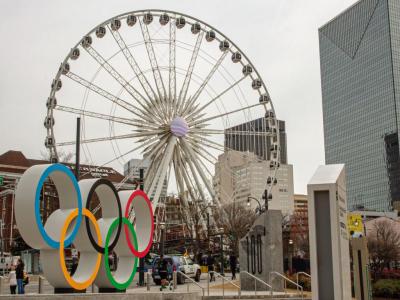
If you want to capture the essence of Atlanta in one go, look no further than here! SkyView Atlanta, a “one-and-done” destination, will provide an thrilling panoramic view of the city and the surrounding metropolitan area, offering a fresh perspective – atop a 200-foot-tall Ferris wheel – which is especially valuable if you are not afforded access to the city's towering structures.
Situated almost 20 stories high above Centennial Olympic Park and surrounded by other local attractions (including the Georgia Aquarium, the Tabernacle, or the World of Coca-Cola), this wheel boasts of 42 lavish, climate-controlled gondolas, with each able to accommodate up to 6 people. For those seeking an elevated, "private" experience, one can pre-book a VIP gondola, providing all the frills including Ferrari-style seats, tinted windows, clear glass floor, and a longer flight time. The wait time and ride duration are reasonable, and in addition to the breathtaking view, this attraction is great for families, couples, and cost-effective – unless you have a fear of heights.
Moreover, do not miss the light show at night! Check for Groupon and other local offers before purchasing on-site tickets to save on the cost. This attraction is the perfect complement to your downtown adventure, providing a fun experience for all ages.
Situated almost 20 stories high above Centennial Olympic Park and surrounded by other local attractions (including the Georgia Aquarium, the Tabernacle, or the World of Coca-Cola), this wheel boasts of 42 lavish, climate-controlled gondolas, with each able to accommodate up to 6 people. For those seeking an elevated, "private" experience, one can pre-book a VIP gondola, providing all the frills including Ferrari-style seats, tinted windows, clear glass floor, and a longer flight time. The wait time and ride duration are reasonable, and in addition to the breathtaking view, this attraction is great for families, couples, and cost-effective – unless you have a fear of heights.
Moreover, do not miss the light show at night! Check for Groupon and other local offers before purchasing on-site tickets to save on the cost. This attraction is the perfect complement to your downtown adventure, providing a fun experience for all ages.
5) Healey Building and Fairlie–Poplar Historic District
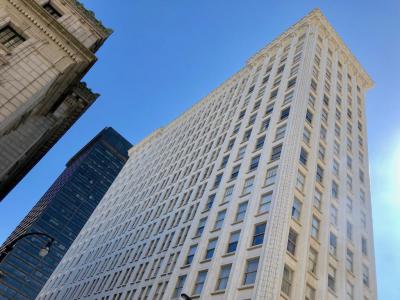
Often dubbed "The Queen of Atlanta", the Healey Building in the Fairlie–Poplar District was the last major skyscraper erected in the Capital of the South during the pre-WWI construction boom. On August 8, 1977, it was listed on the National Register of Historic Places, and since 1987 and has enjoyed local landmark status as well. 2001 saw the upper floors converted into condominiums, while the lower floors continue to be the home of galleries, shops, and restaurants. Anyone wanting to see a great example of adaptive re-use and rehabilitation of a landmark will enjoy a visit.
Part of downtown Atlanta's central business district, the Fairlie–Poplar Historic District is named for the two streets that cross at its center: northeast-only Fairlie and southeast-only Poplar. With smaller city blocks than the rest of the city (about half by half), and streets running at a 40° diagonal, Fairlie–Poplar contains many commercial and office buildings from the late 19th and early 20th centuries, including local interpretations of prevailing national architectural styles: Chicago, Renaissance Revival, Neoclassical, Commercial, Art Deco, Georgian Revival, and Victorian.
The district's buildings also represent the shift in building technology from load-bearing masonry and timber walls to steel and concrete framing.
Overall, the Poplar is a beautiful and unique area to explore in Atlanta, offering a glimpse into the city's rich history and architectural heritage.
Part of downtown Atlanta's central business district, the Fairlie–Poplar Historic District is named for the two streets that cross at its center: northeast-only Fairlie and southeast-only Poplar. With smaller city blocks than the rest of the city (about half by half), and streets running at a 40° diagonal, Fairlie–Poplar contains many commercial and office buildings from the late 19th and early 20th centuries, including local interpretations of prevailing national architectural styles: Chicago, Renaissance Revival, Neoclassical, Commercial, Art Deco, Georgian Revival, and Victorian.
The district's buildings also represent the shift in building technology from load-bearing masonry and timber walls to steel and concrete framing.
Overall, the Poplar is a beautiful and unique area to explore in Atlanta, offering a glimpse into the city's rich history and architectural heritage.
6) Central Presbyterian Church
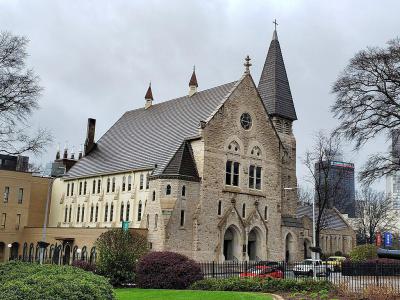
The Central Presbyterian Church dates back to 1885, when it was founded in Atlanta. Its tumultuous history includes a difficult separation from the First Presbyterian Church of Atlanta in 1858, occupation by Union forces in 1864, and trials of church members for offenses such as allowing dancing at a teenager's Christmas party during the 1880s.
Following the "reign of terror" against "errant members", followed by a period of healing, the church began to emphasize social justice. During the 1930s, it became known as "the church that stayed", as other churches abandoned central Atlanta for the suburbs. Following the Rev. Dr. Martin Luther King's assassination in 1968, the church focused on building bridges between white institutions and the African-American community, while providing a safe haven for civil rights activists and hosting numerous meetings/events related to the movement.
The church has undergone several renovations and updates throughout the years, including the installation of a new organ in 1929 and the addition of a chapel and educational building in the 1950s.
An excellent example of Gothic Revival architecture, the building features many elements of this style, including pointed arches, ornate carvings, and stained glass windows. Made of granite and limestone, it has a grand and imposing appearance. The facade features two towers, each with a distinctive spire. The interior is just as impressive, with a soaring nave and vaulted ceiling. The stained glass windows are particularly noteworthy, with intricate designs and vibrant colors that create a beautiful interplay of light and shadow.
Overall, the Central Presbyterian Church is a must-visit for anyone interested in the history of religious architecture in the United States.
Following the "reign of terror" against "errant members", followed by a period of healing, the church began to emphasize social justice. During the 1930s, it became known as "the church that stayed", as other churches abandoned central Atlanta for the suburbs. Following the Rev. Dr. Martin Luther King's assassination in 1968, the church focused on building bridges between white institutions and the African-American community, while providing a safe haven for civil rights activists and hosting numerous meetings/events related to the movement.
The church has undergone several renovations and updates throughout the years, including the installation of a new organ in 1929 and the addition of a chapel and educational building in the 1950s.
An excellent example of Gothic Revival architecture, the building features many elements of this style, including pointed arches, ornate carvings, and stained glass windows. Made of granite and limestone, it has a grand and imposing appearance. The facade features two towers, each with a distinctive spire. The interior is just as impressive, with a soaring nave and vaulted ceiling. The stained glass windows are particularly noteworthy, with intricate designs and vibrant colors that create a beautiful interplay of light and shadow.
Overall, the Central Presbyterian Church is a must-visit for anyone interested in the history of religious architecture in the United States.
7) Georgia State Capitol
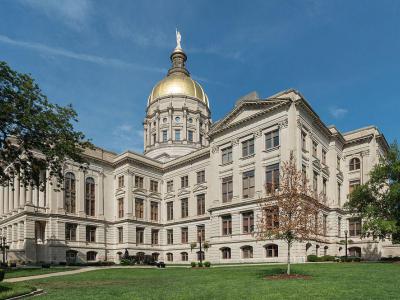
An architectural and historical gem in the heart of Downtown Atlanta, Georgia's State Capitol stands out proudly with its gold-plated dome capped by a statue of Miss Freedom, while the equally impressive, regal-looking interior has marble floors, grand staircases and pillars that exude a sense of government power. On the second floor, you can find the offices of the governor, lieutenant governor, and secretary of state, while the third floor houses the chambers for the General Assembly. The fourth floor is home to visitors' galleries overlooking the legislative chambers and a free museum that showcases Georgia's history, including nature, people, government, state politics, and the building itself.
During the legislative session from January through April, the State Capitol becomes a bustling hub of activity, with crowds of lobbyists gathered 'around the rope lines' leading into the House and Senate cloakrooms. If your schedule allows, be sure to visit the galleries to observe the impressive legislative chambers, whether they are in session or not.
Why You Should Visit:
Great place for those with an interest in Georgia history, politics, or buildings with golden domes.
Surrounded by lushly landscaped grounds with large hardwoods that are home to several varieties of hawks.
Tip:
Start on the fourth floor, where the museum is, and work your way down to the main level.
Take a photo ID or copy of passport, as you need it for entrance.
During the legislative session from January through April, the State Capitol becomes a bustling hub of activity, with crowds of lobbyists gathered 'around the rope lines' leading into the House and Senate cloakrooms. If your schedule allows, be sure to visit the galleries to observe the impressive legislative chambers, whether they are in session or not.
Why You Should Visit:
Great place for those with an interest in Georgia history, politics, or buildings with golden domes.
Surrounded by lushly landscaped grounds with large hardwoods that are home to several varieties of hawks.
Tip:
Start on the fourth floor, where the museum is, and work your way down to the main level.
Take a photo ID or copy of passport, as you need it for entrance.
8) Historic Oakland Cemetery
Nestled in the vibrant heart of Atlanta, Georgia, lies Historic Oakland Cemetery-a captivating oasis that offers a serene escape from the bustling cityscape. Established in 1850, Oakland Cemetery spans across 48 acres and holds the stories of more than 70,000 souls. Far from being just a resting place for the departed, this beautiful landmark intertwines the past with the present, allowing visitors to explore the rich history of Atlanta and the state of Georgia.
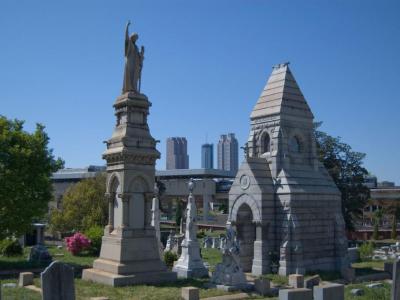
A visit to Historic Oakland Cemetery is akin to walking through an outdoor museum, where art, architecture, and nature blend harmoniously. As one of the city's oldest public parks, Oakland Cemetery stands out with its collection of Victorian-style sculptures and mausoleums. Winding paths invite visitors to wander among a stunning array of magnolia trees, blooming azaleas, and ancient oaks.
Oakland Cemetery is the eternal home of many notable individuals, including former mayors, governors, and Civil War soldiers. It also commemorates the lives of famous Atlanta citizens such as author Margaret Mitchell, known for her timeless novel "Gone with the Wind," and golfer Bobby Jones. These stories, and many more, paint a vivid picture of the city's cultural heritage and societal evolution.
A stroll through Historic Oakland Cemetery is a journey through Atlanta's past-a chance to connect with its rich history, marvel at its architectural beauty, and pay tribute to the lives of those who helped shape the city. As both a solemn resting place and a dynamic cultural attraction, Oakland Cemetery is a must-visit destination for those seeking to experience the multifaceted spirit of Atlanta, Georgia.
Why You Should Visit:
One of the most interesting places to see in Atlanta, full of history, beauty, secrets and stories across its many sections.
Tours are inexpensive and led by intelligent guides who engage people in conversation, and provide facts about the notable Georgians buried here, including civil rights leaders, governors, and mayors.
The space itself is massive with many well-preserved and ornate Victorian-era headstones, monuments, and mausoleums, as well as numerous walking trails and stately trees that cast plenty of shade throughout.
Tips:
Stop by the Visitor Center when you first arrive to get a few bottles of water and to find out about the guided and/or audio tour if you're so inclined.
The 'Capturing the Spirit of Oakland' Halloween tours occur over two weekends near the end of October and are sold out quickly each year.
A visit to Historic Oakland Cemetery is akin to walking through an outdoor museum, where art, architecture, and nature blend harmoniously. As one of the city's oldest public parks, Oakland Cemetery stands out with its collection of Victorian-style sculptures and mausoleums. Winding paths invite visitors to wander among a stunning array of magnolia trees, blooming azaleas, and ancient oaks.
Oakland Cemetery is the eternal home of many notable individuals, including former mayors, governors, and Civil War soldiers. It also commemorates the lives of famous Atlanta citizens such as author Margaret Mitchell, known for her timeless novel "Gone with the Wind," and golfer Bobby Jones. These stories, and many more, paint a vivid picture of the city's cultural heritage and societal evolution.
A stroll through Historic Oakland Cemetery is a journey through Atlanta's past-a chance to connect with its rich history, marvel at its architectural beauty, and pay tribute to the lives of those who helped shape the city. As both a solemn resting place and a dynamic cultural attraction, Oakland Cemetery is a must-visit destination for those seeking to experience the multifaceted spirit of Atlanta, Georgia.
Why You Should Visit:
One of the most interesting places to see in Atlanta, full of history, beauty, secrets and stories across its many sections.
Tours are inexpensive and led by intelligent guides who engage people in conversation, and provide facts about the notable Georgians buried here, including civil rights leaders, governors, and mayors.
The space itself is massive with many well-preserved and ornate Victorian-era headstones, monuments, and mausoleums, as well as numerous walking trails and stately trees that cast plenty of shade throughout.
Tips:
Stop by the Visitor Center when you first arrive to get a few bottles of water and to find out about the guided and/or audio tour if you're so inclined.
The 'Capturing the Spirit of Oakland' Halloween tours occur over two weekends near the end of October and are sold out quickly each year.
9) Birth Home of Martin Luther King, Jr.
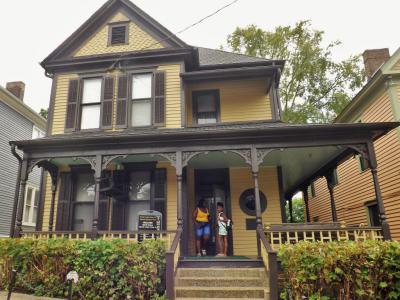
Stoked in history and nostalgia, this Queen Anne–style house in the Sweet Auburn Historic District is a treasure and a delicate piece of history to visit. Built in 1895, it was bought 14 years later by King's maternal grandparents for $3,500. In 1926, when King's father married Alberta Williams, the couple – a Baptist minister and elementary-school music teacher – moved into the house, where King Jr. was born in 1929 (he lived here through the age of 12 before moving with his family a few blocks away).
Free half-hour guided tours are given on a continual basis, daily from 9am to 5pm, but to get tickets you will first have to book on the day at the National Park Service Visitor Center, at 450 Auburn Ave. On weekends, especially, arrive early as demand for tickets often exceeds supply.
Led by park rangers, the tours give an up close look at how MLK Jr. was raised, giving context to his work and the time he lived in. The first level includes the front porch, parlor, study, dining room, kitchen, laundry, bedroom and a bathroom, while the second level includes four bedrooms and a bathroom. The furnishings are all originals or period reproductions, and some personal items belonging to the family are on display. All in all, a must-see if you're in the area!
Free half-hour guided tours are given on a continual basis, daily from 9am to 5pm, but to get tickets you will first have to book on the day at the National Park Service Visitor Center, at 450 Auburn Ave. On weekends, especially, arrive early as demand for tickets often exceeds supply.
Led by park rangers, the tours give an up close look at how MLK Jr. was raised, giving context to his work and the time he lived in. The first level includes the front porch, parlor, study, dining room, kitchen, laundry, bedroom and a bathroom, while the second level includes four bedrooms and a bathroom. The furnishings are all originals or period reproductions, and some personal items belonging to the family are on display. All in all, a must-see if you're in the area!
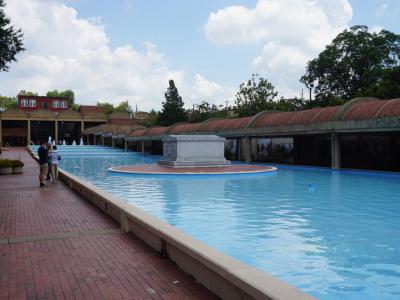
10) Freedom Hall
Located within the Martin Luther King Jr. National Historical Park in Atlanta, the Freedom Hall served as the original headquarters of the Southern Christian Leadership Conference (SCLC), the organization that Dr. Martin Luther King Jr. co-founded in 1957.
Today, Freedom Hall serves as an exhibition space for visitors to the King Center. The exhibits include photographs, artifacts, and documents related to the Civil Rights Movement and Dr. King's life and legacy. Visitors can view exhibits such as "Courage to Lead," which explores the leadership of Dr. King and other Civil Rights leaders, and "The Montgomery Story," which tells the story of the Montgomery bus boycott.
One of the notable features of Freedom Hall is the mural on the building's exterior, titled "Behold." The mural depicts a group of Civil Rights leaders, including Dr. King, gathered around a table. Visitors can also view the "International Civil Rights Walk of Fame" located outside of Freedom Hall, which honors individuals who have made significant contributions to the Civil Rights Movement.
Overall, Freedom Hall at the King Centre offers visitors a unique and informative look into the history of the Civil Rights Movement and the life and legacy of Dr. Martin Luther King Jr. All of this for no charge, but there are donation boxes to make a contribution.
Today, Freedom Hall serves as an exhibition space for visitors to the King Center. The exhibits include photographs, artifacts, and documents related to the Civil Rights Movement and Dr. King's life and legacy. Visitors can view exhibits such as "Courage to Lead," which explores the leadership of Dr. King and other Civil Rights leaders, and "The Montgomery Story," which tells the story of the Montgomery bus boycott.
One of the notable features of Freedom Hall is the mural on the building's exterior, titled "Behold." The mural depicts a group of Civil Rights leaders, including Dr. King, gathered around a table. Visitors can also view the "International Civil Rights Walk of Fame" located outside of Freedom Hall, which honors individuals who have made significant contributions to the Civil Rights Movement.
Overall, Freedom Hall at the King Centre offers visitors a unique and informative look into the history of the Civil Rights Movement and the life and legacy of Dr. Martin Luther King Jr. All of this for no charge, but there are donation boxes to make a contribution.
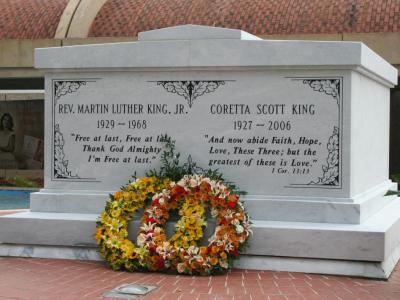
11) Dr. King's Tomb
Serving as both a museum and a hub of social-justice activity, the King Center is also Martin Luther King, Jr.'s final resting place, attracting tens of thousands of visitors annually as a living memorial to the inspiring leader. Dr. King's white-marble crypt lies outside in the Freedom Plaza, surrounded by a magnificent five-tiered Reflecting Pool that symbolizes the life-giving power of water. The tomb bears an inscription of his famous words: “Free at Last. Free at Last. Thank God Almighty I’m Free at Last.”
A small circular pavilion in front of the crypt houses an eternal flame that burns continuously. The Chapel of All Faiths, located at the end of Freedom Walkway, represents the ecumenical nature of Dr. King's work and the universal principles of the world's major religions.
A store on the premises sells King memorabilia and an extensive collection of books. Ranger talks, focusing on the community and civil rights movement, occur regularly on Freedom Plaza.
A small circular pavilion in front of the crypt houses an eternal flame that burns continuously. The Chapel of All Faiths, located at the end of Freedom Walkway, represents the ecumenical nature of Dr. King's work and the universal principles of the world's major religions.
A store on the premises sells King memorabilia and an extensive collection of books. Ranger talks, focusing on the community and civil rights movement, occur regularly on Freedom Plaza.
