Custom Walk in Vienna, Austria by kmtaping22_f5ef6 created on 2025-06-06
Guide Location: Austria » Vienna
Guide Type: Custom Walk
# of Sights: 8
Tour Duration: 2 Hour(s)
Travel Distance: 5.3 Km or 3.3 Miles
Share Key: YB7YW
Guide Type: Custom Walk
# of Sights: 8
Tour Duration: 2 Hour(s)
Travel Distance: 5.3 Km or 3.3 Miles
Share Key: YB7YW
How It Works
Please retrieve this walk in the GPSmyCity app. Once done, the app will guide you from one tour stop to the next as if you had a personal tour guide. If you created the walk on this website or come to the page via a link, please follow the instructions below to retrieve the walk in the app.
Retrieve This Walk in App
Step 1. Download the app "GPSmyCity: Walks in 1K+ Cities" on Apple App Store or Google Play Store.



Step 2. In the GPSmyCity app, download(or launch) the guide "Vienna Map and Walking Tours".
Step 3. Tap the menu button located at upper right corner of the "Walks" screen and select "Retrieve custom walk". Enter the share key: YB7YW
1) Cafe Central (must see)
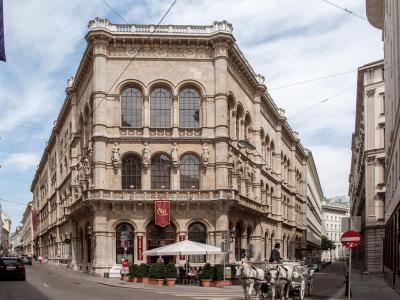
Café Central stands as a quintessential Viennese coffeehouse, nestled on the ground floor of the Palais Ferstel, formerly known as the Bank and Stockmarket Building, designed by architect Heinrich von Ferstel.
Established back in 1876, this café gained significant prominence during the late 19th century, evolving into a pivotal hub for Vienna's intellectual elite. Distinguished regulars included luminaries such as Peter Altenberg, Theodor Herzl, Alfred Adler, Egon Friedell, Hugo von Hofmannsthal, Anton Kuh, Adolf Loos, Leo Perutz, Robert Musil, Stefan Zweig, Alfred Polgar, Adolf Hitler, and Leon Trotsky. Remarkably, in January 1913 alone, notable figures like Josip Broz Tito, Sigmund Freud, and the ever-present Trotsky frequented this establishment.
It was often colloquially referred to as the "Chess school" (Die Schachhochschule), owing to the prevalence of chess enthusiasts who gathered on the first floor to engage in their games. The Vienna Circle, a group of logical positivists, convened numerous meetings here both before and after World War I.
One intriguing anecdote recalls a conversation between Victor Adler and Count Berchtold, the foreign minister of Austria-Hungary, where Adler warned that war might incite revolution in Russia, if not within the Habsburg monarchy itself. In response, Berchtold facetiously queried, "And who will lead this revolution? Perhaps Mr. Bronstein (Leon Trotsky) sitting over there at the Cafe Central?"
Following the conclusion of World War II, the café ceased its operations. However, in 1975, the Palais Ferstel underwent a renovation, and Café Central was resurrected in a different part of the building. Subsequently, in 1986, it underwent another comprehensive renovation.
Today, Café Central remains a cherished tourist attraction and a popular coffeehouse, revered for its enduring place in literary history.
Established back in 1876, this café gained significant prominence during the late 19th century, evolving into a pivotal hub for Vienna's intellectual elite. Distinguished regulars included luminaries such as Peter Altenberg, Theodor Herzl, Alfred Adler, Egon Friedell, Hugo von Hofmannsthal, Anton Kuh, Adolf Loos, Leo Perutz, Robert Musil, Stefan Zweig, Alfred Polgar, Adolf Hitler, and Leon Trotsky. Remarkably, in January 1913 alone, notable figures like Josip Broz Tito, Sigmund Freud, and the ever-present Trotsky frequented this establishment.
It was often colloquially referred to as the "Chess school" (Die Schachhochschule), owing to the prevalence of chess enthusiasts who gathered on the first floor to engage in their games. The Vienna Circle, a group of logical positivists, convened numerous meetings here both before and after World War I.
One intriguing anecdote recalls a conversation between Victor Adler and Count Berchtold, the foreign minister of Austria-Hungary, where Adler warned that war might incite revolution in Russia, if not within the Habsburg monarchy itself. In response, Berchtold facetiously queried, "And who will lead this revolution? Perhaps Mr. Bronstein (Leon Trotsky) sitting over there at the Cafe Central?"
Following the conclusion of World War II, the café ceased its operations. However, in 1975, the Palais Ferstel underwent a renovation, and Café Central was resurrected in a different part of the building. Subsequently, in 1986, it underwent another comprehensive renovation.
Today, Café Central remains a cherished tourist attraction and a popular coffeehouse, revered for its enduring place in literary history.
2) Peterskirche (St. Peter's Church) (must see)
Tucked snugly among Vienna’s Baroque showpieces like a pearl in a pastry, Saint Peter’s Church has a front-row seat to history, and not much else, thanks to the buildings crowding around it. You’ll mostly catch it head-on, which, honestly, is its best angle.
This spot has seen churches come and go like emperors with changing tastes. Some say the very first church here dates back to the early 4th century AD, making it one of the oldest in Vienna-yes, back when sandals were in and Rome was still a big deal. In 792, none other than King Charlemagne is said to have popped by and said, “Let’s build.” There’s even a plaque on the façade bragging about it. Historical records, ever the skeptics, first mention the church in 1137, but who’s counting?
By the late 1100s, the church cozied up to the newly founded Schottenstift monastery. Then came fire, plague, and drama. After the 1661 fire, it got a bit of a patch job… until the plague of 1679 cleared the streets and cleared the way for Emperor Leopold I, who swore a divine vow to rebuild. And he did...
Construction began around 1701, drawing heavy inspiration from Saint Peter’s Basilica in Rome-because if you’re going to imitate, imitate the best. By 1733, Vienna had its first domed Baroque beauty, cleverly built with a compact, oval layout to fit the tight space.
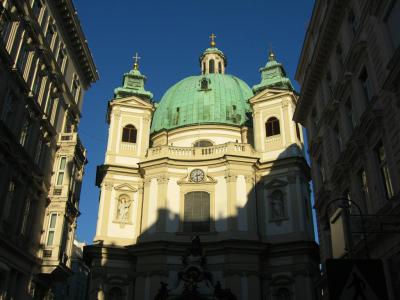
Outside, it sports a neat combo of white and barely-there yellow, flanked by two towers that curve ever so slightly inward-apparently a cheeky nod to Turkish tent poles from the 1683 siege.
Step inside, and there you have it: gold stucco, opulent frescoes, and Johann Michael Rottmayr’s artistic fireworks overhead, including the Coronation of Our Lady. The high altar gets dramatic with a healing scene, starring Saint Peter and Saint John, and around the edges, you'll spot relics of Roman martyrs, reclining in crystal coffins like glittering saints on display.
The church was polished up in a major 1998–2004 renovation, and today it’s still a Baroque gem in Vienna’s crown.
Hot tip:
Drop in any day from 3 to 3:30 pm for a free organ concert-divine music, no ticket required (but donations are saintly). And if you're lucky, catch a choir in the crypts. Now that’s a holy experience...
This spot has seen churches come and go like emperors with changing tastes. Some say the very first church here dates back to the early 4th century AD, making it one of the oldest in Vienna-yes, back when sandals were in and Rome was still a big deal. In 792, none other than King Charlemagne is said to have popped by and said, “Let’s build.” There’s even a plaque on the façade bragging about it. Historical records, ever the skeptics, first mention the church in 1137, but who’s counting?
By the late 1100s, the church cozied up to the newly founded Schottenstift monastery. Then came fire, plague, and drama. After the 1661 fire, it got a bit of a patch job… until the plague of 1679 cleared the streets and cleared the way for Emperor Leopold I, who swore a divine vow to rebuild. And he did...
Construction began around 1701, drawing heavy inspiration from Saint Peter’s Basilica in Rome-because if you’re going to imitate, imitate the best. By 1733, Vienna had its first domed Baroque beauty, cleverly built with a compact, oval layout to fit the tight space.
Outside, it sports a neat combo of white and barely-there yellow, flanked by two towers that curve ever so slightly inward-apparently a cheeky nod to Turkish tent poles from the 1683 siege.
Step inside, and there you have it: gold stucco, opulent frescoes, and Johann Michael Rottmayr’s artistic fireworks overhead, including the Coronation of Our Lady. The high altar gets dramatic with a healing scene, starring Saint Peter and Saint John, and around the edges, you'll spot relics of Roman martyrs, reclining in crystal coffins like glittering saints on display.
The church was polished up in a major 1998–2004 renovation, and today it’s still a Baroque gem in Vienna’s crown.
Hot tip:
Drop in any day from 3 to 3:30 pm for a free organ concert-divine music, no ticket required (but donations are saintly). And if you're lucky, catch a choir in the crypts. Now that’s a holy experience...
3) Stephansdom (St. Stephen's Cathedral) (must see)
In a city where “stunning architecture” is practically the dress code, Saint Stephen’s Cathedral still manages to steal the spotlight-and possibly your neck muscles too, as you crane to admire that towering spire. Known locally as Stephansdom, this Gothic-Romanesque powerhouse has stood at the heart of Vienna’s skyline and soul since 1147, rising on the bones of two earlier churches like the overachiever it is.
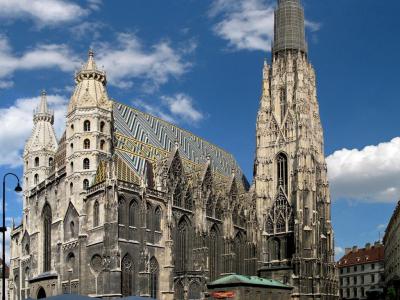
In the 14th century, Duke Rudolf IV decided the cathedral needed a serious makeover. The idea worked. As a result, today we have the building stretching 107 meters long, 40 meters wide, and topped by the South Tower-or “Steffl,” if you're on nickname terms-a 136-meter-high feat of medieval determination that took 65 years to complete. It even moonlighted as a lookout post during Vienna’s sieges, complete with a live-in watchman until 1955. One heck of a long shift...
Meanwhile, the North Tower never quite hit its growth spurt. It stalled at 68 meters and got a Renaissance hat in 1578-basically the architectural equivalent of saying “this is fine” and walking away.
But the real showstopper here is the roof. A kaleidoscope of 230,000 glazed tiles arranged into imperial emblems like the double-headed eagle of the Habsburgs and the crests of Vienna and Austria. After being torched in World War II, it was rebuilt with steel instead of wood-600 metric tons of it-making the new roof not just durable, but also self-cleaning. Because even cathedrals love low-maintenance routines...
Inside, things get just as grand. There’s Pummerin, Europe’s second-largest swinging bell, forged from Turkish cannons in 1711 and recast in 1951-because nothing says peace like a bell made from wartime leftovers. Oh, and she lives in the North Tower, ringing out for special moments and daily rituals.
Musical legends haunt these hallowed halls too: Beethoven figured out he was deaf here (tragic), Haydn sang here as a kid (sweet), Strauss got married here-twice (bold), and Mozart? He got married and buried here. Yes, Saint Stephen's is basically the VIP lounge of Viennese music history.
Inside, you’ll find 18 altars, miraculous icons, bone relics-including those of Saint Valentine-and a maze of crypts holding 11,000 souls, including Habsburg royalty.
Tip:
Do a lap around the outside. Gargoyles, engravings, medieval graffiti-you never know what stories the stones will whisper...
In the 14th century, Duke Rudolf IV decided the cathedral needed a serious makeover. The idea worked. As a result, today we have the building stretching 107 meters long, 40 meters wide, and topped by the South Tower-or “Steffl,” if you're on nickname terms-a 136-meter-high feat of medieval determination that took 65 years to complete. It even moonlighted as a lookout post during Vienna’s sieges, complete with a live-in watchman until 1955. One heck of a long shift...
Meanwhile, the North Tower never quite hit its growth spurt. It stalled at 68 meters and got a Renaissance hat in 1578-basically the architectural equivalent of saying “this is fine” and walking away.
But the real showstopper here is the roof. A kaleidoscope of 230,000 glazed tiles arranged into imperial emblems like the double-headed eagle of the Habsburgs and the crests of Vienna and Austria. After being torched in World War II, it was rebuilt with steel instead of wood-600 metric tons of it-making the new roof not just durable, but also self-cleaning. Because even cathedrals love low-maintenance routines...
Inside, things get just as grand. There’s Pummerin, Europe’s second-largest swinging bell, forged from Turkish cannons in 1711 and recast in 1951-because nothing says peace like a bell made from wartime leftovers. Oh, and she lives in the North Tower, ringing out for special moments and daily rituals.
Musical legends haunt these hallowed halls too: Beethoven figured out he was deaf here (tragic), Haydn sang here as a kid (sweet), Strauss got married here-twice (bold), and Mozart? He got married and buried here. Yes, Saint Stephen's is basically the VIP lounge of Viennese music history.
Inside, you’ll find 18 altars, miraculous icons, bone relics-including those of Saint Valentine-and a maze of crypts holding 11,000 souls, including Habsburg royalty.
Tip:
Do a lap around the outside. Gargoyles, engravings, medieval graffiti-you never know what stories the stones will whisper...
4) Rathaus (City Hall) (must see)
Vienna City Hall-a place where both the municipal government and the legislative assembly get down to business. By no means a dull office block, this neo-Gothic showstopper was built between 1872 and 1883 by architect Friedrich von Schmidt, who, rather humbly, now stands in a statue form just behind the building, keeping an eye on things from his very own square.
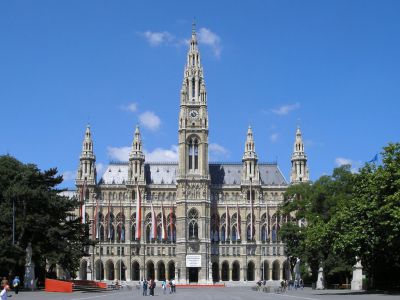
Drawing inspiration from the medieval architecture of Flanders and Brabant, the City Hall flaunts five towers like a crown. The tallest of them pierces the skyline at 98 meters, topped with the "City Hall Man"-not a superhero, but close... Clad in armor inspired by Emperor Maximilian I, this statue has been watching over Vienna since 1882 and has become something of a local mascot.
Inside, the building doesn’t just rest on its aesthetic laurels. There's the "City Hall Cellar"-a grand baroque dining hall where you can dig into proper Viennese culinary classics without a hint of modern guilt. “Schnitzel under chandeliers? Yes, please...”
The façade is a sculptural buffet in its own right, brimming with emperors, virtues like Power and Justice, and even good ol’ Vindobona, the Roman forebear of Vienna, lounging surrounded by heraldic flair. Think of it as Vienna’s resume carved in stone.
And on the flanks is a lineup of statues dedicated to trades and professions-because in this city, bakers, builders, and bookbinders all get a standing ovation in stone!
Now, if you're feeling adventurous (and are in good shape), brave the 331 steps up to the central tower that’s worth every groan from your knees. Your reward will be the sweeping views of Vienna in all its baroque-meets-modern glory-plus bragging rights for conquering the city one stair at a time. Trust us-Vienna looks even better from above.
Tip:
For the inside scoop, join the free German-language guided tour on Mondays, Wednesdays, and Fridays at 1 pm. Not fluent in German? No problem-audio guides are available in multiple languages. Just be ready to temporarily part ways with your passport. The view-and the tales-are absolutely worth it.
Drawing inspiration from the medieval architecture of Flanders and Brabant, the City Hall flaunts five towers like a crown. The tallest of them pierces the skyline at 98 meters, topped with the "City Hall Man"-not a superhero, but close... Clad in armor inspired by Emperor Maximilian I, this statue has been watching over Vienna since 1882 and has become something of a local mascot.
Inside, the building doesn’t just rest on its aesthetic laurels. There's the "City Hall Cellar"-a grand baroque dining hall where you can dig into proper Viennese culinary classics without a hint of modern guilt. “Schnitzel under chandeliers? Yes, please...”
The façade is a sculptural buffet in its own right, brimming with emperors, virtues like Power and Justice, and even good ol’ Vindobona, the Roman forebear of Vienna, lounging surrounded by heraldic flair. Think of it as Vienna’s resume carved in stone.
And on the flanks is a lineup of statues dedicated to trades and professions-because in this city, bakers, builders, and bookbinders all get a standing ovation in stone!
Now, if you're feeling adventurous (and are in good shape), brave the 331 steps up to the central tower that’s worth every groan from your knees. Your reward will be the sweeping views of Vienna in all its baroque-meets-modern glory-plus bragging rights for conquering the city one stair at a time. Trust us-Vienna looks even better from above.
Tip:
For the inside scoop, join the free German-language guided tour on Mondays, Wednesdays, and Fridays at 1 pm. Not fluent in German? No problem-audio guides are available in multiple languages. Just be ready to temporarily part ways with your passport. The view-and the tales-are absolutely worth it.
5) Naturhistorisches Museum (must see)
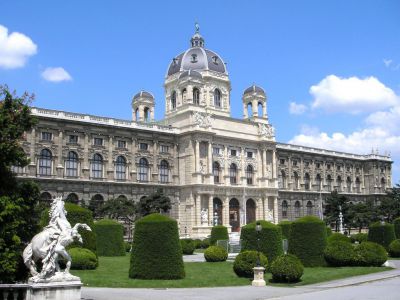
The Naturhistorisches Museum is a prominent component of the extensive collection of exhibitions spread throughout Vienna. The current facility occupies an impressive 90,000 square feet of space. In recent years, they've developed software that allows visitors to explore parts of the museum virtually.
This location enjoys global recognition, as it houses one of the most significant collections of natural history artifacts worldwide. Its inception dates back more than 250 years, resulting in a staggering collection of over 20 million noteworthy specimens.
The central edifice of the museum is an ancient palace, originally serving as the inaugural museum structure. It officially opened its doors in 1869, operating under the name "Imperial Natural Museum." Today, many of the initial exhibits have been relocated to various sections within the broader Wien Museum of Vienna.
Visitors can encounter exceedingly rare artifacts here. For instance, the Venus of Willendorf, an object that boasts an age of more than 25,000 years, is on display. Additionally, you can marvel at a dinosaur skeleton, over 250 million years old, showcased on the museum's floors. In total, you can leisurely explore 39 different sections within the museum.
Why You Should Visit:
Incredible because of the upgrading of many exhibits, which brilliantly combine the old (showcases of artifacts from the late 1880s in their original cases) with the new (an amazing exhibit room of meteorites with interactive cases or an exhibit on our planet which is incredibly interesting and educational).
Almost everything is in English as well as in German. The museum has also gone out of its way to cater to kids, so a great place for the family.
Tip:
It is strongly recommended to take an audio guide and learn more about the most important collection items.
If you are a student, make sure to bring your student card to capitalize on the discount they offer.
This location enjoys global recognition, as it houses one of the most significant collections of natural history artifacts worldwide. Its inception dates back more than 250 years, resulting in a staggering collection of over 20 million noteworthy specimens.
The central edifice of the museum is an ancient palace, originally serving as the inaugural museum structure. It officially opened its doors in 1869, operating under the name "Imperial Natural Museum." Today, many of the initial exhibits have been relocated to various sections within the broader Wien Museum of Vienna.
Visitors can encounter exceedingly rare artifacts here. For instance, the Venus of Willendorf, an object that boasts an age of more than 25,000 years, is on display. Additionally, you can marvel at a dinosaur skeleton, over 250 million years old, showcased on the museum's floors. In total, you can leisurely explore 39 different sections within the museum.
Why You Should Visit:
Incredible because of the upgrading of many exhibits, which brilliantly combine the old (showcases of artifacts from the late 1880s in their original cases) with the new (an amazing exhibit room of meteorites with interactive cases or an exhibit on our planet which is incredibly interesting and educational).
Almost everything is in English as well as in German. The museum has also gone out of its way to cater to kids, so a great place for the family.
Tip:
It is strongly recommended to take an audio guide and learn more about the most important collection items.
If you are a student, make sure to bring your student card to capitalize on the discount they offer.
6) Kunsthistorisches Museum (Art History Museum) (must see)
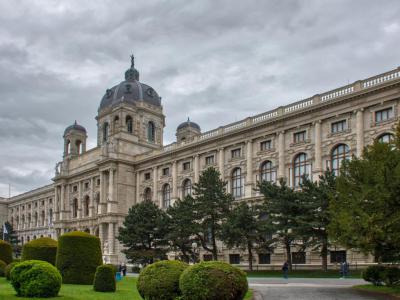
Fuel up with a cup of coffee or tea and head to one of the world-class museums along the Ring. The Kunsthistorisches Museum's galleries house vast collections of fine art and antiquities, based largely on those accumulated over the centuries by generations of Habsburg monarchs. Lavishly decorated interiors, ornate cupolas and sweeping Neo-Classical stairways create a fitting setting for the treasures housed here, with many of the works on display – particularly the Old Masters (Bruegel, Rembrandt, Michelangelo, Caravaggio, Titian, etc.) – being considered among the most spectacular in the world. Not only that, but the museum is among the most visitor-friendly you're likely to visit, with comfortable sofas available in most exhibition rooms and long closing hours on Thursdays.
The galleries occupy the top three floors (although the uppermost is not nearly as extensive), with an entrance hall, shop and cloakroom below. The ground floor contains ancient objects on one side – starting with the age of the Pharaohs in Egypt, then proceeding through ancient Greece and Rome while touching on other cultures along the way – which are joined by rare Renaissance and Baroque treasures collected by and/or made for the Hapsburg monarchs on the other side. The quality and quantity of the material presented is simply astounding, but items are generally labeled simply in German, so you'll want to spring for the audio guide (available in English) to get a more detailed commentary on highlighted objects. The second gallery floor (or "1" level) houses the Picture Gallery, which is again a huge collection of just plain amazing works by every famous artist from the 17th through the 19th centuries. The top floor (or "2" level) only houses a coin and medal gallery along with what are listed as the "Vermeyen Cartoons" – a series of impressive life-sized tapestries that portray Charles V's Tunis campaign of 1535.
The museum's grand central staircase is adorned with murals by the Klimt brothers and others, which depict the history of art from ancient Egypt to Florence. Gustav Klimt's especially ornate gilded frescoes are probably his best works, although they are illustrative, which in the critical art world loses you points (indeed, they were criticized for being "too erotic"). Diagrams point out which mural was painted by which artist, and sometimes a viewing scope is provided for visitors to see them up close.
Tip:
An adult ticket entitles you to a one-time pass to the museum, as well as, the Neue Burg located at Heldenplatz, which has amazing collections of imperial armoury, historic musical instruments, etc. – well worth a visit.
The galleries occupy the top three floors (although the uppermost is not nearly as extensive), with an entrance hall, shop and cloakroom below. The ground floor contains ancient objects on one side – starting with the age of the Pharaohs in Egypt, then proceeding through ancient Greece and Rome while touching on other cultures along the way – which are joined by rare Renaissance and Baroque treasures collected by and/or made for the Hapsburg monarchs on the other side. The quality and quantity of the material presented is simply astounding, but items are generally labeled simply in German, so you'll want to spring for the audio guide (available in English) to get a more detailed commentary on highlighted objects. The second gallery floor (or "1" level) houses the Picture Gallery, which is again a huge collection of just plain amazing works by every famous artist from the 17th through the 19th centuries. The top floor (or "2" level) only houses a coin and medal gallery along with what are listed as the "Vermeyen Cartoons" – a series of impressive life-sized tapestries that portray Charles V's Tunis campaign of 1535.
The museum's grand central staircase is adorned with murals by the Klimt brothers and others, which depict the history of art from ancient Egypt to Florence. Gustav Klimt's especially ornate gilded frescoes are probably his best works, although they are illustrative, which in the critical art world loses you points (indeed, they were criticized for being "too erotic"). Diagrams point out which mural was painted by which artist, and sometimes a viewing scope is provided for visitors to see them up close.
Tip:
An adult ticket entitles you to a one-time pass to the museum, as well as, the Neue Burg located at Heldenplatz, which has amazing collections of imperial armoury, historic musical instruments, etc. – well worth a visit.
7) State Opera House (must see)
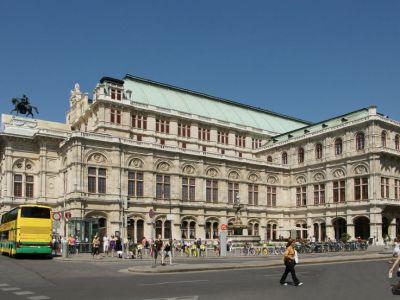
The State Opera House stands as an impressive architectural marvel, complemented by an equally remarkable ensemble of performing artists. Its historical roots trace back to approximately the 1860s when it was initially known as the Vienna Court Opera. However, the name underwent a transformation in 1920, orchestrated by the Habsburgs, during the early stages of the formation of the first Austrian Republic.
Numerous members of the Opera company eventually find themselves on stage with the renowned Vienna Philharmonic, showcasing a vast repertoire of celebrated compositions, including but not limited to, La Traviata, La Clemenza di Tito, and Verdi's Don Carlo. This venue frequently hosts performances by world-famous vocalists, and it has served as the launching pad for the careers of illustrious directors, ranging from Gustav Mahler to Herbert von Karajan and Claudio Abbado.
Beyond the captivating performances of singers and orchestra, the Opera House itself boasts architectural splendor that merits exploration. The State Opera offers guided tours of this remarkable edifice, conducted in 12 different languages. These tours are available daily and typically span approximately 40 minutes, providing visitors with a deeper understanding of this cultural gem.
Tip:
Do not buy opera tickets from the dressed up people outside on the street – they don't sell real tickets!
Numerous members of the Opera company eventually find themselves on stage with the renowned Vienna Philharmonic, showcasing a vast repertoire of celebrated compositions, including but not limited to, La Traviata, La Clemenza di Tito, and Verdi's Don Carlo. This venue frequently hosts performances by world-famous vocalists, and it has served as the launching pad for the careers of illustrious directors, ranging from Gustav Mahler to Herbert von Karajan and Claudio Abbado.
Beyond the captivating performances of singers and orchestra, the Opera House itself boasts architectural splendor that merits exploration. The State Opera offers guided tours of this remarkable edifice, conducted in 12 different languages. These tours are available daily and typically span approximately 40 minutes, providing visitors with a deeper understanding of this cultural gem.
Tip:
Do not buy opera tickets from the dressed up people outside on the street – they don't sell real tickets!
8) Belvedere Palace (must see)
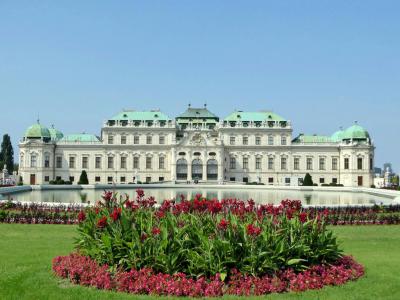
Originally designed as a summer residence for Prince Eugene of Savoy, who apparently felt a standard palace simply wouldn't cut it, this lavish complex was built after Vienna stopped fending off Ottoman invasions and started flexing its imperial muscles in stone, stucco, and cascading fountains.
The Belvedere isn’t just one palace-it’s a full-on ensemble performance: Upper and Lower Belvedere, an Orangery for your fancy citrus needs, and palace stables fit for horses with noble bloodlines. All of it is wrapped in a park so meticulously designed, you’d think every hedge was hand-trimmed by a powdered wig.
Construction kicked off in 1712 with the Lower Belvedere, but things really got dramatic in 1717 when the Upper Belvedere was added-basically a Baroque ballroom with serious diplomatic swagger. Frescoes, gilded ceilings, and artwork by the who’s who of 18th-century painters helped Eugene throw parties that whispered, “empire” with every flute of champagne.
After Prince Eugene passed in 1736, the place got a second act as a Habsburg hangout, hosting royal refugees escaping the French Revolution and later transforming into one of Europe’s earliest public museums, thanks to Maria Theresa and Joseph II.
Fast forward to the 20th century: the Belvedere went national after World War I, becoming the proud home of Austria’s classical and modern art collections. World War II wasn’t kind to it-bombings left their mark-but meticulous restoration from 1945 through the '90s brought the glory back, detail by plastered detail.
Today, the Belvedere is a major world-class museum. Its galleries span centuries, from medieval devotionals to cutting-edge modernism. And yes, Gustav Klimt’s "The Kiss" lives here too, alongside his equally iconic "Judith." You’ll also find a respectable crowd of French Impressionists and Biedermeier charmers holding court on the walls.
It's in equal measure for those who appreciate architecture, arts, or just seek to pretend they’re 18th-century nobility strolling through your summer garden... The Belvedere delivers all of this with a flourish. So go ahead-wander, gaze, and maybe channel your inner prince or princess.
Tip:
If you don’t enjoy queuing in the sun, grab your tickets online. And for the love of Baroque opulence, don’t skip the gardens-those cascading fountains and smug statues have been waiting centuries for your admiration...
The Belvedere isn’t just one palace-it’s a full-on ensemble performance: Upper and Lower Belvedere, an Orangery for your fancy citrus needs, and palace stables fit for horses with noble bloodlines. All of it is wrapped in a park so meticulously designed, you’d think every hedge was hand-trimmed by a powdered wig.
Construction kicked off in 1712 with the Lower Belvedere, but things really got dramatic in 1717 when the Upper Belvedere was added-basically a Baroque ballroom with serious diplomatic swagger. Frescoes, gilded ceilings, and artwork by the who’s who of 18th-century painters helped Eugene throw parties that whispered, “empire” with every flute of champagne.
After Prince Eugene passed in 1736, the place got a second act as a Habsburg hangout, hosting royal refugees escaping the French Revolution and later transforming into one of Europe’s earliest public museums, thanks to Maria Theresa and Joseph II.
Fast forward to the 20th century: the Belvedere went national after World War I, becoming the proud home of Austria’s classical and modern art collections. World War II wasn’t kind to it-bombings left their mark-but meticulous restoration from 1945 through the '90s brought the glory back, detail by plastered detail.
Today, the Belvedere is a major world-class museum. Its galleries span centuries, from medieval devotionals to cutting-edge modernism. And yes, Gustav Klimt’s "The Kiss" lives here too, alongside his equally iconic "Judith." You’ll also find a respectable crowd of French Impressionists and Biedermeier charmers holding court on the walls.
It's in equal measure for those who appreciate architecture, arts, or just seek to pretend they’re 18th-century nobility strolling through your summer garden... The Belvedere delivers all of this with a flourish. So go ahead-wander, gaze, and maybe channel your inner prince or princess.
Tip:
If you don’t enjoy queuing in the sun, grab your tickets online. And for the love of Baroque opulence, don’t skip the gardens-those cascading fountains and smug statues have been waiting centuries for your admiration...
