Custom Walk in Edinburgh, Scotland by gdaviesbig_9b6f9 created on 2025-06-13
Guide Location: Scotland » Edinburgh
Guide Type: Custom Walk
# of Sights: 11
Tour Duration: 5 Hour(s)
Travel Distance: 10.9 Km or 6.8 Miles
Share Key: QURYE
Guide Type: Custom Walk
# of Sights: 11
Tour Duration: 5 Hour(s)
Travel Distance: 10.9 Km or 6.8 Miles
Share Key: QURYE
How It Works
Please retrieve this walk in the GPSmyCity app. Once done, the app will guide you from one tour stop to the next as if you had a personal tour guide. If you created the walk on this website or come to the page via a link, please follow the instructions below to retrieve the walk in the app.
Retrieve This Walk in App
Step 1. Download the app "GPSmyCity: Walks in 1K+ Cities" on Apple App Store or Google Play Store.



Step 2. In the GPSmyCity app, download(or launch) the guide "Edinburgh Map and Walking Tours".
Step 3. Tap the menu button located at upper right corner of the "Walks" screen and select "Retrieve custom walk". Enter the share key: QURYE
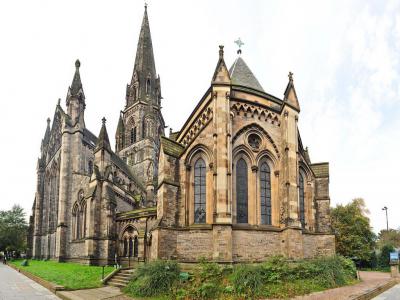
1) St. Mary's Cathedral
Saint Mary’s Cathedral is located in Edinburgh’s New Town district and you shouldn't miss the opportunity to visit this fine church.
The building was designed by Sir George Gilbert Scott in 1874 and is a wonderful example of Victorian Gothic architecture. The foundation stone was hollowed out and it contains a copy of the Trust Deed, Oliver and Boyd’s Almanac, coins, newspapers and an edition of the Post Office directory. The nave was opened in 1879 and the twin spires on the west end were added by Sir George’s grandson Charles in 1913.
The church complex comprises the Song School with its lovely murals of the Beneficiate by Phoebe Anna Traquair and the Chapter House which is open as a crèche on Sundays.
Inside the cathedral, you will find Sir Walter Scott’s pew, which was brought here in 2006 and memorials to the Soldiers of the Royal Scots Infantry killed overseas between 1857 and 1870. Other memorials are dedicated to important Scottish Generals.
The Lorimer Rood Cross over the nave altar was placed there in 1922; the reredos behind the High Altar represent Christ with the Saints Mary, Margaret, Columba and John.
You can also admire the Paolozzi window – one of the first stained-glass windows in Scotland. It caused a bit of a stir at the time, but as it represented scenes from the Ascension, it was allowed to remain in place. The most notable item in the church is Borthwick’s powerful painting “The Presence”.
Why You Should Visit:
This Cathedral is very much a working one and you can be treated to fantastic choral/organ music on most days.
Otherwise, of course, the architecture is a treat to watch – a must for anyone interested in the splendor of 19th-century houses of worship.
The building was designed by Sir George Gilbert Scott in 1874 and is a wonderful example of Victorian Gothic architecture. The foundation stone was hollowed out and it contains a copy of the Trust Deed, Oliver and Boyd’s Almanac, coins, newspapers and an edition of the Post Office directory. The nave was opened in 1879 and the twin spires on the west end were added by Sir George’s grandson Charles in 1913.
The church complex comprises the Song School with its lovely murals of the Beneficiate by Phoebe Anna Traquair and the Chapter House which is open as a crèche on Sundays.
Inside the cathedral, you will find Sir Walter Scott’s pew, which was brought here in 2006 and memorials to the Soldiers of the Royal Scots Infantry killed overseas between 1857 and 1870. Other memorials are dedicated to important Scottish Generals.
The Lorimer Rood Cross over the nave altar was placed there in 1922; the reredos behind the High Altar represent Christ with the Saints Mary, Margaret, Columba and John.
You can also admire the Paolozzi window – one of the first stained-glass windows in Scotland. It caused a bit of a stir at the time, but as it represented scenes from the Ascension, it was allowed to remain in place. The most notable item in the church is Borthwick’s powerful painting “The Presence”.
Why You Should Visit:
This Cathedral is very much a working one and you can be treated to fantastic choral/organ music on most days.
Otherwise, of course, the architecture is a treat to watch – a must for anyone interested in the splendor of 19th-century houses of worship.
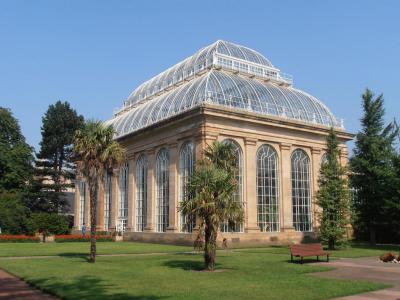
2) Royal Botanic Garden (must see)
The Royal Botanic Garden Edinburgh (RBGE) has a dual role as a scientific hub and a popular tourist spot. Established in 1670 with the purpose of cultivating medicinal plants, it has expanded to encompass four locations in Scotland: Edinburgh, Dawyck, Logan, and Benmore, each specializing in its unique plant collection. RBGE boasts an impressive living collection comprising more than 13,302 plant species (equivalent to 34,422 individual plants), while its herbarium houses over 3 million preserved plant specimens.
Functioning as an executive non-departmental public entity under the Scottish Government, RBGE's primary site in Edinburgh serves as its main garden and administrative center, led by Regius Keeper Simon Milne.
The institution actively engages in and coordinates various conservation projects, both within the United Kingdom and internationally. The core scientific areas of focus at RBGE revolve around Scottish Biodiversity, Plants & Climate Change, and Conservation.
In addition to its scientific endeavors, RBGE remains a beloved destination for tourists and locals alike, affectionately known as "The Botanics" by locals. It's a popular spot for leisurely walks, especially among families with children. Admission to the botanic garden is generally free, though a small fee may be required to access the glasshouses. Throughout the year, the garden hosts numerous events, including live performances, guided tours, and exhibitions. Furthermore, RBGE plays a significant role in education, offering courses at various levels.
The Botanics in Edinburgh, along with its three smaller satellite gardens (referred to as Regional Gardens) in other parts of Scotland, collectively cultivate nearly 273,000 individual plants. This impressive collection represents approximately 13,300 plant species from various regions around the world, accounting for roughly 4% of all known plant species.
Functioning as an executive non-departmental public entity under the Scottish Government, RBGE's primary site in Edinburgh serves as its main garden and administrative center, led by Regius Keeper Simon Milne.
The institution actively engages in and coordinates various conservation projects, both within the United Kingdom and internationally. The core scientific areas of focus at RBGE revolve around Scottish Biodiversity, Plants & Climate Change, and Conservation.
In addition to its scientific endeavors, RBGE remains a beloved destination for tourists and locals alike, affectionately known as "The Botanics" by locals. It's a popular spot for leisurely walks, especially among families with children. Admission to the botanic garden is generally free, though a small fee may be required to access the glasshouses. Throughout the year, the garden hosts numerous events, including live performances, guided tours, and exhibitions. Furthermore, RBGE plays a significant role in education, offering courses at various levels.
The Botanics in Edinburgh, along with its three smaller satellite gardens (referred to as Regional Gardens) in other parts of Scotland, collectively cultivate nearly 273,000 individual plants. This impressive collection represents approximately 13,300 plant species from various regions around the world, accounting for roughly 4% of all known plant species.
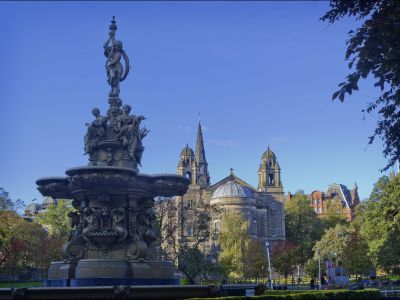
3) Princes Street Gardens (must see)
Between the volcanic drama of Edinburgh Castle and the shopping temptation of Princes Street, you'll stumble across a surprisingly serene stretch of green: Princes Street Gardens. Yes, in a city built on myth, mist, and medieval grit, here's your central patch of peace-complete with ducks, monuments, and the occasional bagpiper soundtrack.
Some 110,000 years ago, the area that is now the quiet garden was a glacial accident waiting to happen. As an ancient glacier oozed its way around the hulking basalt of Castle Rock, it carved out a natural dip-basically scooping out what would later become, and for thousands of years remained, a marshy, defensive moat at the foot of Castle Rock. Humans started settling here by the 9th century BC, presumably appreciating the defensive perks and the view.
Then, in 1460, King James III ordered the marsh to be flooded, turning it into Nor Loch-a grim, murky moat that made invading Edinburgh Castle even less appealing. Further ahead, in 1759, the loch was drained to make way for the New Town. Even today, this area still occasionally gets flooded.
When construction on the New Town kicked off, a handy solution for all that leftover dirt (some millions of tons of earth) was to dump it into the former loch. And thus the Mound, upon which many prestigious buildings stand today, was born. By 1820, the area was transformed into Princes Street Gardens: 8.5 acres to the east and 29 acres to the west, flanking The Mound like leafy bookends.
The gardens now come with a side of Scottish fame. The towering Scott Monument takes center stage, joined by statues of local legends like author John Wilson, Christian missionary David Livingstone, and poet Allan Ramsay. There’s a playground for kids, shade under grand trees, countless benches for people-watching, and even a café if you need caffeine with your contemplation.
In December, this peaceful patch gets seriously festive, with carnival rides, mulled wine, twinkling lights, Edinburgh’s main Christmas Market, and even an ice rink-because few things can contribute to a “holiday spirit” as greatly as skating under a Gothic spire!
Some 110,000 years ago, the area that is now the quiet garden was a glacial accident waiting to happen. As an ancient glacier oozed its way around the hulking basalt of Castle Rock, it carved out a natural dip-basically scooping out what would later become, and for thousands of years remained, a marshy, defensive moat at the foot of Castle Rock. Humans started settling here by the 9th century BC, presumably appreciating the defensive perks and the view.
Then, in 1460, King James III ordered the marsh to be flooded, turning it into Nor Loch-a grim, murky moat that made invading Edinburgh Castle even less appealing. Further ahead, in 1759, the loch was drained to make way for the New Town. Even today, this area still occasionally gets flooded.
When construction on the New Town kicked off, a handy solution for all that leftover dirt (some millions of tons of earth) was to dump it into the former loch. And thus the Mound, upon which many prestigious buildings stand today, was born. By 1820, the area was transformed into Princes Street Gardens: 8.5 acres to the east and 29 acres to the west, flanking The Mound like leafy bookends.
The gardens now come with a side of Scottish fame. The towering Scott Monument takes center stage, joined by statues of local legends like author John Wilson, Christian missionary David Livingstone, and poet Allan Ramsay. There’s a playground for kids, shade under grand trees, countless benches for people-watching, and even a café if you need caffeine with your contemplation.
In December, this peaceful patch gets seriously festive, with carnival rides, mulled wine, twinkling lights, Edinburgh’s main Christmas Market, and even an ice rink-because few things can contribute to a “holiday spirit” as greatly as skating under a Gothic spire!
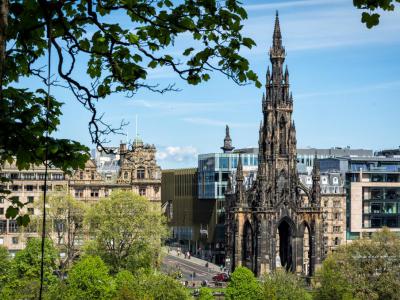
4) Scott Monument (must see)
Sir Walter Scott-Scotland’s literary darling, national treasure, and master of the pen-was so loved by the country that they figured one statue for him wasn't enough. Instead, they built him a giant Gothic spire right in Princes Street Gardens-the Scott Monument. Because, indeed, what better way to honour a writer than with a stone rocket aimed at the heavens?
When Scott passed away in 1832, the city held a grand design competition for his monument. Out of the great many prestigious architects who entered, the winning design came from... a draughtsman with zero architectural credentials. George Meikle Kemp, feeling cheeky, submitted his entry under the pseudonym “John Morvo,” borrowing the name of a 15th-century stonemason to boost his street cred. And it worked.
Now, if you’re up for a challenge, you can tackle the 61-metre-tall monument that has several viewing platforms accessed by narrow winding stairways. The highest of them is only 287 steps away. Yes, 287. But rest assured-if your legs don’t give out en route to the top, you’ll be rewarded with sweeping city views and an actual certificate for surviving the climb. Bragging rights included.
The whole structure is made of Binny Sandstone, a material with a peculiar talent: it is so oily that it attracts dirt almost immediately. Just one year after its completion, the monument looked like it had been standing there for centuries. American writer Bill Bryson once lovingly described it as a “Gothic rocket-ship”-which, honestly, is spot-on.
Inside the base, you’ll find a marble statue of Sir Walter himself, complete with quill, paper, and his loyal dog Maida. Scattered across the monument are 64 statues of characters from his novels, plus a healthy dose of grotesques-those wonderfully creepy Gothic faces that the architect deliberately added to his design to make the monument look more “ancient” and moodier than it is.
For the ease of it, you can admire the monument casually from the safety of the grass. Otherwise, go full adventurer and climb for a 360-degree panoramic view-just don’t expect a lift-and note a fee attached to that.
Tip:
The staircase gets narrow and twisty, and yes, you’ll likely meet people coming down as you're going up. Not particularly recommended for the fainthearted... or the claustrophobic.
When Scott passed away in 1832, the city held a grand design competition for his monument. Out of the great many prestigious architects who entered, the winning design came from... a draughtsman with zero architectural credentials. George Meikle Kemp, feeling cheeky, submitted his entry under the pseudonym “John Morvo,” borrowing the name of a 15th-century stonemason to boost his street cred. And it worked.
Now, if you’re up for a challenge, you can tackle the 61-metre-tall monument that has several viewing platforms accessed by narrow winding stairways. The highest of them is only 287 steps away. Yes, 287. But rest assured-if your legs don’t give out en route to the top, you’ll be rewarded with sweeping city views and an actual certificate for surviving the climb. Bragging rights included.
The whole structure is made of Binny Sandstone, a material with a peculiar talent: it is so oily that it attracts dirt almost immediately. Just one year after its completion, the monument looked like it had been standing there for centuries. American writer Bill Bryson once lovingly described it as a “Gothic rocket-ship”-which, honestly, is spot-on.
Inside the base, you’ll find a marble statue of Sir Walter himself, complete with quill, paper, and his loyal dog Maida. Scattered across the monument are 64 statues of characters from his novels, plus a healthy dose of grotesques-those wonderfully creepy Gothic faces that the architect deliberately added to his design to make the monument look more “ancient” and moodier than it is.
For the ease of it, you can admire the monument casually from the safety of the grass. Otherwise, go full adventurer and climb for a 360-degree panoramic view-just don’t expect a lift-and note a fee attached to that.
Tip:
The staircase gets narrow and twisty, and yes, you’ll likely meet people coming down as you're going up. Not particularly recommended for the fainthearted... or the claustrophobic.
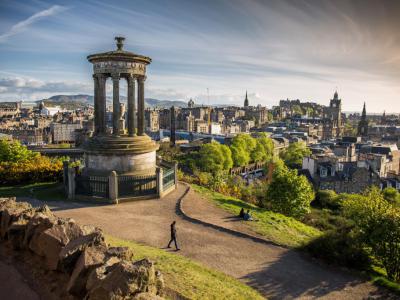
5) Calton Hill (must see)
Calton Hill, located in the heart of Edinburgh, extends beyond the eastern terminus of Princes Street and is part of the city's UNESCO World Heritage Site. It is a popular subject for photography and art, both offering scenic vistas of the city and being featured in various depictions of it.
The Scottish Government has its headquarters on Calton Hill, specifically at Saint Andrew's House, situated on the steep southern slope of the hill. Nearby, at the base of the hill, you'll find significant landmarks like the Scottish Parliament Building and Holyrood Palace. Additionally, Calton Hill boasts several iconic monuments and structures, including the National Monument, the Nelson Monument, the Dugald Stewart Monument, the old Royal High School, the Robert Burns Monument, the Political Martyrs' Monument, and the City Observatory.
Calton Hill hosts various events throughout the year, with the most significant being the Beltane Fire Festival occurring annually on April 30th, drawing a crowd of over 12,000 attendees. Additionally, the Dussehra Hindu Festival is celebrated on Calton Hill at the beginning of October, and the Samhuinn Fire Festival takes place there at the end of October. Notably, Calton Hill has served as a filming location for movies like "Sunshine on Leith," where Davy and Yvonne perform "Misty Blue," "Death Defying Acts" featuring Houdini, and "Greyfriars Bobby," offering scenic views of the city.
The Scottish Government has its headquarters on Calton Hill, specifically at Saint Andrew's House, situated on the steep southern slope of the hill. Nearby, at the base of the hill, you'll find significant landmarks like the Scottish Parliament Building and Holyrood Palace. Additionally, Calton Hill boasts several iconic monuments and structures, including the National Monument, the Nelson Monument, the Dugald Stewart Monument, the old Royal High School, the Robert Burns Monument, the Political Martyrs' Monument, and the City Observatory.
Calton Hill hosts various events throughout the year, with the most significant being the Beltane Fire Festival occurring annually on April 30th, drawing a crowd of over 12,000 attendees. Additionally, the Dussehra Hindu Festival is celebrated on Calton Hill at the beginning of October, and the Samhuinn Fire Festival takes place there at the end of October. Notably, Calton Hill has served as a filming location for movies like "Sunshine on Leith," where Davy and Yvonne perform "Misty Blue," "Death Defying Acts" featuring Houdini, and "Greyfriars Bobby," offering scenic views of the city.
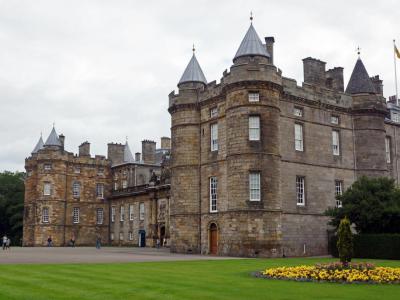
6) Holyroodhouse (must see)
If you're ticking off Edinburgh landmarks, Holyroodhouse is one you can't skip-not unless you're on the run from the crown... Sitting at the royal end of the Royal Mile, this stately pad is the official Scottish residence of the British monarch and once housed none other than Mary, Queen of Scots. That’s right, drama lives here rent-free...
The whole saga begins with King David I, who founded the nearby Holyrood Abbey in 1128 (after a divine deer encounter, according to legend). A few centuries later, precisely by 1501, a palace was built beside the abbey. Now, calling it a “palace”, back then, was maybe a touch ambitious-a grand country house, more like it, rather than Versailles-but it did get bigger in 1532 and 1536. The property was thoroughly renovated in 1633, only to be trashed when Cromwell’s soldiers used it as barracks and then a fire added insult to injury...
Then came the 1670s, when Sir William Bruce, the architectural fixer of the day, rebuilt the place. The abbey chapel became the Chapel Royal, hosting pious activity until 1768, when the roof rather unceremoniously fell in. More restorations followed after that-first in 1822 for a royal visit, and then again in the 20th century when King George V and Queen Mary decided the palace could really use indoor plumbing. Royal flush, anyone?
When the royals are away, the house is open to the public. Inside, you can marvel at ceiling stucco so delicate it practically whispers, and gawk at an entire lineup of Scottish monarchs-some real, some as fictional as their hairlines-painted by the Dutch Golden Age artist Jacob de Wet. Then, dive into the Royal Collection, a five-century mix of armor, jewels, manuscripts, and silverware. Basically, it’s the attic of your dreams-if your attic had Rembrandts and 17th-century clocks.
Oh, and don’t wander off alone unless you're cool with ghosts. Legend has it that Agnes Sampson, accused of witchcraft and executed in 1592, still makes the occasional appearance here. So, if you feel a chill or hear something whispering about herbal remedies... maybe don’t investigate.
Palace, ghosts, ceilings, swords, and sovereign bling-are all here. Holyroodhouse doesn’t just bring the royal drama-it curates it.
The whole saga begins with King David I, who founded the nearby Holyrood Abbey in 1128 (after a divine deer encounter, according to legend). A few centuries later, precisely by 1501, a palace was built beside the abbey. Now, calling it a “palace”, back then, was maybe a touch ambitious-a grand country house, more like it, rather than Versailles-but it did get bigger in 1532 and 1536. The property was thoroughly renovated in 1633, only to be trashed when Cromwell’s soldiers used it as barracks and then a fire added insult to injury...
Then came the 1670s, when Sir William Bruce, the architectural fixer of the day, rebuilt the place. The abbey chapel became the Chapel Royal, hosting pious activity until 1768, when the roof rather unceremoniously fell in. More restorations followed after that-first in 1822 for a royal visit, and then again in the 20th century when King George V and Queen Mary decided the palace could really use indoor plumbing. Royal flush, anyone?
When the royals are away, the house is open to the public. Inside, you can marvel at ceiling stucco so delicate it practically whispers, and gawk at an entire lineup of Scottish monarchs-some real, some as fictional as their hairlines-painted by the Dutch Golden Age artist Jacob de Wet. Then, dive into the Royal Collection, a five-century mix of armor, jewels, manuscripts, and silverware. Basically, it’s the attic of your dreams-if your attic had Rembrandts and 17th-century clocks.
Oh, and don’t wander off alone unless you're cool with ghosts. Legend has it that Agnes Sampson, accused of witchcraft and executed in 1592, still makes the occasional appearance here. So, if you feel a chill or hear something whispering about herbal remedies... maybe don’t investigate.
Palace, ghosts, ceilings, swords, and sovereign bling-are all here. Holyroodhouse doesn’t just bring the royal drama-it curates it.
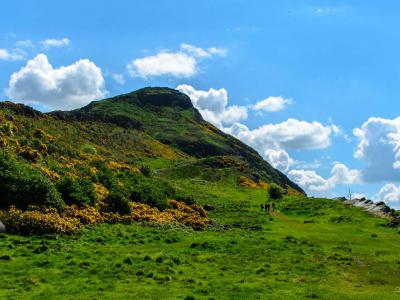
7) Arthur's Seat (must see)
Edinburgh is a busy city, but even here, Scotland doesn’t let you forget its wild origins. To the east of Edinburgh Castle, you will find Arthur’s Seat, a testimony of the ancient land.
About 350 million years ago this main peak of a cluster of hills was an active volcano. During the last Ice Age two million years ago, a huge glacier that moved slowly across the land from west to east eroded the volcano, which was by that time, extinct. Located in Holyrood Park, Arthur’s Seat today is a favourite place for hill walkers as it is relatively easy to climb and you have great views of the city from the top.
The peak’s name comes from a corruption of “Ard-na-Said” which translates roughly as “height of arrows”, although legend likes to claim that this was once the site of Camelot and Arthur’s Round Table. There are remains of old forts on the top of the peak, probably built in the Iron Age by the Votadini, who settled here until after Roman times.
An ancient tradition suggests that if a young girl washes her face in the dew here on May Day, she will become beautiful. The peak today is jealously guarded by the population and no building is allowed here. It is a natural habitat for several wild animals, including foxes, squirrels, weasels and badgers, and for some rather rare species of butterflies.
In 1836, seventeen tiny coffins containing wooden figures were found in a cave on the peak. This led to speculation about the site being used for witch’s rites, but this has never been proved. The coffins and their contents remain a mystery.
Why You Should Visit:
Ruins of an old church, hiking trails, fresh air all around, all on a lovely dormant volcano!
Tip:
Go early in the morning to catch the light over the city and to avoid crowds.
Bring water, snacks, comfortable (closed-toe) shoes, and a light windbreaker too, because it's gusty at the top.
Plan your route carefully, as there are multiple routes up, some more direct and steeper, some more leisurely and meandering.
About 350 million years ago this main peak of a cluster of hills was an active volcano. During the last Ice Age two million years ago, a huge glacier that moved slowly across the land from west to east eroded the volcano, which was by that time, extinct. Located in Holyrood Park, Arthur’s Seat today is a favourite place for hill walkers as it is relatively easy to climb and you have great views of the city from the top.
The peak’s name comes from a corruption of “Ard-na-Said” which translates roughly as “height of arrows”, although legend likes to claim that this was once the site of Camelot and Arthur’s Round Table. There are remains of old forts on the top of the peak, probably built in the Iron Age by the Votadini, who settled here until after Roman times.
An ancient tradition suggests that if a young girl washes her face in the dew here on May Day, she will become beautiful. The peak today is jealously guarded by the population and no building is allowed here. It is a natural habitat for several wild animals, including foxes, squirrels, weasels and badgers, and for some rather rare species of butterflies.
In 1836, seventeen tiny coffins containing wooden figures were found in a cave on the peak. This led to speculation about the site being used for witch’s rites, but this has never been proved. The coffins and their contents remain a mystery.
Why You Should Visit:
Ruins of an old church, hiking trails, fresh air all around, all on a lovely dormant volcano!
Tip:
Go early in the morning to catch the light over the city and to avoid crowds.
Bring water, snacks, comfortable (closed-toe) shoes, and a light windbreaker too, because it's gusty at the top.
Plan your route carefully, as there are multiple routes up, some more direct and steeper, some more leisurely and meandering.
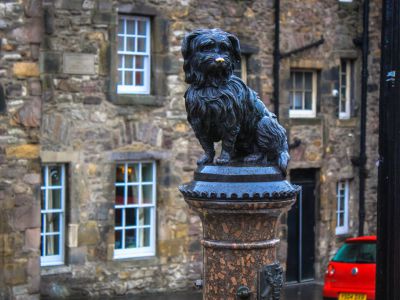
8) Greyfriars Bobby's Statue (must see)
Ah yes-nothing tugs at the heartstrings quite like a tale of undying love and loyalty… especially if it involves a scruffy little dog. Meet Greyfriars Bobby, the Skye Terrier and Edinburgh’s most beloved four-legged legend, immortalized in bronze at the south end of George IV Bridge (just a tail’s wag from the entrance to Greyfriars Kirkyard).
Now, Bobby’s origin story is a bit fuzzy (pun fully intended here). Some say he belonged to a kindly policeman named John Grey; others claim that he was just a clever stray adopted by a “bobby” during his beat (hence the name). Either way, Bobby and John were inseparable for two years… until 1858, when John died of tuberculosis, and Bobby found himself alone in the world.
Whether Grey lived by himself or his widow kicked Bobby out when her husband died remains unclear, but this is where the tear ducts really kick in. Without a home, Bobby made one for himself-on his master’s grave. Indeed, rather than chase squirrels or sniff lampposts like a normal dog, he trotted over to Greyfriars Kirkyard and stayed there-for fourteen years!-until his own death. Through rain, sleet, snow, and the occasional curious visitor, Bobby stood guard with a loyalty that would put most humans to shame.
Usually, dogs weren’t exactly welcomed in church cemeteries, but Bobby had charm. The caretaker took pity on him and fed him, locals left snacks, and even William Chambers, the Lord Provost of Edinburgh, chipped in to pay Bobby’s yearly dog license, without which he would definitely have been destroyed as a stray.
When Bobby passed on in 1872, church rules said “no dogs in holy dirt,” so he was laid to rest just outside the gates. A local philanthropist lady had a statue erected in his honour, complete with two drinking fountains: one for people, and one for thirsty pups.
Over the years, Bobby’s story has had many versions and inspired numerous books, films, and tall tales-you name it. His breed would change depending on who told the tale, but Bobby’s spirit always remained the same-loyal to his master beyond the grave, and always legendary.
Tip:
Wander into Greyfriars Kirkyard right behind the statue for a dose of Edinburgh’s weirder history. Attention, Potterheads!-Rumour has it that Lord Voldemort’s gravestone is in there somewhere, too. Loyalty and dark magic, all in one stop...
Now, Bobby’s origin story is a bit fuzzy (pun fully intended here). Some say he belonged to a kindly policeman named John Grey; others claim that he was just a clever stray adopted by a “bobby” during his beat (hence the name). Either way, Bobby and John were inseparable for two years… until 1858, when John died of tuberculosis, and Bobby found himself alone in the world.
Whether Grey lived by himself or his widow kicked Bobby out when her husband died remains unclear, but this is where the tear ducts really kick in. Without a home, Bobby made one for himself-on his master’s grave. Indeed, rather than chase squirrels or sniff lampposts like a normal dog, he trotted over to Greyfriars Kirkyard and stayed there-for fourteen years!-until his own death. Through rain, sleet, snow, and the occasional curious visitor, Bobby stood guard with a loyalty that would put most humans to shame.
Usually, dogs weren’t exactly welcomed in church cemeteries, but Bobby had charm. The caretaker took pity on him and fed him, locals left snacks, and even William Chambers, the Lord Provost of Edinburgh, chipped in to pay Bobby’s yearly dog license, without which he would definitely have been destroyed as a stray.
When Bobby passed on in 1872, church rules said “no dogs in holy dirt,” so he was laid to rest just outside the gates. A local philanthropist lady had a statue erected in his honour, complete with two drinking fountains: one for people, and one for thirsty pups.
Over the years, Bobby’s story has had many versions and inspired numerous books, films, and tall tales-you name it. His breed would change depending on who told the tale, but Bobby’s spirit always remained the same-loyal to his master beyond the grave, and always legendary.
Tip:
Wander into Greyfriars Kirkyard right behind the statue for a dose of Edinburgh’s weirder history. Attention, Potterheads!-Rumour has it that Lord Voldemort’s gravestone is in there somewhere, too. Loyalty and dark magic, all in one stop...
9) St. Giles' Cathedral (must see)
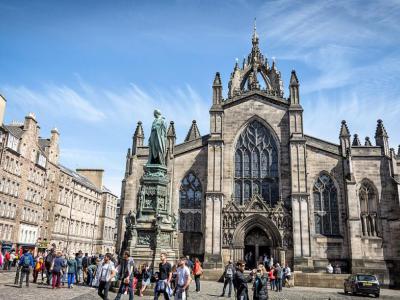
Smack in the middle of the Royal Mile, St Giles’ Cathedral-otherwise known as the High Kirk (or High Church) of Edinburgh-isn't one to be missed. The original building went up in the 12th century but didn’t survive a nasty fire-only the central pillars lived to tell the tale. The replacement was built in 1385. Over the years, it had numerous chapels added-known as aisles-resulting in a kind of charming architectural chaos. At one point, the church had over 50 side altars, like a medieval supermarket of holiness...
In 1466, St Giles’ became a collegiate church, which, in 1490, saw the now-iconic, crown-shaped lantern tower completed. During the Reformation, in 1560, things got a bit dramatic. Most of the church’s treasures vanished-stolen, sold, or just spirited away-including its star relic: Saint Giles’ withered arm and hand, complete with a diamond ring on one skeletal finger (macabre bling at its finest...). In addition to that, the church was partitioned by walls into multiple preaching zones-a kind of Protestant “feng shui,” if you will...
Despite being called a cathedral, it only technically wore that title twice, briefly, during the 17th-century Bishop Wars. The statute of “High Kirk” remains its real claim to fame. A 19th-century restoration gave the church a glow-up-partitions were removed and several chapels pulled down. Among the surviving chapels, perhaps the most beautiful is the Thistle Chapel from 1911: a jaw-dropping High Gothic gem dripping in wood and stone carvings, fluttering heraldic banners, and a breathtaking, delicately carved vaulted ceiling.
Once here, look out for a bronze plaque to Robert Louis Stevenson, author of Treasure Island, in the Moray Aisle, a marble tribute to the dashing but doomed 1st Marquis of Montrose, in the Chapman Aisle, and another to his bitter rival, Archibald Campbell, the 1st Marquis of Argyll, in the Saint Eloi Aisle. Fun fact: these two, once the main signatories of the National Covenant in 1638 (the document signed to oppose attempts to impose Anglican religious practices on the Church of Scotland), became sworn enemies towards the end of their lives. Edinburgh drama, anyone?
Aside from all that, the place is absolutely gorgeous, packed to the rim with stained glass beauty. You’ll walk out with neck cramp from all the ceiling admiration-and it’ll be worth it.
Pro tips:
Entry is free or by donation, but if you’re planning a photo shoot, prepare to fork over £2 for a "permit".
Best to get onto a tour, as there's much you could miss just wandering on your own. Also, if you're feeling adventurous, take the rooftop tour (worth £6).
And yes-don't miss a cozy café downstairs that serves tasty bites. Praise be!
In 1466, St Giles’ became a collegiate church, which, in 1490, saw the now-iconic, crown-shaped lantern tower completed. During the Reformation, in 1560, things got a bit dramatic. Most of the church’s treasures vanished-stolen, sold, or just spirited away-including its star relic: Saint Giles’ withered arm and hand, complete with a diamond ring on one skeletal finger (macabre bling at its finest...). In addition to that, the church was partitioned by walls into multiple preaching zones-a kind of Protestant “feng shui,” if you will...
Despite being called a cathedral, it only technically wore that title twice, briefly, during the 17th-century Bishop Wars. The statute of “High Kirk” remains its real claim to fame. A 19th-century restoration gave the church a glow-up-partitions were removed and several chapels pulled down. Among the surviving chapels, perhaps the most beautiful is the Thistle Chapel from 1911: a jaw-dropping High Gothic gem dripping in wood and stone carvings, fluttering heraldic banners, and a breathtaking, delicately carved vaulted ceiling.
Once here, look out for a bronze plaque to Robert Louis Stevenson, author of Treasure Island, in the Moray Aisle, a marble tribute to the dashing but doomed 1st Marquis of Montrose, in the Chapman Aisle, and another to his bitter rival, Archibald Campbell, the 1st Marquis of Argyll, in the Saint Eloi Aisle. Fun fact: these two, once the main signatories of the National Covenant in 1638 (the document signed to oppose attempts to impose Anglican religious practices on the Church of Scotland), became sworn enemies towards the end of their lives. Edinburgh drama, anyone?
Aside from all that, the place is absolutely gorgeous, packed to the rim with stained glass beauty. You’ll walk out with neck cramp from all the ceiling admiration-and it’ll be worth it.
Pro tips:
Entry is free or by donation, but if you’re planning a photo shoot, prepare to fork over £2 for a "permit".
Best to get onto a tour, as there's much you could miss just wandering on your own. Also, if you're feeling adventurous, take the rooftop tour (worth £6).
And yes-don't miss a cozy café downstairs that serves tasty bites. Praise be!
10) Camera Obscura and World of Illusions (must see)
Back in 1835, an entrepreneurial firecracker named Maria Theresa Short decided that Edinburgh needed more science and spectacle. So, she launched what would become the Camera Obscura & World of Illusions, a place where city views met mind-bending visuals long before Instagram filters were a thing.
Short's first venture, called “Short’s Popular Observatory,” was a quirky little spot built from wood, stone, and pure determination up on Calton Hill, near the National Monument. Sadly, the authorities weren’t fans-so, in 1851, they dismantled it. Undeterred, Short relocated to Castlehill, bought the townhouse of the Laird of Cockpen (indeed, this was his name), and stacked two extra floors on top. By 1853, she had rebranded the place as Short’s Observatory, Museum of Science and Art-a title almost as long as the staircase...
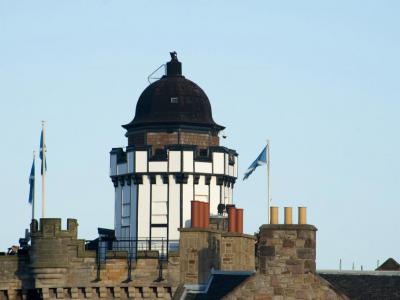
In 1892, the venue came under the management of Patrick Geddes, a forward-thinking Scottish urban planner, sociologist, and ecologist, who gave the building a brainy makeover. He renamed it the Outlook Tower and transformed it into a museum and urban study center. In essence, Geddes filled it with a clever vertical geography lesson: the world at the bottom, Europe and English-speaking countries in the middle, and Edinburgh at the top. Crowning it all, in the topmost room, was a Camera Obscura-because, even in the Victorian era, they already wanted something similar to Google Earth!
The museum ceased operations following Geddes' passing in 1932. In 1966, the University of Edinburgh acquired the site with the intention of establishing the Patrick Geddes Centre and archive. However, in 1982, the building changed ownership to private hands, with a one-room tribute to Geddes remaining on the fourth floor. But that's when the real magic was just getting started.
Today, this tower is Edinburgh’s oldest visitor attraction and still the most delightfully dizzying. It features more than 100 interactive exhibits spread across six floors of illusions, holograms, mirror mazes, vortex tunnels, and hands-on wonders. The rooftop terrace is a camera-ready dream with telescopes and skyline views. The original top-floor Camera Obscura is a 19th-century tech marvel that still gives a live, real-time tour of the city below. It's equally educational, entertaining, and just a little surreal-the kind of place where science meets showbiz and your eyeballs never quite know what hit them.
Short's first venture, called “Short’s Popular Observatory,” was a quirky little spot built from wood, stone, and pure determination up on Calton Hill, near the National Monument. Sadly, the authorities weren’t fans-so, in 1851, they dismantled it. Undeterred, Short relocated to Castlehill, bought the townhouse of the Laird of Cockpen (indeed, this was his name), and stacked two extra floors on top. By 1853, she had rebranded the place as Short’s Observatory, Museum of Science and Art-a title almost as long as the staircase...
In 1892, the venue came under the management of Patrick Geddes, a forward-thinking Scottish urban planner, sociologist, and ecologist, who gave the building a brainy makeover. He renamed it the Outlook Tower and transformed it into a museum and urban study center. In essence, Geddes filled it with a clever vertical geography lesson: the world at the bottom, Europe and English-speaking countries in the middle, and Edinburgh at the top. Crowning it all, in the topmost room, was a Camera Obscura-because, even in the Victorian era, they already wanted something similar to Google Earth!
The museum ceased operations following Geddes' passing in 1932. In 1966, the University of Edinburgh acquired the site with the intention of establishing the Patrick Geddes Centre and archive. However, in 1982, the building changed ownership to private hands, with a one-room tribute to Geddes remaining on the fourth floor. But that's when the real magic was just getting started.
Today, this tower is Edinburgh’s oldest visitor attraction and still the most delightfully dizzying. It features more than 100 interactive exhibits spread across six floors of illusions, holograms, mirror mazes, vortex tunnels, and hands-on wonders. The rooftop terrace is a camera-ready dream with telescopes and skyline views. The original top-floor Camera Obscura is a 19th-century tech marvel that still gives a live, real-time tour of the city below. It's equally educational, entertaining, and just a little surreal-the kind of place where science meets showbiz and your eyeballs never quite know what hit them.
11) Edinburgh Castle (must see)
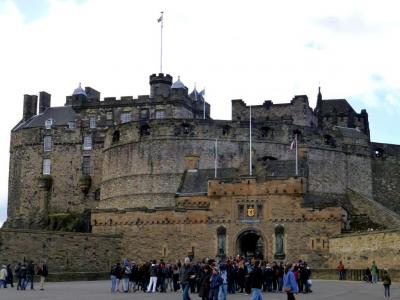
Edinburgh Castle, looming large over the Scottish capital, is the second most visited attraction in the UK (after the Tower of London, which is still number one). The history of Scotland is deeply etched into its ancient stones, making it a timeline in fortress form.
Perched atop Castle Rock (a hardened basaltic plug from an extinct volcano eroded by glaciers), this area has been drawing humans since the 9th millennium BC. The first castle on the site was built in the 12th century by King David I. It remained a royal residence until 1603, when the monarchy packed up and moved to London-presumably for better weather and indoor plumbing...
Indeed, as a fortress, it was virtually impregnable, except for one major-geological-drawback: the basalt rock on which it stands doesn’t hold water (literally). The 28-meter-deep well inside the fortress was about as useful as a chocolate teapot during a siege. So, when the well ran dry, surrender-or dehydration-was the only choice for those inside.
The original castle was mostly destroyed during the Lang Siege of 1573. The only remainder from its early days is St. Margaret’s Chapel. By the 17th century, it had shifted from royal digs to military barracks, housing troops up to the 1920s.
Presently, the castle hosts the Scottish National War Memorial, the National War Museum, and enough regimental museums to keep military buffs busy till closing time. Don't miss the One O’Clock Gun, which is fired daily (except Sundays) at 1 PM with Swiss-watch precision-yes, Edinburgh literally sets its clocks by it...
Also, in the Crown Room, you will see Scotland’s royal bling-crown, scepter, and sword-resting under heavy guard. Period-costumed actors occasionally swoop in to re-enact history with full flair. And if you’re visiting in August, the Military Tattoo takes over the esplanade with kilts, cannons, and bagpipes galore.
Oh, and in the north-east corner of the esplanade, don't miss that rather unassuming little iron fountain. Called Witches' Well, it marks the spot where, back in the day, many women accused of witchcraft were burned at the stake. Spooky, grim, and sadly true...
The panoramic views are postcard-worthy, the historical nooks are endlessly fascinating, and honestly, it just feels epic to stand where centuries of royals, rebels, and rock-solid drama unfolded.
Pro Tips:
The entry is cheaper, and more importantly, faster, if you book online.
Take a free guided tour – running every hour. Otherwise, consider grabbing the £3 audio guide if you like facts with flair.
Being at the mountain's top, it may get breezy, so definitely bring a windproof jacket if visiting in cold weather.
Perched atop Castle Rock (a hardened basaltic plug from an extinct volcano eroded by glaciers), this area has been drawing humans since the 9th millennium BC. The first castle on the site was built in the 12th century by King David I. It remained a royal residence until 1603, when the monarchy packed up and moved to London-presumably for better weather and indoor plumbing...
Indeed, as a fortress, it was virtually impregnable, except for one major-geological-drawback: the basalt rock on which it stands doesn’t hold water (literally). The 28-meter-deep well inside the fortress was about as useful as a chocolate teapot during a siege. So, when the well ran dry, surrender-or dehydration-was the only choice for those inside.
The original castle was mostly destroyed during the Lang Siege of 1573. The only remainder from its early days is St. Margaret’s Chapel. By the 17th century, it had shifted from royal digs to military barracks, housing troops up to the 1920s.
Presently, the castle hosts the Scottish National War Memorial, the National War Museum, and enough regimental museums to keep military buffs busy till closing time. Don't miss the One O’Clock Gun, which is fired daily (except Sundays) at 1 PM with Swiss-watch precision-yes, Edinburgh literally sets its clocks by it...
Also, in the Crown Room, you will see Scotland’s royal bling-crown, scepter, and sword-resting under heavy guard. Period-costumed actors occasionally swoop in to re-enact history with full flair. And if you’re visiting in August, the Military Tattoo takes over the esplanade with kilts, cannons, and bagpipes galore.
Oh, and in the north-east corner of the esplanade, don't miss that rather unassuming little iron fountain. Called Witches' Well, it marks the spot where, back in the day, many women accused of witchcraft were burned at the stake. Spooky, grim, and sadly true...
The panoramic views are postcard-worthy, the historical nooks are endlessly fascinating, and honestly, it just feels epic to stand where centuries of royals, rebels, and rock-solid drama unfolded.
Pro Tips:
The entry is cheaper, and more importantly, faster, if you book online.
Take a free guided tour – running every hour. Otherwise, consider grabbing the £3 audio guide if you like facts with flair.
Being at the mountain's top, it may get breezy, so definitely bring a windproof jacket if visiting in cold weather.
