Custom Walk in Sydney, Australia by michael_hoversten_82e59 created on 2025-06-13
Guide Location: Australia » Sydney
Guide Type: Custom Walk
# of Sights: 9
Tour Duration: 4 Hour(s)
Travel Distance: 8.5 Km or 5.3 Miles
Share Key: FRBYQ
Guide Type: Custom Walk
# of Sights: 9
Tour Duration: 4 Hour(s)
Travel Distance: 8.5 Km or 5.3 Miles
Share Key: FRBYQ
How It Works
Please retrieve this walk in the GPSmyCity app. Once done, the app will guide you from one tour stop to the next as if you had a personal tour guide. If you created the walk on this website or come to the page via a link, please follow the instructions below to retrieve the walk in the app.
Retrieve This Walk in App
Step 1. Download the app "GPSmyCity: Walks in 1K+ Cities" on Apple App Store or Google Play Store.



Step 2. In the GPSmyCity app, download(or launch) the guide "Sydney Map and Walking Tours".
Step 3. Tap the menu button located at upper right corner of the "Walks" screen and select "Retrieve custom walk". Enter the share key: FRBYQ
1) Darling Harbour (must see)
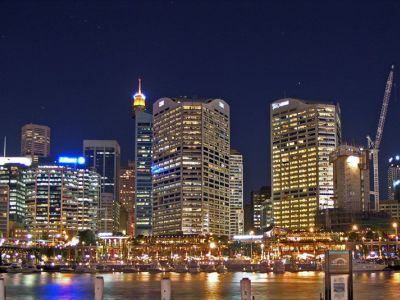
Darling Harbour is one of Sydney’s most active waterfront precincts, where traces of the city’s maritime past coexist with modern public spaces. Once part of the working port known as Cockle Bay, the area functioned for decades as an industrial zone filled with wharves and warehouses. Large-scale redevelopment in the late 1980s, undertaken for Australia’s Bicentenary, reshaped the district into a pedestrian-friendly precinct. The project opened the waterfront to visitors, added landscaped areas, and replaced industrial infrastructure with cultural and recreational facilities while keeping the harbour as the focal point.
Today, Darling Harbour features several of Sydney’s major attractions. The Australian National Maritime Museum showcases the nation’s maritime history with historic vessels and rotating exhibitions. Nearby, SEA LIFE Sydney Aquarium presents marine species from Australian waters through large-scale tanks and underwater tunnels. The Chinese Garden of Friendship, created in cooperation with Sydney’s sister city Guangzhou, offers a quieter space within the precinct. At the southern end, ICC Sydney hosts conferences, concerts, exhibitions, and community events throughout the year. Between these sites, wide promenades, open plazas, playgrounds, and shaded seating areas make the precinct suitable for visitors of all ages.
The built environment combines contemporary architecture with remaining maritime elements, such as old wharf timber, steel trusses, and preserved dock features. Restaurants and cafés line the water’s edge, providing views of ferries, water taxis, and leisure craft moving through the harbour. Footbridges connect the precinct to Barangaroo, Pyrmont, and the central business district, making it easy to incorporate Darling Harbour into broader city walks.
Public programming plays a major role in defining the precinct. Street performers, outdoor screenings, seasonal festivals, and weekend markets contribute to a steady stream of activity. Fireworks displays are common during holidays and large events, drawing both locals and visitors.
Today, Darling Harbour features several of Sydney’s major attractions. The Australian National Maritime Museum showcases the nation’s maritime history with historic vessels and rotating exhibitions. Nearby, SEA LIFE Sydney Aquarium presents marine species from Australian waters through large-scale tanks and underwater tunnels. The Chinese Garden of Friendship, created in cooperation with Sydney’s sister city Guangzhou, offers a quieter space within the precinct. At the southern end, ICC Sydney hosts conferences, concerts, exhibitions, and community events throughout the year. Between these sites, wide promenades, open plazas, playgrounds, and shaded seating areas make the precinct suitable for visitors of all ages.
The built environment combines contemporary architecture with remaining maritime elements, such as old wharf timber, steel trusses, and preserved dock features. Restaurants and cafés line the water’s edge, providing views of ferries, water taxis, and leisure craft moving through the harbour. Footbridges connect the precinct to Barangaroo, Pyrmont, and the central business district, making it easy to incorporate Darling Harbour into broader city walks.
Public programming plays a major role in defining the precinct. Street performers, outdoor screenings, seasonal festivals, and weekend markets contribute to a steady stream of activity. Fireworks displays are common during holidays and large events, drawing both locals and visitors.
2) Sydney Harbour Bridge (must see)
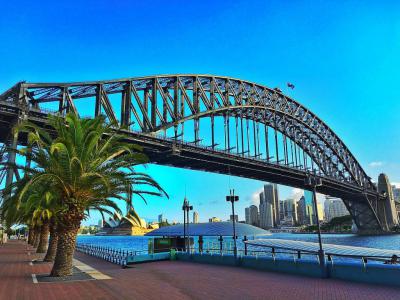
The Sydney Harbour Bridge is one of Australia’s most recognisable engineering achievements, connecting the city centre with the North Shore across Sydney Harbour. Designed by Dr. J.J.C. Bradfield of the New South Wales Department of Public Works and built by Dorman Long & Co. of Middlesbrough, England, the bridge opened in 1932 after nearly a decade of construction. Spanning 503 metres between its granite-faced pylons and rising 134 metres above the water, it became a defining feature of Sydney’s skyline.
At 48.8 metres wide, it was the world’s widest long-span bridge upon completion—a record it held until Vancouver’s Port Mann Bridge opened in 2012. It also remains the world’s tallest steel arch bridge, renowned for its scale, symmetry, and strength.
The bridge’s two half-arches were built outward from each shore and met mid-span in 1930 with remarkable precision. More than six million rivets hold the structure together, its weight distributed through huge abutments rather than the pylons, which were included mainly for aesthetic balance and public reassurance. The granite used for the pylons was quarried at Moruya on the New South Wales south coast, and each of the four towers provides interior space for stairways and viewing platforms.
Carrying eight lanes of road traffic, two rail lines, a pedestrian walkway on the eastern side, and a cycleway on the western side, the bridge remains a vital transport link. The BridgeClimb, introduced in 1998, lets visitors scale the arch under guided supervision for panoramic harbour views, while the Pylon Lookout Museum exhibits models, photographs, and historical records. Painted in the distinctive “Harbour Bridge Grey,” the structure undergoes continuous maintenance, including an ongoing repainting cycle to protect against corrosion.
At 48.8 metres wide, it was the world’s widest long-span bridge upon completion—a record it held until Vancouver’s Port Mann Bridge opened in 2012. It also remains the world’s tallest steel arch bridge, renowned for its scale, symmetry, and strength.
The bridge’s two half-arches were built outward from each shore and met mid-span in 1930 with remarkable precision. More than six million rivets hold the structure together, its weight distributed through huge abutments rather than the pylons, which were included mainly for aesthetic balance and public reassurance. The granite used for the pylons was quarried at Moruya on the New South Wales south coast, and each of the four towers provides interior space for stairways and viewing platforms.
Carrying eight lanes of road traffic, two rail lines, a pedestrian walkway on the eastern side, and a cycleway on the western side, the bridge remains a vital transport link. The BridgeClimb, introduced in 1998, lets visitors scale the arch under guided supervision for panoramic harbour views, while the Pylon Lookout Museum exhibits models, photographs, and historical records. Painted in the distinctive “Harbour Bridge Grey,” the structure undergoes continuous maintenance, including an ongoing repainting cycle to protect against corrosion.
3) Sydney Opera House (must see)
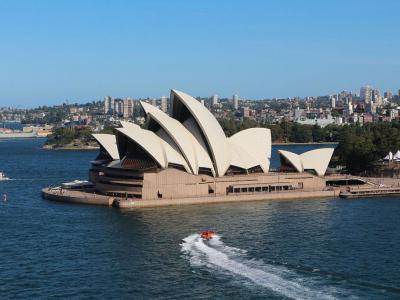
The Sydney Opera House is one of the most celebrated architectural works of the 20th century, situated on Bennelong Point at the edge of Sydney Harbour. Designed by Danish architect Jørn Utzon, it was selected from an international competition held in 1957 and officially opened in 1973 after sixteen years of design and construction.
The building’s distinctive series of white, sail-like shells rising above the harbour have made it an enduring symbol of Australia. Its setting, framed by the Sydney Harbour Bridge and surrounded by water on three sides, amplifies its sculptural form and connection to the natural environment.
The design combines engineering innovation with artistic vision. The roof shells—composed of precast concrete segments arranged in spherical geometry—were an unprecedented structural achievement for their time.
Beneath them, the complex houses multiple performance venues, including the Concert Hall, Joan Sutherland Theatre, Drama Theatre, Playhouse, and Studio. Each space was designed for a specific type of performance, from orchestral and opera productions to contemporary dance and theatre. The Concert Hall, with its soaring timber ceilings and exceptional acoustics, remains the largest and most recognisable of the interior spaces.
The Opera House was designated a UNESCO World Heritage Site in 2007, recognised for its groundbreaking design and influence on modern architecture. Since its opening, it has hosted millions of visitors annually and serves as the home of the Sydney Symphony Orchestra, Opera Australia, and The Australian Ballet, among others.
Beyond its stages, the building’s terraces and promenades offer sweeping views of the harbour, making it both a cultural and civic gathering place. Guided tours reveal the story of its conception, Utzon’s departure before completion, and the later restoration of his design principles in the building’s ongoing renewal.
The building’s distinctive series of white, sail-like shells rising above the harbour have made it an enduring symbol of Australia. Its setting, framed by the Sydney Harbour Bridge and surrounded by water on three sides, amplifies its sculptural form and connection to the natural environment.
The design combines engineering innovation with artistic vision. The roof shells—composed of precast concrete segments arranged in spherical geometry—were an unprecedented structural achievement for their time.
Beneath them, the complex houses multiple performance venues, including the Concert Hall, Joan Sutherland Theatre, Drama Theatre, Playhouse, and Studio. Each space was designed for a specific type of performance, from orchestral and opera productions to contemporary dance and theatre. The Concert Hall, with its soaring timber ceilings and exceptional acoustics, remains the largest and most recognisable of the interior spaces.
The Opera House was designated a UNESCO World Heritage Site in 2007, recognised for its groundbreaking design and influence on modern architecture. Since its opening, it has hosted millions of visitors annually and serves as the home of the Sydney Symphony Orchestra, Opera Australia, and The Australian Ballet, among others.
Beyond its stages, the building’s terraces and promenades offer sweeping views of the harbour, making it both a cultural and civic gathering place. Guided tours reveal the story of its conception, Utzon’s departure before completion, and the later restoration of his design principles in the building’s ongoing renewal.
4) Royal Botanic Gardens (must see)
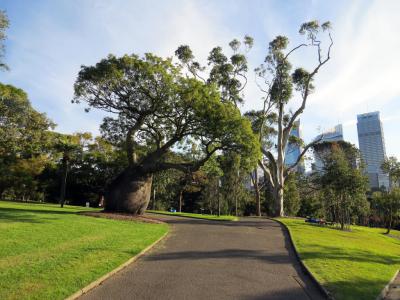
The Royal Botanic Gardens Sydney occupy a large stretch of open space along the eastern edge of Sydney Harbour, a short walk from the Sydney Opera House. Established in 1816, the gardens are Australia’s oldest scientific institution and continue to support research, conservation work, and public education.
Long before colonisation, the area was used by the Gadigal people of the Eora Nation, who harvested food and resources along the shoreline. After 1788, the site became the colony’s first farm before gradually developing into a formal botanic garden. Sandstone walls, mature trees, and waterfront paths frame the grounds and provide uninterrupted views of the harbour and city.
Covering more than 30 hectares, the gardens include a range of themed plant collections. The Palm Grove features species gathered since the 19th century, while the Succulent Garden presents arid-adapted plants from Australia and overseas. The Australian Rainforest Garden highlights the variety of rainforest habitats found across the country. Pathways connect these areas with open lawns, ponds, and shaded groves, creating a layout that supports both scientific displays and everyday recreation. Wildlife is common throughout the gardens, with flying foxes, cockatoos, and waterbirds using the grounds as feeding and roosting sites.
Historical features such as gates, fountains, and memorials mark earlier phases of garden development and illustrate the changing priorities of plant collection and landscape design over two centuries. Seasonal plantings, orchid displays, and rare species collections draw visitors with an interest in botany, horticulture, and photography.
A key facility within the gardens is The Calyx, a contemporary glasshouse and exhibition space used for rotating horticultural shows and public programs focused on biodiversity and environmental themes. The gardens also house the Herbarium of New South Wales, which holds extensive preserved plant specimens used for scientific research.
Along the waterfront, Mrs Macquarie’s Chair provides views across the harbour to the Sydney Harbour Bridge and Opera House. The Farm Cove Walk links the gardens to surrounding foreshore paths, making the area a central point in Sydney’s network of harbour-side walking routes.
Long before colonisation, the area was used by the Gadigal people of the Eora Nation, who harvested food and resources along the shoreline. After 1788, the site became the colony’s first farm before gradually developing into a formal botanic garden. Sandstone walls, mature trees, and waterfront paths frame the grounds and provide uninterrupted views of the harbour and city.
Covering more than 30 hectares, the gardens include a range of themed plant collections. The Palm Grove features species gathered since the 19th century, while the Succulent Garden presents arid-adapted plants from Australia and overseas. The Australian Rainforest Garden highlights the variety of rainforest habitats found across the country. Pathways connect these areas with open lawns, ponds, and shaded groves, creating a layout that supports both scientific displays and everyday recreation. Wildlife is common throughout the gardens, with flying foxes, cockatoos, and waterbirds using the grounds as feeding and roosting sites.
Historical features such as gates, fountains, and memorials mark earlier phases of garden development and illustrate the changing priorities of plant collection and landscape design over two centuries. Seasonal plantings, orchid displays, and rare species collections draw visitors with an interest in botany, horticulture, and photography.
A key facility within the gardens is The Calyx, a contemporary glasshouse and exhibition space used for rotating horticultural shows and public programs focused on biodiversity and environmental themes. The gardens also house the Herbarium of New South Wales, which holds extensive preserved plant specimens used for scientific research.
Along the waterfront, Mrs Macquarie’s Chair provides views across the harbour to the Sydney Harbour Bridge and Opera House. The Farm Cove Walk links the gardens to surrounding foreshore paths, making the area a central point in Sydney’s network of harbour-side walking routes.
5) Art Gallery of New South Wales (must see)
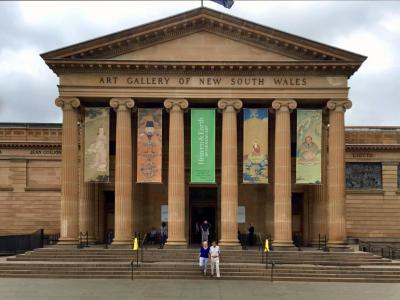
The Art Gallery of New South Wales stands as one of Australia’s foremost public art museums, located on the edge of The Domain overlooking Woolloomooloo Bay. Established in 1871, it began as a modest venue for colonial art and evolved into a major cultural institution that reflects both the breadth of Australian creativity and its global connections.
The gallery’s main building, with its neoclassical sandstone façade completed in 1909, embodies the civic ideals of the early 20th century—elevating art as a shared public experience. Behind its formal exterior, the interior spaces unfold into high-ceilinged galleries illuminated by natural light, designed to balance solemnity with openness.
The collection encompasses more than a century of Australian art, from early colonial landscapes to bold expressions of modern and contemporary practice. A defining feature is its substantial Aboriginal and Torres Strait Islander art collection, which includes traditional works, bark paintings, and contemporary pieces that engage with identity, memory, and Country.
Alongside this are European paintings and sculptures from the Renaissance to Impressionism, and an extensive Asian art collection that reflects cross-cultural exchange—featuring Japanese screens, Chinese ceramics, and Indian miniatures. Together, these collections reveal the gallery’s long-standing commitment to representing diverse artistic traditions.
In 2022, the opening of the Sydney Modern Project marked a transformative moment in the gallery’s history. Designed by the Japanese architectural firm SANAA, the expansion added a series of glass and concrete pavilions that step down the landscape toward the harbour. These new spaces showcase contemporary and large-scale installations, while a repurposed World War II oil tank provides a dramatic subterranean gallery. The project integrates outdoor terraces and sculpture gardens, extending the experience beyond the walls of the museum.
The gallery’s main building, with its neoclassical sandstone façade completed in 1909, embodies the civic ideals of the early 20th century—elevating art as a shared public experience. Behind its formal exterior, the interior spaces unfold into high-ceilinged galleries illuminated by natural light, designed to balance solemnity with openness.
The collection encompasses more than a century of Australian art, from early colonial landscapes to bold expressions of modern and contemporary practice. A defining feature is its substantial Aboriginal and Torres Strait Islander art collection, which includes traditional works, bark paintings, and contemporary pieces that engage with identity, memory, and Country.
Alongside this are European paintings and sculptures from the Renaissance to Impressionism, and an extensive Asian art collection that reflects cross-cultural exchange—featuring Japanese screens, Chinese ceramics, and Indian miniatures. Together, these collections reveal the gallery’s long-standing commitment to representing diverse artistic traditions.
In 2022, the opening of the Sydney Modern Project marked a transformative moment in the gallery’s history. Designed by the Japanese architectural firm SANAA, the expansion added a series of glass and concrete pavilions that step down the landscape toward the harbour. These new spaces showcase contemporary and large-scale installations, while a repurposed World War II oil tank provides a dramatic subterranean gallery. The project integrates outdoor terraces and sculpture gardens, extending the experience beyond the walls of the museum.
6) Saint Mary's Cathedral (must see)
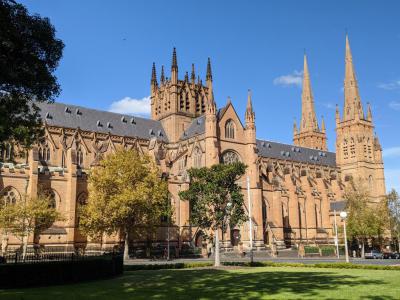
Saint Mary’s Cathedral is one of Sydney’s most distinguished architectural and cultural landmarks, situated on College Street beside Hyde Park. It serves as the principal church of the Catholic Archdiocese of Sydney and occupies the site of the first Catholic chapel established in the colony in 1821. The present cathedral was designed by English-born architect William Wardell, who began work on it in 1868.
Constructed from warm Pyrmont sandstone, the building is an outstanding example of the Gothic Revival style, drawing inspiration from the great cathedrals of Europe while adapting to the Australian climate and light. Its pointed arches, ribbed vaults, and flying buttresses give the structure both grace and strength, while the twin spires, completed in 2000, now stand as defining features of Sydney’s skyline.
The interior of Saint Mary’s is richly detailed, filled with colour and craftsmanship that reveal its long history. High stone columns rise toward a vaulted ceiling illuminated by shafts of filtered light from the stained-glass windows, many of which were created by renowned English and Australian artists.
The rose window above the western entrance casts intricate patterns across the nave, while the carved reredos, choir stalls, and marble altar demonstrate the precision and artistry of 19th-century ecclesiastical design. The cathedral’s proportions and acoustics give it an impressive sense of stillness, especially during organ recitals and choir performances that continue its long tradition of sacred music.
Below the main floor lies the crypt, a quiet chamber adorned with mosaic floors depicting Australian flora and fauna. It houses the tombs of Sydney’s early bishops and archbishops, including Cardinal Norman Gilroy, the first Australian-born cardinal.
The cathedral precinct extends into landscaped gardens and the open Cathedral Square, which connects the building visually to Hyde Park and provides a gathering space for services and civic events. Set beside open parkland and backed by the city’s towers, Saint Mary’s Cathedral remains a clear example of major 19th- and 20th-century church architecture and an important part of Sydney’s historical landscape.
Constructed from warm Pyrmont sandstone, the building is an outstanding example of the Gothic Revival style, drawing inspiration from the great cathedrals of Europe while adapting to the Australian climate and light. Its pointed arches, ribbed vaults, and flying buttresses give the structure both grace and strength, while the twin spires, completed in 2000, now stand as defining features of Sydney’s skyline.
The interior of Saint Mary’s is richly detailed, filled with colour and craftsmanship that reveal its long history. High stone columns rise toward a vaulted ceiling illuminated by shafts of filtered light from the stained-glass windows, many of which were created by renowned English and Australian artists.
The rose window above the western entrance casts intricate patterns across the nave, while the carved reredos, choir stalls, and marble altar demonstrate the precision and artistry of 19th-century ecclesiastical design. The cathedral’s proportions and acoustics give it an impressive sense of stillness, especially during organ recitals and choir performances that continue its long tradition of sacred music.
Below the main floor lies the crypt, a quiet chamber adorned with mosaic floors depicting Australian flora and fauna. It houses the tombs of Sydney’s early bishops and archbishops, including Cardinal Norman Gilroy, the first Australian-born cardinal.
The cathedral precinct extends into landscaped gardens and the open Cathedral Square, which connects the building visually to Hyde Park and provides a gathering space for services and civic events. Set beside open parkland and backed by the city’s towers, Saint Mary’s Cathedral remains a clear example of major 19th- and 20th-century church architecture and an important part of Sydney’s historical landscape.
7) Sydney Tower (must see)
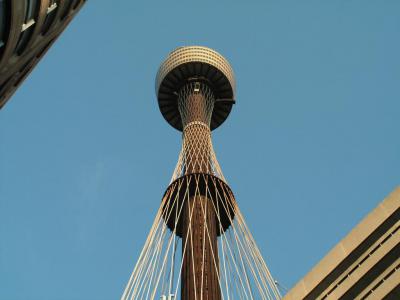
Sydney Tower, also known as the Sydney Tower Eye, is the tallest structure in Sydney and one of the city’s most distinctive modern landmarks. Rising 309 metres above street level from the Centrepoint complex on Market Street, it dominates the skyline of the central business district.
Designed by Australian architect Donald Crone, construction began in 1975 and was completed in 1981, reflecting the city’s growth and architectural ambition during the late 20th century. The tower’s slender central shaft supports a golden turret that houses the observation decks, restaurants, and communication facilities, creating both a functional and symbolic focal point for the city.
The tower’s reinforced concrete core is anchored deep into Sydney’s sandstone bedrock, enabling it to withstand winds of up to 172 kilometres per hour and minor seismic activity. During an earthquake, the tower has been recorded to sway by as much as 30 centimetres, well within its design limits.
The enclosed Sydney Tower Eye observation deck sits 250 metres above ground, offering panoramic 360-degree views across Sydney Harbour, the Blue Mountains, and the Pacific coastline. Above it, the SKYWALK, at 268 metres, provides an open-air experience where visitors step out onto glass platforms while securely harnessed to admire the city from one of its highest points.
Within the turret, the tower features two revolving dining venues—a fine-dining restaurant and a buffet restaurant—that complete a full rotation roughly every 70 to 90 minutes. High-speed lifts transport visitors to the top in under a minute, while the tower’s illumination at night has become an integral feature of Sydney’s skyline, often changing colour to mark cultural events and celebrations. Combining architectural innovation, precise engineering, and sweeping views, Sydney Tower remains a defining symbol of the city’s vertical growth and contemporary identity.
Designed by Australian architect Donald Crone, construction began in 1975 and was completed in 1981, reflecting the city’s growth and architectural ambition during the late 20th century. The tower’s slender central shaft supports a golden turret that houses the observation decks, restaurants, and communication facilities, creating both a functional and symbolic focal point for the city.
The tower’s reinforced concrete core is anchored deep into Sydney’s sandstone bedrock, enabling it to withstand winds of up to 172 kilometres per hour and minor seismic activity. During an earthquake, the tower has been recorded to sway by as much as 30 centimetres, well within its design limits.
The enclosed Sydney Tower Eye observation deck sits 250 metres above ground, offering panoramic 360-degree views across Sydney Harbour, the Blue Mountains, and the Pacific coastline. Above it, the SKYWALK, at 268 metres, provides an open-air experience where visitors step out onto glass platforms while securely harnessed to admire the city from one of its highest points.
Within the turret, the tower features two revolving dining venues—a fine-dining restaurant and a buffet restaurant—that complete a full rotation roughly every 70 to 90 minutes. High-speed lifts transport visitors to the top in under a minute, while the tower’s illumination at night has become an integral feature of Sydney’s skyline, often changing colour to mark cultural events and celebrations. Combining architectural innovation, precise engineering, and sweeping views, Sydney Tower remains a defining symbol of the city’s vertical growth and contemporary identity.
8) Queen Victoria Building (QVB) (must see)
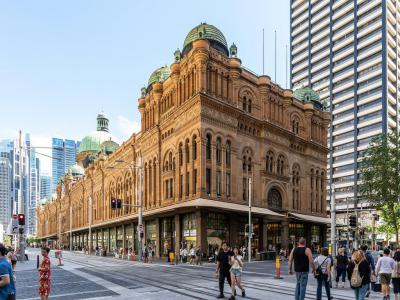
The Queen Victoria Building (QVB) occupies an entire block bounded by George, Market, York, and Druitt Streets and stands as one of Sydney’s most substantial late 19th-century public buildings. Completed in 1898 and designed by George McRae, it was built during an economic depression to provide employment for skilled workers. The building was named in honour of Queen Victoria’s Diamond Jubilee and was intended to serve as a major commercial space for markets and small businesses.
Designed in the Romanesque Revival style, the QVB features sandstone façades, rounded arches, arcades, and detailed stone carving. Its most prominent feature is the large copper-clad central dome, supported by four smaller domes at the corners. The scale and architectural style show the city’s interest in adopting substantial European design influences for its civic buildings.
Inside, the QVB is arranged across five internal levels, including a basement level linked to public transport and lower-priced retailers. The central atrium extends upward through the building, bringing natural light from the dome into the interior. Restored mosaic floors, stained-glass windows, cast-iron balustrades, and decorative arches reflect the original craftsmanship. The levels are connected by staircases and escalators that maintain clear views across the galleries and the length of the atrium.
Throughout the 20th century, the building housed offices and municipal services, and its condition declined until a major restoration in the 1980s returned it to commercial use. The project introduced modern amenities while preserving the building’s structural and decorative features.
Today, the QVB contains boutiques, cafés, and specialty shops and remains a central part of Sydney’s retail environment. Two large mechanical clocks—the Royal Clock and the Great Australian Clock—hang above the atrium and display rotating historical scenes. Outside the Druitt Street entrance stands a statue of Queen Victoria, sculpted by John Hughes in 1908 for Dublin and relocated to Sydney in 1982.
Designed in the Romanesque Revival style, the QVB features sandstone façades, rounded arches, arcades, and detailed stone carving. Its most prominent feature is the large copper-clad central dome, supported by four smaller domes at the corners. The scale and architectural style show the city’s interest in adopting substantial European design influences for its civic buildings.
Inside, the QVB is arranged across five internal levels, including a basement level linked to public transport and lower-priced retailers. The central atrium extends upward through the building, bringing natural light from the dome into the interior. Restored mosaic floors, stained-glass windows, cast-iron balustrades, and decorative arches reflect the original craftsmanship. The levels are connected by staircases and escalators that maintain clear views across the galleries and the length of the atrium.
Throughout the 20th century, the building housed offices and municipal services, and its condition declined until a major restoration in the 1980s returned it to commercial use. The project introduced modern amenities while preserving the building’s structural and decorative features.
Today, the QVB contains boutiques, cafés, and specialty shops and remains a central part of Sydney’s retail environment. Two large mechanical clocks—the Royal Clock and the Great Australian Clock—hang above the atrium and display rotating historical scenes. Outside the Druitt Street entrance stands a statue of Queen Victoria, sculpted by John Hughes in 1908 for Dublin and relocated to Sydney in 1982.
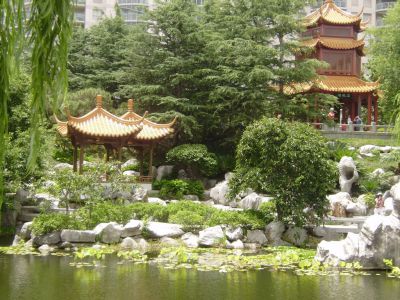
9) Chinese Garden of Friendship (must see)
The Chinese Garden of Friendship is a tranquil oasis in Sydney’s Darling Harbour, designed to embody harmony between nature, architecture, and culture. Opened in 1988 to commemorate Australia’s bicentenary and celebrate the sister-state relationship between New South Wales and Guangdong Province, the garden was created by landscape architects and artisans from China using traditional design principles. Enclosed by high walls that block out the surrounding city, it offers a peaceful retreat filled with winding paths, pavilions, waterfalls, and ornamental lakes that mirror classical gardens from southern China’s Ming dynasty period.
The garden’s design follows the Taoist philosophy of yin and yang, balancing water and stone, light and shadow, and open and enclosed spaces. Visitors pass through gateways that reveal carefully framed scenes—each view intended to evoke a sense of calm and reflection. The Lake of Brightness, the Dragon Wall, and the Clear View Pavilion are among its most recognisable features. Native Australian plants blend seamlessly with Chinese species such as bamboo, lotus, and pine, creating a landscape that symbolises cultural exchange as much as aesthetic harmony.
Architectural elements throughout the garden are rich with symbolism. Curved roofs, carved lattice windows, and moon gates guide movement and perception, while the sound of trickling water softens the urban noise beyond the walls. The Teahouse, situated beside the lake, serves traditional Chinese tea and light refreshments, offering a quiet place to observe koi fish and watch reflections ripple across the water. Seasonal changes bring variety—lotus blooms in summer, falling leaves in autumn, and misty mornings in winter.
Though only steps away from the bustle of Darling Harbour, the Chinese Garden of Friendship feels centuries removed from the modern city. Its composition of stone bridges, willow trees, and tiled pavilions invites visitors to slow their pace and contemplate the balance between human design and the natural world, a significant principle of Chinese garden art.
The garden’s design follows the Taoist philosophy of yin and yang, balancing water and stone, light and shadow, and open and enclosed spaces. Visitors pass through gateways that reveal carefully framed scenes—each view intended to evoke a sense of calm and reflection. The Lake of Brightness, the Dragon Wall, and the Clear View Pavilion are among its most recognisable features. Native Australian plants blend seamlessly with Chinese species such as bamboo, lotus, and pine, creating a landscape that symbolises cultural exchange as much as aesthetic harmony.
Architectural elements throughout the garden are rich with symbolism. Curved roofs, carved lattice windows, and moon gates guide movement and perception, while the sound of trickling water softens the urban noise beyond the walls. The Teahouse, situated beside the lake, serves traditional Chinese tea and light refreshments, offering a quiet place to observe koi fish and watch reflections ripple across the water. Seasonal changes bring variety—lotus blooms in summer, falling leaves in autumn, and misty mornings in winter.
Though only steps away from the bustle of Darling Harbour, the Chinese Garden of Friendship feels centuries removed from the modern city. Its composition of stone bridges, willow trees, and tiled pavilions invites visitors to slow their pace and contemplate the balance between human design and the natural world, a significant principle of Chinese garden art.
