Custom Walk in Zurich, Switzerland by gretacravenoakes_e76cf created on 2025-06-23
Guide Location: Switzerland » Zurich
Guide Type: Custom Walk
# of Sights: 10
Tour Duration: 4 Hour(s)
Travel Distance: 9.2 Km or 5.7 Miles
Share Key: A8Z6H
Guide Type: Custom Walk
# of Sights: 10
Tour Duration: 4 Hour(s)
Travel Distance: 9.2 Km or 5.7 Miles
Share Key: A8Z6H
How It Works
Please retrieve this walk in the GPSmyCity app. Once done, the app will guide you from one tour stop to the next as if you had a personal tour guide. If you created the walk on this website or come to the page via a link, please follow the instructions below to retrieve the walk in the app.
Retrieve This Walk in App
Step 1. Download the app "GPSmyCity: Walks in 1K+ Cities" on Apple App Store or Google Play Store.



Step 2. In the GPSmyCity app, download(or launch) the guide "Zurich Map and Walking Tours".
Step 3. Tap the menu button located at upper right corner of the "Walks" screen and select "Retrieve custom walk". Enter the share key: A8Z6H
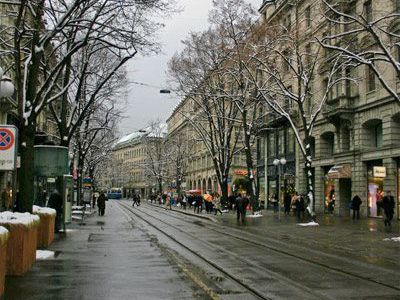
1) Bahnhofstrasse (Station Street) (must see)
Stepping out of Zurich HB, you can't miss Station Street-Zurich’s grand catwalk for wallets with stamina and shoes built for cobblestone. This is the city’s main shopping artery, mostly reserved for pedestrians and trams, which means you’ll be dodging Gucci bags, not taxis. Lined with luxury boutiques and upscale restaurants, this is where Swiss precision meets retail therapy.
The stroll kicks off right outside the station, on Station Square, because Zurich doesn’t believe in metaphors when it comes to names. From there, Station Street marches south all the way to Lake Zurich, finishing at the ever-charming Burkli Square.
Along the way, you’ll saunter past Parade Square, the golden triangle of Swiss finance where the banks are so rich that even the pigeons have portfolios... This real estate is notoriously expensive, which is why the air here smells vaguely of money and truffle oil.
Fun fact: Station Street was born in the 1870s when Zurich’s medieval moats were filled in to make room for the modern city. In short, they replaced water defenses with window shopping-and honestly, that feels like progress.
In essence, Station Street is old Zurich’s nerve center. From here, charming streets like Rennweg and Augustinergasse twist off into postcard-perfect scenes, packed with shops, cafés, and just enough historical flair to justify your souvenir splurge.
If you need a break from luxury price tags, dive into ShopVille, the underground mall beneath the train station. It's got food, gifts, and treats for mere mortals-plus it's open on Sundays, unlike most of Zurich.
So, whenever you're in Zurich and feel like buying, browsing, or just people-watching with a pastry in hand, Station Street-the most stylish stampede of trams and shoppers in Switzerland-can deliver all of this.
Pro tips:
Trams are your best friend-so, hop on, hop off, and explore with the grace of a local who knows not to jaywalk. In winter, treat yourself to rooftop mulled wine and steaming hot chocolate. In summer, trade the boutiques for a lakeside stroll and watch the world glide by...
The stroll kicks off right outside the station, on Station Square, because Zurich doesn’t believe in metaphors when it comes to names. From there, Station Street marches south all the way to Lake Zurich, finishing at the ever-charming Burkli Square.
Along the way, you’ll saunter past Parade Square, the golden triangle of Swiss finance where the banks are so rich that even the pigeons have portfolios... This real estate is notoriously expensive, which is why the air here smells vaguely of money and truffle oil.
Fun fact: Station Street was born in the 1870s when Zurich’s medieval moats were filled in to make room for the modern city. In short, they replaced water defenses with window shopping-and honestly, that feels like progress.
In essence, Station Street is old Zurich’s nerve center. From here, charming streets like Rennweg and Augustinergasse twist off into postcard-perfect scenes, packed with shops, cafés, and just enough historical flair to justify your souvenir splurge.
If you need a break from luxury price tags, dive into ShopVille, the underground mall beneath the train station. It's got food, gifts, and treats for mere mortals-plus it's open on Sundays, unlike most of Zurich.
So, whenever you're in Zurich and feel like buying, browsing, or just people-watching with a pastry in hand, Station Street-the most stylish stampede of trams and shoppers in Switzerland-can deliver all of this.
Pro tips:
Trams are your best friend-so, hop on, hop off, and explore with the grace of a local who knows not to jaywalk. In winter, treat yourself to rooftop mulled wine and steaming hot chocolate. In summer, trade the boutiques for a lakeside stroll and watch the world glide by...
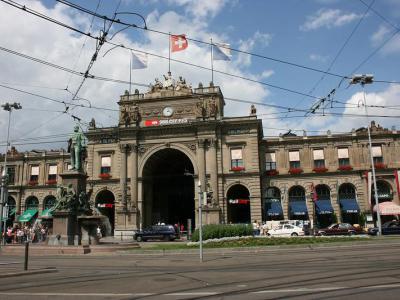
2) Zurich Hauptbahnhof (Central Railway Station)
Known to locals and rail nerds alike as Zurich HB, this train station is Switzerland’s largest and possibly its busiest overachiever. Thanks to Zurich’s prime perch in the heart of Europe, HB has long been the continent’s commuter magnet, currently juggling over 2,000 trains a day like it’s just another Tuesday.
Nestled between the charming wrinkles of the Old Town and flanked by the Limmat and Sihl Rivers, this station even has a river running under it. Yes, the Sihl cruises through a tunnel beneath the platforms like it’s got a ticket too. And speaking of platforms, Zurich HB runs on two levels-one up top, one down below-with a fully functional shopping mall called ShopVille connecting the two.
The station’s railway roots go back to 1847, when the very first Zurich terminal linked to Baden via the Swiss Northern Railway. But as train traffic multiplied like clockwork, the city had to go big. The grand 1871 upgrade produced a neo-Renaissance beauty with soaring arches, stylish lobbies, and even a statue out front of Alfred Escher, the man who made Swiss trains cool before it was cool.
Modern tweaks followed: electrified lines in the early 1900s, computer-controlled signals in the 60s-because even old souls need fresh software. Today, Zurich HB is more than a transit point; it’s a full-blown railway cathedral with shopping, history, and a river casually flowing underneath. All aboard!
Nestled between the charming wrinkles of the Old Town and flanked by the Limmat and Sihl Rivers, this station even has a river running under it. Yes, the Sihl cruises through a tunnel beneath the platforms like it’s got a ticket too. And speaking of platforms, Zurich HB runs on two levels-one up top, one down below-with a fully functional shopping mall called ShopVille connecting the two.
The station’s railway roots go back to 1847, when the very first Zurich terminal linked to Baden via the Swiss Northern Railway. But as train traffic multiplied like clockwork, the city had to go big. The grand 1871 upgrade produced a neo-Renaissance beauty with soaring arches, stylish lobbies, and even a statue out front of Alfred Escher, the man who made Swiss trains cool before it was cool.
Modern tweaks followed: electrified lines in the early 1900s, computer-controlled signals in the 60s-because even old souls need fresh software. Today, Zurich HB is more than a transit point; it’s a full-blown railway cathedral with shopping, history, and a river casually flowing underneath. All aboard!
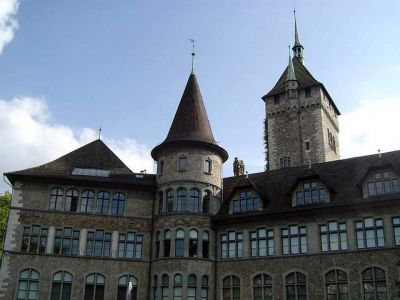
3) Landesmuseum (Swiss National Museum) (must see)
The Swiss National Museum is one of the key art museums of cultural history in the world. The museum was born out of the desire to create a national museum which would be the treasure of the young federal state of Switzerland. Nation Councilmember Salomon Vogelin proposed the construction of a national museum, and, after much debate, a site in Zurich was selected. The building that houses the museum was constructed in 1989. Gustav Gull, a Swiss architect and teacher, designed the building to look like a French Renaissance city chateau.
The museum features a wide range of art and the visitor will see a sample from ancient times and the Middle Ages up to 20th-century. Some of the more unique collections in the museum include a gothic art section, liturgical wooden sculpture, carved alters and chivalry-related art. There is also a section on the history of Switzerland that displays traditional costumes and clothing. The section on Swiss furniture design is a nice juxtaposition to the older items in the space. The museum features regularly rotating exhibits.
Why You Should Visit:
To learn about all aspects of Swiss history – from religion, demographics, archeology, industry to even topographical evolution and more.
The archaeology exhibition is particularly impressive thanks to the animated/interactive displays.
The museum features a wide range of art and the visitor will see a sample from ancient times and the Middle Ages up to 20th-century. Some of the more unique collections in the museum include a gothic art section, liturgical wooden sculpture, carved alters and chivalry-related art. There is also a section on the history of Switzerland that displays traditional costumes and clothing. The section on Swiss furniture design is a nice juxtaposition to the older items in the space. The museum features regularly rotating exhibits.
Why You Should Visit:
To learn about all aspects of Swiss history – from religion, demographics, archeology, industry to even topographical evolution and more.
The archaeology exhibition is particularly impressive thanks to the animated/interactive displays.
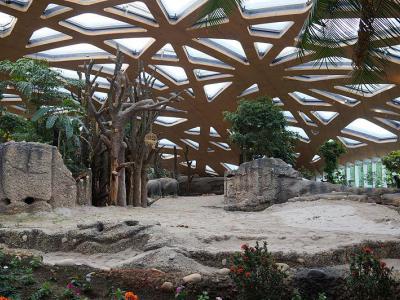
4) Zoo Zürich (must see)
Zoo Zürich, situated in a picturesque area on Zurichberg Street (Zürichbergstrasse) in the Fluntern district of Zurich, showcases the lasting charm and educational importance of zoos in Europe. Established in 1929, it has become one of the top zoos on the continent, known for its diverse animal collection and conservation efforts. As the third oldest zoo in Switzerland, after Basel and Arth-Goldau, Zoo Zürich has a rich history and houses around 2,200 animals of 300 species on its seventy-fifth anniversary.
Located on the lower slopes of Zürichberg, the zoo is popular among locals and tourists for its variety of animals and its focus on providing educational experiences. The penguin parade, held daily afternoon when temperatures drop below ten degrees Celsius, is a particularly cherished tradition allowing visitors to see the charming birds up close.
Led by directors like Heini Hediger, and more recently, Severin Dressen, Zoo Zürich has expanded its attractions, including notable exhibits like the Asian elephant enclosure and the Masoala Hall, which offers underwater views of elephants.
The zoo has also made significant contributions to conservation, notably being the first European institution to successfully breed Galápagos tortoises. In 2005, it identified a new species, the Goodman mouse lemur, highlighting its role in scientific discovery.
Zoo Zürich represents the multifaceted nature of modern zoos, blending education, conservation, and entertainment, and remains an essential destination for animal enthusiasts, conservationists, and the curious, adapting to the challenges of the 21st century.
Why You Should Visit:
The impressive size of most of the enclosures, a pretty good selection of animals, and some very nice settings where you can see the animals close up without cages.
The Masoala Regenwald is a true highlight offering an enclosed rainforest hothouse with a vast number of birds and wildlife at a temperature of 27-33 ℃.
Tip:
Buy tickets online to beat the queues; also make sure to plan your tour around the many activities they have – like feeding or riding the animals.
If you want to save money bring your own food, as there are lots of picnic places to sit and eat.
Located on the lower slopes of Zürichberg, the zoo is popular among locals and tourists for its variety of animals and its focus on providing educational experiences. The penguin parade, held daily afternoon when temperatures drop below ten degrees Celsius, is a particularly cherished tradition allowing visitors to see the charming birds up close.
Led by directors like Heini Hediger, and more recently, Severin Dressen, Zoo Zürich has expanded its attractions, including notable exhibits like the Asian elephant enclosure and the Masoala Hall, which offers underwater views of elephants.
The zoo has also made significant contributions to conservation, notably being the first European institution to successfully breed Galápagos tortoises. In 2005, it identified a new species, the Goodman mouse lemur, highlighting its role in scientific discovery.
Zoo Zürich represents the multifaceted nature of modern zoos, blending education, conservation, and entertainment, and remains an essential destination for animal enthusiasts, conservationists, and the curious, adapting to the challenges of the 21st century.
Why You Should Visit:
The impressive size of most of the enclosures, a pretty good selection of animals, and some very nice settings where you can see the animals close up without cages.
The Masoala Regenwald is a true highlight offering an enclosed rainforest hothouse with a vast number of birds and wildlife at a temperature of 27-33 ℃.
Tip:
Buy tickets online to beat the queues; also make sure to plan your tour around the many activities they have – like feeding or riding the animals.
If you want to save money bring your own food, as there are lots of picnic places to sit and eat.
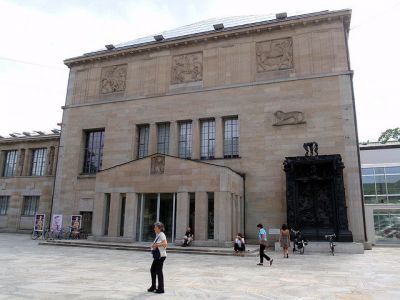
5) Kunsthaus Zurich (Museum of Art) (must see)
The Art Museum of Zürich-one of Europe’s finest museums-is a full-blown visual feast for anyone who enjoys a bit of brain-tickling beauty.
Inside, the collection stretches from medieval mysticism to present-day punch, with Swiss art taking center stage. You’ll spot homegrown legends like Johann Heinrich Füssli-an author of the nightmarish horses-alongside Hodler’s bold forms, Pipilotti Rist’s audiovisual candy, and the cheeky duo Fischli & Weiss. But don’t worry, it’s not all Swiss: Edvard Munch broods on the walls too, while Vincent Van Gogh swirls away, Pablo Picasso throws shapes, and Alberto Giacometti’s spindly figures lurk around like stylish ghosts. Oh, and if you’re into soft lighting and lily pads, yes, Claude Monet and Marc Chagall are here too.
The museum leans into Swissness with flair: special collections highlight Swiss Realism, Zurich Concrete Art (yes, that's a thing), and the lush landscapes and symbolist dreams of Böcklin, Segantini, Vallotton, and again, our friend Hodler. Indeed, it’s got brains and beauty rolled into one.
And let’s not forget the video art section, which started in 1979-back when VHS was cutting-edge and artists decided TV wasn’t just for weather reports. You’ll find works by the likes of Acconci, Baldessari, Marclay, Paik, and other titans of the medium who turned screens into canvases.
There's more: rotating exhibitions keep things fresh, and there’s a library if you're the type who likes your art with a side of theory. The audio guide covers over 200 pieces-perfect if you enjoy having a knowledgeable voice in your ear that isn’t just your own...
Overall, the place is clever, bold, and unapologetically artsy-just like your most interesting friend. If modern art, surrealism, or impressionism make your heart race (or at least mildly speed up), you’ll feel right at home.
Tip:
Wednesdays offer free entry to the main collection. The audio guide is also free.
The building looks modest from the outside, but don’t be fooled-it’s a cultural TARDIS (a fictional hybrid of a time machine and spacecraft from the “Doctor Who” science fiction TV series).
Allow at least two to three hours. Your brain will thank you later.
Inside, the collection stretches from medieval mysticism to present-day punch, with Swiss art taking center stage. You’ll spot homegrown legends like Johann Heinrich Füssli-an author of the nightmarish horses-alongside Hodler’s bold forms, Pipilotti Rist’s audiovisual candy, and the cheeky duo Fischli & Weiss. But don’t worry, it’s not all Swiss: Edvard Munch broods on the walls too, while Vincent Van Gogh swirls away, Pablo Picasso throws shapes, and Alberto Giacometti’s spindly figures lurk around like stylish ghosts. Oh, and if you’re into soft lighting and lily pads, yes, Claude Monet and Marc Chagall are here too.
The museum leans into Swissness with flair: special collections highlight Swiss Realism, Zurich Concrete Art (yes, that's a thing), and the lush landscapes and symbolist dreams of Böcklin, Segantini, Vallotton, and again, our friend Hodler. Indeed, it’s got brains and beauty rolled into one.
And let’s not forget the video art section, which started in 1979-back when VHS was cutting-edge and artists decided TV wasn’t just for weather reports. You’ll find works by the likes of Acconci, Baldessari, Marclay, Paik, and other titans of the medium who turned screens into canvases.
There's more: rotating exhibitions keep things fresh, and there’s a library if you're the type who likes your art with a side of theory. The audio guide covers over 200 pieces-perfect if you enjoy having a knowledgeable voice in your ear that isn’t just your own...
Overall, the place is clever, bold, and unapologetically artsy-just like your most interesting friend. If modern art, surrealism, or impressionism make your heart race (or at least mildly speed up), you’ll feel right at home.
Tip:
Wednesdays offer free entry to the main collection. The audio guide is also free.
The building looks modest from the outside, but don’t be fooled-it’s a cultural TARDIS (a fictional hybrid of a time machine and spacecraft from the “Doctor Who” science fiction TV series).
Allow at least two to three hours. Your brain will thank you later.
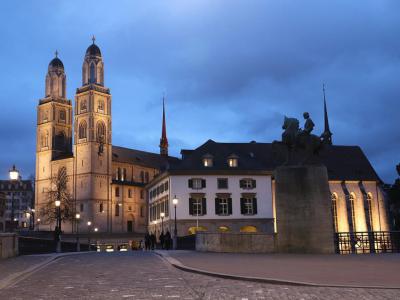
6) Grossmünster (Great Minster) (must see)
Now, if Zurich’s skyline had a king of the hill, it would probably be the Great Minster-standing tall, proud, and unmistakably Romanesque. It’s one of the city’s four major churches, rubbing historic shoulders with The Church of Our Lady, Preacher's Church, and Saint Peter's Church. But this one’s got some serious theological swagger.
Legend credits none other than Emperor Charlemagne-yes, that Charles the Great-with commissioning the place. Construction kicked off around 1100, and after about 120 years of medieval bricklaying, the Great Minster was born.
But here’s where it gets spicy: in the early 1500s, this church didn’t just host sermons-it became ground zero for the Swiss-German Reformation. Huldrych Zwingli, local priest and full-time disruptor, began preaching bold new ideas in 1520. By 1523, after winning a couple of intense theological debates, Zurich officially seceded from the Pope.
Zwingli’s influence ran deep. In 1524, the interior of the Great Minster underwent a makeover-with religious imagery, altars, and even the organ stripped away. Fasting was declared optional. Mass got rewritten. Celibacy-rethought. Church music? Well… eventually it made a comeback. What’s left is a beautifully bare, historically loaded space that tells the story of faith meeting reform head-on.
And speaking of Charles the Great, you’ll spot him again as a statue perched on the southern tower-sword in hand, crown slipping stylishly off his head like a medieval mic drop. The man unified a good chunk of Europe and even lent his name to the word “king” in many languages. Not bad for a guy in stone.
Okay, the church may seem a little plain inside-but don’t let that fool you. The stained-glass windows made from sliced agate are pure magic. The Carolus Magnus statue is iconic. And the front door alone could earn its own Instagram account.
Tip:
Feeling ambitious? Climb the tower-just 180+ steps up. No lift, no turning back. But once you’re up there, the views of Zurich are unbeatable, and best of all, you can catch your breath for as long as you like.
Legend credits none other than Emperor Charlemagne-yes, that Charles the Great-with commissioning the place. Construction kicked off around 1100, and after about 120 years of medieval bricklaying, the Great Minster was born.
But here’s where it gets spicy: in the early 1500s, this church didn’t just host sermons-it became ground zero for the Swiss-German Reformation. Huldrych Zwingli, local priest and full-time disruptor, began preaching bold new ideas in 1520. By 1523, after winning a couple of intense theological debates, Zurich officially seceded from the Pope.
Zwingli’s influence ran deep. In 1524, the interior of the Great Minster underwent a makeover-with religious imagery, altars, and even the organ stripped away. Fasting was declared optional. Mass got rewritten. Celibacy-rethought. Church music? Well… eventually it made a comeback. What’s left is a beautifully bare, historically loaded space that tells the story of faith meeting reform head-on.
And speaking of Charles the Great, you’ll spot him again as a statue perched on the southern tower-sword in hand, crown slipping stylishly off his head like a medieval mic drop. The man unified a good chunk of Europe and even lent his name to the word “king” in many languages. Not bad for a guy in stone.
Okay, the church may seem a little plain inside-but don’t let that fool you. The stained-glass windows made from sliced agate are pure magic. The Carolus Magnus statue is iconic. And the front door alone could earn its own Instagram account.
Tip:
Feeling ambitious? Climb the tower-just 180+ steps up. No lift, no turning back. But once you’re up there, the views of Zurich are unbeatable, and best of all, you can catch your breath for as long as you like.
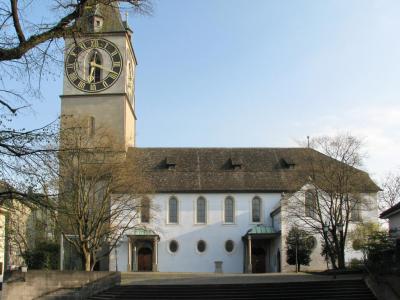
7) St. Peterskirche (St. Peter's Church) (must see)
Saint Peter's Church-Zurich’s oldest temple-is also, quite possibly, the city’s most punctual landmark. Built in the 9th century, this beauty has seen more centuries than your local pub’s clock has seen beers. And speaking of clocks, St. Peter’s claims the biggest clock face in all of Europe. At a whopping 8.6 meters in diameter, its minute hand alone is longer than most compact cars. No excuse for being late around here...
The church got some facelifts over the years-first in the 13th century and again in the 1700s-because, indeed, medieval landmarks deserve a little renovation every now and then. Until 1911, a firewatcher lived in the steeple, popping his head out the window four times an hour to scan for smoke. If flames were spotted, he’d wave a flag in the direction of the danger-simple, low-tech, and surprisingly effective. Thus, unlike many of its European cousins, Zurich avoided catastrophic fires. It turns out that medieval flag signals are not just for parades...
Inside the church, you’ll find a Baroque nave paired with a Romanesque choir-like architectural speed dating through the centuries. Look closely at the faded murals, and you might spot a saint lurking in the shadows. Above the pulpit, the name of God appears in Hebrew, a nod to the Reformation’s love for the Bible’s original languages. Think of it as ancient theological street cred...
Now here’s the kicker: Saint Peter’s Church has shared custody. The City of Zurich owns the tower, while the Swiss Reformed Church parish holds the rights to the bells, the belfry, and the staircase. It is, indeed, church co-parenting at its finest...
Tip for the savvy traveler: Admire it up close, but for peak Instagram potential, cross the river-the church is even prettier from a distance.
The church got some facelifts over the years-first in the 13th century and again in the 1700s-because, indeed, medieval landmarks deserve a little renovation every now and then. Until 1911, a firewatcher lived in the steeple, popping his head out the window four times an hour to scan for smoke. If flames were spotted, he’d wave a flag in the direction of the danger-simple, low-tech, and surprisingly effective. Thus, unlike many of its European cousins, Zurich avoided catastrophic fires. It turns out that medieval flag signals are not just for parades...
Inside the church, you’ll find a Baroque nave paired with a Romanesque choir-like architectural speed dating through the centuries. Look closely at the faded murals, and you might spot a saint lurking in the shadows. Above the pulpit, the name of God appears in Hebrew, a nod to the Reformation’s love for the Bible’s original languages. Think of it as ancient theological street cred...
Now here’s the kicker: Saint Peter’s Church has shared custody. The City of Zurich owns the tower, while the Swiss Reformed Church parish holds the rights to the bells, the belfry, and the staircase. It is, indeed, church co-parenting at its finest...
Tip for the savvy traveler: Admire it up close, but for peak Instagram potential, cross the river-the church is even prettier from a distance.
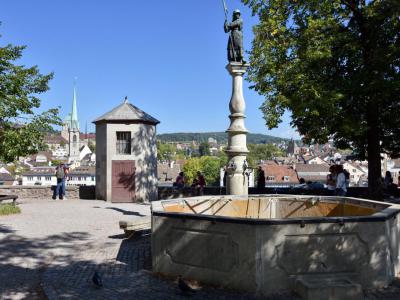
8) Lindenhofplatz (Lindenhof Square) (must see)
Perched above the Old Town of Zurich like a quiet, leafy crown, Lindenhof is both a park and a time machine with a view. And it's not just where the city began-it’s where the city still comes to breathe...
This peaceful hilltop was once the site of a Roman fortress, complete with ten towers and walls thick enough to make modern builders weep. The Romans got busy here in the 2nd century, but by the 9th, Louis the German decided the crumbling castle needed a royal facelift. Sadly, by the 13th century, the whole thing was abandoned, and locals did what locals do best-recycled the stones for new projects. Eco-friendly before it was cool...
And no, Zurich’s ancient swagger didn’t start with Roman togas and centurions. Long before Rome flexed its empire, Neolithic and Bronze Age folks had already claimed this hill as prime real estate. Back then, the Sihl River liked to flood the surrounding lands, and the elevated Lindenhof was the safe (and dry) bet.
Fast forward to the 1700s, and Lindenhof reinvented itself as a public park. The early crowd-pleaser, it was primarily about archery and crossbow contests that drew visitors in those days (indeed, nothing like a bit of target practice to go with your afternoon stroll...).
Nowadays, keep an eye out for the Hedwig Fountain, built in 1912 to honor one of Zurich’s boldest deceptions. During the 1292 siege by Duke Albert I, the city’s women donned full battle gear and manned the ramparts, while the men were off fighting elsewhere. The ruse worked, and Zurich lived to tell the tale. Today, Hedwig and her helmet still stand proudly in the park, thanks to sculptor Gustav Siber.
Apart from all the attractions inside, Lindenhof gives you panoramic eye-candy of Zurich’s rooftops, rivers, and lake-all in one relaxed snapshot. It’s the city’s breathing room, ideal for a pause between museum marathons and shopping sprees. Kids can run wild on the playgrounds, and for the tactically inclined, there’s an outdoor chessboard waiting to test your strategy.
Oh, and if you’re lucky, you might stumble onto a festival or event-just ask at the tourism office.
Insider tip:
Check out the replica of a Roman tombstone that first mentioned Turicum-Zurich’s name back when Latin was all the rage. The original is at the Swiss National Museum, but Lindenhof’s got its own copy for on-the-spot admiration...
This peaceful hilltop was once the site of a Roman fortress, complete with ten towers and walls thick enough to make modern builders weep. The Romans got busy here in the 2nd century, but by the 9th, Louis the German decided the crumbling castle needed a royal facelift. Sadly, by the 13th century, the whole thing was abandoned, and locals did what locals do best-recycled the stones for new projects. Eco-friendly before it was cool...
And no, Zurich’s ancient swagger didn’t start with Roman togas and centurions. Long before Rome flexed its empire, Neolithic and Bronze Age folks had already claimed this hill as prime real estate. Back then, the Sihl River liked to flood the surrounding lands, and the elevated Lindenhof was the safe (and dry) bet.
Fast forward to the 1700s, and Lindenhof reinvented itself as a public park. The early crowd-pleaser, it was primarily about archery and crossbow contests that drew visitors in those days (indeed, nothing like a bit of target practice to go with your afternoon stroll...).
Nowadays, keep an eye out for the Hedwig Fountain, built in 1912 to honor one of Zurich’s boldest deceptions. During the 1292 siege by Duke Albert I, the city’s women donned full battle gear and manned the ramparts, while the men were off fighting elsewhere. The ruse worked, and Zurich lived to tell the tale. Today, Hedwig and her helmet still stand proudly in the park, thanks to sculptor Gustav Siber.
Apart from all the attractions inside, Lindenhof gives you panoramic eye-candy of Zurich’s rooftops, rivers, and lake-all in one relaxed snapshot. It’s the city’s breathing room, ideal for a pause between museum marathons and shopping sprees. Kids can run wild on the playgrounds, and for the tactically inclined, there’s an outdoor chessboard waiting to test your strategy.
Oh, and if you’re lucky, you might stumble onto a festival or event-just ask at the tourism office.
Insider tip:
Check out the replica of a Roman tombstone that first mentioned Turicum-Zurich’s name back when Latin was all the rage. The original is at the Swiss National Museum, but Lindenhof’s got its own copy for on-the-spot admiration...
9) Alter Botanischer Garten (Old Botanical Garden)
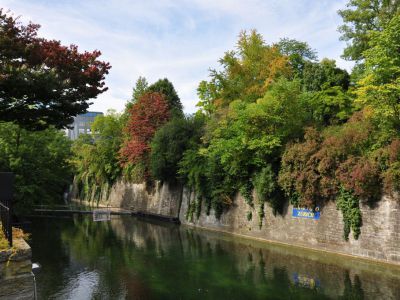
The Old Botanical Garden (Alter Botanischer Garten) in Zurich, holds significant historical and cultural importance as a botanical garden and arboretum. It is located within the remains of Zürich's Baroque fortifications, including the Schanzengraben moat and the Bauschänzli bastion, which were built starting in 1642.
The garden's origins can be traced back to the efforts of Conrad Gessner (1516–1565), a key figure whose personal herbarium laid the foundation for botanical studies in Zurich. In 1746, Johannes Gessner (1709–1790), a descendant of Conrad Gessner and a physician and naturalist, established Zurich's first botanical garden, with support from the Zurich Botanical Society (Naturforschende Gesellschaft Zürich).
After relocating to the Schimmelgut area in 1833 to make way for the newly established University of Zurich, the garden underwent significant developments, including the creation of the plant site at the Schanzengraben moat in 1837, designed by university gardener Leopold Karl Theodor Fröbel (1810–1907). The Palmhaus, a greenhouse made of glass and wood, was added in 1851, followed by an octagonal glass pavilion with an iron frame in 1877, primarily used for cultural events.
Due to limited space and deteriorating conditions, the garden administration decided to move to the spacious Bodmer-Abegg family park in the Weinegg quarter in 1971, opening the new botanical garden in 1976. The original site, now referred to as the Old Botanical Garden, serves as a recreational area, housing the Ethnological Museum (Völkerkundemuseum) of the University of Zurich, an arboretum, and the Gessner-Garten.
The arboretum, situated on the tranquil Schanzengraben moat, remains a notable attraction, offering a serene retreat in the heart of Zurich. The Gessner-Garten, established on May 27, 1997, atop the southern gun bastion of Zurich's fortifications, honors Conrad Gessner. It features 50 medicinal plants from the 16th century, along with quotes from period healers, providing insight into historical medicinal practices.
The garden's origins can be traced back to the efforts of Conrad Gessner (1516–1565), a key figure whose personal herbarium laid the foundation for botanical studies in Zurich. In 1746, Johannes Gessner (1709–1790), a descendant of Conrad Gessner and a physician and naturalist, established Zurich's first botanical garden, with support from the Zurich Botanical Society (Naturforschende Gesellschaft Zürich).
After relocating to the Schimmelgut area in 1833 to make way for the newly established University of Zurich, the garden underwent significant developments, including the creation of the plant site at the Schanzengraben moat in 1837, designed by university gardener Leopold Karl Theodor Fröbel (1810–1907). The Palmhaus, a greenhouse made of glass and wood, was added in 1851, followed by an octagonal glass pavilion with an iron frame in 1877, primarily used for cultural events.
Due to limited space and deteriorating conditions, the garden administration decided to move to the spacious Bodmer-Abegg family park in the Weinegg quarter in 1971, opening the new botanical garden in 1976. The original site, now referred to as the Old Botanical Garden, serves as a recreational area, housing the Ethnological Museum (Völkerkundemuseum) of the University of Zurich, an arboretum, and the Gessner-Garten.
The arboretum, situated on the tranquil Schanzengraben moat, remains a notable attraction, offering a serene retreat in the heart of Zurich. The Gessner-Garten, established on May 27, 1997, atop the southern gun bastion of Zurich's fortifications, honors Conrad Gessner. It features 50 medicinal plants from the 16th century, along with quotes from period healers, providing insight into historical medicinal practices.
10) Urania Observatory
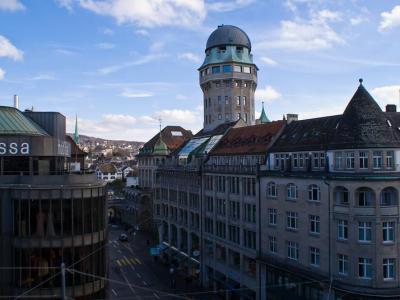
If you’ve ever dreamed of stargazing like an ancient Greek muse, look no further than the Urania Observatory-named, fittingly, after Urania, the celestial lady in charge of astronomy. This 50-meter (or 167-foot, if you're imperially inclined) tower pokes out above Zurich’s Old Town like a curious periscope aimed at the heavens. Construction kicked off in 1899, and by 1907, the public was officially invited to peer into the cosmos.
At the heart of the tower is a serious piece of optical wizardry: a Carl Zeiss refracting telescope with a two-lens system and a 600-times zoom that can make the moon look like it's ready for a selfie. The telescope stretches five meters long and rests on a vibration-proof pillar that goes straight through the building like a cosmic exclamation mark. Despite its age, it’s still a technical marvel-and yes, it got a full spa day in 2007 for its 100th birthday, courtesy of Carl Zeiss Co. in Germany.
But wait-this place isn’t just about interstellar eye candy. You’ll also get sweeping views of Zurich’s rooftops and skyline, which are particularly photogenic after sunset. Join a guided tour on a Friday or Saturday night, or time your visit with one of their special events throughout the year. And if all that stargazing stirs your appetite, don’t worry-they’ve got a bar and restaurant, too. Because sometimes nothing pairs with the rings of Saturn like a nice local beer...
At the heart of the tower is a serious piece of optical wizardry: a Carl Zeiss refracting telescope with a two-lens system and a 600-times zoom that can make the moon look like it's ready for a selfie. The telescope stretches five meters long and rests on a vibration-proof pillar that goes straight through the building like a cosmic exclamation mark. Despite its age, it’s still a technical marvel-and yes, it got a full spa day in 2007 for its 100th birthday, courtesy of Carl Zeiss Co. in Germany.
But wait-this place isn’t just about interstellar eye candy. You’ll also get sweeping views of Zurich’s rooftops and skyline, which are particularly photogenic after sunset. Join a guided tour on a Friday or Saturday night, or time your visit with one of their special events throughout the year. And if all that stargazing stirs your appetite, don’t worry-they’ve got a bar and restaurant, too. Because sometimes nothing pairs with the rings of Saturn like a nice local beer...
