Custom Walk in Lucerne, Switzerland by nsrcsmailbox_d2ec2 created on 2025-07-11
Guide Location: Switzerland » Lucerne
Guide Type: Custom Walk
# of Sights: 10
Tour Duration: 2 Hour(s)
Travel Distance: 4.9 Km or 3 Miles
Share Key: JZ8XQ
Guide Type: Custom Walk
# of Sights: 10
Tour Duration: 2 Hour(s)
Travel Distance: 4.9 Km or 3 Miles
Share Key: JZ8XQ
How It Works
Please retrieve this walk in the GPSmyCity app. Once done, the app will guide you from one tour stop to the next as if you had a personal tour guide. If you created the walk on this website or come to the page via a link, please follow the instructions below to retrieve the walk in the app.
Retrieve This Walk in App
Step 1. Download the app "GPSmyCity: Walks in 1K+ Cities" on Apple App Store or Google Play Store.



Step 2. In the GPSmyCity app, download(or launch) the guide "Lucerne Map and Walking Tours".
Step 3. Tap the menu button located at upper right corner of the "Walks" screen and select "Retrieve custom walk". Enter the share key: JZ8XQ
1) Lucerne Railway Station (must see)
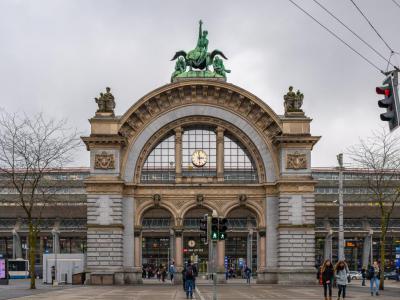
The Lucerne Railway Station is the main hub of Switzerland's rail network. It serves domestic and international traffic on several rail lines. The station is located in a waterfront location on the south side of Lake Lucerne just above the outflow of the Reuss river. A square occupies the area between the front of the station and the lakefront, and is heavily used by the local buses. The landing stages used by the passenger ships are located at the lakeside of the square, providing interchange between rail and water transport. An underground shopping mall lies below both the concourse of the railway station and the square.
The station building was built in 1896. It featured an amazing entrance hall with a distinctive cupola and an elegant curved roof. A fire broke out in 1971 and destroyed much of the building including the cupola, the station frontage and concourse.
A new station was eventually built, and opened on 5 February 1991, exactly 20 years after its predecessor was destroyed. The historic entrance portal facing the lake was re-erected to honor the legacy 1896 building. The portal is crowned by a sculpture named "Zeitgeist" by the well known Swiss sculptor, Richard Kissling.
The station building was built in 1896. It featured an amazing entrance hall with a distinctive cupola and an elegant curved roof. A fire broke out in 1971 and destroyed much of the building including the cupola, the station frontage and concourse.
A new station was eventually built, and opened on 5 February 1991, exactly 20 years after its predecessor was destroyed. The historic entrance portal facing the lake was re-erected to honor the legacy 1896 building. The portal is crowned by a sculpture named "Zeitgeist" by the well known Swiss sculptor, Richard Kissling.
2) Chapel Bridge (must see)
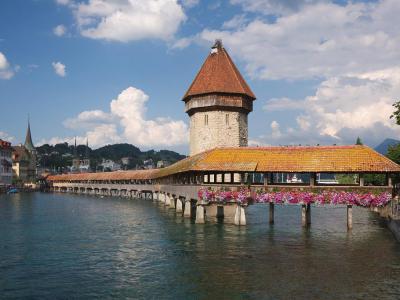
The Chapel Bridge is a wooden foot bridge that stretches diagonally across the Reuss River in Lucerne. It got its name from Saint Peter's Chapel nearby. What makes this bridge special is that it has some old paintings inside from the 17th century. Unfortunately, many of these paintings were destroyed in a fire that happened in 1993, which also damaged most of the bridge. Thankfully, they fixed it up afterward. This bridge is not just any bridge; it's actually the oldest covered wooden bridge in Europe and the world's oldest surviving truss bridge. People in Lucerne really like it, and it's a famous tourist spot in Switzerland.
Originally, they built this bridge in 1333 as part of Lucerne's defenses. It connected the old town on one side of the river to the new town on the other side, which helped protect the city from attacks coming from the south of Lake Lucerne. At first, it was more than 200 meters long, but over time, they made it shorter and did some work on the riverbanks, so now it's 170 meters long.
Lucerne is special because it has three wooden pedestrian bridges: the Hof Bridge from the 14th century (but that one's gone now), the Chapel Bridge, and the Spreuer Bridge from the 16th century. All of them have paintings on the inside in triangle-shaped frames. No other wooden footbridges in Europe have this. The paintings on the Chapel Bridge were made in the 17th century by a local Catholic painter named Hans Heinrich Wagmann. They show things from Lucerne's history. There used to be 147 paintings on the bridge before the fire in 1993, but they could only fully restore 30 of them.
Tip:
Experience it at night with the city lights, swans, flowers and romantic atmosphere. Both banks are full of great shopping and fantastic restaurants.
Originally, they built this bridge in 1333 as part of Lucerne's defenses. It connected the old town on one side of the river to the new town on the other side, which helped protect the city from attacks coming from the south of Lake Lucerne. At first, it was more than 200 meters long, but over time, they made it shorter and did some work on the riverbanks, so now it's 170 meters long.
Lucerne is special because it has three wooden pedestrian bridges: the Hof Bridge from the 14th century (but that one's gone now), the Chapel Bridge, and the Spreuer Bridge from the 16th century. All of them have paintings on the inside in triangle-shaped frames. No other wooden footbridges in Europe have this. The paintings on the Chapel Bridge were made in the 17th century by a local Catholic painter named Hans Heinrich Wagmann. They show things from Lucerne's history. There used to be 147 paintings on the bridge before the fire in 1993, but they could only fully restore 30 of them.
Tip:
Experience it at night with the city lights, swans, flowers and romantic atmosphere. Both banks are full of great shopping and fantastic restaurants.
3) Jesuit Church (Jesuitenkirche) (must see)
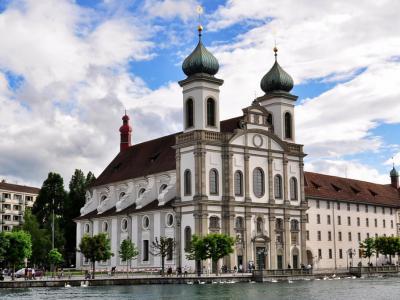
The Lucerne Jesuit Church, located in Lucerne, is a prominent Catholic place of worship. It holds the distinction of being the first grand Baroque-style church constructed in northern Switzerland, situated above the Alps.
The Jesuit order, initiated by Ignatius of Loyola in 1534, played an active role in the Counter-Reformation, which was the Catholic response to the emergence of Protestantism. Protestant reformers like Zwingli in Zurich and Calvin in Geneva had caused a religious divide in predominantly Catholic Switzerland. In response to this situation, the Lucerne city council invited the Jesuits to establish a college in the year 1573.
Ludwig Pfyffer, who held the position of mayor in Lucerne, provided annual financial support to the Jesuits from his personal resources. The Jesuit College of Lucerne was officially founded in 1577, and it was housed in the Ritter Palace, a building originally constructed in 1557 to serve as the residence of Mayor Lux Ritter.
The construction of the associated church commenced in 1667, and by 1673, the basic structure of the church, including its main façade, had been completed. The church was consecrated in 1677, although the interior was not fully finished at that time. Numerous side altars were still missing, and even the high altar wasn't erected until four years later due to financial difficulties. The iconic onion-domed towers were not finished until 1893. In the mid-18th century, the vault underwent a redecoration. The original vestments of Brother Klaus, a renowned Swiss patron, are housed in the inner chapel.
Today, while the church presents an aesthetically pleasing exterior along the river promenade, its remarkable and unaltered pink and white interior truly captivates visitors. Entry to the church is free, and upon stepping inside, you will encounter one of the most magnificent churches in all of Switzerland.
The Jesuit order, initiated by Ignatius of Loyola in 1534, played an active role in the Counter-Reformation, which was the Catholic response to the emergence of Protestantism. Protestant reformers like Zwingli in Zurich and Calvin in Geneva had caused a religious divide in predominantly Catholic Switzerland. In response to this situation, the Lucerne city council invited the Jesuits to establish a college in the year 1573.
Ludwig Pfyffer, who held the position of mayor in Lucerne, provided annual financial support to the Jesuits from his personal resources. The Jesuit College of Lucerne was officially founded in 1577, and it was housed in the Ritter Palace, a building originally constructed in 1557 to serve as the residence of Mayor Lux Ritter.
The construction of the associated church commenced in 1667, and by 1673, the basic structure of the church, including its main façade, had been completed. The church was consecrated in 1677, although the interior was not fully finished at that time. Numerous side altars were still missing, and even the high altar wasn't erected until four years later due to financial difficulties. The iconic onion-domed towers were not finished until 1893. In the mid-18th century, the vault underwent a redecoration. The original vestments of Brother Klaus, a renowned Swiss patron, are housed in the inner chapel.
Today, while the church presents an aesthetically pleasing exterior along the river promenade, its remarkable and unaltered pink and white interior truly captivates visitors. Entry to the church is free, and upon stepping inside, you will encounter one of the most magnificent churches in all of Switzerland.
4) Spreuer Bridge (must see)
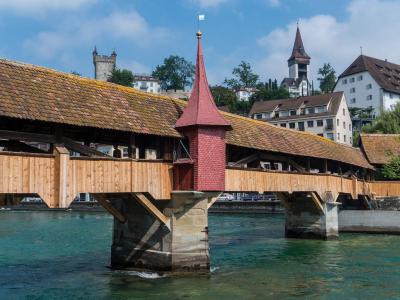
Spreuer Bridge is a covered, wooden footbridge that begins in the Mills Square in old town and ends in Pfister Alley. Also called the Mills Bridge, it is a popular spot for tourists who wish to see both the stunning architecture and the interior paintings.
The original bridge was constructed in the 13th century but was destroyed by a flood in 1566. It was rebuilt shortly thereafter, which was when the paintings were added. The paintings are the largest known paintings of the Dance of Death during the late Middle Ages.
Kaspar Meglinger directed the 67 paintings from 1616 to 1637. Most paintings contain information about the donors, including their names and family coat-of-arms. Some also have portraits of the donors. Forty-five of those paintings have survived. The paintings at Spreuer Bridge have also created the nickname "The Dance of Death Bridge."
Visitors are welcome to walk across the pedestrian bridge at any time, though the paintings are best viewed with natural daylight.
The original bridge was constructed in the 13th century but was destroyed by a flood in 1566. It was rebuilt shortly thereafter, which was when the paintings were added. The paintings are the largest known paintings of the Dance of Death during the late Middle Ages.
Kaspar Meglinger directed the 67 paintings from 1616 to 1637. Most paintings contain information about the donors, including their names and family coat-of-arms. Some also have portraits of the donors. Forty-five of those paintings have survived. The paintings at Spreuer Bridge have also created the nickname "The Dance of Death Bridge."
Visitors are welcome to walk across the pedestrian bridge at any time, though the paintings are best viewed with natural daylight.
5) Museggmauer (Musegg Wall) (must see)
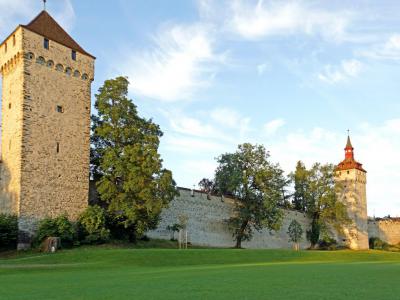
The historic city wall was once part of the fortification of Lucerne. Today Musegg Wall is a beautiful reminder of the past that can be explored up close or viewed from afar.
The wall and nine towers were built in the 13th century. They originally consisted of an inner ring and an outer ring. With much of it still preserved, it is one of the longest defensive walls still standing in the country. Those wishing to walk by the nine towers may do so at anytime as they are all floodlit at night. However, only four are open to public: Mannli, Zyt, Wacht and Schirmer.
Mannli, meaning "little man" is the second tower on the ascending ridge. It was used for military purposes through the end of World War II before it was eventually opened to the public. Wacht Tower, also called Heu Tower, was used for storing gunpowder. It was rebuilt after a 1701 lightning strike caused an explosion. Zyt Tower is a clock tower whose bell, the Leodegar Bell, strikes the hour prior to the city's church clocks. Schirmer Tower holds the city gate.
Musegg Wall and four of its nine towers are open to the public from 8 AM to 7 PM from April through November.
The wall and nine towers were built in the 13th century. They originally consisted of an inner ring and an outer ring. With much of it still preserved, it is one of the longest defensive walls still standing in the country. Those wishing to walk by the nine towers may do so at anytime as they are all floodlit at night. However, only four are open to public: Mannli, Zyt, Wacht and Schirmer.
Mannli, meaning "little man" is the second tower on the ascending ridge. It was used for military purposes through the end of World War II before it was eventually opened to the public. Wacht Tower, also called Heu Tower, was used for storing gunpowder. It was rebuilt after a 1701 lightning strike caused an explosion. Zyt Tower is a clock tower whose bell, the Leodegar Bell, strikes the hour prior to the city's church clocks. Schirmer Tower holds the city gate.
Musegg Wall and four of its nine towers are open to the public from 8 AM to 7 PM from April through November.
6) Bourbaki Panorama (must see)
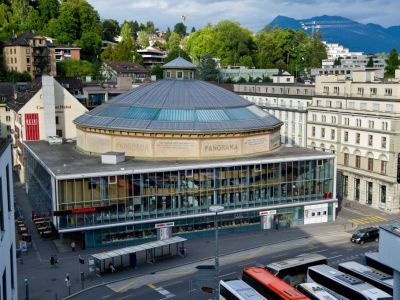
The Bourbaki Panorama is a giant, panoramic painting that pays homage to the internment of the 87,000 French Bourbaki soldiers who made their way from Prussia to Switzerland during the winter of 1871. The artist, Edouard Castres, had a first-hand account of this occurrence. He created the painting after seeing the horrors of war as a Red Cross worker.
The incident happened during the Franco-Prussian War. General Charles Bourbaki's French forces fled to Switzerland. They were starving and facing disease, but the Swiss army found homes for them where they could rest during the harsh winter.
The Bourbaki Panorama is on a 112x10 meter canvas. It is thought to be the inspiration for 360 degree filming and virtual reality due to its size and shape. Visitors can go to the museum to see this important painting any day of the week. It opens at 10 am throughout the year. The museum closes at 5 pm from November to March and at 6 pm from April through October.
Tip:
The Bourbaki Panorama is actually comprised of two levels; the first is a video/slide presentation (plus several artifacts), while the upper level is a spectacular 3D presentation with life-size figures in front of the actual painting. Be sure to study the story in order to understand the situation depicted.
The incident happened during the Franco-Prussian War. General Charles Bourbaki's French forces fled to Switzerland. They were starving and facing disease, but the Swiss army found homes for them where they could rest during the harsh winter.
The Bourbaki Panorama is on a 112x10 meter canvas. It is thought to be the inspiration for 360 degree filming and virtual reality due to its size and shape. Visitors can go to the museum to see this important painting any day of the week. It opens at 10 am throughout the year. The museum closes at 5 pm from November to March and at 6 pm from April through October.
Tip:
The Bourbaki Panorama is actually comprised of two levels; the first is a video/slide presentation (plus several artifacts), while the upper level is a spectacular 3D presentation with life-size figures in front of the actual painting. Be sure to study the story in order to understand the situation depicted.
7) Glacier Garden (must see)
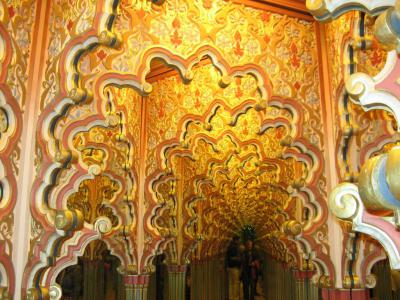
Glacier Garden is the place to go to learn as much as possible about ice age glaciers. Visitors will walk through the museum and gardens where they will find the Rock Adventure Trail, which allows them to effectively walk through the rock and see how it was formed during the Ice Age.
The museum is in a traditional Swiss house. It has an 18th century mountain relief map, which is the oldest in the world. There is also an interactive relief map of Switzerland. After going through the museum, visitors can see themselves in the Mirror Mazer. Made from 90 mirrors, this 19th century maze offers a fun and interesting distraction.
An Observation Tower provides stunning views of Lucerne. Visitors can also find a the perfect area in the park to rest or have an outdoor picnic.
Glacier Garden is open daily from 10 am to 6 pm during the summer season and from 10 am to 5 pm through the winter months.
The museum is in a traditional Swiss house. It has an 18th century mountain relief map, which is the oldest in the world. There is also an interactive relief map of Switzerland. After going through the museum, visitors can see themselves in the Mirror Mazer. Made from 90 mirrors, this 19th century maze offers a fun and interesting distraction.
An Observation Tower provides stunning views of Lucerne. Visitors can also find a the perfect area in the park to rest or have an outdoor picnic.
Glacier Garden is open daily from 10 am to 6 pm during the summer season and from 10 am to 5 pm through the winter months.
8) Lion Monument (must see)
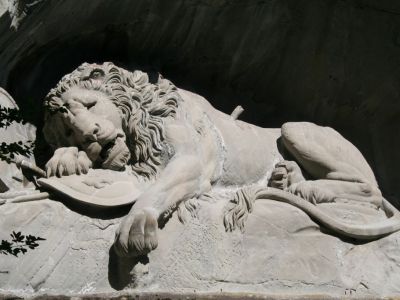
The Lion Monument, also known as the Lion of Lucerne, is a carved rock sculpture located in Lucerne, Switzerland. It was crafted in 1820 to honor the memory of the Swiss Guards who tragically lost their lives in 1792 during the French Revolution. This somber event occurred when revolutionaries attacked the Tuileries Palace in Paris. The Lion Monument stands as one of Switzerland's most renowned landmarks and draws approximately 1.4 million tourists annually.
Starting in the early 17th century, a Swiss Guards regiment had been a part of the Royal Army of France. On August 10th, 1792, as revolutionaries overran the palace, conflict erupted spontaneously after the royal family had been evacuated from the Tuileries to seek shelter with the Legislative Assembly. The Swiss Guards found themselves running out of ammunition and were ultimately overwhelmed by the numerically superior revolutionary forces.
In the course of the fighting or in the aftermath of their surrender, approximately 760 Swiss Guards who had defended the Tuileries lost their lives. An additional two hundred succumbed to their injuries while in prison or fell victim to the September Massacres that ensued.
The Lion Monument, an impressive piece of rock art carved into a cliff face, measures an imposing ten meters in length and six meters in height. It is dedicated to honoring the loyalty and courage of the Swiss. The sculpture depicts a dying lion impaled by a spear, with a shield bearing the emblem of the French monarchy covering its body. Adjacent to the lion, there is another shield bearing the coat of arms of Switzerland.
Mark Twain famously referred to this sculpture of a mortally wounded lion as "the most mournful and moving piece of stone in the world."
Starting in the early 17th century, a Swiss Guards regiment had been a part of the Royal Army of France. On August 10th, 1792, as revolutionaries overran the palace, conflict erupted spontaneously after the royal family had been evacuated from the Tuileries to seek shelter with the Legislative Assembly. The Swiss Guards found themselves running out of ammunition and were ultimately overwhelmed by the numerically superior revolutionary forces.
In the course of the fighting or in the aftermath of their surrender, approximately 760 Swiss Guards who had defended the Tuileries lost their lives. An additional two hundred succumbed to their injuries while in prison or fell victim to the September Massacres that ensued.
The Lion Monument, an impressive piece of rock art carved into a cliff face, measures an imposing ten meters in length and six meters in height. It is dedicated to honoring the loyalty and courage of the Swiss. The sculpture depicts a dying lion impaled by a spear, with a shield bearing the emblem of the French monarchy covering its body. Adjacent to the lion, there is another shield bearing the coat of arms of Switzerland.
Mark Twain famously referred to this sculpture of a mortally wounded lion as "the most mournful and moving piece of stone in the world."
9) Church of St. Leodegar (must see)
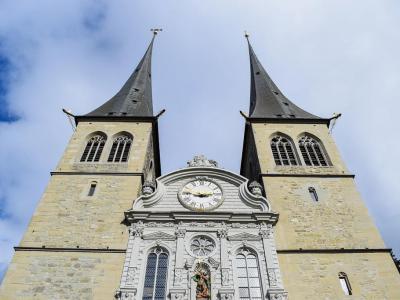
The Church of Saint Leodegar is a 17th century Roman Catholic church. The building was completed in 1639, though the history of the church can be traced as far back as the 8th century.
An older church known as Monastarium Luciaria once stood on the site where the Church of Saint Leodegar now stands. It was built around 735 or 736 AE and had many years of patronage. Unfortunately, that building burned in 1633. All that was left behind were two Romanesque towers.
Many consider the Church of Saint Leodegar to be the most important example of a church using Renaissance architecture in Switzerland. It is also notable for its organ, which was built in 1640. At the time of its original built, the organ had the tallest and heaviest pipe in the world. It was extended in 1862 and again in the 1970s. There are now 7,374 pipes and 111 registers.
Visitors who wish to see the Church of Saint Leodegar may visit on weekdays from 8 am to noon and from 2 PM to 5 pm.
An older church known as Monastarium Luciaria once stood on the site where the Church of Saint Leodegar now stands. It was built around 735 or 736 AE and had many years of patronage. Unfortunately, that building burned in 1633. All that was left behind were two Romanesque towers.
Many consider the Church of Saint Leodegar to be the most important example of a church using Renaissance architecture in Switzerland. It is also notable for its organ, which was built in 1640. At the time of its original built, the organ had the tallest and heaviest pipe in the world. It was extended in 1862 and again in the 1970s. There are now 7,374 pipes and 111 registers.
Visitors who wish to see the Church of Saint Leodegar may visit on weekdays from 8 am to noon and from 2 PM to 5 pm.
10) Swiss Museum of Transport (must see)
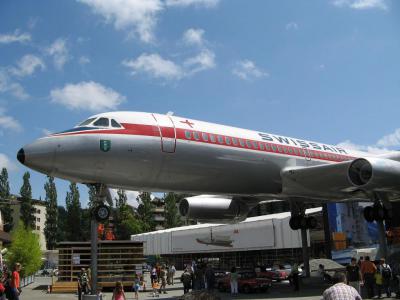
The Swiss Transport Museum, established in July 1959, showcases a diverse array of transportation modes, including trains, cars, ships, and airplanes, alongside exhibits related to communication technologies. Additionally, the museum boasts an extensive collection of artworks by local artist Hans Erni.
Beyond its impressive collections, the museum offers various attractions for visitors. These include an IMAX Theatre, a Planetarium, the Hans Erni Museum, and the Swiss Arena.
One notable space-related exhibit at the museum is EURECA, a 4.5-tonne satellite that was among the few objects sent into space and successfully retrieved. EURECA's journey to space and its safe return was a collaborative effort involving multiple Western European countries and the United States in the 1990s.
Furthermore, the museum received a Spacelab Pallet named "Elvis" on 5th March 2010. This pallet played a role in the STS-46 mission, which took place from 31st July to 8th August 1992. During this mission, ESA astronaut Claude Nicollier, aboard Shuttle Atlantis, deployed ESA's European Retrievable Carrier (Eureca) for scientific research and the joint NASA/Italian Space Agency Tethered Satellite System (TSS-1). The Pallet transported TSS-1 in the cargo bay of the shuttle.
Situated on the shores of Lake Lucerne in the northern part of Lucerne city, the museum is about a 30-minute walk from the city center. It is easily accessible via the Lucerne S-Bahn trains at the nearby Lucerne Verkehrshaus railway station, boat services provided by the Schifffahrtsgesellschaft des Vierwaldstättersees on the lake, and the Lucerne trolleybus system. All three transportation options offer convenient connections to central Lucerne.
Why You Should Visit:
Lots of fun simulations for adults and kids, a restaurant on the premises, place for picnics, as well as a kids play area outside.
Every area has 'hands-on' type of activities and every display is authentic.
Tip:
Make sure to get the headsets if you do not speak German when going to the chocolate exhibit and films.
At the end of your visit, take time to enjoy the lake and walk back to the train station along the lake.
Beyond its impressive collections, the museum offers various attractions for visitors. These include an IMAX Theatre, a Planetarium, the Hans Erni Museum, and the Swiss Arena.
One notable space-related exhibit at the museum is EURECA, a 4.5-tonne satellite that was among the few objects sent into space and successfully retrieved. EURECA's journey to space and its safe return was a collaborative effort involving multiple Western European countries and the United States in the 1990s.
Furthermore, the museum received a Spacelab Pallet named "Elvis" on 5th March 2010. This pallet played a role in the STS-46 mission, which took place from 31st July to 8th August 1992. During this mission, ESA astronaut Claude Nicollier, aboard Shuttle Atlantis, deployed ESA's European Retrievable Carrier (Eureca) for scientific research and the joint NASA/Italian Space Agency Tethered Satellite System (TSS-1). The Pallet transported TSS-1 in the cargo bay of the shuttle.
Situated on the shores of Lake Lucerne in the northern part of Lucerne city, the museum is about a 30-minute walk from the city center. It is easily accessible via the Lucerne S-Bahn trains at the nearby Lucerne Verkehrshaus railway station, boat services provided by the Schifffahrtsgesellschaft des Vierwaldstättersees on the lake, and the Lucerne trolleybus system. All three transportation options offer convenient connections to central Lucerne.
Why You Should Visit:
Lots of fun simulations for adults and kids, a restaurant on the premises, place for picnics, as well as a kids play area outside.
Every area has 'hands-on' type of activities and every display is authentic.
Tip:
Make sure to get the headsets if you do not speak German when going to the chocolate exhibit and films.
At the end of your visit, take time to enjoy the lake and walk back to the train station along the lake.
