

Glacier Garden, Lucerne (must see)
Glacier Garden combines outdoor geology with indoor exhibits, and a guided-style description can help visitors follow its layout. The site began with the discovery of glacial potholes-deep, smooth rock cylinders carved by melting ice and stones during the last Ice Age. These formations sit in the open-air section, surrounded by paths and railings that make it easy to study their shapes from different angles. Nearby displays explain how the area once lay beneath glaciers and, much earlier, beneath a warm sea filled with shell-bearing creatures.
As you enter the outdoor area, look straight ahead toward the largest potholes. Their rounded walls show how water and gravel moved in tight spirals. Step a little to the right and look down into a group of smaller depressions; these vary in depth and show layers of rock smoothed by long abrasion. Now turn to your left, where panels describe the fossilized shell beds discovered on the site. The contrast between the warm marine past and the later glacial landscape becomes clear when you compare the smooth potholes with the patterned surfaces of the shells.
Move toward the villa and step inside. Look to your right for the relief maps that depict the country’s terrain in raised form. These maps were created in the nineteenth century and reflect early attempts to visualize landscape on a smaller scale. Continue straight ahead and you will find rooms filled with geological samples, dioramas, and archival material assembled by the museum’s founders. The layout shows how natural history, private collecting, and early scientific curiosity shaped the museum’s character.
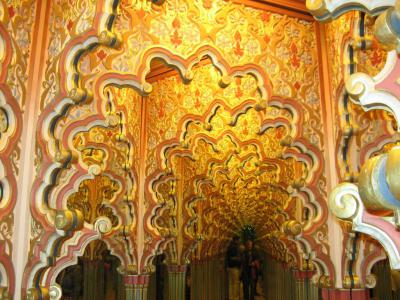
Before leaving, follow the signs to the mirror maze. Once inside, look in any direction and notice how the repeated reflections create long corridors that do not actually exist. The maze was added in the 1890s and remains largely unchanged, giving a sense of how the site blended education and entertainment for early visitors. When you exit, step back into the outdoor section and look once more at the rock formations. The combination of geological evidence, historic collecting, and period amusements reveals how the site developed from a scientific discovery into a museum complex.
As you enter the outdoor area, look straight ahead toward the largest potholes. Their rounded walls show how water and gravel moved in tight spirals. Step a little to the right and look down into a group of smaller depressions; these vary in depth and show layers of rock smoothed by long abrasion. Now turn to your left, where panels describe the fossilized shell beds discovered on the site. The contrast between the warm marine past and the later glacial landscape becomes clear when you compare the smooth potholes with the patterned surfaces of the shells.
Move toward the villa and step inside. Look to your right for the relief maps that depict the country’s terrain in raised form. These maps were created in the nineteenth century and reflect early attempts to visualize landscape on a smaller scale. Continue straight ahead and you will find rooms filled with geological samples, dioramas, and archival material assembled by the museum’s founders. The layout shows how natural history, private collecting, and early scientific curiosity shaped the museum’s character.
Before leaving, follow the signs to the mirror maze. Once inside, look in any direction and notice how the repeated reflections create long corridors that do not actually exist. The maze was added in the 1890s and remains largely unchanged, giving a sense of how the site blended education and entertainment for early visitors. When you exit, step back into the outdoor section and look once more at the rock formations. The combination of geological evidence, historic collecting, and period amusements reveals how the site developed from a scientific discovery into a museum complex.
Want to visit this sight? Check out these Self-Guided Walking Tours in Lucerne. Alternatively, you can download the mobile app "GPSmyCity: Walks in 1K+ Cities" from Apple App Store or Google Play Store. The app turns your mobile device to a personal tour guide and it works offline, so no data plan is needed when traveling abroad.
Download The GPSmyCity App



Glacier Garden on Map
Sight Name: Glacier Garden
Sight Location: Lucerne, Switzerland (See walking tours in Lucerne)
Sight Type: Museum/Gallery
Guide(s) Containing This Sight:
Sight Location: Lucerne, Switzerland (See walking tours in Lucerne)
Sight Type: Museum/Gallery
Guide(s) Containing This Sight:
Nearby Sights

Walking Tours in Lucerne, Switzerland

Create Your Own Walk in Lucerne
Creating your own self-guided walk in Lucerne is easy and fun. Choose the city attractions that you want to see and a walk route map will be created just for you. You can even set your hotel as the start point of the walk.
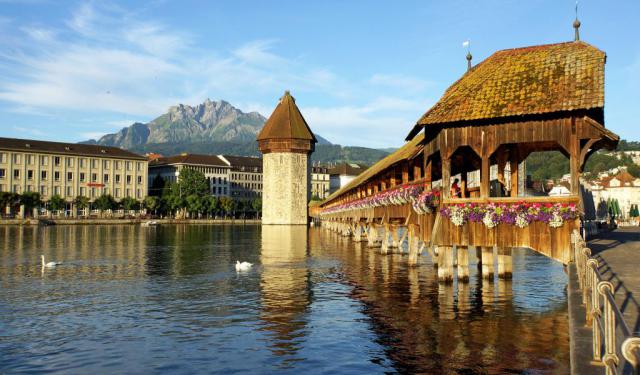
Lucerne Old Town Walking Tour
Lucerne has drawn travelers, writers, and musicians for centuries, often for simple reasons: the lake, the mountains, and a city center that’s easy to walk. Figures like the German composer Richard Wagner lived and worked here, and many 19th-century visitors wrote about Lucerne as a comfortable base for exploring central Switzerland. Their impressions still ring true today-Lucerne is... view more
Tour Duration: 2 Hour(s)
Travel Distance: 4.2 Km or 2.6 Miles
Tour Duration: 2 Hour(s)
Travel Distance: 4.2 Km or 2.6 Miles
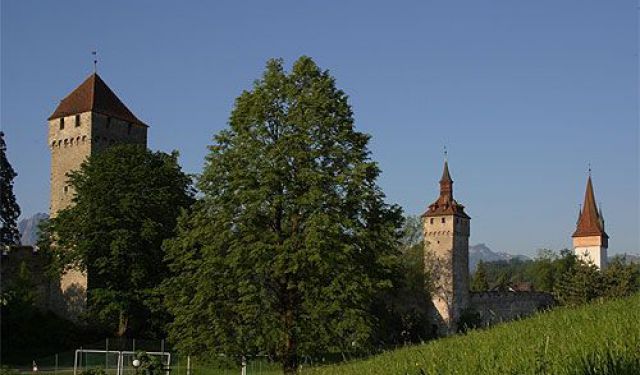
Lucerne's Towers Walking Tour
Rising high above Lucerne’s Old Town, the Musegg Wall is one of the city’s most distinctive landmarks. Its line of nine medieval towers forms a kind of stone crown above the rooftops, and from several points along the fortifications you can look out across the city, Lake Lucerne, the Reuss River, and the mountains beyond.
Built mainly during the 13th and 14th centuries, the wall stretches... view more
Tour Duration: 1 Hour(s)
Travel Distance: 1.0 Km or 0.6 Miles
Built mainly during the 13th and 14th centuries, the wall stretches... view more
Tour Duration: 1 Hour(s)
Travel Distance: 1.0 Km or 0.6 Miles
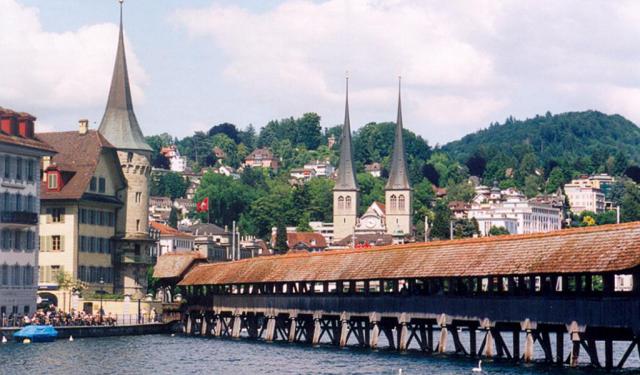
Lucerne's Architectural Jewels Walking Tour
Lucerne’s long religious and cultural history is thoroughly reflected in its architecture, making the city one of Switzerland’s most popular destinations. As you walk through the city center, impressive buildings-from grand civic landmarks to old guild houses, churches, and historic bridges-appear almost naturally along the route.
One of the top local architectural attractions is... view more
Tour Duration: 2 Hour(s)
Travel Distance: 2.3 Km or 1.4 Miles
One of the top local architectural attractions is... view more
Tour Duration: 2 Hour(s)
Travel Distance: 2.3 Km or 1.4 Miles