Custom Walk in Shanghai, China by dacook90_46be3 created on 2025-07-11
Guide Location: China » Shanghai
Guide Type: Custom Walk
# of Sights: 13
Tour Duration: 5 Hour(s)
Travel Distance: 11.6 Km or 7.2 Miles
Share Key: H2FRA
Guide Type: Custom Walk
# of Sights: 13
Tour Duration: 5 Hour(s)
Travel Distance: 11.6 Km or 7.2 Miles
Share Key: H2FRA
How It Works
Please retrieve this walk in the GPSmyCity app. Once done, the app will guide you from one tour stop to the next as if you had a personal tour guide. If you created the walk on this website or come to the page via a link, please follow the instructions below to retrieve the walk in the app.
Retrieve This Walk in App
Step 1. Download the app "GPSmyCity: Walks in 1K+ Cities" on Apple App Store or Google Play Store.



Step 2. In the GPSmyCity app, download(or launch) the guide "Shanghai Map and Walking Tours".
Step 3. Tap the menu button located at upper right corner of the "Walks" screen and select "Retrieve custom walk". Enter the share key: H2FRA
1) Folding Fan Workshop
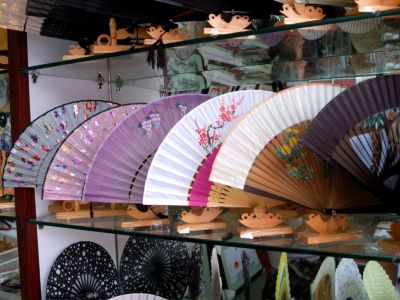
Folding hand fans were invented around 7th AD and were introduced to Europe through trade and the Silk Road. For centuries they are a stylish symbol of wealth and class around the world. One can buy a handmade folding fan at a workshop at 140 Jiu Jiao Chang Road (JiuJiaoChang Lu, 旧校场路), a side alley near 337 Middle Fangbang Road (Fangbang Zhong Lu, 方浜中路). There you can even find the artisans at work. You can choose ready fans, order custom ones, and browse their other products such as their beautiful marble and jade stamps.
What to buy here: folding Fans. Symbol of femininity, folding fans were widely used by concubines during the royal periods, both to give some relief during the hottest hours of the day and as an essential accessory to be compared to a piece of jewelry. Today they are still used during the hot summer months, although they are not all as finely decorated as they were in the imperial era.
They are available in very different prices, depending on the quality of the material and if they are handmade. They can be made in silk and hand painted with typical Chinese patterns of nature subjects such as birds, landscapes, mountains, lakes. You can also order it according to your taste and the artisan will make it for you.
What to buy here: folding Fans. Symbol of femininity, folding fans were widely used by concubines during the royal periods, both to give some relief during the hottest hours of the day and as an essential accessory to be compared to a piece of jewelry. Today they are still used during the hot summer months, although they are not all as finely decorated as they were in the imperial era.
They are available in very different prices, depending on the quality of the material and if they are handmade. They can be made in silk and hand painted with typical Chinese patterns of nature subjects such as birds, landscapes, mountains, lakes. You can also order it according to your taste and the artisan will make it for you.
Image Courtesy of Angela Corrias.
2) Shanghai Town God's Temple (must see)
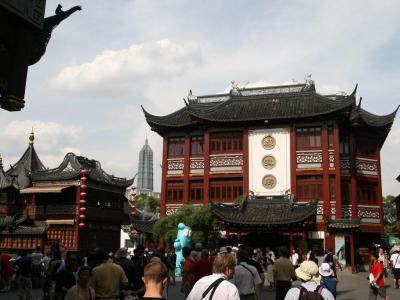
Traditionally, any notable city in China with a sense of history has a temple to its patron deity placed in the old quarter. The Ming-era Taoist temple in the Yuyuan Gardens serves this purpose for Shanghai and deserves a visit if you are in the vicinity, especially given the scarcity of old-style buildings in this part of the city.
Until 1950, this was the center of what is sometimes referred to as "popular Taoism", which is quite removed from the philosophical Taoism of the Tao Te Ching teaching by Lao Tzu. However, the new communist government was equally unsympathetic to any form of Taoism, and promptly removed from the temple all the statues allegedly supporting religious superstition.
Apparently, that reformation still wasn't enough and during the Cultural Revolution the temple was fully converted to a secular use with the main hall housing a jewelry shop for many years afterwards. The return of the traditional Chinese culture to political respectability saw the temple back in the hands of Taoist priests and reconsecrated in 2006.
Inside the temple, passing through its medium-size main courtyard, in front of the main gate, opens way to a number of halls, including the Huo Guang Hall, on the north side, with a large statue of Huo Guang, the prime of Shanghai's three City Gods. Going round the back of the hall one can see a short corridor leading to the hall of Qin Yu-Bo, Shanghai's second major deity. Around that are additional small halls featuring, among others, the Gods of Wealth, Literature, and Knowledge. Few more gods can be seen in the other halls around the main courtyard.
The area outside the temple is packed with souvenir shops selling everything, from postcards to key-chains to handicrafts to clothing, plus many other stores to choose from, mixed up with the beautiful modern but traditionally-styled buildings housing food courts and restaurants offering a wealth of regional cuisine.
At night, when they are lit up, or even during daytime, these old-style buildings are great for taking memorable photos contrasting the Bund's high-rises in the background.
Until 1950, this was the center of what is sometimes referred to as "popular Taoism", which is quite removed from the philosophical Taoism of the Tao Te Ching teaching by Lao Tzu. However, the new communist government was equally unsympathetic to any form of Taoism, and promptly removed from the temple all the statues allegedly supporting religious superstition.
Apparently, that reformation still wasn't enough and during the Cultural Revolution the temple was fully converted to a secular use with the main hall housing a jewelry shop for many years afterwards. The return of the traditional Chinese culture to political respectability saw the temple back in the hands of Taoist priests and reconsecrated in 2006.
Inside the temple, passing through its medium-size main courtyard, in front of the main gate, opens way to a number of halls, including the Huo Guang Hall, on the north side, with a large statue of Huo Guang, the prime of Shanghai's three City Gods. Going round the back of the hall one can see a short corridor leading to the hall of Qin Yu-Bo, Shanghai's second major deity. Around that are additional small halls featuring, among others, the Gods of Wealth, Literature, and Knowledge. Few more gods can be seen in the other halls around the main courtyard.
The area outside the temple is packed with souvenir shops selling everything, from postcards to key-chains to handicrafts to clothing, plus many other stores to choose from, mixed up with the beautiful modern but traditionally-styled buildings housing food courts and restaurants offering a wealth of regional cuisine.
At night, when they are lit up, or even during daytime, these old-style buildings are great for taking memorable photos contrasting the Bund's high-rises in the background.
3) Yuyuan Bazaar (must see)
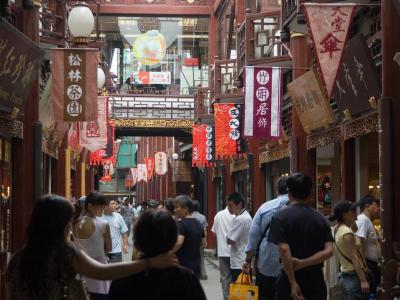
Regularly packed with locals and tourists, this busy shopping area – located just outside the famous Yuyuan Gardens – is a good chance to get a glimpse of Shanghai's everyday life. Amid the plethora of goods on sale – including fresh produce, second-hand stuff, antiques and handicrafts – the most intriguing, perhaps, are the countless food offerings whose vendors seemingly compete with each other. The vast majority of them specialize in dumplings of every imaginable filling; they even have dumplings filled with soup and served with a straw. The Nanxiang Shanghai steamed buns are pretty good on a chilly day either, and there's a long but well-organized queue for them in the central courtyard.
On the whole, this new-looking Ming-style bazaar is a cacophony of shops, street performers, sedan-chair rides and swarms of people everywhere. It covers an area of over 50 hectares and houses almost 3,000 shops and nearly 10,000 vendors. Among them are souvenir shops with tonnes of fine gift ideas, from painted snuff bottles and delightful Chinese kites to embroidered and clever palm-and-finger paintings.
As with any shopping in Asia, haggling skills are quite handy here, especially if you've done your homework on products and prices previously. Another good thing is to buy as the locals buy, particularly women, who certainly know where the best deals are.
Why You Should Visit:
No matter how commercialized, this is still a pretty sight to behold. Only in China!
Tip:
Other than the bazaar itself, there are a few spots just behind the Yuyan Gardens on Fuyou Street where you can find things at wholesale prices. In particular, if you're after household items, check out the Fuyou Street Merchandise Mart – similar to WalMart in the U.S., but in a fraction of the space it usually occupies there. Bargaining here is recommended, but the prices aren’t too high to begin with – just perfect for those on a budget.
On the whole, this new-looking Ming-style bazaar is a cacophony of shops, street performers, sedan-chair rides and swarms of people everywhere. It covers an area of over 50 hectares and houses almost 3,000 shops and nearly 10,000 vendors. Among them are souvenir shops with tonnes of fine gift ideas, from painted snuff bottles and delightful Chinese kites to embroidered and clever palm-and-finger paintings.
As with any shopping in Asia, haggling skills are quite handy here, especially if you've done your homework on products and prices previously. Another good thing is to buy as the locals buy, particularly women, who certainly know where the best deals are.
Why You Should Visit:
No matter how commercialized, this is still a pretty sight to behold. Only in China!
Tip:
Other than the bazaar itself, there are a few spots just behind the Yuyan Gardens on Fuyou Street where you can find things at wholesale prices. In particular, if you're after household items, check out the Fuyou Street Merchandise Mart – similar to WalMart in the U.S., but in a fraction of the space it usually occupies there. Bargaining here is recommended, but the prices aren’t too high to begin with – just perfect for those on a budget.
4) Yuyuan Garden (must see)
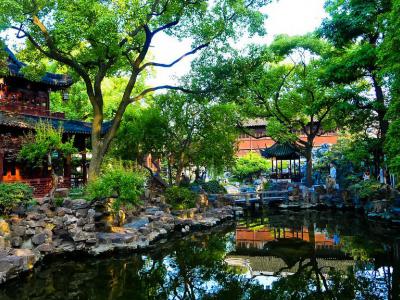
This lovely classical Chinese garden was built in 1577, under the Ming Dynasty, by a high-ranking imperial court official who dedicated it to his elderly father, and quite fittingly so, as ‘yu’ means peace and comfort in Chinese. Probably because of this name or good luck, despite changing fortunes, the garden had miraculously survived the passage of centuries and was reopened to the public in 1961.
For those unfamiliar with Chinese gardening, this would be a great introduction to its elegance manifested, among other things, in the hidden bat and dragon features and, in this particular case, a huge authentic rockery dating back to the Ming period. Overall, the garden has less emphasis on flora and more on water and the harmonious position of elements.
It may well look small, but you will be amazed at how much actually fits in here. The corridors, archways and zigzag bridges all are carefully placed with a great deal of meaning. Of special interest is the Ming-style rosewood furniture in three halls within the garden, one of which is historically famous as the headquarters of the anti-imperialist “Little Sword” society during the Taiping uprising in the 1850s-60s. The roofs and tops of the walls here are decorated with incredible carvings of dragons, horses, and warriors.
Among other highlights is the famous Jade Rock, a 5-ton boulder said to have been one of the private collection items of the Song Dynasty Emperor Huizong. Interestingly enough, this rock's 72 holes are reportedly positioned so as to make the water or smoke sent into one of the holes, come out from all the other holes simultaneously. Sometimes, the guides show another trick with a coin dropped into a hole at the top and exiting from a certain hole down below (each time different) in accordance, they say, with the person's astrological sign.
Tip:
Depending on the time of your visit, the garden may be quite crowded – but that's China! Try coming early, as closer to the opening hours as possible; otherwise, later in the day, the queues are usually long! Don't forget a bottle of water or check out a two-storey teahouse on the island in the middle of the garden. The Queen of England herself once dropped in for a cup of tea there, so these days it’s a bit pricey, but you’re welcome to poke about anyway.
For those unfamiliar with Chinese gardening, this would be a great introduction to its elegance manifested, among other things, in the hidden bat and dragon features and, in this particular case, a huge authentic rockery dating back to the Ming period. Overall, the garden has less emphasis on flora and more on water and the harmonious position of elements.
It may well look small, but you will be amazed at how much actually fits in here. The corridors, archways and zigzag bridges all are carefully placed with a great deal of meaning. Of special interest is the Ming-style rosewood furniture in three halls within the garden, one of which is historically famous as the headquarters of the anti-imperialist “Little Sword” society during the Taiping uprising in the 1850s-60s. The roofs and tops of the walls here are decorated with incredible carvings of dragons, horses, and warriors.
Among other highlights is the famous Jade Rock, a 5-ton boulder said to have been one of the private collection items of the Song Dynasty Emperor Huizong. Interestingly enough, this rock's 72 holes are reportedly positioned so as to make the water or smoke sent into one of the holes, come out from all the other holes simultaneously. Sometimes, the guides show another trick with a coin dropped into a hole at the top and exiting from a certain hole down below (each time different) in accordance, they say, with the person's astrological sign.
Tip:
Depending on the time of your visit, the garden may be quite crowded – but that's China! Try coming early, as closer to the opening hours as possible; otherwise, later in the day, the queues are usually long! Don't forget a bottle of water or check out a two-storey teahouse on the island in the middle of the garden. The Queen of England herself once dropped in for a cup of tea there, so these days it’s a bit pricey, but you’re welcome to poke about anyway.
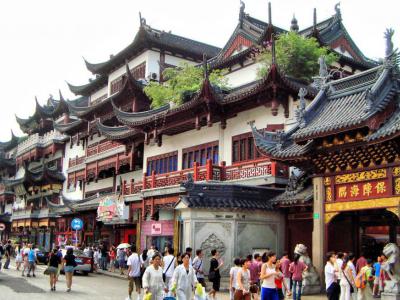
5) Antiques Market of Shanghai Old Town
The Antiques Market of Shanghai Old Town, nestled in the basement of the Huabao building within the bustling Yu Garden Shopping Complex, stands as Shanghai's premier indoor antique market. This sprawling subterranean haven hosts over 200 established antique dealers, creating a labyrinthine treasure trove of historical artifacts and curiosities that echo China's rich and multifaceted past.
A visit to the market is akin to stepping back in time, with each stall and corner brimming with items that tell tales of days gone by. Shoppers can find an eclectic array of merchandise, ranging from intricately embroidered silk jackets and dressing gowns to lustrous freshwater pearls. The market also offers an impressive selection of ceramic tea sets that reflect China's long-standing tea culture, alongside Cultural Revolution posters that capture a pivotal era in the nation's history. Additionally, visitors can discover beautifully crafted wooden fans and painted scrolls, each piece adding to the market's allure as a center for Chinese antiquities and craftsmanship.
The history of this market stretches back to before 1949, preceding the Cultural Revolution of the 1960s and 70s, when it served as a holiday market selling folk antiques and handicrafts. Today, it has evolved into a vibrant destination that attracts tens of thousands of visitors daily, drawn by the vast assortment of goods on offer. The Antiques Market of Shanghai Old Town is not just a place for buying antiques; it's a cultural journey that offers a glimpse into China's storied past, making it a must-visit for locals and tourists alike.
Tip:
Beware – you will definitely have to bring out your haggling skills here! Whatever the price the dealer asks you initially, try to bargain for at least 40% less.
A visit to the market is akin to stepping back in time, with each stall and corner brimming with items that tell tales of days gone by. Shoppers can find an eclectic array of merchandise, ranging from intricately embroidered silk jackets and dressing gowns to lustrous freshwater pearls. The market also offers an impressive selection of ceramic tea sets that reflect China's long-standing tea culture, alongside Cultural Revolution posters that capture a pivotal era in the nation's history. Additionally, visitors can discover beautifully crafted wooden fans and painted scrolls, each piece adding to the market's allure as a center for Chinese antiquities and craftsmanship.
The history of this market stretches back to before 1949, preceding the Cultural Revolution of the 1960s and 70s, when it served as a holiday market selling folk antiques and handicrafts. Today, it has evolved into a vibrant destination that attracts tens of thousands of visitors daily, drawn by the vast assortment of goods on offer. The Antiques Market of Shanghai Old Town is not just a place for buying antiques; it's a cultural journey that offers a glimpse into China's storied past, making it a must-visit for locals and tourists alike.
Tip:
Beware – you will definitely have to bring out your haggling skills here! Whatever the price the dealer asks you initially, try to bargain for at least 40% less.
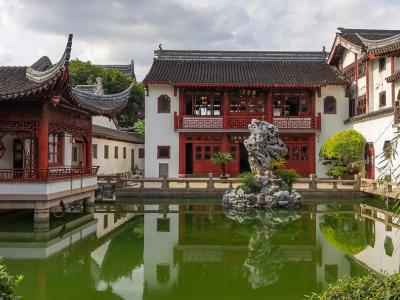
6) Shanghai Confucian Temple (must see)
This ancient shrine is the main temple of Shanghai and a definite must-see for those visiting the city. It is dedicated to the famous Chinese philosopher Confucius and was founded under the Yuan Dynasty, when Shanghai, then a small fishing village, was granted the status of a county seat. With time, this shrine became China's most prestigious academic institution and a religious temple combined.
The complex is well-tended and is much larger than it looks on the outside. Within its walls are a number of scenic spots such as the Music Terrace, Study Gate, Etiquette Gate, Hall to Listen to the Rain, Sky and Cloud Reflection Pond, and Confucian Study Hall, to mention but a few.
Facing the front gate is the Dacheng Hall, or the Hall of Great Perfection, to the right of which is found the eponymous huge Dacheng Bell, weighing some 1500 kg. They say, the sound of this bell is loud and clear, and its reverberations last up to three minutes!
The appealing atmosphere of scholarly introspection infuses the complex and is enhanced with the statues of Confucius, particularly the seated golden one beside the Dacheng Hall, flanked by the statues of his two most illustrious disciples, Yan Hui and Zeng Shen. Modern-day students, wishing to excel at exams, come here to tie a red ribbon around the pine tree for good luck.
In addition to the ancient Confucian texts, the temple houses a collection of ceramics and a tea house where tea lovers can enjoy a Chinese tea ceremony and sample local varieties of tea free of charge.
In keeping with the ancient tradition originated in the Ming and Qing periods, each Sunday in the northeastern part of the temple there is a book fair where people come to buy, sell or exchange books. Some truly old and rare editions can be found there, so it's well worth attending.
The area outside the temple is packed with stores and several eateries selling authentic Shanghai food at reasonable prices. Also nearby is the famous Xintiandi district.
Tip:
The Sunday book market has to be visited as it is something different in Shanghai, but beware that it opens at 8am and closes early around 3-4pm.
If you want full access then pay 10RMB; otherwise, you can just go to the book market inside the inner courtyard. 10RMB gets you into the temple as well as the other courtyards.
Go towards the temple and the guards will ask for your tickets. Most people think they cannot go up, but that's what your ticket covers for.
Temple
The complex is well-tended and is much larger than it looks on the outside. Within its walls are a number of scenic spots such as the Music Terrace, Study Gate, Etiquette Gate, Hall to Listen to the Rain, Sky and Cloud Reflection Pond, and Confucian Study Hall, to mention but a few.
Facing the front gate is the Dacheng Hall, or the Hall of Great Perfection, to the right of which is found the eponymous huge Dacheng Bell, weighing some 1500 kg. They say, the sound of this bell is loud and clear, and its reverberations last up to three minutes!
The appealing atmosphere of scholarly introspection infuses the complex and is enhanced with the statues of Confucius, particularly the seated golden one beside the Dacheng Hall, flanked by the statues of his two most illustrious disciples, Yan Hui and Zeng Shen. Modern-day students, wishing to excel at exams, come here to tie a red ribbon around the pine tree for good luck.
In addition to the ancient Confucian texts, the temple houses a collection of ceramics and a tea house where tea lovers can enjoy a Chinese tea ceremony and sample local varieties of tea free of charge.
In keeping with the ancient tradition originated in the Ming and Qing periods, each Sunday in the northeastern part of the temple there is a book fair where people come to buy, sell or exchange books. Some truly old and rare editions can be found there, so it's well worth attending.
The area outside the temple is packed with stores and several eateries selling authentic Shanghai food at reasonable prices. Also nearby is the famous Xintiandi district.
Tip:
The Sunday book market has to be visited as it is something different in Shanghai, but beware that it opens at 8am and closes early around 3-4pm.
If you want full access then pay 10RMB; otherwise, you can just go to the book market inside the inner courtyard. 10RMB gets you into the temple as well as the other courtyards.
Go towards the temple and the guards will ask for your tickets. Most people think they cannot go up, but that's what your ticket covers for.
Temple
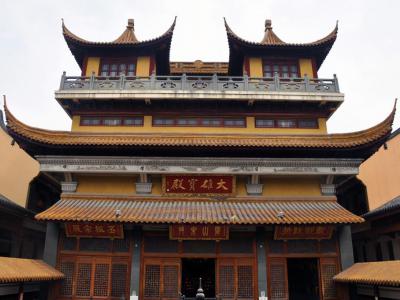
7) Fazangjiang Temple
Fazangjiang is one of the four most prominent Buddhist temples in Shanghai, alongside those of Yu Fu Chan Si (the Jade Buddha Temple), Jing'an Si (the Temple of Peace and Tranquility), and Longhua Si (the Luster of the Dragon Temple). Its unique architecture would make it a top attraction of the Old Town, but curiously enough it does not advertise itself and, without stepping through its doors, people (locals or foreigners alike) may never know it is there. On the outside, it looks pretty much like any other gated entrance with no sound or smell passing from behind the wall, even if there is a prayer in session or incense burning underway.
The temple was built in 1924 and, similarly to the acclaimed Jing’an Si temple, was used as a factory during the Cultural Revolution of the 1960s-70s. Now restored and reconsecrated, some parts of its main hall reflect Art Deco motifs, adding to the uniqueness of its location inside a tower-like structure. A large statue of Buddha Gautama Sakyamuni sat on top of a lily dominates the hall. There are also two gilded walls with the images of “Arhats” – enlightened persons who have reached nirvana – as well as golden sculptures of the Buddhist trinity. There is even a small shrine dedicated to Dizang Wang, the Chinese God of the Underworld in Buddhist mythology. Swastika, the ancient Buddhist symbol of eternity, is found on many prayer ribbons hanging around.
Much to its merit, Fazangjiang has kept its historical identity intact and is now a welcoming oasis amid the hustle and bustle of a busy metropolis. No entry ticket is required, and the serene atmosphere of the temple makes it a fine place to acquaint yourself with the merits of Chinese Buddhism.
Tip:
A vegetarian restaurant run by the temple, serving simple dishes, is right next door and is quite handy for those seeking to quench their hunger other than purely spiritual.
The temple was built in 1924 and, similarly to the acclaimed Jing’an Si temple, was used as a factory during the Cultural Revolution of the 1960s-70s. Now restored and reconsecrated, some parts of its main hall reflect Art Deco motifs, adding to the uniqueness of its location inside a tower-like structure. A large statue of Buddha Gautama Sakyamuni sat on top of a lily dominates the hall. There are also two gilded walls with the images of “Arhats” – enlightened persons who have reached nirvana – as well as golden sculptures of the Buddhist trinity. There is even a small shrine dedicated to Dizang Wang, the Chinese God of the Underworld in Buddhist mythology. Swastika, the ancient Buddhist symbol of eternity, is found on many prayer ribbons hanging around.
Much to its merit, Fazangjiang has kept its historical identity intact and is now a welcoming oasis amid the hustle and bustle of a busy metropolis. No entry ticket is required, and the serene atmosphere of the temple makes it a fine place to acquaint yourself with the merits of Chinese Buddhism.
Tip:
A vegetarian restaurant run by the temple, serving simple dishes, is right next door and is quite handy for those seeking to quench their hunger other than purely spiritual.
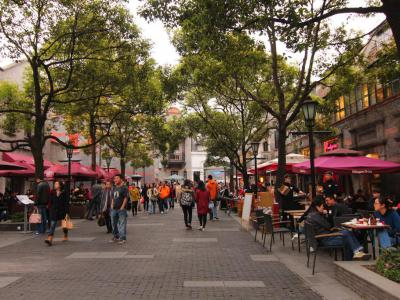
8) Xintiandi (must see)
Xintiandi in Shanghai blends East and West, with traditional Shikumen houses alongside modern Western-style buildings, creating a unique pedestrian district. The area is distinctly divided into two blocks, each offering a different experience to visitors. The Southern block is characterized by its modern architecture, incorporating a few well-preserved Shikumen houses amidst a sprawling 25,000 square meter area dedicated to shopping and entertainment. This modern enclave boasts a sprawling mall, established in 2002.
In contrast, the Northern block is a nostalgic journey back to Shanghai in the early 20th century. It is exclusively composed of preserved Shikumen houses and narrow streets, meticulously maintained to offer a glimpse into the city's historical ambiance. The exteriors of these houses may retain their original charm, but the interiors have been transformed into luxurious spaces housing high-end boutiques and cafes. These establishments serve a variety of global cuisines, catering to the tastes of a diverse clientele.
The two blocks are separated by Xingye Lu, a road of historical significance as it is the site of the memorial for the first congress of the Communist Party of China. This adds a layer of historical depth to Xintiandi's already rich cultural tapestry.
Xintiandi, which translates to "New Heaven and Earth," lives up to its name by being a bustling hub of activity. The district is renowned for its trendy restaurants and bars, many of which feature live music and outdoor seating that extends into the plazas, creating a lively atmosphere that attracts both locals and a large expatriate community. Beyond the bustling nightlife and shopping, the area offers serene escapes like a small lake bordered by trees and surrounded by exclusive residential towers, providing a tranquil contrast to the lively urban environment.
Why You Should Visit:
Elegant, beautiful and of great ambiance; one of the best places for a chilled out meal any time of day – European style.
Tip:
Eat first and burn off the calories with a long walk around the area to explore the bars, designer boutiques, art galleries, specialty stores, etc.
In contrast, the Northern block is a nostalgic journey back to Shanghai in the early 20th century. It is exclusively composed of preserved Shikumen houses and narrow streets, meticulously maintained to offer a glimpse into the city's historical ambiance. The exteriors of these houses may retain their original charm, but the interiors have been transformed into luxurious spaces housing high-end boutiques and cafes. These establishments serve a variety of global cuisines, catering to the tastes of a diverse clientele.
The two blocks are separated by Xingye Lu, a road of historical significance as it is the site of the memorial for the first congress of the Communist Party of China. This adds a layer of historical depth to Xintiandi's already rich cultural tapestry.
Xintiandi, which translates to "New Heaven and Earth," lives up to its name by being a bustling hub of activity. The district is renowned for its trendy restaurants and bars, many of which feature live music and outdoor seating that extends into the plazas, creating a lively atmosphere that attracts both locals and a large expatriate community. Beyond the bustling nightlife and shopping, the area offers serene escapes like a small lake bordered by trees and surrounded by exclusive residential towers, providing a tranquil contrast to the lively urban environment.
Why You Should Visit:
Elegant, beautiful and of great ambiance; one of the best places for a chilled out meal any time of day – European style.
Tip:
Eat first and burn off the calories with a long walk around the area to explore the bars, designer boutiques, art galleries, specialty stores, etc.
9) People's Square and Park (must see)
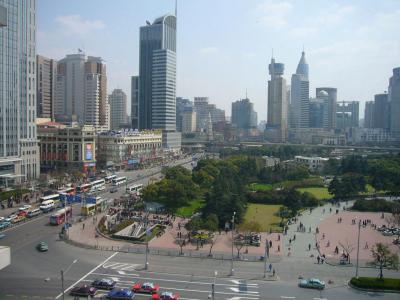
People's Square, situated at the very center of Shanghai, serves as a prominent location in the city. It features world-class museums, the Grand Theater, luxurious five-star hotels, a large water fountain, and the imposing Shanghai City Hall. These structures were constructed in the late 1990s and each of them serves as a significant architectural representation of Shanghai's economic and cultural advancement.
This area stands out in China due to its exceptional collection of remarkable attractions and stunning skyline, making it a highly popular meeting place and a venue for various celebrations. Today, there are few visual reminders of People's Square's history as Asia's finest racecourse, where wealthy individuals once watched horse races. During the wartime Japanese administration, the racetrack was utilized as a detention facility, and after World War II, the Chinese nationalist government transformed it into a sports arena.
By 1952, the new Communist regime had abolished horse racing and gambling, and a section of the racetrack was converted into a recreational space, now referred to as People's Park. Both the square and the park are meticulously maintained and offer numerous benches for relaxation. The park boasts pleasant landscaping, with tree-lined pathways and ponds that are beloved by locals who often visit for leisurely walks, exercise, kite flying, and where children can enjoy various activities at the playground.
Tip:
Underneath the park, there's a fantastic underground labyrinth of galleries with colorful stores, a subway station, and a food court. A definite must-visit!
This area stands out in China due to its exceptional collection of remarkable attractions and stunning skyline, making it a highly popular meeting place and a venue for various celebrations. Today, there are few visual reminders of People's Square's history as Asia's finest racecourse, where wealthy individuals once watched horse races. During the wartime Japanese administration, the racetrack was utilized as a detention facility, and after World War II, the Chinese nationalist government transformed it into a sports arena.
By 1952, the new Communist regime had abolished horse racing and gambling, and a section of the racetrack was converted into a recreational space, now referred to as People's Park. Both the square and the park are meticulously maintained and offer numerous benches for relaxation. The park boasts pleasant landscaping, with tree-lined pathways and ponds that are beloved by locals who often visit for leisurely walks, exercise, kite flying, and where children can enjoy various activities at the playground.
Tip:
Underneath the park, there's a fantastic underground labyrinth of galleries with colorful stores, a subway station, and a food court. A definite must-visit!
10) Nanjing Lu (Nanjing Road) (must see)
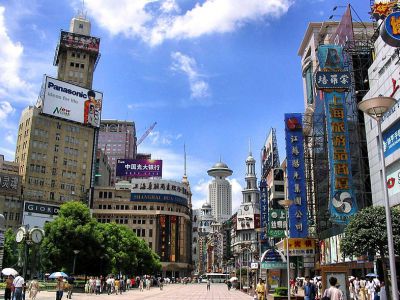
Nanjing Road in Shanghai has long been the city's top shopping destination, attracting more than a million visitors daily. This famous street is divided into two sections: Nanjing East Road and Nanjing West Road. In total, they stretch for nearly 10 kilometers (about 6 miles), making it the world's longest and busiest pedestrian thoroughfare.
Nanjing East Road has held the reputation of being a shopper's paradise since the 1950s or even earlier. Its main attraction is the Shanghai No. 1 Department Store, famous for its eye-catching window displays. Some say it's a great place to browse, but not necessarily the best for finding bargains.
Once the sun sets, Nanjing East Road becomes especially lively, with various malls competing for shoppers' attention through elaborate lighting and countless advertising screens. It seems like they spare no expense when it comes to electricity bills.
Many of the buildings along this road have been standing for over a century, showcasing a unique fusion of Eastern and Western architectural styles that first gained prominence in the 1930s, establishing Shanghai as a significant intermediary between the two civilizations. The newer malls cater to the modern tastes of China's millennials, who are keen on luxury brands.
Unlike other parts of Shanghai, you won't find street vendors or markets on Nanjing Road. Everything here is on a grand scale, including Starbucks. The Starbucks Reserve Roastery, which happens to be the world's largest outlet, spans three floors and serves up to 7,000 customers a day, with seating for up to 1,000 people at once.
Tip:
For ease of travel, mini-trains run up and down half the length of Nanjing Road during day hours – convenient for those wanting to see the area, especially if tired of walking or with kids in tow.
On a foodie note, try the food court in the New World City Plaza. Huge, pretty, and clean, with numerous stores, and good prices. And the LEGO shop on its ground floor is a haven for LEGO lovers.
Nanjing East Road has held the reputation of being a shopper's paradise since the 1950s or even earlier. Its main attraction is the Shanghai No. 1 Department Store, famous for its eye-catching window displays. Some say it's a great place to browse, but not necessarily the best for finding bargains.
Once the sun sets, Nanjing East Road becomes especially lively, with various malls competing for shoppers' attention through elaborate lighting and countless advertising screens. It seems like they spare no expense when it comes to electricity bills.
Many of the buildings along this road have been standing for over a century, showcasing a unique fusion of Eastern and Western architectural styles that first gained prominence in the 1930s, establishing Shanghai as a significant intermediary between the two civilizations. The newer malls cater to the modern tastes of China's millennials, who are keen on luxury brands.
Unlike other parts of Shanghai, you won't find street vendors or markets on Nanjing Road. Everything here is on a grand scale, including Starbucks. The Starbucks Reserve Roastery, which happens to be the world's largest outlet, spans three floors and serves up to 7,000 customers a day, with seating for up to 1,000 people at once.
Tip:
For ease of travel, mini-trains run up and down half the length of Nanjing Road during day hours – convenient for those wanting to see the area, especially if tired of walking or with kids in tow.
On a foodie note, try the food court in the New World City Plaza. Huge, pretty, and clean, with numerous stores, and good prices. And the LEGO shop on its ground floor is a haven for LEGO lovers.
11) Peace Hotel (must see)
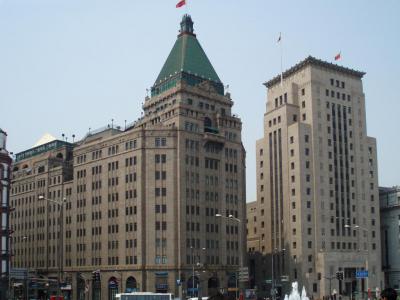
Standing proudly at the eastern end of Nanjing Road is the renowned Fairmont Peace Hotel, an iconic structure on the Bund. Originally known as the Cathay Hotel, it was inaugurated in 1929 and boasts a striking Art Deco exterior and an iconic green copper dome, both of which have recently been meticulously restored to their former splendor.
Dubbed the "Claridges of the Far East," this spot was a pre-war Shanghai hotspot, hosting celebrities like Douglas Fairbanks, Charlie Chaplin, and George Bernard Shaw. It's even rumored that Noel Coward penned "Private Lives" here in just four days while battling the flu. Owned by opium tycoon Sir Victor Sassoon, the hotel hosted many dignitaries and diplomats. It was known for its pioneering amenities, including in-room telephones, which outpaced European hotels at the time. With six floors and 120 guest rooms, it was also the first hotel in Shanghai to feature two elevators. The lavish offerings extended to private plumbing systems, marble baths with silver fixtures and enamel-coated lavatories imported from Britain.
Today, in addition to catering to upscale clientele, the hotel also draws history and architecture enthusiasts. Its Art Deco lobby, on-site Peace Museum, and the Old Shanghai reading room filled with a diverse collection of memorabilia, including Qing-period porcelain and bronze items, black-and-white photographs of days gone by, silverware, and an array of books, are notable attractions.
The ground floor café provides an excellent vantage point for people-watching from window-side seats. Meanwhile, the rooftop bar on the 9th floor offers a pleasant spot for evening drinks with a captivating view of the illuminated Bund and Pudong skyline. If you're in the mood for some leisurely classical jazz and the opportunity to enjoy a cocktail while listening to nostalgic tunes performed by a spirited group of octogenarians, make your way to the hotel's Jazz Bar, reminiscent of the 1920s and 30s, featuring the Old Jazz Band. A quality experience is virtually guaranteed!
Tip:
Those who want to take a guided tour can book it either at the hotel's museum or online. Some tours are offered in English and come at a charge.
Dubbed the "Claridges of the Far East," this spot was a pre-war Shanghai hotspot, hosting celebrities like Douglas Fairbanks, Charlie Chaplin, and George Bernard Shaw. It's even rumored that Noel Coward penned "Private Lives" here in just four days while battling the flu. Owned by opium tycoon Sir Victor Sassoon, the hotel hosted many dignitaries and diplomats. It was known for its pioneering amenities, including in-room telephones, which outpaced European hotels at the time. With six floors and 120 guest rooms, it was also the first hotel in Shanghai to feature two elevators. The lavish offerings extended to private plumbing systems, marble baths with silver fixtures and enamel-coated lavatories imported from Britain.
Today, in addition to catering to upscale clientele, the hotel also draws history and architecture enthusiasts. Its Art Deco lobby, on-site Peace Museum, and the Old Shanghai reading room filled with a diverse collection of memorabilia, including Qing-period porcelain and bronze items, black-and-white photographs of days gone by, silverware, and an array of books, are notable attractions.
The ground floor café provides an excellent vantage point for people-watching from window-side seats. Meanwhile, the rooftop bar on the 9th floor offers a pleasant spot for evening drinks with a captivating view of the illuminated Bund and Pudong skyline. If you're in the mood for some leisurely classical jazz and the opportunity to enjoy a cocktail while listening to nostalgic tunes performed by a spirited group of octogenarians, make your way to the hotel's Jazz Bar, reminiscent of the 1920s and 30s, featuring the Old Jazz Band. A quality experience is virtually guaranteed!
Tip:
Those who want to take a guided tour can book it either at the hotel's museum or online. Some tours are offered in English and come at a charge.
12) The Bund (Waitan) (must see)
If you want to explore the history of Shanghai as the leading financial hub of modern China, The Bund is the ideal place to start. Initially serving as a path for towing rice-loaded barges, it eventually became the site of Shanghai's first foreign settlement, evolving into a bustling business district where major banks and trading companies established their presence to take advantage of the emerging trading opportunities.
In its heyday, The Bund also hosted the Russian and British consulates, as well as the English club and the Masonic lodge. Prior to the communist victory in the Chinese Civil War, the area featured numerous statues of notable colonial and European figures. These have since been replaced by a bronze statue of Chen Yi (Shanghai's first mayor after the communist takeover) and a Monument to the People’s Heroes at the northern end.
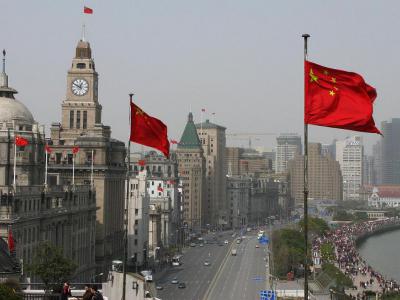
During the 1990s, The Bund underwent restoration, showcasing a waterfront adorned with a variety of buildings representing the architectural styles of nations that once sought to be involved in Shanghai's development.
The western section of The Bund boasts older colonial-style architecture, prominently featuring the neo-classical Hong-Kong and Shanghai Banking Corporation building and the Signal Tower, formerly maintained by the Jesuits to aid local shipping. For many locals, this area serves as a reminder of a century of foreign dominance. In the present golden age, however, it has transformed into a vibrant hub for top-notch dining, entertainment, and shopping.
Set against the backdrop of the now-famous Shanghai skyline, adorned with iconic skyscrapers of various shapes, heights, and colors, The Bund is particularly breathtaking after sunset when all the lights illuminate the area. Be sure to visit before 10pm, as some of the lights are turned off after that time.
Tip:
If you're out taking a stroll along The Bund, make way to the high-ground part beside the river for a better look at the two sides of the promenade. Otherwise, climb to the observation deck of one of the high towers to the east of the Huangpu River and see the whole stretch of the riverfront from up there. A sight not to be missed!
In its heyday, The Bund also hosted the Russian and British consulates, as well as the English club and the Masonic lodge. Prior to the communist victory in the Chinese Civil War, the area featured numerous statues of notable colonial and European figures. These have since been replaced by a bronze statue of Chen Yi (Shanghai's first mayor after the communist takeover) and a Monument to the People’s Heroes at the northern end.
During the 1990s, The Bund underwent restoration, showcasing a waterfront adorned with a variety of buildings representing the architectural styles of nations that once sought to be involved in Shanghai's development.
The western section of The Bund boasts older colonial-style architecture, prominently featuring the neo-classical Hong-Kong and Shanghai Banking Corporation building and the Signal Tower, formerly maintained by the Jesuits to aid local shipping. For many locals, this area serves as a reminder of a century of foreign dominance. In the present golden age, however, it has transformed into a vibrant hub for top-notch dining, entertainment, and shopping.
Set against the backdrop of the now-famous Shanghai skyline, adorned with iconic skyscrapers of various shapes, heights, and colors, The Bund is particularly breathtaking after sunset when all the lights illuminate the area. Be sure to visit before 10pm, as some of the lights are turned off after that time.
Tip:
If you're out taking a stroll along The Bund, make way to the high-ground part beside the river for a better look at the two sides of the promenade. Otherwise, climb to the observation deck of one of the high towers to the east of the Huangpu River and see the whole stretch of the riverfront from up there. A sight not to be missed!
13) Bund Sightseeing Tunnel
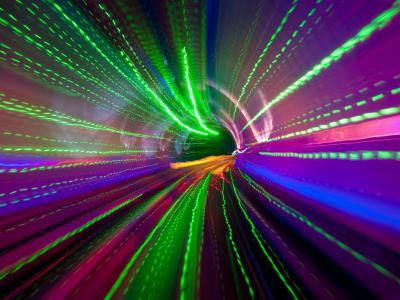
The Bund Sightseeing Tunnel is an underwater tunnel fitted with spectacular audio-visual effects for entertaining adults and children who go across the Huang Pu River from downtown Shanghai to Pudong. The ride through lasts 6 minutes.
The tunnel was completed and opened to the public in the year 2000. There are two entrances, one on the Bund at Nanjing Donglu and the other in Pudong near the Riverside promenade.
Visitors board a small carriage at one end. The carriage takes them through the tunnel that flashes kaleidoscopic neon lights in varying patterns. Blow up dolls pop up during the ride and sway in front of the carriage. A voice commentary tells the geological story of the earth as the carriages rush along to the other bank of the river. The intention is to take visitors on a ride from space to the centre of the earth and back again.
The Bund Sightseeing Tunnel ride is more expensive than getting across the river on the Metro or by ferry. The ride is, however, quicker and more fun for visitors, especially children.
The tunnel was completed and opened to the public in the year 2000. There are two entrances, one on the Bund at Nanjing Donglu and the other in Pudong near the Riverside promenade.
Visitors board a small carriage at one end. The carriage takes them through the tunnel that flashes kaleidoscopic neon lights in varying patterns. Blow up dolls pop up during the ride and sway in front of the carriage. A voice commentary tells the geological story of the earth as the carriages rush along to the other bank of the river. The intention is to take visitors on a ride from space to the centre of the earth and back again.
The Bund Sightseeing Tunnel ride is more expensive than getting across the river on the Metro or by ferry. The ride is, however, quicker and more fun for visitors, especially children.
