Custom Walk in Philadelphia, Pennsylvania by tstoledo_b2ed7 created on 2025-07-13
Guide Location: USA » Philadelphia
Guide Type: Custom Walk
# of Sights: 10
Tour Duration: 4 Hour(s)
Travel Distance: 9.6 Km or 6 Miles
Share Key: VM3D8
Guide Type: Custom Walk
# of Sights: 10
Tour Duration: 4 Hour(s)
Travel Distance: 9.6 Km or 6 Miles
Share Key: VM3D8
How It Works
Please retrieve this walk in the GPSmyCity app. Once done, the app will guide you from one tour stop to the next as if you had a personal tour guide. If you created the walk on this website or come to the page via a link, please follow the instructions below to retrieve the walk in the app.
Retrieve This Walk in App
Step 1. Download the app "GPSmyCity: Walks in 1K+ Cities" on Apple App Store or Google Play Store.



Step 2. In the GPSmyCity app, download(or launch) the guide "Philadelphia Map and Walking Tours".
Step 3. Tap the menu button located at upper right corner of the "Walks" screen and select "Retrieve custom walk". Enter the share key: VM3D8
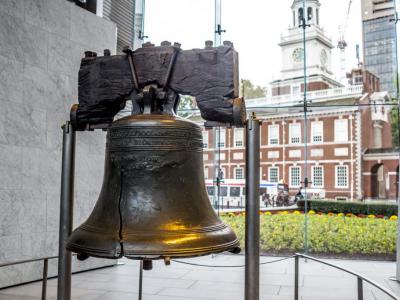
1) Liberty Bell (must see)
The Liberty Bell, an iconic symbol of American freedom and independence, has a rich and storied history closely tied to Philadelphia, Pennsylvania. Cast in 1752 by the Whitechapel Bell Foundry in London, England, the bell was originally commissioned to mark the 50th anniversary of Pennsylvania's original constitution and to symbolize the ideals of liberty and justice.
Initially hung in the Pennsylvania State House (now known as Independence Hall), the bell gained fame not only for its impressive size and sound but also for its role in important historical events. One popular but apocryphal story links the Liberty Bell to the reading of the Declaration of Independence on July 4, 1776, claiming that it rang out to announce the birth of the new nation. While there is no historical evidence to support this specific event, the bell did gain significance as a symbol of American independence in the ensuing decades.
The bell's inscription, "Proclaim LIBERTY Throughout all the Land unto all the Inhabitants Thereof," from the Bible, became its defining feature and a powerful statement in support of abolitionist movements in the 19th century. Its association with the abolitionist cause led to the bell being dubbed the "Liberty Bell" around the 1830s.
By the mid-19th century, as the bell's structural integrity deteriorated, it was retired from active service. In 1852, it was moved to a pavilion near Independence Hall where it became an object of public veneration. During World War II, the bell's iconic status was further solidified as it was used as a symbol of liberty and freedom, inspiring war bond drives and patriotic sentiment.
Today, the Liberty Bell is housed in the Liberty Bell Center, part of Independence National Historical Park in Philadelphia. It continues to attract millions of visitors each year who come to see and reflect upon its enduring message of liberty, justice, and the ongoing struggle for equality.
Initially hung in the Pennsylvania State House (now known as Independence Hall), the bell gained fame not only for its impressive size and sound but also for its role in important historical events. One popular but apocryphal story links the Liberty Bell to the reading of the Declaration of Independence on July 4, 1776, claiming that it rang out to announce the birth of the new nation. While there is no historical evidence to support this specific event, the bell did gain significance as a symbol of American independence in the ensuing decades.
The bell's inscription, "Proclaim LIBERTY Throughout all the Land unto all the Inhabitants Thereof," from the Bible, became its defining feature and a powerful statement in support of abolitionist movements in the 19th century. Its association with the abolitionist cause led to the bell being dubbed the "Liberty Bell" around the 1830s.
By the mid-19th century, as the bell's structural integrity deteriorated, it was retired from active service. In 1852, it was moved to a pavilion near Independence Hall where it became an object of public veneration. During World War II, the bell's iconic status was further solidified as it was used as a symbol of liberty and freedom, inspiring war bond drives and patriotic sentiment.
Today, the Liberty Bell is housed in the Liberty Bell Center, part of Independence National Historical Park in Philadelphia. It continues to attract millions of visitors each year who come to see and reflect upon its enduring message of liberty, justice, and the ongoing struggle for equality.
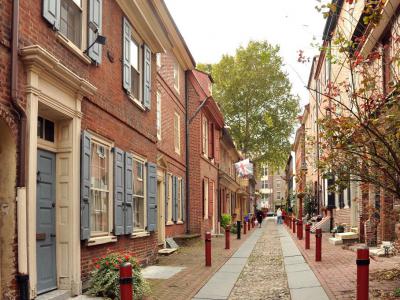
2) Elfreth's Alley (must see)
In the 18th century, Philadelphia became a bustling city, overcrowded with artisans, tradesmen, shipwrights, metalsmiths, glassblowers, and furniture makers. As a result, the landowners Arthur Wells and John Gilbert started a cart path from Front Street to Second Street in 1703. The path became Elfreth's Alley, named after Jeremiah Elfreth, an 18th-century blacksmith and a man of property in young Philadelphia.
By the 1770s Georgian and Federal-style houses lined the cobblestone Alley. Many of the structures were uniquely Philadelphian Trinity houses. These were three-story houses, exceptionally narrow, with one room on each floor. The floors were referred to as "Father, Son, and Holy Ghost." And that is how Trinity houses got their name.
In the 19th and 20th centuries, the industry started to close in on the Alley. A stove factory took its place in a row of residential houses. Immigrants, hoping for jobs, came in waves. In 1934 the Elfreth's Alley Association (EAA) was founded by Alley resident Dolly Ottey. Ottey fought to combat the deterioration of the Alley by encroaching industry in the early 20th century.
Elfreth's Alley Museum is located in houses 124 and 126. The museum preserves the home of 18th-century dressmakers. Tour guides discuss other homes and inhabitants of the Alley. On "Fete Day" in early June, which celebrates Alley's diverse ethnic heritage, the residents open their homes. There are historical reenactments with drum and fife bands. The Alley also host events for the 4th of July, Oktoberfestivities, and Halloween.
By the 1770s Georgian and Federal-style houses lined the cobblestone Alley. Many of the structures were uniquely Philadelphian Trinity houses. These were three-story houses, exceptionally narrow, with one room on each floor. The floors were referred to as "Father, Son, and Holy Ghost." And that is how Trinity houses got their name.
In the 19th and 20th centuries, the industry started to close in on the Alley. A stove factory took its place in a row of residential houses. Immigrants, hoping for jobs, came in waves. In 1934 the Elfreth's Alley Association (EAA) was founded by Alley resident Dolly Ottey. Ottey fought to combat the deterioration of the Alley by encroaching industry in the early 20th century.
Elfreth's Alley Museum is located in houses 124 and 126. The museum preserves the home of 18th-century dressmakers. Tour guides discuss other homes and inhabitants of the Alley. On "Fete Day" in early June, which celebrates Alley's diverse ethnic heritage, the residents open their homes. There are historical reenactments with drum and fife bands. The Alley also host events for the 4th of July, Oktoberfestivities, and Halloween.
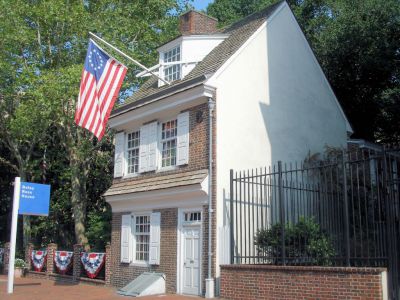
3) Betsy Ross House (must see)
The story goes that Mrs. Eizabeth Claypoole, also known as Betsy Ross, had a visit from George Washington in 1776. She persuaded him, some say, that a five-pointed star was better than a six-pointed star. Betsy was an upholsterer, and she had been making flags for the Pennsylvania Navy. Flags were her specialty.
True or not, this captivating tale was told by her grandsons, William and George Canby, in the 1870s. People loved it, and it became a popular national legend. Number 239 Arch Street in Philadelphia is where Betsy is said to have lived with her third husband, John Claypoole. The house is a restoration done by architect Richardson Okie in 1940.
The "Betsy Ross" house that stands today may have been the house used by Betsy for her business. The residence of Betsy and her husband was adjacent to the present house. The houses next door were demolished and turned into a courtyard.
Richardson Okie used materials from the demolished houses in his restoration. A brick structure was built behind the house. Windows and a dormer were replaced. The whole property was gifted to the city of Philadelphia in 1941. In 1974 the courtyard was provided with a fountain.
As part of the American Bicentennial of 1976, city authorities moved the remains of Betsy and her husband, John Claypoole. They were reinterred in the courtyard of the Betsy Ross House. Betsy is thought to have resided in the house from 1776 until 1779.
John Ross, Betsy's first husband, a member of the militia, died in a gunpowder explosion. Her second husband, Joseph Ashburn, a mariner captured by the British, died in prison in Plymouth, England. John Claypoole was a fellow prisoner. He knew Ashburn. Betsy married Claypoole in 1783.
The Betsy Ross House is traditionally the site of Philadelphia's celebration of Flag Day. This legendary woman lived and worked here for a few short years when the Great Experiment began. Whatever else she may have done, she made flags.
True or not, this captivating tale was told by her grandsons, William and George Canby, in the 1870s. People loved it, and it became a popular national legend. Number 239 Arch Street in Philadelphia is where Betsy is said to have lived with her third husband, John Claypoole. The house is a restoration done by architect Richardson Okie in 1940.
The "Betsy Ross" house that stands today may have been the house used by Betsy for her business. The residence of Betsy and her husband was adjacent to the present house. The houses next door were demolished and turned into a courtyard.
Richardson Okie used materials from the demolished houses in his restoration. A brick structure was built behind the house. Windows and a dormer were replaced. The whole property was gifted to the city of Philadelphia in 1941. In 1974 the courtyard was provided with a fountain.
As part of the American Bicentennial of 1976, city authorities moved the remains of Betsy and her husband, John Claypoole. They were reinterred in the courtyard of the Betsy Ross House. Betsy is thought to have resided in the house from 1776 until 1779.
John Ross, Betsy's first husband, a member of the militia, died in a gunpowder explosion. Her second husband, Joseph Ashburn, a mariner captured by the British, died in prison in Plymouth, England. John Claypoole was a fellow prisoner. He knew Ashburn. Betsy married Claypoole in 1783.
The Betsy Ross House is traditionally the site of Philadelphia's celebration of Flag Day. This legendary woman lived and worked here for a few short years when the Great Experiment began. Whatever else she may have done, she made flags.
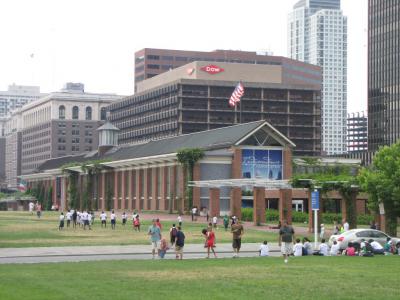
4) Independence National Historical Park (must see)
Independence National Historical Park in Philadelphia has been called "America's most historic square mile." Administered by the National Park Service, the 55 landscaped acres hold several often-visited historic sites within the Old City and Society Hill neighborhoods.
The heart of the Park is Independence Hall, the former Old State House of Philadelphia. This is where the Declaration of Independence and the Constitution of the United States were adopted. The first Continental Congress met in 1774 in Carpenters' Hall next door to Independence Hall, the home of the Second Continental Congress.
The Liberty Bell hangs in the Liberty Bell Center across from Independence Hall. The First Bank of the United States is in the Park. The Second Bank of the United States was closed down by President Andrew Jackson. Nearby is the City Tavern, a refuge of delegates and John Adams' favorite hangout.
The Park houses Franklin Court Museum dedicated to Benjamin Franklin. Another park resident is the United States Postal Service Museum. The three blocks immediately north of Independence Hall is Independence Mall. Besides the Liberty Bell Center, the Mall holds the National Constitution Center and George Washington's residence in his second term.
The first proposal for Independence National Historical Park was floated in 1915. Architects Albert Kelsey and David K. Boyd were driven to create a more sylvan locale for Independence Hall. The action was not taken until June 1948, when Congress authorized the creation of the Park. The Park is listed on the National Register of Historic Places.
The heart of the Park is Independence Hall, the former Old State House of Philadelphia. This is where the Declaration of Independence and the Constitution of the United States were adopted. The first Continental Congress met in 1774 in Carpenters' Hall next door to Independence Hall, the home of the Second Continental Congress.
The Liberty Bell hangs in the Liberty Bell Center across from Independence Hall. The First Bank of the United States is in the Park. The Second Bank of the United States was closed down by President Andrew Jackson. Nearby is the City Tavern, a refuge of delegates and John Adams' favorite hangout.
The Park houses Franklin Court Museum dedicated to Benjamin Franklin. Another park resident is the United States Postal Service Museum. The three blocks immediately north of Independence Hall is Independence Mall. Besides the Liberty Bell Center, the Mall holds the National Constitution Center and George Washington's residence in his second term.
The first proposal for Independence National Historical Park was floated in 1915. Architects Albert Kelsey and David K. Boyd were driven to create a more sylvan locale for Independence Hall. The action was not taken until June 1948, when Congress authorized the creation of the Park. The Park is listed on the National Register of Historic Places.
5) Chinatown Friendship Gate
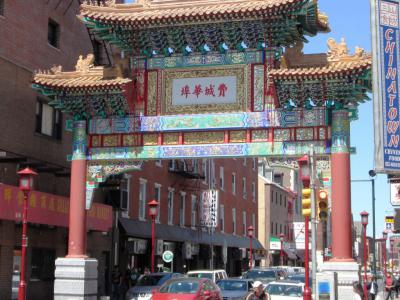
This gateway at 10th and Arch Street is a beautiful, welcoming entrance into the lively Chinatown district filled with great Asian restaurants, bakeries, shops, markets, and places of worship. A symbol of cultural exchange and friendship between Philadelphia and its sister city of Tianjin, it is the first authentic Chinese Gate built in America by artisans from China.
Weighing about 88 tons and standing 40 feet high, the Gate has bright colors and elaborate designs that reflect early Chinese imperial construction. One may see themes of mythical creatures and graphic patterns typical of the Ming and Qing Dynasties; the phoenix is meant to ensure good luck while the dragon, said to have the magical power of retaining water in its mouth, is intended to protect the structure of the Gate and the community from fire.
Originally dedicated in 1984, the Gate was rededicated on November 19, 2008, after being repainted with the help of Tianjin artisans using ancient techniques and traditional materials. Take your pictures, then find a place to eat and/or shop!
Tip:
Serious foodies will not want to miss the EMei Restaurant – a nice, no-frills eatery serving classic Chinese dishes alongside spicy Sichuan specialties. Mei Cai Kou Rou (steamed pork with preserved mustard) is something to die for!
Weighing about 88 tons and standing 40 feet high, the Gate has bright colors and elaborate designs that reflect early Chinese imperial construction. One may see themes of mythical creatures and graphic patterns typical of the Ming and Qing Dynasties; the phoenix is meant to ensure good luck while the dragon, said to have the magical power of retaining water in its mouth, is intended to protect the structure of the Gate and the community from fire.
Originally dedicated in 1984, the Gate was rededicated on November 19, 2008, after being repainted with the help of Tianjin artisans using ancient techniques and traditional materials. Take your pictures, then find a place to eat and/or shop!
Tip:
Serious foodies will not want to miss the EMei Restaurant – a nice, no-frills eatery serving classic Chinese dishes alongside spicy Sichuan specialties. Mei Cai Kou Rou (steamed pork with preserved mustard) is something to die for!
6) Reading Terminal Market (must see)
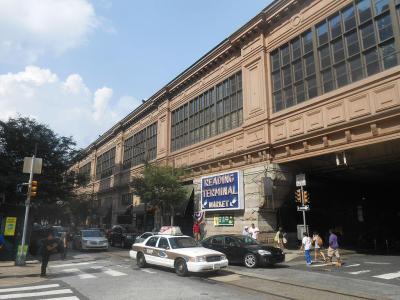
Open-air markets were popular in early Philadelphia. By the mid-19th century, markets along the Delaware River ran on for a mile or more, and High Street was renamed "Market Street." In 1859, the city dismantled everything under public pressure, which perceived open-air markets as dirty and unhygienic. Two indoor markets, Franklin Market and Farmers' Market opened at 12th and Market Streets. These two would be the foundation of the Reading Terminal Market.
With the coming of the railroads, architect Francis H. Kimball designed the Reading Railroad headhouse terminal in 1891. The train shed platform was built over the newly opened consolidated market. In 1893 an up-to-date refrigerated storage space was available for use in the market basement. Vendors could store perishable goods year-round.
After a period of prosperity, the Market experienced a long period of hardship. The Great Depression and the rise of competing supermarkets took their toll. Reading Railroad went bankrupt. In 1990 the City Council set up the non-profit Reading Terminal Market Corporation. The Market revived, and it is currently open seven days a week.
The Reading Terminal Market features arts, crafts, gifts, bakeries, confectionaries, eateries, flowers, ice creams, meats, seafood, Pennsylvania Dutch products, produce, and specialties. There are also diners, restaurants, and fast-food venues.
With the coming of the railroads, architect Francis H. Kimball designed the Reading Railroad headhouse terminal in 1891. The train shed platform was built over the newly opened consolidated market. In 1893 an up-to-date refrigerated storage space was available for use in the market basement. Vendors could store perishable goods year-round.
After a period of prosperity, the Market experienced a long period of hardship. The Great Depression and the rise of competing supermarkets took their toll. Reading Railroad went bankrupt. In 1990 the City Council set up the non-profit Reading Terminal Market Corporation. The Market revived, and it is currently open seven days a week.
The Reading Terminal Market features arts, crafts, gifts, bakeries, confectionaries, eateries, flowers, ice creams, meats, seafood, Pennsylvania Dutch products, produce, and specialties. There are also diners, restaurants, and fast-food venues.
7) LOVE Park
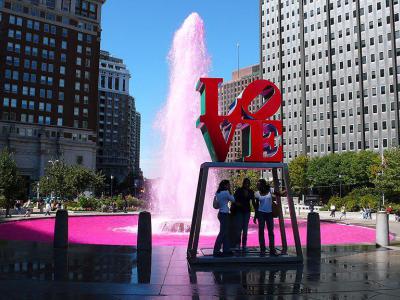
LOVE Park, officially named John F. Kennedy Plaza, is a notable public park in Center City, Philadelphia. It is renowned for its reproduction of Robert Indiana's LOVE sculpture, which has become an iconic feature overlooking the plaza. The park's nickname, "LOVE Park," is derived from this sculpture.
The park's design was the brainchild of former Philadelphia city planner Edmund Bacon and architect Vincent G. Kling. It was established in 1965, covering an underground parking garage. The park's central attraction is a single-spout fountain, added in 1969, which quickly became its main feature.
Located directly across from the Philadelphia City Hall, LOVE Park serves as a visual terminus for the Benjamin Franklin Parkway. It was dedicated in 1967 as John F. Kennedy Plaza, and a plaque within the park commemorates this dedication.
LOVE Park is also significant in the skateboarding community. For many years, it was a popular skateboarding spot, contributing to its cultural significance.
The famous "LOVE" sculpture by Robert Indiana first graced the plaza in 1976 as part of the United States Bicentennial celebration. Initially, the sculpture was temporary and removed in 1978. However, thanks to the efforts of Fitz Eugene Dixon Jr., chairman of the Philadelphia Art Commission, the sculpture was purchased and permanently installed in the park that same year.
From 2016 to 2018, LOVE Park underwent a major makeover, turning the concrete-heavy plaza into a greener and friendlier space. The project added lawns, gardens, stormwater basins with diverse plants, new café areas, and recreational spaces, all while preserving the view of City Hall and the Benjamin Franklin Parkway. This transformation reflects modern urban park design trends, marking a new era for the park.
The park's design was the brainchild of former Philadelphia city planner Edmund Bacon and architect Vincent G. Kling. It was established in 1965, covering an underground parking garage. The park's central attraction is a single-spout fountain, added in 1969, which quickly became its main feature.
Located directly across from the Philadelphia City Hall, LOVE Park serves as a visual terminus for the Benjamin Franklin Parkway. It was dedicated in 1967 as John F. Kennedy Plaza, and a plaque within the park commemorates this dedication.
LOVE Park is also significant in the skateboarding community. For many years, it was a popular skateboarding spot, contributing to its cultural significance.
The famous "LOVE" sculpture by Robert Indiana first graced the plaza in 1976 as part of the United States Bicentennial celebration. Initially, the sculpture was temporary and removed in 1978. However, thanks to the efforts of Fitz Eugene Dixon Jr., chairman of the Philadelphia Art Commission, the sculpture was purchased and permanently installed in the park that same year.
From 2016 to 2018, LOVE Park underwent a major makeover, turning the concrete-heavy plaza into a greener and friendlier space. The project added lawns, gardens, stormwater basins with diverse plants, new café areas, and recreational spaces, all while preserving the view of City Hall and the Benjamin Franklin Parkway. This transformation reflects modern urban park design trends, marking a new era for the park.
8) Eastern State Penitentiary (must see)
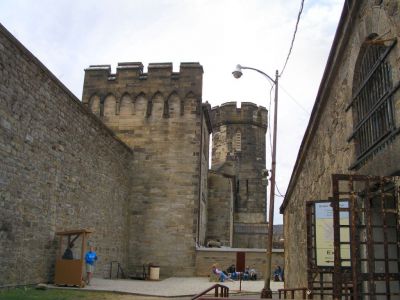
The Eastern State Penitentiary (ESP) in Philadelphia stands as a significant monument in the history of the American penal system. Located on Fairmount Avenue, nestled between Corinthian Avenue and North 22nd Street in the city's Fairmount section, this former prison has a rich and complex history.
Operational from 1829 to 1971, ESP was at the forefront of a revolutionary approach to imprisonment. It was built on the principles of separate incarceration, a system first introduced at the Walnut Street Jail. This approach focused on reform rather than punishment, marking a significant shift in the way prisoners were treated.
The design of ESP was highly innovative for its time. Featuring a wagon wheel design, it became known for its architectural grandeur and technological advancements. Upon its completion, the penitentiary was the largest and most expensive public structure in the United States. Its design and philosophy of reform had a widespread influence, inspiring the construction of over 300 prisons worldwide.
ESP is also notable for housing some of the most infamous criminals in American history. Among its most famous inmates were Al Capone, the notorious gangster, and Willie Sutton, a famed bank robber. Additionally, between 1936 and 1948, James Bruno (Big Joe) and several male relatives were incarcerated here following their alleged involvement in the Kelayres massacre of 1934.
Today, the Eastern State Penitentiary is a U.S. National Historic Landmark. No longer a place of incarceration, it has been repurposed as a museum, open to the public for tours. This transformation allows visitors to explore its historic halls and learn about its unique place in the annals of penal reform and American history.
Operational from 1829 to 1971, ESP was at the forefront of a revolutionary approach to imprisonment. It was built on the principles of separate incarceration, a system first introduced at the Walnut Street Jail. This approach focused on reform rather than punishment, marking a significant shift in the way prisoners were treated.
The design of ESP was highly innovative for its time. Featuring a wagon wheel design, it became known for its architectural grandeur and technological advancements. Upon its completion, the penitentiary was the largest and most expensive public structure in the United States. Its design and philosophy of reform had a widespread influence, inspiring the construction of over 300 prisons worldwide.
ESP is also notable for housing some of the most infamous criminals in American history. Among its most famous inmates were Al Capone, the notorious gangster, and Willie Sutton, a famed bank robber. Additionally, between 1936 and 1948, James Bruno (Big Joe) and several male relatives were incarcerated here following their alleged involvement in the Kelayres massacre of 1934.
Today, the Eastern State Penitentiary is a U.S. National Historic Landmark. No longer a place of incarceration, it has been repurposed as a museum, open to the public for tours. This transformation allows visitors to explore its historic halls and learn about its unique place in the annals of penal reform and American history.
9) Rittenhouse Square
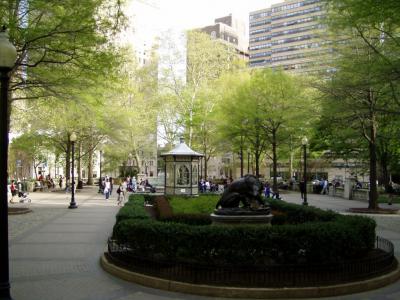
Right in the middle of Philadelphia’s most polished neighborhood—where glass towers loom and fashionably dressed locals pretend not to notice each other—Rittenhouse Square is a slice of greenery that refuses to be outshined. It’s been here since 1825, named after homegrown Revolutionary-era brainiac David Rittenhouse. The layout you see today, with its neat diagonal paths converging toward the center, took shape in 1913, along with many of the bronze statues that quietly observe everything… and judge a little.
But let’s be honest—history aside, a lot of people are here for a different reason: Rocky II. This is where Rocky and Adrian take that soft, slightly awkward stroll along the southeast corner after hearing they’re expecting a baby. It’s one of those rare moments where the Italian Stallion slows down—no punching, just feelings...
From there, they drift south toward 18th and Locust. If you’re feeling cinematic, keep an eye out for the Barclay Condominium—the stone-faced building behind Rocky and Adrian when they stop and face each other. Yes, that’s the one tied to the unforgettable line, “I never use ’em.” Back when the scene was filmed, it had a modest green awning; today, it’s traded that in for a much grander, upscale frontage, self-aware of its status.
And curiously enough, almost too on-the-nose: before the fame, before the running up steps, even before the punches—Sylvester Stallone actually lived right here in the late 1950s, at the Chateau Crillon Apartments. Not only that, in between filming of Rocky II and Rocky III, he stayed at the Barclay Hotel itself. So, yes, when Rocky walks through this square, he’s not just acting—he’s practically coming home...
But let’s be honest—history aside, a lot of people are here for a different reason: Rocky II. This is where Rocky and Adrian take that soft, slightly awkward stroll along the southeast corner after hearing they’re expecting a baby. It’s one of those rare moments where the Italian Stallion slows down—no punching, just feelings...
From there, they drift south toward 18th and Locust. If you’re feeling cinematic, keep an eye out for the Barclay Condominium—the stone-faced building behind Rocky and Adrian when they stop and face each other. Yes, that’s the one tied to the unforgettable line, “I never use ’em.” Back when the scene was filmed, it had a modest green awning; today, it’s traded that in for a much grander, upscale frontage, self-aware of its status.
And curiously enough, almost too on-the-nose: before the fame, before the running up steps, even before the punches—Sylvester Stallone actually lived right here in the late 1950s, at the Chateau Crillon Apartments. Not only that, in between filming of Rocky II and Rocky III, he stayed at the Barclay Hotel itself. So, yes, when Rocky walks through this square, he’s not just acting—he’s practically coming home...
10) Independence Hall (must see)
By the late 1720s, Philadelphia realized it was running a colony with big decisions to make, but was lacking a proper stage to make them—so, naturally, it decided to build one.
Construction began in 1732 on Chestnut Street, guided by architect Edmund Woolley, and by 1753, the Colonial Government of Pennsylvania moved in without hesitation. For nearly half a century, this was where the business of the province—and later the commonwealth—was handled, until the capital duties packed up and moved on in 1799.
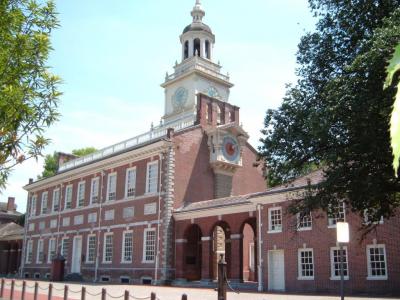
The building itself, now known as Independence Hall, keeps things elegantly symmetrical. Red brick, Georgian style, a central block crowned with a bell tower and a steeple rising 169 feet. Arcaded passageways link the main structure to its side wings, while nearby, Old City Hall, Congress Hall, and Philosophical Hall gather around Independence Square like a well-organized ensemble cast.
Inside, the layout is straightforward but loaded with history. The Assembly Room and Supreme Court Room sit on the ground floor, divided by a vestibule, with the Tower Stair Hall waiting just beyond the entrance. The interiors you see today are the result of careful restorations in the 19th and 20th centuries, all aimed at returning the building to its 18th-century look—because when your past includes founding a nation, you tend to preserve the décor...
And then, of course, came the moments. In June 1775, George Washington was appointed commander-in-chief of the Continental Army right here. A month later, Benjamin Franklin was named the first Postmaster General—arguably launching one of the longest-running institutions in American life. Between 1775 and 1783, this was the meeting place of the Second Continental Congress, where, on July 4, 1776, the Declaration of Independence was approved. Eleven years later, in 1787, the Constitution followed.
Since then, Independence Hall has remained more than just a historic building. It continues to serve as a backdrop for speeches, rallies, and protests—less a frozen monument, more an ongoing conversation about democracy, still very much in progress.
Construction began in 1732 on Chestnut Street, guided by architect Edmund Woolley, and by 1753, the Colonial Government of Pennsylvania moved in without hesitation. For nearly half a century, this was where the business of the province—and later the commonwealth—was handled, until the capital duties packed up and moved on in 1799.
The building itself, now known as Independence Hall, keeps things elegantly symmetrical. Red brick, Georgian style, a central block crowned with a bell tower and a steeple rising 169 feet. Arcaded passageways link the main structure to its side wings, while nearby, Old City Hall, Congress Hall, and Philosophical Hall gather around Independence Square like a well-organized ensemble cast.
Inside, the layout is straightforward but loaded with history. The Assembly Room and Supreme Court Room sit on the ground floor, divided by a vestibule, with the Tower Stair Hall waiting just beyond the entrance. The interiors you see today are the result of careful restorations in the 19th and 20th centuries, all aimed at returning the building to its 18th-century look—because when your past includes founding a nation, you tend to preserve the décor...
And then, of course, came the moments. In June 1775, George Washington was appointed commander-in-chief of the Continental Army right here. A month later, Benjamin Franklin was named the first Postmaster General—arguably launching one of the longest-running institutions in American life. Between 1775 and 1783, this was the meeting place of the Second Continental Congress, where, on July 4, 1776, the Declaration of Independence was approved. Eleven years later, in 1787, the Constitution followed.
Since then, Independence Hall has remained more than just a historic building. It continues to serve as a backdrop for speeches, rallies, and protests—less a frozen monument, more an ongoing conversation about democracy, still very much in progress.
