Custom Walk in Zurich, Switzerland by chefebre_39536 created on 2025-07-16
Guide Location: Switzerland » Zurich
Guide Type: Custom Walk
# of Sights: 13
Tour Duration: 3 Hour(s)
Travel Distance: 5.3 Km or 3.3 Miles
Share Key: AN5KY
Guide Type: Custom Walk
# of Sights: 13
Tour Duration: 3 Hour(s)
Travel Distance: 5.3 Km or 3.3 Miles
Share Key: AN5KY
How It Works
Please retrieve this walk in the GPSmyCity app. Once done, the app will guide you from one tour stop to the next as if you had a personal tour guide. If you created the walk on this website or come to the page via a link, please follow the instructions below to retrieve the walk in the app.
Retrieve This Walk in App
Step 1. Download the app "GPSmyCity: Walks in 1K+ Cities" on Apple App Store or Google Play Store.



Step 2. In the GPSmyCity app, download(or launch) the guide "Zurich Map and Walking Tours".
Step 3. Tap the menu button located at upper right corner of the "Walks" screen and select "Retrieve custom walk". Enter the share key: AN5KY
1) Bahnhofstrasse (Station Street) (must see)
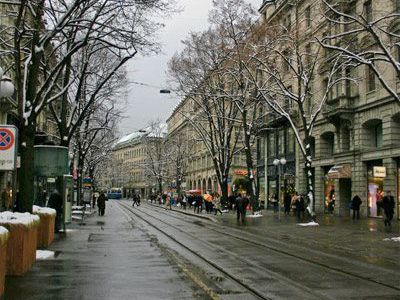
Stepping out of Zurich HB, you can't miss Station Street-Zurich’s grand catwalk for wallets with stamina and shoes built for cobblestone. This is the city’s main shopping artery, mostly reserved for pedestrians and trams, which means you’ll be dodging Gucci bags, not taxis. Lined with luxury boutiques and upscale restaurants, this is where Swiss precision meets retail therapy.
The stroll kicks off right outside the station, on Station Square, because Zurich doesn’t believe in metaphors when it comes to names. From there, Station Street marches south all the way to Lake Zurich, finishing at the ever-charming Burkli Square.
Along the way, you’ll saunter past Parade Square, the golden triangle of Swiss finance where the banks are so rich that even the pigeons have portfolios... This real estate is notoriously expensive, which is why the air here smells vaguely of money and truffle oil.
Fun fact: Station Street was born in the 1870s when Zurich’s medieval moats were filled in to make room for the modern city. In short, they replaced water defenses with window shopping-and honestly, that feels like progress.
In essence, Station Street is old Zurich’s nerve center. From here, charming streets like Rennweg and Augustinergasse twist off into postcard-perfect scenes, packed with shops, cafés, and just enough historical flair to justify your souvenir splurge.
If you need a break from luxury price tags, dive into ShopVille, the underground mall beneath the train station. It's got food, gifts, and treats for mere mortals-plus it's open on Sundays, unlike most of Zurich.
So, whenever you're in Zurich and feel like buying, browsing, or just people-watching with a pastry in hand, Station Street-the most stylish stampede of trams and shoppers in Switzerland-can deliver all of this.
Pro tips:
Trams are your best friend-so, hop on, hop off, and explore with the grace of a local who knows not to jaywalk. In winter, treat yourself to rooftop mulled wine and steaming hot chocolate. In summer, trade the boutiques for a lakeside stroll and watch the world glide by...
The stroll kicks off right outside the station, on Station Square, because Zurich doesn’t believe in metaphors when it comes to names. From there, Station Street marches south all the way to Lake Zurich, finishing at the ever-charming Burkli Square.
Along the way, you’ll saunter past Parade Square, the golden triangle of Swiss finance where the banks are so rich that even the pigeons have portfolios... This real estate is notoriously expensive, which is why the air here smells vaguely of money and truffle oil.
Fun fact: Station Street was born in the 1870s when Zurich’s medieval moats were filled in to make room for the modern city. In short, they replaced water defenses with window shopping-and honestly, that feels like progress.
In essence, Station Street is old Zurich’s nerve center. From here, charming streets like Rennweg and Augustinergasse twist off into postcard-perfect scenes, packed with shops, cafés, and just enough historical flair to justify your souvenir splurge.
If you need a break from luxury price tags, dive into ShopVille, the underground mall beneath the train station. It's got food, gifts, and treats for mere mortals-plus it's open on Sundays, unlike most of Zurich.
So, whenever you're in Zurich and feel like buying, browsing, or just people-watching with a pastry in hand, Station Street-the most stylish stampede of trams and shoppers in Switzerland-can deliver all of this.
Pro tips:
Trams are your best friend-so, hop on, hop off, and explore with the grace of a local who knows not to jaywalk. In winter, treat yourself to rooftop mulled wine and steaming hot chocolate. In summer, trade the boutiques for a lakeside stroll and watch the world glide by...
2) Lindenhofplatz (Lindenhof Square) (must see)
Perched above the Old Town of Zurich like a quiet, leafy crown, Lindenhof is both a park and a time machine with a view. And it's not just where the city began-it’s where the city still comes to breathe...
This peaceful hilltop was once the site of a Roman fortress, complete with ten towers and walls thick enough to make modern builders weep. The Romans got busy here in the 2nd century, but by the 9th, Louis the German decided the crumbling castle needed a royal facelift. Sadly, by the 13th century, the whole thing was abandoned, and locals did what locals do best-recycled the stones for new projects. Eco-friendly before it was cool...
And no, Zurich’s ancient swagger didn’t start with Roman togas and centurions. Long before Rome flexed its empire, Neolithic and Bronze Age folks had already claimed this hill as prime real estate. Back then, the Sihl River liked to flood the surrounding lands, and the elevated Lindenhof was the safe (and dry) bet.
Fast forward to the 1700s, and Lindenhof reinvented itself as a public park. The early crowd-pleaser, it was primarily about archery and crossbow contests that drew visitors in those days (indeed, nothing like a bit of target practice to go with your afternoon stroll...).
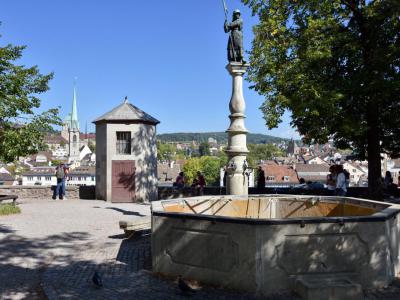
Nowadays, keep an eye out for the Hedwig Fountain, built in 1912 to honor one of Zurich’s boldest deceptions. During the 1292 siege by Duke Albert I, the city’s women donned full battle gear and manned the ramparts, while the men were off fighting elsewhere. The ruse worked, and Zurich lived to tell the tale. Today, Hedwig and her helmet still stand proudly in the park, thanks to sculptor Gustav Siber.
Apart from all the attractions inside, Lindenhof gives you panoramic eye-candy of Zurich’s rooftops, rivers, and lake-all in one relaxed snapshot. It’s the city’s breathing room, ideal for a pause between museum marathons and shopping sprees. Kids can run wild on the playgrounds, and for the tactically inclined, there’s an outdoor chessboard waiting to test your strategy.
Oh, and if you’re lucky, you might stumble onto a festival or event-just ask at the tourism office.
Insider tip:
Check out the replica of a Roman tombstone that first mentioned Turicum-Zurich’s name back when Latin was all the rage. The original is at the Swiss National Museum, but Lindenhof’s got its own copy for on-the-spot admiration...
This peaceful hilltop was once the site of a Roman fortress, complete with ten towers and walls thick enough to make modern builders weep. The Romans got busy here in the 2nd century, but by the 9th, Louis the German decided the crumbling castle needed a royal facelift. Sadly, by the 13th century, the whole thing was abandoned, and locals did what locals do best-recycled the stones for new projects. Eco-friendly before it was cool...
And no, Zurich’s ancient swagger didn’t start with Roman togas and centurions. Long before Rome flexed its empire, Neolithic and Bronze Age folks had already claimed this hill as prime real estate. Back then, the Sihl River liked to flood the surrounding lands, and the elevated Lindenhof was the safe (and dry) bet.
Fast forward to the 1700s, and Lindenhof reinvented itself as a public park. The early crowd-pleaser, it was primarily about archery and crossbow contests that drew visitors in those days (indeed, nothing like a bit of target practice to go with your afternoon stroll...).
Nowadays, keep an eye out for the Hedwig Fountain, built in 1912 to honor one of Zurich’s boldest deceptions. During the 1292 siege by Duke Albert I, the city’s women donned full battle gear and manned the ramparts, while the men were off fighting elsewhere. The ruse worked, and Zurich lived to tell the tale. Today, Hedwig and her helmet still stand proudly in the park, thanks to sculptor Gustav Siber.
Apart from all the attractions inside, Lindenhof gives you panoramic eye-candy of Zurich’s rooftops, rivers, and lake-all in one relaxed snapshot. It’s the city’s breathing room, ideal for a pause between museum marathons and shopping sprees. Kids can run wild on the playgrounds, and for the tactically inclined, there’s an outdoor chessboard waiting to test your strategy.
Oh, and if you’re lucky, you might stumble onto a festival or event-just ask at the tourism office.
Insider tip:
Check out the replica of a Roman tombstone that first mentioned Turicum-Zurich’s name back when Latin was all the rage. The original is at the Swiss National Museum, but Lindenhof’s got its own copy for on-the-spot admiration...
3) St. Peterskirche (St. Peter's Church) (must see)
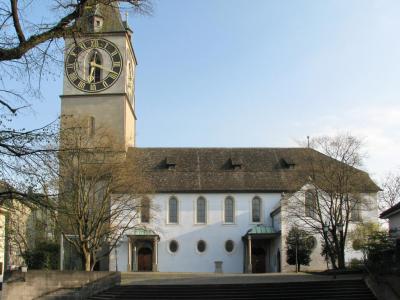
Saint Peter's Church-Zurich’s oldest temple-is also, quite possibly, the city’s most punctual landmark. Built in the 9th century, this beauty has seen more centuries than your local pub’s clock has seen beers. And speaking of clocks, St. Peter’s claims the biggest clock face in all of Europe. At a whopping 8.6 meters in diameter, its minute hand alone is longer than most compact cars. No excuse for being late around here...
The church got some facelifts over the years-first in the 13th century and again in the 1700s-because, indeed, medieval landmarks deserve a little renovation every now and then. Until 1911, a firewatcher lived in the steeple, popping his head out the window four times an hour to scan for smoke. If flames were spotted, he’d wave a flag in the direction of the danger-simple, low-tech, and surprisingly effective. Thus, unlike many of its European cousins, Zurich avoided catastrophic fires. It turns out that medieval flag signals are not just for parades...
Inside the church, you’ll find a Baroque nave paired with a Romanesque choir-like architectural speed dating through the centuries. Look closely at the faded murals, and you might spot a saint lurking in the shadows. Above the pulpit, the name of God appears in Hebrew, a nod to the Reformation’s love for the Bible’s original languages. Think of it as ancient theological street cred...
Now here’s the kicker: Saint Peter’s Church has shared custody. The City of Zurich owns the tower, while the Swiss Reformed Church parish holds the rights to the bells, the belfry, and the staircase. It is, indeed, church co-parenting at its finest...
Tip for the savvy traveler: Admire it up close, but for peak Instagram potential, cross the river-the church is even prettier from a distance.
The church got some facelifts over the years-first in the 13th century and again in the 1700s-because, indeed, medieval landmarks deserve a little renovation every now and then. Until 1911, a firewatcher lived in the steeple, popping his head out the window four times an hour to scan for smoke. If flames were spotted, he’d wave a flag in the direction of the danger-simple, low-tech, and surprisingly effective. Thus, unlike many of its European cousins, Zurich avoided catastrophic fires. It turns out that medieval flag signals are not just for parades...
Inside the church, you’ll find a Baroque nave paired with a Romanesque choir-like architectural speed dating through the centuries. Look closely at the faded murals, and you might spot a saint lurking in the shadows. Above the pulpit, the name of God appears in Hebrew, a nod to the Reformation’s love for the Bible’s original languages. Think of it as ancient theological street cred...
Now here’s the kicker: Saint Peter’s Church has shared custody. The City of Zurich owns the tower, while the Swiss Reformed Church parish holds the rights to the bells, the belfry, and the staircase. It is, indeed, church co-parenting at its finest...
Tip for the savvy traveler: Admire it up close, but for peak Instagram potential, cross the river-the church is even prettier from a distance.
4) Niederdorfstrasse (Niederdorf street) (must see)
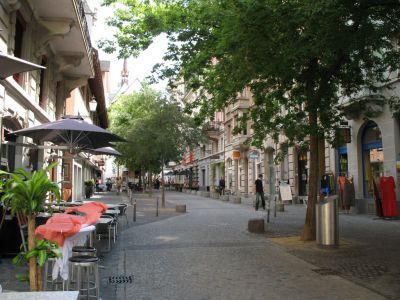
Niederdorf Street-known to locals simply as Niederdorf, or more affectionately as Dörfli (which means "little village")-is Zurich’s cobblestoned catwalk where medieval mischief meets modern-day people-watching. Tucked into the east side of the Old Town, just across the Limmat River, this pedestrian stretch is part time machine, part open-air stage, and full-time charmer.
Back in the day, this was the artisans’ turf. Imagine hammering, shouting, bargaining, and maybe the odd scandal whispered over a barrel of ale. Many of the buildings here date back to the 14th and 15th centuries, and if you squint, you might see a medieval merchant leaning out a timbered window-or maybe it’s just a tourist in vintage Instagram mode...
Fast forward to now, and Dörfli’s still buzzing, only the tools of the trade have changed. Out are the blacksmiths, and in are the chocolate-makers, bookshop keepers, and espresso artists. During the day, it’s the perfect place to grab a coffee, pick up a quirky souvenir, or get delightfully lost in a narrow alley that probably leads to a surprise fountain or a tiny wine bar. By night, the whole street slips into something more comfortable-live music, clinking glasses, laughter in at least five different languages, and bars that don’t mind if you stay a little longer.
The fun starts just opposite Zurich’s main train station and runs parallel to Limmatquai-the riverside promenade one block over, where the views are breezy and the vibes are park-like. Down at the southern end, you'll spot the Great Minster-Zurich’s twin-towered Romanesque giant, looking ever so stoic, while the rest of us have fondue.
Speaking of food: Dörfli delivers too. From bubbling Swiss cheese pots to globally inspired bites, there’s plenty to keep your fork busy. And if you're lucky, a street performer or accordionist might just soundtrack your evening.
Oh, and don’t miss the Dörfli Festival in late August-Zurich's answer to “what if a whole street threw a party?” Music, food, and good vibes guaranteed.
So, go ahead-make good use of your walking shoes, follow the sound of clinking glasses, and let Niederdorf work its old-world magic on you.
Back in the day, this was the artisans’ turf. Imagine hammering, shouting, bargaining, and maybe the odd scandal whispered over a barrel of ale. Many of the buildings here date back to the 14th and 15th centuries, and if you squint, you might see a medieval merchant leaning out a timbered window-or maybe it’s just a tourist in vintage Instagram mode...
Fast forward to now, and Dörfli’s still buzzing, only the tools of the trade have changed. Out are the blacksmiths, and in are the chocolate-makers, bookshop keepers, and espresso artists. During the day, it’s the perfect place to grab a coffee, pick up a quirky souvenir, or get delightfully lost in a narrow alley that probably leads to a surprise fountain or a tiny wine bar. By night, the whole street slips into something more comfortable-live music, clinking glasses, laughter in at least five different languages, and bars that don’t mind if you stay a little longer.
The fun starts just opposite Zurich’s main train station and runs parallel to Limmatquai-the riverside promenade one block over, where the views are breezy and the vibes are park-like. Down at the southern end, you'll spot the Great Minster-Zurich’s twin-towered Romanesque giant, looking ever so stoic, while the rest of us have fondue.
Speaking of food: Dörfli delivers too. From bubbling Swiss cheese pots to globally inspired bites, there’s plenty to keep your fork busy. And if you're lucky, a street performer or accordionist might just soundtrack your evening.
Oh, and don’t miss the Dörfli Festival in late August-Zurich's answer to “what if a whole street threw a party?” Music, food, and good vibes guaranteed.
So, go ahead-make good use of your walking shoes, follow the sound of clinking glasses, and let Niederdorf work its old-world magic on you.
5) Gates of Hell
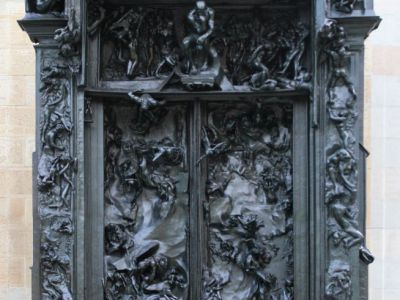
The Gates of Hell, located at the Kunsthaus Zurich, stands as a significant sculptural achievement by the renowned French artist Auguste Rodin. Inspired by Dante Alighieri's "The Inferno," this monumental work delves into a dark portrayal of the afterlife, depicting various damned souls in intricate detail. With dimensions reaching six meters in height, four meters in width, and extending one meter in depth, the sculpture showcases Rodin's expertise in form and emotion.
Commissioned in 1880 by the Directorate of Fine Arts, Rodin's Gates of Hell project was expected to take five years. However, Rodin surpassed expectations, spending 37 years perfecting the composition until his death, showcasing his dedication to his craft. The bronze cast housed in Zurich, acquired by the museum in 1947, features 186 figures adorning the gate, with variations in size ranging from 15 centimeters to over a meter, each contributing to the narrative complexity.
Beyond its sheer scale and emotional resonance, the Gates of Hell holds significance for its impact on Rodin's subsequent works. Several figures from the composition were later developed into standalone sculptures, solidifying Rodin's legacy in the art world. Examples include "The Thinker," "The Kiss," "Ugolino and His Children," and "The Three Shades," showcasing Rodin's innovative approach where elements of a larger work gain individual recognition.
Various casts of the Gates of Hell are displayed worldwide, including at Stanford University in California and the Rodin Gallery in Korea, while the original plaster resides at the Rodin Museum in Paris. Its presence at the Kunsthaus Zurich provides a unique opportunity to engage with Rodin's profound interpretation of Dante's narrative, making it a pivotal work in modern sculpture studies.
Tip:
Look around at the back to see how the castings were put together. Really quite amazing!
Commissioned in 1880 by the Directorate of Fine Arts, Rodin's Gates of Hell project was expected to take five years. However, Rodin surpassed expectations, spending 37 years perfecting the composition until his death, showcasing his dedication to his craft. The bronze cast housed in Zurich, acquired by the museum in 1947, features 186 figures adorning the gate, with variations in size ranging from 15 centimeters to over a meter, each contributing to the narrative complexity.
Beyond its sheer scale and emotional resonance, the Gates of Hell holds significance for its impact on Rodin's subsequent works. Several figures from the composition were later developed into standalone sculptures, solidifying Rodin's legacy in the art world. Examples include "The Thinker," "The Kiss," "Ugolino and His Children," and "The Three Shades," showcasing Rodin's innovative approach where elements of a larger work gain individual recognition.
Various casts of the Gates of Hell are displayed worldwide, including at Stanford University in California and the Rodin Gallery in Korea, while the original plaster resides at the Rodin Museum in Paris. Its presence at the Kunsthaus Zurich provides a unique opportunity to engage with Rodin's profound interpretation of Dante's narrative, making it a pivotal work in modern sculpture studies.
Tip:
Look around at the back to see how the castings were put together. Really quite amazing!
6) Grossmünster (Great Minster) (must see)
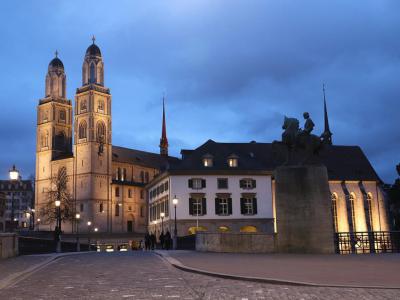
Now, if Zurich’s skyline had a king of the hill, it would probably be the Great Minster-standing tall, proud, and unmistakably Romanesque. It’s one of the city’s four major churches, rubbing historic shoulders with The Church of Our Lady, Preacher's Church, and Saint Peter's Church. But this one’s got some serious theological swagger.
Legend credits none other than Emperor Charlemagne-yes, that Charles the Great-with commissioning the place. Construction kicked off around 1100, and after about 120 years of medieval bricklaying, the Great Minster was born.
But here’s where it gets spicy: in the early 1500s, this church didn’t just host sermons-it became ground zero for the Swiss-German Reformation. Huldrych Zwingli, local priest and full-time disruptor, began preaching bold new ideas in 1520. By 1523, after winning a couple of intense theological debates, Zurich officially seceded from the Pope.
Zwingli’s influence ran deep. In 1524, the interior of the Great Minster underwent a makeover-with religious imagery, altars, and even the organ stripped away. Fasting was declared optional. Mass got rewritten. Celibacy-rethought. Church music? Well… eventually it made a comeback. What’s left is a beautifully bare, historically loaded space that tells the story of faith meeting reform head-on.
And speaking of Charles the Great, you’ll spot him again as a statue perched on the southern tower-sword in hand, crown slipping stylishly off his head like a medieval mic drop. The man unified a good chunk of Europe and even lent his name to the word “king” in many languages. Not bad for a guy in stone.
Okay, the church may seem a little plain inside-but don’t let that fool you. The stained-glass windows made from sliced agate are pure magic. The Carolus Magnus statue is iconic. And the front door alone could earn its own Instagram account.
Tip:
Feeling ambitious? Climb the tower-just 180+ steps up. No lift, no turning back. But once you’re up there, the views of Zurich are unbeatable, and best of all, you can catch your breath for as long as you like.
Legend credits none other than Emperor Charlemagne-yes, that Charles the Great-with commissioning the place. Construction kicked off around 1100, and after about 120 years of medieval bricklaying, the Great Minster was born.
But here’s where it gets spicy: in the early 1500s, this church didn’t just host sermons-it became ground zero for the Swiss-German Reformation. Huldrych Zwingli, local priest and full-time disruptor, began preaching bold new ideas in 1520. By 1523, after winning a couple of intense theological debates, Zurich officially seceded from the Pope.
Zwingli’s influence ran deep. In 1524, the interior of the Great Minster underwent a makeover-with religious imagery, altars, and even the organ stripped away. Fasting was declared optional. Mass got rewritten. Celibacy-rethought. Church music? Well… eventually it made a comeback. What’s left is a beautifully bare, historically loaded space that tells the story of faith meeting reform head-on.
And speaking of Charles the Great, you’ll spot him again as a statue perched on the southern tower-sword in hand, crown slipping stylishly off his head like a medieval mic drop. The man unified a good chunk of Europe and even lent his name to the word “king” in many languages. Not bad for a guy in stone.
Okay, the church may seem a little plain inside-but don’t let that fool you. The stained-glass windows made from sliced agate are pure magic. The Carolus Magnus statue is iconic. And the front door alone could earn its own Instagram account.
Tip:
Feeling ambitious? Climb the tower-just 180+ steps up. No lift, no turning back. But once you’re up there, the views of Zurich are unbeatable, and best of all, you can catch your breath for as long as you like.
7) Fraumünster (Church of Our Lady) (must see)
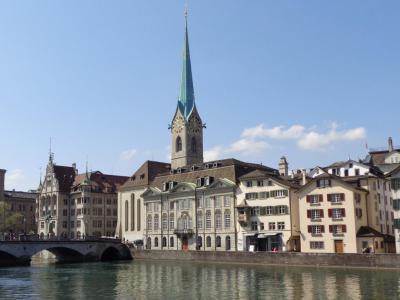
The Church of Our Lady-or Fraumünster if you're feeling Swiss about it-is easily one of Zurich’s most eye-catching landmarks, thanks to that graceful blue spire that insists on being in every skyline photo. Founded way back in 853 by Emperor Louis the German for his daughter Hildegard (talk about a royal housewarming gift), this wasn’t an average cloistered convent. No, the abbess here wasn’t just praying and gardening-she was running the show. In medieval Zurich, she held market rights, minted coins, and had a firm grip on city affairs. Basically, before Zurich was ruled by bankers in suits, it was partly governed by nuns with serious executive power.
By 874, they’d added a basilica complete with a crypt that now houses Zurich’s patron saints, Felix and Regula-because a great city can certainly benefit from a couple of martyred siblings watching over it. But the good times for the abbey came to an end in 1524 during the Reformation. The last abbess handed the keys over to the city, and most of the religious art was either taken down or..., well, aggressively removed.
Today, people come not just for the medieval intrigue, but for the stunning mashup of Gothic architecture and Baroque flair. And then-boom-the stained glass. In the 1970s, none other than Marc Chagall himself stepped in and created five towering windows for the choir. Each one tells a biblical story in bold, glowing color. The “Prophet” window is all reds and oranges and righteous fire. Across from it are “Jacob,” “Christ,” and “Zion” in cooler, gentler hues, and the “Law” window fit to impress even Moses himself.
Also remarkable is the vibrant window near the entrance by Augusto Giacometti, adding another layer of artistic prestige to the church’s interior. So now it doubles as an accidental art museum.
If you're visiting, do grab the audio guide-it’s included with the ticket and actually quite good. You’ll get the full story, minus the Latin. Entry fees vary, and remember: while photos of the interior are generally allowed, pictures of the Chagall windows are strictly prohibited. Your phone will be tempted, but resist. Oh, and be sure to bring some Swiss francs, too-they still like their cash here.
So, whether you’re into saints, stained glass, or just need a break from the Station Street, the Church of Our Lady is a peaceful detour into Zurich’s soul-with a splash of color and a whole lot of history.
By 874, they’d added a basilica complete with a crypt that now houses Zurich’s patron saints, Felix and Regula-because a great city can certainly benefit from a couple of martyred siblings watching over it. But the good times for the abbey came to an end in 1524 during the Reformation. The last abbess handed the keys over to the city, and most of the religious art was either taken down or..., well, aggressively removed.
Today, people come not just for the medieval intrigue, but for the stunning mashup of Gothic architecture and Baroque flair. And then-boom-the stained glass. In the 1970s, none other than Marc Chagall himself stepped in and created five towering windows for the choir. Each one tells a biblical story in bold, glowing color. The “Prophet” window is all reds and oranges and righteous fire. Across from it are “Jacob,” “Christ,” and “Zion” in cooler, gentler hues, and the “Law” window fit to impress even Moses himself.
Also remarkable is the vibrant window near the entrance by Augusto Giacometti, adding another layer of artistic prestige to the church’s interior. So now it doubles as an accidental art museum.
If you're visiting, do grab the audio guide-it’s included with the ticket and actually quite good. You’ll get the full story, minus the Latin. Entry fees vary, and remember: while photos of the interior are generally allowed, pictures of the Chagall windows are strictly prohibited. Your phone will be tempted, but resist. Oh, and be sure to bring some Swiss francs, too-they still like their cash here.
So, whether you’re into saints, stained glass, or just need a break from the Station Street, the Church of Our Lady is a peaceful detour into Zurich’s soul-with a splash of color and a whole lot of history.
8) Bürkliplatz (Burkli Square)
Burkli-Zurich’s unofficial front porch, main square, and tram central all rolled into one. If you're looking for a place where the city gently slips off its shoes and enjoys the lake breeze, this is it. With a steady hum of trams passing through, it's where urban bustle meets lakeside leisure, and somehow, they get along quite nicely.
Just to the north, under the shade of well-behaved trees, is Stadthausanlage-a leafy square that hosts some of the city’s most delicious negotiations: veggies, cheese, flowers, and bread, all vying for your attention at the local market. In the middle, a classic music pavilion nods politely to passersby, often with a soundtrack to match.
From here, Station Street marches north like a well-dressed soldier, ready to lead you straight into Zurich’s high-end shopping world-credit cards beware...
But back to Burkli Square. It’s not just the transport hub or the snack stand heaven (though the bratwurst game is strong). It is also your launch pad for scenic lake cruises and water taxis-because, yes, Zurich knows how to do traffic with style.
To the east, the elegant Quay Bridge crosses the Limmat like a well-dressed Victorian gentleman. Nearby, the Seeuferanlage lakefront park stretches out invitingly, complete with an arboretum and aviary. Nature and relaxation? Yes, and yes.
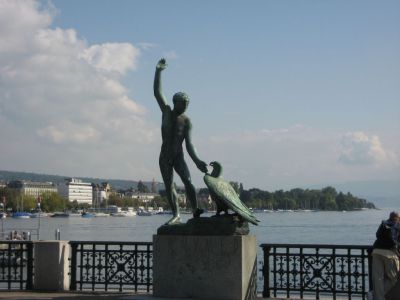
And don't miss the statue of Ganymede at the lake overlook-it’s a dramatic bronze moment of myth-meets-modernity, with the young man being whisked away by Zeus’s eagle, as you do on an average Zurich afternoon...
Just a short stroll east, you'll run into the Geiserbrunnen, a beefy 1911 sculpture by Jakob Brüllmann, where a man appears to be in intense negotiation-or maybe just wrestling-with a bull. Either way, it's got the energy of a protein bar ad.
Burkli Square is not just a place to pass through-it’s a place to pause, snack, stare at some art, and maybe catch a boat. So, linger a little. Zurich doesn’t mind...
Just to the north, under the shade of well-behaved trees, is Stadthausanlage-a leafy square that hosts some of the city’s most delicious negotiations: veggies, cheese, flowers, and bread, all vying for your attention at the local market. In the middle, a classic music pavilion nods politely to passersby, often with a soundtrack to match.
From here, Station Street marches north like a well-dressed soldier, ready to lead you straight into Zurich’s high-end shopping world-credit cards beware...
But back to Burkli Square. It’s not just the transport hub or the snack stand heaven (though the bratwurst game is strong). It is also your launch pad for scenic lake cruises and water taxis-because, yes, Zurich knows how to do traffic with style.
To the east, the elegant Quay Bridge crosses the Limmat like a well-dressed Victorian gentleman. Nearby, the Seeuferanlage lakefront park stretches out invitingly, complete with an arboretum and aviary. Nature and relaxation? Yes, and yes.
And don't miss the statue of Ganymede at the lake overlook-it’s a dramatic bronze moment of myth-meets-modernity, with the young man being whisked away by Zeus’s eagle, as you do on an average Zurich afternoon...
Just a short stroll east, you'll run into the Geiserbrunnen, a beefy 1911 sculpture by Jakob Brüllmann, where a man appears to be in intense negotiation-or maybe just wrestling-with a bull. Either way, it's got the energy of a protein bar ad.
Burkli Square is not just a place to pass through-it’s a place to pause, snack, stare at some art, and maybe catch a boat. So, linger a little. Zurich doesn’t mind...
9) Bürkliplatz Market
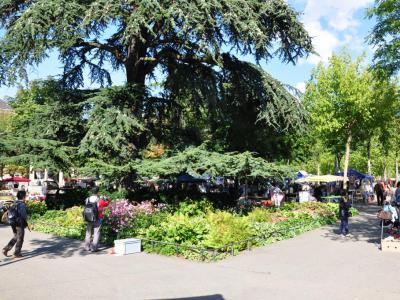
Nicknamed by the locals as “Bürklimäärt”, this cozy open-air market sits at the far end of Bahnhofstrasse, on Bürkliplatz, between the banking district and picturesque Lake Zurich. If you're keen on fresh herbs, seasonal and regional fruits and vegetables, this place is for you!
Here, under the canopy of horse chestnut trees you will find stalls laden with organic products, exotic foods from all over the globe, and many other savory delights. The market offers a large choice of fresh products, such as mushrooms and berries, different sorts of cheese, fish, fresh bread, bakery and confectionery, as well as numerous regional farm specialties.
A visit here can be easily combined with a leisurely stroll along the lake, the wonderful sight of which alone makes it well worth the while. In addition to the idyllic location, the market is also famous, not to a lesser degree, for its beautiful cut flowers and potted plants which are much popular with those eager to make a gift for their loved ones.
Here, under the canopy of horse chestnut trees you will find stalls laden with organic products, exotic foods from all over the globe, and many other savory delights. The market offers a large choice of fresh products, such as mushrooms and berries, different sorts of cheese, fish, fresh bread, bakery and confectionery, as well as numerous regional farm specialties.
A visit here can be easily combined with a leisurely stroll along the lake, the wonderful sight of which alone makes it well worth the while. In addition to the idyllic location, the market is also famous, not to a lesser degree, for its beautiful cut flowers and potted plants which are much popular with those eager to make a gift for their loved ones.
10) Confiserie Sprüngli (Sprüngli Confectionery)
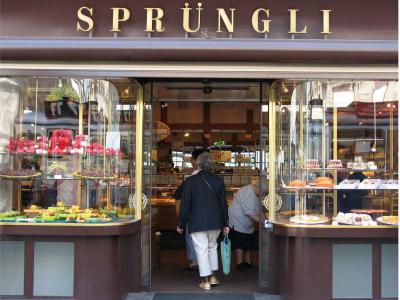
Founded in 1836 by Rudolf Sprüngli, this sweet empire began churning out chocolate long before Zurich became a global banking giant (talking about priorities...). Indeed, Confiserie Sprüngli is one of the city's oldest and most luxurious confectioners, but the real showstopper here isn’t chocolate. What is, is the dainty, dangerously addictive “Luxemburgerli” macarons, invented by a homesick Luxembourger in the kitchen. These pastel treats have gone from petit four to cult status, faster than you can say “truffle overload.”
In 1892, Sprüngli’s chocolate-making arm went its own way (think conscious uncoupling, but with more cocoa) and became Lindt & Sprüngli. That’s right, the silky squares of Lindt you know and love-they’re the rebel offspring. Meanwhile, Confiserie Sprüngli stayed put, happily crafting pralines, Grand Cru truffles, and enough sugar-coated temptation to derail any diet.
Fast forward to today, and the business is still family-run, now in its sixth generation. You’ll find Sprüngli shops sprinkled around Zurich like edible jewels-inside the main train station and twice along Station Street, at No. 21 and No. 67.
But the real gem is the Parade Square café at Station Street 21. Picture this: a salon of elegance where Zurich’s high-society grandmothers sip coffee with diamond-studded discretion. Legend whispers that young bachelors used to signal their availability to the ladies by discreetly flipping their coffee spoons-a sort of edible Tinder for the silk-scarf set... Though Sprüngli’s director insists it’s just a myth born of stricter times, when the women of status had few public places to converse without raising eyebrows.
So, next time you're here, mind your spoon-just in case folklore decides to make a comeback...
In 1892, Sprüngli’s chocolate-making arm went its own way (think conscious uncoupling, but with more cocoa) and became Lindt & Sprüngli. That’s right, the silky squares of Lindt you know and love-they’re the rebel offspring. Meanwhile, Confiserie Sprüngli stayed put, happily crafting pralines, Grand Cru truffles, and enough sugar-coated temptation to derail any diet.
Fast forward to today, and the business is still family-run, now in its sixth generation. You’ll find Sprüngli shops sprinkled around Zurich like edible jewels-inside the main train station and twice along Station Street, at No. 21 and No. 67.
But the real gem is the Parade Square café at Station Street 21. Picture this: a salon of elegance where Zurich’s high-society grandmothers sip coffee with diamond-studded discretion. Legend whispers that young bachelors used to signal their availability to the ladies by discreetly flipping their coffee spoons-a sort of edible Tinder for the silk-scarf set... Though Sprüngli’s director insists it’s just a myth born of stricter times, when the women of status had few public places to converse without raising eyebrows.
So, next time you're here, mind your spoon-just in case folklore decides to make a comeback...
11) Beyer Clock and Watch Museum
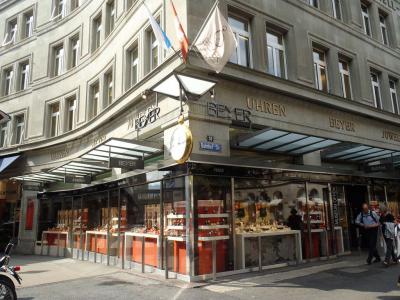
The Beyer Clock and Watch Museum in Zurich represents one of the best private collections of time pieces. This is not surprising, since the Swiss are known for their fine craftsmanship when it comes to watches. The museum represents the private collection of Theodor Beyer, a prominent Swiss family that has owned the Beyer shop since the mid-1700s.
The Beyer shop is the oldest watch and clock store in Switzerland. The museum is located in three rooms in the basement of a retail store and has quite an impressive collection of time-keeping devices. The displays are arranged chronologically (how appropriate for a watch museum), starting with rustic, non-mechanical clocks, such as sundials, then going on up to contemporary pocket watches with intricate detail. There are also grandfather clocks, other wall and floor clocks, shepherds clocks and hour glasses.
Some particularly unique items in the museum include watches made 100% from hardwood or ivory and an original rolling ball clock. There are other items in the museum that are not directly related to watches, including astronomic and geographical tools. Nominal entry fee for adults and children under 12 are free.
The Beyer shop is the oldest watch and clock store in Switzerland. The museum is located in three rooms in the basement of a retail store and has quite an impressive collection of time-keeping devices. The displays are arranged chronologically (how appropriate for a watch museum), starting with rustic, non-mechanical clocks, such as sundials, then going on up to contemporary pocket watches with intricate detail. There are also grandfather clocks, other wall and floor clocks, shepherds clocks and hour glasses.
Some particularly unique items in the museum include watches made 100% from hardwood or ivory and an original rolling ball clock. There are other items in the museum that are not directly related to watches, including astronomic and geographical tools. Nominal entry fee for adults and children under 12 are free.
12) Augustinergasse (Augustinian Street)
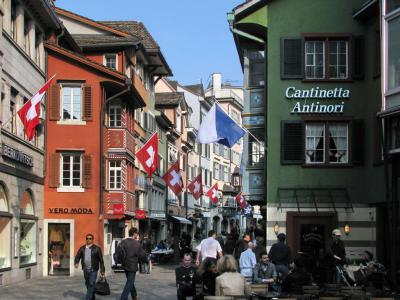
Augustinian Street (Augustinergasse), located in the center of Zürich, represents the city's medieval past mixed with its modern energy. Originally named after the Augustinian Abbey, now the Augustinian Church (Augustinerkirche), this old street is a lively pedestrian area in the heart of Zürich's downtown. The church, once the hub of a convent that ended in 1525, is now used by the Christ Catholic community. Although it appears modest compared to the vibrant street, it holds historical significance.
In the past, Augustinian Street played a vital role in connecting various parts of the medieval city, like Münsterhof, Saint Peterhofstatt, and the Münzplatz, to the city gates and defenses. Its importance was further solidified when it became part of the southern extension of the Seeuferanlage promenades between 1881 and 1887. This made it not only an essential part of the city's layout but also a popular spot in Zürich's oldest neighborhood.
The street reflects Zürich's transition from a medieval craft center to a place of wealth and artistic expression. Starting from the 17th century, affluent factory owners moved in, leading to a competition to create the most impressive facades. This resulted in beautifully decorated wooden bay windows on the colorful houses that now line the street, making it one of the city's most charming areas. Nowadays, these buildings house shops, cafes, and restaurants catering to tourists, adding to the street's lively vibe.
The Augustinian Street illustrates Zürich's ability to retain its historical charm while embracing modern urban life. It offers visitors a glimpse into the city's past, showcasing the creativity of medieval artisans and the later inhabitants' wealth and architectural ambition. Therefore, it's not just a street but a cultural symbol, representing Zürich's spirit and evolution over time.
In the past, Augustinian Street played a vital role in connecting various parts of the medieval city, like Münsterhof, Saint Peterhofstatt, and the Münzplatz, to the city gates and defenses. Its importance was further solidified when it became part of the southern extension of the Seeuferanlage promenades between 1881 and 1887. This made it not only an essential part of the city's layout but also a popular spot in Zürich's oldest neighborhood.
The street reflects Zürich's transition from a medieval craft center to a place of wealth and artistic expression. Starting from the 17th century, affluent factory owners moved in, leading to a competition to create the most impressive facades. This resulted in beautifully decorated wooden bay windows on the colorful houses that now line the street, making it one of the city's most charming areas. Nowadays, these buildings house shops, cafes, and restaurants catering to tourists, adding to the street's lively vibe.
The Augustinian Street illustrates Zürich's ability to retain its historical charm while embracing modern urban life. It offers visitors a glimpse into the city's past, showcasing the creativity of medieval artisans and the later inhabitants' wealth and architectural ambition. Therefore, it's not just a street but a cultural symbol, representing Zürich's spirit and evolution over time.
13) Alter Botanischer Garten (Old Botanical Garden)
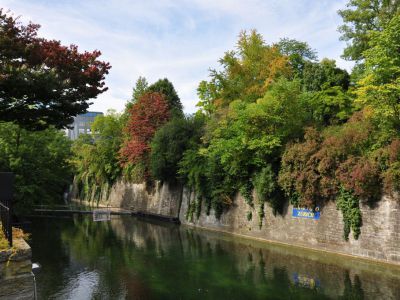
The Old Botanical Garden (Alter Botanischer Garten) in Zurich, holds significant historical and cultural importance as a botanical garden and arboretum. It is located within the remains of Zürich's Baroque fortifications, including the Schanzengraben moat and the Bauschänzli bastion, which were built starting in 1642.
The garden's origins can be traced back to the efforts of Conrad Gessner (1516–1565), a key figure whose personal herbarium laid the foundation for botanical studies in Zurich. In 1746, Johannes Gessner (1709–1790), a descendant of Conrad Gessner and a physician and naturalist, established Zurich's first botanical garden, with support from the Zurich Botanical Society (Naturforschende Gesellschaft Zürich).
After relocating to the Schimmelgut area in 1833 to make way for the newly established University of Zurich, the garden underwent significant developments, including the creation of the plant site at the Schanzengraben moat in 1837, designed by university gardener Leopold Karl Theodor Fröbel (1810–1907). The Palmhaus, a greenhouse made of glass and wood, was added in 1851, followed by an octagonal glass pavilion with an iron frame in 1877, primarily used for cultural events.
Due to limited space and deteriorating conditions, the garden administration decided to move to the spacious Bodmer-Abegg family park in the Weinegg quarter in 1971, opening the new botanical garden in 1976. The original site, now referred to as the Old Botanical Garden, serves as a recreational area, housing the Ethnological Museum (Völkerkundemuseum) of the University of Zurich, an arboretum, and the Gessner-Garten.
The arboretum, situated on the tranquil Schanzengraben moat, remains a notable attraction, offering a serene retreat in the heart of Zurich. The Gessner-Garten, established on May 27, 1997, atop the southern gun bastion of Zurich's fortifications, honors Conrad Gessner. It features 50 medicinal plants from the 16th century, along with quotes from period healers, providing insight into historical medicinal practices.
The garden's origins can be traced back to the efforts of Conrad Gessner (1516–1565), a key figure whose personal herbarium laid the foundation for botanical studies in Zurich. In 1746, Johannes Gessner (1709–1790), a descendant of Conrad Gessner and a physician and naturalist, established Zurich's first botanical garden, with support from the Zurich Botanical Society (Naturforschende Gesellschaft Zürich).
After relocating to the Schimmelgut area in 1833 to make way for the newly established University of Zurich, the garden underwent significant developments, including the creation of the plant site at the Schanzengraben moat in 1837, designed by university gardener Leopold Karl Theodor Fröbel (1810–1907). The Palmhaus, a greenhouse made of glass and wood, was added in 1851, followed by an octagonal glass pavilion with an iron frame in 1877, primarily used for cultural events.
Due to limited space and deteriorating conditions, the garden administration decided to move to the spacious Bodmer-Abegg family park in the Weinegg quarter in 1971, opening the new botanical garden in 1976. The original site, now referred to as the Old Botanical Garden, serves as a recreational area, housing the Ethnological Museum (Völkerkundemuseum) of the University of Zurich, an arboretum, and the Gessner-Garten.
The arboretum, situated on the tranquil Schanzengraben moat, remains a notable attraction, offering a serene retreat in the heart of Zurich. The Gessner-Garten, established on May 27, 1997, atop the southern gun bastion of Zurich's fortifications, honors Conrad Gessner. It features 50 medicinal plants from the 16th century, along with quotes from period healers, providing insight into historical medicinal practices.
