Custom Walk in Toronto, Canada by a54954h_5da59 created on 2025-08-18
Guide Location: Canada » Toronto
Guide Type: Custom Walk
# of Sights: 14
Tour Duration: 7 Hour(s)
Travel Distance: 17.7 Km or 11 Miles
Share Key: WSTGP
Guide Type: Custom Walk
# of Sights: 14
Tour Duration: 7 Hour(s)
Travel Distance: 17.7 Km or 11 Miles
Share Key: WSTGP
How It Works
Please retrieve this walk in the GPSmyCity app. Once done, the app will guide you from one tour stop to the next as if you had a personal tour guide. If you created the walk on this website or come to the page via a link, please follow the instructions below to retrieve the walk in the app.
Retrieve This Walk in App
Step 1. Download the app "GPSmyCity: Walks in 1K+ Cities" on Apple App Store or Google Play Store.



Step 2. In the GPSmyCity app, download(or launch) the guide "Toronto Map and Walking Tours".
Step 3. Tap the menu button located at upper right corner of the "Walks" screen and select "Retrieve custom walk". Enter the share key: WSTGP
1) Yonge-Dundas Square (must see)
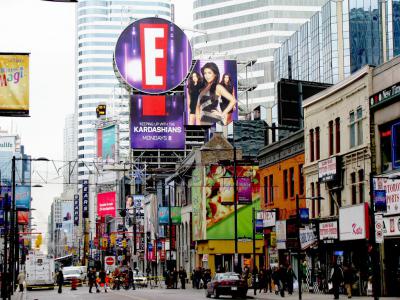
Yonge-Dundas Square is an unparalleled destination that embodies the essence of Toronto. It was conceived in 1997 as part of an initiative to revitalize the bustling intersection of Yonge and Dundas streets Downtown. Although not a traditional square, this vibrant space forms an irregular pentagon, encompassed by Dundas Street East to the north, Victoria Street to the east, Yonge Street to the west, and Dundas Square to the south.
Designed with careful intention, this so-called square features a gentle incline that enhances its theatrical ambiance. Since its completion in 2002, Yonge-Dundas Square has become the beating heart of Toronto's cultural scene, serving as a focal point within the Yonge entertainment and shopping district, and radiating with perpetual liveliness.
Illuminated by colossal billboard screens and adorned with corporate logos, the square often draws comparisons to the iconic Times Square in New York City, the vibrant Shibuya district in Tokyo, and the renowned Piccadilly Circus in London. To manage the tremendous influx of pedestrians, surpassing an astounding 100,000 per day, a pedestrian scramble was introduced in 2008, making it the first of its kind in the city.
Encompassing the square, one can find notable landmarks such as the Toronto Eaton Centre, Ed Mirvish Theatre, and the Citytv building. The centerpiece of Yonge-Dundas Square is an enchanting array of fountains: two rows of ten fountains gracefully dispersed along the main walkway, inviting visitors to pass through or around them.
This public square serves as a unifying space, bringing together individuals from all walks of life. It stands as a prominent emblem of Toronto, regularly hosting public events, celebrations, performances, and captivating art displays.
Designed with careful intention, this so-called square features a gentle incline that enhances its theatrical ambiance. Since its completion in 2002, Yonge-Dundas Square has become the beating heart of Toronto's cultural scene, serving as a focal point within the Yonge entertainment and shopping district, and radiating with perpetual liveliness.
Illuminated by colossal billboard screens and adorned with corporate logos, the square often draws comparisons to the iconic Times Square in New York City, the vibrant Shibuya district in Tokyo, and the renowned Piccadilly Circus in London. To manage the tremendous influx of pedestrians, surpassing an astounding 100,000 per day, a pedestrian scramble was introduced in 2008, making it the first of its kind in the city.
Encompassing the square, one can find notable landmarks such as the Toronto Eaton Centre, Ed Mirvish Theatre, and the Citytv building. The centerpiece of Yonge-Dundas Square is an enchanting array of fountains: two rows of ten fountains gracefully dispersed along the main walkway, inviting visitors to pass through or around them.
This public square serves as a unifying space, bringing together individuals from all walks of life. It stands as a prominent emblem of Toronto, regularly hosting public events, celebrations, performances, and captivating art displays.
2) Royal Ontario Museum (must see)
The Royal Ontario Museum in Toronto offers a captivating blend of ancient wonders and cultural treasures, making it a must-visit destination. Whether your interests lie in dinosaurs, meteorology, historical artifacts, famous paintings, or hands-on exhibits, this museum has something for everyone. Delving into the past, whether it be through historical, archaeological, or scientific lenses, is a rewarding experience at the Royal Ontario Museum.
Drawing in over a million visitors annually, the Royal Ontario Museum is a top priority for any tourist exploring Toronto. Its vast collection of over six million artifacts spans ancient history, art, meteorology, science, anthropology, archaeology, and paleontology, leaving no mystery behind its renowned reputation.
Notably, the museum proudly houses the world's most esteemed fossil field, the Burgess Shale, with the largest collection of fossils. Since its establishment in 1912, the museum has maintained a close affiliation with the University of Toronto. However, it was not until 1968 that the Royal Museum became an independent and separate institution.
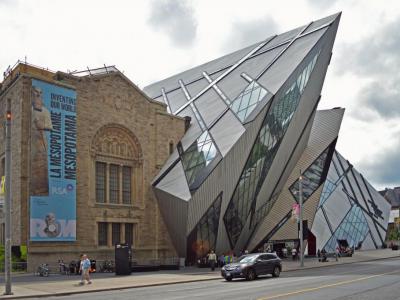
The architecture of the museum also deserves special recognition. It showcases a harmonious blend of various architectural styles and designs, encompassing Neo-Romanesque, Byzantine, and strikingly modern and contemporary elements. The Royal Ontario Museum is not only a visual delight but also sparks imagination and satisfies curiosity, providing a feast for the senses.
Why You Should Visit:
Royal and relevant; not only are the exhibits great and diverse too – the architecture alone is also an attraction.
Has over 40 galleries, a fantastic kids' area on the 2nd floor, a nice souvenir shop & more.
Tip:
There are special events held often, and on certain Friday nights, the museum will become party central with an organized social, bar, and opportunity to mingle among the artifacts.
Plan on being at the museum for about one hour per exhibit/collection and note that some special exhibitions may have an additional charge.
The c5 Restaurant Lounge, located at the top of the Crystal, offers views of Liza's Garden, a sustainable garden installed on the museum rooftop, as well as the Toronto skyline, and there are also other fine dining/coffee spots inside or close by.
Drawing in over a million visitors annually, the Royal Ontario Museum is a top priority for any tourist exploring Toronto. Its vast collection of over six million artifacts spans ancient history, art, meteorology, science, anthropology, archaeology, and paleontology, leaving no mystery behind its renowned reputation.
Notably, the museum proudly houses the world's most esteemed fossil field, the Burgess Shale, with the largest collection of fossils. Since its establishment in 1912, the museum has maintained a close affiliation with the University of Toronto. However, it was not until 1968 that the Royal Museum became an independent and separate institution.
The architecture of the museum also deserves special recognition. It showcases a harmonious blend of various architectural styles and designs, encompassing Neo-Romanesque, Byzantine, and strikingly modern and contemporary elements. The Royal Ontario Museum is not only a visual delight but also sparks imagination and satisfies curiosity, providing a feast for the senses.
Why You Should Visit:
Royal and relevant; not only are the exhibits great and diverse too – the architecture alone is also an attraction.
Has over 40 galleries, a fantastic kids' area on the 2nd floor, a nice souvenir shop & more.
Tip:
There are special events held often, and on certain Friday nights, the museum will become party central with an organized social, bar, and opportunity to mingle among the artifacts.
Plan on being at the museum for about one hour per exhibit/collection and note that some special exhibitions may have an additional charge.
The c5 Restaurant Lounge, located at the top of the Crystal, offers views of Liza's Garden, a sustainable garden installed on the museum rooftop, as well as the Toronto skyline, and there are also other fine dining/coffee spots inside or close by.
3) Casa Loma (must see)
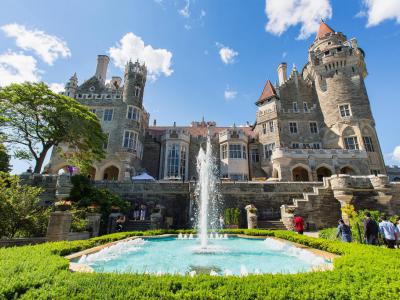
Casa Loma, which translates to "Hill House" in Spanish (although not entirely accurate), is a remarkable mansion and garden located in midtown Toronto. Built between 1911 and 1914, this Gothic Revival castle-style residence was commissioned by financier Sir Henry Pellatt and designed by the renowned architect E. J. Lennox, who was responsible for creating various notable landmarks throughout the city. Situated at an elevation of 140 meters (460 feet) above sea level, Casa Loma proudly stands 66 meters (217 feet) above Lake Ontario.
The structure itself is a captivating representation of the Edwardian era. Within the castle's walls, visitors can delight in the opulence of its exquisite furnishings, lavishly adorned rooms, elegant bathrooms, concealed passageways, and a splendid garden embellished with sculptures and fountains. Sir Henry enlisted the talents of skilled artisans from Europe to craft much of the furniture and other distinctive features found within the mansion. Spanning across five acres, Casa Loma's gardens add to its allure.
A tunnel discreetly connects Casa Loma to the Hunting Lodge and the stables, which include a garage, potting shed, stalls, carriage room, and tack rooms. This seamless integration of architectural elements is a testament to the attention to detail and grandeur of the estate.
Thanks to its distinctive architectural charm in Toronto, Casa Loma has become a sought-after filming location for movies and television productions. Furthermore, it serves as a popular choice for wedding ceremonies, and it is even possible to rent Casa Loma in the evenings for private events after the museum closes its doors to the public.
Why You Should Visit:
Cool to learn some Toronto history. Neat old building with lots of areas to explore.
Tip:
Take the audioguide (freely available downstairs next to the restaurant and gift shop) as it allows you to walk around the building/grounds at your own pace and see all the things you want to see.
Make sure you also head all the way to the towers for an incredible view of the city.
The structure itself is a captivating representation of the Edwardian era. Within the castle's walls, visitors can delight in the opulence of its exquisite furnishings, lavishly adorned rooms, elegant bathrooms, concealed passageways, and a splendid garden embellished with sculptures and fountains. Sir Henry enlisted the talents of skilled artisans from Europe to craft much of the furniture and other distinctive features found within the mansion. Spanning across five acres, Casa Loma's gardens add to its allure.
A tunnel discreetly connects Casa Loma to the Hunting Lodge and the stables, which include a garage, potting shed, stalls, carriage room, and tack rooms. This seamless integration of architectural elements is a testament to the attention to detail and grandeur of the estate.
Thanks to its distinctive architectural charm in Toronto, Casa Loma has become a sought-after filming location for movies and television productions. Furthermore, it serves as a popular choice for wedding ceremonies, and it is even possible to rent Casa Loma in the evenings for private events after the museum closes its doors to the public.
Why You Should Visit:
Cool to learn some Toronto history. Neat old building with lots of areas to explore.
Tip:
Take the audioguide (freely available downstairs next to the restaurant and gift shop) as it allows you to walk around the building/grounds at your own pace and see all the things you want to see.
Make sure you also head all the way to the towers for an incredible view of the city.
4) Kensington Market
Kensington Market, located in Toronto, is a well-known and culturally diverse neighborhood with a rich history. It has earned legendary status, attracting visitors with its indie shops, vintage boutiques, and vibrant art spaces. This district has been the subject of countless photographs, making it the most photographed place in the city. Today, Kensington Market is increasingly regarded as a home for artists, students, and families who inhabit the charming Victorian houses in the area.
Kensington Market was originally a Jewish neighborhood, but it became more diverse over time. After World War II, the Jewish population moved away, and immigrants from the Caribbean and East Asia moved in. American political refugees from the Vietnam War also settled there. In the 1980s and 1990s, more immigrants arrived from Central America, Somalia, Ethiopia, Sudan, Iran, Vietnam, Chile, and other troubled regions. Despite the diversity, the Chinese population remains the largest in Kensington Market due to its proximity to Chinatown.
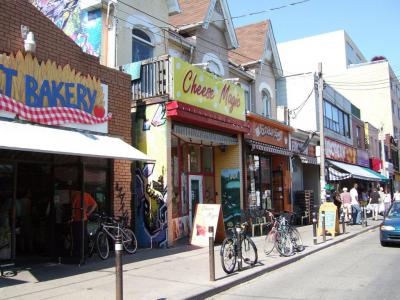
Kensington Market remains a treasure trove of bakeries and specialty grocers, offering a wide range of merchandise from various corners of the world. However, in recent years, many of the older ethnic establishments have given way to a surge of trendy bars, upscale cafés, and international clubs and restaurants that attract hipsters and other colorful individuals. These establishments are predominantly found along Augusta Avenue and the adjacent Nassau Street, Baldwin Street, and Kensington Avenue.
An architectural highlight of the neighborhood is the front extensions built onto many buildings, giving them a unique appearance. The annual "Kensington Market Festival of Lights," now known as the Kensington Market Winter Solstice Festival, takes place during the Winter Solstice in December and is celebrated with a lively street parade.
Over time, Kensington Market has served as a filming location for several TV series, including "King of Kensington," "Twitch City," and "Katts and Dog," as well as the street riot scenes in the 1984 comedy film "Police Academy." Additionally, it served as the primary setting for Cory Doctorow's novel "Someone Comes to Town, Someone Leaves Town." In November 2006, Kensington Market was officially designated as a National Historic Site of Canada, recognizing its cultural significance and historical value.
Kensington Market was originally a Jewish neighborhood, but it became more diverse over time. After World War II, the Jewish population moved away, and immigrants from the Caribbean and East Asia moved in. American political refugees from the Vietnam War also settled there. In the 1980s and 1990s, more immigrants arrived from Central America, Somalia, Ethiopia, Sudan, Iran, Vietnam, Chile, and other troubled regions. Despite the diversity, the Chinese population remains the largest in Kensington Market due to its proximity to Chinatown.
Kensington Market remains a treasure trove of bakeries and specialty grocers, offering a wide range of merchandise from various corners of the world. However, in recent years, many of the older ethnic establishments have given way to a surge of trendy bars, upscale cafés, and international clubs and restaurants that attract hipsters and other colorful individuals. These establishments are predominantly found along Augusta Avenue and the adjacent Nassau Street, Baldwin Street, and Kensington Avenue.
An architectural highlight of the neighborhood is the front extensions built onto many buildings, giving them a unique appearance. The annual "Kensington Market Festival of Lights," now known as the Kensington Market Winter Solstice Festival, takes place during the Winter Solstice in December and is celebrated with a lively street parade.
Over time, Kensington Market has served as a filming location for several TV series, including "King of Kensington," "Twitch City," and "Katts and Dog," as well as the street riot scenes in the 1984 comedy film "Police Academy." Additionally, it served as the primary setting for Cory Doctorow's novel "Someone Comes to Town, Someone Leaves Town." In November 2006, Kensington Market was officially designated as a National Historic Site of Canada, recognizing its cultural significance and historical value.
5) Chinatown (must see)
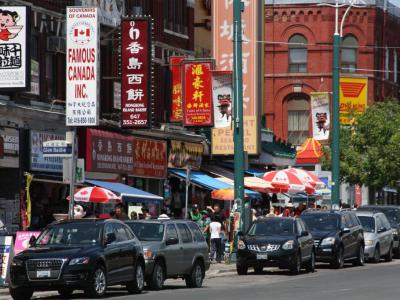
Toronto's Chinatown, also referred to as Downtown Chinatown or West Chinatown, stands as one of the largest enclaves of Chinese culture in North America. Situated at the crossroads of Spadina Avenue and Dundas Street West, this neighborhood emerged from a modest Chinese community in the 1950s-1960s, nestled within what was primarily a Jewish district at the time.
Initially, the area was predominantly inhabited by individuals from southern China and Hong Kong. However, following Hong Kong's transfer to the People's Republic of China in the late 1990s, there has been a significant influx of migrants from mainland China. In recent years, Chinatown has adapted to changing demographics and gentrification, largely influenced by the growing interest of urban professionals and young individuals working in the Financial District.
While several renowned restaurants and barbecue shops on Dundas Street West have closed as a result, the majority of grocery stores have endured. Notable Chinese malls like Dragon City and Chinatown Centre continue to thrive. Alongside these Chinese establishments, visitors will also discover a diverse array of shops and restaurants representing other East Asian cultures, including Vietnamese, Thai, and Japanese.
Nevertheless, amidst these transformations, a few longstanding establishments have withstood the test of time since before the neighborhood acquired its Chinatown status. One such example is the El Mocambo live music venue, which opened its doors in the 1940s. Other enduring attractions include vibrant open-air markets and shops along Spadina Avenue, where one can find fresh fruits, vegetables, herbal medicine, and souvenirs.
Chinese New Year festivities, featuring live stage performances, martial arts demonstrations, and lion dances, constitute yet another local highlight that captivates both tourists and residents alike. The abundance of Chinese signage grants this enchanting neighborhood a captivating atmosphere, particularly during a leisurely stroll.
Furthermore, its appeal is heightened, especially late at night, by the wide range of affordable eateries offering diverse menus, spanning from dim sum to pho to modern fusion. For those seeking unique gifts to bring home, Chinatown offers a broad selection at more affordable prices compared to the city center and other locales.
Initially, the area was predominantly inhabited by individuals from southern China and Hong Kong. However, following Hong Kong's transfer to the People's Republic of China in the late 1990s, there has been a significant influx of migrants from mainland China. In recent years, Chinatown has adapted to changing demographics and gentrification, largely influenced by the growing interest of urban professionals and young individuals working in the Financial District.
While several renowned restaurants and barbecue shops on Dundas Street West have closed as a result, the majority of grocery stores have endured. Notable Chinese malls like Dragon City and Chinatown Centre continue to thrive. Alongside these Chinese establishments, visitors will also discover a diverse array of shops and restaurants representing other East Asian cultures, including Vietnamese, Thai, and Japanese.
Nevertheless, amidst these transformations, a few longstanding establishments have withstood the test of time since before the neighborhood acquired its Chinatown status. One such example is the El Mocambo live music venue, which opened its doors in the 1940s. Other enduring attractions include vibrant open-air markets and shops along Spadina Avenue, where one can find fresh fruits, vegetables, herbal medicine, and souvenirs.
Chinese New Year festivities, featuring live stage performances, martial arts demonstrations, and lion dances, constitute yet another local highlight that captivates both tourists and residents alike. The abundance of Chinese signage grants this enchanting neighborhood a captivating atmosphere, particularly during a leisurely stroll.
Furthermore, its appeal is heightened, especially late at night, by the wide range of affordable eateries offering diverse menus, spanning from dim sum to pho to modern fusion. For those seeking unique gifts to bring home, Chinatown offers a broad selection at more affordable prices compared to the city center and other locales.
6) Fort York
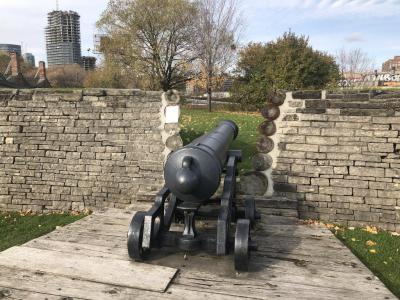
Fort York, located in Toronto, is a historic military fortification from the early 19th century. It played a significant role in housing British and Canadian military personnel and safeguarding the entrance to Toronto Harbour. The fort comprises sturdy earthwork walls adorned with stone lining and encompasses eight noteworthy buildings, including two blockhouses. As part of the larger Fort York National Historic Site, which spans 16.6 hectares (41 acres), the fort encompasses Garrison Common, military cemeteries, and a visitor center.
Fort York was established by John Graves Simcoe in 1793. It gained official recognition as a British Army post in 1798. After being destroyed by American forces in April 1813, it was reconstructed using the original fort's remains and completed in 1815. During the War of 1812, it served as a military hospital and had a brief encounter with an American naval vessel in August 1814.
Even after the construction of newer fortifications to the west in the 1840s, Fort York remained in use by the British Army and the Canadian militia. In 1870, ownership of the property was officially transferred to the Canadian militia. Subsequently, in 1909, the municipal government took ownership of the fort, although the Canadian military continued to utilize it until the conclusion of the Second World War.
In recognition of its historical significance, Fort York and its surrounding area were designated as a National Historic Site of Canada in 1923. In 1934, the fort underwent restoration to reflect its early 19th-century appearance and was reopened as a museum focusing on the War of 1812 and military life in 19th-century Canada.
Fort York was established by John Graves Simcoe in 1793. It gained official recognition as a British Army post in 1798. After being destroyed by American forces in April 1813, it was reconstructed using the original fort's remains and completed in 1815. During the War of 1812, it served as a military hospital and had a brief encounter with an American naval vessel in August 1814.
Even after the construction of newer fortifications to the west in the 1840s, Fort York remained in use by the British Army and the Canadian militia. In 1870, ownership of the property was officially transferred to the Canadian militia. Subsequently, in 1909, the municipal government took ownership of the fort, although the Canadian military continued to utilize it until the conclusion of the Second World War.
In recognition of its historical significance, Fort York and its surrounding area were designated as a National Historic Site of Canada in 1923. In 1934, the fort underwent restoration to reflect its early 19th-century appearance and was reopened as a museum focusing on the War of 1812 and military life in 19th-century Canada.
7) CN Tower (must see)
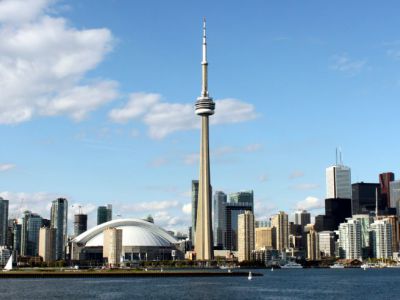
CN Tower is a concrete communications and observation tower situated in Toronto. Standing at an impressive height of 553.3 meters (1,815.3 feet), it was completed in 1976. The tower is prominently located in downtown Toronto, occupying the former Railway Lands. Its name, "CN," originates from Canadian National, the railway company responsible for its construction. When Canadian National decided to divest non-core freight railway assets before privatization in 1995, the tower was transferred to the Canada Lands Company, a federal Crown corporation responsible for the government's real estate portfolio.
For 32 years, from 1975 to 2007, the CN Tower held the distinction of being the world's tallest free-standing structure. It was surpassed by the Burj Khalifa and later the Canton Tower in 2009, relinquishing its title as the world's tallest tower. Nonetheless, it remains the tallest free-standing structure on land in the Western Hemisphere and currently ranks as the tenth-tallest free-standing structure globally. In 1995, the CN Tower was honored as one of the modern Seven Wonders of the World by the American Society of Civil Engineers. Additionally, it is a member of the World Federation of Great Towers.
The CN Tower has become an iconic symbol of Toronto's skyline, drawing over two million international visitors each year. Within its remarkable structure, visitors can explore various observation decks, dine at a revolving restaurant situated approximately 350 meters (1,150 feet) above the ground, and enjoy an entertainment complex.
Why You Should Visit:
Simply put one of the best views in North America. The city is so incredibly planned and laid out and you can truly see this from the top of the CN Tower.
Tip:
You can pay for a time slot to avoid a long wait and some extra to go to the upper levels where it's a bit quieter.
The food at the tower can be quite pricey, so plan accordingly.
For 32 years, from 1975 to 2007, the CN Tower held the distinction of being the world's tallest free-standing structure. It was surpassed by the Burj Khalifa and later the Canton Tower in 2009, relinquishing its title as the world's tallest tower. Nonetheless, it remains the tallest free-standing structure on land in the Western Hemisphere and currently ranks as the tenth-tallest free-standing structure globally. In 1995, the CN Tower was honored as one of the modern Seven Wonders of the World by the American Society of Civil Engineers. Additionally, it is a member of the World Federation of Great Towers.
The CN Tower has become an iconic symbol of Toronto's skyline, drawing over two million international visitors each year. Within its remarkable structure, visitors can explore various observation decks, dine at a revolving restaurant situated approximately 350 meters (1,150 feet) above the ground, and enjoy an entertainment complex.
Why You Should Visit:
Simply put one of the best views in North America. The city is so incredibly planned and laid out and you can truly see this from the top of the CN Tower.
Tip:
You can pay for a time slot to avoid a long wait and some extra to go to the upper levels where it's a bit quieter.
The food at the tower can be quite pricey, so plan accordingly.
8) Fairmont Royal York Hotel
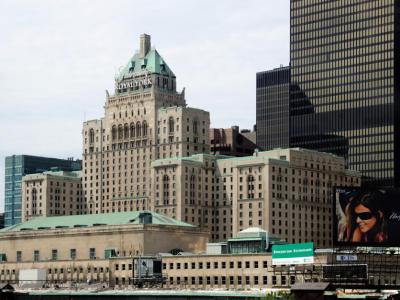
The Fairmont Royal York, also known as the Royal York, is a prestigious historic hotel located in Toronto. Situated in Downtown Toronto's Financial District, it stands proudly at the southern end. Ross and Macdonald, in collaboration with Sproatt and Rolph, designed the Royal York, which was constructed by the Canadian Pacific Railway company.
This magnificent building, completed on June 11, 1929, reaches a height of 124 meters (407 feet) and boasts 28 floors. It holds a distinguished status as one of Canada's magnificent railway hotels. Upon its completion, the Royal York briefly held the title of Toronto's tallest building, as well as the tallest in the entire country and the British Empire.
However, the nearby Canadian Bank of Commerce Tower surpassed its height the following year. Over the years, the building has undergone several extensive renovations, with the first significant refurbishment occurring in 1972. An underground walkway connecting the hotel with the Royal Bank Plaza and Union Station is a part of Toronto's PATH underground city system.
The Châteauesque-style hotel showcases a row of pointed arches on the third floor, along with a small peaked roof featuring charming dormers at its summit. Additionally, the hotel features griffin-shaped grotesques at various corners. The exterior of the building is crafted from Indiana Limestone, enveloping the hotel's 28-story steel frame. Alongside the traditional elements commonly found in Châteauesque-style hotels, this building incorporates Art Deco setbacks and Romanesque-inspired decorations.
This magnificent building, completed on June 11, 1929, reaches a height of 124 meters (407 feet) and boasts 28 floors. It holds a distinguished status as one of Canada's magnificent railway hotels. Upon its completion, the Royal York briefly held the title of Toronto's tallest building, as well as the tallest in the entire country and the British Empire.
However, the nearby Canadian Bank of Commerce Tower surpassed its height the following year. Over the years, the building has undergone several extensive renovations, with the first significant refurbishment occurring in 1972. An underground walkway connecting the hotel with the Royal Bank Plaza and Union Station is a part of Toronto's PATH underground city system.
The Châteauesque-style hotel showcases a row of pointed arches on the third floor, along with a small peaked roof featuring charming dormers at its summit. Additionally, the hotel features griffin-shaped grotesques at various corners. The exterior of the building is crafted from Indiana Limestone, enveloping the hotel's 28-story steel frame. Alongside the traditional elements commonly found in Châteauesque-style hotels, this building incorporates Art Deco setbacks and Romanesque-inspired decorations.
9) Union Station
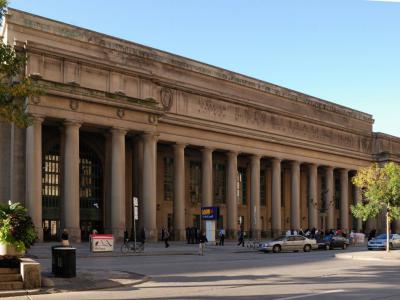
Toronto's Union Station stands as a prominent railway station and intermodal transportation hub, recognized as a National Historic Site of Canada since 1975. Moreover, it holds the distinction of being a Heritage Railway Station since 1989.
Renowned as Canada's largest and most magnificent railway station, Union Station in Toronto was masterfully crafted by the Montreal architecture firm of Ross and Macdonald. Designed in the elegant Beaux-Arts style, this architectural gem emerged as a collaborative effort between the Grand Trunk Railway, the Canadian Pacific Railway, and notable architects Hugh Jones from CPR and John M. Lyle from Toronto. Recognizing its exceptional design, the Historic Sites and Monuments Board of Canada acclaimed it in 1975 for its "national architectural significance as one of the finest examples of Beaux-Arts railway station design in Canada."
The striking exterior of Union Station showcases a Front Street façade meticulously laid out in an ashlar pattern. Smooth beige Indiana and Queenston limestone were meticulously employed in its construction. Along the colonnaded loggia facing Front Street, visitors are greeted by 22 Roman Tuscan columns, equally spaced and crafted from Bedford limestone. Enhancing the grandeur, the recessed main entrance is adorned by two sets of four columns, with intricately carved relief wreaths adorning the entablature above them.
Renowned as Canada's largest and most magnificent railway station, Union Station in Toronto was masterfully crafted by the Montreal architecture firm of Ross and Macdonald. Designed in the elegant Beaux-Arts style, this architectural gem emerged as a collaborative effort between the Grand Trunk Railway, the Canadian Pacific Railway, and notable architects Hugh Jones from CPR and John M. Lyle from Toronto. Recognizing its exceptional design, the Historic Sites and Monuments Board of Canada acclaimed it in 1975 for its "national architectural significance as one of the finest examples of Beaux-Arts railway station design in Canada."
The striking exterior of Union Station showcases a Front Street façade meticulously laid out in an ashlar pattern. Smooth beige Indiana and Queenston limestone were meticulously employed in its construction. Along the colonnaded loggia facing Front Street, visitors are greeted by 22 Roman Tuscan columns, equally spaced and crafted from Bedford limestone. Enhancing the grandeur, the recessed main entrance is adorned by two sets of four columns, with intricately carved relief wreaths adorning the entablature above them.
10) Brookfield Place
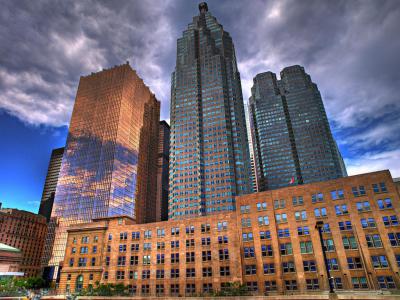
Toronto’s architectural landscape is a perfect blend of the old and the new. Showcasing some stunning cutting-edge modern designs and monuments of the past, it is indeed a breathtaking sight to see both the extremes that make up the perfect skyline of the city. Brookfield Place is one such site. A visit to this place is a must if you do not want to miss out on any fascinating structure of Toronto.
The Brookfield Place comprises two contemporary towers, the Bay Wellington Tower and the TD Canada Trust Tower, which took form in 1990 and 1991 respectively. The 49-storied Bay Wellington was designed by architects Bregman and Hamann, while the 53 stories of Canada Trust Tower were created by Skidmore, Owings & Merrill. However, the real treat is the Allen Lambert Galleria, a six-storied high pedestrian atrium designed by famous Santiago Calatrava.
Although the architectural element is what drives people towards this stunning building, visiting Brookfield Place has an added advantage – it has some of the best shopping stores in town. Ranging from high-end boutiques to casual and popular brands, you are bound to enjoy the Brookfield Place one way or the other. The complex also boasts some of the best restaurants in town and if you are in a mood for some fine dining experience, Brookfield Place is the place to be.
Why You Should Visit:
The more you look at the structure, the more you are mesmerized with the design.
Great photo opportunity, especially when it is sunny out. The light passes through the top of the arches and it is somewhat reminiscent of European cathedrals.
The office complex does not have many stores, but it does have a large food court, located on the lower concourse, and several excellent restaurants for all budgets.
Tip:
Keep an eye out for the annual holiday lighting ceremony!
The Brookfield Place comprises two contemporary towers, the Bay Wellington Tower and the TD Canada Trust Tower, which took form in 1990 and 1991 respectively. The 49-storied Bay Wellington was designed by architects Bregman and Hamann, while the 53 stories of Canada Trust Tower were created by Skidmore, Owings & Merrill. However, the real treat is the Allen Lambert Galleria, a six-storied high pedestrian atrium designed by famous Santiago Calatrava.
Although the architectural element is what drives people towards this stunning building, visiting Brookfield Place has an added advantage – it has some of the best shopping stores in town. Ranging from high-end boutiques to casual and popular brands, you are bound to enjoy the Brookfield Place one way or the other. The complex also boasts some of the best restaurants in town and if you are in a mood for some fine dining experience, Brookfield Place is the place to be.
Why You Should Visit:
The more you look at the structure, the more you are mesmerized with the design.
Great photo opportunity, especially when it is sunny out. The light passes through the top of the arches and it is somewhat reminiscent of European cathedrals.
The office complex does not have many stores, but it does have a large food court, located on the lower concourse, and several excellent restaurants for all budgets.
Tip:
Keep an eye out for the annual holiday lighting ceremony!
11) Gooderham Building
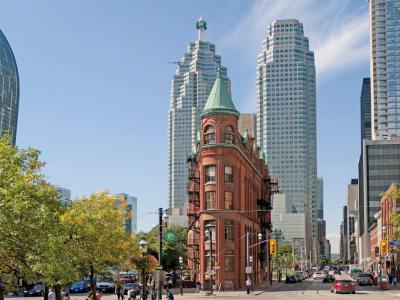
Among the many places worth visiting in the Saint Lawrence neighborhood, especially for an architecture buff, is the Gooderham Building. Hardly five stories tall, wedged in a triangular intersection between Front and Wellington streets, this structure is one of the most photographed sights in the city. The house was built in 1892, ten years before its famous kin, the Fuller Building in New York City, and as such, represents an early example of the flatiron form of architecture.
The previous building on this site was shorter but of the same shape and was called the Coffin Block. The current vermilion red-brick edifice, with tinges of Romanesque styling, was constructed for distiller George Gooderham and served as the office of the Gooderham & Worts distillery until 1952. The Gooderham family sold the property in 1957, following which it changed hands several times. In 1975, the building was designated a historic site under the Ontario Heritage Act.
Besides its shape, the Gooderham Building is well-known for the mural on its back wall. The Flatiron Mural – created by renowned Canadian artist Derek Michael Besant – uses a trompe-l'œil effect to make the wall appear to have more windows than it does, as well as to give it a more mobile effect with the help of a picture of the Perkins Building, which is located directly across the street, depicted as if loosely 'tacked' down to the wall, with some of its edges 'fluttering' away.
Right behind the Gooderham Building is a tree-lined spot called Berczy Park. This park, housing a sizeable three-tier fountain fitted with 27 cast-iron dogs spouting water, a cast-iron cat, and crowned with a bone, was completed in 2017. The drinking trough for dogs has made this fountain a popular destination, particularly for dog lovers.
The previous building on this site was shorter but of the same shape and was called the Coffin Block. The current vermilion red-brick edifice, with tinges of Romanesque styling, was constructed for distiller George Gooderham and served as the office of the Gooderham & Worts distillery until 1952. The Gooderham family sold the property in 1957, following which it changed hands several times. In 1975, the building was designated a historic site under the Ontario Heritage Act.
Besides its shape, the Gooderham Building is well-known for the mural on its back wall. The Flatiron Mural – created by renowned Canadian artist Derek Michael Besant – uses a trompe-l'œil effect to make the wall appear to have more windows than it does, as well as to give it a more mobile effect with the help of a picture of the Perkins Building, which is located directly across the street, depicted as if loosely 'tacked' down to the wall, with some of its edges 'fluttering' away.
Right behind the Gooderham Building is a tree-lined spot called Berczy Park. This park, housing a sizeable three-tier fountain fitted with 27 cast-iron dogs spouting water, a cast-iron cat, and crowned with a bone, was completed in 2017. The drinking trough for dogs has made this fountain a popular destination, particularly for dog lovers.
12) Distillery Historic District (must see)
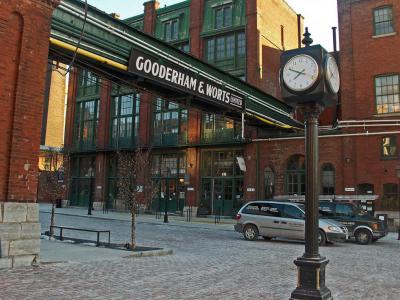
The Distillery District in Toronto is an enchanting area that combines history and entertainment. Situated east of Downtown Toronto, this district has a rich industrial past. It was once the largest industrial zone in Toronto but saw a decline in the distilling industry, leading to its transformation into a bustling shopping and entertainment destination. Spanning over 13 acres (53,000 square meters), the district boasts more than 40 beautifully preserved heritage buildings and 10 charming streets, making it the largest collection of Victorian-era industrial architecture in North America.
A distinguishing feature of the Distillery District is its traditional brick-paved streets and lanes, which are exclusively reserved for pedestrians and cyclists. Vehicle traffic is restricted to the streets and parking areas outside the district's historic center, ensuring a tranquil and pedestrian-friendly environment. Adding to its charm, the lanes are adorned with several captivating sculptures, with three located on Distillery Lane and the final one at the parking area towards the end of Trinity Street. One of the prominent landmarks in the area is the chimney stack atop the Boiler House complex.
Visitors to the Distillery District can find both informal and formal public spaces to relax, socialize, and enjoy the unique ambiance. Pedestrianized streets offer inviting chairs and tables where people can gather and unwind. Additionally, various coffee houses and restaurants feature formal patios, providing an ideal setting for a delightful dining experience. This well-designed district not only attracts pedestrian traffic but also encourages visitors to spend quality time in its inviting spaces.
Why You Should Visit:
The old buildings in combination with art stores & galleries, eateries, craft breweries, and occasional live performances make a stroll worthwhile if you have spare time.
Tip:
They run a Christmas market in the District and it's quite fun and well-decorated. The whole area is closed off with entrances and you can walk about looking, eating, drinking, and shopping all you like.
A distinguishing feature of the Distillery District is its traditional brick-paved streets and lanes, which are exclusively reserved for pedestrians and cyclists. Vehicle traffic is restricted to the streets and parking areas outside the district's historic center, ensuring a tranquil and pedestrian-friendly environment. Adding to its charm, the lanes are adorned with several captivating sculptures, with three located on Distillery Lane and the final one at the parking area towards the end of Trinity Street. One of the prominent landmarks in the area is the chimney stack atop the Boiler House complex.
Visitors to the Distillery District can find both informal and formal public spaces to relax, socialize, and enjoy the unique ambiance. Pedestrianized streets offer inviting chairs and tables where people can gather and unwind. Additionally, various coffee houses and restaurants feature formal patios, providing an ideal setting for a delightful dining experience. This well-designed district not only attracts pedestrian traffic but also encourages visitors to spend quality time in its inviting spaces.
Why You Should Visit:
The old buildings in combination with art stores & galleries, eateries, craft breweries, and occasional live performances make a stroll worthwhile if you have spare time.
Tip:
They run a Christmas market in the District and it's quite fun and well-decorated. The whole area is closed off with entrances and you can walk about looking, eating, drinking, and shopping all you like.
13) St. James Anglican Cathedral
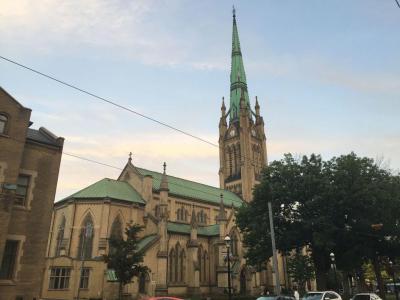
One of the most enthralling churches of Toronto is the Saint James Cathedral. Not only does the facade of this church make it captivating, but it is also the story that accompanies it.
Home to the oldest congregation in Toronto, established in 1797, Saint James's serves as the spiritual center of Saint Lawrence neighborhood and is the episcopal seat of the Anglican Church of Canada's Diocese of Toronto. All of this makes it one of the most treasured heritage sites in the city.
Built in the mid-19th century, the cathedral boasts a magnificent Gothic Revival style of architecture. Designed by Frederick William Cumberland, the Saint James Cathedral greets spectators from far and wide coming to admire its sheer beauty. The structure flaunts a wonderful harmony of proportions and grandeur. With its white brick and sandstone exterior, the building conspicuously stands out in contrast to its surrounding landscape. Along with its exteriors, the cathedral's insides are also equally breathtaking. The architectural elements include high raised ceiling, ribbed vaults and pointed arched lights that brighten the interiors with natural illumination, making it a truly magnificent sight to behold during daylight.
Home to the oldest congregation in Toronto, established in 1797, Saint James's serves as the spiritual center of Saint Lawrence neighborhood and is the episcopal seat of the Anglican Church of Canada's Diocese of Toronto. All of this makes it one of the most treasured heritage sites in the city.
Built in the mid-19th century, the cathedral boasts a magnificent Gothic Revival style of architecture. Designed by Frederick William Cumberland, the Saint James Cathedral greets spectators from far and wide coming to admire its sheer beauty. The structure flaunts a wonderful harmony of proportions and grandeur. With its white brick and sandstone exterior, the building conspicuously stands out in contrast to its surrounding landscape. Along with its exteriors, the cathedral's insides are also equally breathtaking. The architectural elements include high raised ceiling, ribbed vaults and pointed arched lights that brighten the interiors with natural illumination, making it a truly magnificent sight to behold during daylight.
14) Old City Hall
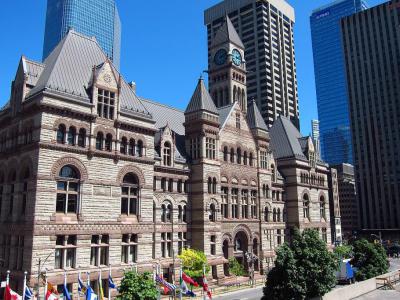
Located at the intersection of Queen and Bay Streets in Downtown Toronto stands an impressive building with Romanesque-style architecture. This remarkable structure, known today as the Old City Hall, served as the Toronto City Council's home from 1899 to 1966, becoming the third city hall constructed for the flourishing city. Upon its completion, it ranked among the largest buildings in Toronto and stood as the largest civic edifice in North America.
Renowned architect Edward James Lennox led the creation of this masterpiece. Over a decade of construction, the majestic City Hall emerged as an iconic landmark. Its remarkable clock tower, standing at 103.6 meters (340 feet), became the city's crown jewel. The clock mechanism was crafted in Croydon, England. Inside the clock room, three bells were placed: two smaller ones that chimed every quarter hour, and a bourdon bell weighing 5,443 kilograms, which tolled every hour.
Matching the splendid exterior, the interior of the building exuded charm, adorned with intricate details. Noteworthy features include a grand staircase adorned with stained glass windows depicting Canadian history, various murals, statues, and other decorative elements.
Despite its grandeur, the Old City Hall proved inadequate for Toronto's expanding municipal government within a few decades of its construction. In the 1960s, plans were made to demolish the building and make way for a retail complex known as the Eaton Centre. However, thanks to public outcry, the Old City Hall was saved and repurposed as a courthouse. In 1984, it received the prestigious designation as a National Historic Site, preserving its historical significance for future generations.
Tip:
Make sure to visit the small "lake" close by, as many of the pictures from Toronto you might know are taken from this place while facing the "TORONTO" sign.
Renowned architect Edward James Lennox led the creation of this masterpiece. Over a decade of construction, the majestic City Hall emerged as an iconic landmark. Its remarkable clock tower, standing at 103.6 meters (340 feet), became the city's crown jewel. The clock mechanism was crafted in Croydon, England. Inside the clock room, three bells were placed: two smaller ones that chimed every quarter hour, and a bourdon bell weighing 5,443 kilograms, which tolled every hour.
Matching the splendid exterior, the interior of the building exuded charm, adorned with intricate details. Noteworthy features include a grand staircase adorned with stained glass windows depicting Canadian history, various murals, statues, and other decorative elements.
Despite its grandeur, the Old City Hall proved inadequate for Toronto's expanding municipal government within a few decades of its construction. In the 1960s, plans were made to demolish the building and make way for a retail complex known as the Eaton Centre. However, thanks to public outcry, the Old City Hall was saved and repurposed as a courthouse. In 1984, it received the prestigious designation as a National Historic Site, preserving its historical significance for future generations.
Tip:
Make sure to visit the small "lake" close by, as many of the pictures from Toronto you might know are taken from this place while facing the "TORONTO" sign.
