Custom Walk in Denver, Colorado by mrazhunt_b6245 created on 2025-09-13
Guide Location: USA » Denver
Guide Type: Custom Walk
# of Sights: 7
Tour Duration: 4 Hour(s)
Travel Distance: 11.4 Km or 7.1 Miles
Share Key: 68CTR
Guide Type: Custom Walk
# of Sights: 7
Tour Duration: 4 Hour(s)
Travel Distance: 11.4 Km or 7.1 Miles
Share Key: 68CTR
How It Works
Please retrieve this walk in the GPSmyCity app. Once done, the app will guide you from one tour stop to the next as if you had a personal tour guide. If you created the walk on this website or come to the page via a link, please follow the instructions below to retrieve the walk in the app.
Retrieve This Walk in App
Step 1. Download the app "GPSmyCity: Walks in 1K+ Cities" on Apple App Store or Google Play Store.



Step 2. In the GPSmyCity app, download(or launch) the guide "Denver Map and Walking Tours".
Step 3. Tap the menu button located at upper right corner of the "Walks" screen and select "Retrieve custom walk". Enter the share key: 68CTR
1) Union Station (must see)
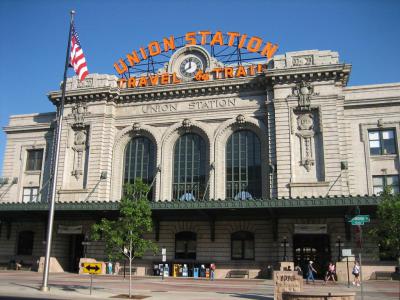
The historic Union Station in downtown Denver is a place that can be enjoyed by those who love to shop, dine, relax or enjoy the architecture while learning about the past. Visitors are welcome to tour the station, including the attached hotel.
Union Station was originally built in 1881. However, a fire burned the facility to the ground causing it to be rebuilt in 1894. It has had a number of renovations and upgrades over the years but retains the old-world charm from its beginnings in the 19th century.
Architectural firm Van Brunt & Howe designed the current Union Station in a Romanesque Revival style. An arch was added in 1906 as a symbol for welcoming new guests to the city. Likewise, the Hebrew word "mizpah" was added to the arch to wish a farewell to those who use the station to leave.
It is still a working railroad, but also offers retail space and restaurants. The station also regularly partners with the Denver Museum of Nature and Science to offer special events for visitors of all ages. A farmers' market is hosted at the Union Station most Fridays.
Union Station is located near the 16th Street Mall, making it a great starting point or end point for a full day of walking through the city. It's also an excellent stop along the way of any walking tour that has Coors Field, the Denver Millennium Bridge or the Museum of Contemporary Art as one of the stops.
Sports lovers will appreciate Union Station's location between Coors Field, the home of the Colorado Rockies, and the Pepsi Center, which hosts the Denver Nuggets.
Why You Should Visit:
The history of a city is often best told by its railroads. Anyone who wants to experience Denver in the way 19th century travelers would have should spend some time at the Union Station.
Tips:
Look for some remnants of the original Union Station, such as the large chandeliers in the Great Hall. Make sure to check out the calendar of events as most days offer something fun and new for tourists of the city.
Union Station was originally built in 1881. However, a fire burned the facility to the ground causing it to be rebuilt in 1894. It has had a number of renovations and upgrades over the years but retains the old-world charm from its beginnings in the 19th century.
Architectural firm Van Brunt & Howe designed the current Union Station in a Romanesque Revival style. An arch was added in 1906 as a symbol for welcoming new guests to the city. Likewise, the Hebrew word "mizpah" was added to the arch to wish a farewell to those who use the station to leave.
It is still a working railroad, but also offers retail space and restaurants. The station also regularly partners with the Denver Museum of Nature and Science to offer special events for visitors of all ages. A farmers' market is hosted at the Union Station most Fridays.
Union Station is located near the 16th Street Mall, making it a great starting point or end point for a full day of walking through the city. It's also an excellent stop along the way of any walking tour that has Coors Field, the Denver Millennium Bridge or the Museum of Contemporary Art as one of the stops.
Sports lovers will appreciate Union Station's location between Coors Field, the home of the Colorado Rockies, and the Pepsi Center, which hosts the Denver Nuggets.
Why You Should Visit:
The history of a city is often best told by its railroads. Anyone who wants to experience Denver in the way 19th century travelers would have should spend some time at the Union Station.
Tips:
Look for some remnants of the original Union Station, such as the large chandeliers in the Great Hall. Make sure to check out the calendar of events as most days offer something fun and new for tourists of the city.
2) Larimer Square (must see)
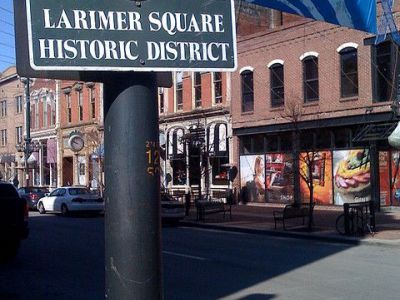
Larimer Square is billed as the most historic block in Denver because it was the first settled part in the city. Originally, the block was settled by Green Russell in what he called Auraria. In 1860 it was incorporated into Denver with the street named after the first person to build a home in Denver, General Larimer.
The buildings around the square are now filled with restaurants, shopping and nightlife. Many of the buildings originally had very different purposes. Tourists can explore the current-day interiors and exteriors while thinking of days gone by.
The Miller Building was once a popular saloon that was frequented by lawmakers and politicians. The Congdon Building held Denver's first theatre and first City Hall. The Frontenac Building was a barbershop and speakeasy during Prohibition. The Graham Building was once a lending library and pharmacy. Different from the others, the Graham Building is not an original but a recreation.
Larimer Square is close to the 16th Street Mall. Indeed, it is close enough that both could easily be visited on the same walking tour. Visitors will find more dining establishments and retail shops at Larimer Square, but they will also find special events that are unique to that area. Look for block parties that regularly occur and live music that can be found almost every night of the week.
The square is conveniently located near a number of performing arts venues. Those who want to take in a show may want to plan a visit to Larimer Square early in the evening so that they can then head to the Robert and Judi Newman Center and the Denver Center for the Performing Arts, the Buell Theatre or the Garner Galleria Theatre, among others.
Why You Should Visit:
History buffs should not let a visit to Denver pass by without seeing this first settled area in the city. It may not be as solitary as it was in 1858, but it still holds the charm of California's gold rush.
Tips:
Visitors should take their time when exploring Larimer Square. There are treasures to be found around every corner.
The buildings around the square are now filled with restaurants, shopping and nightlife. Many of the buildings originally had very different purposes. Tourists can explore the current-day interiors and exteriors while thinking of days gone by.
The Miller Building was once a popular saloon that was frequented by lawmakers and politicians. The Congdon Building held Denver's first theatre and first City Hall. The Frontenac Building was a barbershop and speakeasy during Prohibition. The Graham Building was once a lending library and pharmacy. Different from the others, the Graham Building is not an original but a recreation.
Larimer Square is close to the 16th Street Mall. Indeed, it is close enough that both could easily be visited on the same walking tour. Visitors will find more dining establishments and retail shops at Larimer Square, but they will also find special events that are unique to that area. Look for block parties that regularly occur and live music that can be found almost every night of the week.
The square is conveniently located near a number of performing arts venues. Those who want to take in a show may want to plan a visit to Larimer Square early in the evening so that they can then head to the Robert and Judi Newman Center and the Denver Center for the Performing Arts, the Buell Theatre or the Garner Galleria Theatre, among others.
Why You Should Visit:
History buffs should not let a visit to Denver pass by without seeing this first settled area in the city. It may not be as solitary as it was in 1858, but it still holds the charm of California's gold rush.
Tips:
Visitors should take their time when exploring Larimer Square. There are treasures to be found around every corner.
3) Byers-Evans House Museum (must see)
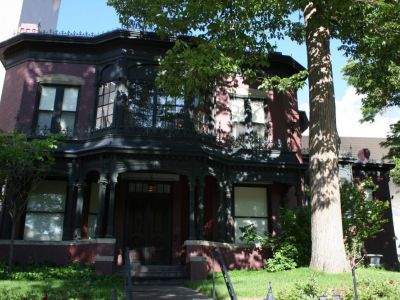
The Byers-Evans House Museum is a Late Victorian home that has since been converted into a museum. This must-see site was built in 1883 by William Byers. Later, it served as a home to Anne Evans, who was known as a prominent arts patron. In fact, Evans was instrumental in the founding of the Denver Art Museum, the Denver Public Library and the Central City Opera.
The house is now owned by the Colorado Historical Society and operated by History Colorado. Located directly behind the Denver Art Museum, the Byers-Evans House Museum is open for guided tours. The house is also home to the Center for Colorado Women's History.
The home was built in an Italianate style and added to over the years. The restoration project, which was begun in 1981, restored the home to the way it looked at the turn of the 20th century. Approximately 90 percent of the house and museum's contents are original belongings of those who previously lived in the home.
Lucky tourists may find that their visit to the Byers-Evans House Museum coincides with one of the many special events that occur onsite. Some of these include book club meetings, writing lessons and cultural events.
Why You Should Visit:
The Byers-Evans House Museum is an important part of the city's history. It also offers insight into the important influence women have had in local culture.
Tips:
The home is an easy walk from the Denver Art Museum, but visitors should still call in advance to ensure the house is open as there are no self-guided tours. The cost is $8 for adults, $6 for students and seniors, $4 for children under the age of seven and free for members of the military and History Colorado.
The house is now owned by the Colorado Historical Society and operated by History Colorado. Located directly behind the Denver Art Museum, the Byers-Evans House Museum is open for guided tours. The house is also home to the Center for Colorado Women's History.
The home was built in an Italianate style and added to over the years. The restoration project, which was begun in 1981, restored the home to the way it looked at the turn of the 20th century. Approximately 90 percent of the house and museum's contents are original belongings of those who previously lived in the home.
Lucky tourists may find that their visit to the Byers-Evans House Museum coincides with one of the many special events that occur onsite. Some of these include book club meetings, writing lessons and cultural events.
Why You Should Visit:
The Byers-Evans House Museum is an important part of the city's history. It also offers insight into the important influence women have had in local culture.
Tips:
The home is an easy walk from the Denver Art Museum, but visitors should still call in advance to ensure the house is open as there are no self-guided tours. The cost is $8 for adults, $6 for students and seniors, $4 for children under the age of seven and free for members of the military and History Colorado.
4) Denver Art Museum (must see)
The Denver Art Museum, originally established in 1893 as the Denver Artists' Club, has evolved into one of the most prominent art institutions between Chicago and the West Coast. Renowned for its extensive global art collections, the museum showcases works that span diverse cultures from around the world, alongside pieces by artists from Denver and the broader Rocky Mountain region. Among its most celebrated collections are the Indigenous Arts of North America, which has earned international acclaim, as well as a distinguished collection of Latin American Art and Art of the Ancient Americas.
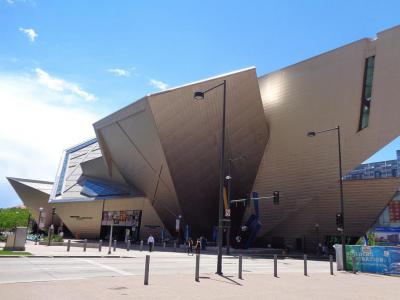
The museum's architectural legacy is equally significant. When the North Building opened, it was recognized as a pioneering shift away from traditional temple-style museum architecture toward more innovative and surprising designs. This forward-thinking approach was further exemplified in 2000 when the museum selected architect Daniel Libeskind to design a bold expansion of the campus. The resulting Frederic C. Hamilton Building, which opened in 2006, features major exhibition spaces dedicated to special presentations and traveling art shows.
The museum's most recent addition, the Martin Building, houses the museum's encyclopedic collections and the new Learning & Engagement Center, which centralizes the museum's acclaimed education programs. Together, these spaces reflect the Denver Art Museum's ongoing commitment to innovation in both art and education, making it a cultural cornerstone in the region.
The museum's architectural legacy is equally significant. When the North Building opened, it was recognized as a pioneering shift away from traditional temple-style museum architecture toward more innovative and surprising designs. This forward-thinking approach was further exemplified in 2000 when the museum selected architect Daniel Libeskind to design a bold expansion of the campus. The resulting Frederic C. Hamilton Building, which opened in 2006, features major exhibition spaces dedicated to special presentations and traveling art shows.
The museum's most recent addition, the Martin Building, houses the museum's encyclopedic collections and the new Learning & Engagement Center, which centralizes the museum's acclaimed education programs. Together, these spaces reflect the Denver Art Museum's ongoing commitment to innovation in both art and education, making it a cultural cornerstone in the region.
5) Colorado State Capitol (must see)
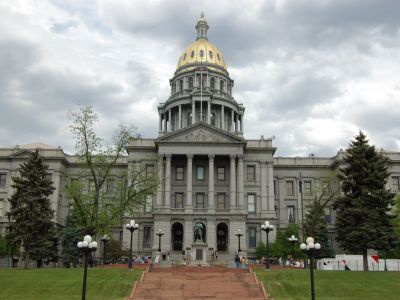
The Colorado State Capitol, located east of Civic Center Park, was designed to mimic the appearance of the United States Capitol in Washington, D.C. It was constructed in the 1890s using Colorado white granite for the building's exterior and genuine gold leaf for the dome.
The interior of the State Capitol is just as stunning as the exterior. Architect Elijah E. Myers used white yale and rose marble excavated from within the state. Stained glass windows adorn much of the Capitol including its rotunda. The Gallery of Presidents include portraits of each President of the United States.
A number of sculptures are also located throughout the building. Visitors should look for busts honoring Colorado's most famous public servants. They can also find artifacts from the early days of the building's construction. Those who greatly desire seeing all art and artifacts should be sure to plan their trip in advance as some of these artworks can only be seen while on a guided tour.
One of the most notable features of the Capitol building is the mile high marker. Originally engraved on the fifteenth step, this was noted as the spot in the city that was exactly one mile above sea level. New surveys have been conducted over time, which have led to two additional markers on the 13th and 18th steps.
The Capitol building is an active, working government facility. As such, visitors may be able to see legislators, law-makers or even the governor while they are touring the facility.
Why You Should Visit:
The Colorado State Capitol is among the most notable buildings in the state. It is also known throughout the nation for its beauty and grandeur.
Tips:
Visitors are welcome to take a self-guided tour of the Capitol building or they can join a public group tour. Visitors can schedule tours in advance to ensure they can see the dome.
The interior of the State Capitol is just as stunning as the exterior. Architect Elijah E. Myers used white yale and rose marble excavated from within the state. Stained glass windows adorn much of the Capitol including its rotunda. The Gallery of Presidents include portraits of each President of the United States.
A number of sculptures are also located throughout the building. Visitors should look for busts honoring Colorado's most famous public servants. They can also find artifacts from the early days of the building's construction. Those who greatly desire seeing all art and artifacts should be sure to plan their trip in advance as some of these artworks can only be seen while on a guided tour.
One of the most notable features of the Capitol building is the mile high marker. Originally engraved on the fifteenth step, this was noted as the spot in the city that was exactly one mile above sea level. New surveys have been conducted over time, which have led to two additional markers on the 13th and 18th steps.
The Capitol building is an active, working government facility. As such, visitors may be able to see legislators, law-makers or even the governor while they are touring the facility.
Why You Should Visit:
The Colorado State Capitol is among the most notable buildings in the state. It is also known throughout the nation for its beauty and grandeur.
Tips:
Visitors are welcome to take a self-guided tour of the Capitol building or they can join a public group tour. Visitors can schedule tours in advance to ensure they can see the dome.
6) City Park (must see)
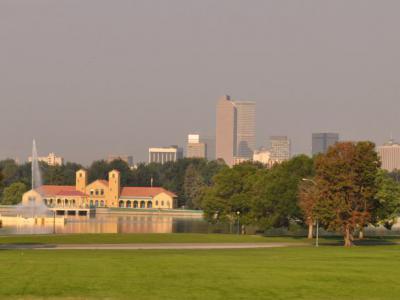
City Park, located in east-central Denver, is the largest urban park in the city, sprawling over 330 acres (1.3 km²). This vast green space serves as an urban oasis and is one of Denver's most beloved destinations. The park, just over a mile east of downtown Denver, offers a variety of attractions, including the Denver Zoo and the Denver Museum of Nature and Science, which features a planetarium, an IMAX theater, and rotating exhibits. Two scenic lakes, Ferril, and Duck Lakes, enhance the park's natural beauty, providing picturesque settings for leisurely walks, jogging, and picnicking.
City Park is also the site of special events such as the summer-long City Park Jazz concert series, drawing both locals and visitors for live music in a relaxed outdoor setting. The park’s boathouse, trails, and ample picnic areas make it a popular spot for recreation and relaxation.
Surrounding the park is the City Park neighborhood, which shares its name with the park. The neighborhood, though small, is trendy and vibrant, featuring cool cafes, retro-style bars, and the Bluebird Theater, a popular concert venue located on East Colfax Avenue. The area around the Bluebird Theater is known as the "Bluebird District," which adds to the neighborhood’s charm and cultural appeal.
The neighborhood's boundaries are slightly different from the park's, with Colfax Avenue as its southern border. The City Park neighborhood extends south to include East High School and the City Park Esplanade, effectively extending the green space two blocks further to Colfax Avenue. To the immediate north of the park is the City Park Golf Course, adding to the recreational options available to residents and visitors.
City Park and its surrounding neighborhood offer a blend of natural beauty, cultural attractions, and urban conveniences, making it a central hub for community life in Denver.
City Park is also the site of special events such as the summer-long City Park Jazz concert series, drawing both locals and visitors for live music in a relaxed outdoor setting. The park’s boathouse, trails, and ample picnic areas make it a popular spot for recreation and relaxation.
Surrounding the park is the City Park neighborhood, which shares its name with the park. The neighborhood, though small, is trendy and vibrant, featuring cool cafes, retro-style bars, and the Bluebird Theater, a popular concert venue located on East Colfax Avenue. The area around the Bluebird Theater is known as the "Bluebird District," which adds to the neighborhood’s charm and cultural appeal.
The neighborhood's boundaries are slightly different from the park's, with Colfax Avenue as its southern border. The City Park neighborhood extends south to include East High School and the City Park Esplanade, effectively extending the green space two blocks further to Colfax Avenue. To the immediate north of the park is the City Park Golf Course, adding to the recreational options available to residents and visitors.
City Park and its surrounding neighborhood offer a blend of natural beauty, cultural attractions, and urban conveniences, making it a central hub for community life in Denver.
7) 16th Street Mall (must see)
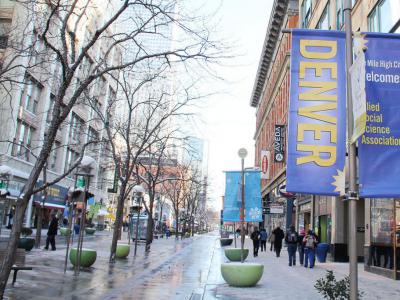
The 16th Street Mall is a busy, booming area that offers something for everyone. You can visit the 16th Street Mall for an hour or an afternoon. Many visitors find themselves gravitating toward the area several times throughout their stay in Denver.
There are more than 40 dining establishments and over 300 retail locations throughout the 16th Street Mall. There are also a number of entertainment venues both inside the buildings and on the streets themselves. Street performers are favorites with Denver tourists and can be seen any time of the day or night.
The architecture of the 16th Street Mall is unique. Rarely is a stretch of street so thoughtfully crafted by a world-famous architect. I.M. Pei, who known for his architecture of grand buildings, such as the Louvre. The promenade of the 16th Street Mall was designed by Pei with the inspiration of a rattlesnake. From above, the street looks like a rattlesnake's diamond patterned skin.
The mall is easy to find and reach via foot for anyone walking through Denver. The street can be reached on foot from Civic Center Park or from any number of other locations in downtown Denver. Other nearby spots of interest include Larimer Square, Union Station, Coors Field and the Denver Museum of Contemporary Art.
Tourists will also enjoy Denver Pavilions for even more shopping and dining options. In addition, Denver Pavilions is home to a bowling alley and cinema.
The 16th Street Mall may be of particular interest to people on walking tours because they can take a much-needed rest by enjoying the free shuttles that populate the mall.
Why You Should Visit:
16th Street Mall is Denver's top tourist attraction. It offers carefree people watching by day and bustling activity by night.
Tips:
Tourists can plan multiple trips to 16th Street Mall and never see the same thing twice. Those staying nearby are particularly well-positioned to repeat visits.
There are more than 40 dining establishments and over 300 retail locations throughout the 16th Street Mall. There are also a number of entertainment venues both inside the buildings and on the streets themselves. Street performers are favorites with Denver tourists and can be seen any time of the day or night.
The architecture of the 16th Street Mall is unique. Rarely is a stretch of street so thoughtfully crafted by a world-famous architect. I.M. Pei, who known for his architecture of grand buildings, such as the Louvre. The promenade of the 16th Street Mall was designed by Pei with the inspiration of a rattlesnake. From above, the street looks like a rattlesnake's diamond patterned skin.
The mall is easy to find and reach via foot for anyone walking through Denver. The street can be reached on foot from Civic Center Park or from any number of other locations in downtown Denver. Other nearby spots of interest include Larimer Square, Union Station, Coors Field and the Denver Museum of Contemporary Art.
Tourists will also enjoy Denver Pavilions for even more shopping and dining options. In addition, Denver Pavilions is home to a bowling alley and cinema.
The 16th Street Mall may be of particular interest to people on walking tours because they can take a much-needed rest by enjoying the free shuttles that populate the mall.
Why You Should Visit:
16th Street Mall is Denver's top tourist attraction. It offers carefree people watching by day and bustling activity by night.
Tips:
Tourists can plan multiple trips to 16th Street Mall and never see the same thing twice. Those staying nearby are particularly well-positioned to repeat visits.
