Custom Walk in Guadalajara, Mexico by griff_5491_8f744 created on 2025-09-19
Guide Location: Mexico » Guadalajara
Guide Type: Custom Walk
# of Sights: 9
Tour Duration: 2 Hour(s)
Travel Distance: 4.8 Km or 3 Miles
Share Key: 7KU9K
Guide Type: Custom Walk
# of Sights: 9
Tour Duration: 2 Hour(s)
Travel Distance: 4.8 Km or 3 Miles
Share Key: 7KU9K
How It Works
Please retrieve this walk in the GPSmyCity app. Once done, the app will guide you from one tour stop to the next as if you had a personal tour guide. If you created the walk on this website or come to the page via a link, please follow the instructions below to retrieve the walk in the app.
Retrieve This Walk in App
Step 1. Download the app "GPSmyCity: Walks in 1K+ Cities" on Apple App Store or Google Play Store.



Step 2. In the GPSmyCity app, download(or launch) the guide "Guadalajara Map and Walking Tours".
Step 3. Tap the menu button located at upper right corner of the "Walks" screen and select "Retrieve custom walk". Enter the share key: 7KU9K
1) Mercado de San Juan de Dios (Libertad Market)
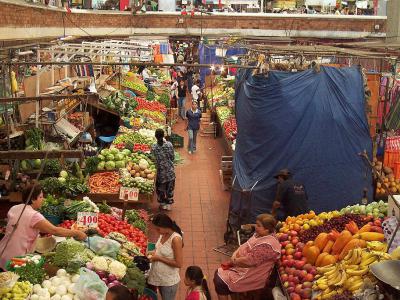
Libertad Market is one of Mexico's largest covered markets, with around 40,000 square meters of shopping space. Shoppers can find all sorts of goods, arts, and crafts at over 2,800 stands.
The market was designed by architect Alejandro Zohn and first opened in 1958.
Shoppers will find endless groceries such as fresh fruits and vegetables. Visitors can shop for clothing items such as leather coats, sweaters, and embroidered clothes. You'll find other household and fashion items such as cozy blankets, shoes, and attractive bags. In addition, you can find items like electronics, movies, and music.
Stalls sell different crafts using materials such as silver, blown glass, ceramic, leather, and palm leaves. Shoppers can find arts and crafts from a variety of Mexican regions.
On the second floor, visitors will find various restaurants focused on Mexican dishes like torta ahogadas, pozole, and tacos.
The market was designed by architect Alejandro Zohn and first opened in 1958.
Shoppers will find endless groceries such as fresh fruits and vegetables. Visitors can shop for clothing items such as leather coats, sweaters, and embroidered clothes. You'll find other household and fashion items such as cozy blankets, shoes, and attractive bags. In addition, you can find items like electronics, movies, and music.
Stalls sell different crafts using materials such as silver, blown glass, ceramic, leather, and palm leaves. Shoppers can find arts and crafts from a variety of Mexican regions.
On the second floor, visitors will find various restaurants focused on Mexican dishes like torta ahogadas, pozole, and tacos.
2) Plaza de la Liberación (Freedom Square) (must see)
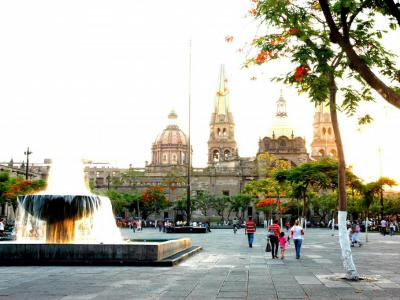
Freedom Square is dedicated to Miguel Hidalgo, who signed the Abolition of Slavery in 1810. The square features a bronze sculpture showing Miguel Hidalgo breaking the chains of slavery. Hidalgo also led the Mexican War of Independence and is known as the Father of the Nation.
Freedom Square features two impressive fountains designed by Ignacio Díaz Morales. The fountains look like two large cups, and the square is sometimes called Two Cups Plaza (La Plaza de Dos Copas).
Because of its large size, the square hosts many exhibitions and events. The square is also home to a Guadalajara sign, which is a popular backdrop for photos.
Freedom Square has a vibrant market where you can find clothing, pottery, ceramics, art, and souvenirs. The square also has several cafes with outdoor seating so you can grab a refreshment and enjoy people-watching.
Freedom Square features two impressive fountains designed by Ignacio Díaz Morales. The fountains look like two large cups, and the square is sometimes called Two Cups Plaza (La Plaza de Dos Copas).
Because of its large size, the square hosts many exhibitions and events. The square is also home to a Guadalajara sign, which is a popular backdrop for photos.
Freedom Square has a vibrant market where you can find clothing, pottery, ceramics, art, and souvenirs. The square also has several cafes with outdoor seating so you can grab a refreshment and enjoy people-watching.
3) Plaza de Armas (Main Square)
Plaza de Armas is the main square of Guadalajara. It is located directly in the city's historic center. The square offers a variety of sights, such as the Guadalajara Cathedral and the Government Palace.
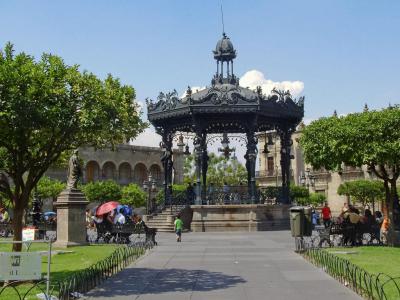
Mariachi bands frequent the Main Square. Those who wish to stay for a while to take in the vibrant square can do so on one of the many public, wrought iron benches. The rows of trees provide ample shade so even the hottest days can be enjoyed. The square is also lovely at night when it is lit by the lampposts and the lights of Guadalajara Cathedral.
The square was constructed in the late 19th century and remodeled in 1910. The bandstand in the center of the square is an art nouveau, wrought iron bandstand that was gifted by Mexican president Porfirio Diaz. The stage features eight pillars with female figures that represent different musical instruments. It was built in Paris by the Val D'Osne Art Foundries (Fonderies D'art Du Val D'Osne).
Mariachi bands frequent the Main Square. Those who wish to stay for a while to take in the vibrant square can do so on one of the many public, wrought iron benches. The rows of trees provide ample shade so even the hottest days can be enjoyed. The square is also lovely at night when it is lit by the lampposts and the lights of Guadalajara Cathedral.
The square was constructed in the late 19th century and remodeled in 1910. The bandstand in the center of the square is an art nouveau, wrought iron bandstand that was gifted by Mexican president Porfirio Diaz. The stage features eight pillars with female figures that represent different musical instruments. It was built in Paris by the Val D'Osne Art Foundries (Fonderies D'art Du Val D'Osne).
4) Palacio de Gobierno (Government Palace) (must see)
The original Government Palace was built in 1650. However, an earthquake in 1750 destroyed the original adobe building. Governor Don Jose de Basarte commissioned a new building that was designed by Manuel Jose Conique and Nicolas Enrique del Castillo.
The construction was funded by taxes placed on local tequila producers. Spain prohibited any local production of alcohol, so instead of legally producing alcohol and sending tax money to Spain, the local government secretly allowed alcohol production to continue while keeping the tax money for local improvements. The palace was officially inaugurated in 1790.
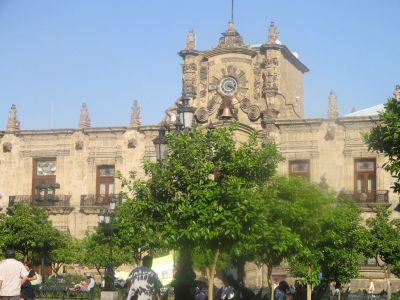
Government Palace has a magnificent baroque facade with attractive balconies and large windows. The palace features an impressive Doric gate and a large courtyard with colonial-style columns and arches.
The historic Decree for the Abolition of Slavery was signed at the palace in 1810. Every year, the palace commemorates this important event.
President of the Mexican Republic Benito Juarez narrowly escaped assassination in the palace on March 13, 1858.
In the main courtyard's stairwell, visitors can see three murals painted by the renowned Mexican caricaturist and painter Jose Clemente Orozco in 1937.
The construction was funded by taxes placed on local tequila producers. Spain prohibited any local production of alcohol, so instead of legally producing alcohol and sending tax money to Spain, the local government secretly allowed alcohol production to continue while keeping the tax money for local improvements. The palace was officially inaugurated in 1790.
Government Palace has a magnificent baroque facade with attractive balconies and large windows. The palace features an impressive Doric gate and a large courtyard with colonial-style columns and arches.
The historic Decree for the Abolition of Slavery was signed at the palace in 1810. Every year, the palace commemorates this important event.
President of the Mexican Republic Benito Juarez narrowly escaped assassination in the palace on March 13, 1858.
In the main courtyard's stairwell, visitors can see three murals painted by the renowned Mexican caricaturist and painter Jose Clemente Orozco in 1937.
5) Catedral de Guadalajara (Guadalajara Cathedral) (must see)
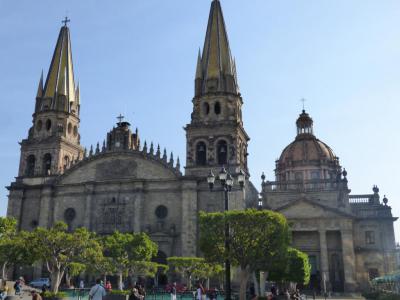
Guadalajara's first cathedral was built in 1541. This cathedral was damaged in a fire, and Phillip II, King of Spain, commissioned a new cathedral. Construction began in 1561 and was completed in 1618. The Spanish Renaissance-style Guadalajara Cathedral was consecrated in 1716.
After earthquakes damaged the cathedral in 1818 and 1849, architect Manuel Gómez Ibarra designed new Neo-Gothic towers. The towers were completed in 1854. Several more earthquakes have damaged the cathedral over the last one hundred years.
Guadalajara Cathedral has eleven altars gifted by King Fernando VII of Spain. The altars are dedicated to Our Lady of Guadalupe, Our Lady of the Assumption, Our Lady of Zapopan, and Our Lady of Sorrows. In addition, there are also altars dedicated to Saint Thomas Aquinas, Saint Nicholas, Saint Dominic, Saint Christopher, and Saint John of God.
The relics of Santa Innocencia are housed in the cathedral. In the 1700s, Santa Innocencia was killed by her father for converting to Catholicism. In addition, the cathedral houses the remains of several prominent cardinals and bishops.
In the Martyrs Relic, you can see the bones of 23 men that died during the Cristero Wars. The Cristero War, also known as the Cristero Rebellion, was a widespread struggle in central and western Mexico against the implementation of secularist and anticlerical articles of the 1917 Constitution. Pope John Paul II beatified these remains in 1992.
Spanish artist Bartolome Murillo painted the beautiful The Assumption of the Virgin in 1650. Emperor Carlos V donated the Virgin of the Roses sculpture.
The 19th-century organ was imported from France and took an entire year to assemble. The beautiful stained glass windows also came from France.
The cathedral has hidden tunnels that were used as escape routes and hiding places.
After earthquakes damaged the cathedral in 1818 and 1849, architect Manuel Gómez Ibarra designed new Neo-Gothic towers. The towers were completed in 1854. Several more earthquakes have damaged the cathedral over the last one hundred years.
Guadalajara Cathedral has eleven altars gifted by King Fernando VII of Spain. The altars are dedicated to Our Lady of Guadalupe, Our Lady of the Assumption, Our Lady of Zapopan, and Our Lady of Sorrows. In addition, there are also altars dedicated to Saint Thomas Aquinas, Saint Nicholas, Saint Dominic, Saint Christopher, and Saint John of God.
The relics of Santa Innocencia are housed in the cathedral. In the 1700s, Santa Innocencia was killed by her father for converting to Catholicism. In addition, the cathedral houses the remains of several prominent cardinals and bishops.
In the Martyrs Relic, you can see the bones of 23 men that died during the Cristero Wars. The Cristero War, also known as the Cristero Rebellion, was a widespread struggle in central and western Mexico against the implementation of secularist and anticlerical articles of the 1917 Constitution. Pope John Paul II beatified these remains in 1992.
Spanish artist Bartolome Murillo painted the beautiful The Assumption of the Virgin in 1650. Emperor Carlos V donated the Virgin of the Roses sculpture.
The 19th-century organ was imported from France and took an entire year to assemble. The beautiful stained glass windows also came from France.
The cathedral has hidden tunnels that were used as escape routes and hiding places.
6) Plaza Guadalajara (Guadalajara Square)
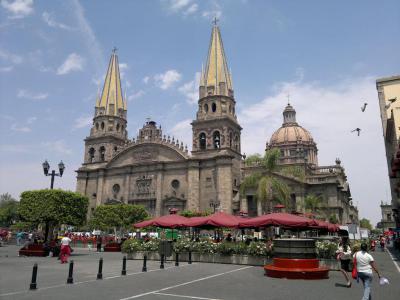
Guadalajara Square is home to City Palace, and visitors can also enjoy views of Guadalajara Cathedral. The square was founded in the 1950s when the City Palace was built. The area had several buildings that were demolished to make room for the palace and plaza. In addition, an underground parking lot was built underneath the plaza.
The square is shaded by laurel trees and was originally called the Laurels Square (Plaza de los Laureles). In 1992, the square was renamed Guadalajara Square to celebrate the city's 450th anniversary.
Guadalajara Square features a large fountain that depicts an oyster shell decorated with rose petals and a single pearl. The fountain celebrates Gudalajara's two nicknames, "The Pearl of the West" and "City of Roses." The fountain also features the city's coat of arms.
The square has several welcoming cafes where visitors can enjoy a break. The original underground parking lot has been transformed into the Plaza Guadalajara Shopping Center.
The square is shaded by laurel trees and was originally called the Laurels Square (Plaza de los Laureles). In 1992, the square was renamed Guadalajara Square to celebrate the city's 450th anniversary.
Guadalajara Square features a large fountain that depicts an oyster shell decorated with rose petals and a single pearl. The fountain celebrates Gudalajara's two nicknames, "The Pearl of the West" and "City of Roses." The fountain also features the city's coat of arms.
The square has several welcoming cafes where visitors can enjoy a break. The original underground parking lot has been transformed into the Plaza Guadalajara Shopping Center.
7) Universidad de Guadalajara (The University of Guadalajara)
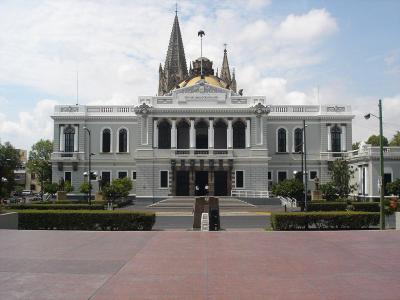
The University of Guadalajara is Mexico’s second-oldest university, originally founded in 1586 and formally established as the Royal University of Guadalajara in 1792, before taking its present form in 1925. Today, it stands as a leading public and autonomous university system in Jalisco, with a network of 15 university centres, high schools, and a large virtual campus serving more than 280,000 students in August 2022.
More than an educational institution, the university's main campus showcases several architecturally significant buildings, including the General Rectory-home to the Museum of the Arts. The university also operates the University Cultural Center in Zapopan, one of the largest cultural complexes in Latin America, which houses performance venues, libraries, auditoriums, and soon, an Environmental Sciences Museum.
Wander through the leafy plazas, browse exhibitions at the Museum of the Arts and attend a performance at the Diana Cultural Center or Cineforo located within the museum facilities. The university’s Folkloric Ballet keeps traditional Mexican dances alive, while its various arts centers host exhibitions and film series.
More than an educational institution, the university's main campus showcases several architecturally significant buildings, including the General Rectory-home to the Museum of the Arts. The university also operates the University Cultural Center in Zapopan, one of the largest cultural complexes in Latin America, which houses performance venues, libraries, auditoriums, and soon, an Environmental Sciences Museum.
Wander through the leafy plazas, browse exhibitions at the Museum of the Arts and attend a performance at the Diana Cultural Center or Cineforo located within the museum facilities. The university’s Folkloric Ballet keeps traditional Mexican dances alive, while its various arts centers host exhibitions and film series.
8) Templo Expiatorio (Expiatory Church) (must see)
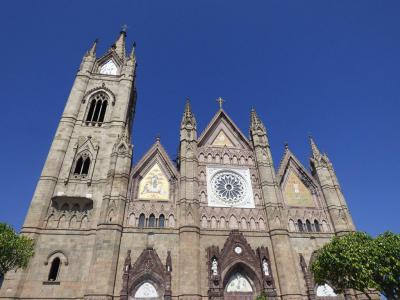
The Templo Expiatorio del Santísimo Sacramento, or Expiatory Church, is a Catholic church dedicated to the Blessed Sacrament. The church was designed by Italian architect Adamo Boari in the Neo-Gothic architectural style. Construction on the church began in 1897.
Construction on the Expiatory Church halted in 1910 due to the Mexican Revolution. Building did not start again until 1924. Three years later, architect Ignacio Diaz Morales took over the project and oversaw construction until it was completed almost 50 years later. The church was finally complete in 1972.
The church is primarily made of carved stone. The temple's doors are made of granadilla wood, carved by Jesús Gómez Velazco, and they are incrusted with bronze high reliefs made by master Benito Castañeda. The three tympana on the church's facade are embellished with Italian mosaics created in the Vatican's Mosaic Factory. The central one represents the Lamb of God; the east, Saint Tarcisius; and the west, Saint Pius X. The church clock, imported from Germany, has a 25-bell carillon.
Tourists are welcome to visit the church for free from 7 AM to 11 PM seven days per week.
Construction on the Expiatory Church halted in 1910 due to the Mexican Revolution. Building did not start again until 1924. Three years later, architect Ignacio Diaz Morales took over the project and oversaw construction until it was completed almost 50 years later. The church was finally complete in 1972.
The church is primarily made of carved stone. The temple's doors are made of granadilla wood, carved by Jesús Gómez Velazco, and they are incrusted with bronze high reliefs made by master Benito Castañeda. The three tympana on the church's facade are embellished with Italian mosaics created in the Vatican's Mosaic Factory. The central one represents the Lamb of God; the east, Saint Tarcisius; and the west, Saint Pius X. The church clock, imported from Germany, has a 25-bell carillon.
Tourists are welcome to visit the church for free from 7 AM to 11 PM seven days per week.
9) Plaza de los Mariachis (Mariachi Square)
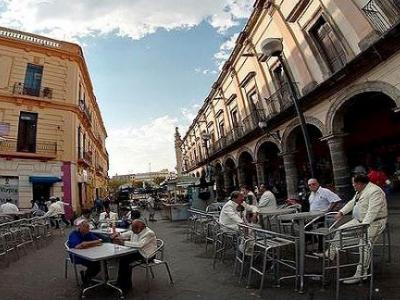
Mariachi Square is a square in Guadalajara that is known for hosting music. The square is frequented by mariachi bands each evening. Known as the birthplace of mariachi music, it is also the location of the annual International Mariachi Festival.
The square is mostly quiet during the daytime hours. A few single mariachi musicians busk on the street during the day or simply wait to pose for pictures with tourists. The music only starts to swell in the evening when the streets become lively and bustling with locals and tourists alike.
Mariachi Square has a number of low-cost souvenir shops, eateries and bars. There is also a large fountain near the front steps of the Parish of Saint John of God. This Catholic church looms over Mariachi Square next to the various shops, boutiques and tequila distilleries.
It is worthwhile to visit Mariachi Square to experience its full vibrance even if you are not a fan of mariachi music.
The square is mostly quiet during the daytime hours. A few single mariachi musicians busk on the street during the day or simply wait to pose for pictures with tourists. The music only starts to swell in the evening when the streets become lively and bustling with locals and tourists alike.
Mariachi Square has a number of low-cost souvenir shops, eateries and bars. There is also a large fountain near the front steps of the Parish of Saint John of God. This Catholic church looms over Mariachi Square next to the various shops, boutiques and tequila distilleries.
It is worthwhile to visit Mariachi Square to experience its full vibrance even if you are not a fan of mariachi music.
