Custom Walk in Tashkent, Uzbekistan by cathy_tsewf_499cd created on 2025-09-24
Guide Location: Uzbekistan » Tashkent
Guide Type: Custom Walk
# of Sights: 14
Tour Duration: 7 Hour(s)
Travel Distance: 18 Km or 11.2 Miles
Share Key: 3W6S6
Guide Type: Custom Walk
# of Sights: 14
Tour Duration: 7 Hour(s)
Travel Distance: 18 Km or 11.2 Miles
Share Key: 3W6S6
How It Works
Please retrieve this walk in the GPSmyCity app. Once done, the app will guide you from one tour stop to the next as if you had a personal tour guide. If you created the walk on this website or come to the page via a link, please follow the instructions below to retrieve the walk in the app.
Retrieve This Walk in App
Step 1. Download the app "GPSmyCity: Walks in 1K+ Cities" on Apple App Store or Google Play Store.



Step 2. In the GPSmyCity app, download(or launch) the guide "Tashkent Map and Walking Tours".
Step 3. Tap the menu button located at upper right corner of the "Walks" screen and select "Retrieve custom walk". Enter the share key: 3W6S6
1) Amir Timur Square (must see)
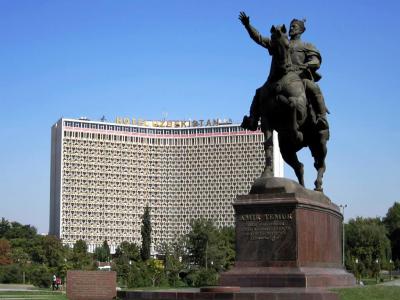
Situated in the very heart of Tashkent, Amir Temur Square (Uzbek: Amir Temur xiyoboni) is the main town square in the capital, equally popular with locals and tourists.
The square was built in 1882 by the Russian architects, Nikolai Ulyanov and Mikhail Chernyayev, on the site of a public park at the intersection of two main lanes, Moscow Street (now Amir Timur Street) and Kaufman Street (now Milza Ulugh Beg Street), and was initially called Konstantinovskaya Square.
It was not paved, getting all dusty in dry weather and muddy when it rained. In 1913, a multi-figure monument to the first Turkestan governor-general, Konstantin Kaufman, was erected here, upon which the square was renamed Kaufmansky.
After the 1917 Russian Revolution, the square was renamed once again, this time as Revolution Square; the Kaufman monument was dismantled, in 1919, but its granite pedestal remained. During the late 1940s, it was reused to accommodate the statue of Joseph Stalin, and was ultimately removed only in 1961, as part of the nationwide de-stalinization campaign. In 1968, a sculpture of Karl Marx was put in its place.
Before that, in the 1950s, the square underwent significant reconstruction. Owing to its convenient central location, it regularly drew attention of the people who wished to express their political views. Here, alongside frequent communist rallies, starting from the late 1960s, the Crimean Tatars, who were deported by Stalin to Uzbekistan in 1944, also demonstrated several times, without authorization, demanding to be allowed to return to Crimea. Throughout the 1980s, this place was a popular hangout with both “golden” youth and small-time criminals, attracted by the nearby cafe-restaurant (open until late hours), several ice cream parlors, and the alleys lined with benches.
In 1994, three years into Uzbekistan's independence, the square was renamed Amir Timur. The Karl Marx monument was dismantled and a bronze equestrian statue to Tamerlane was installed. Simultaneously, all the drinking and entertainment establishments in the vicinity were liquidated in a bid to tackle crime, prostitution, and idle pastime.
In 2009, another round of comprehensive embellishment was carried out bringing in new walkways, benches and modernized lighting, as well as well chopping down some of the old trees. Their place was taken by the newly-planted sakuras, chestnut and other trees. The effort proved worthy, as, beginning from the 2010s, the area has once again become regularly crowded with townsfolk, prompting the authorities to reopen the previously closed eateries and souvenir shops.
The square was built in 1882 by the Russian architects, Nikolai Ulyanov and Mikhail Chernyayev, on the site of a public park at the intersection of two main lanes, Moscow Street (now Amir Timur Street) and Kaufman Street (now Milza Ulugh Beg Street), and was initially called Konstantinovskaya Square.
It was not paved, getting all dusty in dry weather and muddy when it rained. In 1913, a multi-figure monument to the first Turkestan governor-general, Konstantin Kaufman, was erected here, upon which the square was renamed Kaufmansky.
After the 1917 Russian Revolution, the square was renamed once again, this time as Revolution Square; the Kaufman monument was dismantled, in 1919, but its granite pedestal remained. During the late 1940s, it was reused to accommodate the statue of Joseph Stalin, and was ultimately removed only in 1961, as part of the nationwide de-stalinization campaign. In 1968, a sculpture of Karl Marx was put in its place.
Before that, in the 1950s, the square underwent significant reconstruction. Owing to its convenient central location, it regularly drew attention of the people who wished to express their political views. Here, alongside frequent communist rallies, starting from the late 1960s, the Crimean Tatars, who were deported by Stalin to Uzbekistan in 1944, also demonstrated several times, without authorization, demanding to be allowed to return to Crimea. Throughout the 1980s, this place was a popular hangout with both “golden” youth and small-time criminals, attracted by the nearby cafe-restaurant (open until late hours), several ice cream parlors, and the alleys lined with benches.
In 1994, three years into Uzbekistan's independence, the square was renamed Amir Timur. The Karl Marx monument was dismantled and a bronze equestrian statue to Tamerlane was installed. Simultaneously, all the drinking and entertainment establishments in the vicinity were liquidated in a bid to tackle crime, prostitution, and idle pastime.
In 2009, another round of comprehensive embellishment was carried out bringing in new walkways, benches and modernized lighting, as well as well chopping down some of the old trees. Their place was taken by the newly-planted sakuras, chestnut and other trees. The effort proved worthy, as, beginning from the 2010s, the area has once again become regularly crowded with townsfolk, prompting the authorities to reopen the previously closed eateries and souvenir shops.
2) Mustaqillik Maidoni (Independence Square) Metro Station (must see)
Independence Square (Mustaqillik Maydoni) Metro Station stands as one of the most iconic and opulent stops on the Tashkent Metro network, blending grandeur with history. Opened on 6 November 1977, this station was part of the inaugural section of the metro system, making it one of the oldest in Tashkent. Initially named "V. I. Lenin Maidoni" after the Soviet leader, the station was renamed in the 1990s to reflect Uzbekistan's independence, along with the square above it.
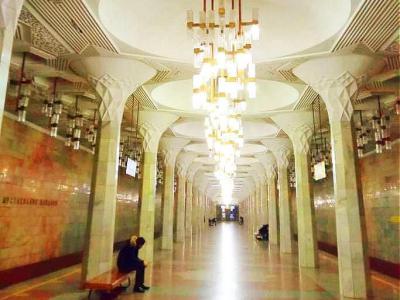
The station’s design is a nod to the architectural elegance seen in the Moscow Metro of the 1930s, despite being built decades later. Inside, the station dazzles with white Nurata marble columns, peach-colored walls lined with Gazgan marble and red Emelyanovsky granite finishing the plinth. The floors are paved with polished slabs of red and gray granite arranged in intricate Uzbek patterns, a testament to the country’s cultural artistry.
A centerpiece of the station is the bas-relief bronze screen, which vividly depicts jubilant Uzbeks celebrating with karnays-long ceremonial trumpets-accompanied by clusters of dancing maidens and flag-waving citizens. The ceiling features crystal chandeliers arranged in domes around the perimeter, adding a touch of brilliance and refinement.
Notably, the station was showcased to King Juan Carlos I of Spain and Queen Sophia during their visit to Tashkent, underscoring its significance as a symbol of national pride. The Independence Square Metro Station remains an architectural marvel and a cultural landmark, offering a glimpse into the Soviet era's ambitious design ethos while celebrating Uzbekistan's heritage.
The station’s design is a nod to the architectural elegance seen in the Moscow Metro of the 1930s, despite being built decades later. Inside, the station dazzles with white Nurata marble columns, peach-colored walls lined with Gazgan marble and red Emelyanovsky granite finishing the plinth. The floors are paved with polished slabs of red and gray granite arranged in intricate Uzbek patterns, a testament to the country’s cultural artistry.
A centerpiece of the station is the bas-relief bronze screen, which vividly depicts jubilant Uzbeks celebrating with karnays-long ceremonial trumpets-accompanied by clusters of dancing maidens and flag-waving citizens. The ceiling features crystal chandeliers arranged in domes around the perimeter, adding a touch of brilliance and refinement.
Notably, the station was showcased to King Juan Carlos I of Spain and Queen Sophia during their visit to Tashkent, underscoring its significance as a symbol of national pride. The Independence Square Metro Station remains an architectural marvel and a cultural landmark, offering a glimpse into the Soviet era's ambitious design ethos while celebrating Uzbekistan's heritage.
3) Mustakillik Maydoni (Independence Square) (must see)
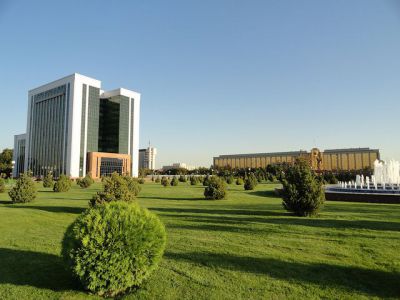
Independence Square (Uzbek: Mustaqillik Maydoni) is a central-most and largest square in Tashkent, a place where public celebrations, military parades and other special events take place. As a matter of fact, this is more like a huge park rather than a square, replete with trees and flower beds amid monuments and fountains, a showcase of modern Uzbekistan.
The history of this place goes back over a century, to 1865, when, following the capture of Turkestan by Russia, the new imperial administration began transforming Tashkent into a European-like city. The reconstruction involved, among other things, the building of residence for the Turkestan Governor-General, the so-called "White House".
The square in front of the house was named Cathedral Square, after the Spaso-Preobrazhensky Cathedral, located on the opposite side. In the early 1930s, under the Soviets, the cathedral was demolished and the square was renamed Red. In 1936, they had a Lenin monument placed here. Twenty years later, Red Square became known as Lenin Square.
After the devastating earthquake of 1966, a radical reconstruction of the square was carried out in compliance with the general plan of resurrection of Tashkent. In 1967, a modern "concrete-and-glass" edifice of the Council of Ministers of the Uzbek SSR, on the south side of the square, was completed. The entire reconstruction was finished in 1974, on the eve of the 50th anniversary of the Uzbek SSR. That same year, the old Lenin monument was moved to Samarkand, and its place was taken by a new, bigger monument to the same Vladimir Lenin, set on top of a marble plinth that was taller than a ten-storey building.
Following Uzbekistan's independence in 1991, Lenin Square was renamed Independence Square and the bronze statue of Lenin was dismantled. Its marble plinth, however, survived and was topped with a golden globe (featuring a map of Uzbekistan), known since as the Independence Monument. Later, in front of it, another statue, of a happy mother with a child, symbolizing Motherland, was added. Installed in 2006, it marked the completion of the total reconstruction of the area.
Another notable mark, at the square's entrance, is the silver Arch of Independence, with figures of storks around the fountain. Overlooking the square from the western side there are also a number of imposing administrative buildings, such as the Council of Ministers, the Senate of Uzbekistan, and the Ministry of Finance.
The history of this place goes back over a century, to 1865, when, following the capture of Turkestan by Russia, the new imperial administration began transforming Tashkent into a European-like city. The reconstruction involved, among other things, the building of residence for the Turkestan Governor-General, the so-called "White House".
The square in front of the house was named Cathedral Square, after the Spaso-Preobrazhensky Cathedral, located on the opposite side. In the early 1930s, under the Soviets, the cathedral was demolished and the square was renamed Red. In 1936, they had a Lenin monument placed here. Twenty years later, Red Square became known as Lenin Square.
After the devastating earthquake of 1966, a radical reconstruction of the square was carried out in compliance with the general plan of resurrection of Tashkent. In 1967, a modern "concrete-and-glass" edifice of the Council of Ministers of the Uzbek SSR, on the south side of the square, was completed. The entire reconstruction was finished in 1974, on the eve of the 50th anniversary of the Uzbek SSR. That same year, the old Lenin monument was moved to Samarkand, and its place was taken by a new, bigger monument to the same Vladimir Lenin, set on top of a marble plinth that was taller than a ten-storey building.
Following Uzbekistan's independence in 1991, Lenin Square was renamed Independence Square and the bronze statue of Lenin was dismantled. Its marble plinth, however, survived and was topped with a golden globe (featuring a map of Uzbekistan), known since as the Independence Monument. Later, in front of it, another statue, of a happy mother with a child, symbolizing Motherland, was added. Installed in 2006, it marked the completion of the total reconstruction of the area.
Another notable mark, at the square's entrance, is the silver Arch of Independence, with figures of storks around the fountain. Overlooking the square from the western side there are also a number of imposing administrative buildings, such as the Council of Ministers, the Senate of Uzbekistan, and the Ministry of Finance.
4) Jami Mosque (Friday Mosque)
Mosque Khoja Ahrar Vali or Jami Mosque is the basis of the Registan ensemble in the area of Chorsu square. The only Tashkent example of the Friday mosque of the yard type, common in Central Asia in the late Middle Ages.
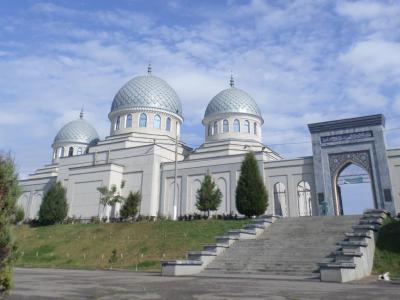
The main building has the shape of a cube covered with a dome with four windows in a low cylinder. On the eastern wall, facing the courtyard, there is a large arch cut through. The border of arches and niches at the entrance is lancet, which is not typical for the Central Asian outline, rather Gothic. The layout of the mosque is rectangular with a large building at the end of the east-west longitudinal axis.
The first building of the Tashkent Juma Mosque (Uzb. Juma masjidi) (Main Friday Mosque) was built in 1451 at the expense of Sheikh Ubaydulla Khoja Akhrar (Uzbek Akhror ) (1404-1490).
Ubaydulla Ahrar, the great master of Sufism , the head of the Muslim clergy, in preparation for the move, ordered the construction of a large Friday mosque and madrasah in the ancient Tashkent mahalla Gulbazar. Local legends say that Ubaydulla got the money for the construction from the sale of “cutting threads”, which remain after cutting the fabric into standard pieces.
The main Friday mosque was built on a hill; therefore it was possible to see this majestic building from a great distance. From that time to the present day, people call this mosque, the mosque of Ubaydulla Ahror , in memory of him.
In 1868 the mosque was severely damaged by a devastating earthquake. By 1888, the Juma Mosque was repaired with the participation of Russian engineers. Funds for repairs, in the amount of 15,000 rubles, were taken from a gift from the Emir of Bukhara Muzaffar made to Emperor Alexander III on the occasion of his coronation in 1883 . The grand opening of the renovated Juma Mosque took place in July 1888.
In Soviet times, various state organizations were located here: the department of the Ministry of Education, other state institutions and even a cinema.
The last restoration of the Khoja Ahrar Vali Mosque was carried out in the 1990s. The building was recognized as emergency and it was completely rebuilt by modern architects, the cube was demolished, and instead of one dome, now there are three of them.
In 2003, the mosque was rebuilt on the same site using modern construction and decoration methods.
The main building has the shape of a cube covered with a dome with four windows in a low cylinder. On the eastern wall, facing the courtyard, there is a large arch cut through. The border of arches and niches at the entrance is lancet, which is not typical for the Central Asian outline, rather Gothic. The layout of the mosque is rectangular with a large building at the end of the east-west longitudinal axis.
The first building of the Tashkent Juma Mosque (Uzb. Juma masjidi) (Main Friday Mosque) was built in 1451 at the expense of Sheikh Ubaydulla Khoja Akhrar (Uzbek Akhror ) (1404-1490).
Ubaydulla Ahrar, the great master of Sufism , the head of the Muslim clergy, in preparation for the move, ordered the construction of a large Friday mosque and madrasah in the ancient Tashkent mahalla Gulbazar. Local legends say that Ubaydulla got the money for the construction from the sale of “cutting threads”, which remain after cutting the fabric into standard pieces.
The main Friday mosque was built on a hill; therefore it was possible to see this majestic building from a great distance. From that time to the present day, people call this mosque, the mosque of Ubaydulla Ahror , in memory of him.
In 1868 the mosque was severely damaged by a devastating earthquake. By 1888, the Juma Mosque was repaired with the participation of Russian engineers. Funds for repairs, in the amount of 15,000 rubles, were taken from a gift from the Emir of Bukhara Muzaffar made to Emperor Alexander III on the occasion of his coronation in 1883 . The grand opening of the renovated Juma Mosque took place in July 1888.
In Soviet times, various state organizations were located here: the department of the Ministry of Education, other state institutions and even a cinema.
The last restoration of the Khoja Ahrar Vali Mosque was carried out in the 1990s. The building was recognized as emergency and it was completely rebuilt by modern architects, the cube was demolished, and instead of one dome, now there are three of them.
In 2003, the mosque was rebuilt on the same site using modern construction and decoration methods.
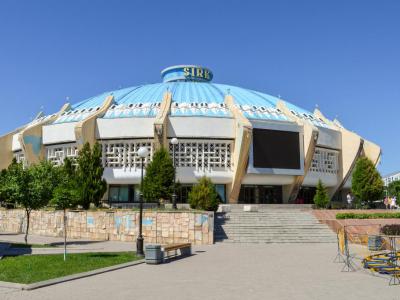
5) Circus
The Tashkent Circus, established in its current form in 1976, is a dazzling architectural and cultural landmark of Uzbekistan's capital. Its iconic blue dome, visible from afar, graces Khadra Square, near the G. Gulyam metro station. This Modernist masterpiece celebrated as an example of "Soviet cosmic architecture" by Frédéric Chaubin, combines traditional Uzbek elements like intricate stained glass, ceramic mosaics, and ornate wooden carvings. The elegant walnut doors, adorned with delicate lace patterns, invite audiences into a world of wonder and entertainment.
The history of the Tashkent Circus stretches back over a century, with its roots in the late 19th century when Russian and European circus artists toured the Turkestan region. Initially, performances took place in semi-stationary circus tents. In 1914, the first dedicated circus building was constructed in Tashkent, only to be destroyed by the devastating 1966 earthquake. A decade later, the current structure was built, cementing the circus's place as a hub of joy for children and adults alike.
The circus has been home to legendary Uzbek circus dynasties like the Tashkenbayevs and Zaripovs, whose traditions continue to shape performances today. With over two dozen original productions and hundreds of unique acts, the Tashkent Circus blends breathtaking acrobatics, dazzling juggling, tightrope walking, and trained animal shows, often featuring camels, tigers, and dogs. Every performance promises a mix of magic, artistry, and fun.
Internationally acclaimed, the circus troupe has toured more than 30 countries across Eurasia and Africa, earning accolades for their vibrant and captivating shows. Whether you’re drawn by the promise of clowns, strongmen, or the elegance of oriental performers, the Tashkent Circus offers a truly unforgettable experience. For families, it remains a cherished tradition, where every visit brings a sense of awe and delight.
The history of the Tashkent Circus stretches back over a century, with its roots in the late 19th century when Russian and European circus artists toured the Turkestan region. Initially, performances took place in semi-stationary circus tents. In 1914, the first dedicated circus building was constructed in Tashkent, only to be destroyed by the devastating 1966 earthquake. A decade later, the current structure was built, cementing the circus's place as a hub of joy for children and adults alike.
The circus has been home to legendary Uzbek circus dynasties like the Tashkenbayevs and Zaripovs, whose traditions continue to shape performances today. With over two dozen original productions and hundreds of unique acts, the Tashkent Circus blends breathtaking acrobatics, dazzling juggling, tightrope walking, and trained animal shows, often featuring camels, tigers, and dogs. Every performance promises a mix of magic, artistry, and fun.
Internationally acclaimed, the circus troupe has toured more than 30 countries across Eurasia and Africa, earning accolades for their vibrant and captivating shows. Whether you’re drawn by the promise of clowns, strongmen, or the elegance of oriental performers, the Tashkent Circus offers a truly unforgettable experience. For families, it remains a cherished tradition, where every visit brings a sense of awe and delight.
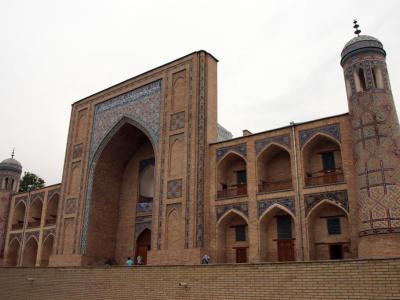
6) Kukeldash Madrasah
The ancient Kukeldash madrasah (Islamic religious school) is the largest of the 23 madrasahs found in Tashkent. It is also one of the oldest in Central Asia, built circa 1570, under the Shaybani Dynasty. Back then, the area was the southern edge of the city, and the madrasah was set upon the remains of the rampart of the southern fortress with a moat (which is now a street).
Historically, the establishment of the school has been attributed to two famous individuals of that period, namely: Qulbobo Kokaldosh, the influential minister of the Sheybanid sultan Barak Khan, and the governor of Tashkent, Darvesh Khan, nicknamed "kukeldash", which means blood brother of the khan. The opinions, as to who exactly founded and built the school, vary.
Over the years, among those who studied here have been the likes of Furqat, an Uzbek author, poet, and political activist, in 1889-1891; and Hamza, another prominent author, composer, playwright, poet, scholar, and political activist, in 1910-1911.
The two-story yellow brick building is of traditional square shape, with a huge gate and inner yard. The actual walls surrounding the inner yard are the living quarters for students – two-story dormitories in the form of cells (“hujras”).
By the 1730s, the structure had fallen into disrepair and was converted to caravanserai, a roadside inn for caravaners. Following that, for a while, it served as a fortress. In 1830-1831, the first floor of the building was demolished, and the bricks were used to build the nearby Beklarbegi madrasah. It was later restored.
Several earthquakes, in 1868 and 1886, destroyed the façade, which was subsequently restored in 1902-1903. The building was reconstructed again, in the 1950s, following yet another devastating earthquake, in 1946, and was one of only few religious sites in Tashkent to survive the most recent, 1966 earthquake.
Throughout the 20th century, the building served as a museum, first of atheism, and later of folk music. In the 1990s it was made a madrasah again. As a result of numerous reconstructions, the appearance of the madrasah has changed. Despite that, it still remains a must-see attraction in Tashkent, known for its landmark gate, 20 meters (66 feet) high, flanked by two towers.
In 2008, on the occasion of the 2200th anniversary of Tashkent, the frontal part of Kukeldash received a fresh “facelift”.
Historically, the establishment of the school has been attributed to two famous individuals of that period, namely: Qulbobo Kokaldosh, the influential minister of the Sheybanid sultan Barak Khan, and the governor of Tashkent, Darvesh Khan, nicknamed "kukeldash", which means blood brother of the khan. The opinions, as to who exactly founded and built the school, vary.
Over the years, among those who studied here have been the likes of Furqat, an Uzbek author, poet, and political activist, in 1889-1891; and Hamza, another prominent author, composer, playwright, poet, scholar, and political activist, in 1910-1911.
The two-story yellow brick building is of traditional square shape, with a huge gate and inner yard. The actual walls surrounding the inner yard are the living quarters for students – two-story dormitories in the form of cells (“hujras”).
By the 1730s, the structure had fallen into disrepair and was converted to caravanserai, a roadside inn for caravaners. Following that, for a while, it served as a fortress. In 1830-1831, the first floor of the building was demolished, and the bricks were used to build the nearby Beklarbegi madrasah. It was later restored.
Several earthquakes, in 1868 and 1886, destroyed the façade, which was subsequently restored in 1902-1903. The building was reconstructed again, in the 1950s, following yet another devastating earthquake, in 1946, and was one of only few religious sites in Tashkent to survive the most recent, 1966 earthquake.
Throughout the 20th century, the building served as a museum, first of atheism, and later of folk music. In the 1990s it was made a madrasah again. As a result of numerous reconstructions, the appearance of the madrasah has changed. Despite that, it still remains a must-see attraction in Tashkent, known for its landmark gate, 20 meters (66 feet) high, flanked by two towers.
In 2008, on the occasion of the 2200th anniversary of Tashkent, the frontal part of Kukeldash received a fresh “facelift”.
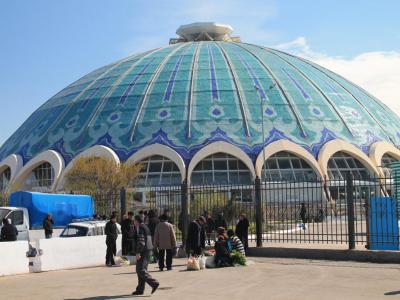
7) Chorsu Bazaar (must see)
Chorsu (or Charsu) Bazaar, otherwise called Eski Zhuva Bozori, is one of the largest markets in Uzbekistan. It is also the oldest one in Central Asia, known since the Middle Ages as the great place to buy groceries and other daily necessities along the Silk Road. Centuries on, the place still buzzes with activity, being equally popular with locals and tourists.
The word "Chorsu" translates from the Persian language as "crossroads" or "four streams", and indeed, Chorsu Bazaar lives up to its name, located between Alisher Navoi Avenue, Farobi and Chakhchi Imom streets.
Albeit ancient as such (it has several buildings dating back as far as the 15th-16th centuries), the market these days is famous primarily for its modern central building with a signature blue-colored dome, designed in 1980 as the late example of Soviet Modernism.
The vast – some 350 meters in diameter – domed ceiling of the market is richly covered with ornaments. The building itself is quite monumental, comprising a three-tier structure with an elevator system. The lowest tier – the basement – contains utility rooms. Merchandise stalls are located on the middle and upper floors, divided into sections: vegetables, fruits, nuts, oriental sweets, spices, cereals, etc.
There are separate pavilions for clothing and household items. Also on sale here are a huge variety of unique handicrafts, such as carpets, national costumes, ceramics and other fascinating stuff and souvenirs fit to impress anyone.
The word "Chorsu" translates from the Persian language as "crossroads" or "four streams", and indeed, Chorsu Bazaar lives up to its name, located between Alisher Navoi Avenue, Farobi and Chakhchi Imom streets.
Albeit ancient as such (it has several buildings dating back as far as the 15th-16th centuries), the market these days is famous primarily for its modern central building with a signature blue-colored dome, designed in 1980 as the late example of Soviet Modernism.
The vast – some 350 meters in diameter – domed ceiling of the market is richly covered with ornaments. The building itself is quite monumental, comprising a three-tier structure with an elevator system. The lowest tier – the basement – contains utility rooms. Merchandise stalls are located on the middle and upper floors, divided into sections: vegetables, fruits, nuts, oriental sweets, spices, cereals, etc.
There are separate pavilions for clothing and household items. Also on sale here are a huge variety of unique handicrafts, such as carpets, national costumes, ceramics and other fascinating stuff and souvenirs fit to impress anyone.
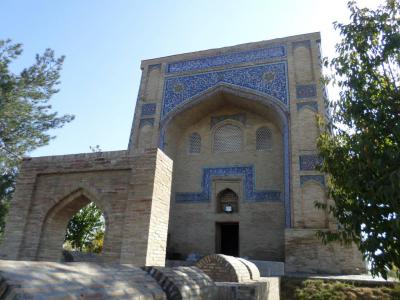
8) Mausoleum of Hazrati Imam (Kaffal Shoshiy)
The Mausoleum of Kaffal Shashi, also known as Hazrat Imam or Hastimam, stands as a testament to the enduring legacy of one of Islam's revered figures, Imam Abu Bakr Muhammad ibn Ali ibn Ismail al-Kaffal ash-Shashi. Built in 1541-42 by the architect Ghulam Husayn, this monument is the final resting place of the 16th-century Islamic scholar and leader, whose influence resonates among Muslims worldwide. The mausoleum also houses the graves of Hazrat Imam's sons and his students, adding to its spiritual significance.
The structure features an asymmetric domed portal, known as a khanaka, flanked by residential cells (hujras) that historically provided shelter to dervishes and pilgrims. The exterior is a harmonious blend of hard-burned tiled bricks and decorative majolica, crowned with a striking blue dome. The windows are adorned with intricate ganch panjara, adding elegance to the monument’s timeless design. Above the entrance, Arabic inscriptions detail its construction and creator, while other inscriptions, like those in the basement, have been lost over time.
The mausoleum forms the centerpiece of the larger Hazrat Imam Complex, which includes a mosque and a kitchen, or oshkhona. To the south lies a small courtyard with a burial ground (sagan), further emphasizing the site’s sacred purpose. Nearby, one can find the chillahona-underground cells-and the house where Khoja Ahrar Vali, a notable follower of Kaffal Shashi, once lived.
The mausoleum’s history reflects resilience in the face of adversity. During the Soviet era, when religious practices were suppressed, the site was closed by the authorities. Despite this, devoted worshipers continued to visit it in secret. In 1945, a decree by the Council of People's Commissars of the Uzbek SSR returned the mausoleum to the jurisdiction of the Spiritual Administration of Muslims of Central Asia and Kazakhstan, ensuring its preservation and ongoing role as a place of reverence.
Today, the Mausoleum of Hazrati Imam remains a cherished landmark in Tashkent. It attracts pilgrims and admirers of Islamic architecture while preserving the memory of its esteemed namesake.
The structure features an asymmetric domed portal, known as a khanaka, flanked by residential cells (hujras) that historically provided shelter to dervishes and pilgrims. The exterior is a harmonious blend of hard-burned tiled bricks and decorative majolica, crowned with a striking blue dome. The windows are adorned with intricate ganch panjara, adding elegance to the monument’s timeless design. Above the entrance, Arabic inscriptions detail its construction and creator, while other inscriptions, like those in the basement, have been lost over time.
The mausoleum forms the centerpiece of the larger Hazrat Imam Complex, which includes a mosque and a kitchen, or oshkhona. To the south lies a small courtyard with a burial ground (sagan), further emphasizing the site’s sacred purpose. Nearby, one can find the chillahona-underground cells-and the house where Khoja Ahrar Vali, a notable follower of Kaffal Shashi, once lived.
The mausoleum’s history reflects resilience in the face of adversity. During the Soviet era, when religious practices were suppressed, the site was closed by the authorities. Despite this, devoted worshipers continued to visit it in secret. In 1945, a decree by the Council of People's Commissars of the Uzbek SSR returned the mausoleum to the jurisdiction of the Spiritual Administration of Muslims of Central Asia and Kazakhstan, ensuring its preservation and ongoing role as a place of reverence.
Today, the Mausoleum of Hazrati Imam remains a cherished landmark in Tashkent. It attracts pilgrims and admirers of Islamic architecture while preserving the memory of its esteemed namesake.
9) Barak Khan Madrasah
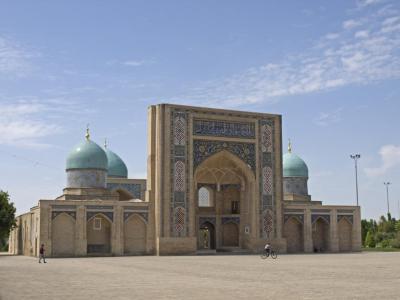
One of the most impressive buildings within the Hazrati Imam Complex in Tashkent is the Madrasah of Barak Khan. It was built in 1531-1532, first as a mausoleum, and then, in the middle of the 16th century, was rebuilt into a madrasah (religious educational institution) during the rule of Shibanid Navruz Ahmed Khan, nicknamed "Barak Khan", which means "lucky".
Originally, there were two mausoleums on the site: big and small. The former was a two-domed mausoleum – khanaka, built in 1530 in honor of the governor of Tashkent, Suyunchkhoja Khan (1454-1525). It was under his rule and that of his immediate heirs that the role of the Uzbek language in literature became firmly established, and Tashkent became a magnet for the intellectual elite of that time. The other mausoleum is called Nameless, for it was built for Barak Khan who was subsequently buried in Samarkand.
The artistic design of the madrasah's gate is not typical for Tashkent and is close to the architectural style of Samarkand. Its vault is made in the form of a niche – colab-kori; tympanums and piers are decorated with carved bricks and various mosaics.
The thick walls of the building are made of bricks of different sizes, clad in colorful glazed ceramic tiles, making up intricate geometrical patterns. Doors of the cells inside the madrasah are also richly decorated, with ivory and non-ferrous metals. The overall shape and decoration of the building remains unchanged, despite numerous earthquakes, thanks to the meticulous restorations carried out in 1946, 1949, 1951, and 1967.
Originally, there were two mausoleums on the site: big and small. The former was a two-domed mausoleum – khanaka, built in 1530 in honor of the governor of Tashkent, Suyunchkhoja Khan (1454-1525). It was under his rule and that of his immediate heirs that the role of the Uzbek language in literature became firmly established, and Tashkent became a magnet for the intellectual elite of that time. The other mausoleum is called Nameless, for it was built for Barak Khan who was subsequently buried in Samarkand.
The artistic design of the madrasah's gate is not typical for Tashkent and is close to the architectural style of Samarkand. Its vault is made in the form of a niche – colab-kori; tympanums and piers are decorated with carved bricks and various mosaics.
The thick walls of the building are made of bricks of different sizes, clad in colorful glazed ceramic tiles, making up intricate geometrical patterns. Doors of the cells inside the madrasah are also richly decorated, with ivory and non-ferrous metals. The overall shape and decoration of the building remains unchanged, despite numerous earthquakes, thanks to the meticulous restorations carried out in 1946, 1949, 1951, and 1967.
10) Muyi Muborak and Tilla Shaikh Madrasah
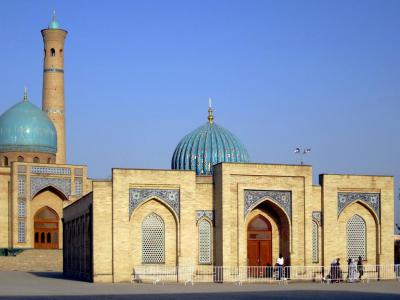
The Muyi Muborak Madrasah, located in one of the oldest parts of Tashkent near the Gafur Gulyam metro station, is a revered site within the Hazrati Imam Complex. Built in the 16th century, it is renowned for housing a sacred relic-the hair of the Prophet Muhammad-which inspired its name, "Muyi Muborak," meaning "Sacred Hair." The structure was reportedly rebuilt in 1856-1857 under the decree of Kokand Khan Mirza Ahmed Kushbegi, further enhancing its historical significance.
The madrasah houses the library of the Muslim Board of Uzbekistan, featuring around 20,000 books and manuscripts, including the 7th-century Qur'an of Usman, the world’s oldest Qur'an. Weighing 35 kilograms with 300 pages, it is considered the source for all later copies. Preserved in a bulletproof, climate-controlled sarcophagus, legend holds that traces of Caliph Usman’s blood mark his final moments reading it.
Adjacent to the Muyi Muborak Madrasah is the Tilla Shaikh Madrasah, also part of the Hazrati Imam Complex. Constructed in the 19th century with funding from a wealthy local benefactor, Tilla Shaikh, the building features dual mihrabs for worshipers' convenience. Its name translates to "The Mosque of the Golden Sheikh," reflecting its historical importance and former status as Tashkent’s main mosque, also known as the Friday Mosque.
The ensemble exudes serenity, with quiet interiors and a subdued atmosphere that enhances its spiritual ambiance. Photography inside is prohibited, adding to the sense of reverence. Outside, the area offers a blend of history and modern tourism, with souvenir shops featuring local handicrafts. However, visitors often note that prices here can be higher than elsewhere.
The Tilla Shaikh Mosque, especially, draws attention for its photogenic appeal. At sunset, the square in front of the mosque becomes tranquil, and as night falls, lighting transforms the complex into a dreamlike scene, evoking an "oriental fairy tale." Benches and walking paths provide space for quiet contemplation or relaxation, making it a popular spot for locals and tourists alike.
Together, the Muyi Muborak Madrasah and the Tilla Shaikh Madrasah form an essential part of Tashkent's cultural and religious heritage, offering visitors a glimpse into the rich history and devotion of Uzbekistan.
The madrasah houses the library of the Muslim Board of Uzbekistan, featuring around 20,000 books and manuscripts, including the 7th-century Qur'an of Usman, the world’s oldest Qur'an. Weighing 35 kilograms with 300 pages, it is considered the source for all later copies. Preserved in a bulletproof, climate-controlled sarcophagus, legend holds that traces of Caliph Usman’s blood mark his final moments reading it.
Adjacent to the Muyi Muborak Madrasah is the Tilla Shaikh Madrasah, also part of the Hazrati Imam Complex. Constructed in the 19th century with funding from a wealthy local benefactor, Tilla Shaikh, the building features dual mihrabs for worshipers' convenience. Its name translates to "The Mosque of the Golden Sheikh," reflecting its historical importance and former status as Tashkent’s main mosque, also known as the Friday Mosque.
The ensemble exudes serenity, with quiet interiors and a subdued atmosphere that enhances its spiritual ambiance. Photography inside is prohibited, adding to the sense of reverence. Outside, the area offers a blend of history and modern tourism, with souvenir shops featuring local handicrafts. However, visitors often note that prices here can be higher than elsewhere.
The Tilla Shaikh Mosque, especially, draws attention for its photogenic appeal. At sunset, the square in front of the mosque becomes tranquil, and as night falls, lighting transforms the complex into a dreamlike scene, evoking an "oriental fairy tale." Benches and walking paths provide space for quiet contemplation or relaxation, making it a popular spot for locals and tourists alike.
Together, the Muyi Muborak Madrasah and the Tilla Shaikh Madrasah form an essential part of Tashkent's cultural and religious heritage, offering visitors a glimpse into the rich history and devotion of Uzbekistan.
11) Hazrati Imam Complex (must see)
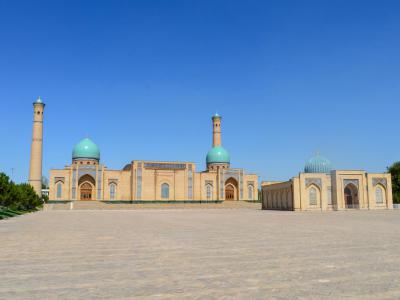
The Hazrati Imam Complex, also known as Hastimom, is a remarkable architectural ensemble in the Olmazor district of Tashkent. Spanning from the 16th to the 20th century, this site stands as a testament to Tashkent's rich Islamic heritage. Situated in the "Old City," the complex centers around the tomb of Hazrati Imam, an esteemed scholar, poet, artist, and the first imam-khatib of Tashkent. His skill in crafting locks earned him the nickname "Qaffol," and his mastery of 72 languages, including translating the Torah into Arabic, showcased his remarkable linguistic talent.
The Hazrati Imam Complex is a blend of historical and spiritual landmarks that highlight Tashkent’s cultural and religious heritage. The Moʻyi Muborak Madrasa, renowned for housing one of the world’s oldest Qurans, radiates reverence and scholarly significance. The Qaffol Shoshi Mausoleum, the complex’s centerpiece, honors Hazrati Imam’s legacy as a scholar and spiritual guide. The Baroqxon Madrasa, a 16th-century masterpiece commissioned by Abdullah Khan II, and the Hazrati Imam Mosque, with its sandalwood columns and gold-leaf domes capturing sunlight, showcase architectural brilliance. The Tillashayx Mosque, renovated in the 20th century, remains a vibrant place of worship, while the Imam al-Bukhari Islamic Institute bridges tradition and modern Islamic studies.
Hazrati Imam’s legacy is deeply ingrained in the complex's history. Constructed near his grave, the ensemble has evolved over centuries, with significant contributions from skilled artisans. The two towering minarets, each 53 meters high, were crafted by Khorezmian and Samarkand masters, blending intricate design with structural ingenuity.
Surviving the devastating 1966 earthquake, the Hazrati Imam Complex stands as a symbol of Tashkent’s resilience. It also played a role in commemorating the city’s 2200th anniversary in 2009, with its image featured on commemorative postage stamps alongside other iconic landmarks.
Today, the Hazrati Imam Complex is not only a place of worship but also a cultural hub, housing the Administration of Muslims of Uzbekistan. It attracts visitors and scholars alike, offering insights into the region's spiritual and architectural traditions.
The Hazrati Imam Complex seamlessly blends the past and present, making it a cornerstone of Uzbekistan’s Islamic heritage and a must-visit landmark in Tashkent.
The Hazrati Imam Complex is a blend of historical and spiritual landmarks that highlight Tashkent’s cultural and religious heritage. The Moʻyi Muborak Madrasa, renowned for housing one of the world’s oldest Qurans, radiates reverence and scholarly significance. The Qaffol Shoshi Mausoleum, the complex’s centerpiece, honors Hazrati Imam’s legacy as a scholar and spiritual guide. The Baroqxon Madrasa, a 16th-century masterpiece commissioned by Abdullah Khan II, and the Hazrati Imam Mosque, with its sandalwood columns and gold-leaf domes capturing sunlight, showcase architectural brilliance. The Tillashayx Mosque, renovated in the 20th century, remains a vibrant place of worship, while the Imam al-Bukhari Islamic Institute bridges tradition and modern Islamic studies.
Hazrati Imam’s legacy is deeply ingrained in the complex's history. Constructed near his grave, the ensemble has evolved over centuries, with significant contributions from skilled artisans. The two towering minarets, each 53 meters high, were crafted by Khorezmian and Samarkand masters, blending intricate design with structural ingenuity.
Surviving the devastating 1966 earthquake, the Hazrati Imam Complex stands as a symbol of Tashkent’s resilience. It also played a role in commemorating the city’s 2200th anniversary in 2009, with its image featured on commemorative postage stamps alongside other iconic landmarks.
Today, the Hazrati Imam Complex is not only a place of worship but also a cultural hub, housing the Administration of Muslims of Uzbekistan. It attracts visitors and scholars alike, offering insights into the region's spiritual and architectural traditions.
The Hazrati Imam Complex seamlessly blends the past and present, making it a cornerstone of Uzbekistan’s Islamic heritage and a must-visit landmark in Tashkent.
12) Minor Mosque
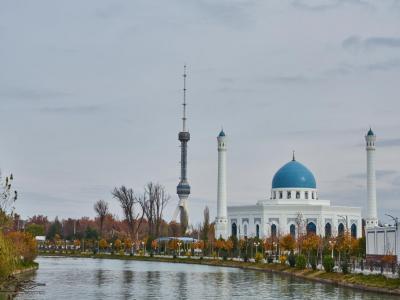
The Minor Mosque, a modern architectural gem in Tashkent, was inaugurated on October 1, 2014, on the eve of the Eid al-Adha holiday. Located on the picturesque embankment of the Ankhor Canal, near the UzExpoCentre and Hotel International, this mosque has become a favorite spot for evening strolls among locals, thanks to its serene surroundings and beautifully landscaped area.
Construction of the mosque began in the summer of 2013, following a resolution by then-President Islam Karimov. The design reflects a harmonious blend of traditional oriental and Uzbek architectural styles while incorporating modern elements. Unlike the historic brick mosques of the region, the Minor Mosque is entirely clad in gleaming white marble, giving it a radiant appearance under the clear sky. The turquoise dome atop the structure appears to dissolve into the heavens, adding to its ethereal charm.
The mosque features a two-story prayer hall flanked by two grand portals and framed by twin 38-meter-high minarets. Inside, the domed hall can accommodate over 2,400 worshippers. The space is adorned in the intricate Naqsh style, with Quranic verses and other texts crafted by renowned calligraphers Habibullo Solikh, Islam Mamatov, and Abdulgofur Haqberdiyev. The gilded mihrab (a niche indicating the direction of Mecca) is a centerpiece of the interior, adding a touch of grandeur to the space.
The mosque is equipped with modern amenities, including ablution facilities, ensuring comfort for visitors and worshippers. Funded by the State Budget and the Muslim Board of Uzbekistan, the Minor Mosque has become one of the largest Muslim spiritual centers in Tashkent.
Despite its recent establishment, the Minor Mosque has quickly become an iconic landmark. Its striking white marble exterior, elegant turquoise dome and tranquil location make it a must-visit for anyone exploring the vibrant capital of Uzbekistan.
Construction of the mosque began in the summer of 2013, following a resolution by then-President Islam Karimov. The design reflects a harmonious blend of traditional oriental and Uzbek architectural styles while incorporating modern elements. Unlike the historic brick mosques of the region, the Minor Mosque is entirely clad in gleaming white marble, giving it a radiant appearance under the clear sky. The turquoise dome atop the structure appears to dissolve into the heavens, adding to its ethereal charm.
The mosque features a two-story prayer hall flanked by two grand portals and framed by twin 38-meter-high minarets. Inside, the domed hall can accommodate over 2,400 worshippers. The space is adorned in the intricate Naqsh style, with Quranic verses and other texts crafted by renowned calligraphers Habibullo Solikh, Islam Mamatov, and Abdulgofur Haqberdiyev. The gilded mihrab (a niche indicating the direction of Mecca) is a centerpiece of the interior, adding a touch of grandeur to the space.
The mosque is equipped with modern amenities, including ablution facilities, ensuring comfort for visitors and worshippers. Funded by the State Budget and the Muslim Board of Uzbekistan, the Minor Mosque has become one of the largest Muslim spiritual centers in Tashkent.
Despite its recent establishment, the Minor Mosque has quickly become an iconic landmark. Its striking white marble exterior, elegant turquoise dome and tranquil location make it a must-visit for anyone exploring the vibrant capital of Uzbekistan.
13) Shahidlar Xotirasi Monument
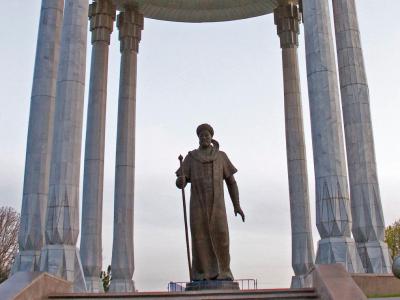
The Shahidlar Xotirasi Monument, also known as the Memorial to the Victims of Repression, was inaugurated on May 12, 2000, to honor those who suffered during the political repressions that plagued Uzbekistan from the late 19th century through the Soviet era. Spanning 17 hectares, this memorial park and museum complex stands as a solemn reminder of the sacrifices made to preserve the nation's cultural and political identity.
Located near the Tashkent TV Tower and along the Bozsu Canal, the memorial occupies a site where thousands of wrongful executions occurred during the 1930s Stalinist purges. Between 1920 and 1940, approximately 100,000 Uzbeks were arrested, and 13,000 were executed. These victims included prominent intellectuals like Abdullah Kadiri, Fitrat, Chulpon, and Hamza, who were targeted in efforts to erase Uzbekistan's cultural heritage.
The monument's scope extends beyond the Soviet era, commemorating repressions dating back to the 1860s, when Uzbekistan fell under the Russian Empire's control. The monument reflects on a history of oppression that culminated in independence in 1991, marking a pivotal moment for the Uzbek nation.
The complex comprises a park, a museum, and an Islamic-style rotunda featuring a symbolic nephrite tomb, inscribed in Arabic, English, and Uzbek: “The memory of those who died for their country will live forever.” This serene site is further enriched by cedar trees and vibrant floral arrangements, symbolizing the innocent souls and the suffering endured by the Uzbek people.
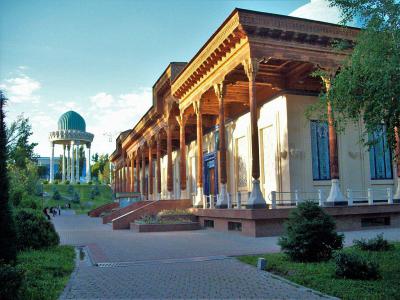
The Museum of Victims of Repression, set within a beautifully crafted building with intricate woodwork and a light-blue dome, showcases historic documents, photos, and narratives of political and cultural oppression. A key highlight is the section on the 1980s Uzbek cotton scandal, which saw thousands falsely accused. The Shahidlar Xotirasi Monument serves as a powerful space for reflection and education, honoring those who sacrificed for Uzbekistan's sovereignty.
Located near the Tashkent TV Tower and along the Bozsu Canal, the memorial occupies a site where thousands of wrongful executions occurred during the 1930s Stalinist purges. Between 1920 and 1940, approximately 100,000 Uzbeks were arrested, and 13,000 were executed. These victims included prominent intellectuals like Abdullah Kadiri, Fitrat, Chulpon, and Hamza, who were targeted in efforts to erase Uzbekistan's cultural heritage.
The monument's scope extends beyond the Soviet era, commemorating repressions dating back to the 1860s, when Uzbekistan fell under the Russian Empire's control. The monument reflects on a history of oppression that culminated in independence in 1991, marking a pivotal moment for the Uzbek nation.
The complex comprises a park, a museum, and an Islamic-style rotunda featuring a symbolic nephrite tomb, inscribed in Arabic, English, and Uzbek: “The memory of those who died for their country will live forever.” This serene site is further enriched by cedar trees and vibrant floral arrangements, symbolizing the innocent souls and the suffering endured by the Uzbek people.
The Museum of Victims of Repression, set within a beautifully crafted building with intricate woodwork and a light-blue dome, showcases historic documents, photos, and narratives of political and cultural oppression. A key highlight is the section on the 1980s Uzbek cotton scandal, which saw thousands falsely accused. The Shahidlar Xotirasi Monument serves as a powerful space for reflection and education, honoring those who sacrificed for Uzbekistan's sovereignty.
14) Museum of Victims of Political Repression in Tashkent
The Museum of Victims of Political Repression in Tashkent is a poignant institution that preserves the memory of those who sacrificed their lives for Uzbekistan's independence and suffered under Soviet-era political repression. Established on 31 August 2002 by the country's first president, Islam Karimov, the museum is one of the youngest in Uzbekistan. Initially housed in a modest park near the Tashkent TV Tower, it has since grown into a comprehensive memorial complex.
The museum is divided into ten sections, offering an in-depth exploration of Uzbekistan's turbulent history from the mid-19th century to the late 20th century. The exhibits focus on the colonial repression during the Russian Empire’s expansion into Central Asia in the 1860s and the devastating political purges under Stalin’s regime following the October Revolution. A particularly notable segment covers the infamous “Cotton Case” of the 1980s, which implicated thousands in fraudulent criminal charges.
The museum's collection includes photographs, documents, and personal belongings of the victims, providing a somber yet insightful perspective on their lives and struggles. Visitors can view detailed maquettes of concentration camps and prisons, illustrating the harsh conditions endured by detainees. The centerpiece of the museum is the “Prison Van” exhibit, symbolizing the cruel transportation methods used to take prisoners to their fate.
The Museum of Victims of Political Repression serves as a memorial to the countless individuals who suffered and perished under oppressive regimes. It also sheds light on the broader struggle for Uzbekistan’s independence, making it a vital space for reflection and historical education.
The museum is divided into ten sections, offering an in-depth exploration of Uzbekistan's turbulent history from the mid-19th century to the late 20th century. The exhibits focus on the colonial repression during the Russian Empire’s expansion into Central Asia in the 1860s and the devastating political purges under Stalin’s regime following the October Revolution. A particularly notable segment covers the infamous “Cotton Case” of the 1980s, which implicated thousands in fraudulent criminal charges.
The museum's collection includes photographs, documents, and personal belongings of the victims, providing a somber yet insightful perspective on their lives and struggles. Visitors can view detailed maquettes of concentration camps and prisons, illustrating the harsh conditions endured by detainees. The centerpiece of the museum is the “Prison Van” exhibit, symbolizing the cruel transportation methods used to take prisoners to their fate.
The Museum of Victims of Political Repression serves as a memorial to the countless individuals who suffered and perished under oppressive regimes. It also sheds light on the broader struggle for Uzbekistan’s independence, making it a vital space for reflection and historical education.
