Custom Walk in Copenhagen, Denmark by bartosc76_445d4 created on 2025-10-23
Guide Location: Denmark » Copenhagen
Guide Type: Custom Walk
# of Sights: 13
Tour Duration: 3 Hour(s)
Travel Distance: 5.5 Km or 3.4 Miles
Share Key: XH8JK
Guide Type: Custom Walk
# of Sights: 13
Tour Duration: 3 Hour(s)
Travel Distance: 5.5 Km or 3.4 Miles
Share Key: XH8JK
How It Works
Please retrieve this walk in the GPSmyCity app. Once done, the app will guide you from one tour stop to the next as if you had a personal tour guide. If you created the walk on this website or come to the page via a link, please follow the instructions below to retrieve the walk in the app.
Retrieve This Walk in App
Step 1. Download the app "GPSmyCity: Walks in 1K+ Cities" on Apple App Store or Google Play Store.



Step 2. In the GPSmyCity app, download(or launch) the guide "Copenhagen Map and Walking Tours".
Step 3. Tap the menu button located at upper right corner of the "Walks" screen and select "Retrieve custom walk". Enter the share key: XH8JK
1) Royal Danish Theatre (Kongelige Teater)
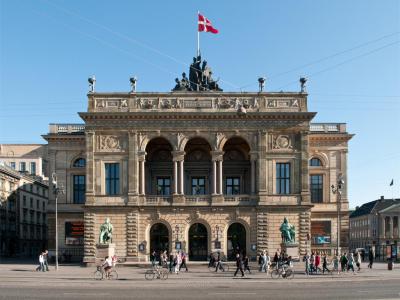
The Royal Danish Theatre is a place where Denmark brings the drama (in a good way). If you’re strolling through central Copenhagen, you are bound to spot this grand, palatial building that looks like it’s about to burst into opera, ballet, or Shakespeare at any moment.
Founded back in 1748, it started as the royal family’s personal cultural playground. The main building, known as the Old Stage, sits regally on King’s New Square. Matching its grand façade is the interior with its neoclassical opulence: red velvet, chandeliers, and plenty of gold leaf. Outside the main entrance are the statues of two literary big names: Adam Oehlenschläger, the Danish Golden Age poet and playwright, and Ludvig Holberg, once dubbed "the father of Danish literature".
But wait - there’s more drama across the canal! The new ultramodern Opera House (inaugurated in 2005), looking like a spaceship, and the Royal Danish Playhouse, a waterfront beauty with glass walls, sharp angles, and stunning harbor views, opened in 2008.
If you can’t get a ticket, no worries. There are guided tours of the Old Stage where you can sneak a peek behind the curtains, strut across the stage (try not to trip), and even step inside the royal box like you own the place. It’s surprisingly affordable and, yes, could easily be the highlight of your trip!
As a bonus, Hans Christian Andersen’s fans would be surprised to learn that at age 14, our favorite fairy-tale writer gave it a go here as an actor, singer, and dancer. Yes! Alas, it didn’t go well. His plays were rejected. His stage presence was questionable. But plot twist - a kind theater director sent him off to grammar school for five years, which later helped him get into university and, at long last, find his literary groove.
Moral of the story - a failed audition can be just a prequel to worldwide fame...
Founded back in 1748, it started as the royal family’s personal cultural playground. The main building, known as the Old Stage, sits regally on King’s New Square. Matching its grand façade is the interior with its neoclassical opulence: red velvet, chandeliers, and plenty of gold leaf. Outside the main entrance are the statues of two literary big names: Adam Oehlenschläger, the Danish Golden Age poet and playwright, and Ludvig Holberg, once dubbed "the father of Danish literature".
But wait - there’s more drama across the canal! The new ultramodern Opera House (inaugurated in 2005), looking like a spaceship, and the Royal Danish Playhouse, a waterfront beauty with glass walls, sharp angles, and stunning harbor views, opened in 2008.
If you can’t get a ticket, no worries. There are guided tours of the Old Stage where you can sneak a peek behind the curtains, strut across the stage (try not to trip), and even step inside the royal box like you own the place. It’s surprisingly affordable and, yes, could easily be the highlight of your trip!
As a bonus, Hans Christian Andersen’s fans would be surprised to learn that at age 14, our favorite fairy-tale writer gave it a go here as an actor, singer, and dancer. Yes! Alas, it didn’t go well. His plays were rejected. His stage presence was questionable. But plot twist - a kind theater director sent him off to grammar school for five years, which later helped him get into university and, at long last, find his literary groove.
Moral of the story - a failed audition can be just a prequel to worldwide fame...
2) King's New Square (Kongens Nytorv)
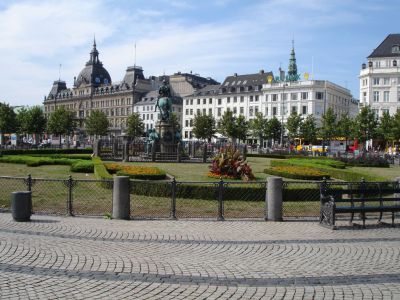
King's New Square is a central hub in Copenhagen, noted for its significant size and historical prominence. Established in 1670 by King Christian V, the square was part of an extensive urban development aimed at expanding and fortifying the city.
Originally a chaotic site with muddy terrain outside the city's fortifications, the area was transformed into a planned, cobblestoned space inspired by royal squares in Paris. It served both military and social functions – first, as a military alarm square and then as a venue for royal ceremonies and public gatherings.
Dominating the square, at its center, is the equestrian statue of King Christian V. The oldest of its kind in Scandinavia, first crafted in 1688 and recast in bronze in 1939, it exudes a historical aura.
Surrounding the square are prominent buildings such as the Royal Danish Theater, Charlottenborg Palace (now housing the Royal Danish Academy of Fine Arts), the Thott Palace (currently the French Embassy), and notable commercial establishments like the Hotel D'Angleterre and the Magasin du Nord department store.
Also, check out an old kiosk and telephone stand from 1913. Built in Baroque Revival style and featuring a copper-clad roof and hand-carved ornamentation, it once hosted Copenhagen's first public telephone service and now serves as a café with outdoor seating.
Today, the square is not only a historical site but also a vibrant public space that hosts outdoor exhibitions and ice skating in winter and is a traditional spot for high school graduation celebrations.
Originally a chaotic site with muddy terrain outside the city's fortifications, the area was transformed into a planned, cobblestoned space inspired by royal squares in Paris. It served both military and social functions – first, as a military alarm square and then as a venue for royal ceremonies and public gatherings.
Dominating the square, at its center, is the equestrian statue of King Christian V. The oldest of its kind in Scandinavia, first crafted in 1688 and recast in bronze in 1939, it exudes a historical aura.
Surrounding the square are prominent buildings such as the Royal Danish Theater, Charlottenborg Palace (now housing the Royal Danish Academy of Fine Arts), the Thott Palace (currently the French Embassy), and notable commercial establishments like the Hotel D'Angleterre and the Magasin du Nord department store.
Also, check out an old kiosk and telephone stand from 1913. Built in Baroque Revival style and featuring a copper-clad roof and hand-carved ornamentation, it once hosted Copenhagen's first public telephone service and now serves as a café with outdoor seating.
Today, the square is not only a historical site but also a vibrant public space that hosts outdoor exhibitions and ice skating in winter and is a traditional spot for high school graduation celebrations.
3) Charlottenborg Palace
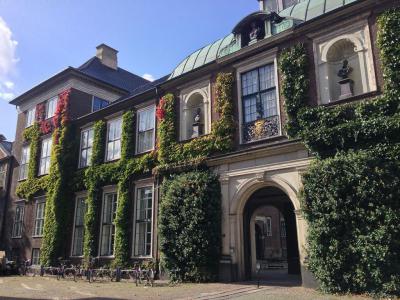
Charlottenborg is a Dutch Baroque style palace constructed for Ulrik Frederik Gyldenlve between 1672 and 1683. In 1700, the palace was bought by Charlotte Amalie, Queen Dowager. As you visit the palace, you will find that the main building faces Kongens Nytorv. It was constructed by C. F. Hansen in 1827 and features the Antiksalen and Fest Halls.
Today, Charlottenborg, named after the famous widow Queen Charlotte Amalie, has an extensive collection of art and literature displayed in its library. It is also where the Royal Danish Academy of Art operates from. Established and emerging artists aspiring to showcase their talent hold exhibitions here.
One of the most famous exhibitions held at Charlottenborg is Forårsudstillint, the spring show. This exhibition is a host to artists who display their crafts, paintings and architecture. Artists from around the nation send their work here which is reviewed and if chosen, displayed at this exhibition.
Another art show, namely the Efterårsudstillingen, is held in autumn. This exhibition displays works of eminent artists who are specially invited. Charlottenborg holds curated shows and at least five exhibitions each year. Do not miss a visit to this popular tourist attraction on your trip to Copenhagen.
Today, Charlottenborg, named after the famous widow Queen Charlotte Amalie, has an extensive collection of art and literature displayed in its library. It is also where the Royal Danish Academy of Art operates from. Established and emerging artists aspiring to showcase their talent hold exhibitions here.
One of the most famous exhibitions held at Charlottenborg is Forårsudstillint, the spring show. This exhibition is a host to artists who display their crafts, paintings and architecture. Artists from around the nation send their work here which is reviewed and if chosen, displayed at this exhibition.
Another art show, namely the Efterårsudstillingen, is held in autumn. This exhibition displays works of eminent artists who are specially invited. Charlottenborg holds curated shows and at least five exhibitions each year. Do not miss a visit to this popular tourist attraction on your trip to Copenhagen.
4) Odd Fellows Mansion
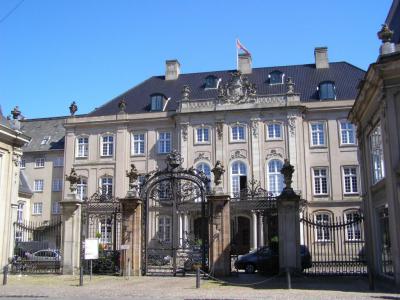
The Odd Fellows Mansion is a significant Rococo-style town mansion located in Copenhagen. It gained its current name when it was acquired by the local branch of the Independent Order of Odd Fellows in 1900. Before this acquisition, it was known through its history as the Berckentin Mansion and later the Schimmelmann Mansion, reflecting the names of its notable owners.
The mansion's origins date back to the redevelopment of the Frederiksstaden district, a project under the creative guidance of architect Nicolai Eigtved. Eigtved's vision for the district included the design of the mansion, which was executed by Johann Gottfried Rosenberg. It was originally built to serve as the residence for Christian August von Berckentin, a wealthy merchant and politician who was recently ennobled with the title of Count.
In 1762, the mansion was purchased by Heinrich von Schimmelmann, leading to its rechristening as the Schimmelmann Mansion. It continued to serve as a prominent cultural hub under the ownership of Ernst Schimmelmann, Heinrich's son, who inherited it in 1782. Ernst and his wife, Charlotte Schimmelmann, were passionate patrons of the arts. Charlotte, particularly, became renowned for hosting salons that attracted various cultural figures, thereby enhancing the mansion's reputation as a center for vibrant cultural life.
Today, the mansion is not only a historical building but also a cultural venue. It includes a concert hall that is accessible to the public, furthering its legacy as a place of gathering and cultural exchange. Additionally, the Odd Fellows Mansion has served as a picturesque location for various film and television productions, including the 1997 film "Smilla's Sense of Snow" and an episode of the TV series "Matador," highlighting its architectural and historical significance.
The mansion's origins date back to the redevelopment of the Frederiksstaden district, a project under the creative guidance of architect Nicolai Eigtved. Eigtved's vision for the district included the design of the mansion, which was executed by Johann Gottfried Rosenberg. It was originally built to serve as the residence for Christian August von Berckentin, a wealthy merchant and politician who was recently ennobled with the title of Count.
In 1762, the mansion was purchased by Heinrich von Schimmelmann, leading to its rechristening as the Schimmelmann Mansion. It continued to serve as a prominent cultural hub under the ownership of Ernst Schimmelmann, Heinrich's son, who inherited it in 1782. Ernst and his wife, Charlotte Schimmelmann, were passionate patrons of the arts. Charlotte, particularly, became renowned for hosting salons that attracted various cultural figures, thereby enhancing the mansion's reputation as a center for vibrant cultural life.
Today, the mansion is not only a historical building but also a cultural venue. It includes a concert hall that is accessible to the public, furthering its legacy as a place of gathering and cultural exchange. Additionally, the Odd Fellows Mansion has served as a picturesque location for various film and television productions, including the 1997 film "Smilla's Sense of Snow" and an episode of the TV series "Matador," highlighting its architectural and historical significance.
5) Frederick's Church (must see)
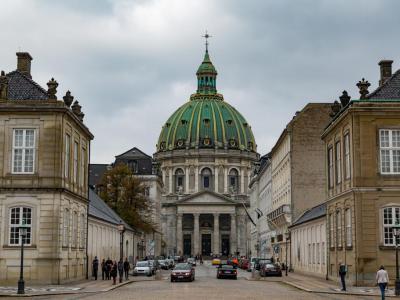
Also known as the Marble Church, Frederick’s Church is one of the most popular tourist attractions in Copenhagen – especially for its dome which is the largest in Scandinavia. This dome spans 31 meters and is supported by 12 columns.
Along with all other structures in Frederiksstaden district, the church was built to commemorate a member of the House of Oldenburg’s 300 years coronation jubilee celebrations. It was designed and erected by architect Nicolai Eigtved in 1740. King Frederick V laid the foundation stone in 1749. Eigtved died in 1754 due to which construction was hit by budget constraints and had to be stalled.
Johann Friedrich Struensee discarded the original plan in 1770 and the church remained incomplete for a while in spite of many efforts. For the next 150 years, the edifice remained in ruins. Carl Frederik Tietgen eventually got prominent architect Ferdinand Meldahl to design the church in its final form and financed its construction. Due to financial restrictions, the original plans for the church to be built almost entirely from marble were discarded, and instead, Meldahl opted for construction to be done with limestone. The church was finally opened to the public on August 19, 1894.
A series of statues of prominent theologians and ecclesiastical figures, including one of the eminent Danish philosopher Kierkegaard (who, incidentally, had become very critical of the established church by the end of his life), encircles the grounds of the building.
Why You Should Visit:
This church really has the wow factor; as beautiful inside as it is out (also, rather unique and unusual as it is circular inside).
Tip:
The dome can be visited – for a small fee – every day at 1pm sharp in summer but only at the weekend (Sat/Sun) in winter. Very impressive view from above!
Along with all other structures in Frederiksstaden district, the church was built to commemorate a member of the House of Oldenburg’s 300 years coronation jubilee celebrations. It was designed and erected by architect Nicolai Eigtved in 1740. King Frederick V laid the foundation stone in 1749. Eigtved died in 1754 due to which construction was hit by budget constraints and had to be stalled.
Johann Friedrich Struensee discarded the original plan in 1770 and the church remained incomplete for a while in spite of many efforts. For the next 150 years, the edifice remained in ruins. Carl Frederik Tietgen eventually got prominent architect Ferdinand Meldahl to design the church in its final form and financed its construction. Due to financial restrictions, the original plans for the church to be built almost entirely from marble were discarded, and instead, Meldahl opted for construction to be done with limestone. The church was finally opened to the public on August 19, 1894.
A series of statues of prominent theologians and ecclesiastical figures, including one of the eminent Danish philosopher Kierkegaard (who, incidentally, had become very critical of the established church by the end of his life), encircles the grounds of the building.
Why You Should Visit:
This church really has the wow factor; as beautiful inside as it is out (also, rather unique and unusual as it is circular inside).
Tip:
The dome can be visited – for a small fee – every day at 1pm sharp in summer but only at the weekend (Sat/Sun) in winter. Very impressive view from above!
6) Amalienborg Palace and Museum (must see)
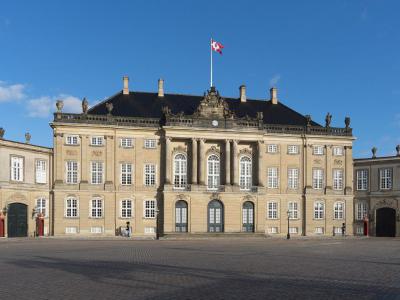
Amalienborg Palace is the official residence of the Danish Royal Family. This palace complex features four rococo palaces constructed between 1750 and 1758. All are built around the octagonal square where you will find King Frederik’s equestrian statue. King Frederik ruled Norway and Denmark between 1723 and 1766 and was instrumental in the construction of Frederiksstad of which Amalienborg palace is a part.
Land for the palace was acquired by King Christian IV who ruled Norway and Denmark between 1577 and 1648. Queen Sophie Amalie, King Frederik III’s consort constructed the first palace in this waterfront area between 1669 and 1673. This palace was destroyed by fire in 1689.
King Frederik IV constructed the second royal palace at Amalienborg during his rule between 1671 and 1730. This was a two-storied small summer residence that featured a charming French garden. It was named Sophie Amalienborg.
In the 1980s the palace was restored as residence for the Crown Prince, storage facilities for the Queen’s Reference Library and a museum for the Royal House of Glücksborg. The museum features private royal apartments from 1863 to 1947 including original fittings and furnishings.
King Frederik V, in his effort to create a separate city outside Copenhagen, constructed Frederik’s City or Frederiksstad that featured exclusive homes for the noble families and aristocrats. All buildings were in Baroque style. Later on, additions were made to these buildings in rococo architectural style. Make sure you include Amalienborg Palace in your itinerary when you visit Copenhagen.
Why You Should Visit:
Considered as one of the best examples of the Rococo architecture style, this complex is beautifully preserved and feels more intimate than its European counterparts.
Tip:
Arrive at midday for the changing of the guard, an interesting display that takes around 10 minutes.
Land for the palace was acquired by King Christian IV who ruled Norway and Denmark between 1577 and 1648. Queen Sophie Amalie, King Frederik III’s consort constructed the first palace in this waterfront area between 1669 and 1673. This palace was destroyed by fire in 1689.
King Frederik IV constructed the second royal palace at Amalienborg during his rule between 1671 and 1730. This was a two-storied small summer residence that featured a charming French garden. It was named Sophie Amalienborg.
In the 1980s the palace was restored as residence for the Crown Prince, storage facilities for the Queen’s Reference Library and a museum for the Royal House of Glücksborg. The museum features private royal apartments from 1863 to 1947 including original fittings and furnishings.
King Frederik V, in his effort to create a separate city outside Copenhagen, constructed Frederik’s City or Frederiksstad that featured exclusive homes for the noble families and aristocrats. All buildings were in Baroque style. Later on, additions were made to these buildings in rococo architectural style. Make sure you include Amalienborg Palace in your itinerary when you visit Copenhagen.
Why You Should Visit:
Considered as one of the best examples of the Rococo architecture style, this complex is beautifully preserved and feels more intimate than its European counterparts.
Tip:
Arrive at midday for the changing of the guard, an interesting display that takes around 10 minutes.
7) Amaliehaven (Amalie Garden)
Amaliehaven also known as Amalie Garden is situated in central Copenhagen’s Frederiksstaden neighbourhood between the water front and the Amalienborg Palace. This small park was gifted to the city by the A.P. Moller and Chastine McKinney Moller Foundation in 1953.
The park was first created over an ancient shipyard established by Lars Larsen, a rich ship owner in 1802. Jean Delogne, the Belgian landscape architect designed this garden that was inaugurated in 1983.
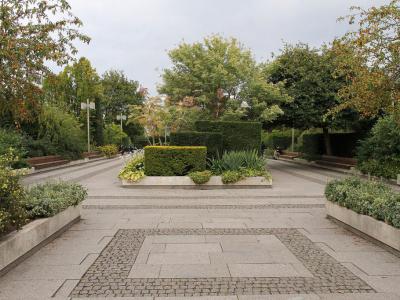
The park is rectangle shaped with a large fountain at the center. The design is symmetrical and is exquisitely complemented by the naturally flowering plants. You will find two levels of the garden extending on either sides of the central fountain. One side of the garden is enclosed by the street and the other by walls and shrubs.
You will also find a stunning variety of flowers and plants in this garden. The effect is amazing with natural shapes of flowers contrasting the park’s geometric layout. If you visit Amaliehaven in April, you are extremely lucky as you will find the Japanese cherry trees in full bloom. These trees are indeed the highlight of this park.
All sculptures you find here are sculpted by Arnaldo Pomodoro, the famous Italian sculptor. There are four attractive abstract columns and water features that sprinkle jets of water.
The park was first created over an ancient shipyard established by Lars Larsen, a rich ship owner in 1802. Jean Delogne, the Belgian landscape architect designed this garden that was inaugurated in 1983.
The park is rectangle shaped with a large fountain at the center. The design is symmetrical and is exquisitely complemented by the naturally flowering plants. You will find two levels of the garden extending on either sides of the central fountain. One side of the garden is enclosed by the street and the other by walls and shrubs.
You will also find a stunning variety of flowers and plants in this garden. The effect is amazing with natural shapes of flowers contrasting the park’s geometric layout. If you visit Amaliehaven in April, you are extremely lucky as you will find the Japanese cherry trees in full bloom. These trees are indeed the highlight of this park.
All sculptures you find here are sculpted by Arnaldo Pomodoro, the famous Italian sculptor. There are four attractive abstract columns and water features that sprinkle jets of water.
8) Little Mermaid (must see)
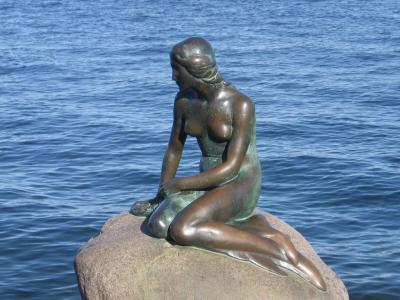
On your trip to Copenhagen, take time off to visit the harbor where you will find the Little Mermaid statue. This statue is the icon of Copenhagen and is visited by tourists from across the world. The unimposing statue is based on one of Hans Christian Anderson’s fairy tales.
After enjoying a ballet on this fairy tale at the Royal Theatre, Carlsberg founder’s son Carl Jacobsen commissioned the statue in 1909. It was modeled after none other than Ellen Price, the prima ballerina (well, partly, at least).
The statue is made of bronze and was painstakingly created by expert sculptor, Edvard Eriksen. Unveiled in 1913, the statue has Ellen Price’s head and Eline Eriksen, the sculptor’s wife’s body.
The Little Mermaid statue surprisingly weighs only around 175 kg and is 1.25 meters tall. Its small size is a surprise for first-time visitors who expect to see something grand and huge.
Why You Should Visit:
To watch people fall into the water as they try to get a photo with the statue (this happens more often than you'd think).
Tip:
The perfect spot for taking a picture is from the promenade overlooking the statue to the left. It's a great photo op, not only of the mermaid but the Copenhagen harbour behind.
After enjoying a ballet on this fairy tale at the Royal Theatre, Carlsberg founder’s son Carl Jacobsen commissioned the statue in 1909. It was modeled after none other than Ellen Price, the prima ballerina (well, partly, at least).
The statue is made of bronze and was painstakingly created by expert sculptor, Edvard Eriksen. Unveiled in 1913, the statue has Ellen Price’s head and Eline Eriksen, the sculptor’s wife’s body.
The Little Mermaid statue surprisingly weighs only around 175 kg and is 1.25 meters tall. Its small size is a surprise for first-time visitors who expect to see something grand and huge.
Why You Should Visit:
To watch people fall into the water as they try to get a photo with the statue (this happens more often than you'd think).
Tip:
The perfect spot for taking a picture is from the promenade overlooking the statue to the left. It's a great photo op, not only of the mermaid but the Copenhagen harbour behind.
9) Gefion Fountain
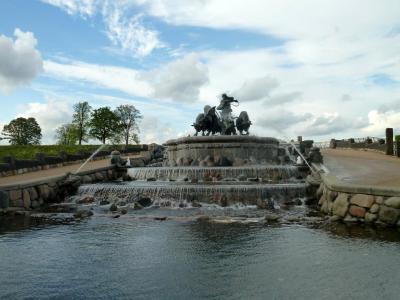
The Gefion Fountain, located on the harbourfront in Copenhagen, is a striking and elaborate fountain that celebrates a blend of art and mythology. This monumental fountain features a dynamic sculpture of the Norse goddess Gefjon driving a group of animals. These figures are not just any animals, but her four sons whom she transformed into oxen to perform a tremendous mythological feat.
The mythology behind the fountain is rooted in ancient Norse legends that describe the creation of Zealand, the island on which Copenhagen is situated. This tale is vividly recounted in several old texts, including the Prose Edda and Heimskringla by the 13th-century Icelandic historian Snorri Sturluson, as well as in Ragnarsdrápa, a 9th-century Skaldic poem.
According to the legend, the Swedish king Gylfi promised Gefjon as much land as she could plow in one night. To accomplish this task, Gefjon transformed her four sons into powerful oxen. The land they plowed was then thrown into the Danish sea, forming the island of Zealand. The void left by the removed earth became a lake, known in ancient texts as Lögrinn or Leginum, which is identified by Snorri Sturluson as Lake Mälaren, near Stockholm.
Interestingly, despite Snorri's specific identification of Lake Mälaren, tourist information typically connects the story with Lake Vänern, Sweden's largest lake. This is largely due to perceived similarities in size and shape between Zealand and Vänern, suggesting a different geographical interpretation from Snorri's historical accounts.
The Gefion Fountain not only serves as a key historical landmark but also as a symbol of Copenhagen’s rich cultural heritage intertwined with Norse mythology. Its dramatic sculptures and the powerful story they depict attract numerous visitors and provide insight into the mythological origins of the region.
The mythology behind the fountain is rooted in ancient Norse legends that describe the creation of Zealand, the island on which Copenhagen is situated. This tale is vividly recounted in several old texts, including the Prose Edda and Heimskringla by the 13th-century Icelandic historian Snorri Sturluson, as well as in Ragnarsdrápa, a 9th-century Skaldic poem.
According to the legend, the Swedish king Gylfi promised Gefjon as much land as she could plow in one night. To accomplish this task, Gefjon transformed her four sons into powerful oxen. The land they plowed was then thrown into the Danish sea, forming the island of Zealand. The void left by the removed earth became a lake, known in ancient texts as Lögrinn or Leginum, which is identified by Snorri Sturluson as Lake Mälaren, near Stockholm.
Interestingly, despite Snorri's specific identification of Lake Mälaren, tourist information typically connects the story with Lake Vänern, Sweden's largest lake. This is largely due to perceived similarities in size and shape between Zealand and Vänern, suggesting a different geographical interpretation from Snorri's historical accounts.
The Gefion Fountain not only serves as a key historical landmark but also as a symbol of Copenhagen’s rich cultural heritage intertwined with Norse mythology. Its dramatic sculptures and the powerful story they depict attract numerous visitors and provide insight into the mythological origins of the region.
10) Kastellet (must see)
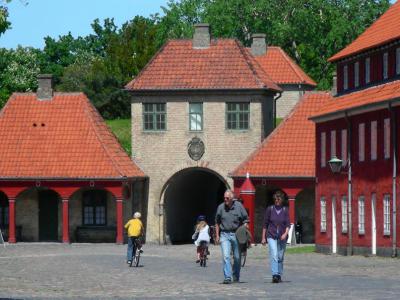
One of the most impressive and well-preserved fortifications in Northern Europe, Kastellet, as it is called, has bastions at the corners and is designed in the form of a pentagram. As you enter its grounds, you will find a number of buildings including a windmill and a church. This historic site which also serves as a public park is frequented by locals and tourists alike.
It was in 1626 that King Christian IV started construction of Kastellet. Economic constraints forced him to drop his grand plans of building a large castle here. King Frederik III, his successor continued with the construction which was later extended by Henrik Ruse, the Dutch engineer after the Swedish siege between 1658 and 1660.
Kastellet was built as an effort by Copenhagen to defend itself against England in the 1807 Battle of Copenhagen. A.P. Moller and Chastine McKinney Mollers General Fund made possible a complete renovation of Kastellet between 1989 and 1999. Currently, it is owned by the Danish Defence Ministry and the area is used by Defence Intelligence, Danish Home Guard, Chief of Staff, Royal Garrison’s Library and the Defence Judge Advocate Corps.
Locals visit Kastellet to enjoy a pleasant walk on a sunny day. Tourists visit this fortification for its rich heritage and children love to play around with the birds and animals here.
Why You Should Visit:
The high walls of the fortress offer a lovely view of the harbor, and the fact that half of it is still a working base means it's kept in tip top shape.
Very pleasant area to take a quiet stroll or run, and with a charming windmill to boot!
Tip:
Can get windy on a cold day so do cover up.
It was in 1626 that King Christian IV started construction of Kastellet. Economic constraints forced him to drop his grand plans of building a large castle here. King Frederik III, his successor continued with the construction which was later extended by Henrik Ruse, the Dutch engineer after the Swedish siege between 1658 and 1660.
Kastellet was built as an effort by Copenhagen to defend itself against England in the 1807 Battle of Copenhagen. A.P. Moller and Chastine McKinney Mollers General Fund made possible a complete renovation of Kastellet between 1989 and 1999. Currently, it is owned by the Danish Defence Ministry and the area is used by Defence Intelligence, Danish Home Guard, Chief of Staff, Royal Garrison’s Library and the Defence Judge Advocate Corps.
Locals visit Kastellet to enjoy a pleasant walk on a sunny day. Tourists visit this fortification for its rich heritage and children love to play around with the birds and animals here.
Why You Should Visit:
The high walls of the fortress offer a lovely view of the harbor, and the fact that half of it is still a working base means it's kept in tip top shape.
Very pleasant area to take a quiet stroll or run, and with a charming windmill to boot!
Tip:
Can get windy on a cold day so do cover up.
11) Rosenborg Castle (must see)
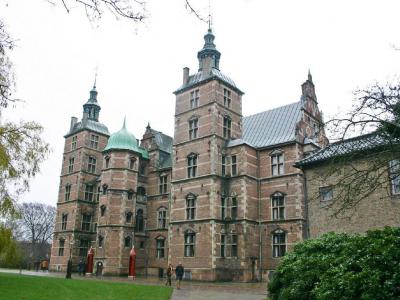
One of the most popular tourist attractions in Copenhagen, Rosenborg Castle reflects the very essence of the Dutch Renaissance style. This caste was constructed in 1606 and served as a summer house. It was a part of many interesting architectural projects initiated by Christian IV.
The castle has since been expanded many times and its present version was built in 1624. Rosenborg Castle was structurally planned by architects Hans van Steenwincke and Bertel Lange.
Until 1710, the castle was a royal residence. On the third floor, you will find the Long Hall. It was built in 1624 to serve as the royal ballroom. In the 1700s, it was used as the banquet hall and the Royal Reception Room. It came to be known as the “Knight’s Hall” from the latter half of the 19th century.
Here you will find a dozen impressive tapestries that depict the victories of the king in the Scanian War. Do not miss out the stucco ceiling that was created in the early 18th century. The main attractions at this castle include the throne of queens and absolutist king’s coronation chair. At the Large Hall, you will find an exquisite collection of 17th-century silver furniture.
Join one of the public tours organized at this castle. The tour will take you through the museum where you can view artifacts from the Royal Collections.
Why You Should Visit:
There's lots of history here and it is well presented. It is not too cluttered so you are not overburdened.
The castle interior is splendid with wonderfully preserved artwork and furnishings – especially the tapestries in the throne room.
Tip:
Make sure you visit all the levels, taking time to walk around and not be too rushed. Plan on at least 2-3 hours here if you can. You need a coin for the locker to leave bags, however.
Tickets are timed entry to ensure the smallish rooms don't get overcrowded. Pre-book online if you can; otherwise, you can walk around the relaxing gardens while you wait for your time slot.
Keep your ticket to go to the basement and see the crown jewels! There's a separate entrance to the basement from outside the castle (you can't get to the basement from inside the castle itself).
The castle has since been expanded many times and its present version was built in 1624. Rosenborg Castle was structurally planned by architects Hans van Steenwincke and Bertel Lange.
Until 1710, the castle was a royal residence. On the third floor, you will find the Long Hall. It was built in 1624 to serve as the royal ballroom. In the 1700s, it was used as the banquet hall and the Royal Reception Room. It came to be known as the “Knight’s Hall” from the latter half of the 19th century.
Here you will find a dozen impressive tapestries that depict the victories of the king in the Scanian War. Do not miss out the stucco ceiling that was created in the early 18th century. The main attractions at this castle include the throne of queens and absolutist king’s coronation chair. At the Large Hall, you will find an exquisite collection of 17th-century silver furniture.
Join one of the public tours organized at this castle. The tour will take you through the museum where you can view artifacts from the Royal Collections.
Why You Should Visit:
There's lots of history here and it is well presented. It is not too cluttered so you are not overburdened.
The castle interior is splendid with wonderfully preserved artwork and furnishings – especially the tapestries in the throne room.
Tip:
Make sure you visit all the levels, taking time to walk around and not be too rushed. Plan on at least 2-3 hours here if you can. You need a coin for the locker to leave bags, however.
Tickets are timed entry to ensure the smallish rooms don't get overcrowded. Pre-book online if you can; otherwise, you can walk around the relaxing gardens while you wait for your time slot.
Keep your ticket to go to the basement and see the crown jewels! There's a separate entrance to the basement from outside the castle (you can't get to the basement from inside the castle itself).
12) Copenhagen Botanical Garden (must see)
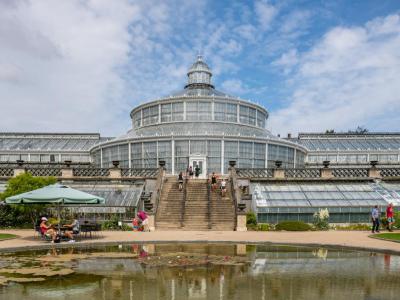
If you like plants and wish to know all about their diversity, you must visit the Copenhagen Botanical Garden on your trip to the city. This garden teaches you all about the fungal kingdoms and even about how to conserve nature on a national and global basis. It covers an area of 10 hectares and is particularly noted for its extensive complex of historical glasshouses dating from 1874.
Enter the garden and you will find the area divided into three distinct parts namely the Botanic Garden, Botanical Library and the Botanical Museum. The garden is arranged in different sections including Danish plants (600 species), perennial plants (1,100 species), annual plants (1,100 species), rock gardens with plants from mountainous areas in Central and Southern Europe and Conifer Hill which is planted with coniferous trees.
At the Botanical Museum, you will find a range of fungi and dried plant collections, while Denmark’s botanical literature collection is housed at the Botanical Library (admission by appointment only). The garden, as well as the museum, help develop and maintain scientific collections of dried and living fungi and plants in keeping with international conventions and practice.
Why You Should Visit:
Plenty of open space, trees, water features, and, in the summer, scented flowers and (hopefully) sunshine.
Great place to relax or walk quietly. There's also a café where you can order refreshments.
Tip:
Take a picnic and allow for lots of time. If you're a keen gardener you'll also need a notebook!
Enter the garden and you will find the area divided into three distinct parts namely the Botanic Garden, Botanical Library and the Botanical Museum. The garden is arranged in different sections including Danish plants (600 species), perennial plants (1,100 species), annual plants (1,100 species), rock gardens with plants from mountainous areas in Central and Southern Europe and Conifer Hill which is planted with coniferous trees.
At the Botanical Museum, you will find a range of fungi and dried plant collections, while Denmark’s botanical literature collection is housed at the Botanical Library (admission by appointment only). The garden, as well as the museum, help develop and maintain scientific collections of dried and living fungi and plants in keeping with international conventions and practice.
Why You Should Visit:
Plenty of open space, trees, water features, and, in the summer, scented flowers and (hopefully) sunshine.
Great place to relax or walk quietly. There's also a café where you can order refreshments.
Tip:
Take a picnic and allow for lots of time. If you're a keen gardener you'll also need a notebook!
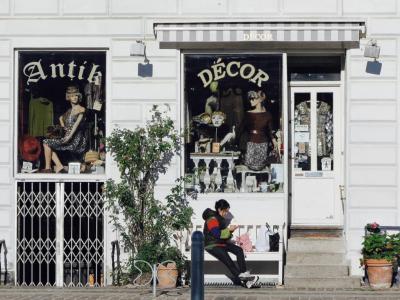
13) Decor
Located in the heart of Copenhagen's Indre By at Rømersgade, Décor stands out as a premier destination for vintage fashion enthusiasts and antique lovers. Founded in 1989 by Lone Riis, a former model and trained furniture expert under renowned antique dealer Mr. Melgaard, Décor has established itself as a beloved fixture in Copenhagen’s vintage scene.
The store boasts an eclectic and constantly evolving assortment of high-quality vintage items, ranging from women's clothing that dates back to 1850 to modern-day menswear. Women’s offerings include everything from exquisite ball gowns and Art Deco cocktail dresses to silk blouses and French fashion pieces. Men's clothing, a newer addition, spans tailored suits from the 1920s to contemporary styles, with plans for further expansion.
Décor's commitment to quality extends to its selection of leather goods and accessories. Shoppers can find everything from narrow evening bags to large shopping shoulder bags, including occasional pieces from major Italian and Parisian luxury brands. The accessories collection is particularly diverse, featuring jewelry from the 1920s, unique ivory fans, and rare finds such as vintage hats and silk scarves from renowned designers.
Recognized by Vogue as a "must-go" shopping destination in Copenhagen, Décor offers an adventurous and quality-driven shopping experience. With new products continuously added across all categories, it remains a treasure trove for those seeking unique vintage and antique pieces. Whether it’s the allure of historical garments or the quest for a design classic, Décor invites both seasoned collectors and casual visitors to explore its rich collection amidst the cultural backdrop of Copenhagen.
The store boasts an eclectic and constantly evolving assortment of high-quality vintage items, ranging from women's clothing that dates back to 1850 to modern-day menswear. Women’s offerings include everything from exquisite ball gowns and Art Deco cocktail dresses to silk blouses and French fashion pieces. Men's clothing, a newer addition, spans tailored suits from the 1920s to contemporary styles, with plans for further expansion.
Décor's commitment to quality extends to its selection of leather goods and accessories. Shoppers can find everything from narrow evening bags to large shopping shoulder bags, including occasional pieces from major Italian and Parisian luxury brands. The accessories collection is particularly diverse, featuring jewelry from the 1920s, unique ivory fans, and rare finds such as vintage hats and silk scarves from renowned designers.
Recognized by Vogue as a "must-go" shopping destination in Copenhagen, Décor offers an adventurous and quality-driven shopping experience. With new products continuously added across all categories, it remains a treasure trove for those seeking unique vintage and antique pieces. Whether it’s the allure of historical garments or the quest for a design classic, Décor invites both seasoned collectors and casual visitors to explore its rich collection amidst the cultural backdrop of Copenhagen.
