Custom Walk in Jerusalem, Israel by alon_3869c created on 2025-11-27
Guide Location: Israel » Jerusalem
Guide Type: Custom Walk
# of Sights: 13
Tour Duration: 2 Hour(s)
Travel Distance: 3.7 Km or 2.3 Miles
Share Key: NWBFZ
Guide Type: Custom Walk
# of Sights: 13
Tour Duration: 2 Hour(s)
Travel Distance: 3.7 Km or 2.3 Miles
Share Key: NWBFZ
How It Works
Please retrieve this walk in the GPSmyCity app. Once done, the app will guide you from one tour stop to the next as if you had a personal tour guide. If you created the walk on this website or come to the page via a link, please follow the instructions below to retrieve the walk in the app.
Retrieve This Walk in App
Step 1. Download the app "GPSmyCity: Walks in 1K+ Cities" on Apple App Store or Google Play Store.



Step 2. In the GPSmyCity app, download(or launch) the guide "Jerusalem Map and Walking Tours".
Step 3. Tap the menu button located at upper right corner of the "Walks" screen and select "Retrieve custom walk". Enter the share key: NWBFZ
1) Jaffa Gate
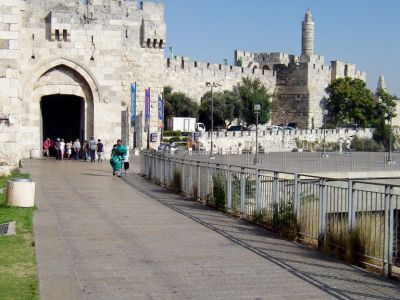
Known in English as Jaffa Gate, this is Jerusalem's Old City’s busiest entrance-and it knows it. Indeed, this is where traffic, tour groups, taxis, and determined pedestrians funnel in from Mamilla and modern West Jerusalem.
From the outside, it looks broad and welcoming, but once you step inside, the passage quickly narrows and bends sharply. That awkward L-shaped turn is no accident. Built in 1538 under Sultan Suleyman the Magnificent, the gate was engineered to slow down attackers and break their momentum. A stone inscription above the outer arch still records its precise construction date, just in case anyone doubts the planning.
Unlike most Old City gates, cars are allowed through here, thanks to an unusual episode in 1898. When Kaiser Wilhelm II arrived for a ceremonial visit, the Ottomans worried about an old belief that conquerors were expected to enter Jerusalem through this gate. Their solution was diplomatic engineering-a temporary breach cut into the wall beside the gate, so the Kaiser could ride in without triggering uncomfortable symbolism.
Fast-forward to 1917, and General Edmund Allenby made a point of doing the opposite. When British forces entered Jerusalem, Allenby dismounted and walked through the gate on foot, deliberately rejecting spectacle in favor of restraint.
The gate’s multiple names tell their own story. Sha’ar Yafo in Hebrew and Jaffa Gate in English recall the road leading to the Mediterranean port of Jaffa, long the arrival point for pilgrims and travelers. In Arabic, Bab al-Khalil points south instead, toward Hebron, known as Al-Khalil. One gate, three names, several directions-and a long memory of who entered, how, and why.
From the outside, it looks broad and welcoming, but once you step inside, the passage quickly narrows and bends sharply. That awkward L-shaped turn is no accident. Built in 1538 under Sultan Suleyman the Magnificent, the gate was engineered to slow down attackers and break their momentum. A stone inscription above the outer arch still records its precise construction date, just in case anyone doubts the planning.
Unlike most Old City gates, cars are allowed through here, thanks to an unusual episode in 1898. When Kaiser Wilhelm II arrived for a ceremonial visit, the Ottomans worried about an old belief that conquerors were expected to enter Jerusalem through this gate. Their solution was diplomatic engineering-a temporary breach cut into the wall beside the gate, so the Kaiser could ride in without triggering uncomfortable symbolism.
Fast-forward to 1917, and General Edmund Allenby made a point of doing the opposite. When British forces entered Jerusalem, Allenby dismounted and walked through the gate on foot, deliberately rejecting spectacle in favor of restraint.
The gate’s multiple names tell their own story. Sha’ar Yafo in Hebrew and Jaffa Gate in English recall the road leading to the Mediterranean port of Jaffa, long the arrival point for pilgrims and travelers. In Arabic, Bab al-Khalil points south instead, toward Hebron, known as Al-Khalil. One gate, three names, several directions-and a long memory of who entered, how, and why.
2) The Citadel (Tower of David) (must see)
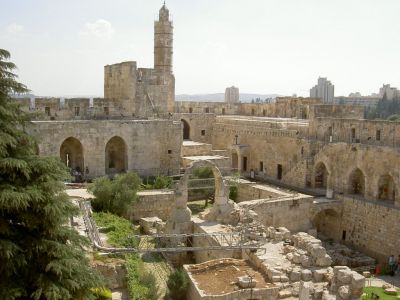
Just inside Jaffa Gate rises the Citadel, better known today as the Tower of David-a place where Jerusalem’s history is stacked quite literally in stone. Careful excavation has peeled the site back layer by layer, so as you move through it, you’re also moving through time. The experience easily stretches over a couple of hours, especially if you follow the story indoors, where archaeology and narrative are woven together into a clear, chronological portrait of the city.
The Citadel occupies the western hill of the Old City, a strategic high point fortified repeatedly since the 2nd century BC. Early defenses were expanded dramatically by Herod the Great, who reinforced the Hasmonean walls with three massive towers. Only one of them-the Phasael Tower-still stands, but it does plenty of heavy lifting. Later, during the Byzantine period, a historical mix-up led locals to believe this was King David’s palace, giving the complex its enduring name.
Power changed hands, and so did the Citadel. Muslim rulers, Crusaders, and later the Mamluks reshaped it until its basic form was fixed in 1310 under Sultan Al-Nasir Muhammad. In the 16th century, Suleiman the Magnificent added a grand eastern gateway and an open square, while the minaret-built in the 17th century-rose to become one of Jerusalem’s most recognizable silhouettes.
Climb the Phasael Tower in the Citadel’s northeast corner, and the reward is perspective, in every sense. Below you lie the excavations; beyond them, the Old City; further still, the hills stretching south and west. Along the way, plaques help decode what you’re seeing-Hasmonean walls, Roman cisterns, and Umayyad fortifications that once held firm against Crusader forces in 1099.
And when night falls, stick around. A 45-minute sound-and-light show transforms the Citadel into a moving timeline of Jerusalem’s past-dramatic, immersive, and very popular. Book ahead, or risk watching history unfold from the outside.
The Citadel occupies the western hill of the Old City, a strategic high point fortified repeatedly since the 2nd century BC. Early defenses were expanded dramatically by Herod the Great, who reinforced the Hasmonean walls with three massive towers. Only one of them-the Phasael Tower-still stands, but it does plenty of heavy lifting. Later, during the Byzantine period, a historical mix-up led locals to believe this was King David’s palace, giving the complex its enduring name.
Power changed hands, and so did the Citadel. Muslim rulers, Crusaders, and later the Mamluks reshaped it until its basic form was fixed in 1310 under Sultan Al-Nasir Muhammad. In the 16th century, Suleiman the Magnificent added a grand eastern gateway and an open square, while the minaret-built in the 17th century-rose to become one of Jerusalem’s most recognizable silhouettes.
Climb the Phasael Tower in the Citadel’s northeast corner, and the reward is perspective, in every sense. Below you lie the excavations; beyond them, the Old City; further still, the hills stretching south and west. Along the way, plaques help decode what you’re seeing-Hasmonean walls, Roman cisterns, and Umayyad fortifications that once held firm against Crusader forces in 1099.
And when night falls, stick around. A 45-minute sound-and-light show transforms the Citadel into a moving timeline of Jerusalem’s past-dramatic, immersive, and very popular. Book ahead, or risk watching history unfold from the outside.
3) Cardo Maximus
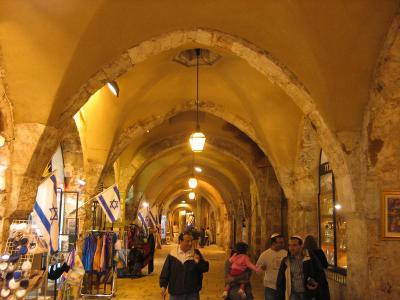
One of the Jewish Quarter's most evocative sites is the Cardo Maximus, the broad, column-lined main street of Hadrian's ancient city, Aelia Capitolina. This particular segment is actually a Byzantine addition to the original Roman Cardo, which stretched from the Damascus Gate (now in the Muslim Quarter) down through what is now the Souq Khan al-Zeit. Once the city's main artery and later the bustling market of the Crusaders, the Cardo now lies between two modern roads, Habad Street and Jewish Quarter Road, at a lower level.
Strolling along the Byzantine pavement flanked by elegant colonnades, one can easily envision the activity of its ancient past. The vaulted northern end of the excavated section now houses upscale gift shops, art galleries, along with remnants of the Hasmonean city wall and structures from the First Temple period. Additionally, you'll find charming pizza parlors and cafes perfect for a quick bite, though it's wise to exercise caution in the evenings, as locals may not appreciate tourists wandering the neighborhood streets and alleys.
Tip:
Be sure to visit Chaya, a store renowned for its exquisite collection of Judaica, jewelry, and gifts, offering reasonable prices and exceptional customer service.
Strolling along the Byzantine pavement flanked by elegant colonnades, one can easily envision the activity of its ancient past. The vaulted northern end of the excavated section now houses upscale gift shops, art galleries, along with remnants of the Hasmonean city wall and structures from the First Temple period. Additionally, you'll find charming pizza parlors and cafes perfect for a quick bite, though it's wise to exercise caution in the evenings, as locals may not appreciate tourists wandering the neighborhood streets and alleys.
Tip:
Be sure to visit Chaya, a store renowned for its exquisite collection of Judaica, jewelry, and gifts, offering reasonable prices and exceptional customer service.
4) David Street Arab Shuk (Market)
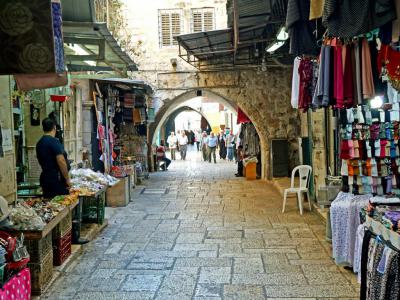
Sliding downhill from the Jaffa Gate, you'll find yourself on David Street, a narrow pedestrian artery marking the line between the Christian Quarter on one side and the Armenian Quarter on the other. Thanks to its location-and its undeniable charm-it pulls in just about everyone at once: Jewish worshipers heading toward the Western Wall, Christian pilgrims bound for the Church of the Holy Sepulchre, Muslims moving uphill toward the Temple Mount, and plenty of visitors simply trying to take it all in without losing their footing.
Cars don’t stand a chance here. The street is barely wide enough for foot traffic, with just enough room for the occasional three-wheeled cart to squeeze past. This stretch forms the backbone of Jerusalem’s most famous market area, the Arab Market, or Arab Shuk, which branches into several distinct sections.
In the Christian Quarter, the focus leans heavily toward visitors, with stalls filled with Christian-themed souvenirs, icons, and keepsakes. Mixed in are a few solid bakeries and modest supermarkets that still serve the residents who live above and behind the shopfronts.
One quick market survival tip before you dive in. Bargaining is expected-and often enjoyed-when it comes to souvenirs and household items. Fresh produce, however, plays by different rules. Fruit and vegetable stalls usually work with fixed prices, sometimes written in Arabic, sometimes simply understood. Trying to negotiate over tomatoes may earn you a smile, but it can just as easily cross into an awkward territory.
Just browse, buy, and move along-and let the rhythm of the street do the rest of the talking.
Cars don’t stand a chance here. The street is barely wide enough for foot traffic, with just enough room for the occasional three-wheeled cart to squeeze past. This stretch forms the backbone of Jerusalem’s most famous market area, the Arab Market, or Arab Shuk, which branches into several distinct sections.
In the Christian Quarter, the focus leans heavily toward visitors, with stalls filled with Christian-themed souvenirs, icons, and keepsakes. Mixed in are a few solid bakeries and modest supermarkets that still serve the residents who live above and behind the shopfronts.
One quick market survival tip before you dive in. Bargaining is expected-and often enjoyed-when it comes to souvenirs and household items. Fresh produce, however, plays by different rules. Fruit and vegetable stalls usually work with fixed prices, sometimes written in Arabic, sometimes simply understood. Trying to negotiate over tomatoes may earn you a smile, but it can just as easily cross into an awkward territory.
Just browse, buy, and move along-and let the rhythm of the street do the rest of the talking.
5) Church of the Holy Sepulchre / Christ's Tomb (must see)
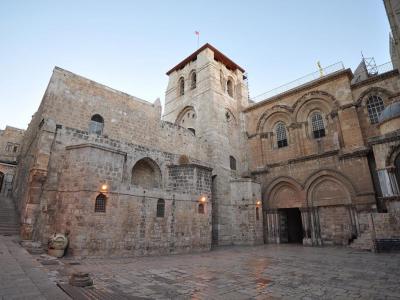
Known to many as the Church of the Resurrection, the Church of the Holy Sepulchre is where Christianity compresses its most intense chapters into one dimly lit, yet often crowded, site. This is the traditional endpoint of the Via Dolorosa-though technically, the final steps spill out into the broad courtyard just outside. Inside, four stations of the Way of the Cross are packed under one roof, which explains the steady flow of pilgrims here, moving with purpose, patience, and very little personal space...
Pass through the entrance, and things get serious pretty fast. The Chapel of the Franks greets you first, a brief threshold before the space opens upward toward the crucifixion altar. The Greek Orthodox altar rises above what is believed to be the very spot of the Crucifixion itself.
Just nearby lies the Stone of Unction, smooth and worn, marking where Jesus’s body was prepared for burial-still touched, kissed, and quietly circled by pilgrims every day. Move deeper inside, past the Chapel of the Angel, and you reach the marble-clad tomb traditionally identified as Jesus’s burial place. Above it all, a great dome pulls daylight down into the gloom, as if reminding everyone where this story is headed.
The building itself has lived several lives. Commissioned in the 4th century by Emperor Constantine after his conversion to Christianity, the church has endured fires, invasions, neglect, and repeated rebuilding as Jerusalem changed hands. What stands today is the result of survival rather than design-a layered mix of Byzantine foundations, Crusader additions, medieval repairs, and modern reinforcements. A major restoration in 1959, carried out jointly by Latin, Greek, and Armenian Christian communities, stabilized what could still be saved.
Sharing the space, however, has never been simple. Control of the church is divided with almost ceremonial precision among several Christian denominations. Even tasks as basic as cleaning steps or moving furniture are governed by centuries-old agreements-proof that, here, theology and logistics are equally sacred.
A word of advice: arrive early, dress respectfully, and don’t expect much guidance. This church explains itself slowly, through stone, shadow, and the steady movement of those who came here long before you.
Pass through the entrance, and things get serious pretty fast. The Chapel of the Franks greets you first, a brief threshold before the space opens upward toward the crucifixion altar. The Greek Orthodox altar rises above what is believed to be the very spot of the Crucifixion itself.
Just nearby lies the Stone of Unction, smooth and worn, marking where Jesus’s body was prepared for burial-still touched, kissed, and quietly circled by pilgrims every day. Move deeper inside, past the Chapel of the Angel, and you reach the marble-clad tomb traditionally identified as Jesus’s burial place. Above it all, a great dome pulls daylight down into the gloom, as if reminding everyone where this story is headed.
The building itself has lived several lives. Commissioned in the 4th century by Emperor Constantine after his conversion to Christianity, the church has endured fires, invasions, neglect, and repeated rebuilding as Jerusalem changed hands. What stands today is the result of survival rather than design-a layered mix of Byzantine foundations, Crusader additions, medieval repairs, and modern reinforcements. A major restoration in 1959, carried out jointly by Latin, Greek, and Armenian Christian communities, stabilized what could still be saved.
Sharing the space, however, has never been simple. Control of the church is divided with almost ceremonial precision among several Christian denominations. Even tasks as basic as cleaning steps or moving furniture are governed by centuries-old agreements-proof that, here, theology and logistics are equally sacred.
A word of advice: arrive early, dress respectfully, and don’t expect much guidance. This church explains itself slowly, through stone, shadow, and the steady movement of those who came here long before you.
6) Via Dolorosa (Way of Sorrow) (must see)
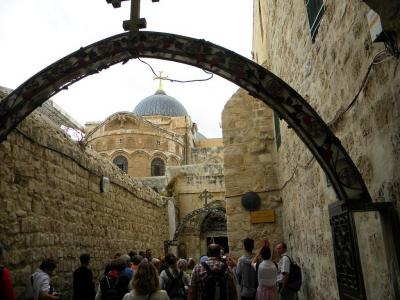
Via Dolorosa-literally the “Way of Sorrow”-is the route traditionally associated with the final walk of Jesus Christ, from the judgment of Pontius Pilate to Golgotha. Today, this short but intense stretch of street threads its way through the Muslim Quarter of Jerusalem’s Old City, beginning near the Madrasa al-Omariya, not far from the Lions' Gate, and ending inside the Church of the Holy Sepulchre. In total, the route runs for roughly half a kilometer-compact in distance, immense in meaning...
Along the way are the 14 Stations of the Cross, each marking a moment from the Gospel narrative. While the tradition they represent is ancient, many of the stations themselves were formalized only in the 18th and 19th centuries. Look for the understated black iron plaques with Roman numerals: they are easy to miss amid shopfronts, doorways, and everyday street life. That contrast is part of the experience-sacred memory unfolding in the middle of a living city.
On Fridays, the route takes on a more solemn rhythm when Franciscan friars retrace the path in procession, continuing a tradition they have maintained as custodians of key Christian holy sites since the 14th century. The timing is deliberate, echoing the hour associated with the Crucifixion, and the atmosphere shifts noticeably, as prayers replace street noise, even if only briefly.
A practical note for your feet and focus: the stone paving can be slick, especially after rain, and the route includes steps and uneven slopes. Crowds ebb and flow without warning. So, keep your balance, keep your awareness, and keep your eyes up.
Beyond its religious importance, the Via Dolorosa offers fragments of architecture, artwork, and street life that reward close attention. This is not a corridor sealed in time-it’s a passage where devotion, history, and daily routine overlap, step by step.
Along the way are the 14 Stations of the Cross, each marking a moment from the Gospel narrative. While the tradition they represent is ancient, many of the stations themselves were formalized only in the 18th and 19th centuries. Look for the understated black iron plaques with Roman numerals: they are easy to miss amid shopfronts, doorways, and everyday street life. That contrast is part of the experience-sacred memory unfolding in the middle of a living city.
On Fridays, the route takes on a more solemn rhythm when Franciscan friars retrace the path in procession, continuing a tradition they have maintained as custodians of key Christian holy sites since the 14th century. The timing is deliberate, echoing the hour associated with the Crucifixion, and the atmosphere shifts noticeably, as prayers replace street noise, even if only briefly.
A practical note for your feet and focus: the stone paving can be slick, especially after rain, and the route includes steps and uneven slopes. Crowds ebb and flow without warning. So, keep your balance, keep your awareness, and keep your eyes up.
Beyond its religious importance, the Via Dolorosa offers fragments of architecture, artwork, and street life that reward close attention. This is not a corridor sealed in time-it’s a passage where devotion, history, and daily routine overlap, step by step.
7) Western (Wailing) Wall (must see)
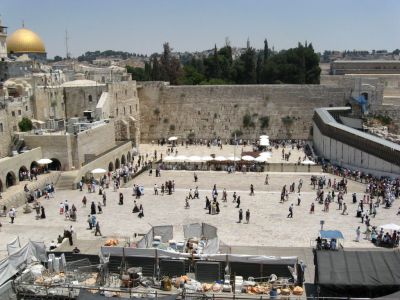
The Western Wall-also known as the Wailing Wall, the Place of Weeping, or the Buraq Wall-is not a standalone monument but a surviving fragment of the massive retaining wall that once supported the Temple Mount. It dates back to 19 BC, when Herod the Great decided that the sacred platform needed more space and a lot more engineering. The solution was to expand the mount artificially and build enormous stone walls to hold everything in place. What you’re looking at is structural support that quietly became one of the most charged religious sites on earth.
From its foundation, the wall rises about 100 feet, though only around 60 feet are visible today. Of the 45 stone layers stacked here, just 28 are exposed. The lowest seven courses come straight from Herod’s time. Four more were added under the Umayyad Caliphate around the 7th century, another 14 during Ottoman rule in the 1860s, and the final three layers were completed in the 1920s under the Mufti of Jerusalem.
Since the Six-Day War in 1967, nothing has been added. The wall, for once in Jerusalem’s history, has been left exactly as it is.
Then there’s the scale. Some of these limestone blocks weigh between two and eight tons, and one stone near Wilson’s Arch tips the scales at an almost unbelievable 570 tons. Even by ancient standards, this was an extraordinary feat of planning, labor, and sheer stubborn ambition.
The wall has been a place of Jewish prayer since at least the 4th century AD and is considered sacred because of its proximity to the Temple Mount. The term “wailing” comes from the tradition of mourning the destruction of the Temple.
Today, men and women pray in separate sections, especially during the Sabbath, from Friday evening to Saturday evening. You’ll also notice folded notes tucked into the stones-written prayers left by visitors. They’re collected regularly and buried respectfully on the Mount of Olives.
A practical note before you approach: bring valid ID, expect security checks, dress modestly, and remember that photography is not permitted during the Sabbath. Entry, however, is free-no ticket required to stand before two thousand years of layered history...
From its foundation, the wall rises about 100 feet, though only around 60 feet are visible today. Of the 45 stone layers stacked here, just 28 are exposed. The lowest seven courses come straight from Herod’s time. Four more were added under the Umayyad Caliphate around the 7th century, another 14 during Ottoman rule in the 1860s, and the final three layers were completed in the 1920s under the Mufti of Jerusalem.
Since the Six-Day War in 1967, nothing has been added. The wall, for once in Jerusalem’s history, has been left exactly as it is.
Then there’s the scale. Some of these limestone blocks weigh between two and eight tons, and one stone near Wilson’s Arch tips the scales at an almost unbelievable 570 tons. Even by ancient standards, this was an extraordinary feat of planning, labor, and sheer stubborn ambition.
The wall has been a place of Jewish prayer since at least the 4th century AD and is considered sacred because of its proximity to the Temple Mount. The term “wailing” comes from the tradition of mourning the destruction of the Temple.
Today, men and women pray in separate sections, especially during the Sabbath, from Friday evening to Saturday evening. You’ll also notice folded notes tucked into the stones-written prayers left by visitors. They’re collected regularly and buried respectfully on the Mount of Olives.
A practical note before you approach: bring valid ID, expect security checks, dress modestly, and remember that photography is not permitted during the Sabbath. Entry, however, is free-no ticket required to stand before two thousand years of layered history...
8) Dung Gate
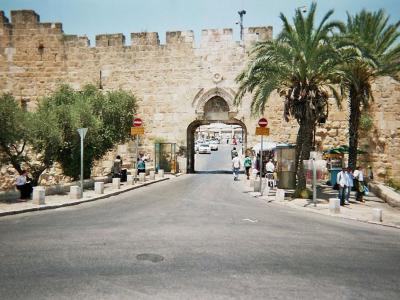
The Dung Gate, one of the gates in the walls of the Old City of Jerusalem dating back to the 16th century, is located near the southeast corner of the Old City, southwest of the Temple Mount. The less-than-flattering "dung", derived from the original Hebrew name Sha'ar Ha'ashpot, meaning "Gate of Garbage" or "Ash Pot Gate", reflects its historical role. During the time of the First Jewish Temple, waste and ashes from sacrifices were discarded through this gate into the Valley of Hinnom to be burned.
The original Dung Gate from antiquity may differ from the one built in the 16th century, which was initially quite small, resembling a doorway in a typical domestic house, and was only enlarged in 1952 under Jordanian rule to accommodate vehicular traffic. Despite expansion, it remains the smallest of all the Old City gates and retains its original Ottoman carved arch with a stone flower above.
Today, the gate serves as the main entrance and exit for the Jewish Quarter, providing convenient access to the Western Wall compound directly behind it. Additionally, it offers easy access to the City of David and Hezekiah's Tunnel, making it a crucial entry point for visitors to these significant historical sites.
The original Dung Gate from antiquity may differ from the one built in the 16th century, which was initially quite small, resembling a doorway in a typical domestic house, and was only enlarged in 1952 under Jordanian rule to accommodate vehicular traffic. Despite expansion, it remains the smallest of all the Old City gates and retains its original Ottoman carved arch with a stone flower above.
Today, the gate serves as the main entrance and exit for the Jewish Quarter, providing convenient access to the Western Wall compound directly behind it. Additionally, it offers easy access to the City of David and Hezekiah's Tunnel, making it a crucial entry point for visitors to these significant historical sites.
9) The Cenacle – Room of the Last Supper
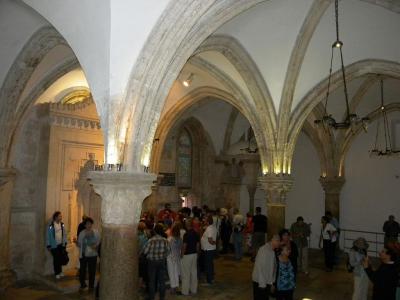
Part of the complex that also hosts the Tomb of David on Mount Zion, the ancient Room of the Last Supper resides on the upper floor of a Gothic structure beneath the Dormition Abbey's shadow. Christian tradition maintains that this space, known as the Cenacle (from the Latin "cenaca", meaning "supper room"), has also witnessed the descent of the Holy Spirit upon the eleven apostles after Easter.
Accessible through a doorway with an Ottoman inscription above it, visitors ascend the stairs to the left upon entry. Though slightly smaller than its depiction in da Vinci's renowned painting, the room's layout, with pillars in the middle, might have posed challenges for Jesus and his disciples to gather around a table. Despite debates over authenticity, the room's beauty and tranquility endure.
Constructed long after Jesus's era, during the Crusader period, its architecture is characterized by distinctive pointed arches. Ironically, however, the most exquisite architectural features bear Islamic influences, reflecting the room's history as a mosque for around 400 years until the establishment of the State of Israel following the 1948 war. Standouts include the small but very ornate mihrab and the impressive stained glass windows with vibrant geometric motifs and delicate Quranic inscriptions.
Tip:
Consider accessing the building's rooftop for beautiful views of the Mount of Olives and the neighboring Dormition Abbey.
Accessible through a doorway with an Ottoman inscription above it, visitors ascend the stairs to the left upon entry. Though slightly smaller than its depiction in da Vinci's renowned painting, the room's layout, with pillars in the middle, might have posed challenges for Jesus and his disciples to gather around a table. Despite debates over authenticity, the room's beauty and tranquility endure.
Constructed long after Jesus's era, during the Crusader period, its architecture is characterized by distinctive pointed arches. Ironically, however, the most exquisite architectural features bear Islamic influences, reflecting the room's history as a mosque for around 400 years until the establishment of the State of Israel following the 1948 war. Standouts include the small but very ornate mihrab and the impressive stained glass windows with vibrant geometric motifs and delicate Quranic inscriptions.
Tip:
Consider accessing the building's rooftop for beautiful views of the Mount of Olives and the neighboring Dormition Abbey.
10) King David's Tomb
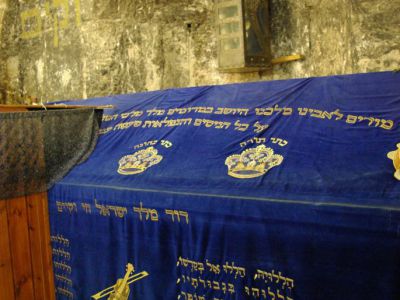
King David's Tomb holds significant cultural and religious importance for the Jewish community. Particularly during the period between 1948 and 1967 when access to the Old City and the Western Wall was restricted due to Jordanian control, it became an alternative site for Jewish pilgrimage. While some believe it to be the actual burial place of King David, this tradition only dates back to the 10th century AD, shortly after the Crusades. The building itself dates from the Crusader era and is partially open to the public for visitation.
Upon entering, take note of the exquisite tile work in the first antechamber, which was patched to match repairs made to the Dome of the Rock during the 1500s. The second antechamber houses a mihrab with equally impressive tile work dating from the 1400s when the area was under Muslim control. Today, the building serves as a synagogue, with separate entrances for men and women.
Next to the velvet-draped cenotaph and directly beneath the Cenacle is the empty room where Jesus supposedly washed his disciples’ feet after the last supper. Additionally, the building's rooftop features an observation point offering excellent views and a minaret, added by the Turks during the 16th century after the expulsion of Christians from Mount Zion.
Tips:
Modest attire is recommended regardless of gender (kippahs are provided for men).
Though pictures are often allowed, it's important to be respectful of those involved in prayer.
Upon entering, take note of the exquisite tile work in the first antechamber, which was patched to match repairs made to the Dome of the Rock during the 1500s. The second antechamber houses a mihrab with equally impressive tile work dating from the 1400s when the area was under Muslim control. Today, the building serves as a synagogue, with separate entrances for men and women.
Next to the velvet-draped cenotaph and directly beneath the Cenacle is the empty room where Jesus supposedly washed his disciples’ feet after the last supper. Additionally, the building's rooftop features an observation point offering excellent views and a minaret, added by the Turks during the 16th century after the expulsion of Christians from Mount Zion.
Tips:
Modest attire is recommended regardless of gender (kippahs are provided for men).
Though pictures are often allowed, it's important to be respectful of those involved in prayer.
11) Dormition Abbey
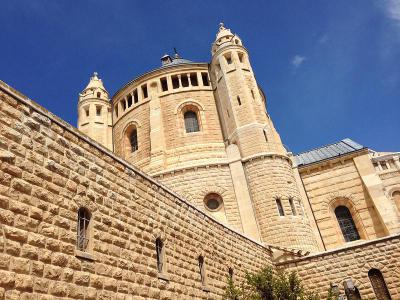
This beautiful, ancient monastery on top of Mount Zion – said to be the place where the Virgin Mary was taken, body and soul, to heaven by angels – is attractive for its distinctive conical roof and rich interior decorations, in addition to its religious significance. After Christ's death, according to Christian tradition, his mother lived on Mount Zion until her eternal sleep; the name "dormition" meaning "falling asleep" or death and the resurrection to heaven.
The church has two levels – the main church and the crypt, both equally impressive, with fine mosaics and Byzantine-style artwork which cover almost every surface, including the floor. Chapels and alters have been donated from around the world and make the tour of the church simply breathtaking, culminating with the ivory sculpture of the resting Mary in the crypt below.
The little shop and quiet cafe are the frostings on the cake; a real haven in the maze complex of the Old City. The cade has comfortable chairs and tables and delicious coffee/cakes, while the shop sells high-quality souvenirs at very reasonable prices, including small hand-painted Russian icons and handcrafted crosses.
Tip:
Make sure to use their 3-shekel bathroom to see the ruins they have there with an explanation!
The church has two levels – the main church and the crypt, both equally impressive, with fine mosaics and Byzantine-style artwork which cover almost every surface, including the floor. Chapels and alters have been donated from around the world and make the tour of the church simply breathtaking, culminating with the ivory sculpture of the resting Mary in the crypt below.
The little shop and quiet cafe are the frostings on the cake; a real haven in the maze complex of the Old City. The cade has comfortable chairs and tables and delicious coffee/cakes, while the shop sells high-quality souvenirs at very reasonable prices, including small hand-painted Russian icons and handcrafted crosses.
Tip:
Make sure to use their 3-shekel bathroom to see the ruins they have there with an explanation!
12) Zion Gate
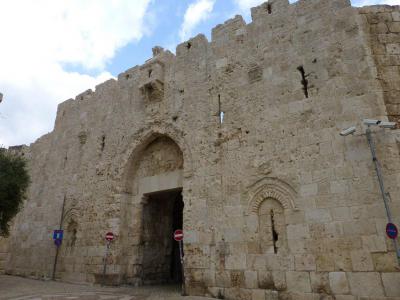
Lying among the eight gates embedded within the Old City's fortifications, the Zion Gate, also known as David's Gate, serves as a direct passage into the Armenian and Jewish Quarters. If the tales of the famous Jewish king's burial here hold true, the name couldn't be more fitting. With its angular features crafted to thwart invaders, one can now traverse it in the opposite direction and 'invade' the Old City at any hour of the day. Besides, the walls along here are especially nice, offering splendid photo opportunities under the afternoon sun.
Constructed by engineers of Suleiman the Magnificent around 1540, this gate facilitated direct access from the city to the sacred sites atop Mount Zion. In the 19th century, the nearby vicinity gained notoriety as a gathering point for lepers. The battleground was particularly intense here in 1948, as Israeli soldiers struggled to breach the walls to relieve the besieged Jewish Quarter held by the Jordanians. Today, the gate's exterior bears witness to the ferocious combat, marred by numerous bullet holes. A short distance to the west, conspicuous damage to the base of the wall remains from the soldiers' attempts to blast their way through with explosives.
Constructed by engineers of Suleiman the Magnificent around 1540, this gate facilitated direct access from the city to the sacred sites atop Mount Zion. In the 19th century, the nearby vicinity gained notoriety as a gathering point for lepers. The battleground was particularly intense here in 1948, as Israeli soldiers struggled to breach the walls to relieve the besieged Jewish Quarter held by the Jordanians. Today, the gate's exterior bears witness to the ferocious combat, marred by numerous bullet holes. A short distance to the west, conspicuous damage to the base of the wall remains from the soldiers' attempts to blast their way through with explosives.
13) Cathedral of St. James
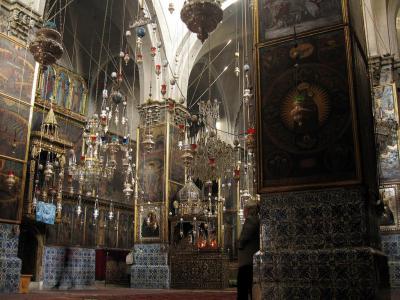
Nestled within a walled compound in the ancient Armenian Quarter of Jerusalem's Old City, the Church of Saint James – dedicated to two martyred saints of that name – is one of the most artfully decorated worship places in the Holy Land. According to Armenian tradition, within the church are buried the head of Saint James the Great – one of the first apostles to follow Jesus, and the body of Saint James the Less, believed to be a close relative of Jesus, who later became the first Bishop of Jerusalem.
Here you will see a church decorated in Byzantine and early Christian style and witness a centuries-old ritualistic service, with lovely hymns and chants that are unique to the Armenian liturgy. It's an educational and enlightening way to spend 30 minutes of your time if you are visiting the Armenian Quarter during the afternoon. At other times, you can enter the peaceful courtyard to see the exterior, which is decorated with khachkars (stone crosses surrounded by intricate tracery) and tiled murals depicting the Last Judgement and the Apostles.
Dimly lit by a forest of golden oil-lamps hung from the ceiling, the church interior is quite ornate with frescoes, engravings, tiling, metalworks, hanging incense burners, chandeliers, decorative altar, and even a second-floor globe. There is much to keep the eyes busy while you listen to and witness the service. At the end, you can take pictures for around 10 minutes before church staff kindly usher guests out of the building.
Tip:
Only open during daily services, so plan your visit to coincide.
Here you will see a church decorated in Byzantine and early Christian style and witness a centuries-old ritualistic service, with lovely hymns and chants that are unique to the Armenian liturgy. It's an educational and enlightening way to spend 30 minutes of your time if you are visiting the Armenian Quarter during the afternoon. At other times, you can enter the peaceful courtyard to see the exterior, which is decorated with khachkars (stone crosses surrounded by intricate tracery) and tiled murals depicting the Last Judgement and the Apostles.
Dimly lit by a forest of golden oil-lamps hung from the ceiling, the church interior is quite ornate with frescoes, engravings, tiling, metalworks, hanging incense burners, chandeliers, decorative altar, and even a second-floor globe. There is much to keep the eyes busy while you listen to and witness the service. At the end, you can take pictures for around 10 minutes before church staff kindly usher guests out of the building.
Tip:
Only open during daily services, so plan your visit to coincide.
