Custom Walk in Toronto, Canada by milliefitzburger_d38fa created on 2025-12-08
Guide Location: Canada » Toronto
Guide Type: Custom Walk
# of Sights: 10
Tour Duration: 2 Hour(s)
Travel Distance: 3.6 Km or 2.2 Miles
Share Key: MG2MR
Guide Type: Custom Walk
# of Sights: 10
Tour Duration: 2 Hour(s)
Travel Distance: 3.6 Km or 2.2 Miles
Share Key: MG2MR
How It Works
Please retrieve this walk in the GPSmyCity app. Once done, the app will guide you from one tour stop to the next as if you had a personal tour guide. If you created the walk on this website or come to the page via a link, please follow the instructions below to retrieve the walk in the app.
Retrieve This Walk in App
Step 1. Download the app "GPSmyCity: Walks in 1K+ Cities" on Apple App Store or Google Play Store.



Step 2. In the GPSmyCity app, download(or launch) the guide "Toronto Map and Walking Tours".
Step 3. Tap the menu button located at upper right corner of the "Walks" screen and select "Retrieve custom walk". Enter the share key: MG2MR
1) Fairmont Royal York Hotel
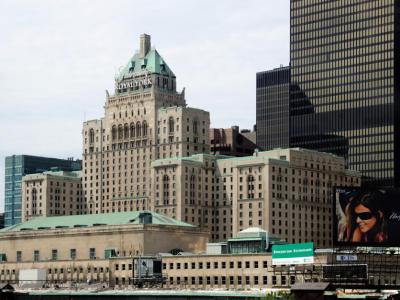
The Fairmont Royal York, also known as the Royal York, is a prestigious historic hotel located in Toronto. Situated in Downtown Toronto's Financial District, it stands proudly at the southern end. Ross and Macdonald, in collaboration with Sproatt and Rolph, designed the Royal York, which was constructed by the Canadian Pacific Railway company.
This magnificent building, completed on June 11, 1929, reaches a height of 124 meters (407 feet) and boasts 28 floors. It holds a distinguished status as one of Canada's magnificent railway hotels. Upon its completion, the Royal York briefly held the title of Toronto's tallest building, as well as the tallest in the entire country and the British Empire.
However, the nearby Canadian Bank of Commerce Tower surpassed its height the following year. Over the years, the building has undergone several extensive renovations, with the first significant refurbishment occurring in 1972. An underground walkway connecting the hotel with the Royal Bank Plaza and Union Station is a part of Toronto's PATH underground city system.
The Châteauesque-style hotel showcases a row of pointed arches on the third floor, along with a small peaked roof featuring charming dormers at its summit. Additionally, the hotel features griffin-shaped grotesques at various corners. The exterior of the building is crafted from Indiana Limestone, enveloping the hotel's 28-story steel frame. Alongside the traditional elements commonly found in Châteauesque-style hotels, this building incorporates Art Deco setbacks and Romanesque-inspired decorations.
This magnificent building, completed on June 11, 1929, reaches a height of 124 meters (407 feet) and boasts 28 floors. It holds a distinguished status as one of Canada's magnificent railway hotels. Upon its completion, the Royal York briefly held the title of Toronto's tallest building, as well as the tallest in the entire country and the British Empire.
However, the nearby Canadian Bank of Commerce Tower surpassed its height the following year. Over the years, the building has undergone several extensive renovations, with the first significant refurbishment occurring in 1972. An underground walkway connecting the hotel with the Royal Bank Plaza and Union Station is a part of Toronto's PATH underground city system.
The Châteauesque-style hotel showcases a row of pointed arches on the third floor, along with a small peaked roof featuring charming dormers at its summit. Additionally, the hotel features griffin-shaped grotesques at various corners. The exterior of the building is crafted from Indiana Limestone, enveloping the hotel's 28-story steel frame. Alongside the traditional elements commonly found in Châteauesque-style hotels, this building incorporates Art Deco setbacks and Romanesque-inspired decorations.
2) Osgoode Hall
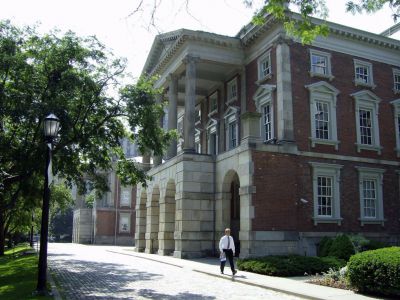
Toronto's Osgoode Hall is a remarkable heritage building sprawling across six acres. It has captivated attention for 170 years as a hub of legal activity and was aptly named after William Osgoode, the first Chief Justice of the province. Construction on this historic structure commenced in 1829, but it took a span of 20 years and the expertise of multiple architects, including John Ewart and W.W. Baldwin, to complete.
The exterior facade proudly showcases the exquisite Italian Renaissance style, while the interior boasts an array of stunning features, such as stained glass heraldic windows, intricate ceilings, and graceful arched pillars. Elements of the Palladian architectural style can also be admired within the Hall.
Following a period of use as troop barracks from 1838 to 1843, Osgoode Hall underwent a series of restoration projects between 1844 and 1891. Until the relocation of York University's faculty in 1969, the Hall served as the prestigious home of the Osgoode Hall Law School, a renowned institution for legal education.
In 1928, to honor Ontario lawyers and law students who had lost their lives during the First World War, a memorial sculpted by Frances Norma Loring was added to the Hall's Library. In recognition of its historical significance, Osgoode Hall was officially designated a National Historic Site of Canada in 1979.
Presently, Osgoode Hall accommodates the Law Society of Upper Canada, the Superior Court of Justice, and the Ontario Court of Appeal, solidifying its enduring role as a vital center for the legal community.
The exterior facade proudly showcases the exquisite Italian Renaissance style, while the interior boasts an array of stunning features, such as stained glass heraldic windows, intricate ceilings, and graceful arched pillars. Elements of the Palladian architectural style can also be admired within the Hall.
Following a period of use as troop barracks from 1838 to 1843, Osgoode Hall underwent a series of restoration projects between 1844 and 1891. Until the relocation of York University's faculty in 1969, the Hall served as the prestigious home of the Osgoode Hall Law School, a renowned institution for legal education.
In 1928, to honor Ontario lawyers and law students who had lost their lives during the First World War, a memorial sculpted by Frances Norma Loring was added to the Hall's Library. In recognition of its historical significance, Osgoode Hall was officially designated a National Historic Site of Canada in 1979.
Presently, Osgoode Hall accommodates the Law Society of Upper Canada, the Superior Court of Justice, and the Ontario Court of Appeal, solidifying its enduring role as a vital center for the legal community.
3) Four Seasons Center for the Performing Arts
The Four Seasons Centre for the Performing Arts in Toronto is an impressive theater at University Avenue and Queen Street West. It seats 2,071 and is home to the Canadian Opera Company and the National Ballet of Canada. Designed by Diamond and Schmitt Architects, led by Jack Diamond, it features a unique glass staircase. Completed in 2006.
Back in the 1980s, the Canadian Opera Company, along with Hal Jackman, a financier, and president of the Ballet Opera House Corporation, initiated efforts to advocate for a new structure to replace the aging O'Keefe Centre, which had been the opera company's residence for nearly four decades.
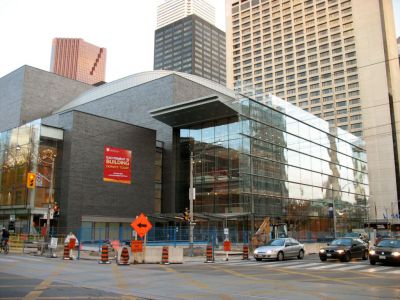
Despite budget constraints, the venue features contrasting materials. The City Room has glass and steel fixtures, offering views of University Avenue and Queen Street. The other sides have dark brick, with north-facing windows revealing Osgoode Hall. The exterior is left unadorned.
The City Room extends westward, adding transparency to the sidewalk. The eastern facade seamlessly integrates with the office building and brick surroundings toward York Street, with only horizontal windows. The southern facade, facing Richmond Street, is made of plain brick with dressing room windows, opposite the Hilton Hotel.
The Four Seasons Centre opened on June 14, 2006, and featured Richard Wagner's "Der Ring des Nibelungen" as its inaugural production. Governor General Michaëlle Jean and esteemed Canadians attended the event. Three complete Ring Cycles were performed in September 2006, a significant moment for Canadian arts.
Back in the 1980s, the Canadian Opera Company, along with Hal Jackman, a financier, and president of the Ballet Opera House Corporation, initiated efforts to advocate for a new structure to replace the aging O'Keefe Centre, which had been the opera company's residence for nearly four decades.
Despite budget constraints, the venue features contrasting materials. The City Room has glass and steel fixtures, offering views of University Avenue and Queen Street. The other sides have dark brick, with north-facing windows revealing Osgoode Hall. The exterior is left unadorned.
The City Room extends westward, adding transparency to the sidewalk. The eastern facade seamlessly integrates with the office building and brick surroundings toward York Street, with only horizontal windows. The southern facade, facing Richmond Street, is made of plain brick with dressing room windows, opposite the Hilton Hotel.
The Four Seasons Centre opened on June 14, 2006, and featured Richard Wagner's "Der Ring des Nibelungen" as its inaugural production. Governor General Michaëlle Jean and esteemed Canadians attended the event. Three complete Ring Cycles were performed in September 2006, a significant moment for Canadian arts.
4) Old City Hall
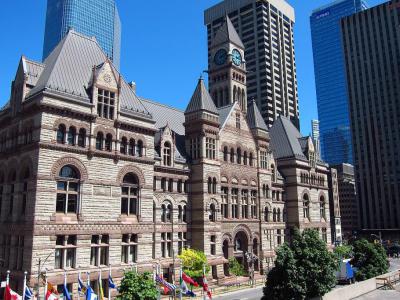
Located at the intersection of Queen and Bay Streets in Downtown Toronto stands an impressive building with Romanesque-style architecture. This remarkable structure, known today as the Old City Hall, served as the Toronto City Council's home from 1899 to 1966, becoming the third city hall constructed for the flourishing city. Upon its completion, it ranked among the largest buildings in Toronto and stood as the largest civic edifice in North America.
Renowned architect Edward James Lennox led the creation of this masterpiece. Over a decade of construction, the majestic City Hall emerged as an iconic landmark. Its remarkable clock tower, standing at 103.6 meters (340 feet), became the city's crown jewel. The clock mechanism was crafted in Croydon, England. Inside the clock room, three bells were placed: two smaller ones that chimed every quarter hour, and a bourdon bell weighing 5,443 kilograms, which tolled every hour.
Matching the splendid exterior, the interior of the building exuded charm, adorned with intricate details. Noteworthy features include a grand staircase adorned with stained glass windows depicting Canadian history, various murals, statues, and other decorative elements.
Despite its grandeur, the Old City Hall proved inadequate for Toronto's expanding municipal government within a few decades of its construction. In the 1960s, plans were made to demolish the building and make way for a retail complex known as the Eaton Centre. However, thanks to public outcry, the Old City Hall was saved and repurposed as a courthouse. In 1984, it received the prestigious designation as a National Historic Site, preserving its historical significance for future generations.
Tip:
Make sure to visit the small "lake" close by, as many of the pictures from Toronto you might know are taken from this place while facing the "TORONTO" sign.
Renowned architect Edward James Lennox led the creation of this masterpiece. Over a decade of construction, the majestic City Hall emerged as an iconic landmark. Its remarkable clock tower, standing at 103.6 meters (340 feet), became the city's crown jewel. The clock mechanism was crafted in Croydon, England. Inside the clock room, three bells were placed: two smaller ones that chimed every quarter hour, and a bourdon bell weighing 5,443 kilograms, which tolled every hour.
Matching the splendid exterior, the interior of the building exuded charm, adorned with intricate details. Noteworthy features include a grand staircase adorned with stained glass windows depicting Canadian history, various murals, statues, and other decorative elements.
Despite its grandeur, the Old City Hall proved inadequate for Toronto's expanding municipal government within a few decades of its construction. In the 1960s, plans were made to demolish the building and make way for a retail complex known as the Eaton Centre. However, thanks to public outcry, the Old City Hall was saved and repurposed as a courthouse. In 1984, it received the prestigious designation as a National Historic Site, preserving its historical significance for future generations.
Tip:
Make sure to visit the small "lake" close by, as many of the pictures from Toronto you might know are taken from this place while facing the "TORONTO" sign.
5) Nathan Phillips Square
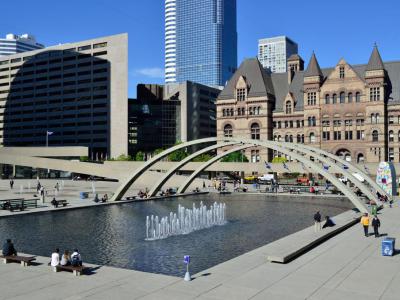
Nathan Phillips Square stands as a bustling urban plaza, positioned as the welcoming space before Toronto City Hall, also known as New City Hall. Situated at the intersection of Queen Street West and Bay Street, this vibrant square derives its name from Nathan Phillips, who served as the mayor of Toronto between 1955 and 1962. The visionary architect Viljo Revell, in collaboration with landscape architect Richard Strong, crafted the design of this square, which was officially inaugurated in 1965.
In present times, Nathan Phillips Square remains a vibrant hub, hosting a diverse range of public events. It serves as a venue for captivating art exhibitions, thrilling concerts, inspiring rallies, and a bustling weekly farmers' market, among other ceremonies. Notable annual occasions include the lively New Year's Eve Party and the enchanting Cavalcade of Lights Festival, where the official Christmas tree is splendidly illuminated.
The square also welcomes the renowned Nuit Blanche art festival, which transforms the square into an artistic haven, extending its displays into the underground parking garage. Furthermore, during the winter months, the reflective pool undergoes a marvelous metamorphosis, transforming into an inviting ice rink for ice-skating enthusiasts.
Year after year, Nathan Phillips Square magnetizes an estimated 1.5 million visitors, allured by its charm and grandeur. Covering an expansive area of 4.85 hectares (12.0 acres), this city square proudly claims the title of Canada's largest, offering an expansive and captivating experience to all who venture within its borders.
In present times, Nathan Phillips Square remains a vibrant hub, hosting a diverse range of public events. It serves as a venue for captivating art exhibitions, thrilling concerts, inspiring rallies, and a bustling weekly farmers' market, among other ceremonies. Notable annual occasions include the lively New Year's Eve Party and the enchanting Cavalcade of Lights Festival, where the official Christmas tree is splendidly illuminated.
The square also welcomes the renowned Nuit Blanche art festival, which transforms the square into an artistic haven, extending its displays into the underground parking garage. Furthermore, during the winter months, the reflective pool undergoes a marvelous metamorphosis, transforming into an inviting ice rink for ice-skating enthusiasts.
Year after year, Nathan Phillips Square magnetizes an estimated 1.5 million visitors, allured by its charm and grandeur. Covering an expansive area of 4.85 hectares (12.0 acres), this city square proudly claims the title of Canada's largest, offering an expansive and captivating experience to all who venture within its borders.
6) Toronto New City Hall
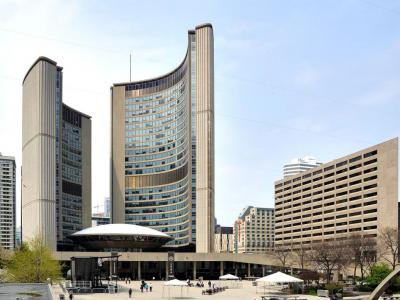
Ontario's capital boasts yet another architectural marvel known as the New City Hall, captivating the lenses of countless photographers. This iconic emblem of Toronto stands as a remarkable testament to the city's individuality and elegance.
The visionary behind the New City Hall was Finnish architect Viljo Revell, chosen for the task through an international competition that attracted an astounding 500 designs from 42 countries. Initially, the competition faced severe criticism and controversy, with some insisting that a Canadian should have been entrusted with the project. Nevertheless, the outcome bestowed upon Toronto one of its most splendid edifices, beloved by all and regarded as a symbol of the region.
The construction of the New City Hall commenced in 1961 and spanned four years. The building has a rectangular base with curved towers of different heights. The east tower is 27 stories (99.5 meters) tall, while the west tower is 20 stories (79.4 meters) tall. The towers cradle a saucer-like council chamber. Concrete covers the curved surfaces with a rib pattern for strength and to prevent fabric collapse due to exterior expansion or tearing caused by different air pressures. The north, west, and east sides have abstract and sculptural designs, while the south side facing the square has extensive glazing.
From the air, the building resembles an unblinking eye, earning it the nickname "The Eye of Government." Its futuristic design stirred controversy, but it was praised as an exceptional city hall by Arthur in his book, Toronto, No Mean City.
The visionary behind the New City Hall was Finnish architect Viljo Revell, chosen for the task through an international competition that attracted an astounding 500 designs from 42 countries. Initially, the competition faced severe criticism and controversy, with some insisting that a Canadian should have been entrusted with the project. Nevertheless, the outcome bestowed upon Toronto one of its most splendid edifices, beloved by all and regarded as a symbol of the region.
The construction of the New City Hall commenced in 1961 and spanned four years. The building has a rectangular base with curved towers of different heights. The east tower is 27 stories (99.5 meters) tall, while the west tower is 20 stories (79.4 meters) tall. The towers cradle a saucer-like council chamber. Concrete covers the curved surfaces with a rib pattern for strength and to prevent fabric collapse due to exterior expansion or tearing caused by different air pressures. The north, west, and east sides have abstract and sculptural designs, while the south side facing the square has extensive glazing.
From the air, the building resembles an unblinking eye, earning it the nickname "The Eye of Government." Its futuristic design stirred controversy, but it was praised as an exceptional city hall by Arthur in his book, Toronto, No Mean City.
7) PATH
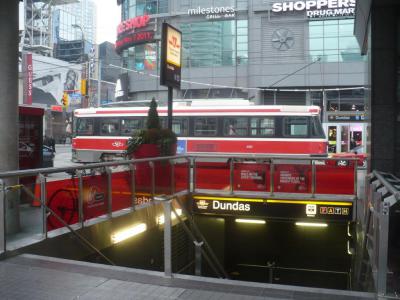
The office towers of Downtown Toronto are interconnected by a network known as PATH, which consists of underground pedestrian tunnels, elevated walkways, and at-grade walkways. This extensive system spans 30 kilometers (19 miles) and connects over 70 buildings, incorporating tunnels, walkways, and shopping areas. Recognized by Guinness World Records, PATH claims the title of the world's largest underground shopping complex, boasting a vast retail space of 371,600 square meters (4,000,000 square feet) with more than 1,200 retail fronts. Currently, the PATH system serves a daily user count of over 200,000 residents and workers, with 30,115 private dwellings conveniently located within walking distance.
The PATH system facilitates connectivity among more than 50 buildings and office towers. It encompasses 20 parking garages, five subway stations, two major department stores, two major shopping centers, six major hotels, and a railway terminal. Notably, the CN Tower, Ripley's Aquarium of Canada, and Rogers Centre are accessible through an enclosed elevated walkway called the SkyWalk; however, this walkway does not provide direct indoor connections to these attractions.
PATH plays a significant role in bolstering the economic vitality of Toronto's downtown core while also supplementing sidewalk capacity. It serves as a crucial pedestrian link to public transit, accommodating a daily influx of over 200,000 commuters, as well as numerous tourists and residents en route to sports and cultural events. The underground location of PATH offers pedestrians a refuge from the harsh winter weather, shielding them from the cold and snow, as well as providing respite from the summer heat and humidity.
The PATH system facilitates connectivity among more than 50 buildings and office towers. It encompasses 20 parking garages, five subway stations, two major department stores, two major shopping centers, six major hotels, and a railway terminal. Notably, the CN Tower, Ripley's Aquarium of Canada, and Rogers Centre are accessible through an enclosed elevated walkway called the SkyWalk; however, this walkway does not provide direct indoor connections to these attractions.
PATH plays a significant role in bolstering the economic vitality of Toronto's downtown core while also supplementing sidewalk capacity. It serves as a crucial pedestrian link to public transit, accommodating a daily influx of over 200,000 commuters, as well as numerous tourists and residents en route to sports and cultural events. The underground location of PATH offers pedestrians a refuge from the harsh winter weather, shielding them from the cold and snow, as well as providing respite from the summer heat and humidity.
8) Eaton Centre (must see)
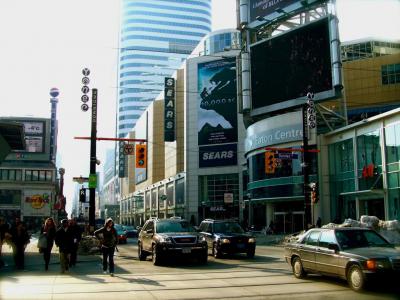
Toronto caters to any visitor's idea of the "best shopping day ever" as its shopping destinations are perfectly compatible with all budgets, however diverse. Still, no shopping experience in Toronto is complete without visiting the Eaton Centre.
Quite literally "shop-till-you-drop", this Downtown location – anchored between Queen, Dundas, and Yonge streets – is the largest shopping mall in Eastern Canada. The colossal – 160,000 square meters – shopping complex contains more than 230 retail outlets, restaurants, and services under one roof and has definitely something for everyone.
The place is named for Timothy Eaton, owner of a dry goods store on Yonge Street, who in the 19th century revolutionized retailing in Canada. By the 20th century, Eaton's chain of department stores was the largest in the country and owned most of the land in the neighbourhood.
In the mid-1960s, the chain announced plans to build a massive shopping mall that would occupy several city blocks. This implied the demolition of the Old City Hall and the Church of the Holy Trinity. Although the plans were eventually revised, to make way for the new complex, several streets ultimately disappeared from the city street grid.
The Eaton Centre's first phase opened in 1977, featuring ultra-modern, for that time, exterior design as a token of dominance and aspirations. Originally marketed as "Eaton Centre", the complex was renamed "Toronto Eaton Centre" in the early 1990s to disambiguate from other Eaton Centres spawned across Canada.
Today, apart from the high-end boutiques and exclusive stores, inside this premier shopping venue you will find popular universal brands and even bargain marts. With a massive visitor count of over one million a year, the Toronto Eaton Centre has become a regular entry on every tourist’s list.
Quite literally "shop-till-you-drop", this Downtown location – anchored between Queen, Dundas, and Yonge streets – is the largest shopping mall in Eastern Canada. The colossal – 160,000 square meters – shopping complex contains more than 230 retail outlets, restaurants, and services under one roof and has definitely something for everyone.
The place is named for Timothy Eaton, owner of a dry goods store on Yonge Street, who in the 19th century revolutionized retailing in Canada. By the 20th century, Eaton's chain of department stores was the largest in the country and owned most of the land in the neighbourhood.
In the mid-1960s, the chain announced plans to build a massive shopping mall that would occupy several city blocks. This implied the demolition of the Old City Hall and the Church of the Holy Trinity. Although the plans were eventually revised, to make way for the new complex, several streets ultimately disappeared from the city street grid.
The Eaton Centre's first phase opened in 1977, featuring ultra-modern, for that time, exterior design as a token of dominance and aspirations. Originally marketed as "Eaton Centre", the complex was renamed "Toronto Eaton Centre" in the early 1990s to disambiguate from other Eaton Centres spawned across Canada.
Today, apart from the high-end boutiques and exclusive stores, inside this premier shopping venue you will find popular universal brands and even bargain marts. With a massive visitor count of over one million a year, the Toronto Eaton Centre has become a regular entry on every tourist’s list.
9) Hudson's Bay Queen Street
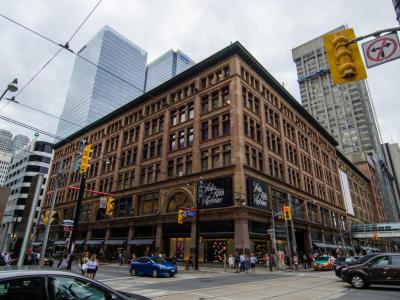
Hudson's Bay Queen Street is the flagship store of Hudson's Bay department stores. The 1896 sandstone building located on Queen Street slightly west of Yonge Street was built by Toronto firm of Burke and Horwood for Simpson's Department Store in the Romanesque Revival style with Chicago School influences.
The store outgrew the capacity of the structure by 1900, leading to the first of several expansions. Burke and Horwood returned with additions in 1907 and 1923. The largest expansion came in 1929 with Chapman and Oxley's nine-floor Art Deco addition (facing Bay and Richmond) capped by the Arcadian Court. When construction completed, the store occupied two full city blocks.
Hudson's Bay Queen Street focuses on high-end fashion apparel, accessories, and home goods. Among these are iconic Point Blankets, coats, bed sheets, bags, T-shirts, lotions, scents, candles, and many more. The store features about 93,000 square meters (1,000,000 sq ft) of shopping space.
The store outgrew the capacity of the structure by 1900, leading to the first of several expansions. Burke and Horwood returned with additions in 1907 and 1923. The largest expansion came in 1929 with Chapman and Oxley's nine-floor Art Deco addition (facing Bay and Richmond) capped by the Arcadian Court. When construction completed, the store occupied two full city blocks.
Hudson's Bay Queen Street focuses on high-end fashion apparel, accessories, and home goods. Among these are iconic Point Blankets, coats, bed sheets, bags, T-shirts, lotions, scents, candles, and many more. The store features about 93,000 square meters (1,000,000 sq ft) of shopping space.
10) Brookfield Place
Toronto’s architectural landscape is a perfect blend of the old and the new. Showcasing some stunning cutting-edge modern designs and monuments of the past, it is indeed a breathtaking sight to see both the extremes that make up the perfect skyline of the city. Brookfield Place is one such site. A visit to this place is a must if you do not want to miss out on any fascinating structure of Toronto.
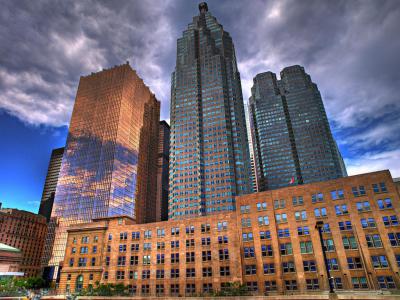
The Brookfield Place comprises two contemporary towers, the Bay Wellington Tower and the TD Canada Trust Tower, which took form in 1990 and 1991 respectively. The 49-storied Bay Wellington was designed by architects Bregman and Hamann, while the 53 stories of Canada Trust Tower were created by Skidmore, Owings & Merrill. However, the real treat is the Allen Lambert Galleria, a six-storied high pedestrian atrium designed by famous Santiago Calatrava.
Although the architectural element is what drives people towards this stunning building, visiting Brookfield Place has an added advantage – it has some of the best shopping stores in town. Ranging from high-end boutiques to casual and popular brands, you are bound to enjoy the Brookfield Place one way or the other. The complex also boasts some of the best restaurants in town and if you are in a mood for some fine dining experience, Brookfield Place is the place to be.
Why You Should Visit:
The more you look at the structure, the more you are mesmerized with the design.
Great photo opportunity, especially when it is sunny out. The light passes through the top of the arches and it is somewhat reminiscent of European cathedrals.
The office complex does not have many stores, but it does have a large food court, located on the lower concourse, and several excellent restaurants for all budgets.
Tip:
Keep an eye out for the annual holiday lighting ceremony!
The Brookfield Place comprises two contemporary towers, the Bay Wellington Tower and the TD Canada Trust Tower, which took form in 1990 and 1991 respectively. The 49-storied Bay Wellington was designed by architects Bregman and Hamann, while the 53 stories of Canada Trust Tower were created by Skidmore, Owings & Merrill. However, the real treat is the Allen Lambert Galleria, a six-storied high pedestrian atrium designed by famous Santiago Calatrava.
Although the architectural element is what drives people towards this stunning building, visiting Brookfield Place has an added advantage – it has some of the best shopping stores in town. Ranging from high-end boutiques to casual and popular brands, you are bound to enjoy the Brookfield Place one way or the other. The complex also boasts some of the best restaurants in town and if you are in a mood for some fine dining experience, Brookfield Place is the place to be.
Why You Should Visit:
The more you look at the structure, the more you are mesmerized with the design.
Great photo opportunity, especially when it is sunny out. The light passes through the top of the arches and it is somewhat reminiscent of European cathedrals.
The office complex does not have many stores, but it does have a large food court, located on the lower concourse, and several excellent restaurants for all budgets.
Tip:
Keep an eye out for the annual holiday lighting ceremony!
