Custom Walk in Dusseldorf, Germany by seb_knauf1_8c938 created on 2025-12-09
Guide Location: Germany » Dusseldorf
Guide Type: Custom Walk
# of Sights: 12
Tour Duration: 3 Hour(s)
Travel Distance: 6.8 Km or 4.2 Miles
Share Key: 26GMC
Guide Type: Custom Walk
# of Sights: 12
Tour Duration: 3 Hour(s)
Travel Distance: 6.8 Km or 4.2 Miles
Share Key: 26GMC
How It Works
Please retrieve this walk in the GPSmyCity app. Once done, the app will guide you from one tour stop to the next as if you had a personal tour guide. If you created the walk on this website or come to the page via a link, please follow the instructions below to retrieve the walk in the app.
Retrieve This Walk in App
Step 1. Download the app "GPSmyCity: Walks in 1K+ Cities" on Apple App Store or Google Play Store.



Step 2. In the GPSmyCity app, download(or launch) the guide "Dusseldorf Map and Walking Tours".
Step 3. Tap the menu button located at upper right corner of the "Walks" screen and select "Retrieve custom walk". Enter the share key: 26GMC
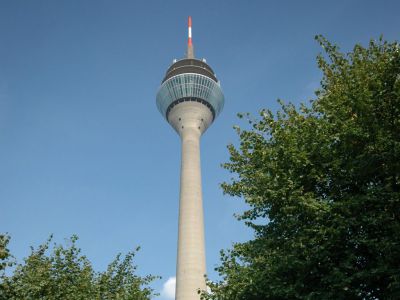
1) Rheinturm (Rhine Tower) (must see)
The Rheinturm, or Rhine Tower, is a 789-foot tall telecommunications tower. It carries broadcasts for radio and television but is best known for being the tallest building in the city. Along with its functional properties, the Rhine Tower is home to an observation deck and a revolving restaurant.
Construction on the tower began in 1979 and was completed in 1981. Largely made of reinforced concrete, the Rhine Tower weighs an impressive 22,500 tons. It was designed by architect Harald Deilmann, who is best known for his work on university buildings, theatres, hospitals and office buildings.
A sculptural clock on the Rhine Tower's shaft called Lichtzeitpegel, or Light Time Level, was designed by Horst H. Baumann. The number of dots represents the hour, minutes and seconds. It is the largest digital clock in the world.
The observation deck is open to the public daily from 10 am to midnight. The restaurant within the Rhine Tower, QOMO, is open from 6 pm to midnight.
Construction on the tower began in 1979 and was completed in 1981. Largely made of reinforced concrete, the Rhine Tower weighs an impressive 22,500 tons. It was designed by architect Harald Deilmann, who is best known for his work on university buildings, theatres, hospitals and office buildings.
A sculptural clock on the Rhine Tower's shaft called Lichtzeitpegel, or Light Time Level, was designed by Horst H. Baumann. The number of dots represents the hour, minutes and seconds. It is the largest digital clock in the world.
The observation deck is open to the public daily from 10 am to midnight. The restaurant within the Rhine Tower, QOMO, is open from 6 pm to midnight.
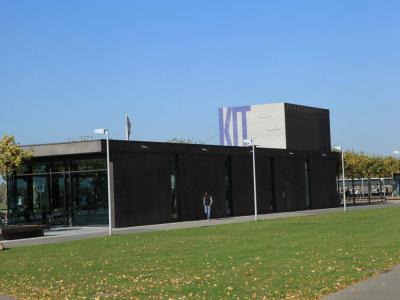
2) Kunst im Tunnel (Art in the Tunnel)
Art in the Tunnel (KIT) is an underground exhibition space for contemporary art in Dusseldorf, which is also, and deservedly so, considered to be one of its best local landmarks for its unique construction. The gallery is housed in the so-called residual tunnel space, two meters beneath the Rhine Promenade, which was created during the construction of the Rhine bank tunnel. The exhibition room is located in the immediate vicinity of the state parliament of North Rhine-Westphalia and the Rheinkniebrucke, and was opened on February 10, 2007.
The 130 square meters glazed entrance pavilion was built to a design by the Dusseldorf architectural firm, Fritschi Architekten, who also developed the Rhine Promenade itself, back in 1995. The underground exhibition area of total 888 square meters is squeezed between two tunnel tubes for car traffic. The slightly curved tunnel space is 140 meters long and – tapering to a point – between eight and one meter wide. Towards the surface, two light wells, fitted with armored glass, have been created.
KIT is used for exhibiting contemporary art and is intended to complement the Dusseldorf exhibition landscape in a targeted manner. Shown here primarily are the works by young artists, graduates of the Dusseldorf Art Academy, as well as winners of the Dusseldorf Art Prize, with four planned exhibitions held each year.
The 130 square meters glazed entrance pavilion was built to a design by the Dusseldorf architectural firm, Fritschi Architekten, who also developed the Rhine Promenade itself, back in 1995. The underground exhibition area of total 888 square meters is squeezed between two tunnel tubes for car traffic. The slightly curved tunnel space is 140 meters long and – tapering to a point – between eight and one meter wide. Towards the surface, two light wells, fitted with armored glass, have been created.
KIT is used for exhibiting contemporary art and is intended to complement the Dusseldorf exhibition landscape in a targeted manner. Shown here primarily are the works by young artists, graduates of the Dusseldorf Art Academy, as well as winners of the Dusseldorf Art Prize, with four planned exhibitions held each year.
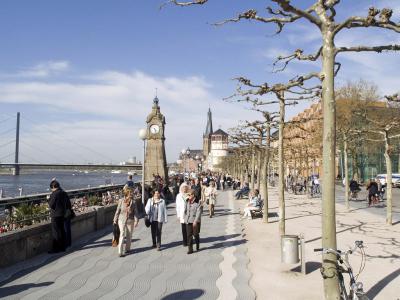
3) Rheinuferpromenade (Rhine Embankment Promenade) (must see)
The Rhine Embankment Promenade was designed by Architect Niklaus Fritschi and built between 1990 and 1997. This riverside promenade is popular with residents and visitors alike and is considered the Rhine's most attractive promenade. Visitors can enjoy the river views and breezes or stop for a cafe beverage or treat.
The promenade was originally built around 1900 and featured two levels. The lower level was used by shipping traffic, and the upper level was used as a promenade. The Rhine River's bank was redesigned after World War II, and a multi-lane street was constructed.
Road traffic used to run parallel to the river, but the Rhine bank tunnel was completed in the 1990s. This new infrastructure means that traffic runs underground. Pedestrians can now enjoy walking or biking along the promenade without road traffic. One million visitors celebrated the promenade's opening in 1995.
There are many historic and landmark buildings on the promenade. In addition, visitors can access the Dusseldorf Art Academy, the maritime museum, the state parliament, and the Apollo Variete.
The promenade hosts several Rhine boat tour operators, where you can enjoy seeing the city from another perspective. The promenade's staircase is a popular spot for people-watching and sunbathing.
The promenade hosts almost 300 cafes, bars, restaurants, and discos. Most of these venues are connected, so you can hop along the row and enjoy non-stop entertainment and fun. Promenade bars serve Dussedorf’s favorite brew, the Altbier. Be sure to order one to get a true taste of Dusseldorf.
The promenade hosts festivals and events throughout the year. For example, visitors might catch an exhibition, open-air movie screening, or festive market.
The promenade is a fantastic place to watch the sunset from. The city's lights start to come on and are beautifully reflected in the water.
The promenade was originally built around 1900 and featured two levels. The lower level was used by shipping traffic, and the upper level was used as a promenade. The Rhine River's bank was redesigned after World War II, and a multi-lane street was constructed.
Road traffic used to run parallel to the river, but the Rhine bank tunnel was completed in the 1990s. This new infrastructure means that traffic runs underground. Pedestrians can now enjoy walking or biking along the promenade without road traffic. One million visitors celebrated the promenade's opening in 1995.
There are many historic and landmark buildings on the promenade. In addition, visitors can access the Dusseldorf Art Academy, the maritime museum, the state parliament, and the Apollo Variete.
The promenade hosts several Rhine boat tour operators, where you can enjoy seeing the city from another perspective. The promenade's staircase is a popular spot for people-watching and sunbathing.
The promenade hosts almost 300 cafes, bars, restaurants, and discos. Most of these venues are connected, so you can hop along the row and enjoy non-stop entertainment and fun. Promenade bars serve Dussedorf’s favorite brew, the Altbier. Be sure to order one to get a true taste of Dusseldorf.
The promenade hosts festivals and events throughout the year. For example, visitors might catch an exhibition, open-air movie screening, or festive market.
The promenade is a fantastic place to watch the sunset from. The city's lights start to come on and are beautifully reflected in the water.
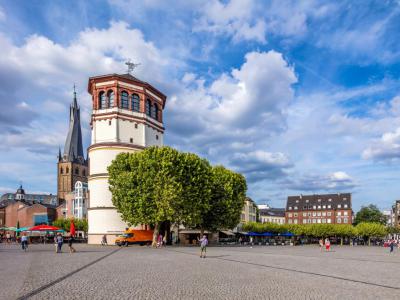
4) Burgplatz (Castle Square) (must see)
Castle Square is located on the Rhine River, near the location of the original town. This open space was named after Dusseldorf Castle, which was originally built during the 14th century. The castle was built to collect tolls, hence its location right on the river. Dusseldorf Castle was mostly torn down in 1892, and the remaining castle tower houses a museum.
Dusseldorf Castle and Castle Square were the city's center for centuries. When the castle deteriorated and was removed, Castle Square became a bigger, more open area. The area changed again when a busy highway was built here after World War II.
Finally, the area was redesigned in 1995 when the Rhine Embankment Promenade was built. Visitors can take a flight of steps to reach the Rhine's banks from Castle Square. The square often hosts different festivals and events and the open space offers visitors and residents a convenient meeting place.
The northern part of Castle Square faces the Rhine and the castle tower. The square is paved with cobblestones, which adds to its charm. The Radschlager fountain was added in 1954 and features a depiction of two cartwheeling boys.
Castle Square features the popular Wheel of Vision Ferris Wheel. This is a popular attraction day and night and offers a relaxing way to get the best views of historic Dusseldorf.
Dusseldorf Castle and Castle Square were the city's center for centuries. When the castle deteriorated and was removed, Castle Square became a bigger, more open area. The area changed again when a busy highway was built here after World War II.
Finally, the area was redesigned in 1995 when the Rhine Embankment Promenade was built. Visitors can take a flight of steps to reach the Rhine's banks from Castle Square. The square often hosts different festivals and events and the open space offers visitors and residents a convenient meeting place.
The northern part of Castle Square faces the Rhine and the castle tower. The square is paved with cobblestones, which adds to its charm. The Radschlager fountain was added in 1954 and features a depiction of two cartwheeling boys.
Castle Square features the popular Wheel of Vision Ferris Wheel. This is a popular attraction day and night and offers a relaxing way to get the best views of historic Dusseldorf.
5) Stadterhebungs Monument (City Founding Monument)
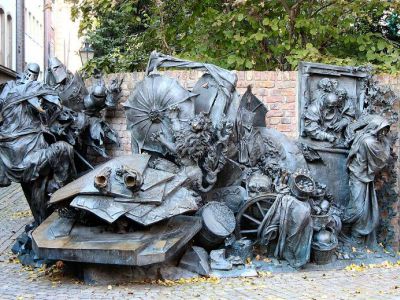
The City Founding Monument was created in 1988 to celebrate Dusseldorf's 700th anniversary. Bert Gerresheim crafted the bronze monument that depicts important scenes from Dusseldorf's history. The monument shows the Battle of Worringen, the city's original deed, and celebrates Saint Lambertus church.
The Battle of Worringen was fought on the 5th of June 1288 near the town of Worringen, which is now the northernmost borough of Cologne. Dusseldorf and Cologne residents fought against the Archbishop of Cologne's army during this battle. It was one of the largest battles in Europe in the Middle Ages and over 1100 people died during the battle. The Archbishop of Cologne was defeated.
After the battle, Count Adolf von Berg granted the Dusseldorf city charter. Cologne gained its independence from the Archbishopric after this decisive battle and finally became a free imperial city in 1475.
The monument's helmets and breastplates represent the famous 1288 battle. The cart represents Dusseldorf's market rights. The monument also shows the original town survey.
The bronze monument is very detailed and has many artistic layers. Visitors can gain an appreciation of the city's long history and storied birth.
The Battle of Worringen was fought on the 5th of June 1288 near the town of Worringen, which is now the northernmost borough of Cologne. Dusseldorf and Cologne residents fought against the Archbishop of Cologne's army during this battle. It was one of the largest battles in Europe in the Middle Ages and over 1100 people died during the battle. The Archbishop of Cologne was defeated.
After the battle, Count Adolf von Berg granted the Dusseldorf city charter. Cologne gained its independence from the Archbishopric after this decisive battle and finally became a free imperial city in 1475.
The monument's helmets and breastplates represent the famous 1288 battle. The cart represents Dusseldorf's market rights. The monument also shows the original town survey.
The bronze monument is very detailed and has many artistic layers. Visitors can gain an appreciation of the city's long history and storied birth.
6) Kunstakademie (Art Academy)
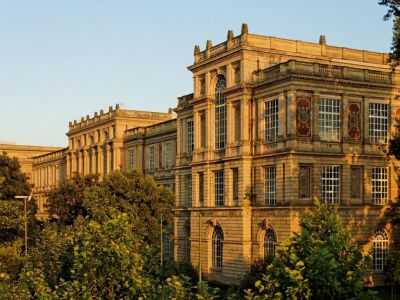
Dusseldorf Art Academy, founded in 1762 as a drawing school by Lambert Krahe, is a historic institution at the heart of Dusseldorf’s vibrant art scene. Its evolution into the "Electoral Palatinate Academy of Painters, Sculpture, and Architecture" in 1773 under Elector Carl Theodor marked its ascent as a renowned center for fine arts. Over the centuries, the academy has fostered pioneering artists, from Joseph Beuys to Gerhard Richter and Katharina Fritsch, and has been central to movements like ZERO, Fluxus, and German Pop.
By the 1990s, the Dusseldorf School of Photography, led by Bernd and Hilla Becher, gained international acclaim, with students such as Andreas Gursky and Candida Hofer redefining modern photography. Each winter semester, the academy’s neo-Renaissance building hosts a celebrated public tour, showcasing emerging talent. Engraved at the entrance, the academy’s guiding principle, “For our Students only the Best”, reflects its commitment to quality.
Today, it offers diverse programs in Fine Arts, Art Education, and Architecture, providing a comprehensive blend of art practice and art-related sciences. With 23 classes led by esteemed artists, the Dusseldorf Art Academy continues to uphold its legacy as a hub for innovative and interdisciplinary artistic development.
By the 1990s, the Dusseldorf School of Photography, led by Bernd and Hilla Becher, gained international acclaim, with students such as Andreas Gursky and Candida Hofer redefining modern photography. Each winter semester, the academy’s neo-Renaissance building hosts a celebrated public tour, showcasing emerging talent. Engraved at the entrance, the academy’s guiding principle, “For our Students only the Best”, reflects its commitment to quality.
Today, it offers diverse programs in Fine Arts, Art Education, and Architecture, providing a comprehensive blend of art practice and art-related sciences. With 23 classes led by esteemed artists, the Dusseldorf Art Academy continues to uphold its legacy as a hub for innovative and interdisciplinary artistic development.
7) Hofgarten
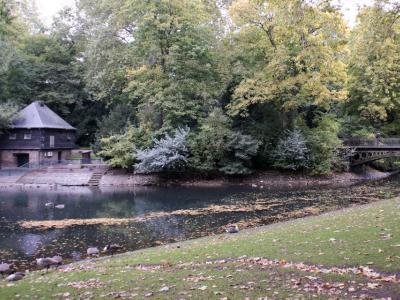
The Hofgarten, Dusseldorf’s central park and oldest public green space in Germany, offers a lush escape in the heart of the city. Spanning from Jacobistrasse near Jagerhof Castle (Schloss Jagerhof) to Heinrich-Heine-Allee by the Altstadt, and from Konigsallee to the Rhine Terrace, the park is often called "the Green Lung of Dusseldorf." Initially laid out in 1769 by Nicolas de Pigage after the destruction of the Seven Years' War, the Hofgarten was designed as a job creation initiative and place of beauty, blending French classical style with English landscape elements over time.
Strolling through Hofgarten reveals a captivating mix of nature, history, and art. Large grassy areas invite relaxation, while numerous ponds, fountains, and playgrounds cater to families, locals, and office workers seeking a midday retreat. Birds of all kinds-ducks, swans, Canada geese, and more-bring life to the park’s ponds and greenery. The Hofgarten is also a showcase of artistic treasures, with historic monuments and modern sculptures scattered throughout. Highlights include the Marchenbrunnen fountain, the Stephanien bust, memorials for fallen soldiers, and sculptures by Vadim Sidhur and Henry Moore. Visitors can also explore the Goethe Museum within Jagerhof Castle, a tribute to the famous poet.
Whether for a leisurely walk, a jog, or a moment of quiet reflection, the Hofgarten provides a serene yet vibrant oasis amid Dusseldorf’s bustling cityscape, particularly stunning during autumn when the trees transform into a palette of reds and golds.
Strolling through Hofgarten reveals a captivating mix of nature, history, and art. Large grassy areas invite relaxation, while numerous ponds, fountains, and playgrounds cater to families, locals, and office workers seeking a midday retreat. Birds of all kinds-ducks, swans, Canada geese, and more-bring life to the park’s ponds and greenery. The Hofgarten is also a showcase of artistic treasures, with historic monuments and modern sculptures scattered throughout. Highlights include the Marchenbrunnen fountain, the Stephanien bust, memorials for fallen soldiers, and sculptures by Vadim Sidhur and Henry Moore. Visitors can also explore the Goethe Museum within Jagerhof Castle, a tribute to the famous poet.
Whether for a leisurely walk, a jog, or a moment of quiet reflection, the Hofgarten provides a serene yet vibrant oasis amid Dusseldorf’s bustling cityscape, particularly stunning during autumn when the trees transform into a palette of reds and golds.
8) Theatermuseum (Theater Museum)
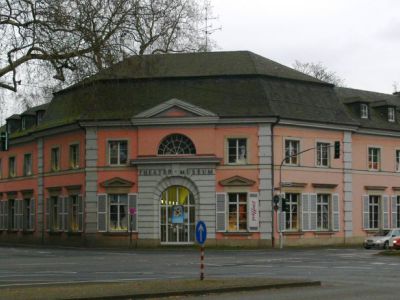
The Theater Museum in Dusseldorf stands as a distinctive cultural institution, being Germany’s only independent, municipally sponsored museum dedicated to theater arts. Originally rooted in the archive of the Dusseldorf Playhouse and open to the public since 1938, it combines a museum, an extensive library, and an active studio stage under one roof. This venue offers not only an exhibition of historical artifacts but also an ongoing program of performances, with a particular focus on youth engagement. From children’s theater and narrative showcases to improvisational acts, the museum’s guest performances keep the art form accessible and lively.
Currently transitioning from the Hofgartnerhaus in Hofgarten to the historic former post office building near the main station, the museum’s permanent exhibit, "SchauPlatze – Theater in der Stadt," provides a comprehensive look into the evolution of German theater through the lens of Dusseldorf's storied theatrical scene. The exhibition chronicles the development of courtly theater and opera in the 16th and 17th centuries, the establishment of Dusseldorf’s City Theatre in the 19th and 20th centuries, and the post-war innovations including the German Opera on the Rhine and the founding of notable stages like the Comedy (Komodchen) and Chamber Plays (Kammerspiele). The journey through Dusseldorf’s theatrical landscape wouldn’t be complete without recognizing influential figures such as J.G. Wohlbruck, Louise Dumont, Gustav Lindemann, Gustaf Grundgens, and Karl Heinz Stroux, whose legacies are explored in depth.
The museum’s library, boasting over 25,000 books and periodicals, and the Dumont Lindemann Archive are vital resources for scholars and theater enthusiasts alike. Its programming extends beyond exhibitions, offering community events, puppet theater, crafts, and socio-cultural projects, all fostering a vibrant intersection of theater, history, and contemporary performance.
Currently transitioning from the Hofgartnerhaus in Hofgarten to the historic former post office building near the main station, the museum’s permanent exhibit, "SchauPlatze – Theater in der Stadt," provides a comprehensive look into the evolution of German theater through the lens of Dusseldorf's storied theatrical scene. The exhibition chronicles the development of courtly theater and opera in the 16th and 17th centuries, the establishment of Dusseldorf’s City Theatre in the 19th and 20th centuries, and the post-war innovations including the German Opera on the Rhine and the founding of notable stages like the Comedy (Komodchen) and Chamber Plays (Kammerspiele). The journey through Dusseldorf’s theatrical landscape wouldn’t be complete without recognizing influential figures such as J.G. Wohlbruck, Louise Dumont, Gustav Lindemann, Gustaf Grundgens, and Karl Heinz Stroux, whose legacies are explored in depth.
The museum’s library, boasting over 25,000 books and periodicals, and the Dumont Lindemann Archive are vital resources for scholars and theater enthusiasts alike. Its programming extends beyond exhibitions, offering community events, puppet theater, crafts, and socio-cultural projects, all fostering a vibrant intersection of theater, history, and contemporary performance.
9) Schauspielhaus (Dusseldorf Theater)
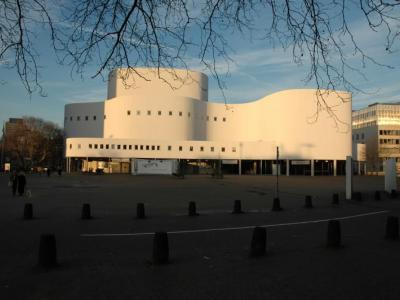
The Dusseldorf Theater, a beacon of modern architecture and theatrical heritage, stands as a testament to both artistic and urban innovation. Designed by architect Bernhard Pfau, this theatre opened its doors in 1970 on Gustaf-Gründgens-Platz. Built between 1965 and 1969, it features an organic, sculptural style that boldly contrasts with its neighbor, the Dreischeibenhaus, a high-rise known for its mirrored cubic structure. The Dusseldorf Theater, with its rounded, staggered surfaces and minimalist white facade, showcases a striking modernist approach to post-war architecture.
The building's unique form emerges as one without a conventional front, encouraging viewers to explore it from all angles to grasp its full dimensionality. This all-encompassing view reveals a layered design of concave and convex surfaces that create terrace spaces and highlight the dynamic relationship between the exterior and interior spaces. The minimalist fenestration with rows of square windows adds an element of mystery, allowing glimpses into the structure while maintaining a smooth, cohesive outer appearance. The ground floor departs from the uniform facade by incorporating a columned corridor that gives the illusion of a floating structure.
Historically, the Dusseldorf Theater traces its roots to 1747 when Elector Karl Theodor transformed a foundry into a theatre, marking the city’s enduring dedication to the performing arts. Over centuries, the institution evolved through various directors who each contributed to its prominence. Notably, after World War II, directors like Wolfgang Langhoff and Gustaf Grundgens shaped it into one of Europe’s leading theatres. Today, the Dusseldorf Theater operates as the only state theatre in North Rhine-Westphalia, maintaining a robust repertoire with a permanent ensemble. Following extensive renovations from 2016 to 2019, it continues to host performances in its iconic Big House (Großes Haus) and Small House (Kleines Haus), cementing its place as a cultural and architectural landmark.
The building's unique form emerges as one without a conventional front, encouraging viewers to explore it from all angles to grasp its full dimensionality. This all-encompassing view reveals a layered design of concave and convex surfaces that create terrace spaces and highlight the dynamic relationship between the exterior and interior spaces. The minimalist fenestration with rows of square windows adds an element of mystery, allowing glimpses into the structure while maintaining a smooth, cohesive outer appearance. The ground floor departs from the uniform facade by incorporating a columned corridor that gives the illusion of a floating structure.
Historically, the Dusseldorf Theater traces its roots to 1747 when Elector Karl Theodor transformed a foundry into a theatre, marking the city’s enduring dedication to the performing arts. Over centuries, the institution evolved through various directors who each contributed to its prominence. Notably, after World War II, directors like Wolfgang Langhoff and Gustaf Grundgens shaped it into one of Europe’s leading theatres. Today, the Dusseldorf Theater operates as the only state theatre in North Rhine-Westphalia, maintaining a robust repertoire with a permanent ensemble. Following extensive renovations from 2016 to 2019, it continues to host performances in its iconic Big House (Großes Haus) and Small House (Kleines Haus), cementing its place as a cultural and architectural landmark.
10) Kö-Bogen
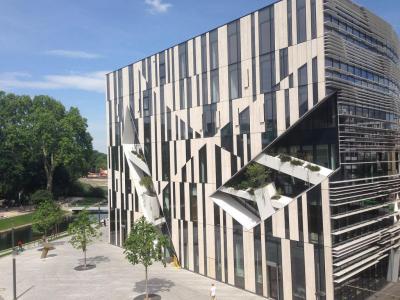
The Ko-Bogen, an ambitious urban renewal project in Dusseldorf, reimagines a historic area of the North Rhine-Westphalian capital with a blend of modern architecture, pedestrian-friendly spaces, and environmental upgrades. Named for the quarter-circle arch once formed by Hofgartenstrasse along the edge of the Hofgarten and Landskrone pond, Ko-Bogen is designed to bridge the classic elegance of Konigsallee (the Ko) with a forward-thinking urban layout.
Initiated in 2005, the project unfolded over multiple phases. The first phase saw the transformation of Jan-Wellem-Platz, a former tram hub reimagined as a multifunctional complex housing retail, office, and dining spaces, based on designs by architect Daniel Libeskind. This phase also included replacing Hofgartenstrasse with a tunnel and reshaping the area’s connectivity. The second phase followed the demolition of the Millipede Hochstrasse, a former elevated roadway, which was similarly replaced by an underground tunnel, allowing for a new pedestrian promenade.
The redevelopment also addressed a portion of the district south of the theater, stretching from Gustaf-Grundgens-Platz to Schadowstrasse. Plans initially proposed four new structures, later streamlined into the “Ingenhoven Valley,” combining retail, office, and dining spaces with a cohesive architectural ensemble. The revised design created an attractive public area along the former path of the Millipede.
Though controversial, the Ko-Bogen project moved forward, overcoming opposition and a petition that sought to halt the sale of Jan-Wellem-Platz. Construction officially began with a groundbreaking ceremony on August 17, 2009. The Libeskind buildings in the first phase were completed in 2013, with the second phase linked to the Wehrhahn Line’s completion in 2016. By early 2017, the final phase, Ko-Bogen II, began, further reshaping the area between the Schauspielhaus and Schadowstrasse. Today, Ko-Bogen stands as a landmark of Dusseldorf’s urban transformation, merging modern architecture with the city’s historic roots.
Initiated in 2005, the project unfolded over multiple phases. The first phase saw the transformation of Jan-Wellem-Platz, a former tram hub reimagined as a multifunctional complex housing retail, office, and dining spaces, based on designs by architect Daniel Libeskind. This phase also included replacing Hofgartenstrasse with a tunnel and reshaping the area’s connectivity. The second phase followed the demolition of the Millipede Hochstrasse, a former elevated roadway, which was similarly replaced by an underground tunnel, allowing for a new pedestrian promenade.
The redevelopment also addressed a portion of the district south of the theater, stretching from Gustaf-Grundgens-Platz to Schadowstrasse. Plans initially proposed four new structures, later streamlined into the “Ingenhoven Valley,” combining retail, office, and dining spaces with a cohesive architectural ensemble. The revised design created an attractive public area along the former path of the Millipede.
Though controversial, the Ko-Bogen project moved forward, overcoming opposition and a petition that sought to halt the sale of Jan-Wellem-Platz. Construction officially began with a groundbreaking ceremony on August 17, 2009. The Libeskind buildings in the first phase were completed in 2013, with the second phase linked to the Wehrhahn Line’s completion in 2016. By early 2017, the final phase, Ko-Bogen II, began, further reshaping the area between the Schauspielhaus and Schadowstrasse. Today, Ko-Bogen stands as a landmark of Dusseldorf’s urban transformation, merging modern architecture with the city’s historic roots.
11) Königsallee (King's Alley) (must see)
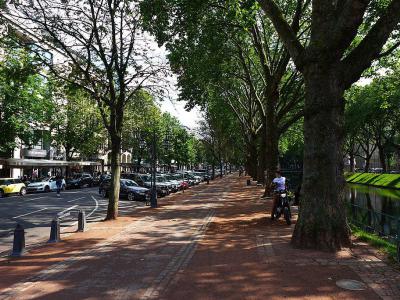
King's Alley is a shopping street that runs along a picturesque canal. King's Alley, also known as King's Avenue, is one of Germany's most attractive upscale shopping streets.
King's Alley was redeveloped in 1802. City planners dug the canal, which is fed by water from the Dussel River. The attractive canal is 32 meters wide (105 feet) and five meters (16 feet) deep.
Chestnut trees were planted along the canal, and the street was named Chestnut Avenue. Legend tells of a story where someone threw horse manure at King Friedrich Wilhelm IV in 1848. The street was then named King's Alley as a goodwill gesture.
Shoppers will find luxury brands such as Armani, Louis Vuitton, Chanel, Cartier, Prada, and Jimmy Choo. Visitors can also visit gorgeous boutiques and shops for clothing, shoes, designer bags, and one-of-a-kind jewelry.
The street is also home to the Ko Galerie, a three-story mall. This beautiful building features steel, aluminum, and marble construction. Here, visitors will find a variety of clothing, home decor, and accessories. In addition, the mall features several restaurants.
King's Alley is a beautiful street to stroll, and the trees provide welcome shade during the summer. The street also boasts interesting architecture. The Ko-Bogen has a modern glass, stone, and aluminum exterior and houses several stores, restaurants, and offices.
There are many luxury hotels along King's Alley, such as the Steigenberger Park Hotel, the Leonardo Royal, and Hotel Favor. Visitors can also stop by several great art galleries. For example, Galerie Paffrath and Galerie Ludorff both feature modern art.
King's Alley has dozens of fantastic restaurants. You can enjoy a quick meal at a casual cafe, stop for a bakery treat, or make a reservation at a Michelin-starred restaurant.
In addition to the shopping, architecture, and hotels, King's Alley is home to vibrant nightlife. Visitors will find exciting nightclubs, bars, cocktail lounges, and discos along the busy street.
During the festive season, King's Alley hosts two Christmas markets that feature beautiful lights and delightful treats.
King's Alley was redeveloped in 1802. City planners dug the canal, which is fed by water from the Dussel River. The attractive canal is 32 meters wide (105 feet) and five meters (16 feet) deep.
Chestnut trees were planted along the canal, and the street was named Chestnut Avenue. Legend tells of a story where someone threw horse manure at King Friedrich Wilhelm IV in 1848. The street was then named King's Alley as a goodwill gesture.
Shoppers will find luxury brands such as Armani, Louis Vuitton, Chanel, Cartier, Prada, and Jimmy Choo. Visitors can also visit gorgeous boutiques and shops for clothing, shoes, designer bags, and one-of-a-kind jewelry.
The street is also home to the Ko Galerie, a three-story mall. This beautiful building features steel, aluminum, and marble construction. Here, visitors will find a variety of clothing, home decor, and accessories. In addition, the mall features several restaurants.
King's Alley is a beautiful street to stroll, and the trees provide welcome shade during the summer. The street also boasts interesting architecture. The Ko-Bogen has a modern glass, stone, and aluminum exterior and houses several stores, restaurants, and offices.
There are many luxury hotels along King's Alley, such as the Steigenberger Park Hotel, the Leonardo Royal, and Hotel Favor. Visitors can also stop by several great art galleries. For example, Galerie Paffrath and Galerie Ludorff both feature modern art.
King's Alley has dozens of fantastic restaurants. You can enjoy a quick meal at a casual cafe, stop for a bakery treat, or make a reservation at a Michelin-starred restaurant.
In addition to the shopping, architecture, and hotels, King's Alley is home to vibrant nightlife. Visitors will find exciting nightclubs, bars, cocktail lounges, and discos along the busy street.
During the festive season, King's Alley hosts two Christmas markets that feature beautiful lights and delightful treats.
12) Kunstsammlung K21
The Kunstsammlung K21, housed in the historic Standehaus in Dusseldorf, is a cornerstone of the Kunstsammlung, which curates an extensive collection of modern and contemporary art. Established in 1961, the Kunstsammlung includes three venues: K20 at Grabbeplatz, K21 in the Standehaus, and the Schmela Haus, each enriching the artistic landscape of Dusseldorf.
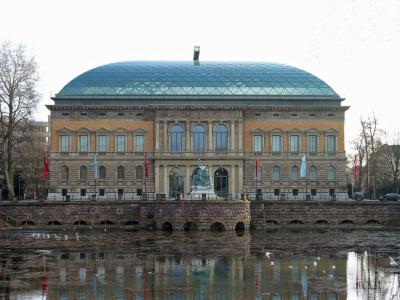
The K21 venue opened in 2002 within the stately Standehaus, a neo-Renaissance building designed by Julius Raschdorff. Originally built between 1876 and 1880, the Standehaus has served various governmental functions, including as the meeting place for the Provincial Diet of the Prussian Rhineland and later as the Parliament of North Rhine-Westphalia until 1988. Its transformation into a museum space in the early 2000s was spearheaded by the architects Kiessler+Partner of Munich, who retained the exterior's historic charm while crafting a contemporary interior crowned by a unique, elongated glass dome that gives the structure a modern edge.
Inside, K21 emphasizes immersive experiences, focusing on artist installations and large-scale works spread across 5,300 square meters. Key features include a central square (piazza), framed by continuous arcade passageways, and a preserved historic staircase leading to multiple gallery levels. With an education department providing workshops, studios, and interactive experiences, K21 ensures that art is accessible and engaging for all visitors.
K21’s addition to Dusseldorf’s cultural scene complements the more modern-focused K20 and the intimate Schmela Haus, collectively offering more than 10,000 square meters of exhibition space and a robust program dedicated to 20th-century and contemporary art.
The K21 venue opened in 2002 within the stately Standehaus, a neo-Renaissance building designed by Julius Raschdorff. Originally built between 1876 and 1880, the Standehaus has served various governmental functions, including as the meeting place for the Provincial Diet of the Prussian Rhineland and later as the Parliament of North Rhine-Westphalia until 1988. Its transformation into a museum space in the early 2000s was spearheaded by the architects Kiessler+Partner of Munich, who retained the exterior's historic charm while crafting a contemporary interior crowned by a unique, elongated glass dome that gives the structure a modern edge.
Inside, K21 emphasizes immersive experiences, focusing on artist installations and large-scale works spread across 5,300 square meters. Key features include a central square (piazza), framed by continuous arcade passageways, and a preserved historic staircase leading to multiple gallery levels. With an education department providing workshops, studios, and interactive experiences, K21 ensures that art is accessible and engaging for all visitors.
K21’s addition to Dusseldorf’s cultural scene complements the more modern-focused K20 and the intimate Schmela Haus, collectively offering more than 10,000 square meters of exhibition space and a robust program dedicated to 20th-century and contemporary art.
