Custom Walk in Austin, Texas by jsmythe_b553ec created on 2026-01-02
Guide Location: USA » Austin
Guide Type: Custom Walk
# of Sights: 9
Tour Duration: 2 Hour(s)
Travel Distance: 2.9 Km or 1.8 Miles
Share Key: VCP9Y
Guide Type: Custom Walk
# of Sights: 9
Tour Duration: 2 Hour(s)
Travel Distance: 2.9 Km or 1.8 Miles
Share Key: VCP9Y
How It Works
Please retrieve this walk in the GPSmyCity app. Once done, the app will guide you from one tour stop to the next as if you had a personal tour guide. If you created the walk on this website or come to the page via a link, please follow the instructions below to retrieve the walk in the app.
Retrieve This Walk in App
Step 1. Download the app "GPSmyCity: Walks in 1K+ Cities" on Apple App Store or Google Play Store.



Step 2. In the GPSmyCity app, download(or launch) the guide "Austin Map and Walking Tours".
Step 3. Tap the menu button located at upper right corner of the "Walks" screen and select "Retrieve custom walk". Enter the share key: VCP9Y
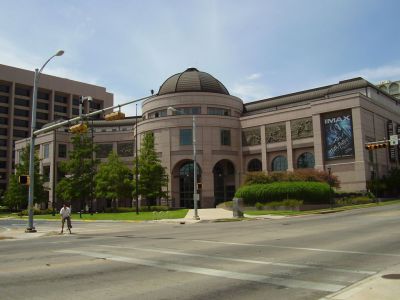
1) Bob Bullock Texas State History Museum (must see)
The Bullock Texas State History Museum, situated in Austin, is dedicated to showcasing the rich and evolving history of Texas. Located just a few blocks north of the Texas State Capitol on North Congress Avenue, this museum is committed to providing educational experiences that interpret the "Story of Texas" for a wide audience.
Operated by the Texas State Preservation Board, the same organization that manages the Texas State Capitol, the Texas Capitol Visitors Center, the Texas Governor's Mansion, and the Texas State Cemetery, the Bullock Museum is integral to Texas' preservation and educational efforts.
The museum is named in honor of Bob Bullock, the 38th Lieutenant Governor of Texas, who was instrumental in its creation. Bullock, known for his commitment to preserving and exhibiting Texas history, was the guest of honor at the groundbreaking ceremony in April 1999 but unfortunately passed away in June of the same year, before the museum's completion.
A significant development in the museum's history was the 2018 unveiling of the renovated first-floor Texas History Gallery, titled "Becoming Texas." This exhibition delves deep into over 16,000 years of Texas history, starting from the earliest known human-made objects in the Americas, including a projectile point from the Gault archaeological site. It covers the era of early American Indian civilizations, European colonization efforts, and the international politics that shaped early Texas.
The third floor of the museum offers a comprehensive exploration of Texas land, culture, and technology. It features dedicated sections on Texas ranching, the oil industry, civil rights, science and space exploration, and even Texas sports and music. Adding to its cultural significance, the museum houses the Austin City Limits Theater, showcasing musical performances from the renowned PBS television series based in Austin.
Operated by the Texas State Preservation Board, the same organization that manages the Texas State Capitol, the Texas Capitol Visitors Center, the Texas Governor's Mansion, and the Texas State Cemetery, the Bullock Museum is integral to Texas' preservation and educational efforts.
The museum is named in honor of Bob Bullock, the 38th Lieutenant Governor of Texas, who was instrumental in its creation. Bullock, known for his commitment to preserving and exhibiting Texas history, was the guest of honor at the groundbreaking ceremony in April 1999 but unfortunately passed away in June of the same year, before the museum's completion.
A significant development in the museum's history was the 2018 unveiling of the renovated first-floor Texas History Gallery, titled "Becoming Texas." This exhibition delves deep into over 16,000 years of Texas history, starting from the earliest known human-made objects in the Americas, including a projectile point from the Gault archaeological site. It covers the era of early American Indian civilizations, European colonization efforts, and the international politics that shaped early Texas.
The third floor of the museum offers a comprehensive exploration of Texas land, culture, and technology. It features dedicated sections on Texas ranching, the oil industry, civil rights, science and space exploration, and even Texas sports and music. Adding to its cultural significance, the museum houses the Austin City Limits Theater, showcasing musical performances from the renowned PBS television series based in Austin.
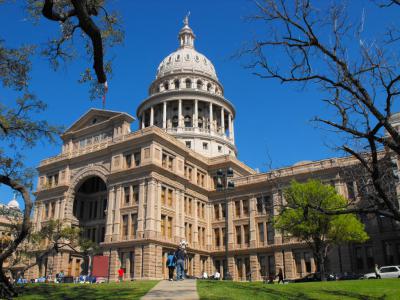
2) Texas State Capitol (must see)
The Texas State Capitol, located in downtown Austin, is a significant historical and architectural landmark. It serves as the seat of government for the state of Texas, housing the offices and chambers of the Texas Legislature and the Governor of Texas. The Capitol was designed by architect Elijah E. Myers and constructed between 1882 and 1888 under the supervision of civil engineer Reuben Lindsay Walker. In 1970, it was added to the National Register of Historic Places, and in 1986, it was designated as a National Historic Landmark.
Architecturally, the Capitol is an exemplar of the Italian Renaissance Revival style. It is constructed primarily from limestone sourced from Pecan Point quarries and sandstone from nearby Barton Creek. Remarkably, the Texas State Capitol is 302.64 feet (92.24 meters) tall, making it the sixth-tallest state capitol and one of several taller than the United States Capitol in Washington, D.C.
The Texas State Capitol proudly stands on a hill, providing a picturesque view over downtown Austin. The building has undergone several modifications over the years, incorporating various additions, including a prominent dome that crowns a rotunda. This dome, designed by architect Elijah Ealy Clark, is a notable feature of the Capitol.
The rotunda showcases portraits of all individuals who have held the position of President in the Republic of Texas or served as Governor of the State of Texas. In the southern foyer, you can find sculptures of Sam Houston and Stephen F. Austin, which were created by Elisabeth Ney. Interestingly, the rotunda also functions as a whispering gallery.
The Capitol itself is quite spacious, spanning 360,000 square feet (33,000 square meters), which is more extensive than any other state capitol building in the country. It sits on a land area of 2.25 acres and boasts nearly 400 rooms along with over 900 windows.
Strategically positioned, the Texas State Capitol demarcates the State Capitol Mall from downtown Austin. Open to the public, it stands as a testament to the state's history, especially its construction during an economic downturn caused by an agricultural depression. The Capitol's construction was funded through state bonds instead of taxes.
Architecturally, the Capitol is an exemplar of the Italian Renaissance Revival style. It is constructed primarily from limestone sourced from Pecan Point quarries and sandstone from nearby Barton Creek. Remarkably, the Texas State Capitol is 302.64 feet (92.24 meters) tall, making it the sixth-tallest state capitol and one of several taller than the United States Capitol in Washington, D.C.
The Texas State Capitol proudly stands on a hill, providing a picturesque view over downtown Austin. The building has undergone several modifications over the years, incorporating various additions, including a prominent dome that crowns a rotunda. This dome, designed by architect Elijah Ealy Clark, is a notable feature of the Capitol.
The rotunda showcases portraits of all individuals who have held the position of President in the Republic of Texas or served as Governor of the State of Texas. In the southern foyer, you can find sculptures of Sam Houston and Stephen F. Austin, which were created by Elisabeth Ney. Interestingly, the rotunda also functions as a whispering gallery.
The Capitol itself is quite spacious, spanning 360,000 square feet (33,000 square meters), which is more extensive than any other state capitol building in the country. It sits on a land area of 2.25 acres and boasts nearly 400 rooms along with over 900 windows.
Strategically positioned, the Texas State Capitol demarcates the State Capitol Mall from downtown Austin. Open to the public, it stands as a testament to the state's history, especially its construction during an economic downturn caused by an agricultural depression. The Capitol's construction was funded through state bonds instead of taxes.
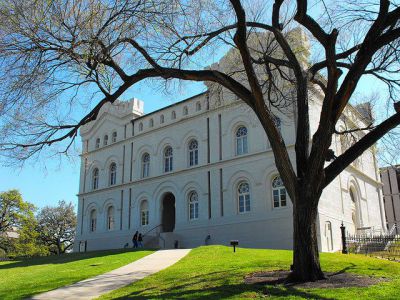
3) Capitol Visitors Center
The Capitol Visitors Center sits in the restored General Land Office building which is located in the southeast corner of the State Capitol grounds. Built in 1856-57, it had initially served as the General Land Office until 1918 and, as such, is the oldest state office facility in Texas. The three-story, castle-like structure was designed by Christoph Conrad Stremme, native of Germany, and combined Classical and Medieval elements reflecting architectural trends in his home country.
In the late 1880s, William Sydney Porter, later known as the writer O. Henry, worked here as a draftsman. For three years, he drew county maps for a monthly salary of $100. Porter later used the Land Office Building as a setting for two of his stories, “Bexar Script 2692” and “Georgia's Ruling.”
Over the years, the building underwent series of alterations, including the addition of iron shutters and vaults to aid in the protection of the irreplaceable land records. It received recognition as Texas Historic Landmark in 1962 and became listed on the National Register of Historic Places in 1970. By the 1980s, the building had found itself in a state of disrepair. Due to its architectural and historical significance, the State Preservation Board undertook a restoration of the structure returning it to the appearance circa 1890 when the Capitol was constructed.
In 1994, the building opened as the Visitors Center providing exhibits and programs to educate visitors about the history of Texas, the Capitol and the General Land Office. Over two million people have visited here since.
Why You Should Visit:
To learn about the history and the development of the Texas State, as well as the construction and the everyday activities of the State Capitol.
Tip:
The Center offers free guided, self-guided and specialty tours. Allow about 1.5 hours for this.
In the late 1880s, William Sydney Porter, later known as the writer O. Henry, worked here as a draftsman. For three years, he drew county maps for a monthly salary of $100. Porter later used the Land Office Building as a setting for two of his stories, “Bexar Script 2692” and “Georgia's Ruling.”
Over the years, the building underwent series of alterations, including the addition of iron shutters and vaults to aid in the protection of the irreplaceable land records. It received recognition as Texas Historic Landmark in 1962 and became listed on the National Register of Historic Places in 1970. By the 1980s, the building had found itself in a state of disrepair. Due to its architectural and historical significance, the State Preservation Board undertook a restoration of the structure returning it to the appearance circa 1890 when the Capitol was constructed.
In 1994, the building opened as the Visitors Center providing exhibits and programs to educate visitors about the history of Texas, the Capitol and the General Land Office. Over two million people have visited here since.
Why You Should Visit:
To learn about the history and the development of the Texas State, as well as the construction and the everyday activities of the State Capitol.
Tip:
The Center offers free guided, self-guided and specialty tours. Allow about 1.5 hours for this.
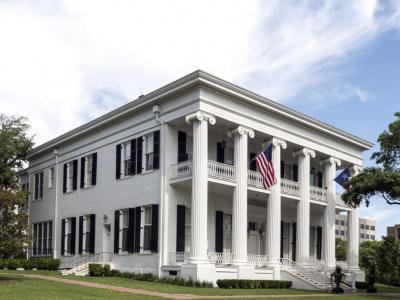
4) Texas Governor's Mansion
The Texas Governor's Mansion in Austin stands as a significant historical landmark and a symbol of Texas's rich history. Designed by the notable architect Abner Cook, this Greek Revival structure was built in 1854 and has served as the residence for every Texas governor since 1856. The mansion's current residents are Governor Greg Abbott and First Lady Cecilia Phalen Abbott.
This mansion is not just a home but also a piece of living history, holding the title of the oldest continuously inhabited house in Texas and ranking as the fourth oldest governor's mansion in continuous use by a chief executive in the United States. In recognition of its historical value, it was designated as the first Texas historic landmark in 1962, added to the National Register of Historic Places in 1970, and declared a U.S. National Historic Landmark in 1974.
Originally, the mansion was 6,000 square feet with 11 rooms but without any bathrooms. However, a 1914 remodeling expanded it to 8,920 square feet, enhancing it to 25 rooms and seven bathrooms. This architectural gem occupies the center of a block, embraced by lush trees and gardens.
The mansion's stewardship saw a significant change in 1931 when, on the recommendation of former First Lady Mildred Paxton Moody, the Texas Legislature created the Board of Mansion Supervisors to manage its upkeep. This board was later dissolved in 1965, with its duties transferred to the Texas Commission on the Arts.
An incident in the mansion's history occurred on June 8, 2008, when it was gravely damaged by an arson fire, caused by a Molotov cocktail. Thankfully, the restoration was completed by 2012, allowing this historic building to continue serving as a symbol of Texas governance and pride.
This mansion is not just a home but also a piece of living history, holding the title of the oldest continuously inhabited house in Texas and ranking as the fourth oldest governor's mansion in continuous use by a chief executive in the United States. In recognition of its historical value, it was designated as the first Texas historic landmark in 1962, added to the National Register of Historic Places in 1970, and declared a U.S. National Historic Landmark in 1974.
Originally, the mansion was 6,000 square feet with 11 rooms but without any bathrooms. However, a 1914 remodeling expanded it to 8,920 square feet, enhancing it to 25 rooms and seven bathrooms. This architectural gem occupies the center of a block, embraced by lush trees and gardens.
The mansion's stewardship saw a significant change in 1931 when, on the recommendation of former First Lady Mildred Paxton Moody, the Texas Legislature created the Board of Mansion Supervisors to manage its upkeep. This board was later dissolved in 1965, with its duties transferred to the Texas Commission on the Arts.
An incident in the mansion's history occurred on June 8, 2008, when it was gravely damaged by an arson fire, caused by a Molotov cocktail. Thankfully, the restoration was completed by 2012, allowing this historic building to continue serving as a symbol of Texas governance and pride.
5) Henry Hirshfeld House and Cottage
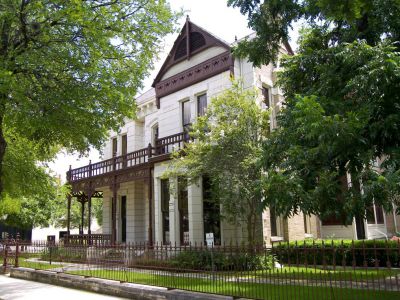
The Henry Hirshfeld House and Cottage are a pair of historic residences located in downtown Austin. These homes were originally occupied by the notable Hirshfeld family. Henry Hirshfeld (1834-1911), a native of Germany, was a prominent Austin merchant and a leader in the city’s Jewish community. The cottage, constructed in 1873, served as the residence for Henry and his wife Jennie until the larger house was completed in 1885. These buildings have been carefully preserved and currently serve as the Office of Governmental Relations for the Texas A&M University System. Both structures were collectively added to the National Register of Historic Places in 1973.
Designed and constructed by architect John Andrewartha, the Henry Hirshfeld House displays architectural elements influenced by Victorian and Eastlake styles. The exterior embellishments include a double gallery, a bay window, stained glass features, intricate woodwork, and detailed limestone accents. The two-story stick style carriage house was constructed shortly after the completion of the main residence.
In 1873, Henry Hirshfeld had a single-story stone cottage built for his family. This cottage includes a widow's walk on its roof and decorative jigsaw detailing on the porch. After the Hirshfeld family relocated to their new home on the adjacent east lot in 1888, the cottage was used as a rental property.
Designed and constructed by architect John Andrewartha, the Henry Hirshfeld House displays architectural elements influenced by Victorian and Eastlake styles. The exterior embellishments include a double gallery, a bay window, stained glass features, intricate woodwork, and detailed limestone accents. The two-story stick style carriage house was constructed shortly after the completion of the main residence.
In 1873, Henry Hirshfeld had a single-story stone cottage built for his family. This cottage includes a widow's walk on its roof and decorative jigsaw detailing on the porch. After the Hirshfeld family relocated to their new home on the adjacent east lot in 1888, the cottage was used as a rental property.
6) Austin History Center
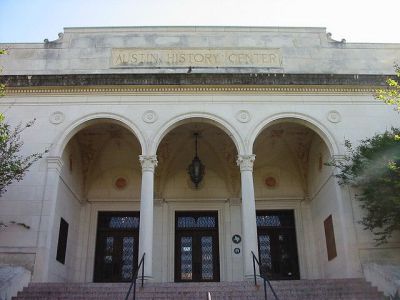
The Austin History Center, located in Austin, Texas, is an integral part of the city's heritage and culture. It functions as both the local history collection of the Austin Public Library and the city's historical archive. The center's journey began with the building's opening in 1933, originally serving as the official Austin Public Library. This role continued until 1979 when the main library operations were transferred to the adjacent John Henry Faulk Library.
The Austin History Center building is a testament to the Renaissance Revival architectural style and was a product of the 1928 Austin city plan. J. Roy White, the founding dean of the University of Texas School of Architecture, played a key role in giving the design a local touch as the principal architect. The structure is not just an architectural marvel but also a showcase of local craftsmanship. Notable contributors include ironworker Fortunat Wiegl, wood-carver Peter Mansbendel, and fresco artist Harold "Bubi" Jessen. Jessen's contribution is particularly noteworthy; he hand-painted a fresco on the ceiling of the loggia at the front entrance. This loggia, with Corinthian column arches, matches the building's style. The fresco on the vaulted ceiling shows winged horses and graceful lines, enhancing its beauty.
The Austin History Center celebrated a significant milestone in 2005, marking its 50th anniversary. It houses an extensive collection that includes thousands of documents, photographs, maps, artifacts, and personal histories. The center is not only a repository of information but also a vibrant space for learning and exploration, regularly featuring special exhibits and speakers. In recognition of its historical and architectural significance, the building was added to the National Register of Historic Places on May 6, 1993.
The Austin History Center building is a testament to the Renaissance Revival architectural style and was a product of the 1928 Austin city plan. J. Roy White, the founding dean of the University of Texas School of Architecture, played a key role in giving the design a local touch as the principal architect. The structure is not just an architectural marvel but also a showcase of local craftsmanship. Notable contributors include ironworker Fortunat Wiegl, wood-carver Peter Mansbendel, and fresco artist Harold "Bubi" Jessen. Jessen's contribution is particularly noteworthy; he hand-painted a fresco on the ceiling of the loggia at the front entrance. This loggia, with Corinthian column arches, matches the building's style. The fresco on the vaulted ceiling shows winged horses and graceful lines, enhancing its beauty.
The Austin History Center celebrated a significant milestone in 2005, marking its 50th anniversary. It houses an extensive collection that includes thousands of documents, photographs, maps, artifacts, and personal histories. The center is not only a repository of information but also a vibrant space for learning and exploration, regularly featuring special exhibits and speakers. In recognition of its historical and architectural significance, the building was added to the National Register of Historic Places on May 6, 1993.
7) John Bremond House
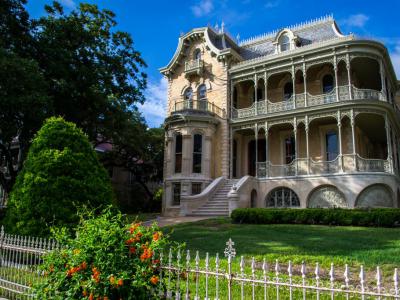
The John Bremond House is situated within the Bremond Block Historic District, which consists of a group of eleven historic homes located in downtown Austin. These homes were constructed between the 1850s and 1910.
The John Bremond House stands out as the grandest among the Bremond Block residences. Constructed in 1886 by George Fiegel, this building features an ornate cast-iron wraparound porch and balcony, as well as an eye-catching mansard roof. It has retained its original late 1800s appearance. Presently, the property is owned by the Texas Classroom Teachers Association.
The entire block was officially listed on the National Register of Historic Places in 1970 and is recognized as one of the few remaining well-preserved upper-class Victorian neighborhoods from the mid to late nineteenth century in Texas.
Six of these houses were either built or expanded to accommodate members of the Bremond family, particularly Eugene and John Bremond, who were prominent figures in the social, merchandising, and banking circles of late-nineteenth-century Austin. These historic homes are nestled within the square block bounded by West Seventh, West Eighth, Guadalupe, and San Antonio streets. Additionally, the district encompasses several houses located on the west side of San Antonio Street and the south side of West Seventh Street, with at least three of them having connections to the North family.
The John Bremond House stands out as the grandest among the Bremond Block residences. Constructed in 1886 by George Fiegel, this building features an ornate cast-iron wraparound porch and balcony, as well as an eye-catching mansard roof. It has retained its original late 1800s appearance. Presently, the property is owned by the Texas Classroom Teachers Association.
The entire block was officially listed on the National Register of Historic Places in 1970 and is recognized as one of the few remaining well-preserved upper-class Victorian neighborhoods from the mid to late nineteenth century in Texas.
Six of these houses were either built or expanded to accommodate members of the Bremond family, particularly Eugene and John Bremond, who were prominent figures in the social, merchandising, and banking circles of late-nineteenth-century Austin. These historic homes are nestled within the square block bounded by West Seventh, West Eighth, Guadalupe, and San Antonio streets. Additionally, the district encompasses several houses located on the west side of San Antonio Street and the south side of West Seventh Street, with at least three of them having connections to the North family.
8) Angelina Eberly Statue
Angelina Belle Peyton Eberly, born on July 2, 1798, and passing away on August 15, 1860, was not only an innkeeper but also a significant figure in the history of Austin, particularly during the Texas Archive War. In 1836, she married Captain Jacob Eberly, who was a widower at the time. Together, they relocated to Austin in 1839, where they established the Eberly House, an inn or tavern.
On October 18, 1839, President Mirabeau B. Lamar and his cabinet had a meal at her establishment instead of the official presidential residence. Later, when Sam Houston succeeded Lamar, he chose to reside at the Eberly House, further highlighting its importance.
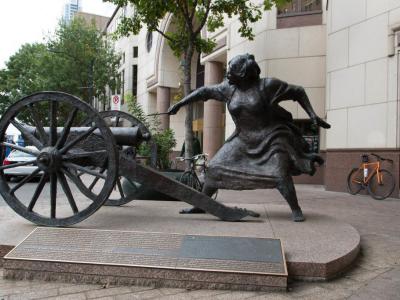
In December 1842, Sam Houston decided to secretly relocate the government archives of the Republic to the safety of Washington-on-the-Brazos. Mrs. Eberly realized that this meant the removal of vital symbols of the national government from Austin. In response, she fired a six-pound cannon into the General Land Office Building, which caught the attention of the townsfolk, who saw it as an act of theft. This event sparked what is now known as the Archive War. Ultimately, the Austinites emerged victorious in this conflict, ensuring that Austin remained the capital of Texas and the guardian of the state's archives.
Today, a bronze statue of Angelina Eberly, created by Pat Oliphant, stands near the location where she played a pivotal role in preserving Austin as the capital city of Texas.
On October 18, 1839, President Mirabeau B. Lamar and his cabinet had a meal at her establishment instead of the official presidential residence. Later, when Sam Houston succeeded Lamar, he chose to reside at the Eberly House, further highlighting its importance.
In December 1842, Sam Houston decided to secretly relocate the government archives of the Republic to the safety of Washington-on-the-Brazos. Mrs. Eberly realized that this meant the removal of vital symbols of the national government from Austin. In response, she fired a six-pound cannon into the General Land Office Building, which caught the attention of the townsfolk, who saw it as an act of theft. This event sparked what is now known as the Archive War. Ultimately, the Austinites emerged victorious in this conflict, ensuring that Austin remained the capital of Texas and the guardian of the state's archives.
Today, a bronze statue of Angelina Eberly, created by Pat Oliphant, stands near the location where she played a pivotal role in preserving Austin as the capital city of Texas.
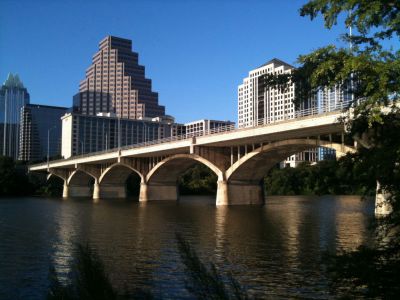
9) Congress Avenue Bridge /Austin Bats (must see)
The Ann W. Richards Congress Avenue Bridge, previously known as the Congress Avenue Bridge, is situated over Lady Bird Lake in Austin. Prior to the completion of the Longhorn Dam in 1960, this bridge spanned the Colorado River, which is now impounded as Lady Bird Lake. It had been named the Congress Avenue Bridge since its initial construction in the late 19th century until November 16, 2006, when the Austin City Council decided to rename it in honor of Ann W. Richards. She served as the 45th Governor of Texas and was a long-time resident of Austin.
This bridge is made of concrete and features three southbound and three northbound vehicle lanes, with sidewalks on both sides. The Ann W. Richards Congress Avenue Bridge is renowned for housing the world's largest urban bat colony, consisting of Mexican free-tailed bats. These bats live beneath the road deck in gaps between the concrete components. They are migratory, spending their summers in Austin and their winters in Mexico.
Every evening at dusk, the bats emerge from beneath the bridge and fly across Lady Bird Lake, primarily to the east, in search of food. This spectacle attracts up to 100,000 tourists annually. Visitors can observe the bats from the bridge itself, from the riverbanks, and even from boats. Interestingly, the Austin Ice Bats, a minor-league hockey team, took its name from the bridge's famous bat colony. Additionally, the song "Bats" by Kimya Dawson and rapper Aesop Rock was inspired by the immense number of bats residing under this bridge.
This bridge is made of concrete and features three southbound and three northbound vehicle lanes, with sidewalks on both sides. The Ann W. Richards Congress Avenue Bridge is renowned for housing the world's largest urban bat colony, consisting of Mexican free-tailed bats. These bats live beneath the road deck in gaps between the concrete components. They are migratory, spending their summers in Austin and their winters in Mexico.
Every evening at dusk, the bats emerge from beneath the bridge and fly across Lady Bird Lake, primarily to the east, in search of food. This spectacle attracts up to 100,000 tourists annually. Visitors can observe the bats from the bridge itself, from the riverbanks, and even from boats. Interestingly, the Austin Ice Bats, a minor-league hockey team, took its name from the bridge's famous bat colony. Additionally, the song "Bats" by Kimya Dawson and rapper Aesop Rock was inspired by the immense number of bats residing under this bridge.
