Custom Walk in Lyon, France by aaron_monk2_e86987 created on 2026-02-06
Guide Location: France » Lyon
Guide Type: Custom Walk
# of Sights: 9
Tour Duration: 2 Hour(s)
Travel Distance: 4.4 Km or 2.7 Miles
Share Key: 8FASS
Guide Type: Custom Walk
# of Sights: 9
Tour Duration: 2 Hour(s)
Travel Distance: 4.4 Km or 2.7 Miles
Share Key: 8FASS
How It Works
Please retrieve this walk in the GPSmyCity app. Once done, the app will guide you from one tour stop to the next as if you had a personal tour guide. If you created the walk on this website or come to the page via a link, please follow the instructions below to retrieve the walk in the app.
Retrieve This Walk in App
Step 1. Download the app "GPSmyCity: Walks in 1K+ Cities" on Apple App Store or Google Play Store.



Step 2. In the GPSmyCity app, download(or launch) the guide "Lyon Map and Walking Tours".
Step 3. Tap the menu button located at upper right corner of the "Walks" screen and select "Retrieve custom walk". Enter the share key: 8FASS
1) Lyon Cathedral (must see)
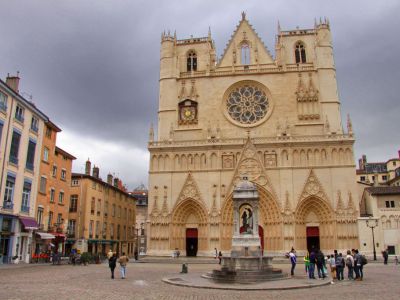
In 450 AD, on or about, Patiens, sainted Bishop of Lyon, had a cathedral built in Lyon named for Saint Stephen. In the seventh century a baptistry was constructed as an adjunct to the cathedral. The Church of Saint Croix was nearby. This area, in the heart of Old Lyon, near the River Saone, became the site of Lyon Cathedral in 1180.
Built on the ruins of Saint Stephen's, the cathedral was founded by Saints Pothinus and Irenaeus. Construction begun in 1180 and completed in 1476. The architectural style is a harmonious blend of Gothic and Romanesque. The blend of styles is consistent, untrammeled by the over-long period of construction.
The building is 263 feet long and 66 feet wide at the choir. The nave is 107 feet high. The facade is moderately Gothic, featuring high pointed arches and pediments. The apse and choir are Romanesque. The high ribbed vault of the nave is Gothic.
Inside the cathedral is a 30-foot high astronomical clock. An astrolabe cites dates and locations of the stars, Moon, Sun and Earth. The clock was first installed in 1383. Destroyed in a raid by Francois de Beaument, the Baron of Adrets, in the War of Religions in 1562, it was rebuilt by master clockmaker Guillaume Norrisson in 1661.
Each December, in honor of the Virgin Mary, lighted candles are placed outside the windows of Lyon. The facade of the cathedral comes alive with a stunning multicolored light show. The festival marks the miraculous end of the plague in Lyons in 1643.
Built on the ruins of Saint Stephen's, the cathedral was founded by Saints Pothinus and Irenaeus. Construction begun in 1180 and completed in 1476. The architectural style is a harmonious blend of Gothic and Romanesque. The blend of styles is consistent, untrammeled by the over-long period of construction.
The building is 263 feet long and 66 feet wide at the choir. The nave is 107 feet high. The facade is moderately Gothic, featuring high pointed arches and pediments. The apse and choir are Romanesque. The high ribbed vault of the nave is Gothic.
Inside the cathedral is a 30-foot high astronomical clock. An astrolabe cites dates and locations of the stars, Moon, Sun and Earth. The clock was first installed in 1383. Destroyed in a raid by Francois de Beaument, the Baron of Adrets, in the War of Religions in 1562, it was rebuilt by master clockmaker Guillaume Norrisson in 1661.
Each December, in honor of the Virgin Mary, lighted candles are placed outside the windows of Lyon. The facade of the cathedral comes alive with a stunning multicolored light show. The festival marks the miraculous end of the plague in Lyons in 1643.
2) Rue Saint-Jean - Old Lyon Traboules (must see)
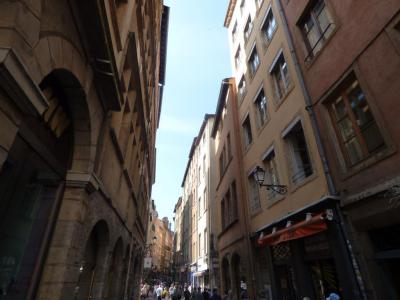
In 1954, the Old city of Lyon was the first town in France to be protected as a cultural site under France's Malraux law. The law protects an area of three Renaissance neighborhoods around Fourviere Hill. The districts are Saint Jean, Saint Paul and Saint Georges. Saint Jean was a nexus of political and religious power in the Middle Ages.
Saint Jean Cathedral and its adjoining Romanesque Manecanterie (choir school) are found in the Saint-Jean distric. The first foot tunnel (traboule) connects Saint-Jean Street to the Government Square (Place du Gouvernment). In the Middle Ages there were few streets connecting the hill to the Saone. Citizens needed quicker access to fresh water.
The tunnels (traboules) were the answer. More tunnels were built in the 19th century. Canuts (silk workers) used the tunnels to move their silk down to the river for transport. When the Canuts rebelled against the rich silk merchants in the early 1800s, they used the traboules as hiding places. In World War II, the tunnels harbored Resistence fighters.
At 54 Saint-Jean Street there is a green door with an engraved sign reading: "La Longue Traboule" ( The Long Tunnel). It is the longest traboule in Old Lyon. The passage extends from Saint-Jean Street to Boeuf Street ("Beef Street"). The tunnel crosses five courtyards and four buildings. About fifty traboules are open to the public. But there are many more.
Saint Jean Cathedral and its adjoining Romanesque Manecanterie (choir school) are found in the Saint-Jean distric. The first foot tunnel (traboule) connects Saint-Jean Street to the Government Square (Place du Gouvernment). In the Middle Ages there were few streets connecting the hill to the Saone. Citizens needed quicker access to fresh water.
The tunnels (traboules) were the answer. More tunnels were built in the 19th century. Canuts (silk workers) used the tunnels to move their silk down to the river for transport. When the Canuts rebelled against the rich silk merchants in the early 1800s, they used the traboules as hiding places. In World War II, the tunnels harbored Resistence fighters.
At 54 Saint-Jean Street there is a green door with an engraved sign reading: "La Longue Traboule" ( The Long Tunnel). It is the longest traboule in Old Lyon. The passage extends from Saint-Jean Street to Boeuf Street ("Beef Street"). The tunnel crosses five courtyards and four buildings. About fifty traboules are open to the public. But there are many more.
3) Musée Cinéma et Miniature (Cinema and Miniature Museum) (must see)
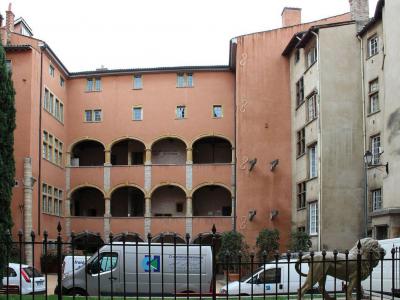
The Cinema and Miniature Museum (Musée Cinéma et Miniature) in Lyon, stands as a testament to the magical world of cinema and the intricate art of miniatures. Established by the renowned miniaturist Dan Ohlmann, this private museum is situated in a UNESCO-listed Renaissance building, nestled in the picturesque heart of Old Lyon.
Spanning an impressive 2000 square meters of exhibition space, the museum offers an immersive experience of the grand history of cinema. It features a remarkable collection of over a thousand original works, including costumes and iconic props that have captivated audiences in some of the most beloved films in cinematic history. The museum’s extensive array of artifacts encompasses pieces from blockbuster movies such as "Back to the Future," "Star Wars," "Mary Poppins," "Harry Potter," "Indiana Jones," "Alien," "Matrix," "Batman," "Terminator," and many others.
The Cinema and Miniature Museum serves not only as a treasure trove for cinephiles but also as an educational journey into the world of filmmaking. It aims to unveil the secrets behind special effects and the unique crafts and techniques that define the Seventh Art. The museum's permanent collections showcase costumes, props, makeup, animatronics, puppets, and sculptures, revealing the movie-making process.
In addition to its cinematic wonders, the museum is also renowned for housing the world's largest international collection of miniature art. This extraordinary assemblage includes a thousand realistic masterpieces, each meticulously and skillfully crafted by various miniature artists from around the globe. These miniatures, with their astonishing attention to detail, complement the cinematic exhibits by showcasing another form of artistic mastery.
Spanning an impressive 2000 square meters of exhibition space, the museum offers an immersive experience of the grand history of cinema. It features a remarkable collection of over a thousand original works, including costumes and iconic props that have captivated audiences in some of the most beloved films in cinematic history. The museum’s extensive array of artifacts encompasses pieces from blockbuster movies such as "Back to the Future," "Star Wars," "Mary Poppins," "Harry Potter," "Indiana Jones," "Alien," "Matrix," "Batman," "Terminator," and many others.
The Cinema and Miniature Museum serves not only as a treasure trove for cinephiles but also as an educational journey into the world of filmmaking. It aims to unveil the secrets behind special effects and the unique crafts and techniques that define the Seventh Art. The museum's permanent collections showcase costumes, props, makeup, animatronics, puppets, and sculptures, revealing the movie-making process.
In addition to its cinematic wonders, the museum is also renowned for housing the world's largest international collection of miniature art. This extraordinary assemblage includes a thousand realistic masterpieces, each meticulously and skillfully crafted by various miniature artists from around the globe. These miniatures, with their astonishing attention to detail, complement the cinematic exhibits by showcasing another form of artistic mastery.
4) Museum of Gallo-Roman Civilization (must see)
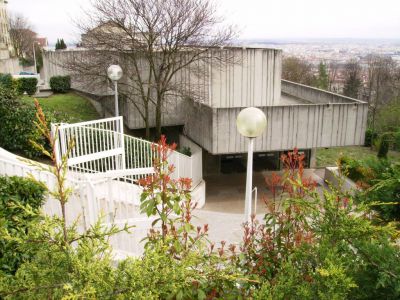
The Museum of Gallo-Roman Civilization in Lyon is dedicated to showcasing ancient artifacts from the region's rich archaeological heritage. Initially, these valuable artifacts were displayed in the Saint Peter's Palace (Palais de Saint Pierre). However, in 1957, they were relocated to a modest building, where they remained relatively obscure until the construction of the current museum. Architect Zehrfuss took on the project, culminating in the museum's opening in 1975. Since 1991, the Rhône District Council has overseen its operations.
Strategically situated on the site of an ancient Roman theater, the museum is architecturally and symbolically aligned with its contents. The internal layout is split into three distinct areas: permanent exhibitions, research facilities, and workshops.
The exhibition space, comprising half of the museum's floor area, is ingeniously organized into 17 thematic rooms. Each room is centered around a key artifact, with accompanying items that collectively narrate the history and culture of the period. These displays range from inscriptions and mosaics to ceramics, glassware, jewelry, and sarcophagi, covering a timeline from 43 BC to the early Christian era. The artifacts, predominantly sourced from the Rhône, Ain, and Isere departments, weave an intricate story of life in ancient Lyon, once the capital of Gaul, and its surrounding areas.
The other half of the museum is dedicated to administrative functions, workshops, and an extensive research and reference library. This library, notable for its comprehensive collection, is accessible to the public, offering an invaluable resource for both casual visitors and serious scholars. The Museum of Gallo-Roman Civilization thus serves not only as a guardian of history but also as a vibrant center for ongoing research and education in the field of Gallo-Roman studies.
Strategically situated on the site of an ancient Roman theater, the museum is architecturally and symbolically aligned with its contents. The internal layout is split into three distinct areas: permanent exhibitions, research facilities, and workshops.
The exhibition space, comprising half of the museum's floor area, is ingeniously organized into 17 thematic rooms. Each room is centered around a key artifact, with accompanying items that collectively narrate the history and culture of the period. These displays range from inscriptions and mosaics to ceramics, glassware, jewelry, and sarcophagi, covering a timeline from 43 BC to the early Christian era. The artifacts, predominantly sourced from the Rhône, Ain, and Isere departments, weave an intricate story of life in ancient Lyon, once the capital of Gaul, and its surrounding areas.
The other half of the museum is dedicated to administrative functions, workshops, and an extensive research and reference library. This library, notable for its comprehensive collection, is accessible to the public, offering an invaluable resource for both casual visitors and serious scholars. The Museum of Gallo-Roman Civilization thus serves not only as a guardian of history but also as a vibrant center for ongoing research and education in the field of Gallo-Roman studies.
5) Ancient Theatre of Fourvière (Amphitheatre Gallo-Romain) (must see)
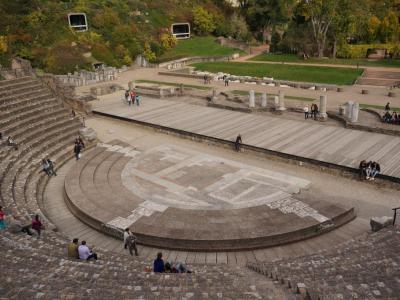
There are a lot of interesting vestiges of ancient Lyon to behold and one of the best of them, undoubtedly, is the Amphitheatre Gallo-Romain, at the foot of the Croix-Rousse Hill.
This theatre, first built under the reign of Roman Emperor Tiberius, around 19AD, was also known as the Amphitheatre des Trois Gaules. Its main purpose was to serve as the Sanctuary of the Three Gauls – an administrative institution set to federalize and romanize Gallia as an Imperial province.
Other than that, the theatre was used, as were all such places in Roman times, as a place for entertainment. Theatrical plays were put on here along with gladiator fights and other public events. The theatre was also used for public executions.
The original amphitheatre wasn’t very large; it had room for just about 1,800 spectators. The basement was made up of three elliptical walls joined by cross-walls and a channel around the oval central space.
Around 230 AD the theatre was enlarged, added with two new galleries, which brought the seating space up to 20,000. At the end of the Gallo-Roman era the theatre was abandoned and fell into ruin, with parts of it being built on.
Archaeological digs between 1956 and 1976 uncovered the remains of what you can see today in the Jardin des Plantes.
This theatre, first built under the reign of Roman Emperor Tiberius, around 19AD, was also known as the Amphitheatre des Trois Gaules. Its main purpose was to serve as the Sanctuary of the Three Gauls – an administrative institution set to federalize and romanize Gallia as an Imperial province.
Other than that, the theatre was used, as were all such places in Roman times, as a place for entertainment. Theatrical plays were put on here along with gladiator fights and other public events. The theatre was also used for public executions.
The original amphitheatre wasn’t very large; it had room for just about 1,800 spectators. The basement was made up of three elliptical walls joined by cross-walls and a channel around the oval central space.
Around 230 AD the theatre was enlarged, added with two new galleries, which brought the seating space up to 20,000. At the end of the Gallo-Roman era the theatre was abandoned and fell into ruin, with parts of it being built on.
Archaeological digs between 1956 and 1976 uncovered the remains of what you can see today in the Jardin des Plantes.
6) Basilica of Notre-Dame de Fourvière (must see)
"Fourviere" is a corruption of the French version of the Latin name, "forum vetus," meaning "Old Forum." Old Forum in French becomes "Vieux-Forum." Reverse it and say it fast and voila! We have "Fourviere." The Basilica of Notre-Dame de Fourviere of Lyon is sitting on the remains the Roman forum built by Trajan. Nothing more need be said.
The basilica was built in the years 1872 to 1896 using private funds. The church is dedicated to the Virgin Mary. She is credited with saving the city from the Black Plague in 1643. Each December 8th, the Festival of Lights is held in her honor. Lighted candles are placed outside every window, and Light Shows play over building facades.
The Virgin has not been neglectful. It is said she also saved the city from the Cholera epidemic in 1832 and the Prussian invasion of 1871. Like the Sacred Heart of Montmartre (Sacré Coeur de Montmartre), the Basilica of Notre-Dame de Fourviere perches on a high hill, a votive offering and a victory memorial.
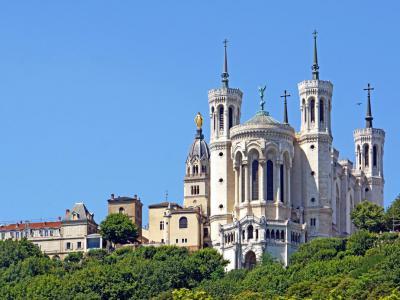
The basilica has a Museum of Sacred Art and sees over two million visitors and pilgrims every year. The church was designed by historicist architect Pierre Bossan. He foreswore Gothic influences, embracing Romanesque and Byzantine styles.
The basilica has four towers and a bell tower with a gilded statue of the Virgin. There is a wealth of mosaics, stained glass and a crypt to Saint Joseph. There are actually two sanctuaries. The upper one is lush and ornate. The lower sanctuary is simple. The building, with its four towers, is said to look like an elephant upside-down.
The basilica is not the first shrine at Fourviere. The earliest chapel on the site dedicated to Mary dates from 1170. The most recent reconstruction was in 1852 when the tower bearing the golden statue by sculptor Joseph Fabisch was installed. The city committed to build the basilica after the Franco-Prussian War of 1871.
The basilica was built in the years 1872 to 1896 using private funds. The church is dedicated to the Virgin Mary. She is credited with saving the city from the Black Plague in 1643. Each December 8th, the Festival of Lights is held in her honor. Lighted candles are placed outside every window, and Light Shows play over building facades.
The Virgin has not been neglectful. It is said she also saved the city from the Cholera epidemic in 1832 and the Prussian invasion of 1871. Like the Sacred Heart of Montmartre (Sacré Coeur de Montmartre), the Basilica of Notre-Dame de Fourviere perches on a high hill, a votive offering and a victory memorial.
The basilica has a Museum of Sacred Art and sees over two million visitors and pilgrims every year. The church was designed by historicist architect Pierre Bossan. He foreswore Gothic influences, embracing Romanesque and Byzantine styles.
The basilica has four towers and a bell tower with a gilded statue of the Virgin. There is a wealth of mosaics, stained glass and a crypt to Saint Joseph. There are actually two sanctuaries. The upper one is lush and ornate. The lower sanctuary is simple. The building, with its four towers, is said to look like an elephant upside-down.
The basilica is not the first shrine at Fourviere. The earliest chapel on the site dedicated to Mary dates from 1170. The most recent reconstruction was in 1852 when the tower bearing the golden statue by sculptor Joseph Fabisch was installed. The city committed to build the basilica after the Franco-Prussian War of 1871.
7) Fresque des Lyonnais (The Lyon Fresco) (must see)
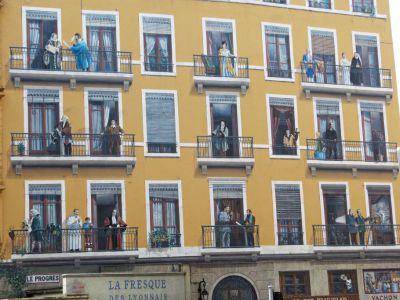
On the Saone side of the first arrondissement, on the corner of Quai Saint Vincent and Martinière Street, stands a seven-story building. Two of the walls of the building, one measuring 800 square meters and the other 200 square meters, are covered with a massive "trompe-l'oeil," a mural called a "trick of the eye."
There are 200 meters of mural on the Saint Vincent side and 600 on the side of Martinière. The building has become a popular historical monument for visitors, showing 24 historic and six modern-day persons who have made the city what it is. The modern personalities are shown at street level "interacting" with passersby.
The massive fresco spans 2,000 years of Lyonnais history, from Emperor Claudius of Ancient Rome to L'abbe Pierre, founder of the anti-poverty movement Emmaus and French Resistance fighter, and Bernard Lacombe, who had scored 255 goals in football by 1987. Paul Bocuse, Michelin star master chef, stands in the doorway of an illusionary cafe.
Giovanni de Verrazzo is there. While in the service of Francois I, he discovered New York City before it was anything. Antoine de Saint Exupery and his Little Prince share a balcony. Edouard Herriot, mayor of Lyon for 50 years, smokes his pipe. Auguste and Louis Lumiere show their "cinematograph" the first motion-picture camera.
Many more figures are looking out of windows and taking to their balconies for the open air. The mural was created in 1995 by the artist cooperative, CiteCreation. The object was the revitalization of this heavily trafficked waterfront district. CiteCreation created a similar "balcony" mural in Barcelona, Spain.
The best time to study the mural is early on a sunny day. The light is best between 10 and 11 am. The neighborhood is filled with wall paintings. Of course, none are on the level with The Lyon Fresco.
There are 200 meters of mural on the Saint Vincent side and 600 on the side of Martinière. The building has become a popular historical monument for visitors, showing 24 historic and six modern-day persons who have made the city what it is. The modern personalities are shown at street level "interacting" with passersby.
The massive fresco spans 2,000 years of Lyonnais history, from Emperor Claudius of Ancient Rome to L'abbe Pierre, founder of the anti-poverty movement Emmaus and French Resistance fighter, and Bernard Lacombe, who had scored 255 goals in football by 1987. Paul Bocuse, Michelin star master chef, stands in the doorway of an illusionary cafe.
Giovanni de Verrazzo is there. While in the service of Francois I, he discovered New York City before it was anything. Antoine de Saint Exupery and his Little Prince share a balcony. Edouard Herriot, mayor of Lyon for 50 years, smokes his pipe. Auguste and Louis Lumiere show their "cinematograph" the first motion-picture camera.
Many more figures are looking out of windows and taking to their balconies for the open air. The mural was created in 1995 by the artist cooperative, CiteCreation. The object was the revitalization of this heavily trafficked waterfront district. CiteCreation created a similar "balcony" mural in Barcelona, Spain.
The best time to study the mural is early on a sunny day. The light is best between 10 and 11 am. The neighborhood is filled with wall paintings. Of course, none are on the level with The Lyon Fresco.
8) Fine Arts Museum (must see)
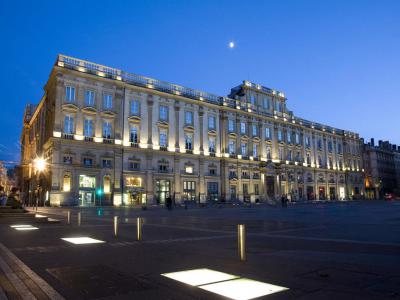
The Fine Arts Museum in Lion is situated within the former Abbey of Les Dames de Saint Pierre, known as the Saint Peter's Palace (Palais de Saint Pierre). This abbey has its origins dating back to the 7th century and underwent significant renovations in the 17th century. It faced upheaval during the French Revolution when the nuns were expelled. Subsequently, the palace saw further restoration and expansion efforts carried out between 1988 and 1998.
Established in 1801, the museum encompasses a wide span of art history, ranging from Ancient Egypt to the Modern Art era. Its collection is comprehensive, covering various artistic disciplines, and it stands as one of France's foremost fine arts museums.
The museum's exhibitions, both temporary and permanent, are spread across 70 rooms. Among these, 35 rooms are dedicated to paintings from the 14th to the mid-20th century, organized chronologically based on major art schools. You can admire works from French, German, Flemish, Dutch, and Spanish artists.
In the museum's garden, 19th-century statues can be found, while additional statues are divided into two sections: Medieval and Renaissance pieces on the ground floor and 19th- and 20th-century sculptures in the former refectory.
Nine rooms are specifically allocated to Ancient Egyptian artifacts, displaying 600 items in chronological order by theme. Other rooms showcase items from Assyria, Babylon, Cyprus, Samaria, and Syria. There are also three rooms dedicated to Greek artifacts and Roman sculptures.
The museum boasts a notable collection of coins and medals from the 19th century, as well as objets d’art spanning from the Middle Ages to the 20th century. Additionally, there is a selection of Graphic Art from the 19th and 20th centuries on display.
Established in 1801, the museum encompasses a wide span of art history, ranging from Ancient Egypt to the Modern Art era. Its collection is comprehensive, covering various artistic disciplines, and it stands as one of France's foremost fine arts museums.
The museum's exhibitions, both temporary and permanent, are spread across 70 rooms. Among these, 35 rooms are dedicated to paintings from the 14th to the mid-20th century, organized chronologically based on major art schools. You can admire works from French, German, Flemish, Dutch, and Spanish artists.
In the museum's garden, 19th-century statues can be found, while additional statues are divided into two sections: Medieval and Renaissance pieces on the ground floor and 19th- and 20th-century sculptures in the former refectory.
Nine rooms are specifically allocated to Ancient Egyptian artifacts, displaying 600 items in chronological order by theme. Other rooms showcase items from Assyria, Babylon, Cyprus, Samaria, and Syria. There are also three rooms dedicated to Greek artifacts and Roman sculptures.
The museum boasts a notable collection of coins and medals from the 19th century, as well as objets d’art spanning from the Middle Ages to the 20th century. Additionally, there is a selection of Graphic Art from the 19th and 20th centuries on display.
9) Le Mur Des Canuts (The Canuts Mural) (must see)
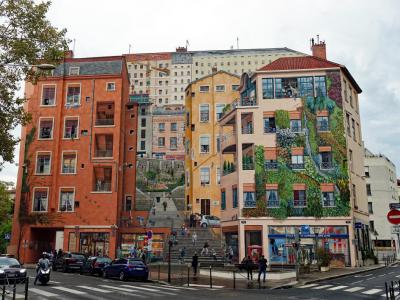
The Wall of the Silkworkers (Le Mur des Canuts) is a mural in the Croix-Rouge ("Red-Cross") district of Lyon. It is the largest "trick of the eye" (trompe-l'oeil) mural in the city, covering an area of 12,917 square feet. It is located at the corner of the Canuts Boulevard (Boulevard des Canuts) and Denfert Rochereau Street.
This mural is unlike any other. It represents ordinary day-to-day life in the neighborhood of Croix-Rouge, but with a twist. It is updated. The first update was in 1997. The second, in 2013. The aim is to keep up with the transformations of the district, including changes in the people. The mural is a "living" history.
Pastel colored buildings with tall windows, a steep stairway of stone, a theatre, a silk shop, a bank; all appear in a near surrealistic display. It is another work of CiteCreation. The mural painting organization created the mural in 1987 to honor the history of Croix-Rouge neighborhood.
The profound three-dimensional effects give a sense of action to the display. A black dog lies in front of a shop. Customers wait for the bank to open. Children play at parkour on the stone steps. Tenants peer from windows at passersby. It is a show of life on the "Hill that works." The spirit of the silk weavers of Lyon lives on.
This mural is unlike any other. It represents ordinary day-to-day life in the neighborhood of Croix-Rouge, but with a twist. It is updated. The first update was in 1997. The second, in 2013. The aim is to keep up with the transformations of the district, including changes in the people. The mural is a "living" history.
Pastel colored buildings with tall windows, a steep stairway of stone, a theatre, a silk shop, a bank; all appear in a near surrealistic display. It is another work of CiteCreation. The mural painting organization created the mural in 1987 to honor the history of Croix-Rouge neighborhood.
The profound three-dimensional effects give a sense of action to the display. A black dog lies in front of a shop. Customers wait for the bank to open. Children play at parkour on the stone steps. Tenants peer from windows at passersby. It is a show of life on the "Hill that works." The spirit of the silk weavers of Lyon lives on.
