Custom Walk in York, England by vklporter_332f22 created on 2026-02-12
Guide Location: England » York
Guide Type: Custom Walk
# of Sights: 9
Tour Duration: 2 Hour(s)
Travel Distance: 3.6 Km or 2.2 Miles
Share Key: 3TMBC
Guide Type: Custom Walk
# of Sights: 9
Tour Duration: 2 Hour(s)
Travel Distance: 3.6 Km or 2.2 Miles
Share Key: 3TMBC
How It Works
Please retrieve this walk in the GPSmyCity app. Once done, the app will guide you from one tour stop to the next as if you had a personal tour guide. If you created the walk on this website or come to the page via a link, please follow the instructions below to retrieve the walk in the app.
Retrieve This Walk in App
Step 1. Download the app "GPSmyCity: Walks in 1K+ Cities" on Apple App Store or Google Play Store.



Step 2. In the GPSmyCity app, download(or launch) the guide "York Map and Walking Tours".
Step 3. Tap the menu button located at upper right corner of the "Walks" screen and select "Retrieve custom walk". Enter the share key: 3TMBC
1) York Minster (must see)
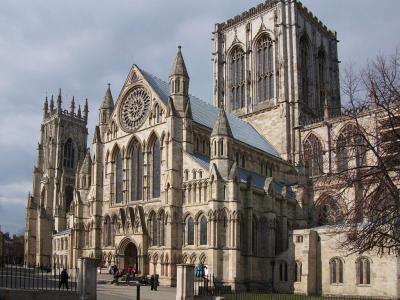
The York Minster is an impressive cathedral with a long and storied history. The Romans settled here and named the area Eboracum in 71 AD. King Edwin was baptized in a small wooden church here in 625. A stone church was built, and King Edwin was buried in the stone church in 633. In 1088, a new Minster was built. The Minster was expanded between 1154 and 1225. In 1328, the York Minster hosted a royal wedding between King Edward III and Philippa of Hainault.
Richard Scrope, Archbishop of York, was accused of treason by Henry IV and beheaded in 1405. His tomb lies in the Minster.
The Minster as it stands today was completed in 1471. It is the second-largest Gothic cathedral in Northern Europe. The name "minster" harkens to Anglo-Saxon missionary churches. The cathedral's official name is the Cathedral and Metropolitical Church of Saint Peter in York.
The Minster features majestic architecture, including a Gothic nave and a Perpendicular Gothic quire. The 1408 Great East Window is the largest expanse of stained glass in the world. Each lancet in the magnificent Five Sisters Window is 53 feet tall. A gorgeous rose window graces the south transept. The design of the west window is known as The Heart of Yorkshire.
The transepts feature wooden roofs. The nave was completed in 1350 and is England's widest Gothic nave. The central tower is 235 feet tall (72 meters). The choir is 102 feet tall (31 meters). The octagonal Chapter House was built in 1280 and features wonderful stone carvings.
Visitors can view the remains of the Roman fort in the cathedral's museum.
Why You Should Visit:
The York Minster is one of the most impressive churches in Northern Europe. It was one of the few Catholic churches not destroyed by Henry VIII, as he wanted to convert it to an Anglican church. The soaring nave, impressive towers, storied history, and Gothic architecture are the highlight of any York visit.
Tips:
Go for an evensong service, usually held in the evenings at 5:15 pm, and experience the acoustic wonders of the choir and organ.
The 35 church bells ring at 10:00 am on Sundays.
Richard Scrope, Archbishop of York, was accused of treason by Henry IV and beheaded in 1405. His tomb lies in the Minster.
The Minster as it stands today was completed in 1471. It is the second-largest Gothic cathedral in Northern Europe. The name "minster" harkens to Anglo-Saxon missionary churches. The cathedral's official name is the Cathedral and Metropolitical Church of Saint Peter in York.
The Minster features majestic architecture, including a Gothic nave and a Perpendicular Gothic quire. The 1408 Great East Window is the largest expanse of stained glass in the world. Each lancet in the magnificent Five Sisters Window is 53 feet tall. A gorgeous rose window graces the south transept. The design of the west window is known as The Heart of Yorkshire.
The transepts feature wooden roofs. The nave was completed in 1350 and is England's widest Gothic nave. The central tower is 235 feet tall (72 meters). The choir is 102 feet tall (31 meters). The octagonal Chapter House was built in 1280 and features wonderful stone carvings.
Visitors can view the remains of the Roman fort in the cathedral's museum.
Why You Should Visit:
The York Minster is one of the most impressive churches in Northern Europe. It was one of the few Catholic churches not destroyed by Henry VIII, as he wanted to convert it to an Anglican church. The soaring nave, impressive towers, storied history, and Gothic architecture are the highlight of any York visit.
Tips:
Go for an evensong service, usually held in the evenings at 5:15 pm, and experience the acoustic wonders of the choir and organ.
The 35 church bells ring at 10:00 am on Sundays.
2) York City Walls (must see)
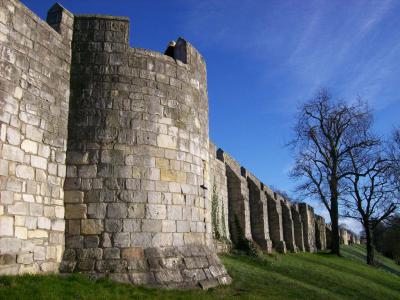
The York City Walls in York are a historic and extensive fortification that has surrounded the city since Roman times. Today, York boasts more miles of intact walls than any other city in England, known collectively as the York City Walls, the Bar Walls, or, less accurately, the Roman Walls. The latter term is a misnomer since the majority of the surviving structure is not of Roman origin, and the layout of the walls has significantly evolved since the Roman period.
These walls originally date back to around 71 AD when the Romans built a wooden fort near the River Ouse, covering approximately 50 acres. The fort's rectangular boundary was integral to its defensive strategy. However, these early fortifications proved inadequate during the Viking invasions, necessitating the construction of more robust defenses.
Between the 12th and 14th centuries, a new stone wall was erected, utilizing the foundations of the old Roman walls and extending southwards across both sides of the Rivers Ouse and Foss. This expansion effectively enclosed the city, enhancing its defense against future threats. Today, the walls stand about 13 feet high and 6 feet wide, a testament to medieval engineering and strategic planning.
Access to the city is controlled through four main gates, also known as "bars": Bootham Bar, Monk Bar, Walmgate Bar, and Micklegate Bar. These gates not only served as toll collection points in medieval times but also played crucial roles in the city’s defense during wartime. Each gate has its unique historical significance and architectural features, contributing to the overall heritage of York’s medieval city defenses.
These walls originally date back to around 71 AD when the Romans built a wooden fort near the River Ouse, covering approximately 50 acres. The fort's rectangular boundary was integral to its defensive strategy. However, these early fortifications proved inadequate during the Viking invasions, necessitating the construction of more robust defenses.
Between the 12th and 14th centuries, a new stone wall was erected, utilizing the foundations of the old Roman walls and extending southwards across both sides of the Rivers Ouse and Foss. This expansion effectively enclosed the city, enhancing its defense against future threats. Today, the walls stand about 13 feet high and 6 feet wide, a testament to medieval engineering and strategic planning.
Access to the city is controlled through four main gates, also known as "bars": Bootham Bar, Monk Bar, Walmgate Bar, and Micklegate Bar. These gates not only served as toll collection points in medieval times but also played crucial roles in the city’s defense during wartime. Each gate has its unique historical significance and architectural features, contributing to the overall heritage of York’s medieval city defenses.
3) St. Cuthbert's Church
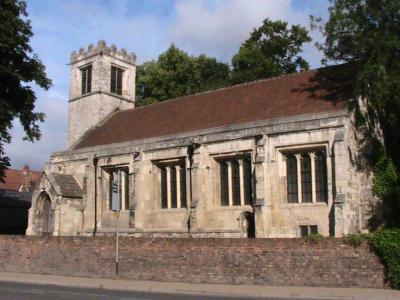
Saint Cuthbert's Church in York stands as a Grade I listed parish church and has been renamed Saint Cuthbert's House of Prayer. This historic building is located on Peasholme Green and is remarkable for its architectural and historical value, dating back to the 15th century. It underwent significant restoration and rebuilding around 1430 under the direction of William de Bowes, a former Lord Mayor of York. Further restorations occurred in 1859, which included repointing the stonework, leveling the floor, and replacing the pews.
The church's architectural features are predominantly from the 15th century, showcasing the late perpendicular style, particularly evident in the square windows along the south wall. The vestry, positioned just past the tower on the west side, was likely added after 1850. In contrast, the east wall of the church, visible from adjacent business premises, presents a fascinating array of building styles from different eras. This wall includes elements from the 11th to the 15th centuries, with medieval buttresses and a blocked-up door from the 18th century, offering a vivid tableau of historical architecture.
In 1980, the church building transitioned from a traditional parish church to serve as offices for the adjoining parish of Saint Michael le Belfrey. It now functions as the Saint Cuthbert's House of Prayer, continuing its legacy as a place of spiritual significance in York. This transformation marks Saint Cuthbert's as a living piece of history, integrating centuries of architectural styles and serving new purposes while retaining its sacred essence.
The church's architectural features are predominantly from the 15th century, showcasing the late perpendicular style, particularly evident in the square windows along the south wall. The vestry, positioned just past the tower on the west side, was likely added after 1850. In contrast, the east wall of the church, visible from adjacent business premises, presents a fascinating array of building styles from different eras. This wall includes elements from the 11th to the 15th centuries, with medieval buttresses and a blocked-up door from the 18th century, offering a vivid tableau of historical architecture.
In 1980, the church building transitioned from a traditional parish church to serve as offices for the adjoining parish of Saint Michael le Belfrey. It now functions as the Saint Cuthbert's House of Prayer, continuing its legacy as a place of spiritual significance in York. This transformation marks Saint Cuthbert's as a living piece of history, integrating centuries of architectural styles and serving new purposes while retaining its sacred essence.
4) Merchant Adventurers' Hall
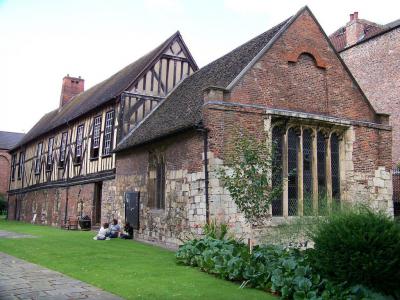
This guildhall in the city of York was one of the most important buildings in the medieval city. The majority of the Hall was built in 1357 by a group of influential men and women who came together to form a religious fraternity called the Guild of Our Lord Jesus and the Blessed Virgin Mary. The main part of the building consists of the Great Hall, the Undercroft and the Chapel.
The Great Hall is where is where the medieval merchants first gathered to conduct their business and to socialize. It is the largest timber-framed building in the UK still standing and used for its original purpose. The roof of the hall is of two spans supported by a row of large central timber posts. It includes complex crown posts and is held together by wooden pegs.
The Undercroft was was originally a hospital or almshouse for poor people of York. Like the Great Hall, the Undercroft is divided in two by its supporting row of timber posts. The undercroft also provides access to an attached chapel.
The Chapel was build for the spiritual use of the ill and poor in the hospital as well as the members of the the Merchant Adventurers' Guild. It is still used for worship today.
Merchant Adventurers' Hall is one of the best preserved medieval guildhalls in the world and is well worth being included on your York itinerary.
The Great Hall is where is where the medieval merchants first gathered to conduct their business and to socialize. It is the largest timber-framed building in the UK still standing and used for its original purpose. The roof of the hall is of two spans supported by a row of large central timber posts. It includes complex crown posts and is held together by wooden pegs.
The Undercroft was was originally a hospital or almshouse for poor people of York. Like the Great Hall, the Undercroft is divided in two by its supporting row of timber posts. The undercroft also provides access to an attached chapel.
The Chapel was build for the spiritual use of the ill and poor in the hospital as well as the members of the the Merchant Adventurers' Guild. It is still used for worship today.
Merchant Adventurers' Hall is one of the best preserved medieval guildhalls in the world and is well worth being included on your York itinerary.
5) Fishergate Bar
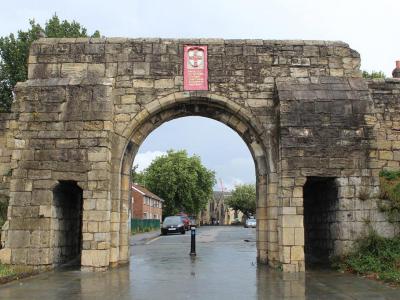
The south-facing Fishergate Bar is one of six gateways in the City Walls of York.
The first recorded mention of the Bar dates from 1315, where it is referred to as Barram Fishergate. The latter comes after a large flooded area, known as the King’s Fishpond, that used to be located nearby.
The current structure was erected in 1487, by the authority of Mayor of York, Sir William Todd. Attesting to this fact is a central stone surmounting the archway, featuring the York coat of arms and Latin inscription – “A.doi m.cccc.lxxx.vii Sr Willm Tod knight mayre this wal was mayd in his days lx yadys” – translating as “Sixty yards of the wall, including the bar, was built in 1487 under Sir William Tod, mayor of York”.
Two years after the construction, in 1489, the Bar suffered severe damage at the hands of enraged citizens who revolted against heavy taxation imposed by Henry VII, the first Tudor king. The rebels burned the gate following the murder of Henry Percy, 4th Earl of Northumberland.
Today, a commemorative plaque on the Bar recalls that event. Also, you can see some reddened and cracked stones near the base of the gateway – traces of the Yorkshire Revolt. The damage was so bad that, instead of repairing the gateway, it was bricked up and not re-opened until 1834, to provide access to the cattle market.
As a secondary gateway, just like Victoria Bar, the Fishergate consists of a main arch and two smaller pedestrian ones.
The first recorded mention of the Bar dates from 1315, where it is referred to as Barram Fishergate. The latter comes after a large flooded area, known as the King’s Fishpond, that used to be located nearby.
The current structure was erected in 1487, by the authority of Mayor of York, Sir William Todd. Attesting to this fact is a central stone surmounting the archway, featuring the York coat of arms and Latin inscription – “A.doi m.cccc.lxxx.vii Sr Willm Tod knight mayre this wal was mayd in his days lx yadys” – translating as “Sixty yards of the wall, including the bar, was built in 1487 under Sir William Tod, mayor of York”.
Two years after the construction, in 1489, the Bar suffered severe damage at the hands of enraged citizens who revolted against heavy taxation imposed by Henry VII, the first Tudor king. The rebels burned the gate following the murder of Henry Percy, 4th Earl of Northumberland.
Today, a commemorative plaque on the Bar recalls that event. Also, you can see some reddened and cracked stones near the base of the gateway – traces of the Yorkshire Revolt. The damage was so bad that, instead of repairing the gateway, it was bricked up and not re-opened until 1834, to provide access to the cattle market.
As a secondary gateway, just like Victoria Bar, the Fishergate consists of a main arch and two smaller pedestrian ones.
6) Clifford's Tower (must see)
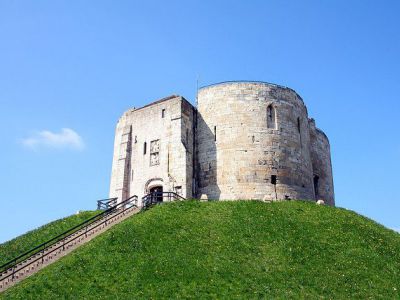
Clifford's Tower in York is a historical site steeped in a rich and tumultuous past. It stands as the largest surviving part of York Castle, which was once northern England's most formidable medieval royal fortress. The tower has recently been enhanced with a significant update in 2022, which includes a dramatic roof deck, internal walkways, and a soundscape interpretation that narrates the tower's compelling history like never before. These new features make its history and interior more accessible, providing a vivid account of its dramatic and sometimes tragic events.
Originally constructed by William the Conqueror in 1068-69, Clifford's Tower was built to assert control over the rebellious north. The tower has endured multiple devastations, having been burned down twice before being reconstructed by Henry III in the 13th century. It is named after a particularly dark event where Roger de Clifford was executed for treason against Edward II and displayed on the tower walls.
Today, the tower's stone structure, dating from the late 13th century, invites visitors to explore its multifaceted history. The site is not only significant for its military and royal associations but also as a tragic site of the 1190 massacre of about 150 Jews who sought refuge there. Visitors can climb to the top of the tower to walk the open-air wall that guards once patrolled, offering unparalleled views of York, including the Old Minister, the North York Moors, and other remnants of York Castle.
From this vantage point, one can also view the "Eye of York"-a collection of buildings that includes the Female Prison, Debtor's Prison, and the Assize Courts, enhancing the understanding of York's historical and architectural development. The panoramic views from the tower make it an ideal starting point for anyone visiting the city.
The ground floor of Clifford's Tower, once the royal exchequer, now invites visitors to explore its history. A tactile model in the courtyard showcases its unique, possibly French-inspired four-lobed architecture. The first floor features a richly decorated chapel, formerly private apartments. Historically, the tower has served as a prison and royal mint, and it was here that the infamous highwayman Dick Turpin was identified, leading to his execution in 1739.
Originally constructed by William the Conqueror in 1068-69, Clifford's Tower was built to assert control over the rebellious north. The tower has endured multiple devastations, having been burned down twice before being reconstructed by Henry III in the 13th century. It is named after a particularly dark event where Roger de Clifford was executed for treason against Edward II and displayed on the tower walls.
Today, the tower's stone structure, dating from the late 13th century, invites visitors to explore its multifaceted history. The site is not only significant for its military and royal associations but also as a tragic site of the 1190 massacre of about 150 Jews who sought refuge there. Visitors can climb to the top of the tower to walk the open-air wall that guards once patrolled, offering unparalleled views of York, including the Old Minister, the North York Moors, and other remnants of York Castle.
From this vantage point, one can also view the "Eye of York"-a collection of buildings that includes the Female Prison, Debtor's Prison, and the Assize Courts, enhancing the understanding of York's historical and architectural development. The panoramic views from the tower make it an ideal starting point for anyone visiting the city.
The ground floor of Clifford's Tower, once the royal exchequer, now invites visitors to explore its history. A tactile model in the courtyard showcases its unique, possibly French-inspired four-lobed architecture. The first floor features a richly decorated chapel, formerly private apartments. Historically, the tower has served as a prison and royal mint, and it was here that the infamous highwayman Dick Turpin was identified, leading to his execution in 1739.
7) The Shambles (must see)
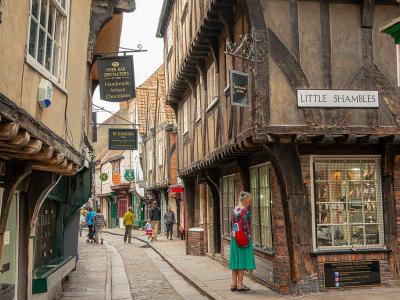
The Shambles is a historic street. Shambles refers to a meat market, and several streets with butcher shops are named The Shambles. Butcher stalls in this area were named in the 1086 Doomsday Book. The oldest buildings that line The Shambles today were built in the 14th century, and most were built by 1475. By 1426 the street was known as the Great Flesh Shambles, and later the street name was shortened to The Shambles.
Slaughterhouses were set up at the back of the butcher shops. The pavements were raised on the cobblestone street to allow easier cleaning of blood.
This narrow street features overhanging buildings, and some areas are so skinny that visitors can touch both sides of the street at once. The overhanging buildings would have sheltered the walls below and protected the display meat from the sun.
Visitors will find a shrine to Saint Margaret Clitherow on this street. Known as the "Pearl of York," she was martyred in 1586 for refusing to enter a plea to the charge of harboring Catholic priests. Saint Margaret Clitherow was married to a butcher and lived on The Shambles.
Butchers no longer line The Shambles, but several buildings still display meat hooks and meat shelves on display. Today's shops include restaurants, a bakery, and a bookshop.
Shambles Market runs daily between The Shambles and Parliament Street.
Why You Should Visit:
The Shambles is known as one of the best-preserved medieval streets in England. While fans believe it may have been the inspiration for Harry Potter's Diagon Alley, author J.K Rowling has denied these rumors. Regardless, the charming narrow street will transport visitors back in time.
Tips:
Visitors will also love exploring the five snickelways that lead off The Shambles. These snickelways are narrow alleys that connect to other streets.
Slaughterhouses were set up at the back of the butcher shops. The pavements were raised on the cobblestone street to allow easier cleaning of blood.
This narrow street features overhanging buildings, and some areas are so skinny that visitors can touch both sides of the street at once. The overhanging buildings would have sheltered the walls below and protected the display meat from the sun.
Visitors will find a shrine to Saint Margaret Clitherow on this street. Known as the "Pearl of York," she was martyred in 1586 for refusing to enter a plea to the charge of harboring Catholic priests. Saint Margaret Clitherow was married to a butcher and lived on The Shambles.
Butchers no longer line The Shambles, but several buildings still display meat hooks and meat shelves on display. Today's shops include restaurants, a bakery, and a bookshop.
Shambles Market runs daily between The Shambles and Parliament Street.
Why You Should Visit:
The Shambles is known as one of the best-preserved medieval streets in England. While fans believe it may have been the inspiration for Harry Potter's Diagon Alley, author J.K Rowling has denied these rumors. Regardless, the charming narrow street will transport visitors back in time.
Tips:
Visitors will also love exploring the five snickelways that lead off The Shambles. These snickelways are narrow alleys that connect to other streets.
8) The Cat Gallery
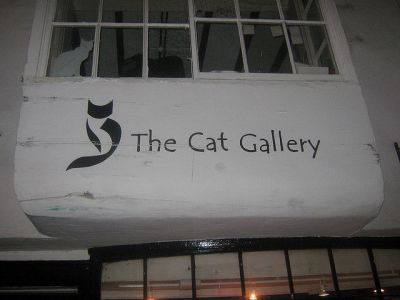
The Cat Gallery in York is a unique retail destination established in 2001 by Peter & Alison Hanson. This family-owned business is dedicated to all things feline, offering an extensive array of cat-themed products ranging from jewelry and accessories to housewares, paintings, and collectibles. It holds the distinction of being the UK's only cat-themed store providing a comprehensive shopping experience both in-store and through its internet and mail-order services.
Located in the historic city of York, The Cat Gallery has become a key player in the local retail scene, featuring a diverse selection of items that cater to cat enthusiasts. Shoppers can find everything from cat-themed books and stationery to toys, games, and even clothing. An interesting addition to its offerings is The Lucky Cat Shop, which focuses on York's Original Lucky Cat, enhancing the store's charm and appeal.
Beyond its commercial offerings, The Cat Gallery contributes to the cultural experience of York through the York Cat Trail. This free, self-guided tour allows participants to explore central York while discovering the intriguing cat statues that decorate various buildings, each with its unique backstory. The trail is family-friendly, including a mini-quiz for children who receive a gift upon completion.
The Cat Gallery not only serves as a shopping haven for cat lovers but also as a cultural highlight within York, making it a must-visit for both locals and tourists alike.
Located in the historic city of York, The Cat Gallery has become a key player in the local retail scene, featuring a diverse selection of items that cater to cat enthusiasts. Shoppers can find everything from cat-themed books and stationery to toys, games, and even clothing. An interesting addition to its offerings is The Lucky Cat Shop, which focuses on York's Original Lucky Cat, enhancing the store's charm and appeal.
Beyond its commercial offerings, The Cat Gallery contributes to the cultural experience of York through the York Cat Trail. This free, self-guided tour allows participants to explore central York while discovering the intriguing cat statues that decorate various buildings, each with its unique backstory. The trail is family-friendly, including a mini-quiz for children who receive a gift upon completion.
The Cat Gallery not only serves as a shopping haven for cat lovers but also as a cultural highlight within York, making it a must-visit for both locals and tourists alike.
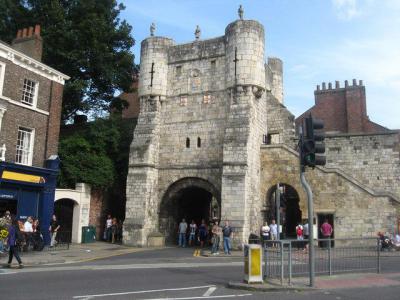
9) Bootham Bar
Although much of Bootham Bar was built in the 14th and 19th centuries, it also has some of the oldest surviving stonework, dating to the 11th century. It stands almost on the site of Porta Principalis Dextra, the northwestern gate of Eboracum. It was named in the 12th century as "barram de Bootham", meaning bar at the booths, after the nearby market booths. It was the last of the bars to lose its barbican, which was removed in 1835.
One interesting historical anecdote is that in 1501 a door knocker was attached to the bar's entrance in order to prevent Scots from entering the town. Nowadays, of course, all are welcome. Be sure to check out this historical landmark when visiting York.
Why You Should Visit:
This is the closest gate to the Minster and between here and Monk Bar you will find the most popular and attractive section of the City Wall. Unparalleled views of gardens, Minster, university, neighborhoods.
Tip:
The first floor has a square paved area which is worth a look round before you go to the walls via a black steel gate.
One interesting historical anecdote is that in 1501 a door knocker was attached to the bar's entrance in order to prevent Scots from entering the town. Nowadays, of course, all are welcome. Be sure to check out this historical landmark when visiting York.
Why You Should Visit:
This is the closest gate to the Minster and between here and Monk Bar you will find the most popular and attractive section of the City Wall. Unparalleled views of gardens, Minster, university, neighborhoods.
Tip:
The first floor has a square paved area which is worth a look round before you go to the walls via a black steel gate.
