Custom Walk in Rome, Italy by sophiastef_d23328 created on 2026-02-15
Guide Location: Italy » Rome
Guide Type: Custom Walk
# of Sights: 15
Tour Duration: 4 Hour(s)
Travel Distance: 7.4 Km or 4.6 Miles
Share Key: CDGWX
Guide Type: Custom Walk
# of Sights: 15
Tour Duration: 4 Hour(s)
Travel Distance: 7.4 Km or 4.6 Miles
Share Key: CDGWX
How It Works
Please retrieve this walk in the GPSmyCity app. Once done, the app will guide you from one tour stop to the next as if you had a personal tour guide. If you created the walk on this website or come to the page via a link, please follow the instructions below to retrieve the walk in the app.
Retrieve This Walk in App
Step 1. Download the app "GPSmyCity: Walks in 1K+ Cities" on Apple App Store or Google Play Store.



Step 2. In the GPSmyCity app, download(or launch) the guide "Rome Map and Walking Tours".
Step 3. Tap the menu button located at upper right corner of the "Walks" screen and select "Retrieve custom walk". Enter the share key: CDGWX
1) Piazza Trilussa (Trilussa Square)
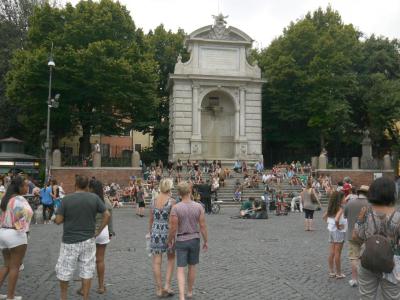
Piazza Trilussa in Rome is a vibrant square located in the heart of the Trastevere district, known for its lively atmosphere and popular among both young Romans and tourists. Situated in front of the Ponte Sisto this charming square is dedicated to Carlo Alberto Salustri, the renowned Roman satirical poet better known as Trilussa.
At the center of Piazza Trilussa stands the beautiful fountain of Acqua Paola, designed by architects Van Santen, known as Vasanzio, and Giovanni Fontana. This fountain was commissioned by Pope Paul V Borghese in 1613 to provide water to the districts of Trastevere, Borgo, Regola, and Ponte. The fountain features a monumental arch with a central niche flanked by two Ionic columns. An elevated attic displays the Borghese family coat of arms, featuring an eagle and a dragon, along with a celebratory inscription dedicated to the pontiff for bringing water to the left bank of the Tiber.
In 1870, due to the construction of the Tiber's embankments following a devastating flood, the fountain was dismantled. Unfortunately, almost half of the pieces broke or were scattered among different municipal warehouses. In 1898, when the fountain was reconstructed in Piazza Trilussa, architect Vescovali was only able to use what remained of it. Nevertheless, the result was remarkable.
In addition to the fountain, the square is adorned with a monument celebrating the great Roman poet Trilussa. Born in Rome in 1871 and passing away in 1950, Trilussa gained fame for his ironic poems that satirized corrupt politicians, fanaticism, and the intrigues of the powerful. The bronze statue of the poet, depicting him reciting his poems, was created by sculptor Lorenzo Ferri and inaugurated on December 21, 1954.
At the center of Piazza Trilussa stands the beautiful fountain of Acqua Paola, designed by architects Van Santen, known as Vasanzio, and Giovanni Fontana. This fountain was commissioned by Pope Paul V Borghese in 1613 to provide water to the districts of Trastevere, Borgo, Regola, and Ponte. The fountain features a monumental arch with a central niche flanked by two Ionic columns. An elevated attic displays the Borghese family coat of arms, featuring an eagle and a dragon, along with a celebratory inscription dedicated to the pontiff for bringing water to the left bank of the Tiber.
In 1870, due to the construction of the Tiber's embankments following a devastating flood, the fountain was dismantled. Unfortunately, almost half of the pieces broke or were scattered among different municipal warehouses. In 1898, when the fountain was reconstructed in Piazza Trilussa, architect Vescovali was only able to use what remained of it. Nevertheless, the result was remarkable.
In addition to the fountain, the square is adorned with a monument celebrating the great Roman poet Trilussa. Born in Rome in 1871 and passing away in 1950, Trilussa gained fame for his ironic poems that satirized corrupt politicians, fanaticism, and the intrigues of the powerful. The bronze statue of the poet, depicting him reciting his poems, was created by sculptor Lorenzo Ferri and inaugurated on December 21, 1954.
2) Isola Tiberina (Tiber Island)
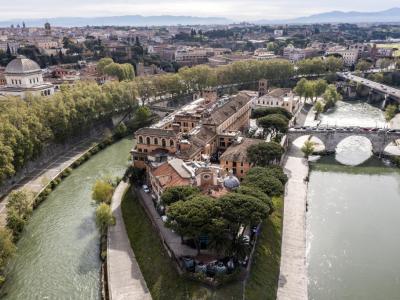
Tiber Island, known as Isola Tiberina in Italian, holds a unique place as the only river island within the part of the Tiber River that flows through Rome. Situated in the southern bend of the river, Tiber Island has a distinct boat-shaped appearance, measuring approximately 270 meters (890 feet) in length and 67 meters (220 feet) in width. It has been connected to both sides of the river by bridges since ancient times.
Throughout history, Tiber Island has been associated with medicine and healing due to its connection with the ancient temple of Asclepius and its later use as a hospital. The Fatebenefratelli Hospital, established in the 16th century, and the church of San Bartolomeo all'Isola, dating back to the 10th century, are prominent features on the island. These institutions further reinforce its connection to healthcare and wellness.
The island's original name, Insula Inter-Duos-Pontes, translates to "the island between the two bridges," highlighting its location between the Ponte Fabricio and the Ponte Cestio. The Ponte Fabricio, which connects the island to the northeast and the Field of Mars, is the only remaining original bridge in Rome. On the other hand, the Ponte Cestio, although some parts are original, links the island to the southern bank in the neighborhood of Trastevere.
Legend has it that Tiber Island originated from the body of the despised tyrant Tarquinius Superbus, who was overthrown in 510 BC. According to the story, after his fall, Romans threw his body into the Tiber, and it settled at the river's bottom. Over time, dirt and silt accumulated around the body, eventually forming Tiber Island. Another version of the legend suggests that the people gathered the wheat and grain associated with the tyrant and cast it into the Tiber, which eventually served as the foundation for the island.
In ancient times, prior to the spread of Christianity in Rome, Tiber Island carried a negative reputation, and people tended to avoid it. It was believed to be a place of punishment reserved for the worst criminals and the contagiously ill. However, with the construction of a temple on the island, its perception changed, and it became associated with healing and divine intervention.
Today, Tiber Island stands as a historic and picturesque site, offering a tranquil escape from the bustling city. Its connections to Roman mythology, ancient medicine, and architectural heritage make it a unique destination for locals and tourists alike.
Throughout history, Tiber Island has been associated with medicine and healing due to its connection with the ancient temple of Asclepius and its later use as a hospital. The Fatebenefratelli Hospital, established in the 16th century, and the church of San Bartolomeo all'Isola, dating back to the 10th century, are prominent features on the island. These institutions further reinforce its connection to healthcare and wellness.
The island's original name, Insula Inter-Duos-Pontes, translates to "the island between the two bridges," highlighting its location between the Ponte Fabricio and the Ponte Cestio. The Ponte Fabricio, which connects the island to the northeast and the Field of Mars, is the only remaining original bridge in Rome. On the other hand, the Ponte Cestio, although some parts are original, links the island to the southern bank in the neighborhood of Trastevere.
Legend has it that Tiber Island originated from the body of the despised tyrant Tarquinius Superbus, who was overthrown in 510 BC. According to the story, after his fall, Romans threw his body into the Tiber, and it settled at the river's bottom. Over time, dirt and silt accumulated around the body, eventually forming Tiber Island. Another version of the legend suggests that the people gathered the wheat and grain associated with the tyrant and cast it into the Tiber, which eventually served as the foundation for the island.
In ancient times, prior to the spread of Christianity in Rome, Tiber Island carried a negative reputation, and people tended to avoid it. It was believed to be a place of punishment reserved for the worst criminals and the contagiously ill. However, with the construction of a temple on the island, its perception changed, and it became associated with healing and divine intervention.
Today, Tiber Island stands as a historic and picturesque site, offering a tranquil escape from the bustling city. Its connections to Roman mythology, ancient medicine, and architectural heritage make it a unique destination for locals and tourists alike.
3) Piazza Navona (Navona Square) (must see)
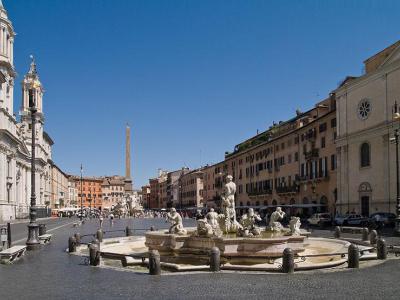
Navona Square, one of Rome’s most iconic places, is built on the site of the ancient (1st-century AD) Stadium of Domitian. The stadium’s elongated oval shape defines the square’s layout, which was originally designed for Roman games (or agones). Over time, the name evolved from Circus Agonalis (which means “competition arena”) to Navona. After the fall of the Roman Empire, the stadium fell into ruin and was quarried for materials, leaving few remnants today.
In the late 15th century, Navona Square was designated a public space when the city market moved there from Capitoline Hill. It became a celebrated example of Baroque architecture and art during the mid-17th century under Pope Innocent X, whose family property, the Pamphili Palace, overlooks the square. The latter also features several masterpieces, including Gian Lorenzo Bernini’s Fountain of the Four Rivers at its center, crowned by the Obelisk of Domitian. The renowned Church of Saint Agnes in Agone with its impressive dome further highlights the area's artistic significance. Also noteworthy are the Braschi Palace, presently home to the Museum of Rome, and the Cupis Palace, which now offers pre-booked accommodations.
Navona Square is also home to two additional fountains. The Fountain of the Moor, at the southern end, was originally sculpted by Giacomo della Porta in 1575, with Bernini adding a statue of a Moor wrestling a dolphin in 1673. At the northern end, the Fountain of Neptune, also by della Porta (created in 1574), gained its central Neptune statue in 1878.
The square has a rich cultural history, hosting theatrical performances and festivals, including a popular annual Christmas market, from December to January.
Navona Square made an appearance in several movies, including “Angels & Demons” (of 2008, starring Tom Hanks), “Yesterday, Today and Tomorrow” (with Sophie Loren, made in 1964), and “The Talented Mr. Ripley” (directed in 1999 by Anthony Minghella, featuring Matt Damon). The atmosphere in Navona Square exudes a cool and relaxed vibe which, complete with its cinematic and architectural appeal, makes it an ideal spot for photography.
Tip:
In the evenings, when the central fountain is illuminated, the square becomes particularly scenic.
If looking for more intimate and more value-for-money meals and refreshments, consider venturing onto one of the side streets adjacent to the square, filled with multiple eateries and cafes.
In the late 15th century, Navona Square was designated a public space when the city market moved there from Capitoline Hill. It became a celebrated example of Baroque architecture and art during the mid-17th century under Pope Innocent X, whose family property, the Pamphili Palace, overlooks the square. The latter also features several masterpieces, including Gian Lorenzo Bernini’s Fountain of the Four Rivers at its center, crowned by the Obelisk of Domitian. The renowned Church of Saint Agnes in Agone with its impressive dome further highlights the area's artistic significance. Also noteworthy are the Braschi Palace, presently home to the Museum of Rome, and the Cupis Palace, which now offers pre-booked accommodations.
Navona Square is also home to two additional fountains. The Fountain of the Moor, at the southern end, was originally sculpted by Giacomo della Porta in 1575, with Bernini adding a statue of a Moor wrestling a dolphin in 1673. At the northern end, the Fountain of Neptune, also by della Porta (created in 1574), gained its central Neptune statue in 1878.
The square has a rich cultural history, hosting theatrical performances and festivals, including a popular annual Christmas market, from December to January.
Navona Square made an appearance in several movies, including “Angels & Demons” (of 2008, starring Tom Hanks), “Yesterday, Today and Tomorrow” (with Sophie Loren, made in 1964), and “The Talented Mr. Ripley” (directed in 1999 by Anthony Minghella, featuring Matt Damon). The atmosphere in Navona Square exudes a cool and relaxed vibe which, complete with its cinematic and architectural appeal, makes it an ideal spot for photography.
Tip:
In the evenings, when the central fountain is illuminated, the square becomes particularly scenic.
If looking for more intimate and more value-for-money meals and refreshments, consider venturing onto one of the side streets adjacent to the square, filled with multiple eateries and cafes.
4) Fontana dei Quattro Fiumi (Fountain of the Four Rivers) (must see)
The focal point of Navona Square, the Fountain of the Four Rivers has been in place since the 17th century. While Rome has a longstanding affinity for fountains, dating back to antiquity, the Baroque era brought a new dimension to these water features, showcasing the generosity of the papacy.
In the case of the Fountain of the Four Rivers, Pope Innocent X, whose family seat – the Pamphili Palace – overlooks the square, entrusted the task to one of the most groundbreaking artists of the time, Gian Lorenzo Bernini. Created in 1651, the fountain was Rome's pinnacle achievement in fountain design, a symbolic masterpiece brimming with the dynamic and dramatic elements sought after by Baroque artists. Its central Egyptian obelisk is crowned with the Pamphili emblem, a dove with an olive twig.
Pope Innocent X chose Bernini after being secretly shown his model. The fountain was innovative, combining sculpture and architecture in a way unmatched by previous Roman fountains.
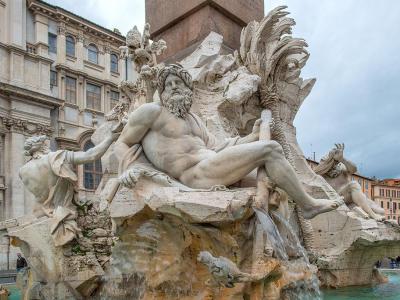
Here, the travertine base supports sculptures of four river gods, representing the major rivers of the continents over which papal authority had extended at that time. These include the Nile (for Africa), the Danube (for Europe), the Ganges (for Asia), and the Plate (for the Americas). Each figure conveys symbolic details: the Ganges is depicted holding a long oar, symbolizing the river's navigability; the Nile's veiled head signifies its unknown source; the Danube, the largest river near Rome touches the Pope's coat of arms; and the Plate sits atop a pile of coins, reflecting America’s wealth.
The fountain's unveiling on June 12, 1651, was marked by grand celebrations orchestrated by the Pamphili family. Allegorical figures of Fame and Curiosity paraded the streets, urging Romans to witness the reveal. The crowd marveled at the lifelike sculptures and water features, described as naturalistic and astonishing.
However, the project faced significant public opposition. Critics condemned its expense during the famine of 1646 to 1648, expressing their discontent through pasquinades demanding "Bread, not fountains." Street vendors and Roman Jews lamented their displacement from the square's market, which was closed to enhance its splendor.
Despite the controversy, the Fountain of the Four Rivers remains a cornerstone of Rome’s cultural and architectural legacy, blending mythology, artistry, and geographical narratives.
Tip:
To capture the essence of this fountain in photographs, it is recommended to shoot from various angles and positions, so as to get as much detail as possible. With ample space surrounding the fountain, take your time to find the perfect shot-or perhaps even multiple perfect shots.
In the case of the Fountain of the Four Rivers, Pope Innocent X, whose family seat – the Pamphili Palace – overlooks the square, entrusted the task to one of the most groundbreaking artists of the time, Gian Lorenzo Bernini. Created in 1651, the fountain was Rome's pinnacle achievement in fountain design, a symbolic masterpiece brimming with the dynamic and dramatic elements sought after by Baroque artists. Its central Egyptian obelisk is crowned with the Pamphili emblem, a dove with an olive twig.
Pope Innocent X chose Bernini after being secretly shown his model. The fountain was innovative, combining sculpture and architecture in a way unmatched by previous Roman fountains.
Here, the travertine base supports sculptures of four river gods, representing the major rivers of the continents over which papal authority had extended at that time. These include the Nile (for Africa), the Danube (for Europe), the Ganges (for Asia), and the Plate (for the Americas). Each figure conveys symbolic details: the Ganges is depicted holding a long oar, symbolizing the river's navigability; the Nile's veiled head signifies its unknown source; the Danube, the largest river near Rome touches the Pope's coat of arms; and the Plate sits atop a pile of coins, reflecting America’s wealth.
The fountain's unveiling on June 12, 1651, was marked by grand celebrations orchestrated by the Pamphili family. Allegorical figures of Fame and Curiosity paraded the streets, urging Romans to witness the reveal. The crowd marveled at the lifelike sculptures and water features, described as naturalistic and astonishing.
However, the project faced significant public opposition. Critics condemned its expense during the famine of 1646 to 1648, expressing their discontent through pasquinades demanding "Bread, not fountains." Street vendors and Roman Jews lamented their displacement from the square's market, which was closed to enhance its splendor.
Despite the controversy, the Fountain of the Four Rivers remains a cornerstone of Rome’s cultural and architectural legacy, blending mythology, artistry, and geographical narratives.
Tip:
To capture the essence of this fountain in photographs, it is recommended to shoot from various angles and positions, so as to get as much detail as possible. With ample space surrounding the fountain, take your time to find the perfect shot-or perhaps even multiple perfect shots.
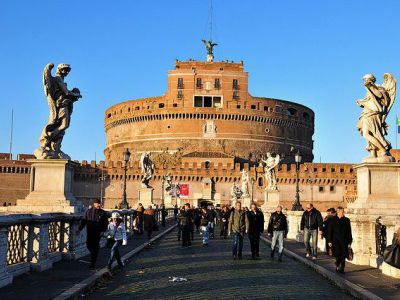
5) Museo Nazionale di Castel Sant'Angelo (National Museum of the Holy Angel Castle) (must see)
The Mausoleum of Hadrian, commonly known as the Castle of the Holy Angel, is a cylindrical tower in Rome’s Adriano Park. Commissioned by Emperor Hadrian between 134 and 139 AD as a family mausoleum, it was once the tallest building in Rome.
Initially, the mausoleum housed the ashes of Hadrian, his wife Sabina, and subsequent emperors, ending with Caracalla in 217. The structure was adorned with a garden-topped cylinder and a golden quadriga. Hadrian also built the nearby Pons Aelius bridge, which still offers a scenic route adorned with Baroque angel statues.
In 401, the mausoleum was converted into a fortress and incorporated into Rome's Aurelian Walls. Over centuries, its treasures and urns were scattered, including during the Visigoth sack of Rome in 410. The building also served as a defense during the Gothic siege in 537, with statues thrown down on attackers. Some remnants, like a capstone from Hadrian's urn, found their way into significant structures such as Saint Peter’s Basilica.
Legend holds that Archangel Michael appeared over the building in 590, signaling the end of a plague and inspiring the castle's current name. The statue of Michael atop the castle, first sculpted in 1536 and replaced by a bronze version in 1753, commemorates this event.
The popes transformed the structure into a fortress and residence. Pope Nicholas III linked it to Saint Peter's Basilica with the fortified Borgo Passage, while Clement VII used it as a refuge during the 1527 Sack of Rome (by the mutinous troops of the Holy Roman Emperor, Charles V). The castle also became a prison, housing figures like the Italian philosopher and astrologer Giordano Bruno. Executions occurred in its courtyard, and the structure was immortalized in Puccini’s opera Tosca.
Decommissioned as a fortress in 1901, the castle now operates as a museum, attracting over a million visitors per year. It offers a fascinating display, featuring cannons, armor, and ornately decorated papal apartments. A highlight is the hidden passageway connecting the Vatican to the castle.
Visitors can enjoy coffee with incredible views of Saint Peter's Basilica at the on-site café. For breathtaking panoramas of Rome and Vatican City, head to the rooftop terrace, ideal on clear days or evenings to experience the city's vibrant nighttime charm. While there is some walking involved, the museum is easily navigable and offers a memorable blend of history, architecture, and stunning vistas.
Initially, the mausoleum housed the ashes of Hadrian, his wife Sabina, and subsequent emperors, ending with Caracalla in 217. The structure was adorned with a garden-topped cylinder and a golden quadriga. Hadrian also built the nearby Pons Aelius bridge, which still offers a scenic route adorned with Baroque angel statues.
In 401, the mausoleum was converted into a fortress and incorporated into Rome's Aurelian Walls. Over centuries, its treasures and urns were scattered, including during the Visigoth sack of Rome in 410. The building also served as a defense during the Gothic siege in 537, with statues thrown down on attackers. Some remnants, like a capstone from Hadrian's urn, found their way into significant structures such as Saint Peter’s Basilica.
Legend holds that Archangel Michael appeared over the building in 590, signaling the end of a plague and inspiring the castle's current name. The statue of Michael atop the castle, first sculpted in 1536 and replaced by a bronze version in 1753, commemorates this event.
The popes transformed the structure into a fortress and residence. Pope Nicholas III linked it to Saint Peter's Basilica with the fortified Borgo Passage, while Clement VII used it as a refuge during the 1527 Sack of Rome (by the mutinous troops of the Holy Roman Emperor, Charles V). The castle also became a prison, housing figures like the Italian philosopher and astrologer Giordano Bruno. Executions occurred in its courtyard, and the structure was immortalized in Puccini’s opera Tosca.
Decommissioned as a fortress in 1901, the castle now operates as a museum, attracting over a million visitors per year. It offers a fascinating display, featuring cannons, armor, and ornately decorated papal apartments. A highlight is the hidden passageway connecting the Vatican to the castle.
Visitors can enjoy coffee with incredible views of Saint Peter's Basilica at the on-site café. For breathtaking panoramas of Rome and Vatican City, head to the rooftop terrace, ideal on clear days or evenings to experience the city's vibrant nighttime charm. While there is some walking involved, the museum is easily navigable and offers a memorable blend of history, architecture, and stunning vistas.
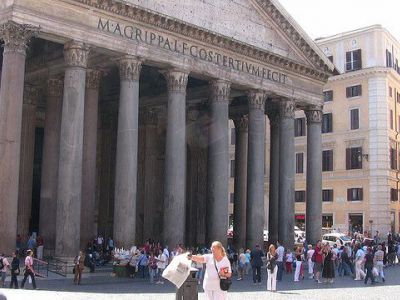
6) G. Rocca Cafe at Pantheon: Meeting Irving
Joe and Ann meet at the Spanish Steps while Ann enjoys gelato, and they decide to spend a carefree holiday together, indulging in simple pleasures like sitting at sidewalk cafes, admiring shop windows, and strolling in the rain. To fulfill Ann’s wish of visiting a cafe, Joe takes her to G. Rocca Café, located next to the Pantheon, a historic Roman monument from the 2nd century AD.
At Rocca’s, Ann experiences a moment of newfound freedom-sipping her first glass of champagne for breakfast and smoking her first cigarette. It is also where she meets photographer Irving Radovich, Joe’s colleague, who stumbles upon them and has Joe masterfully pour champagne over his pants. The café setting adds a charming touch to Ann’s transformation, as she sports her new fashionable haircut and embraces a more adventurous spirit.
Although, in reality, there never was any Rocca Café there, its façade today remains intact. Specially installed for filming at the northwest corner of the Pantheon, this spot laid the foundation for the prosperity of all the nearby cafes which have been serving Prosecco for everyone ever since.
As for the actual location, it has been transformed into a trendy Italian fashion store, particularly known for its denim collection. Despite its transformation, the new establishment still carries the echoes of Ann and Joe’s time together, making it a nostalgic landmark for film lovers. Visitors can still peek inside the shop for a touch of the past, where the magic of their cinematic moment lingers.
At Rocca’s, Ann experiences a moment of newfound freedom-sipping her first glass of champagne for breakfast and smoking her first cigarette. It is also where she meets photographer Irving Radovich, Joe’s colleague, who stumbles upon them and has Joe masterfully pour champagne over his pants. The café setting adds a charming touch to Ann’s transformation, as she sports her new fashionable haircut and embraces a more adventurous spirit.
Although, in reality, there never was any Rocca Café there, its façade today remains intact. Specially installed for filming at the northwest corner of the Pantheon, this spot laid the foundation for the prosperity of all the nearby cafes which have been serving Prosecco for everyone ever since.
As for the actual location, it has been transformed into a trendy Italian fashion store, particularly known for its denim collection. Despite its transformation, the new establishment still carries the echoes of Ann and Joe’s time together, making it a nostalgic landmark for film lovers. Visitors can still peek inside the shop for a touch of the past, where the magic of their cinematic moment lingers.
7) Pantheon (must see)
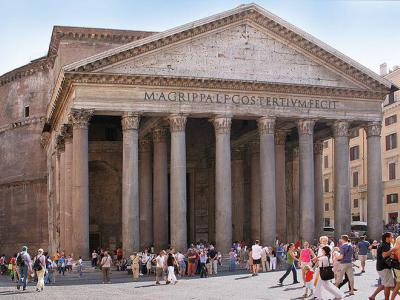
The Pantheon is one of Rome’s most iconic landmarks, renowned for its architectural brilliance. Originally a Roman temple, its name comes from the Ancient Greek "pan theos," which means dedication to all gods. Built on the site of a temple commissioned by consul Marcus Agrippa during Augustus’ reign, the current structure was completed under Emperor Hadrian around 126 AD. It was transformed into a Catholic Church of Saint Mary and the Martyrs in 609 AD, ensuring its preservation through centuries.
The Pantheon’s unique design combines a classical portico supported by Corinthian granite columns with a domed cylindrical structure (called a rotunda). The unsupported concrete dome, still the largest of its kind in the world, features a central oculus that provides natural light, ventilation, and symbolic celestial connections. The rotunda's harmonious dimensions-43 meters in both height and diameter-epitomize Roman engineering excellence, while its original massive bronze doors, each weighing over 20 tons, and intricate drainage system (allowing to effectively divert rainwater) highlight the ingenuity of its creators.
Throughout its history, the Pantheon has been a vibrant part of Roman life. It served as a burial site during the Renaissance, housing notable figures like painter Raphael and Italian kings Victor Emmanuel II and Umberto I. Its materials, such as bronze, have been repurposed for other projects like Bernini’s baldachin above the high altar of Saint Peter's Basilica. However, its core structure remains remarkably intact. Today, the church still host religious ceremonies, including masses, weddings, and Pentecost celebrations.
The Pantheon’s influence extends far beyond Rome. Its dome inspired architectural marvels like the Florence Cathedral and Rotunda of the U.S. Capital in Washington D.C., while its combination of classical and modern elements shaped countless government and academic buildings worldwide.
With over six million annual visitors, the Pantheon remains a symbol of Roman ingenuity and artistic achievement. Tourists can enjoy free entry to this historic site or soak in its splendor from Rotonda Square, savoring gelato while marveling at its timeless beauty.
Tip:
Incredible at night (from the outside), it is especially so if you enjoy musicians with talent and engagement... but beware of pickpockets.
The Pantheon’s unique design combines a classical portico supported by Corinthian granite columns with a domed cylindrical structure (called a rotunda). The unsupported concrete dome, still the largest of its kind in the world, features a central oculus that provides natural light, ventilation, and symbolic celestial connections. The rotunda's harmonious dimensions-43 meters in both height and diameter-epitomize Roman engineering excellence, while its original massive bronze doors, each weighing over 20 tons, and intricate drainage system (allowing to effectively divert rainwater) highlight the ingenuity of its creators.
Throughout its history, the Pantheon has been a vibrant part of Roman life. It served as a burial site during the Renaissance, housing notable figures like painter Raphael and Italian kings Victor Emmanuel II and Umberto I. Its materials, such as bronze, have been repurposed for other projects like Bernini’s baldachin above the high altar of Saint Peter's Basilica. However, its core structure remains remarkably intact. Today, the church still host religious ceremonies, including masses, weddings, and Pentecost celebrations.
The Pantheon’s influence extends far beyond Rome. Its dome inspired architectural marvels like the Florence Cathedral and Rotunda of the U.S. Capital in Washington D.C., while its combination of classical and modern elements shaped countless government and academic buildings worldwide.
With over six million annual visitors, the Pantheon remains a symbol of Roman ingenuity and artistic achievement. Tourists can enjoy free entry to this historic site or soak in its splendor from Rotonda Square, savoring gelato while marveling at its timeless beauty.
Tip:
Incredible at night (from the outside), it is especially so if you enjoy musicians with talent and engagement... but beware of pickpockets.
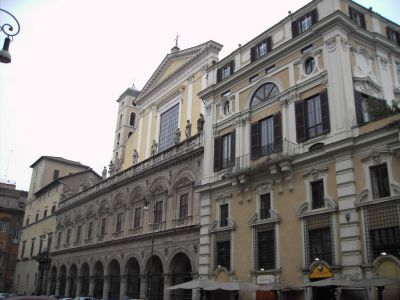
8) Palazzo Colonna (Colonna Palace): Ann meets the Press
The Colonna Palace is a vast palatial complex and one of the grandest private residences in Rome. It has been in the possession of the Colonna family for over twenty generations. The palace's origins date back to the 13th century, and it is said to have hosted Dante during his time in Rome. Historically, the palace was first recorded as the residence of Cardinals Giovanni and Giacomo Colonna and later housed Cardinal Oddone Colonna, who became Pope Martin V in 1417.
Despite the 1527 Sack of Rome, the property remained unharmed and underwent significant renovations in the 17th and 18th centuries. A small bridge over Via della Pilotta connects the palace to its gardens. While still serving as a private residence for members of the Colonna family, it is open to the public on Saturday mornings or by guided tours on Friday mornings.
The Colonna Gallery, completed in 1703, is the palace's most opulent feature. Its ceiling fresco, depicting the 1571 Battle of Lepanto, commemorates the victory of Marcantonio II of Colonna. The gallery boasts an extraordinary collection of works by renowned artists such as Poussin, Tintoretto, Veronese, and many others. Among its many treasures is Annibale Carracci’s "The Beaneater", which captures a strikingly naturalistic image of a common man mid-meal. At one end of the gallery stands a red marble column, representing the Colonna family’s emblem.
The Colonna Palace has also made its mark in popular culture. The final scene of the 1953 film Roman Holiday, starring Audrey Hepburn and Gregory Peck, was shot in the Sala Grande, where Princess Ann delivers her farewell speech. The poignant closing scene shows Gregory Peck walking through the grand hall, his solitary figure echoing against the towering walls adorned with multiple levels of paintings.
Visitors can explore the palace through guided tours in English, included in the entrance fee, making it easier to appreciate the extensive collection of artwork featuring madonnas, saints, popes, and cardinals. To round off the experience, the gallery café with a terrace provides a charming spot to relax and admire the breathtaking surroundings.
Despite the 1527 Sack of Rome, the property remained unharmed and underwent significant renovations in the 17th and 18th centuries. A small bridge over Via della Pilotta connects the palace to its gardens. While still serving as a private residence for members of the Colonna family, it is open to the public on Saturday mornings or by guided tours on Friday mornings.
The Colonna Gallery, completed in 1703, is the palace's most opulent feature. Its ceiling fresco, depicting the 1571 Battle of Lepanto, commemorates the victory of Marcantonio II of Colonna. The gallery boasts an extraordinary collection of works by renowned artists such as Poussin, Tintoretto, Veronese, and many others. Among its many treasures is Annibale Carracci’s "The Beaneater", which captures a strikingly naturalistic image of a common man mid-meal. At one end of the gallery stands a red marble column, representing the Colonna family’s emblem.
The Colonna Palace has also made its mark in popular culture. The final scene of the 1953 film Roman Holiday, starring Audrey Hepburn and Gregory Peck, was shot in the Sala Grande, where Princess Ann delivers her farewell speech. The poignant closing scene shows Gregory Peck walking through the grand hall, his solitary figure echoing against the towering walls adorned with multiple levels of paintings.
Visitors can explore the palace through guided tours in English, included in the entrance fee, making it easier to appreciate the extensive collection of artwork featuring madonnas, saints, popes, and cardinals. To round off the experience, the gallery café with a terrace provides a charming spot to relax and admire the breathtaking surroundings.
9) Foro di Traiano (Trajan's Forum)
Emperor Trajan, who reigned from 98 to 117 AD, is best known for his military conquests. Prime among them were the Dacian Wars, resulting in the annexation of Dacia (which is modern-day Romania) and expanding the Roman Empire to its greatest territorial extent. Trajan's successful campaigns brought immense wealth to Rome, notably in the form of Dacian gold, which funded various public works.
Beyond military achievements, Trajan was admired for his relatively fair and just governance, implementing social programs such as the Alimenta, a welfare program for orphaned children and poor families. His reign is often seen as a high point in Roman history, marked by prosperity, effective leadership, and the expansion of the empire.
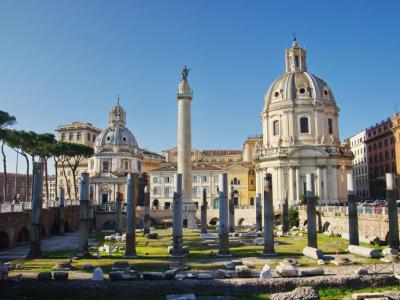
Trajan is also celebrated for his significant contributions to Roman architecture, including the construction of Trajan's Forum in 113 AD. Set to commemorate Trajan's military victories, particularly the conquest of Dacia, the forum was part of a larger complex that featured a vast, portico-lined square measuring 300 by 185 meters, enclosed by tall tuff walls clad in marble. The main entrance at the south end had a triumphal arch celebrating the Dacian Wars. The arch was adorned with friezes and statues depicting Dacian prisoners.
The forum's open space was paved in Carrara marble and connected to the Forum of Augustus. Key structures therein included Trajan's Market, the Basilica Ulpia, one Latin library and one Greek library, and Trajan’s Column.
Today, the forum is one of the most impressive and well-preserved ancient Roman sites. Although mostly in ruins, visitors can still see the iconic Trajan’s Column standing 30 meters tall, covered in a continuous frieze depicting scenes from the Dacian Wars. Also, don't miss the ruins of Trajan's Market. This structure – a series of multi-level buildings that once housed administrative offices and retail spaces – is often referred to as the world’s oldest shopping mall.
Beyond military achievements, Trajan was admired for his relatively fair and just governance, implementing social programs such as the Alimenta, a welfare program for orphaned children and poor families. His reign is often seen as a high point in Roman history, marked by prosperity, effective leadership, and the expansion of the empire.
Trajan is also celebrated for his significant contributions to Roman architecture, including the construction of Trajan's Forum in 113 AD. Set to commemorate Trajan's military victories, particularly the conquest of Dacia, the forum was part of a larger complex that featured a vast, portico-lined square measuring 300 by 185 meters, enclosed by tall tuff walls clad in marble. The main entrance at the south end had a triumphal arch celebrating the Dacian Wars. The arch was adorned with friezes and statues depicting Dacian prisoners.
The forum's open space was paved in Carrara marble and connected to the Forum of Augustus. Key structures therein included Trajan's Market, the Basilica Ulpia, one Latin library and one Greek library, and Trajan’s Column.
Today, the forum is one of the most impressive and well-preserved ancient Roman sites. Although mostly in ruins, visitors can still see the iconic Trajan’s Column standing 30 meters tall, covered in a continuous frieze depicting scenes from the Dacian Wars. Also, don't miss the ruins of Trajan's Market. This structure – a series of multi-level buildings that once housed administrative offices and retail spaces – is often referred to as the world’s oldest shopping mall.
10) Mercati di Traiano (Trajan's Market)
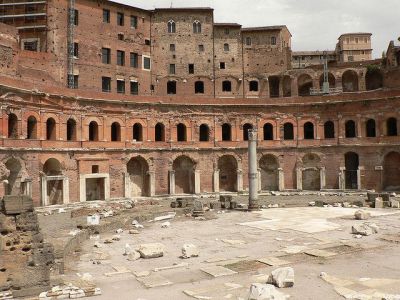
Trajan's Market is a complex of ruins, once part of Trajan's Forum in Rome. The remaining buildings (or rather fragments thereof) that offer a glimpse into the daily social and business activities of the ancient Roman capital, are now carefully restored.
The arcades in the market are believed to have served as administrative offices for Emperor Trajan himself. Spread across multiple levels, some of which are accessible to visitors today, the market encompassed shops and apartments. The world's oldest shopping mall, if you like, this venue comprised both a marketplace and a cultural center. Remarkable elements that attest to its significance include delicate marble floors, remnants of a library, and the towering triumphal column, the second-largest standing ancient structure in Rome, following the Colosseum.
Constructed circa 100 AD, Trajan's Market was designed by Apollodorus of Damascus, the esteemed architect who consistently accompanied Trajan on his expeditions. While the core structure dates back to this period, subsequent additions were made during the Middle Ages, including visible floor levels within the market and fortified elements like the notable "militia tower."
At a later point in time, a convent emerged in the vicinity, but it was ultimately demolished in the early 20th century as part of the comprehensive restoration project aimed at returning Trajan's Market to its authentic and original state.
The arcades in the market are believed to have served as administrative offices for Emperor Trajan himself. Spread across multiple levels, some of which are accessible to visitors today, the market encompassed shops and apartments. The world's oldest shopping mall, if you like, this venue comprised both a marketplace and a cultural center. Remarkable elements that attest to its significance include delicate marble floors, remnants of a library, and the towering triumphal column, the second-largest standing ancient structure in Rome, following the Colosseum.
Constructed circa 100 AD, Trajan's Market was designed by Apollodorus of Damascus, the esteemed architect who consistently accompanied Trajan on his expeditions. While the core structure dates back to this period, subsequent additions were made during the Middle Ages, including visible floor levels within the market and fortified elements like the notable "militia tower."
At a later point in time, a convent emerged in the vicinity, but it was ultimately demolished in the early 20th century as part of the comprehensive restoration project aimed at returning Trajan's Market to its authentic and original state.
11) Foro Romano (Roman Forum) (must see)
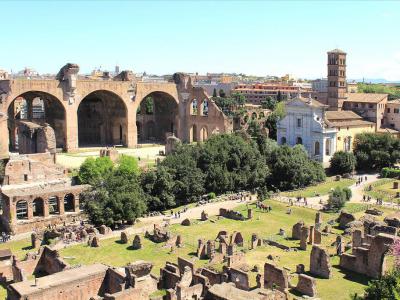
The Roman Forum, once the pulsating heart of ancient Rome's public life, evolved from a simple marketplace around 500 BC into the epicenter of Roman political, social, and religious activity. Known as the Forum Magnum, it became a hub for triumphal processions, public speeches, elections, criminal trials, gladiatorial matches, and commerce. Statues and monuments celebrating Roman leaders solidified its status as one of history’s most significant meeting places.
Initially featuring early structures like the Regia (a royal residence) and the Temple of Vesta, the Forum developed into a formal assembly area called the Comitium, where the Senate and government convened. Over centuries, temples, tribunals, and public buildings, such as the Senate House and the Temple of Saturn, transformed the Forum into a multifunctional hub. The Basilica Aemilia, built in 179 BC, expanded judicial activities, while Julius Caesar’s enhancements, including the Basilica Julia and Curia Julia, underscored its role as a center for politics, commerce, and religion.
Despite its prominence, the Forum’s importance began to decline with the emergence of grander structures, such as Trajan's Forum and the Basilica Ulpia, to the north. Unlike the more planned Imperial Forums, the Roman Forum grew organically, reflecting a mix of architectural styles across periods. Constantine the Great’s construction of the Maxentius Basilica in 312 AD marked its final significant addition, temporarily restoring its political centrality. However, the fall of the Western Roman Empire in the 5th century AD led to the Forum's destruction and decline.
Today, the Roman Forum is a sprawling ruin but remains a priceless historical treasure. Though reduced to crumbling remains, it continues to captivate visitors, drawing nearly five million annually. Highlights of the site include the Sacred Street, the Arch of Titus, and remnants of iconic buildings like the Temple of Castor and Pollux.
Initially featuring early structures like the Regia (a royal residence) and the Temple of Vesta, the Forum developed into a formal assembly area called the Comitium, where the Senate and government convened. Over centuries, temples, tribunals, and public buildings, such as the Senate House and the Temple of Saturn, transformed the Forum into a multifunctional hub. The Basilica Aemilia, built in 179 BC, expanded judicial activities, while Julius Caesar’s enhancements, including the Basilica Julia and Curia Julia, underscored its role as a center for politics, commerce, and religion.
Despite its prominence, the Forum’s importance began to decline with the emergence of grander structures, such as Trajan's Forum and the Basilica Ulpia, to the north. Unlike the more planned Imperial Forums, the Roman Forum grew organically, reflecting a mix of architectural styles across periods. Constantine the Great’s construction of the Maxentius Basilica in 312 AD marked its final significant addition, temporarily restoring its political centrality. However, the fall of the Western Roman Empire in the 5th century AD led to the Forum's destruction and decline.
Today, the Roman Forum is a sprawling ruin but remains a priceless historical treasure. Though reduced to crumbling remains, it continues to captivate visitors, drawing nearly five million annually. Highlights of the site include the Sacred Street, the Arch of Titus, and remnants of iconic buildings like the Temple of Castor and Pollux.
12) Arco di Tito (Arch of Titus)
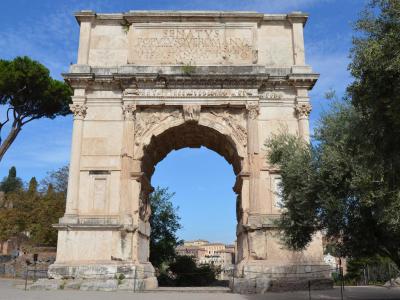
The Arch of Titus, an honorific arch on the Sacred Street, was built by Emperor Domitian around 81 AD. Its purpose was to commemorate Domitian's brother Titus’ victory in Judaea (which is modern-day Israel and Palestine) and his subsequent deification. The arch celebrates the Roman triumph over the Jewish revolt (also known as the Great Revolt), which resulted in the fall of Jerusalem in 70 AD. This victory brought over 60,000 Jewish slaves and immense wealth back to Rome, funding the construction of the Colosseum.
One of the only three surviving arches out of Rome’s original 36, the Arch of Titus provides a rare visual representation of the Roman triumphal procession of 71 AD. It also portrays Titus on horseback, symbolizing Rome’s dominance, and the Eagle, a representation of Roman power.
The Roman treatment of conquered people varied. Those who surrendered quickly were often incorporated into Roman society, while those who resisted fiercely-as in Judaea-faced brutal consequences such as mass slaughter, enslavement, and destruction of homes and livelihoods. The Jewish rebellion was crushed after the Romans breached three walls of Jerusalem over seven months, leading to one of the most devastating sackings of antiquity.
The arch's panels vividly depict scenes from this momentous event, offering one of the few contemporary representations of artifacts from Herod's Temple including the menorah, a multi-branched candelabra, used in the religious rituals of Judaism. While not explicitly mentioned, the panels closely mirror the narrative of the Roman procession described a decade earlier in the book titled "The Jewish War" written by Josephus, a first-century Roman-Jewish historian.
Beyond its historical importance, the Arch of Titus showcases a significant evolution in Roman art. The reliefs inside demonstrate early illusionistic techniques, giving a sense of depth and motion, a precursor to Baroque aesthetics nearly 1,500 years later. These artistic innovations highlight the stark contrast between the flourishing Roman Empire and the struggling tribes of northern Europe, who at the time still lived in primitive conditions.
As such, the arch had a long-lasting architectural influence, serving as a model for later triumphal arches, including the Arch of Triumph in Paris. Although the identity of its architect is uncertain, Rabirius, a favored designer of Emperor Domitian, is often suggested.
For Jewish communities, the arch remains a symbol of the diaspora. The menorah relief, a significant Jewish artifact depicted on the arch, later inspired the official emblem of the State of Israel. Today, the Arch of Titus is a must-see monument in Rome, linking the ancient past to modern history and symbolizing both Roman power and Jewish resilience.
One of the only three surviving arches out of Rome’s original 36, the Arch of Titus provides a rare visual representation of the Roman triumphal procession of 71 AD. It also portrays Titus on horseback, symbolizing Rome’s dominance, and the Eagle, a representation of Roman power.
The Roman treatment of conquered people varied. Those who surrendered quickly were often incorporated into Roman society, while those who resisted fiercely-as in Judaea-faced brutal consequences such as mass slaughter, enslavement, and destruction of homes and livelihoods. The Jewish rebellion was crushed after the Romans breached three walls of Jerusalem over seven months, leading to one of the most devastating sackings of antiquity.
The arch's panels vividly depict scenes from this momentous event, offering one of the few contemporary representations of artifacts from Herod's Temple including the menorah, a multi-branched candelabra, used in the religious rituals of Judaism. While not explicitly mentioned, the panels closely mirror the narrative of the Roman procession described a decade earlier in the book titled "The Jewish War" written by Josephus, a first-century Roman-Jewish historian.
Beyond its historical importance, the Arch of Titus showcases a significant evolution in Roman art. The reliefs inside demonstrate early illusionistic techniques, giving a sense of depth and motion, a precursor to Baroque aesthetics nearly 1,500 years later. These artistic innovations highlight the stark contrast between the flourishing Roman Empire and the struggling tribes of northern Europe, who at the time still lived in primitive conditions.
As such, the arch had a long-lasting architectural influence, serving as a model for later triumphal arches, including the Arch of Triumph in Paris. Although the identity of its architect is uncertain, Rabirius, a favored designer of Emperor Domitian, is often suggested.
For Jewish communities, the arch remains a symbol of the diaspora. The menorah relief, a significant Jewish artifact depicted on the arch, later inspired the official emblem of the State of Israel. Today, the Arch of Titus is a must-see monument in Rome, linking the ancient past to modern history and symbolizing both Roman power and Jewish resilience.
13) Palatino (Palatine Hill) (must see)
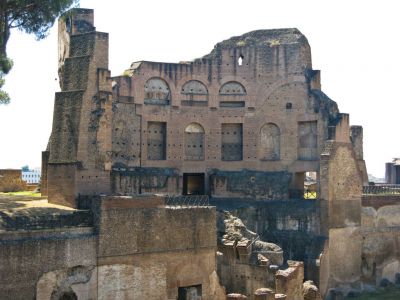
The Palatine Hill, centrally located among Rome’s seven hills, is one of the city’s oldest and most historically significant areas. Often referred to as "the first nucleus of the Roman Empire," it is now a vast open-air museum.
Overlooking the Roman Forum and Circus Maximus, Palatine Hill became the desirable location for the homes of Rome's wealthiest citizens during the Republican era. During the Imperial era, starting from the reign of Augustus, it was an exclusive domain of emperors, featuring luxurious palaces like those of Augustus, Tiberius, and Domitian. Before imperial development, the hill had two summits, Palatium and Germalus, separated by a depression. Over time, the Palatine played a central role in Rome’s evolution, with continuous habitation traced back to the 10th century BC. Excavations reveal funerary huts from the 9th–7th centuries BC, aligning with the city’s mythological founding period.
The modern-day word “palace” is derived from the word “Palatine”.
Roman mythology enriches its legacy, as the hill was believed to be the site where Rome was reportedly founded. According to legend, it was on this hill that the twins Romulus and Remus, the legendary founders of Rome, were discovered by a she-wolf who raised them. When they grew up, the twins set out to build a city of their own. While Remus wanted to build it on Aventine Hill, Romulus had his mind set firmly on Palatine Hill. The brothers argued fiercely, and during the fight, Romulus killed Remus. He went on to build the city in 753 BC, calling it Rome, and reigned as its first king.
Monumental structures dominate the site, including the Palace of Domitian and the House of Livia, the latter renowned for its well-preserved frescoes. The House of Tiberius partially survives within the Farnese Gardens.
Extensive archaeological excavations, dating back to Augustus’ time, have uncovered significant finds, including Bronze Age artifacts and the Palatine House, thought to be the birthplace of Emperor Augustus. Modern investigations have revealed frescoed walls and mosaics, along with the Lupercal, the cave at the southwest foot of the Palatine Hill, where Romulus and Remus were suckled by the she-wolf.
Tip:
"Super" tickets provide access to the key attractions on the Hill, including the Roman Forum and Colosseum. Prepare with water, snacks, sunscreen, a hat, and sturdy shoes, as the steep paths and lack of vending machines can be challenging.
Overlooking the Roman Forum and Circus Maximus, Palatine Hill became the desirable location for the homes of Rome's wealthiest citizens during the Republican era. During the Imperial era, starting from the reign of Augustus, it was an exclusive domain of emperors, featuring luxurious palaces like those of Augustus, Tiberius, and Domitian. Before imperial development, the hill had two summits, Palatium and Germalus, separated by a depression. Over time, the Palatine played a central role in Rome’s evolution, with continuous habitation traced back to the 10th century BC. Excavations reveal funerary huts from the 9th–7th centuries BC, aligning with the city’s mythological founding period.
The modern-day word “palace” is derived from the word “Palatine”.
Roman mythology enriches its legacy, as the hill was believed to be the site where Rome was reportedly founded. According to legend, it was on this hill that the twins Romulus and Remus, the legendary founders of Rome, were discovered by a she-wolf who raised them. When they grew up, the twins set out to build a city of their own. While Remus wanted to build it on Aventine Hill, Romulus had his mind set firmly on Palatine Hill. The brothers argued fiercely, and during the fight, Romulus killed Remus. He went on to build the city in 753 BC, calling it Rome, and reigned as its first king.
Monumental structures dominate the site, including the Palace of Domitian and the House of Livia, the latter renowned for its well-preserved frescoes. The House of Tiberius partially survives within the Farnese Gardens.
Extensive archaeological excavations, dating back to Augustus’ time, have uncovered significant finds, including Bronze Age artifacts and the Palatine House, thought to be the birthplace of Emperor Augustus. Modern investigations have revealed frescoed walls and mosaics, along with the Lupercal, the cave at the southwest foot of the Palatine Hill, where Romulus and Remus were suckled by the she-wolf.
Tip:
"Super" tickets provide access to the key attractions on the Hill, including the Roman Forum and Colosseum. Prepare with water, snacks, sunscreen, a hat, and sturdy shoes, as the steep paths and lack of vending machines can be challenging.
14) Colosseo (Colosseum) (must see)
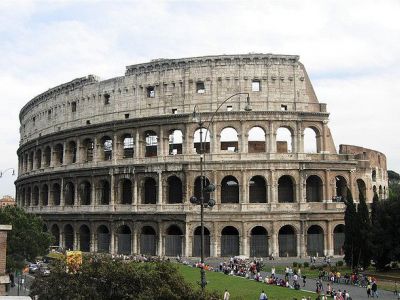
The Colosseum, Rome’s iconic elliptical amphitheater, is the largest ancient amphitheater ever built, covering 24,000 square meters. Constructed between 69 and 80 AD by the Flavian dynasty, it was initially called the Flavian Amphitheater. Its modern name stems from the Colossus of Nero statue that once stood nearby, with the term "Colosseum" emerging during the medieval period.
Built on the land reclaimed from Emperor Nero’s landscaped Domus Aurea complex after the Great Fire of 64 AD, the Colosseum represented a gift to the Roman people under Emperor Vespasian. It was constructed using travertine, tuff, and concrete and was funded by spoils from the Jewish War. The latter, fought in 70 AD, led to the Siege of Jerusalem and brought back numerous prisoners who largely contributed to the massive workforce needed for the construction. The amphitheater comprised four tiers that could hold between 50,000 and 80,000 spectators at a time. Its free-standing structure features three architectural orders – Doric, Ionic, and Corinthian.
The lowest tier was for the emperor and the royal family, the two middle ones were for the noble Romans and members of government, while the highest tier was for the ordinary citizens. The elaborate system included 80 entrances, passageways for crowd control, and numbered pottery tickets for seating. Admission was free and the main sponsor was the emperor himself.
The Colosseum hosted gladiatorial contests, animal hunts, and mythological reenactments. Events often featured exotic animals imported from Africa and the Middle East. Emperor Trajan's games, for example, involved over 11,000 animals and 10,000 gladiators over 123 days! The below-ground passages were used to bring men and animals into the arena, which was separated from the audience by a ditch. Occasionally, it was reportedly even flooded for naval battles. Executions were common during intervals, with the condemned facing wild beasts or acting out tragic myths.
During the medieval period, the Colosseum served as a fortress and even a stone quarry. Passers-by habitually chipped off pieces of it for souvenirs which, together with some natural causes like earthquakes, led to its partial destruction.
Despite popular belief that the early Christians were martyred here in numbers, evidence suggests that most executions occurred elsewhere. By the 17th century, the Colosseum became recognized as a sacred site. Today, it hosts the Pope’s Good Friday “Way of the Cross” procession.
Only the north side of the building, as well as the underground passages, have survived intact. The arena floor is totally gone. Inside the Colosseum, there's a historical exhibition with both permanent and changing displays.
Tips:
Visit early in the morning or late in the evening to avoid long queues and heat. The ground and first floors are open to visitors without a special ticket, while the subterranean part and the third floor are accessed on pre-booked tours only. Opt for a guided tour to skip lines and access the Forum area. Alternatively, buy tickets in advance or at the Roman Forum. Enhance your experience with an audio guide for detailed historical insights.
Built on the land reclaimed from Emperor Nero’s landscaped Domus Aurea complex after the Great Fire of 64 AD, the Colosseum represented a gift to the Roman people under Emperor Vespasian. It was constructed using travertine, tuff, and concrete and was funded by spoils from the Jewish War. The latter, fought in 70 AD, led to the Siege of Jerusalem and brought back numerous prisoners who largely contributed to the massive workforce needed for the construction. The amphitheater comprised four tiers that could hold between 50,000 and 80,000 spectators at a time. Its free-standing structure features three architectural orders – Doric, Ionic, and Corinthian.
The lowest tier was for the emperor and the royal family, the two middle ones were for the noble Romans and members of government, while the highest tier was for the ordinary citizens. The elaborate system included 80 entrances, passageways for crowd control, and numbered pottery tickets for seating. Admission was free and the main sponsor was the emperor himself.
The Colosseum hosted gladiatorial contests, animal hunts, and mythological reenactments. Events often featured exotic animals imported from Africa and the Middle East. Emperor Trajan's games, for example, involved over 11,000 animals and 10,000 gladiators over 123 days! The below-ground passages were used to bring men and animals into the arena, which was separated from the audience by a ditch. Occasionally, it was reportedly even flooded for naval battles. Executions were common during intervals, with the condemned facing wild beasts or acting out tragic myths.
During the medieval period, the Colosseum served as a fortress and even a stone quarry. Passers-by habitually chipped off pieces of it for souvenirs which, together with some natural causes like earthquakes, led to its partial destruction.
Despite popular belief that the early Christians were martyred here in numbers, evidence suggests that most executions occurred elsewhere. By the 17th century, the Colosseum became recognized as a sacred site. Today, it hosts the Pope’s Good Friday “Way of the Cross” procession.
Only the north side of the building, as well as the underground passages, have survived intact. The arena floor is totally gone. Inside the Colosseum, there's a historical exhibition with both permanent and changing displays.
Tips:
Visit early in the morning or late in the evening to avoid long queues and heat. The ground and first floors are open to visitors without a special ticket, while the subterranean part and the third floor are accessed on pre-booked tours only. Opt for a guided tour to skip lines and access the Forum area. Alternatively, buy tickets in advance or at the Roman Forum. Enhance your experience with an audio guide for detailed historical insights.
15) Circo Massimo (Circus Maximus)
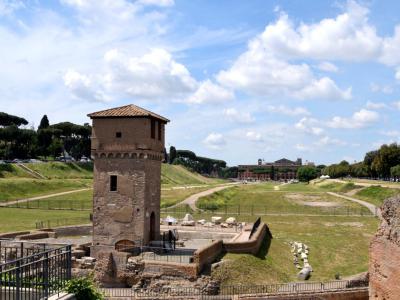
Set in the valley between the Palatine and Aventine hills, the Circus Maximus is the oldest and largest racetrack in ancient Rome. This colossal space, once capable of accommodating over 300,000 spectators, witnessed thrilling chariot races while the emperor looked on. From the 4th century BC until AD 549, the Circus Maximus underwent continuous embellishment and expansion, culminating in its final races.
The oval course spans approximately 650 yards from end to end. On certain occasions, as many as 24 chariot races were held in a single day, and competitions could extend for up to 15 days. Much like modern sports stars, charioteers could accumulate vast fortunes. Diocles, a renowned Portuguese charioteer, reportedly won an astounding 35 million sestertii. The atmosphere within the Circus Maximus must have been electrifying as charioteers competed in teams, each representing their own colors such as the Reds, the Blues, and others. Betting on the races also provided a potentially lucrative occupation for the majority of unemployed citizens in Rome.
The Circus Maximus featured a central dividing barrier known as the spina, adorned with seven large egg-shaped objects used to count laps during a race. In 33 BC, seven bronze dolphins were added to the spina for the same purpose. In 10 BC, Augustus constructed the Imperial box beneath the Palatine Hill and adorned the spina with an obelisk, which now stands at the center of Piazza del Popolo. Another obelisk, added in the 4th century by Constantine II, now stands in Piazza di San Giovanni in Laterano.
Today, the long grassy expanse of the Circus Maximus still retains hints of its original purpose and occasionally serves as a venue for festivals and concerts. However, during the recent remake of "Ben Hur", archaeological authorities denied permission to film chariot-racing scenes in this historical location.
The oval course spans approximately 650 yards from end to end. On certain occasions, as many as 24 chariot races were held in a single day, and competitions could extend for up to 15 days. Much like modern sports stars, charioteers could accumulate vast fortunes. Diocles, a renowned Portuguese charioteer, reportedly won an astounding 35 million sestertii. The atmosphere within the Circus Maximus must have been electrifying as charioteers competed in teams, each representing their own colors such as the Reds, the Blues, and others. Betting on the races also provided a potentially lucrative occupation for the majority of unemployed citizens in Rome.
The Circus Maximus featured a central dividing barrier known as the spina, adorned with seven large egg-shaped objects used to count laps during a race. In 33 BC, seven bronze dolphins were added to the spina for the same purpose. In 10 BC, Augustus constructed the Imperial box beneath the Palatine Hill and adorned the spina with an obelisk, which now stands at the center of Piazza del Popolo. Another obelisk, added in the 4th century by Constantine II, now stands in Piazza di San Giovanni in Laterano.
Today, the long grassy expanse of the Circus Maximus still retains hints of its original purpose and occasionally serves as a venue for festivals and concerts. However, during the recent remake of "Ben Hur", archaeological authorities denied permission to film chariot-racing scenes in this historical location.
