Custom Walk in Bucharest, Romania by helen_holbrow_d5b33e created on 2026-02-16
Guide Location: Romania » Bucharest
Guide Type: Custom Walk
# of Sights: 8
Tour Duration: 2 Hour(s)
Travel Distance: 3.2 Km or 2 Miles
Share Key: 2ZP7P
Guide Type: Custom Walk
# of Sights: 8
Tour Duration: 2 Hour(s)
Travel Distance: 3.2 Km or 2 Miles
Share Key: 2ZP7P
How It Works
Please retrieve this walk in the GPSmyCity app. Once done, the app will guide you from one tour stop to the next as if you had a personal tour guide. If you created the walk on this website or come to the page via a link, please follow the instructions below to retrieve the walk in the app.
Retrieve This Walk in App
Step 1. Download the app "GPSmyCity: Walks in 1K+ Cities" on Apple App Store or Google Play Store.



Step 2. In the GPSmyCity app, download(or launch) the guide "Bucharest Map and Walking Tours".
Step 3. Tap the menu button located at upper right corner of the "Walks" screen and select "Retrieve custom walk". Enter the share key: 2ZP7P
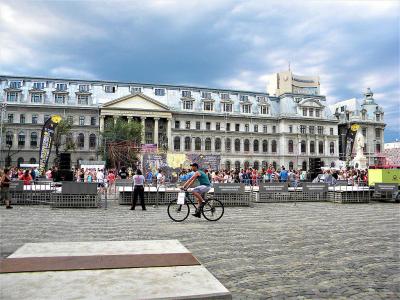
1) University Square
University Square (Piata Universitatii) is one of the city’s most vibrant and historically significant public spaces. Located at the heart of downtown Bucharest, this bustling square serves as both a major transportation hub-where two metro lines meet-and a central gathering spot. For tourists, it’s a perfect starting point to get a feel for the city's energy, architectural contrasts, and layered past. From here, you can explore surrounding landmarks on foot, including the National Theatre and the University of Bucharest.
Designed in a semi-circular shape, University Square is framed by wide, pedestrian-friendly boulevards and dotted with fountains and statues. It’s a lovely spot to relax and watch the flow of city life-whether locals heading to work, street artists performing, or vendors offering refreshments. By day, the square is bright and lively; by night, it becomes a glowing cultural crossroads, with nearby cafés and restaurants that spill onto the sidewalks, inviting you to linger over a coffee or a glass of wine.
Beyond its aesthetic charm, University Square is steeped in modern Romanian history. In the late 20th century, and again in 1990, it served as the epicenter for mass demonstrations that helped shape the course of Romania’s democratic transition. The space has since evolved into a place not only of daily urban life but also of civic memory, where plaques and public art commemorate important events and figures. Tourists interested in social history will appreciate the subtle reminders of Romania’s journey toward freedom.
For visitors, the convenience of transport, rich architectural backdrop, and palpable sense of history make University Square a must-see destination. Whether you’re here to map out your city itinerary or simply soak in the urban atmosphere, this square offers a perfect blend of convenience, culture, and storytelling.
Designed in a semi-circular shape, University Square is framed by wide, pedestrian-friendly boulevards and dotted with fountains and statues. It’s a lovely spot to relax and watch the flow of city life-whether locals heading to work, street artists performing, or vendors offering refreshments. By day, the square is bright and lively; by night, it becomes a glowing cultural crossroads, with nearby cafés and restaurants that spill onto the sidewalks, inviting you to linger over a coffee or a glass of wine.
Beyond its aesthetic charm, University Square is steeped in modern Romanian history. In the late 20th century, and again in 1990, it served as the epicenter for mass demonstrations that helped shape the course of Romania’s democratic transition. The space has since evolved into a place not only of daily urban life but also of civic memory, where plaques and public art commemorate important events and figures. Tourists interested in social history will appreciate the subtle reminders of Romania’s journey toward freedom.
For visitors, the convenience of transport, rich architectural backdrop, and palpable sense of history make University Square a must-see destination. Whether you’re here to map out your city itinerary or simply soak in the urban atmosphere, this square offers a perfect blend of convenience, culture, and storytelling.
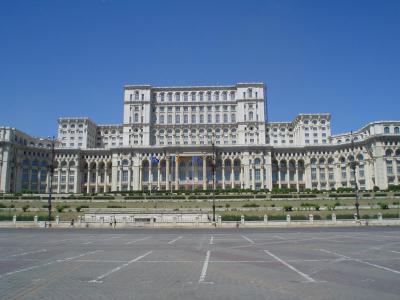
2) Palace of the Parliament (must see)
The Palace of the Parliament in Bucharest is a multi-purpose building which houses both chambers of the Romanian Parliament. According to the World Records Academy, the Palace is the world's largest civilian building, most expensive administrative building, and heaviest construction. The Palace was designed and nearly completed under the Ceauşescu regime as the seat of political and administrative power. Nicolae Ceauşescu named it the House of the Republic, although many Romanians call it the People's House.
Built on the site of a hill variously known as Spirii Hill, Uranus Hill, or Arsenal Hill, which was largely razed for this mega project in 1980, the building anchors the west end of Unification Boulevard and Civic Center. Constructing the Palace and Civic Center required demolishing much of Bucharest's historic district, including 19 Orthodox Christian churches, six Jewish synagogues, three Protestant churches (plus eight churches had to be relocated), and 30,000 residences. The construction began in 1983; the cornerstone was laid on 25 June 1984.
While the building was intended to house all four major state institutions (in a similar manner to the UK Houses of Parliament), Ceausescu opted to make the palace his personal residence and have the government operate in it (as if confining the Moscow Kremlin to one building). By the time Nicolae Ceauşescu was overthrown and executed in 1989, the building had been almost complete. Some of the initially planned furnishings were never installed, and the last three basement levels and a large clock tower (meant to display the official Romanian time) were never finished.
Built on the site of a hill variously known as Spirii Hill, Uranus Hill, or Arsenal Hill, which was largely razed for this mega project in 1980, the building anchors the west end of Unification Boulevard and Civic Center. Constructing the Palace and Civic Center required demolishing much of Bucharest's historic district, including 19 Orthodox Christian churches, six Jewish synagogues, three Protestant churches (plus eight churches had to be relocated), and 30,000 residences. The construction began in 1983; the cornerstone was laid on 25 June 1984.
While the building was intended to house all four major state institutions (in a similar manner to the UK Houses of Parliament), Ceausescu opted to make the palace his personal residence and have the government operate in it (as if confining the Moscow Kremlin to one building). By the time Nicolae Ceauşescu was overthrown and executed in 1989, the building had been almost complete. Some of the initially planned furnishings were never installed, and the last three basement levels and a large clock tower (meant to display the official Romanian time) were never finished.
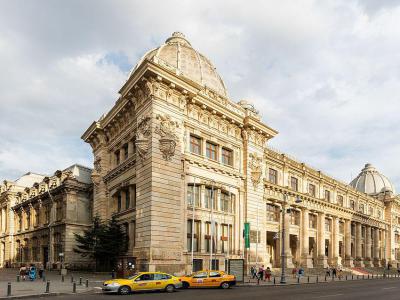
3) National Museum of Romanian History
The National Museum of Romanian History resides in the grand former Postal Services Palace-an architectural gem built between 1894 and 1899 in an eclectic style by Alexandru Savulescu. Established between 1970 and officially opened in 1972, the museum spans over 8,000 square meters with approximately 60 exhibition rooms, making it Romania’s preeminent institution of history and archaeology. As you approach the grand entrance-lined with Doric columns and crowned by a high central dome-you can’t help but sense the cultural importance awaiting within.
Inside, the museum weaves a rich narrative of Romania’s journey from prehistoric communities through Dacian tribes, Roman conquest, medieval principalities, and the modern nation-state. The permanent exhibition “Historical Treasure” showcases over 3,000 precious objects-gold, silver, regal jewelry, and coins-many of which were repatriated from abroad. Key highlights include the Dacian gold bracelets, treasures from Pietroasele, and the Romanian Crown Jewels, including royal crowns that reflect both craftsmanship and royal heritage.
One of the museum’s most visually striking installations is the life‑size plaster copy of Trajan’s Column, complete with intricate relief work depicting the Dacian Wars. Housed within a dedicated lapidarium, this faithful reproduction offers a captivating, close‑range view of this Roman monument. Other notable exhibits include royal artifacts, medieval armaments, numismatic collections, philatelic archives from the postal palace days, and documents from pivotal figures in Romanian history.
For visitors, the museum offers a compelling and educational experience. It is open Wednesday to Sunday, and features rotating temporary exhibitions, educational workshops, and family‑friendly programming. As Romania’s top historical museum, the National Museum of Romanian History offers travelers an immersive journey through the nation’s cultural legacy-whether it’s ancient jewelry, medieval relics, royal regalia, or Roman grandeur, it’s all here, waiting to be discovered.
Inside, the museum weaves a rich narrative of Romania’s journey from prehistoric communities through Dacian tribes, Roman conquest, medieval principalities, and the modern nation-state. The permanent exhibition “Historical Treasure” showcases over 3,000 precious objects-gold, silver, regal jewelry, and coins-many of which were repatriated from abroad. Key highlights include the Dacian gold bracelets, treasures from Pietroasele, and the Romanian Crown Jewels, including royal crowns that reflect both craftsmanship and royal heritage.
One of the museum’s most visually striking installations is the life‑size plaster copy of Trajan’s Column, complete with intricate relief work depicting the Dacian Wars. Housed within a dedicated lapidarium, this faithful reproduction offers a captivating, close‑range view of this Roman monument. Other notable exhibits include royal artifacts, medieval armaments, numismatic collections, philatelic archives from the postal palace days, and documents from pivotal figures in Romanian history.
For visitors, the museum offers a compelling and educational experience. It is open Wednesday to Sunday, and features rotating temporary exhibitions, educational workshops, and family‑friendly programming. As Romania’s top historical museum, the National Museum of Romanian History offers travelers an immersive journey through the nation’s cultural legacy-whether it’s ancient jewelry, medieval relics, royal regalia, or Roman grandeur, it’s all here, waiting to be discovered.
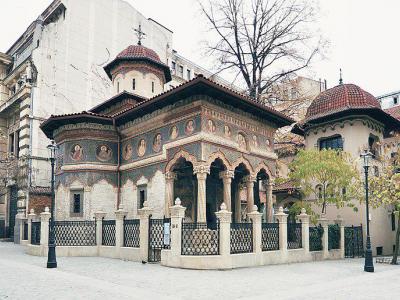
4) Stavropoleos Convent (must see)
Stavropoleos Convent (Manastirea Stavropoleos) is a hidden treasure tucked away on a quiet lane in Bucharest’s bustling Old Town. Founded in 1724 by Greek archimandrite Ioanichie Stratonikeas under Prince Nicolae Mavrocordatos, the convent-with its cobblestone courtyard and peaceful atmosphere-offers a serene contrast to the energetic cafés and shops just steps away. The name Stavropoleos is derived from the Greek “Stauropolis,” meaning “City of the Cross,” a poetic reminder of the convent's spiritual focus.
Architecturally, the church and remaining convent buildings showcase the exquisite Brancovenesc style-an iconic synthesis of Byzantine, Ottoman, Italian Renaissance, and local influences. You’ll notice its intricately carved stone portico, trilobate arches, floral motifs, and framed religious medallions adorning the facade. Inside, the intimate space is rich with stunning frescoes, gilded icons, and an atmosphere heavy with incense and devotion. Its survival through earthquakes, secularization, and the Ceaușescu era makes visiting feel like stepping back into early 18th-century Bucharest.
Beyond its visual beauty, Stavropoleos is a living center for Orthodox spirituality and cultural heritage. The convent is active with nuns and priests who continue its mission through a renowned Byzantine choir, a library housing over 8,000 theological works and historical manuscripts, and diligent restoration of ancient books, icons, and liturgical garments. Its courtyard also displays fragments rescued from demolished churches, turning this urban nook into a small but poignant museum of Romanian religious art.
For travelers, a visit to Stavropoleos offers much more than architecture-it brings a spiritual and cultural immersion. Entry is free, and the convent welcomes visitors daily from morning to evening. A guided tour or simply lingering inside to absorb the hymns, scents, and sacred ambiance makes this a highlight of any stroll through Bucharest’s Old Town.
Architecturally, the church and remaining convent buildings showcase the exquisite Brancovenesc style-an iconic synthesis of Byzantine, Ottoman, Italian Renaissance, and local influences. You’ll notice its intricately carved stone portico, trilobate arches, floral motifs, and framed religious medallions adorning the facade. Inside, the intimate space is rich with stunning frescoes, gilded icons, and an atmosphere heavy with incense and devotion. Its survival through earthquakes, secularization, and the Ceaușescu era makes visiting feel like stepping back into early 18th-century Bucharest.
Beyond its visual beauty, Stavropoleos is a living center for Orthodox spirituality and cultural heritage. The convent is active with nuns and priests who continue its mission through a renowned Byzantine choir, a library housing over 8,000 theological works and historical manuscripts, and diligent restoration of ancient books, icons, and liturgical garments. Its courtyard also displays fragments rescued from demolished churches, turning this urban nook into a small but poignant museum of Romanian religious art.
For travelers, a visit to Stavropoleos offers much more than architecture-it brings a spiritual and cultural immersion. Entry is free, and the convent welcomes visitors daily from morning to evening. A guided tour or simply lingering inside to absorb the hymns, scents, and sacred ambiance makes this a highlight of any stroll through Bucharest’s Old Town.
5) Cărturești Carusel Bookstore
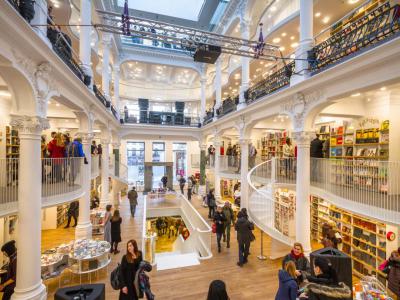
Nestled in the heart of Bucharest’s historic Lipscani district, Carturesti Carusel is more than just a bookstore-it’s a captivating cultural landmark. Housed in a beautifully restored 19th-century edifice, this multi-level treasure trove weaves together literature, design, music, and culinary delights. As you climb the gracefully spiraling staircase, it's easy to lose track of time amid shelves overflowing with books in Romanian and multiple foreign languages-fiction, poetry, art, fashion, and children’s literature. The soft lighting, wooden floors, and ornate balconies give the space a refined yet cozy atmosphere, inviting visitors to linger, browse, and discover unexpected gems.
Beyond books, Carturesti Carusel offers an alluring art studio, a café with luscious pastries and expertly crafted coffee, and an events space for talks, readings, and exhibitions. Whether you're a bibliophile eager to find a rare volume, a traveler seeking a calm retreat from the bustle of the Old Town, or someone hoping to connect with Bucharest’s contemporary cultural scene, this bookstore delivers. Its central location also makes it a convenient stop during a sightseeing stroll-just steps from landmarks like Stavropoleos Monastery and University Square.
Visiting Carturesti Carusel is an immersive, sensory experience. The gradient of hues-from cream walls to warm wooden accents-enhances the sense of depth and elegance as you explore its six balconies, each with a unique view into the shop’s literary world. Live music often fills the air in the evenings, pairing effortlessly with a glass of wine or a cappuccino as you scan the latest releases or flip through vintage art books.
On your journey through Bucharest, set aside some time to experience this literary gem-a place that celebrates imagination, creativity, and the joy of slow, intentional exploration.
Beyond books, Carturesti Carusel offers an alluring art studio, a café with luscious pastries and expertly crafted coffee, and an events space for talks, readings, and exhibitions. Whether you're a bibliophile eager to find a rare volume, a traveler seeking a calm retreat from the bustle of the Old Town, or someone hoping to connect with Bucharest’s contemporary cultural scene, this bookstore delivers. Its central location also makes it a convenient stop during a sightseeing stroll-just steps from landmarks like Stavropoleos Monastery and University Square.
Visiting Carturesti Carusel is an immersive, sensory experience. The gradient of hues-from cream walls to warm wooden accents-enhances the sense of depth and elegance as you explore its six balconies, each with a unique view into the shop’s literary world. Live music often fills the air in the evenings, pairing effortlessly with a glass of wine or a cappuccino as you scan the latest releases or flip through vintage art books.
On your journey through Bucharest, set aside some time to experience this literary gem-a place that celebrates imagination, creativity, and the joy of slow, intentional exploration.
6) Lipscani Street (must see)
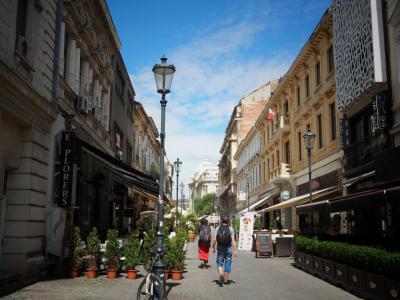
Lipscani Street is the beating heart of Bucharest’s Old Town, a vibrant pedestrian artery that beautifully intertwines medieval charm with bustling modern life. Stretching for nearly a kilometre, Lipscani has been central to the city’s identity since its first mention in 1589, originally known as Broad Lane (Ulita Mare). Its name derives from “lipscan,” the Romanian word for merchants from Leipzig-“Lipsca”-who traded here, making it a lively hub where fine European goods arrived in Wallachia.
The street thrived especially during the reign of Princes Constantin Brancoveanu and Serban Cantacuzino in the late 17th and early 18th centuries, becoming home to guilds and several hanuri (merchant inns) such as The Linden Tree Inn (Hanul cu Tei), which still stands today with its original vaulted cellars and façade. Nearby, the impressive National Bank of Romania occupies the former Serban Voda Inn site, its grand eclectic façade a testament to the late 19th-century architectural ambitions. These buildings reveal layers of Baroque, Neo‑Classical, and Brancovenesc styles-an architectural narrative of a street that evolved from trade epicentre to cultural landmark.
Throughout the 20th century, Lipscani suffered neglect-from wartime damage to Communist-era dereliction-but escaped major demolition and began a dramatic revival in the early 2000s. Today, it pulses with life: cafés, atmospheric bars, boutique shops, and cultural gems occupy restored spaces. Highlights include the iconic Caru’ cu Bere (est. 1899), a Gothic‑Revival gem, and Carturesti Carusel, a stunning early-20th-century bookstore in a former Phanariot bank building. Close by, visiting the Old Princely Court ruins and Stavropoleos Church offers a dip into medieval Bucharest.
For visitors, Lipscani is an immersive time-travel journey. By day, historic façades and narrow cobbles beckon. By night, it transforms into the lifeblood of Bucharest’s culinary and nightlife scene. Whether you're exploring its rich architecture, dashing from a coffee house to a craft beer bar, or simply soaking in the spirited atmosphere, Lipscani is where the city’s past and present meet-and it’s a must-do introduction to the soul of Bucharest.
The street thrived especially during the reign of Princes Constantin Brancoveanu and Serban Cantacuzino in the late 17th and early 18th centuries, becoming home to guilds and several hanuri (merchant inns) such as The Linden Tree Inn (Hanul cu Tei), which still stands today with its original vaulted cellars and façade. Nearby, the impressive National Bank of Romania occupies the former Serban Voda Inn site, its grand eclectic façade a testament to the late 19th-century architectural ambitions. These buildings reveal layers of Baroque, Neo‑Classical, and Brancovenesc styles-an architectural narrative of a street that evolved from trade epicentre to cultural landmark.
Throughout the 20th century, Lipscani suffered neglect-from wartime damage to Communist-era dereliction-but escaped major demolition and began a dramatic revival in the early 2000s. Today, it pulses with life: cafés, atmospheric bars, boutique shops, and cultural gems occupy restored spaces. Highlights include the iconic Caru’ cu Bere (est. 1899), a Gothic‑Revival gem, and Carturesti Carusel, a stunning early-20th-century bookstore in a former Phanariot bank building. Close by, visiting the Old Princely Court ruins and Stavropoleos Church offers a dip into medieval Bucharest.
For visitors, Lipscani is an immersive time-travel journey. By day, historic façades and narrow cobbles beckon. By night, it transforms into the lifeblood of Bucharest’s culinary and nightlife scene. Whether you're exploring its rich architecture, dashing from a coffee house to a craft beer bar, or simply soaking in the spirited atmosphere, Lipscani is where the city’s past and present meet-and it’s a must-do introduction to the soul of Bucharest.
7) Museum of the National Bank of Romania
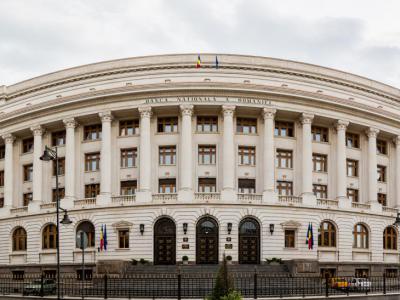
The Museum of the National Bank of Romania offers a captivating dive into the nation’s financial and architectural heritage. Housed within the historic New BNR Palace, the building dates back to the World War II era (1937–1944) and was designed in the elegant classical style with rationalist influences by architects Ion Davidescu, Radu Dudescu, and N. Cretoiu. Inside, visitors are greeted by grand marble halls, monumental granite staircases, and imposing Corinthian columns-testament to the Neoclassical charm that marks Bucharest’s cityscape.
The museum’s rich numismatic collection spans over two and a half millennia, featuring rare artifacts such as the oldest coin minted in Romanian territory, the smallest-ever Romanian paper money, and an impressive assembly of gold coins, bars, and medals. Highlights include the chance to touch a 13‑kilo gold bar and examine original minting tools and dies-an immersive experience for those fascinated by the evolution of money.
Tours are free but must be booked in advance, with guided visits provided by knowledgeable staff-usually lasting around an hour and rich in anecdotes linking Romania’s monetary history to its broader cultural narrative. The museum operates on weekdays only, and spaces fill up quickly, so booking early is recommended.
Whether you’re a history buff, a fan of monumental architecture, or simply curious about Romania’s economic story, the Museum of the National Bank offers a thoughtfully curated, free-of-charge educational experience in a beautifully preserved setting. It’s a perfect complement to a stroll through Bucharest’s historic center, just steps away from the Lipscani pedestrian district.
The museum’s rich numismatic collection spans over two and a half millennia, featuring rare artifacts such as the oldest coin minted in Romanian territory, the smallest-ever Romanian paper money, and an impressive assembly of gold coins, bars, and medals. Highlights include the chance to touch a 13‑kilo gold bar and examine original minting tools and dies-an immersive experience for those fascinated by the evolution of money.
Tours are free but must be booked in advance, with guided visits provided by knowledgeable staff-usually lasting around an hour and rich in anecdotes linking Romania’s monetary history to its broader cultural narrative. The museum operates on weekdays only, and spaces fill up quickly, so booking early is recommended.
Whether you’re a history buff, a fan of monumental architecture, or simply curious about Romania’s economic story, the Museum of the National Bank offers a thoughtfully curated, free-of-charge educational experience in a beautifully preserved setting. It’s a perfect complement to a stroll through Bucharest’s historic center, just steps away from the Lipscani pedestrian district.
8) Bucharest Russian Church
Nestled just off University Square in the heart of Bucharest’s historic center, the Saint Nicholas Russian Church (Biserica Sfantul Nicolae – Rusa) is a striking gem of early 20th-century Russian Orthodox architecture. Built between 1905 and 1909 at the behest of Russian Ambassador Mikhail Nikolaevich Giers and funded by Tsar Nicholas II, this church was originally intended for the Russian diplomatic community and expatriates living in Romania at the time.
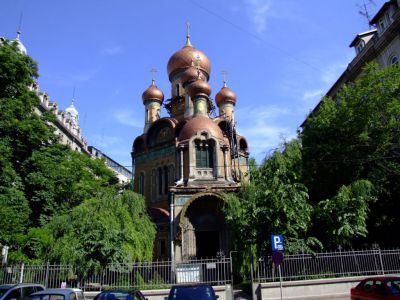
The church is a rare example of Russian Revival style in Romania, featuring seven gilded onion domes perched atop pink-and-yellow brick façades. The domes, eye-catching with their traditional motifs and crowned by golden Orthodox crosses, were designed in the Neo-Russian style, tinged with the Art Nouveau spirit that was prevalent in Europe at the turn of the century. Entering through an elaborately carved stone portal, you step into a serene sanctuary that dazzles with ornate iconography and rich décor.
Inside, the iconostasis is a masterpiece in its own right-hand-carved in Moscow and coated in gold leaf, modeled after the one in the Archangel Cathedral of the Kremlin. Russian painter Vasiliev originally adorned the interior walls with vivid oil frescoes, later restored by Anatolie Cudinov in the mid-20th century. The result is an immersive visual journey, blending Byzantine influences of Mount Athos with the vibrant palette of Russian ecclesiastical art.
Today, the church serves a dual purpose. Since 1992, it has functioned as the University of Bucharest’s chapel, earning the affectionate name of the “Students’ Church.” Open to anyone seeking reflection, culture, or spirituality, it blends religious services with musical and artistic events, creating a warm, welcoming atmosphere for both locals and tourists. Whether you’re drawn by its architectural grandeur or its peaceful interior, the Russian Church offers a luminous insight into Bucharest’s multicultural heritage and spiritual life.
The church is a rare example of Russian Revival style in Romania, featuring seven gilded onion domes perched atop pink-and-yellow brick façades. The domes, eye-catching with their traditional motifs and crowned by golden Orthodox crosses, were designed in the Neo-Russian style, tinged with the Art Nouveau spirit that was prevalent in Europe at the turn of the century. Entering through an elaborately carved stone portal, you step into a serene sanctuary that dazzles with ornate iconography and rich décor.
Inside, the iconostasis is a masterpiece in its own right-hand-carved in Moscow and coated in gold leaf, modeled after the one in the Archangel Cathedral of the Kremlin. Russian painter Vasiliev originally adorned the interior walls with vivid oil frescoes, later restored by Anatolie Cudinov in the mid-20th century. The result is an immersive visual journey, blending Byzantine influences of Mount Athos with the vibrant palette of Russian ecclesiastical art.
Today, the church serves a dual purpose. Since 1992, it has functioned as the University of Bucharest’s chapel, earning the affectionate name of the “Students’ Church.” Open to anyone seeking reflection, culture, or spirituality, it blends religious services with musical and artistic events, creating a warm, welcoming atmosphere for both locals and tourists. Whether you’re drawn by its architectural grandeur or its peaceful interior, the Russian Church offers a luminous insight into Bucharest’s multicultural heritage and spiritual life.
