Custom Walk in Liverpool, England by caroline_lobb_d96c99 created on 2026-02-20
Guide Location: England » Liverpool
Guide Type: Custom Walk
# of Sights: 7
Tour Duration: 7 Hour(s)
Travel Distance: 18.5 Km or 11.5 Miles
Share Key: 7E7GE
Guide Type: Custom Walk
# of Sights: 7
Tour Duration: 7 Hour(s)
Travel Distance: 18.5 Km or 11.5 Miles
Share Key: 7E7GE
How It Works
Please retrieve this walk in the GPSmyCity app. Once done, the app will guide you from one tour stop to the next as if you had a personal tour guide. If you created the walk on this website or come to the page via a link, please follow the instructions below to retrieve the walk in the app.
Retrieve This Walk in App
Step 1. Download the app "GPSmyCity: Walks in 1K+ Cities" on Apple App Store or Google Play Store.



Step 2. In the GPSmyCity app, download(or launch) the guide "Liverpool Map and Walking Tours".
Step 3. Tap the menu button located at upper right corner of the "Walks" screen and select "Retrieve custom walk". Enter the share key: 7E7GE
1) Port of Liverpool Building
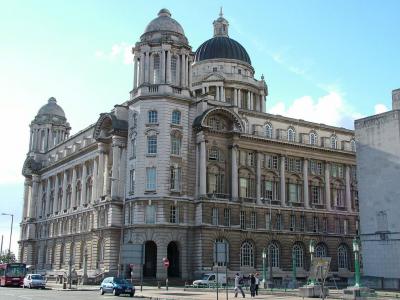
The Port of Liverpool Building, originally known as the Mersey Docks and Harbour Board Offices and commonly referred to as the Dock Office, is a distinguished Grade II* listed structure in Liverpool. Situated at the Pier Head, it forms part of Liverpool’s iconic Three Graces, alongside the Royal Liver Building and Cunard Building. These architectural masterpieces define the city’s waterfront and were central to Liverpool’s former designation as a UNESCO World Heritage Maritime Mercantile City.
Designed by Sir Arnold Thornely and F.B. Hobbs, the Port of Liverpool Building was completed in 1907 with a reinforced concrete frame clad in Portland stone. It showcases Edwardian Baroque architecture. Its 220-foot height and stately dome, inspired by Renaissance palaces, make it Liverpool’s tallest building and an enduring icon of the skyline.
Key highlights include its symmetrical design, canted corners with stone cupolas, and the ornate dome-added later and inspired by Liverpool's Anglican Cathedral. Though initially debated, the dome became the building's defining feature, drawing comparisons to Saint Paul’s Cathedral, Saint Peter’s Basilica, and Belfast City Hall.
Inside and out, the Port of Liverpool Building is adorned with rich maritime symbolism and intricate decorative elements, reflecting Liverpool’s historic role as a global trading hub and its importance to the British Empire. The river-facing entrance is flanked by statues of Commerce and Industry, sculpted by Charles John Allen, further emphasizing its nautical heritage.
As the oldest of the Three Graces, the Port of Liverpool Building continues to symbolize the city’s rich maritime history while standing as an enduring architectural treasure on the Liverpool waterfront.
Designed by Sir Arnold Thornely and F.B. Hobbs, the Port of Liverpool Building was completed in 1907 with a reinforced concrete frame clad in Portland stone. It showcases Edwardian Baroque architecture. Its 220-foot height and stately dome, inspired by Renaissance palaces, make it Liverpool’s tallest building and an enduring icon of the skyline.
Key highlights include its symmetrical design, canted corners with stone cupolas, and the ornate dome-added later and inspired by Liverpool's Anglican Cathedral. Though initially debated, the dome became the building's defining feature, drawing comparisons to Saint Paul’s Cathedral, Saint Peter’s Basilica, and Belfast City Hall.
Inside and out, the Port of Liverpool Building is adorned with rich maritime symbolism and intricate decorative elements, reflecting Liverpool’s historic role as a global trading hub and its importance to the British Empire. The river-facing entrance is flanked by statues of Commerce and Industry, sculpted by Charles John Allen, further emphasizing its nautical heritage.
As the oldest of the Three Graces, the Port of Liverpool Building continues to symbolize the city’s rich maritime history while standing as an enduring architectural treasure on the Liverpool waterfront.
2) Pier Head (must see)
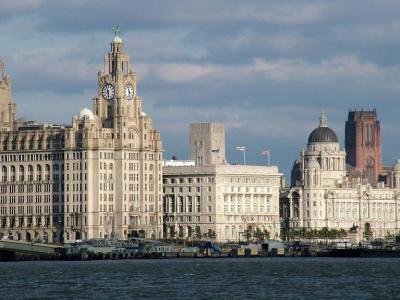
The Pier Head, officially known as George’s Pier Head, is a prominent riverside location in Liverpool’s city center. Formerly part of the Liverpool Maritime Mercantile City UNESCO World Heritage Site (2004–2021), the Pier Head is celebrated for its iconic architecture, public spaces, and historical significance as a landing site for passenger ships.
Originally the site of George’s Dock, constructed in 1771, the area became obsolete by the 1890s due to its inadequate size for modern commercial vessels. After prolonged negotiations between the Mersey Docks and Harbour Board and Liverpool Corporation, the dock was purchased in 1898 for redevelopment. This paved the way for the construction of landmark buildings and new public spaces, transforming the area into the architectural centerpiece it is today.
The Pier Head features the iconic "Three Graces": the Royal Liver Building (1911), England’s first skyscraper; the Cunard Building (1917), inspired by Italian palaces; and the Port of Liverpool Building (1907), a neo-baroque symbol of the city’s maritime legacy.
In 2002, the Pier Head was the focus of the controversial "Fourth Grace" project, which aimed to add a bold architectural statement to the waterfront. The winning design, “The Cloud” by Will Alsop, was abandoned in 2004 but plans for redevelopment continued.
In 2011, the Museum of Liverpool opened at the Pier Head, housing a rich collection that celebrates the city’s history and culture. Additionally, a canal link connecting the Leeds and Liverpool Canal to the South Docks was completed in 2009, enhancing the area’s accessibility and recreational appeal.
Although the Pier Head lost its UNESCO World Heritage status in 2021 due to modern developments that altered its historic landscape, it remains a testament to Liverpool’s evolution as a maritime and cultural hub. With its blend of historic grandeur and contemporary vibrancy, the Pier Head continues to draw locals and visitors alike to its storied waterfront.
Originally the site of George’s Dock, constructed in 1771, the area became obsolete by the 1890s due to its inadequate size for modern commercial vessels. After prolonged negotiations between the Mersey Docks and Harbour Board and Liverpool Corporation, the dock was purchased in 1898 for redevelopment. This paved the way for the construction of landmark buildings and new public spaces, transforming the area into the architectural centerpiece it is today.
The Pier Head features the iconic "Three Graces": the Royal Liver Building (1911), England’s first skyscraper; the Cunard Building (1917), inspired by Italian palaces; and the Port of Liverpool Building (1907), a neo-baroque symbol of the city’s maritime legacy.
In 2002, the Pier Head was the focus of the controversial "Fourth Grace" project, which aimed to add a bold architectural statement to the waterfront. The winning design, “The Cloud” by Will Alsop, was abandoned in 2004 but plans for redevelopment continued.
In 2011, the Museum of Liverpool opened at the Pier Head, housing a rich collection that celebrates the city’s history and culture. Additionally, a canal link connecting the Leeds and Liverpool Canal to the South Docks was completed in 2009, enhancing the area’s accessibility and recreational appeal.
Although the Pier Head lost its UNESCO World Heritage status in 2021 due to modern developments that altered its historic landscape, it remains a testament to Liverpool’s evolution as a maritime and cultural hub. With its blend of historic grandeur and contemporary vibrancy, the Pier Head continues to draw locals and visitors alike to its storied waterfront.
3) Beatles Statues (must see)
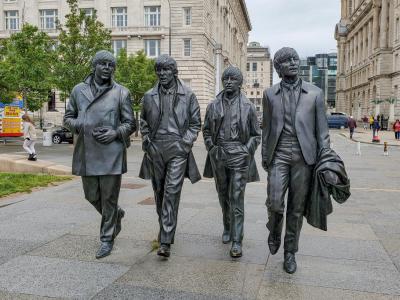
The Beatles Statue is an iconic monument located at Liverpool's Pier Head, near the intersection of Brunswick Street and Canada Boulevard. Designed by sculptor Andy Edwards, this striking bronze tribute to Paul McCartney, George Harrison, Ringo Starr, and John Lennon was unveiled on December 4, 2015. The ceremony, coinciding with the 50th anniversary of the Beatles' last Liverpool concert, was attended by Ann O'Byrne, the city’s deputy mayor, and Julia Baird, John Lennon's sister. The statue was generously donated to the city by The Cavern Club, the legendary music venue closely linked to the band’s early days.
The monument depicts the four Beatles walking together in a larger-than-life composition based on a 1963 photograph taken in Liverpool. Each figure features personal and symbolic details that celebrate the individuality of the band members. McCartney is seen holding a camera close to his chest, a nod to his late wife Linda McCartney, a photographer. Harrison's belt bears a Sanskrit inscription, symbolizing his spiritual interests. Starr’s right shoe has a card with the postal code "L8," referencing his childhood neighborhood in the Welsh Streets. He is positioned slightly behind the others, reflecting his placement as the drummer on stage. Lennon carries two acorns in his hand, referencing his and Yoko Ono’s 1968 acorn-planting gesture for world peace.
Standing prominently in front of the Liver Building, the statue has become a favorite photo stop for visitors and Beatles fans worldwide. Each small, thoughtful detail in the sculpture enriches the narrative of the Beatles' legacy, making it one of Liverpool’s most cherished attractions.
The monument depicts the four Beatles walking together in a larger-than-life composition based on a 1963 photograph taken in Liverpool. Each figure features personal and symbolic details that celebrate the individuality of the band members. McCartney is seen holding a camera close to his chest, a nod to his late wife Linda McCartney, a photographer. Harrison's belt bears a Sanskrit inscription, symbolizing his spiritual interests. Starr’s right shoe has a card with the postal code "L8," referencing his childhood neighborhood in the Welsh Streets. He is positioned slightly behind the others, reflecting his placement as the drummer on stage. Lennon carries two acorns in his hand, referencing his and Yoko Ono’s 1968 acorn-planting gesture for world peace.
Standing prominently in front of the Liver Building, the statue has become a favorite photo stop for visitors and Beatles fans worldwide. Each small, thoughtful detail in the sculpture enriches the narrative of the Beatles' legacy, making it one of Liverpool’s most cherished attractions.
4) Cilla Black Statue
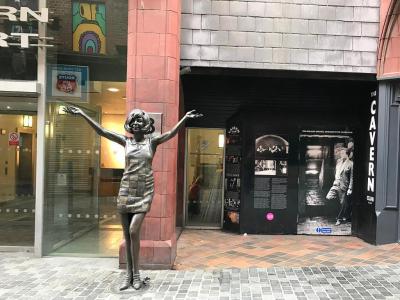
The Cilla Black Statue stands as a poignant tribute to one of Liverpool's most beloved musical icons. Unveiled in 2017 on Mathew Street, near the iconic Cavern Club, the life-size bronze sculpture honors Cilla Black's remarkable journey from a cloakroom attendant to a celebrated singer and entertainer. Created by sculptor Andy Edwards, the statue depicts a young Cilla performing one of her early songs, with her dress adorned with images symbolizing her illustrious career.
Born Priscilla Maria Veronica White on May 27, 1943, in Liverpool's Vauxhall district, Cilla grew up near Scotland Road. After attending Saint Anthony’s School and Anfield Community College, her love for entertainment led her to the Cavern Club, where she impressed The Beatles and others. With encouragement from promoter Sam Heath, she debuted at the Zodiac Club and was later discovered and signed by Brian Epstein as his only female artist.
Cilla rose to fame with her debut single "Love of the Loved," produced by George Martin and written by McCartney and Lennon. Her 1964 hits "Anyone Who Had a Heart" and "You're My World" topped the UK charts, making her the decade's best-selling female artist. Expanding into TV, acting, and writing, she became a British entertainment icon before passing away on August 1, 2015, at 72, in Estepona, Spain.
The statue, commissioned by her sons, not only celebrates her legacy but also the vibrant musical culture of Liverpool that launched her career. As part of the Cavern Club's 60th-anniversary celebrations, it reminds visitors of Cilla’s enduring impact on British pop culture and the city's storied musical history.
Born Priscilla Maria Veronica White on May 27, 1943, in Liverpool's Vauxhall district, Cilla grew up near Scotland Road. After attending Saint Anthony’s School and Anfield Community College, her love for entertainment led her to the Cavern Club, where she impressed The Beatles and others. With encouragement from promoter Sam Heath, she debuted at the Zodiac Club and was later discovered and signed by Brian Epstein as his only female artist.
Cilla rose to fame with her debut single "Love of the Loved," produced by George Martin and written by McCartney and Lennon. Her 1964 hits "Anyone Who Had a Heart" and "You're My World" topped the UK charts, making her the decade's best-selling female artist. Expanding into TV, acting, and writing, she became a British entertainment icon before passing away on August 1, 2015, at 72, in Estepona, Spain.
The statue, commissioned by her sons, not only celebrates her legacy but also the vibrant musical culture of Liverpool that launched her career. As part of the Cavern Club's 60th-anniversary celebrations, it reminds visitors of Cilla’s enduring impact on British pop culture and the city's storied musical history.
5) Strawberry Field
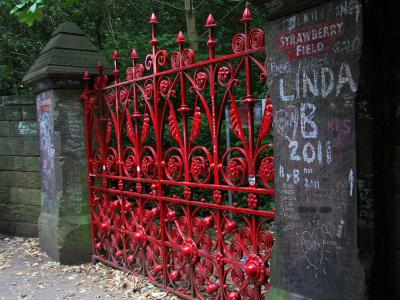
Strawberry Field is a former Salvation Army children’s home in the Liverpool suburb of Woolton, situated on Beaconsfield Road, a short walk from John Lennon’s childhood home. The building that existed during Lennon’s time in Liverpool opened in 1936, and was demolished in 1973 due to structural problems to be replaced with purpose-built units. The name of the children’s home was used by Lennon in the single ‘Strawberry Fields Forever’. Released in 1967, it was the first song to be recorded for “Sergeant Pepper’s Lonely Hearts Club Band”, considered by many to be the greatest album of all time. The song is regularly voted as one of the band’s five best.
The song does not directly reference the children’s home, but its hazy, summery melody is believed to be influenced by the afternoons spent by young Lennon in woodland behind the Strawberry Field grounds. Lennon also attended the home’s summer fête with his aunt each year; she claimed that he would listen to the Salvation Army marching band warming up from his bedroom window.
In time, the old red-painted entrance gates on Beaconsfield Road became a place of pilgrimage for Beatles fans. Strawberry Field is opened to the public. There is an exhibition on its history, plus a café and a shop. It is free to visit the Strawberry Field garden, care and shop. There is a small fee for viewing the exhibition.
The gates were stolen on 11 May 2000, allegedly by two men in a transit van, and were sold to an unsuspecting antiques dealer who never realized they were the actual gates from Strawberry Field. He returned them to the police upon request, and they now stand in the grounds of Strawberry Field.
Opening times:
Summer (1st April to 31st October)
Daily 09:00-19.00 (last admission 18:00)
Winter (1st November to 31st March)
Daily 09:30-17:00 (last admission 16:00)
Why You Should Visit:
This is one of the few places associated with the Beatles' childhood that you can visit for free. Do it as part of the whole Beatles experience.
Tip:
Strawberry Field operates a minibus to take people from Albert Dock in the city center to Strawberry Field and back. The minibus leaves Royal Albert Dock at the following times: 10:00, 11:15, 13:15, 14:15, 15:15. The last bus returning to Royal Albert Dock leaves Strawberry Field at 17:00.
The song does not directly reference the children’s home, but its hazy, summery melody is believed to be influenced by the afternoons spent by young Lennon in woodland behind the Strawberry Field grounds. Lennon also attended the home’s summer fête with his aunt each year; she claimed that he would listen to the Salvation Army marching band warming up from his bedroom window.
In time, the old red-painted entrance gates on Beaconsfield Road became a place of pilgrimage for Beatles fans. Strawberry Field is opened to the public. There is an exhibition on its history, plus a café and a shop. It is free to visit the Strawberry Field garden, care and shop. There is a small fee for viewing the exhibition.
The gates were stolen on 11 May 2000, allegedly by two men in a transit van, and were sold to an unsuspecting antiques dealer who never realized they were the actual gates from Strawberry Field. He returned them to the police upon request, and they now stand in the grounds of Strawberry Field.
Opening times:
Summer (1st April to 31st October)
Daily 09:00-19.00 (last admission 18:00)
Winter (1st November to 31st March)
Daily 09:30-17:00 (last admission 16:00)
Why You Should Visit:
This is one of the few places associated with the Beatles' childhood that you can visit for free. Do it as part of the whole Beatles experience.
Tip:
Strawberry Field operates a minibus to take people from Albert Dock in the city center to Strawberry Field and back. The minibus leaves Royal Albert Dock at the following times: 10:00, 11:15, 13:15, 14:15, 15:15. The last bus returning to Royal Albert Dock leaves Strawberry Field at 17:00.
6) Penny Lane
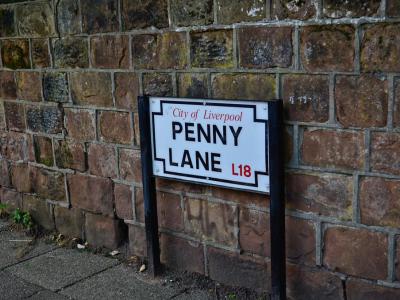
Penny Lane, a fairly typical suburban shopping street in the eastern suburb of Mossley Hill, has become world famous thanks to the Beatles hit that bears its name. It was written by Paul McCartney, who attended Saint Barnabas Church on the street and often met here his childhood friend and fellow Beatle, John Lennon, before catching a bus to Liverpool’s city centre. The many sights referenced in the lyrics can still be found on Penny Lane, including a bus shelter, a barber shop and a fire station. Street signs bearing the famous name were stolen so regularly that the council began painting the street name onto buildings instead.
“Penny Lane” was released in 1967 as a double A-side single with “Strawberry Fields Forever”, another song which references a Liverpool landmark. Beatles producer, George Martin, believed that it was collectively their finest single. It went to No.1 in the US, but only reached No.2 in the UK charts. The street has grown in stature as the result of its Beatles connections, and has become an attraction for tourists and locals alike. It caused some embarrassment to the council officials at one point, when they proposed that all Liverpool streets named after slave traders be renamed, unaware that Penny Lane was indeed named after the local slave trader James Penny. The famous street thus kept its name, whilst the other street names in the city were changed.
“Penny Lane” was released in 1967 as a double A-side single with “Strawberry Fields Forever”, another song which references a Liverpool landmark. Beatles producer, George Martin, believed that it was collectively their finest single. It went to No.1 in the US, but only reached No.2 in the UK charts. The street has grown in stature as the result of its Beatles connections, and has become an attraction for tourists and locals alike. It caused some embarrassment to the council officials at one point, when they proposed that all Liverpool streets named after slave traders be renamed, unaware that Penny Lane was indeed named after the local slave trader James Penny. The famous street thus kept its name, whilst the other street names in the city were changed.
7) Royal Albert Dock & the Waterfront (must see)
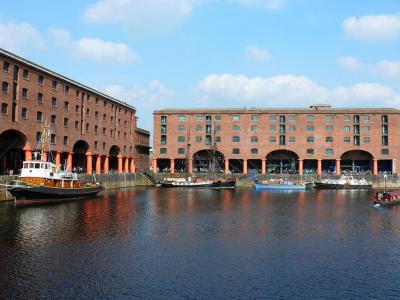
Albert Dock, a historic complex of docks and warehouses on the banks of the Mersey river, is Liverpool’s biggest tourist draw, attracting over 4 million visitors each year. It was built in the 1840s and designed by local architects Jesse Hartley and Philip Hardwick. The new dock was ground-breaking in two ways – one of the first dock complexes to allow direct unloading of cargo into warehouses, it was also the first UK development not to use wood in its construction. The complex was crucial to Liverpool’s rapid development as a global trade port, with ivory, sugar, silk and tobacco stored in its five vast warehouses.
The dock ceased to function for trade purposes after the outbreak of WWII, instead becoming a base for Royal Navy ships. In the post-war era, Albert Dock fell into disuse, before a redevelopment plan was drawn up in the 1980s. The dock itself was regenerated and hosted the Tall Ships Race in 1983, bringing a million tourists into the city. Gradually, the historic warehouses around the water were renovated and used for a wide range of new attractions. They now host a Maritime Museum, the world’s only dedicated Beatles museum, and Liverpool’s Tate Gallery.
Albert Dock houses the largest collection of Grade I listed buildings in the UK and is the jewel of Liverpool’s historic waterfront area. Immediately west of the dock, you will find the Pier Head, a peninsula jutting into the river which houses the Three Graces – three of Liverpool’s most famous buildings, including the Royal Liver building. The ornamental birds on the Liver building have become a symbol for the city’s university, council, and eponymous football team, Liverpool FC.
Why You Should Visit:
Industrial heritage, museums (some are free entry), art galleries, countless shops, bars & restaurants – a focal point of Liverpool.
The only problem with this place is, it is too big to discover in a single day.
The dock ceased to function for trade purposes after the outbreak of WWII, instead becoming a base for Royal Navy ships. In the post-war era, Albert Dock fell into disuse, before a redevelopment plan was drawn up in the 1980s. The dock itself was regenerated and hosted the Tall Ships Race in 1983, bringing a million tourists into the city. Gradually, the historic warehouses around the water were renovated and used for a wide range of new attractions. They now host a Maritime Museum, the world’s only dedicated Beatles museum, and Liverpool’s Tate Gallery.
Albert Dock houses the largest collection of Grade I listed buildings in the UK and is the jewel of Liverpool’s historic waterfront area. Immediately west of the dock, you will find the Pier Head, a peninsula jutting into the river which houses the Three Graces – three of Liverpool’s most famous buildings, including the Royal Liver building. The ornamental birds on the Liver building have become a symbol for the city’s university, council, and eponymous football team, Liverpool FC.
Why You Should Visit:
Industrial heritage, museums (some are free entry), art galleries, countless shops, bars & restaurants – a focal point of Liverpool.
The only problem with this place is, it is too big to discover in a single day.
