Custom Walk in Antigua, Guatemala by thestrunas_6448b created on 2026-02-20
Guide Location: Guatemala » Antigua
Guide Type: Custom Walk
# of Sights: 16
Tour Duration: 3 Hour(s)
Travel Distance: 5.9 Km or 3.7 Miles
Share Key: VBMZS
Guide Type: Custom Walk
# of Sights: 16
Tour Duration: 3 Hour(s)
Travel Distance: 5.9 Km or 3.7 Miles
Share Key: VBMZS
How It Works
Please retrieve this walk in the GPSmyCity app. Once done, the app will guide you from one tour stop to the next as if you had a personal tour guide. If you created the walk on this website or come to the page via a link, please follow the instructions below to retrieve the walk in the app.
Retrieve This Walk in App
Step 1. Download the app "GPSmyCity: Walks in 1K+ Cities" on Apple App Store or Google Play Store.



Step 2. In the GPSmyCity app, download(or launch) the guide "Antigua Map and Walking Tours".
Step 3. Tap the menu button located at upper right corner of the "Walks" screen and select "Retrieve custom walk". Enter the share key: VBMZS
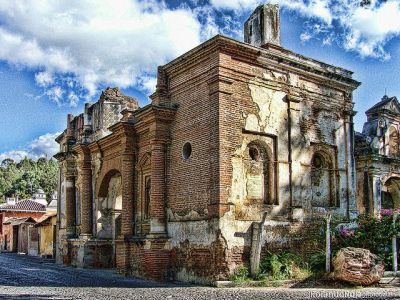
1) Saint Sebastian Church
Saint Sebastian Church in Antigua holds a significant place in the religious and cultural history of the region. Founded originally as a hermitage in 1565, it was relocated to the foot of Cerro del Manchén by Juan de Cuéllar around 1582. This church, dedicated to Antigua's protector, Saint Sebastian, was constructed to serve the burgeoning spiritual needs of the local population.
By the end of the 17th century, it was elevated to the status of a parish church, a critical development that coincided with its recovery from an earthquake in 1631. Saint Sebastian became a central institution in the city, notably serving as one of the three key parishes, alongside Candelaria and Los Remedios, overseeing the ancient city of Santiago de los Caballeros de Guatemala.
Throughout its history, Saint Sebastian Church has faced numerous challenges, particularly from natural disasters. The Santa Marta earthquakes in the 1770s inflicted severe damage, leading to the church functioning temporarily from the partially damaged structure after the original parish was moved to Nueva Guatemala de la Asunción in 1776. In 1804, it merged with the parishes of Candelaria and Los Remedios to form the Parish of San José, operating from the ruins of the Cathedral of Santiago de Antigua Guatemala.
The church's resilience was further tested by additional earthquakes in the second half of the 19th century, culminating in its abandonment in 1874. It remained mostly in ruins until a catastrophic earthquake in 1976 nearly obliterated it, leaving only the façade largely intact. A partial reconstruction at the end of the 20th century used brick prominently, highlighting a new phase in its architectural history.
Notably, the church also holds a special place in the cultural heritage of Guatemala, having been the baptismal site of the esteemed Jesuit poet and priest, Rafael Landívar. It was mentioned in the 1620 work of theologian Antonio Vázquez de Espinosa, underscoring its significance and the extensive reach of its religious services during that era.
By the end of the 17th century, it was elevated to the status of a parish church, a critical development that coincided with its recovery from an earthquake in 1631. Saint Sebastian became a central institution in the city, notably serving as one of the three key parishes, alongside Candelaria and Los Remedios, overseeing the ancient city of Santiago de los Caballeros de Guatemala.
Throughout its history, Saint Sebastian Church has faced numerous challenges, particularly from natural disasters. The Santa Marta earthquakes in the 1770s inflicted severe damage, leading to the church functioning temporarily from the partially damaged structure after the original parish was moved to Nueva Guatemala de la Asunción in 1776. In 1804, it merged with the parishes of Candelaria and Los Remedios to form the Parish of San José, operating from the ruins of the Cathedral of Santiago de Antigua Guatemala.
The church's resilience was further tested by additional earthquakes in the second half of the 19th century, culminating in its abandonment in 1874. It remained mostly in ruins until a catastrophic earthquake in 1976 nearly obliterated it, leaving only the façade largely intact. A partial reconstruction at the end of the 20th century used brick prominently, highlighting a new phase in its architectural history.
Notably, the church also holds a special place in the cultural heritage of Guatemala, having been the baptismal site of the esteemed Jesuit poet and priest, Rafael Landívar. It was mentioned in the 1620 work of theologian Antonio Vázquez de Espinosa, underscoring its significance and the extensive reach of its religious services during that era.
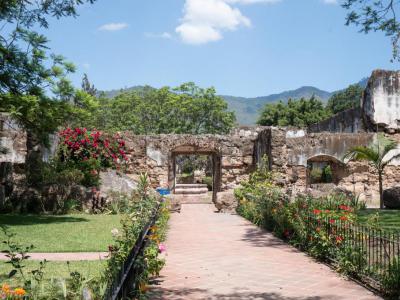
2) San Jeronimo Convent (ruins)
Nestled in the heart of Antigua, the San Jeronimo Convent is an essential destination for anyone exploring the colonial ruins of this historic city. Known for its beautiful and expansive ruins, San Jeronimo offers a glimpse into the past with its impressive architecture and enchanting gardens. Originally built in the first half of the 18th century by the Mercedarians, a Catholic order, the site functioned as a school before falling into ruin.
Today, San Jeronimo stands as a testament to the grandeur of colonial Antigua. Despite its state of disrepair, the site remains stunning, with large blocks of fallen masonry and crumbling walls that add to its charm. The gardens are a highlight, beautifully mingling with the ruins and offering a peaceful retreat within the city.
The convent is a popular spot among locals, often serving as a romantic venue for couples and hosting classical music concerts. Visitors can explore several intact stairways that lead to excellent vantage points for viewing the central courtyard and its elegant water fountain, set against the dramatic backdrop of the Agua Volcano.
San Jeronimo is open daily and a small entrance fee is required. The fee is a small price to pay for the opportunity to experience the beauty and historical significance of this magnificent site. Whether you're looking to enjoy a picnic, snap some stunning photos, or simply soak in the atmosphere, San Jeronimo Convent is a must-visit location in Antigua.
Today, San Jeronimo stands as a testament to the grandeur of colonial Antigua. Despite its state of disrepair, the site remains stunning, with large blocks of fallen masonry and crumbling walls that add to its charm. The gardens are a highlight, beautifully mingling with the ruins and offering a peaceful retreat within the city.
The convent is a popular spot among locals, often serving as a romantic venue for couples and hosting classical music concerts. Visitors can explore several intact stairways that lead to excellent vantage points for viewing the central courtyard and its elegant water fountain, set against the dramatic backdrop of the Agua Volcano.
San Jeronimo is open daily and a small entrance fee is required. The fee is a small price to pay for the opportunity to experience the beauty and historical significance of this magnificent site. Whether you're looking to enjoy a picnic, snap some stunning photos, or simply soak in the atmosphere, San Jeronimo Convent is a must-visit location in Antigua.
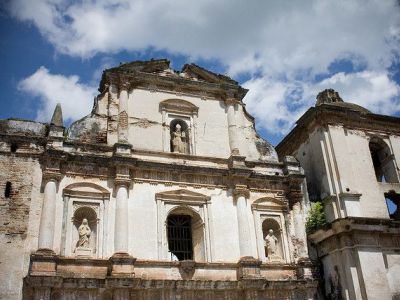
3) Saint Augustine Church
The Saint Augustine Church in Antigua stands as a historical and architectural landmark, richly imbued with religious significance and artistic merit. Its construction began on January 28, 1657, under the guidance of architect Juan Pascual. The church exemplifies Renaissance architecture, prominently featuring a façade adorned with an image of Saint Augustine on the upper part, complemented by depictions of other saints across the rest of the frontispiece.
Located just two blocks west of Central Park (Parque Central), the church's stately façade marks the remnants of what was once an extensive religious complex belonging to the order of San Agustín. Despite its grand beginnings, the church suffered extensive damage during the earthquakes of 1773, leading to the collapse of its dome and main altar. In the aftermath, the church and the accompanying convent, which originally boasted a two-story arcade, were repurposed for secular uses.
The interior of the church once housed luxurious altars and featured a bell tower that echoed its religious fervor across the city. Notably, the painting of the church by Antonio Ramírez de Montúfar during the colonial era adds a layer of cultural depth, reflecting the artistic styles and religious sentiments of the period.
Today, although only the facade of this massive complex survives, Saint Augustine Church remains a testament to the enduring legacy of Bishop Saint Augustine of Hippo and the historical depth of Antigua Guatemala. It continues to be a focal point for both visitors and locals, offering a glimpse into the city's rich past and its continued reverence for its religious and architectural heritage.
Located just two blocks west of Central Park (Parque Central), the church's stately façade marks the remnants of what was once an extensive religious complex belonging to the order of San Agustín. Despite its grand beginnings, the church suffered extensive damage during the earthquakes of 1773, leading to the collapse of its dome and main altar. In the aftermath, the church and the accompanying convent, which originally boasted a two-story arcade, were repurposed for secular uses.
The interior of the church once housed luxurious altars and featured a bell tower that echoed its religious fervor across the city. Notably, the painting of the church by Antonio Ramírez de Montúfar during the colonial era adds a layer of cultural depth, reflecting the artistic styles and religious sentiments of the period.
Today, although only the facade of this massive complex survives, Saint Augustine Church remains a testament to the enduring legacy of Bishop Saint Augustine of Hippo and the historical depth of Antigua Guatemala. It continues to be a focal point for both visitors and locals, offering a glimpse into the city's rich past and its continued reverence for its religious and architectural heritage.
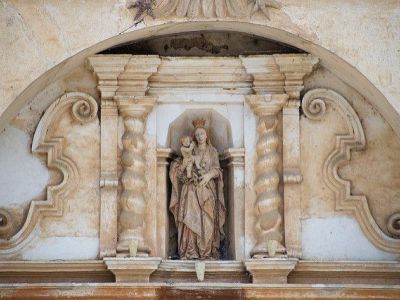
4) Santa Lucia Church
Santa Lucia Church in Antigua stands as a historical and architectural landmark with deep roots dating back to 1542, coinciding with the founding year of Antigua itself. This makes it one of the earliest religious sites in the region, constructed just 18 years after the fall of Iximché, the last Mayan-Cakchiquel city. Unique among the ecclesiastical structures in Antigua, Santa Lucia features a twin bell tower design that sets it apart from the more commonly ornate facades of other local churches.
From its inception, the Church of Santa Lucía was a pioneer in inclusivity, being one of the first temples to welcome both indigenous people and new settlers to participate in its liturgies. This openness marked a significant step in blending local and European traditions and fostering a communal religious life in the nascent colonial city.
Despite suffering considerable damage during the earthquakes of 1717 and the more destructive one in 1773, Santa Lucia Church has resiliently withstood these trials. It continues to fulfill its religious role, housing several revered images including that of the Virgen de la Candelaria, which plays a central role in annual processions held on the first Sunday of February.
The church's location in Ciudad Vieja enhances its historical significance, positioned near the scenic port of the bell towers and surrounded by a quaint semi-landscaped square. This setting not only reflects the church’s storied past but also its continued importance as a place of worship and community gathering in Antigua, Guatemala.
From its inception, the Church of Santa Lucía was a pioneer in inclusivity, being one of the first temples to welcome both indigenous people and new settlers to participate in its liturgies. This openness marked a significant step in blending local and European traditions and fostering a communal religious life in the nascent colonial city.
Despite suffering considerable damage during the earthquakes of 1717 and the more destructive one in 1773, Santa Lucia Church has resiliently withstood these trials. It continues to fulfill its religious role, housing several revered images including that of the Virgen de la Candelaria, which plays a central role in annual processions held on the first Sunday of February.
The church's location in Ciudad Vieja enhances its historical significance, positioned near the scenic port of the bell towers and surrounded by a quaint semi-landscaped square. This setting not only reflects the church’s storied past but also its continued importance as a place of worship and community gathering in Antigua, Guatemala.
5) Saint Joseph el Veijo
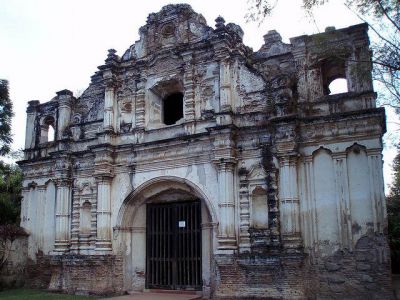
Nestled in the heart of Antigua, The Church of San José El Viejo stands as a testament to the rich history and architectural splendor of the region. Constructed around 1740, this church is a magnificent example of Baroque architecture, encapsulating the grandeur and intricate detail characteristic of the era.
The church was originally built to enshrine a revered sculpture of Saint Joseph, crafted by the distinguished sculptor Alonso de la Paz. This sculpture not only heightened the church's religious significance but also added to its cultural prestige. However, the construction of the church faced significant hurdles from the outset. The builders commenced work without prior approval from the Crown, leading to an order for its demolition. This decree was temporarily circumvented by transferring the sculpture to San Lucia, thus preserving both the artwork and the church's structure.
Despite these challenges, construction resumed, and the church suffered considerable damage during an earthquake in 1751. It was not until 1759 that reconstruction efforts gained momentum, completing the church in 1761, and allowing the sculpture to be returned to its rightful place.
Over the centuries, Saint Joseph el Viejo has withstood the test of time, including natural disasters that partially destroyed it. Today, it serves not only as a place of worship but also as a venue for various events, notably weddings. Its combination of historic ruins and modern decorations creates a unique and enchanting atmosphere that captivates both hosts and guests.
In recognition of its cultural and historical importance, Saint Joseph el Viejo was declared a National Monument in 1944. This designation underscores its significance as a historical site and its role in the cultural heritage of Antigua.
The church was originally built to enshrine a revered sculpture of Saint Joseph, crafted by the distinguished sculptor Alonso de la Paz. This sculpture not only heightened the church's religious significance but also added to its cultural prestige. However, the construction of the church faced significant hurdles from the outset. The builders commenced work without prior approval from the Crown, leading to an order for its demolition. This decree was temporarily circumvented by transferring the sculpture to San Lucia, thus preserving both the artwork and the church's structure.
Despite these challenges, construction resumed, and the church suffered considerable damage during an earthquake in 1751. It was not until 1759 that reconstruction efforts gained momentum, completing the church in 1761, and allowing the sculpture to be returned to its rightful place.
Over the centuries, Saint Joseph el Viejo has withstood the test of time, including natural disasters that partially destroyed it. Today, it serves not only as a place of worship but also as a venue for various events, notably weddings. Its combination of historic ruins and modern decorations creates a unique and enchanting atmosphere that captivates both hosts and guests.
In recognition of its cultural and historical importance, Saint Joseph el Viejo was declared a National Monument in 1944. This designation underscores its significance as a historical site and its role in the cultural heritage of Antigua.
6) Bethlehem Church
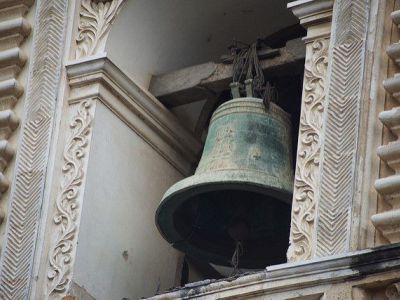
Bethlehem Church, nestled in the heart of Antigua, stands as a testament to the city's rich religious heritage and architectural beauty. This historic church, also known as Iglesia de Belén in Spanish, holds a significant place in Antigua's cultural landscape, drawing visitors from around the world to marvel at its stunning Baroque architecture and serene atmosphere.
Constructed in the 18th century, Bethlehem Church reflects the colonial influence prevalent in Antigua during that period. Its façade, adorned with intricate stonework and elaborate detailing, is a striking example of Spanish colonial architecture. The church's ornate entrance, framed by towering columns and sculpted reliefs, invites visitors to step inside and explore its sacred halls.
Inside the church, visitors are greeted by a tranquil atmosphere infused with reverence and history. The interior features majestic altars, adorned with gilded decorations and religious icons, showcasing the craftsmanship of the artisans who contributed to its construction. The soaring ceilings, adorned with intricate frescoes and wooden carvings, further enhance the church's aesthetic appeal and spiritual ambiance.
Beyond its architectural splendor, Bethlehem Church holds deep religious significance for the local community. It serves as a place of worship and spiritual refuge for worshippers, who gather here to participate in religious ceremonies and seek solace in their faith. The church's rich history and cultural heritage contribute to its enduring importance as a cherished landmark in Antigua.
Visitors to Bethlehem Church not only admire its architectural beauty but also have the opportunity to delve into the rich history and traditions of Antigua. The church's location in the heart of the city makes it easily accessible to tourists exploring Antigua's cobblestone streets and vibrant culture.
Constructed in the 18th century, Bethlehem Church reflects the colonial influence prevalent in Antigua during that period. Its façade, adorned with intricate stonework and elaborate detailing, is a striking example of Spanish colonial architecture. The church's ornate entrance, framed by towering columns and sculpted reliefs, invites visitors to step inside and explore its sacred halls.
Inside the church, visitors are greeted by a tranquil atmosphere infused with reverence and history. The interior features majestic altars, adorned with gilded decorations and religious icons, showcasing the craftsmanship of the artisans who contributed to its construction. The soaring ceilings, adorned with intricate frescoes and wooden carvings, further enhance the church's aesthetic appeal and spiritual ambiance.
Beyond its architectural splendor, Bethlehem Church holds deep religious significance for the local community. It serves as a place of worship and spiritual refuge for worshippers, who gather here to participate in religious ceremonies and seek solace in their faith. The church's rich history and cultural heritage contribute to its enduring importance as a cherished landmark in Antigua.
Visitors to Bethlehem Church not only admire its architectural beauty but also have the opportunity to delve into the rich history and traditions of Antigua. The church's location in the heart of the city makes it easily accessible to tourists exploring Antigua's cobblestone streets and vibrant culture.
7) Sacred Cross Hermitage
The Sacred Cross Hermitage (Ermita de la Santa Cruz) in Antigua holds a deep historical significance dating back to its origins in 1664. Initially proposed by Dominican monks, the hermitage was established to serve the local community of Indians and mulattoes in the Barrio de la Santa Cruz. These residents not only supported the mission but also actively participated in restoring the temple over the years.
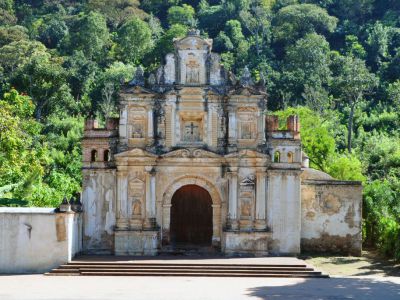
Architecturally, the hermitage showcases a rich façade adorned with a stucco crucifix, surrounded by images of the Virgin Mary, Mary Magdalene, and several saints. It features distinctive elements like a niche window, recessed tympanums, octagonal holes, and discontinuous cornices, making it a unique example of local religious architecture.
Throughout its history, the hermitage has faced numerous challenges, particularly from earthquakes. The significant tremors of 1717, 1773, and 1942 each caused considerable damage, with the 1942 quake collapsing its original dome. After each event, the resilient community contributed to the building's restoration, preserving its status as a vital local landmark.
In 1968, a transformative restoration enabled the hermitage to serve a new purpose as a venue for artistic and cultural presentations, operating as an open-air theater. This adaptation highlights the community's ongoing commitment to preserving and utilizing the space in ways that celebrate local culture and history.
The Sacred Cross Hermitage is not only the oldest in Antigua but also a testament to the enduring spirit and collective effort of its residents, making it a cherished historical site in Guatemala.
Architecturally, the hermitage showcases a rich façade adorned with a stucco crucifix, surrounded by images of the Virgin Mary, Mary Magdalene, and several saints. It features distinctive elements like a niche window, recessed tympanums, octagonal holes, and discontinuous cornices, making it a unique example of local religious architecture.
Throughout its history, the hermitage has faced numerous challenges, particularly from earthquakes. The significant tremors of 1717, 1773, and 1942 each caused considerable damage, with the 1942 quake collapsing its original dome. After each event, the resilient community contributed to the building's restoration, preserving its status as a vital local landmark.
In 1968, a transformative restoration enabled the hermitage to serve a new purpose as a venue for artistic and cultural presentations, operating as an open-air theater. This adaptation highlights the community's ongoing commitment to preserving and utilizing the space in ways that celebrate local culture and history.
The Sacred Cross Hermitage is not only the oldest in Antigua but also a testament to the enduring spirit and collective effort of its residents, making it a cherished historical site in Guatemala.
8) San Francsico el Grande (San Francisco Cathedral) (must see)
San Francisco Cathedral (San Francisco el Grande), located in Antigua Guatemala, is a historically and culturally significant church, revered particularly for housing the shrine of Peter of Saint Joseph Betancur (Santo Hermano Pedro). Established following the arrival of Franciscan missionaries from Spain in 1530, the Franciscans were originally assigned 120 villages by civil authorities. The first church built by these missionaries was constructed in the Panchoy Valley in 1541, at the current site of the School of Christ (Escuela de Cristo). After suffering damage in 1565, a new sanctuary was erected two blocks away in 1579, parts of which still stand today and represent some of the oldest architecture in Antigua.
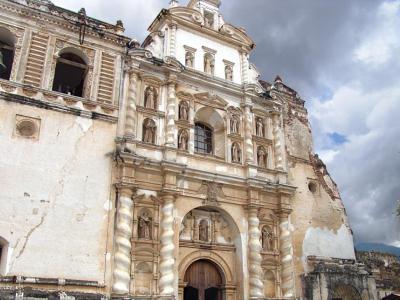
Over the centuries, the church and its cloister were expanded and reinforced, notably surviving the 1691 earthquake. However, it sustained severe damage during the earthquakes of 1717, and 1751, particularly in 1773, after which it was only partially reconstructed. Despite these challenges, elements like its façade, characterized by twisted Salomon columns typical of Spanish-American baroque architecture, remain strikingly similar to that of San José Cathedral. Inside, the church houses sixteen vaulted niches with various saints and friars, including notable figures such as the Virgin Mary and San Antonio de Padua.
The church’s bell and clock towers, remnants of its 17th and 19th-century architecture, stand in ruins today. Despite this, the church’s interior remains adorned with rich altarpieces featuring paintings and sculptures by famous artists of the era. Additionally, San Francisco marks the start of Calle los Pasos (Steps Street), which features the Stations of the Cross, a significant religious path traditionally walked solemnly by the faithful.
San Francisco Cathedral thus serves not only as a place of worship but also as a living museum of Guatemalan history and culture, continuing to attract both the devout and the curious.
Over the centuries, the church and its cloister were expanded and reinforced, notably surviving the 1691 earthquake. However, it sustained severe damage during the earthquakes of 1717, and 1751, particularly in 1773, after which it was only partially reconstructed. Despite these challenges, elements like its façade, characterized by twisted Salomon columns typical of Spanish-American baroque architecture, remain strikingly similar to that of San José Cathedral. Inside, the church houses sixteen vaulted niches with various saints and friars, including notable figures such as the Virgin Mary and San Antonio de Padua.
The church’s bell and clock towers, remnants of its 17th and 19th-century architecture, stand in ruins today. Despite this, the church’s interior remains adorned with rich altarpieces featuring paintings and sculptures by famous artists of the era. Additionally, San Francisco marks the start of Calle los Pasos (Steps Street), which features the Stations of the Cross, a significant religious path traditionally walked solemnly by the faithful.
San Francisco Cathedral thus serves not only as a place of worship but also as a living museum of Guatemalan history and culture, continuing to attract both the devout and the curious.
9) Santa Clara Convent and Church
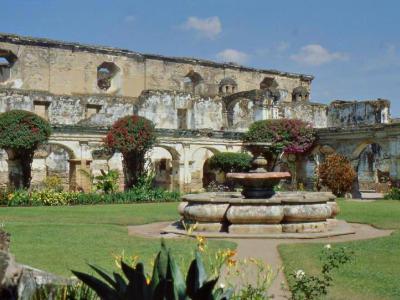
The convent and church, founded in 1699 by nuns from Puebla in Mexico, became a popular place for well-to-do young ladies to take the veil, as the hardships were none too hard, and the nuns quickly earned a reputation by selling bread to high society. The original convent was totally wiped out in 1717, as was the second in 1773, but the current building was spared in 1976 and its amazingly beautiful ornate facade remains intact.
You walk into a smaller garden, wonderfully kept with beautiful plants and flowers, and can have a good look at the place where they had the bread oven originally, walk past the embedded pila (wash house) to the amazing courtyard with its fountain in the middle, then continue to the church with its underground tombs.
Buy a drink, take a picnic, relax and enjoy the beautiful settings inside this convent. The arches, openings, fountain, layers of exposed walls, and volcano in the background are beautiful to photograph.
Tickets cost Q40 for non-nationals and are good value. A tour of the site takes about an hour.
You walk into a smaller garden, wonderfully kept with beautiful plants and flowers, and can have a good look at the place where they had the bread oven originally, walk past the embedded pila (wash house) to the amazing courtyard with its fountain in the middle, then continue to the church with its underground tombs.
Buy a drink, take a picnic, relax and enjoy the beautiful settings inside this convent. The arches, openings, fountain, layers of exposed walls, and volcano in the background are beautiful to photograph.
Tickets cost Q40 for non-nationals and are good value. A tour of the site takes about an hour.
10) San Hermano Pedro Cathedral
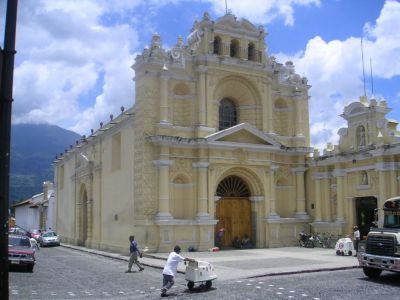
San Hermano Pedro Cathedral in Antigua serves a pivotal role in the community, reflecting a rich history intertwined with charity and dedication to the needy. Originally founded as a hospital in 1663 by Dominican friars, it has undergone multiple transformations and renovations, particularly under the stewardship of Capuchin nuns in the nineteenth century and later the Charity Sisters of San Vicente de Paul in 1869. Today, it stands as a testament to the enduring legacy of its namesake, Hermano Pedro Betancourt, a Franciscan priest renowned for his selfless care of the sick and abandoned in the early 1600s.
Hermano Pedro's hospital evolved over the centuries, enduring several reconstructions due to earthquake damage. The 1974 earthquake particularly devastated the facility, leading to a significant rebuilding effort led by Franciscan priest Guillermo Bonilla in 1984. This effort continued the hospital's tradition of providing essential care without governmental support, relying solely on donations and managed by the Franciscan order.
Today, the building serves a multifaceted role as a social work center and religious site. It includes Obras Sociales Hermano Pedro, a comprehensive social service facility offering a range of services from medical and dental care to education for handicapped children and a nutrition center for malnourished infants. The hospital caters to a diverse group of over three hundred residents, from newborns to nonagenarians, providing surgeries often performed by visiting medical staff from abroad. The site also includes operating rooms utilized almost year-round.
In addition to its function as a hospital, the cathedral continues to host Catholic religious services, maintaining its spiritual foundation. Hermano Pedro's legacy is further honored at his tomb, now a shrine located at San Francisco Church, a short distance from the current hospital site. This historic and versatile institution not only provides medical and educational services but also serves as a cultural and spiritual beacon in Antigua, Guatemala.
Hermano Pedro's hospital evolved over the centuries, enduring several reconstructions due to earthquake damage. The 1974 earthquake particularly devastated the facility, leading to a significant rebuilding effort led by Franciscan priest Guillermo Bonilla in 1984. This effort continued the hospital's tradition of providing essential care without governmental support, relying solely on donations and managed by the Franciscan order.
Today, the building serves a multifaceted role as a social work center and religious site. It includes Obras Sociales Hermano Pedro, a comprehensive social service facility offering a range of services from medical and dental care to education for handicapped children and a nutrition center for malnourished infants. The hospital caters to a diverse group of over three hundred residents, from newborns to nonagenarians, providing surgeries often performed by visiting medical staff from abroad. The site also includes operating rooms utilized almost year-round.
In addition to its function as a hospital, the cathedral continues to host Catholic religious services, maintaining its spiritual foundation. Hermano Pedro's legacy is further honored at his tomb, now a shrine located at San Francisco Church, a short distance from the current hospital site. This historic and versatile institution not only provides medical and educational services but also serves as a cultural and spiritual beacon in Antigua, Guatemala.
11) San Jose Cathedral (ruins)
The first cathedral on this site was begun in 1545; construction was so poor, however, that the structure was in a constant state of disrepair, and an earthquake in 1583 brought down much of the roof. In 1670 work started on a new cathedral worthy of the town's role as a capital city.
For 11 years the town watched as conscripted Maya labored and the most spectacular colonial building in Central America took shape. The scale of the new cathedral was astounding: a vast dome, five naves, eighteen chapels, and a central chamber measuring 90m by 20m. Its altar was inlaid with mother-of-pearl, ivory and silver, and carvings of saints and paintings by the most revered of European and colonial artists covered the walls.
The new cathedral held out the 1689/1717 quakes, but its walls were weakened and the 1773 upheaval sent them tumbling to the ground. Today, two of the chapels have been restored as the Church of San José, which opens off the Parque Central; inside is a figure of Christ by the colonial sculptor Quirio Cataño, who also carved the famous Black Christ of Esquipulas.
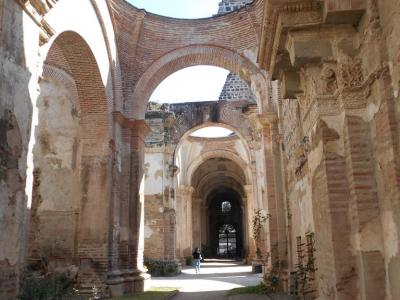
Behind the church, entered from 5 Calle Oriente, are the ruins of the rest of the structure; a mass of fallen masonry, broken arches and hefty pillars, cracked and moss-covered, the great original cupola now a window to the sky. At the very rear of the original nave, steps lead down to a burial vault, blackened by candle smoke, that's regularly used for Maya religious ceremonies – an example of the coexistence of pagan and Catholic beliefs, so characteristic of Guatemala.
For 11 years the town watched as conscripted Maya labored and the most spectacular colonial building in Central America took shape. The scale of the new cathedral was astounding: a vast dome, five naves, eighteen chapels, and a central chamber measuring 90m by 20m. Its altar was inlaid with mother-of-pearl, ivory and silver, and carvings of saints and paintings by the most revered of European and colonial artists covered the walls.
The new cathedral held out the 1689/1717 quakes, but its walls were weakened and the 1773 upheaval sent them tumbling to the ground. Today, two of the chapels have been restored as the Church of San José, which opens off the Parque Central; inside is a figure of Christ by the colonial sculptor Quirio Cataño, who also carved the famous Black Christ of Esquipulas.
Behind the church, entered from 5 Calle Oriente, are the ruins of the rest of the structure; a mass of fallen masonry, broken arches and hefty pillars, cracked and moss-covered, the great original cupola now a window to the sky. At the very rear of the original nave, steps lead down to a burial vault, blackened by candle smoke, that's regularly used for Maya religious ceremonies – an example of the coexistence of pagan and Catholic beliefs, so characteristic of Guatemala.
12) Antigua Guatemala Cathedral (must see)
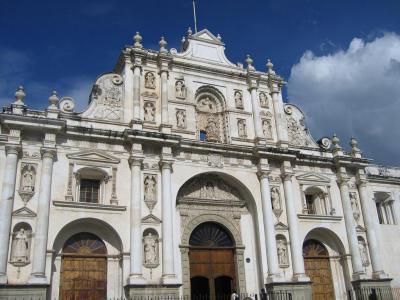
Antigua Guatemala Cathedral stands on the site of a church originally constructed in 1541. Several earthquakes damaged the original building, leading to its demolishment in 1669. Another building took its place, consecrated in 1680. This church was one of Central America's largest by 1743. The 1773 earthquake caused substantial damage, but the two towers at the building's front escaped most of the damage.
This cathedral enjoys UNESCO World Heritage Site status, with the facade being particularly impressive for many visitors. Statues of multiple saints grace the front. There are ruins from the previous part of the building destroyed in the earthquake that visitors can see, with the arches being particularly impressive. A plaza area outside the church features an impressive fountain.
Some of the sights to see inside the cathedral include sacred art that has been the subject of restorations. The high altar is one of the most well-preserved areas. At nightfall, the cathedral is impressively illuminated.
This cathedral enjoys UNESCO World Heritage Site status, with the facade being particularly impressive for many visitors. Statues of multiple saints grace the front. There are ruins from the previous part of the building destroyed in the earthquake that visitors can see, with the arches being particularly impressive. A plaza area outside the church features an impressive fountain.
Some of the sights to see inside the cathedral include sacred art that has been the subject of restorations. The high altar is one of the most well-preserved areas. At nightfall, the cathedral is impressively illuminated.
13) El Carmen Church (ruins)
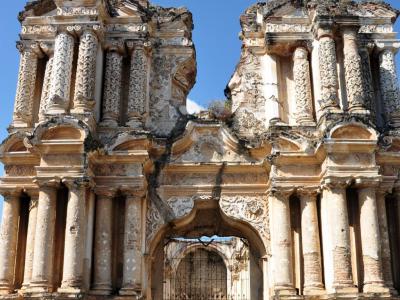
El Carmen Church (La Iglesia de Nuestra Señora del Carmen) stands as a historic relic in Antigua, embodying centuries of cultural and architectural heritage. Initially granted construction permission in 1638 by the city council of Santiago de los Caballeros, the church was intended to serve the Carmelite nuns displaced by the catastrophic earthquakes of 1773.
The original structure of El Carmen Church was significantly damaged by an earthquake in 1651. Subsequently, a more robust church was constructed in 1686, only to be destroyed again by another earthquake in 1717. A third iteration, completed in 1728, was renowned for its elaborate design and cultural significance, hosting prestigious events and becoming a key religious site in the region.
However, the resilience of El Carmen Church was continuously tested by seismic activity. The church suffered extensive damage during the earthquakes of 1773, which destroyed the dome, vaults, and bell tower, and later in 1976, which damaged the effigy of Our Lady of Carmen. Despite ongoing efforts to stabilize the ruins, much of the church remains in disrepair.
Today, El Carmen Church is inactive, no longer hosting regular religious services, but its facade, adorned with ornate stonework and majestic columns, still stands as a testament to the Guatemalan seismic Baroque style. The facade has weathered multiple earthquakes and retains its architectural splendor, making it a prominent feature in the cityscape of Santiago de los Caballeros de Guatemala.
Visitors to Antigua cannot enter the church but can admire its exterior and intricate details from the street, peering through protective bars. Adjacent to the church is a vibrant handicrafts market, offering a range of local artisanal products. This market provides an excellent opportunity for visitors to engage with the local culture and shop for unique gifts, though bargaining may be necessary to secure the best prices.
El Carmen Church, with its rich history and stunning facade, remains a must-visit landmark in Antigua Guatemala, offering a glimpse into the past and a cultural experience through its neighboring market.
Tip:
Also across the street is the excellent EPICURE restaurant inspired by European cuisine, and next to it is the amazing home that Antoine de Saint-Exupéry lived in when he wrote 'The Little Prince'. If you crave a vegetarian/vegan meal, do not miss LA BRUJA, tucked into the back corner of an off-street courtyard surrounded by plants. The food is simply amazing!
The original structure of El Carmen Church was significantly damaged by an earthquake in 1651. Subsequently, a more robust church was constructed in 1686, only to be destroyed again by another earthquake in 1717. A third iteration, completed in 1728, was renowned for its elaborate design and cultural significance, hosting prestigious events and becoming a key religious site in the region.
However, the resilience of El Carmen Church was continuously tested by seismic activity. The church suffered extensive damage during the earthquakes of 1773, which destroyed the dome, vaults, and bell tower, and later in 1976, which damaged the effigy of Our Lady of Carmen. Despite ongoing efforts to stabilize the ruins, much of the church remains in disrepair.
Today, El Carmen Church is inactive, no longer hosting regular religious services, but its facade, adorned with ornate stonework and majestic columns, still stands as a testament to the Guatemalan seismic Baroque style. The facade has weathered multiple earthquakes and retains its architectural splendor, making it a prominent feature in the cityscape of Santiago de los Caballeros de Guatemala.
Visitors to Antigua cannot enter the church but can admire its exterior and intricate details from the street, peering through protective bars. Adjacent to the church is a vibrant handicrafts market, offering a range of local artisanal products. This market provides an excellent opportunity for visitors to engage with the local culture and shop for unique gifts, though bargaining may be necessary to secure the best prices.
El Carmen Church, with its rich history and stunning facade, remains a must-visit landmark in Antigua Guatemala, offering a glimpse into the past and a cultural experience through its neighboring market.
Tip:
Also across the street is the excellent EPICURE restaurant inspired by European cuisine, and next to it is the amazing home that Antoine de Saint-Exupéry lived in when he wrote 'The Little Prince'. If you crave a vegetarian/vegan meal, do not miss LA BRUJA, tucked into the back corner of an off-street courtyard surrounded by plants. The food is simply amazing!
14) Santa Teresa Church
The Santa Teresa Church in Antigua is a remarkable historical site with a rich past that dates back to the late 17th century. Completed in April 1687, the church was designed by José de Porres, a renowned architect of the Colonial era known for his significant contributions to Antigua's architectural landscape. The church was part of a larger convent complex completed in 1677, which was specifically destined for the clergy and managed by the Discalced Carmelite nuns, a religious order known for their strict ascetic practices.
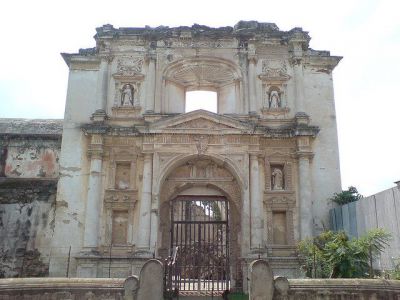
Architecturally, Santa Teresa Church is distinctive among the ruins scattered throughout Antigua. It was uniquely connected to the Carcel de Hombres, which served as Antigua's town jail until recently. This association required the church to have much thicker walls than typical colonial churches, intended to provide security and structural stability. The church's design includes elements that echo those of the Catedral de Santiago, with Ionic columns on the upper façade, a west-facing main entrance, and intricate carvings and details in its niches.
The church's history is marked by resilience and tragedy. It survived early earthquakes in 1717 and 1751 but was ultimately destroyed in the catastrophic 1773 earthquake that devastated many of Antigua's buildings and led to the relocation of the Guatemalan capital to Guatemala City. Despite its ruinous state, the site of Santa Teresa Church continues to attract numerous visitors each year, drawn to its historical significance and architectural uniqueness.
Architecturally, Santa Teresa Church is distinctive among the ruins scattered throughout Antigua. It was uniquely connected to the Carcel de Hombres, which served as Antigua's town jail until recently. This association required the church to have much thicker walls than typical colonial churches, intended to provide security and structural stability. The church's design includes elements that echo those of the Catedral de Santiago, with Ionic columns on the upper façade, a west-facing main entrance, and intricate carvings and details in its niches.
The church's history is marked by resilience and tragedy. It survived early earthquakes in 1717 and 1751 but was ultimately destroyed in the catastrophic 1773 earthquake that devastated many of Antigua's buildings and led to the relocation of the Guatemalan capital to Guatemala City. Despite its ruinous state, the site of Santa Teresa Church continues to attract numerous visitors each year, drawn to its historical significance and architectural uniqueness.
15) Church of Santa Rosa (ruins)
The Church of Santa Rosa, nestled in the historic heart of Antigua Guatemala, stands as a profound emblem of resilience amidst the captivating ruins that characterize this colonial city. Constructed in 1570 as a convent, the complex was specifically built for a sisterhood recognizable by their white clothing. Over the centuries, it transitioned into a church, withstanding the test of time and natural disasters, particularly the severe earthquakes of the 18th century.
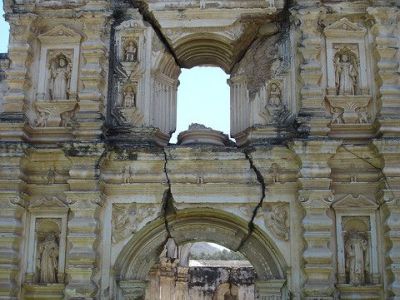
These earthquakes left indelible marks on the church, notably two prominent cracks that slice through the main structure. These fissures narrate the violent shakes that once ravaged the region, yet they also underscore the building's enduring strength. Despite the collapse of its domes long ago, the church maintains its grandeur, proudly displaying an architectural style that speaks volumes about the colonial era's aesthetic and structural ambitions.
Visitors to the Church of Santa Rosa are greeted by its striking façade, which remains intricately adorned despite the seismic damage. The façade prominently features Santa Rosa de Lima, the patron saint depicted with a crown of roses and holding the infant Jesus. Accompanying her are sculptures of Dominican saints such as Santo Domingo, San Francisco, and San Vicente Ferrer, each contributing to the religious and artistic richness of the edifice.
The Church of Santa Rosa is more than a mere historical site; it is a testament to the ingenuity and craftsmanship of its builders and the enduring spirit of the people of Antigua Guatemala. As one of the prime colonial ruins in the city, it offers visitors a profound glimpse into the past, while celebrating the cultural and architectural heritage that continues to thrive in the face of adversity.
These earthquakes left indelible marks on the church, notably two prominent cracks that slice through the main structure. These fissures narrate the violent shakes that once ravaged the region, yet they also underscore the building's enduring strength. Despite the collapse of its domes long ago, the church maintains its grandeur, proudly displaying an architectural style that speaks volumes about the colonial era's aesthetic and structural ambitions.
Visitors to the Church of Santa Rosa are greeted by its striking façade, which remains intricately adorned despite the seismic damage. The façade prominently features Santa Rosa de Lima, the patron saint depicted with a crown of roses and holding the infant Jesus. Accompanying her are sculptures of Dominican saints such as Santo Domingo, San Francisco, and San Vicente Ferrer, each contributing to the religious and artistic richness of the edifice.
The Church of Santa Rosa is more than a mere historical site; it is a testament to the ingenuity and craftsmanship of its builders and the enduring spirit of the people of Antigua Guatemala. As one of the prime colonial ruins in the city, it offers visitors a profound glimpse into the past, while celebrating the cultural and architectural heritage that continues to thrive in the face of adversity.
16) Church of Santo Domingo (ruins)
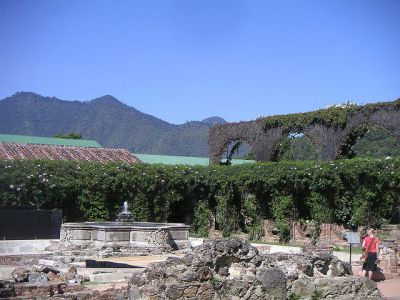
The Church of Santo Domingo in Antigua stands as a testament to the grandeur and historical significance of the once-flourishing 16th-century convent of the Santo Domingo Order. Established in 1542, this convent quickly became the largest and wealthiest in Antigua, reflecting the prominence of the Santo Domingo Order during that era. Tragically, a series of earthquakes in the 18th century devastated the structure, leaving only ruins behind which were not uncovered until excavations in the 1970s. These ruins were later incorporated into a hotel that opened in the 1990s, providing a unique blend of historical preservation and modern hospitality.
Visitors to the site can explore various aspects of the former convent's daily life through the preserved domestic areas, kitchens, chapels, stairways, and fountains. One of the more poignant exhibits includes skeletons displayed behind glass, offering a somber reflection on the lives of those who once inhabited the convent. Additionally, the site hosts multiple museums that enrich the visitor's experience with displays of colonial and pre-Columbian art, archaeological finds, and intricate silverwork. These exhibits not only highlight the cultural richness of the region but also its historical layers.
The Church of Santo Domingo is an essential destination for those interested in the cultural heritage and history of Guatemala. It provides a compelling glimpse into the past life of a significant religious and social institution in Antigua, enhanced by educational exhibits and the atmospheric presence of the ruins themselves. This site encourages visitors to immerse themselves in history, offering a profound understanding of the area's past and its enduring legacy.
Visitors to the site can explore various aspects of the former convent's daily life through the preserved domestic areas, kitchens, chapels, stairways, and fountains. One of the more poignant exhibits includes skeletons displayed behind glass, offering a somber reflection on the lives of those who once inhabited the convent. Additionally, the site hosts multiple museums that enrich the visitor's experience with displays of colonial and pre-Columbian art, archaeological finds, and intricate silverwork. These exhibits not only highlight the cultural richness of the region but also its historical layers.
The Church of Santo Domingo is an essential destination for those interested in the cultural heritage and history of Guatemala. It provides a compelling glimpse into the past life of a significant religious and social institution in Antigua, enhanced by educational exhibits and the atmospheric presence of the ruins themselves. This site encourages visitors to immerse themselves in history, offering a profound understanding of the area's past and its enduring legacy.
