Custom Walk in Melbourne, Australia by judinewman992487 created on 2026-02-23
Guide Location: Australia » Melbourne
Guide Type: Custom Walk
# of Sights: 11
Tour Duration: 5 Hour(s)
Travel Distance: 10.5 Km or 6.5 Miles
Share Key: LVF9R
Guide Type: Custom Walk
# of Sights: 11
Tour Duration: 5 Hour(s)
Travel Distance: 10.5 Km or 6.5 Miles
Share Key: LVF9R
How It Works
Please retrieve this walk in the GPSmyCity app. Once done, the app will guide you from one tour stop to the next as if you had a personal tour guide. If you created the walk on this website or come to the page via a link, please follow the instructions below to retrieve the walk in the app.
Retrieve This Walk in App
Step 1. Download the app "GPSmyCity: Walks in 1K+ Cities" on Apple App Store or Google Play Store.



Step 2. In the GPSmyCity app, download(or launch) the guide "Melbourne Map and Walking Tours".
Step 3. Tap the menu button located at upper right corner of the "Walks" screen and select "Retrieve custom walk". Enter the share key: LVF9R
1) Flinders Street Station
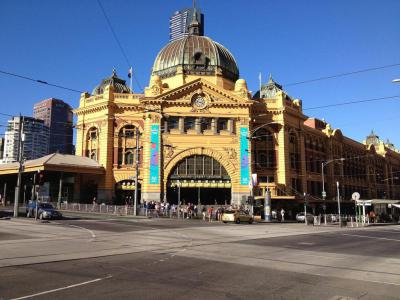
If you’re standing at the corner of Flinders and Swanston Streets and wondering why everyone else is looking up—congrats, you’ve found Flinders Street Station! It opened in 1854 as the terminus of Australia’s very first railway, back when “catching a train” meant something closer to “braving an experiment.” Today, it’s still one of Melbourne’s busiest transport hubs, funneling commuters across the suburbs and deep into the city’s daily rhythm.
The building you see now arrived later, finished in 1909. It’s an Edwardian creation that doesn’t believe in subtlety—domes, arches, towers, and enough ornamentation to fuel a century of urban legends. The curious fact associated with this building is that its design was mistakenly swapped with plans for Victoria Terminus in Bombay. No proof, however, but the rumour is almost as iconic as the station itself. Heritage-listed and instantly recognisable, it remains one of Melbourne’s most photographed faces.
And then there are the clocks. If someone in Melbourne tells you to meet them “under the clocks,” they’re not being poetic—that’s the row of indicator clocks above the main entrance. Another classic rendezvous point here is “On the steps.” Basically, this station doubles as both a transit hub and the city’s unofficial meeting app...
Its location doesn’t hurt either. Step outside and you’re right beside Federation Square, the Yarra River, and the maze of laneways, cafés, and arcades that make up the Central Business District. A truly perfect launchpad for whatever you’re doing next...
Indeed, whenever you're in Melbourne, even if you’re not catching a train, this building is always a delight to look at. The food inside is tempting, and—bonus—the station turns into a glowing postcard at night. So, make sure to have a camera handy; it likes the attention...
The building you see now arrived later, finished in 1909. It’s an Edwardian creation that doesn’t believe in subtlety—domes, arches, towers, and enough ornamentation to fuel a century of urban legends. The curious fact associated with this building is that its design was mistakenly swapped with plans for Victoria Terminus in Bombay. No proof, however, but the rumour is almost as iconic as the station itself. Heritage-listed and instantly recognisable, it remains one of Melbourne’s most photographed faces.
And then there are the clocks. If someone in Melbourne tells you to meet them “under the clocks,” they’re not being poetic—that’s the row of indicator clocks above the main entrance. Another classic rendezvous point here is “On the steps.” Basically, this station doubles as both a transit hub and the city’s unofficial meeting app...
Its location doesn’t hurt either. Step outside and you’re right beside Federation Square, the Yarra River, and the maze of laneways, cafés, and arcades that make up the Central Business District. A truly perfect launchpad for whatever you’re doing next...
Indeed, whenever you're in Melbourne, even if you’re not catching a train, this building is always a delight to look at. The food inside is tempting, and—bonus—the station turns into a glowing postcard at night. So, make sure to have a camera handy; it likes the attention...
2) Government House
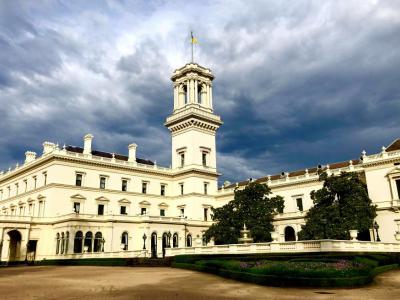
Government House is one of Melbourne’s most stunning buildings and the official residence of Victoria’s Governor. It was also home to Australia’s Governor-General, following federation, from 1901 to 1930. The house is located next to the Royal Botanic Gardens on land that was set aside by the first Governor of Victoria Charles La Trobe in 1841.
In 1870 the decision was made to finally construct a purpose built Victorian Government House there. It is the largest government house anywhere in the former British Empire. The flamboyant style of the building reflects the immense wealth of the state at that time as a direct result of the gold rush.
Government House is generally closed to the public as it is in use for state events and as the Governor’s private residence. However, tours may be available on Mondays and Wednesdays if you make an advance booking. The ballroom is said to be the largest in the southern hemisphere and within the British Empire. Every Australia Day it is opened up to visitors. Paying a visit to the Royal Botanic Gardens and wandering up to Government House to see its lovely Italianate exterior at close range is definitely worth the time on any trip to Melbourne.
In 1870 the decision was made to finally construct a purpose built Victorian Government House there. It is the largest government house anywhere in the former British Empire. The flamboyant style of the building reflects the immense wealth of the state at that time as a direct result of the gold rush.
Government House is generally closed to the public as it is in use for state events and as the Governor’s private residence. However, tours may be available on Mondays and Wednesdays if you make an advance booking. The ballroom is said to be the largest in the southern hemisphere and within the British Empire. Every Australia Day it is opened up to visitors. Paying a visit to the Royal Botanic Gardens and wandering up to Government House to see its lovely Italianate exterior at close range is definitely worth the time on any trip to Melbourne.
3) Royal Botanic Gardens Melbourne (must see)
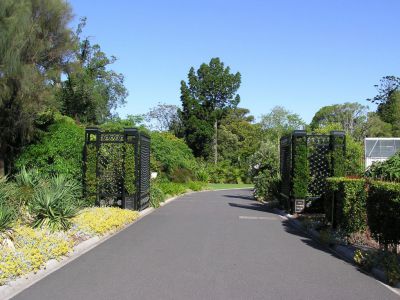
The Royal Botanic Gardens Victoria consists of two separate locations: Melbourne and Cranbourne. Melbourne Gardens, established in 1846, occupies a 38-hectare area along the southern bank of the Yarra River. It features a diverse landscape with trees, garden beds, lakes, and lawns, showcasing nearly 50,000 individual plants from 8,500 different species, organized into 30 living plant collections.
Cranbourne Gardens, on the other hand, was founded in 1970 on the southeastern outskirts of Melbourne. It was specifically created to focus on Australian plant species and is situated on a sprawling 363-hectare site. This site, known for its natural wilderness and importance in biodiversity conservation, opened to the public in 1989. Visitors can explore native bushland, heathlands, wetlands, and woodlands within its boundaries. Notable within Cranbourne Gardens is the Australian Garden, which highlights Australian landscapes and native flora through the display of approximately 170,000 plants representing 1,700 plant varieties. This project was completed in 2012.
The Royal Botanic Gardens Victoria is also home to the State Botanical Collection, housed in the National Herbarium of Victoria. This collection comprises a vast array of preserved plants, algae, and fungi, totaling 1.5 million specimens. It stands as the largest herbarium collection in both Australia and the wider Oceania region. Additionally, the institution boasts Australia's most comprehensive botanical library.
Cranbourne Gardens, on the other hand, was founded in 1970 on the southeastern outskirts of Melbourne. It was specifically created to focus on Australian plant species and is situated on a sprawling 363-hectare site. This site, known for its natural wilderness and importance in biodiversity conservation, opened to the public in 1989. Visitors can explore native bushland, heathlands, wetlands, and woodlands within its boundaries. Notable within Cranbourne Gardens is the Australian Garden, which highlights Australian landscapes and native flora through the display of approximately 170,000 plants representing 1,700 plant varieties. This project was completed in 2012.
The Royal Botanic Gardens Victoria is also home to the State Botanical Collection, housed in the National Herbarium of Victoria. This collection comprises a vast array of preserved plants, algae, and fungi, totaling 1.5 million specimens. It stands as the largest herbarium collection in both Australia and the wider Oceania region. Additionally, the institution boasts Australia's most comprehensive botanical library.
4) Shrine of Remembrance (must see)
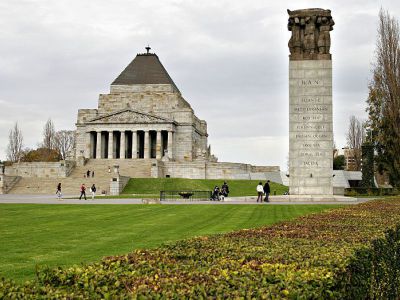
The Shrine of Remembrance at the King’s Domain in Melbourne was built following World War I as a constant reminder of all those Australians who fought and perished in the “Great War”. During WWI around 119,000 Victorians enlisted to defend king and country. Of the 89,000 who served abroad, around 19,000 were killed and buried in distant graves. The Shrine of Remembrance was built as a physical reminder and memorial to a grieving state and nation. Following several years of debate and contention over the design and form of the memorial, the foundation stone was laid on 11 November 1927. The shrine was officially dedicated on Remembrance Day, 1934 by the Duke of Gloucester before a crowd of around 300,000.
Following World War II a forecourt was added and this was dedicated by Queen Elizabeth II on her visit to Australia in 1954. The façade of the shrine is inspired by the Mausoleum of Maussollos at Halicarnassus and the Parthenon in Athens. Inside the shrine, the Stone of Remembrance is sunken so that visitors must bow their heads in order to read the inscription. In the Crypt there is a bronze statue of a father and son to represent the two generations that fought in the World War I and II.
Why You Should Visit:
Only a mile or two from central Melbourne, the atmosphere changes drastically when you get there.
Away from crowds and cars, this place is so quiet and peaceful, besides being very well maintained – both building and landscape.
Tip:
If you get a chance, catch one of the guided tours giving you further insight into the building and putting everything into perspective.
Following World War II a forecourt was added and this was dedicated by Queen Elizabeth II on her visit to Australia in 1954. The façade of the shrine is inspired by the Mausoleum of Maussollos at Halicarnassus and the Parthenon in Athens. Inside the shrine, the Stone of Remembrance is sunken so that visitors must bow their heads in order to read the inscription. In the Crypt there is a bronze statue of a father and son to represent the two generations that fought in the World War I and II.
Why You Should Visit:
Only a mile or two from central Melbourne, the atmosphere changes drastically when you get there.
Away from crowds and cars, this place is so quiet and peaceful, besides being very well maintained – both building and landscape.
Tip:
If you get a chance, catch one of the guided tours giving you further insight into the building and putting everything into perspective.
5) Queen Victoria Gardens
The Queen Victoria Gardens is a memorial to the state of Victoria’s namesake. Following her death in 1901, the state deemed that the long reigning monarch should be given an appropriate memorial and 4.8 hectares was set aside. The gardens are bounded by Saint Kilda Road, Alexandra Avenue and Linlithgow Avenue and make up part of the large group of city gardens known as the Domain Parklands. Taking a stroll through the gardens is the perfect way to revive your spirits and seek out some green space close to the bustling CBD.
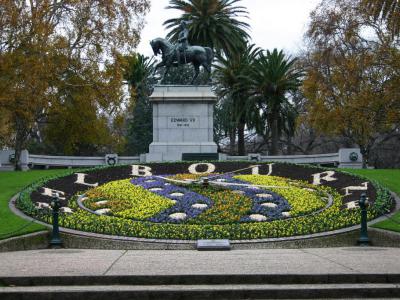
There are several features to visit while wandering through the Queen Victoria Gardens. One of the highlights is the large floral clock, which was donated in 1966 and features more than 7000 blooms. Behind the clock is a large bronze statue of Edward VII who succeeded Queen Victoria on the British throne. One of the main features of the park is the statue of Queen Victoria, which is at the highest point in the park, and she is shown wearing full regalia. Built from marble by James White, Queen Victoria looks down over the parklands’ lawns and garden beds. There are many other statues that are scattered around the parklands including The Genie, The Phoenix and The Pathfinder.
There are several features to visit while wandering through the Queen Victoria Gardens. One of the highlights is the large floral clock, which was donated in 1966 and features more than 7000 blooms. Behind the clock is a large bronze statue of Edward VII who succeeded Queen Victoria on the British throne. One of the main features of the park is the statue of Queen Victoria, which is at the highest point in the park, and she is shown wearing full regalia. Built from marble by James White, Queen Victoria looks down over the parklands’ lawns and garden beds. There are many other statues that are scattered around the parklands including The Genie, The Phoenix and The Pathfinder.
6) Arts Centre Melbourne
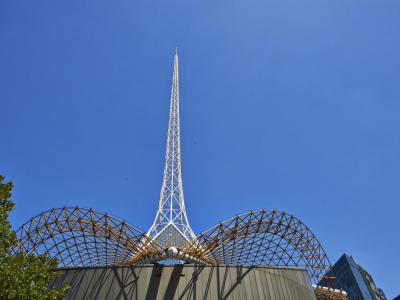
Arts Centre Melbourne, originally known as the Victorian Arts Centre and briefly referred to as the Arts Centre, is a prominent hub for the performing arts. It encompasses a collection of theaters and concert halls situated within the Melbourne Arts Precinct, situated in the central Melbourne neighborhood of Southbank, Victoria.
The design of this cultural complex was the work of architect Sir Roy Grounds. The comprehensive plan for this complex, along with that of the National Gallery of Victoria, received approval in 1960. However, construction commenced in 1973, albeit with some delays. The complex was unveiled in multiple phases, with Hamer Hall opening its doors in 1982, followed by the Theatres Building in 1984.
Arts Centre Melbourne is strategically positioned alongside the Yarra River and Saint Kilda Road, one of the city's primary thoroughfares, and it seamlessly integrates into the broader Melbourne Arts Precinct.
This cultural center regularly hosts prominent performing arts companies, including Opera Australia, The Australian Ballet, the Melbourne Theatre Company, The Production Company, Victorian Opera, Bell Shakespeare, Bangarra Dance Theatre, and the Melbourne Symphony Orchestra. Arts Centre Melbourne also serves as a venue for numerous Australian and international performances and production companies.
The design of this cultural complex was the work of architect Sir Roy Grounds. The comprehensive plan for this complex, along with that of the National Gallery of Victoria, received approval in 1960. However, construction commenced in 1973, albeit with some delays. The complex was unveiled in multiple phases, with Hamer Hall opening its doors in 1982, followed by the Theatres Building in 1984.
Arts Centre Melbourne is strategically positioned alongside the Yarra River and Saint Kilda Road, one of the city's primary thoroughfares, and it seamlessly integrates into the broader Melbourne Arts Precinct.
This cultural center regularly hosts prominent performing arts companies, including Opera Australia, The Australian Ballet, the Melbourne Theatre Company, The Production Company, Victorian Opera, Bell Shakespeare, Bangarra Dance Theatre, and the Melbourne Symphony Orchestra. Arts Centre Melbourne also serves as a venue for numerous Australian and international performances and production companies.
7) Eureka Skydeck 88 (must see)
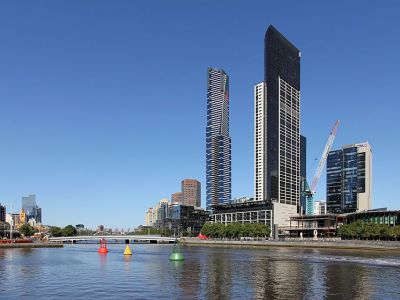
The Eureka Skydeck 88 is located in Eureka Tower on Melbourne’s Southbank. When it was built in 2002 it was the world’s tallest residential building, but now occupies the 15th place. At the Eureka Skydeck 88 you have the chance to take in the very best views of Melbourne. It is the southern hemisphere’s highest viewing platform and offers 360-degree views of the city and out to the Dandenong Mountain Range. If you are feeling daring, The Edge experience is the only one of its kind in the world. It is a glass viewing cube that juts out three meters from the rest of the building with you suspended 300 meters above the ground.
Out on The Terrace, you step out onto an enclosed space that is still open to the elements. There are often bracing winds on The Terrace and you can look through the high powered binoculars without the reflection from glass interrupting your views. Part of the Eureka Skydeck 88 experience is getting there in the fastest lifts in the southern hemisphere – it only takes 38 seconds to get to the 88th floor.
Tip:
Save money and buy tickets online. Day&Night tickets are available, allowing to visit early in the morning and then return after your day's sightseeing.
When you get to the top, go and book in for the Sky Deck as there is often a large queue. You will be given a token which then lights up when it is your turn.
Note to photographers:
Reflections are your greatest enemy here, especially at night, so hold your camera lens hard up against the window. If necessary, clean the glass first.
Out on The Terrace, you step out onto an enclosed space that is still open to the elements. There are often bracing winds on The Terrace and you can look through the high powered binoculars without the reflection from glass interrupting your views. Part of the Eureka Skydeck 88 experience is getting there in the fastest lifts in the southern hemisphere – it only takes 38 seconds to get to the 88th floor.
Tip:
Save money and buy tickets online. Day&Night tickets are available, allowing to visit early in the morning and then return after your day's sightseeing.
When you get to the top, go and book in for the Sky Deck as there is often a large queue. You will be given a token which then lights up when it is your turn.
Note to photographers:
Reflections are your greatest enemy here, especially at night, so hold your camera lens hard up against the window. If necessary, clean the glass first.
8) Block Arcade (must see)
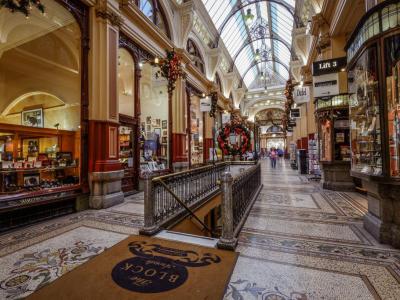
If Melbourne had a catwalk, the Block Arcade would be strutting right down the middle of it in full glamour mode. Opened in 1892, this lavish stretch of French Renaissance beauty is all towering arches, ornate cornices, and decorative tiles—basically the architectural equivalent of overdressing for every occasion, and loving it. Inside, boutiques and tea rooms line the walkways, echoing the days when this was the most fashionable shopping runway in town just off Collins Street.
Shaped like an elegant L and crowned at the bend with a domed rotunda that refuses to be ignored, the arcade links Elizabeth Street to Collins Street. And if you walk in from the Collins side, you’ll find yourself facing its slightly older sibling, the Royal Arcade, as if the two have been politely competing for attention since the Victorian era...
The name “Block Arcade” comes from the 19th-century pastime of “doing the block,” when Melbourne’s elite would dress to impress and glide along Collins Street and its arcades. This was the place to see—and be seen—long before Instagram tried to claim the job...
Nowadays, people keep stopping by because a walk through the Block Arcade feels like stepping straight into Victorian Melbourne, minus the horse-drawn traffic... Those soaring six-storey façades and meticulously restored interior are textbook Mannerist drama, and the whole place is proudly listed on the Victorian Heritage Register—because, frankly, how could it possibly not be?
And now for a tip worthy of your inner aristocrat: the Hopetoun Tea Rooms. First opened in 1894 and redecorated in 1976 in full Victorian splendour, it still delivers the kind of tea service that expects you to sit up straight and behave elegantly—well, at least until dessert arrives...
Since you're already here, glance across the street to the Royal Arcade for another dose of grandeur. Or take a quick detour into Block Court next door—its Art Deco interior no longer houses an arcade of shops, but it certainly still knows how to make an entrance.
Shaped like an elegant L and crowned at the bend with a domed rotunda that refuses to be ignored, the arcade links Elizabeth Street to Collins Street. And if you walk in from the Collins side, you’ll find yourself facing its slightly older sibling, the Royal Arcade, as if the two have been politely competing for attention since the Victorian era...
The name “Block Arcade” comes from the 19th-century pastime of “doing the block,” when Melbourne’s elite would dress to impress and glide along Collins Street and its arcades. This was the place to see—and be seen—long before Instagram tried to claim the job...
Nowadays, people keep stopping by because a walk through the Block Arcade feels like stepping straight into Victorian Melbourne, minus the horse-drawn traffic... Those soaring six-storey façades and meticulously restored interior are textbook Mannerist drama, and the whole place is proudly listed on the Victorian Heritage Register—because, frankly, how could it possibly not be?
And now for a tip worthy of your inner aristocrat: the Hopetoun Tea Rooms. First opened in 1894 and redecorated in 1976 in full Victorian splendour, it still delivers the kind of tea service that expects you to sit up straight and behave elegantly—well, at least until dessert arrives...
Since you're already here, glance across the street to the Royal Arcade for another dose of grandeur. Or take a quick detour into Block Court next door—its Art Deco interior no longer houses an arcade of shops, but it certainly still knows how to make an entrance.
9) Queen Victoria Market (must see)
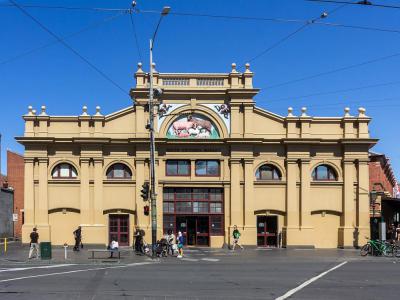
If Melbourne had a heartbeat, you’d probably hear it thumping somewhere between the cheese counters and doughnut queues of the Queen Victoria Market—or “the Queen Vic” to anyone who’s ever bought a snack here. It’s the last major market standing in the Central Business District and the largest open-air market in the entire Southern Hemisphere, which is a fancy way of saying it’s been out-shopping and outlasting everyone else since 1878.
Back in the early days, the city was littered with markets. The Western Market opened in 1841 and instantly packed out, so the Eastern Market appeared soon after and stole the spotlight. The Queen Vic rose from a patchwork of smaller trading spots built around the Old Melbourne Cemetery, where early settlers—including Melbourne founder, John Bateman—were laid to rest. By the 1870s, the city had outgrown its earlier markets, so the Queen Vic expanded with the now-classic A–F sheds, new shops along Elizabeth Street, and that unmistakable Meat and Fish façade.
Today, the Queen Vic is a world unto itself. It runs most days of the week, and when summer rolls in, Wednesday evenings burst into a full-blown Night Market—street food sizzling, music drifting across the sheds, and crowds circling festival bars like moths to a neon flame. With more than 600 small businesses, the market is a parade of produce, seafood, deli treats, handmade crafts, jewelers, artists, coffee brewers, and everything in between.
Many of the original 19th-century buildings still frame the site, including the 1869 Meat Hall and the heritage shopfronts along Elizabeth and Victoria Streets. Inside, regulars swear by the deli section’s meats and cheeses, the mountain of seasonal produce, the French pastries in the Dairy Produce Hall, and the famous doughnut truck that rarely stops steaming.
And here's one insider perk: vendors often drop prices late in the day—so timing your visit just right might score you a bargain along with your brioche.
Back in the early days, the city was littered with markets. The Western Market opened in 1841 and instantly packed out, so the Eastern Market appeared soon after and stole the spotlight. The Queen Vic rose from a patchwork of smaller trading spots built around the Old Melbourne Cemetery, where early settlers—including Melbourne founder, John Bateman—were laid to rest. By the 1870s, the city had outgrown its earlier markets, so the Queen Vic expanded with the now-classic A–F sheds, new shops along Elizabeth Street, and that unmistakable Meat and Fish façade.
Today, the Queen Vic is a world unto itself. It runs most days of the week, and when summer rolls in, Wednesday evenings burst into a full-blown Night Market—street food sizzling, music drifting across the sheds, and crowds circling festival bars like moths to a neon flame. With more than 600 small businesses, the market is a parade of produce, seafood, deli treats, handmade crafts, jewelers, artists, coffee brewers, and everything in between.
Many of the original 19th-century buildings still frame the site, including the 1869 Meat Hall and the heritage shopfronts along Elizabeth and Victoria Streets. Inside, regulars swear by the deli section’s meats and cheeses, the mountain of seasonal produce, the French pastries in the Dairy Produce Hall, and the famous doughnut truck that rarely stops steaming.
And here's one insider perk: vendors often drop prices late in the day—so timing your visit just right might score you a bargain along with your brioche.
10) Fitzroy Gardens and Captain Cook's Cottage (must see)
On the southeastern edge of Melbourne’s Central Business District, the city suddenly exhales—with 64 acres of Fitzroy Gardens opening up like a green antidote to downtown hustle. Laid out back in 1848 and named after the then Governor of New South Wales, Sir Charles Augustus FitzRoy, these Victorian-era gardens come packed with an ornamental lake, a glass conservatory, a miniature Tudor village, and one very well-travelled cottage.
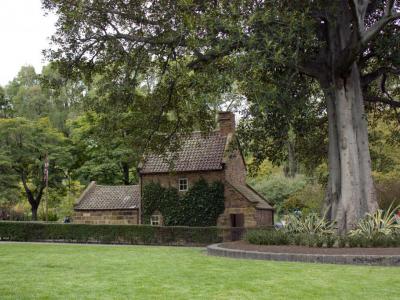
That cottage, Cooks’ Cottage, began life in 1755 in Great Ayton, North Yorkshire, England, where Captain James Cook’s parents built it long before anyone imagined it would one day cross the globe. In 1933, the cottage was taken apart brick by brick, packed into 253 cases and 40 barrels, and shipped to Melbourne aboard the cargo vessel Port Dunedin. Even the ivy tagging along today comes from cuttings of the original plant—proof that homesickness isn’t just for people... Though Cook may or may not have ever lived in this cottage himself, it now holds the title of Australia’s oldest standing building, which is quite a twist for something that started life on the other side of the world.
Restored in 1978, the house now sits inside a cottage garden, with antiques and costumed guides offering a glimpse into 18th-century domestic life—no electricity, no smartphones, and other technical delights of today...
Indeed, Melbourne likes to call itself Australia’s garden city, and Fitzroy Gardens is its strongest argument. Long, tree-lined paths, fountains, sculptures, and the Spanish mission-style conservatory (housing impressive floral displays) create a calm inner-city retreat where your biggest decision is whether to linger in the sun or keep exploring.
For a quick break, the KereKere Café by the visitor centre has you covered. Most visitors stay under an hour, but with sunshine, lawns, and picnic spots everywhere you look, stretching that into an afternoon feels entirely justified.
That cottage, Cooks’ Cottage, began life in 1755 in Great Ayton, North Yorkshire, England, where Captain James Cook’s parents built it long before anyone imagined it would one day cross the globe. In 1933, the cottage was taken apart brick by brick, packed into 253 cases and 40 barrels, and shipped to Melbourne aboard the cargo vessel Port Dunedin. Even the ivy tagging along today comes from cuttings of the original plant—proof that homesickness isn’t just for people... Though Cook may or may not have ever lived in this cottage himself, it now holds the title of Australia’s oldest standing building, which is quite a twist for something that started life on the other side of the world.
Restored in 1978, the house now sits inside a cottage garden, with antiques and costumed guides offering a glimpse into 18th-century domestic life—no electricity, no smartphones, and other technical delights of today...
Indeed, Melbourne likes to call itself Australia’s garden city, and Fitzroy Gardens is its strongest argument. Long, tree-lined paths, fountains, sculptures, and the Spanish mission-style conservatory (housing impressive floral displays) create a calm inner-city retreat where your biggest decision is whether to linger in the sun or keep exploring.
For a quick break, the KereKere Café by the visitor centre has you covered. Most visitors stay under an hour, but with sunshine, lawns, and picnic spots everywhere you look, stretching that into an afternoon feels entirely justified.
11) Forum Theatre
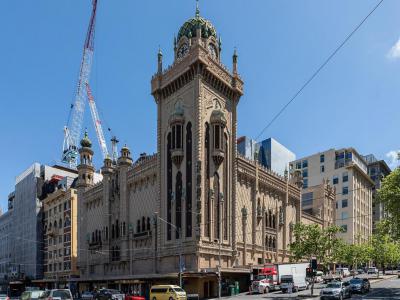
Melbourne has long been considered the cultural capital of Australia, and the Forum Theatre is one of the city’s best known cultural landmarks. Formerly known as the “State Theatre”, it was originally built as a movie palace. When the theatre opened in 1929, it had the largest seating capacity in the country with space for 3371 people. The building was designed by John Eberson, an American architect, who was well known around the world for his theatres. The exterior was in the Moorish revival style, with decadent minarets, cupola and an attention grabbing clock tower. The interior was done in an ornate Greco-Roman style and the ceiling was peppered with stars to emulate the twinkling night sky.
Today the theatre is no longer a cinema, but has for many years been used for a wide variety of theatrical, musical and cultural performances. Entertainers such as Oasis, Katy Perry and Ozzy Osborne have performed there and it is a regular venue for the Melbourne International Film Festival and Melbourne International Comedy Festival. The Forum Theatre has been on the Victorian Heritage Register since 1981.
Today the theatre is no longer a cinema, but has for many years been used for a wide variety of theatrical, musical and cultural performances. Entertainers such as Oasis, Katy Perry and Ozzy Osborne have performed there and it is a regular venue for the Melbourne International Film Festival and Melbourne International Comedy Festival. The Forum Theatre has been on the Victorian Heritage Register since 1981.
