Custom Walk in Marseille, France by deanna_4ca6ee created on 2026-02-26
Guide Location: France » Marseille
Guide Type: Custom Walk
# of Sights: 14
Tour Duration: 10 Hour(s)
Travel Distance: 25 Km or 15.5 Miles
Share Key: L6VN8
Guide Type: Custom Walk
# of Sights: 14
Tour Duration: 10 Hour(s)
Travel Distance: 25 Km or 15.5 Miles
Share Key: L6VN8
How It Works
Please retrieve this walk in the GPSmyCity app. Once done, the app will guide you from one tour stop to the next as if you had a personal tour guide. If you created the walk on this website or come to the page via a link, please follow the instructions below to retrieve the walk in the app.
Retrieve This Walk in App
Step 1. Download the app "GPSmyCity: Walks in 1K+ Cities" on Apple App Store or Google Play Store.



Step 2. In the GPSmyCity app, download(or launch) the guide "Marseille Map and Walking Tours".
Step 3. Tap the menu button located at upper right corner of the "Walks" screen and select "Retrieve custom walk". Enter the share key: L6VN8

1) Gare de Marseille Saint-Charles
Marseille-Saint-Charles stands as the principal railway and intercity bus hub in Marseille. It serves as the southern endpoint of the Paris–Marseille railway and the western terminus of the Marseille–Ventimiglia railway.
Its inauguration took place on 8 January 1848, commissioned by the Chemins de fer de Paris à Lyon et à la Méditerranée (PLM) on the site of the former Saint Charles Cemetery. Perched atop a small hill, the station is linked to the city center by an imposing set of stairs. With the advent of the TGV in 2001, travel times between Marseille and Northern France have significantly reduced, leading to a surge in passenger traffic from 7.1 million annually in 2000 to 16.5 million in 2017, solidifying its position as the eleventh busiest station in France.
In times gone by, Marseille-Saint-Charles held great significance as a crucial stopover on sea voyages to Africa, the Middle East, and the Far East, before air travel gained widespread popularity. Originally disconnected from the city, the station's grand staircase, envisioned by Eugène Senès, received approval from the municipality on 3 July 1911, but its construction was delayed due to World War I. Finally, on 17 July 1923, the construction commenced, and the grand staircase was unveiled on 22 December 1925, followed by an official inauguration by President Gaston Doumergue on 24 April 1927. Along its borders stand statues inspired by distant locations reachable from Marseille's port.
Its inauguration took place on 8 January 1848, commissioned by the Chemins de fer de Paris à Lyon et à la Méditerranée (PLM) on the site of the former Saint Charles Cemetery. Perched atop a small hill, the station is linked to the city center by an imposing set of stairs. With the advent of the TGV in 2001, travel times between Marseille and Northern France have significantly reduced, leading to a surge in passenger traffic from 7.1 million annually in 2000 to 16.5 million in 2017, solidifying its position as the eleventh busiest station in France.
In times gone by, Marseille-Saint-Charles held great significance as a crucial stopover on sea voyages to Africa, the Middle East, and the Far East, before air travel gained widespread popularity. Originally disconnected from the city, the station's grand staircase, envisioned by Eugène Senès, received approval from the municipality on 3 July 1911, but its construction was delayed due to World War I. Finally, on 17 July 1923, the construction commenced, and the grand staircase was unveiled on 22 December 1925, followed by an official inauguration by President Gaston Doumergue on 24 April 1927. Along its borders stand statues inspired by distant locations reachable from Marseille's port.
2) Palais Longchamp (must see)
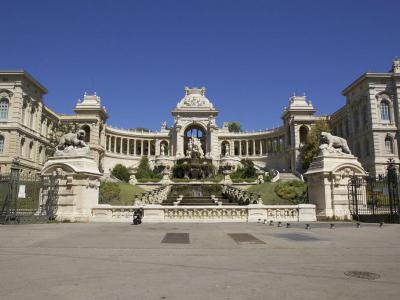
The Longchamp Palace (Palais Longchamp) stands as a prominent monument in the 4th arrondissement of Marseille. It serves as the home for the Museum of Fine Arts and the Natural History Museum of Marseille. The exquisite Longchamp Park that surrounds the palace has garnered recognition as one of the Notable Gardens of France, as designated by the French Ministry of Culture.
The genesis of the Longchamp Palace traces back to the celebration of the construction of the Canal de Marseille, an engineering marvel designed to supply water from the river Durance to the city. Laid down on 15th November 1839 by the Duke of Orleans, the palace's construction endured numerous challenges and took three decades to complete, primarily due to its substantial costs and complications arising from local regulations. The mastermind behind its architectural brilliance was Henri-Jacques Espérandieu, who centered the design around an impressive fountain, often referred to as the château d'eau or "water tower."
Subsequently, Longchamp Park opened its gates to the public in 1869, simultaneously accommodating the art and natural-history collections that were formerly housed elsewhere. For a significant period, the park also housed a zoo, managed by the city from 1898 until 1987. Due to public discontent with traditional zoos, it was eventually closed.
The palace's majestic fountain features four grand bulls and three women with a central Durance symbol. It represents fertility with grape and wheat motifs. Inside, a beautifully crafted stone grotto adorned with stalactites and nymphs sits behind the women. Water flows from beneath them and the bulls into a secondary basin, cascading into an artificial pond. It eventually drains into underground pipes, forming a graceful waterfall-like structure with twelve ornate bronze fountains leading to a larger pond.
Beyond the palace's grandeur lies the Jardin du Plateau, a classic garden à la française, beautifully adorning the garden's core. Additionally, the garden comprises an English landscape garden with meandering pathways and an array of remarkable trees, including a 150-year-old plane tree, a 120-year-old oak, and a Siberian elm.
The genesis of the Longchamp Palace traces back to the celebration of the construction of the Canal de Marseille, an engineering marvel designed to supply water from the river Durance to the city. Laid down on 15th November 1839 by the Duke of Orleans, the palace's construction endured numerous challenges and took three decades to complete, primarily due to its substantial costs and complications arising from local regulations. The mastermind behind its architectural brilliance was Henri-Jacques Espérandieu, who centered the design around an impressive fountain, often referred to as the château d'eau or "water tower."
Subsequently, Longchamp Park opened its gates to the public in 1869, simultaneously accommodating the art and natural-history collections that were formerly housed elsewhere. For a significant period, the park also housed a zoo, managed by the city from 1898 until 1987. Due to public discontent with traditional zoos, it was eventually closed.
The palace's majestic fountain features four grand bulls and three women with a central Durance symbol. It represents fertility with grape and wheat motifs. Inside, a beautifully crafted stone grotto adorned with stalactites and nymphs sits behind the women. Water flows from beneath them and the bulls into a secondary basin, cascading into an artificial pond. It eventually drains into underground pipes, forming a graceful waterfall-like structure with twelve ornate bronze fountains leading to a larger pond.
Beyond the palace's grandeur lies the Jardin du Plateau, a classic garden à la française, beautifully adorning the garden's core. Additionally, the garden comprises an English landscape garden with meandering pathways and an array of remarkable trees, including a 150-year-old plane tree, a 120-year-old oak, and a Siberian elm.
3) Porte d'Aix
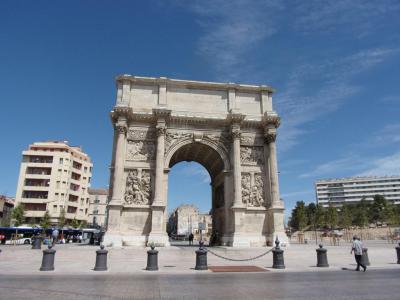
Porte d'Aix, also known as Porte Royal, stands as a triumphant arch that once marked the ancient entry point to the city on the road from Aix-en-Provence. The magnificent design, crafted by Michel-Robert Penchaud, draws inspiration from the grandeur of the triumphal arches of the Roman Empire. Adorning the main facades are depictions of significant battles such as Fleurus, Héliopolis, Marengo, and Austerlitz.
The original concept for Porte d'Aix emerged in 1784, intended to honor Louis XIV and commemorate the Peace of Paris, which marked the end of the American War of Independence. However, due to political upheavals and changes in the French monarchy, the project was put on hold until 1823, when the mayor of Marseille, the Marquis de Montgrand, revived it under the royal charter from Louis XVIII. This time, the arch was meant to commemorate the victory of Louis-Antoine at the Battle of Trocadero, which led to the restoration of Ferdinand VII as the king of Spain.
In 1825, the first stone was laid with a dedication to the royal family, and three years later, the aqueduct was demolished to make way for the Place d'Aix. However, further political shifts in France disrupted the project's progress. Only under the reign of Louis-Philippe was the main construction work eventually completed in 1839. As a result, the monument's purpose evolved, no longer solely celebrating the campaign of the Duke of Angoulême but instead encompassing the broader theme of French victories.
The original concept for Porte d'Aix emerged in 1784, intended to honor Louis XIV and commemorate the Peace of Paris, which marked the end of the American War of Independence. However, due to political upheavals and changes in the French monarchy, the project was put on hold until 1823, when the mayor of Marseille, the Marquis de Montgrand, revived it under the royal charter from Louis XVIII. This time, the arch was meant to commemorate the victory of Louis-Antoine at the Battle of Trocadero, which led to the restoration of Ferdinand VII as the king of Spain.
In 1825, the first stone was laid with a dedication to the royal family, and three years later, the aqueduct was demolished to make way for the Place d'Aix. However, further political shifts in France disrupted the project's progress. Only under the reign of Louis-Philippe was the main construction work eventually completed in 1839. As a result, the monument's purpose evolved, no longer solely celebrating the campaign of the Duke of Angoulême but instead encompassing the broader theme of French victories.
4) Cathédrale de la Major (Marseille Cathedral) (must see)
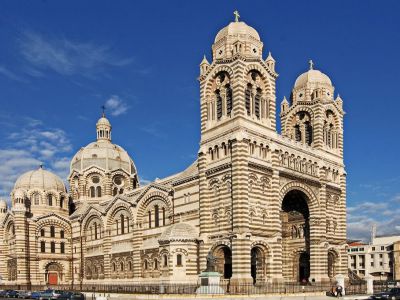
The Marseille Cathedral, also known as the Cathedral of Saint Mary Major, unites two eras of faith and architecture. The site includes both the Old Marseille Cathedral, dating to the 12th century, and the New Marseille Cathedral, constructed under Emperor Napoleon III in the late 19th century. Napoleon ordered the older Provençal Romanesque building replaced but preserved part of it-the choir and one bay of the nave-after public protests over its demolition.
The New Marseille Cathedral dominates the waterfront with its vast Romanesque-Byzantine Revival design. Stretching 469 feet in length, with a main dome reaching 231 feet in height, it can hold about 3,000 worshippers. Its façade alternates bands of white and dark stone, a combination of Florentine limestone and Ligurian green porphyry, producing a striped pattern affectionately nicknamed “the Pajamas” by locals. Inside, the cathedral reveals a rich blend of imported materials: white Carrara marble from Italy, onyx from Tunisia, and dazzling Venetian mosaics that illuminate its chapels and domes.
Beside this grand 19th-century structure lie the remains of the Old Cathedral, a humble yet evocative remnant of Marseille’s medieval heritage. The surviving chancel and apse feature smaller side chapels and a cylindrical vault crowned with octagonal and heptagonal domes. Archaeological traces beneath the site even reveal earlier Christian structures dating to the 5th century, showing that this location has been a place of worship for over fifteen centuries.
A visit to Marseille Cathedral offers not just architectural splendor but also some of the best panoramic views of the port and the Mediterranean. Rising between sea and city, the cathedral stands as both a symbol of continuity and a beacon of faith-undeniably one of Marseille’s must-see attractions.
The New Marseille Cathedral dominates the waterfront with its vast Romanesque-Byzantine Revival design. Stretching 469 feet in length, with a main dome reaching 231 feet in height, it can hold about 3,000 worshippers. Its façade alternates bands of white and dark stone, a combination of Florentine limestone and Ligurian green porphyry, producing a striped pattern affectionately nicknamed “the Pajamas” by locals. Inside, the cathedral reveals a rich blend of imported materials: white Carrara marble from Italy, onyx from Tunisia, and dazzling Venetian mosaics that illuminate its chapels and domes.
Beside this grand 19th-century structure lie the remains of the Old Cathedral, a humble yet evocative remnant of Marseille’s medieval heritage. The surviving chancel and apse feature smaller side chapels and a cylindrical vault crowned with octagonal and heptagonal domes. Archaeological traces beneath the site even reveal earlier Christian structures dating to the 5th century, showing that this location has been a place of worship for over fifteen centuries.
A visit to Marseille Cathedral offers not just architectural splendor but also some of the best panoramic views of the port and the Mediterranean. Rising between sea and city, the cathedral stands as both a symbol of continuity and a beacon of faith-undeniably one of Marseille’s must-see attractions.
5) Hotel de Ville (City Hall)
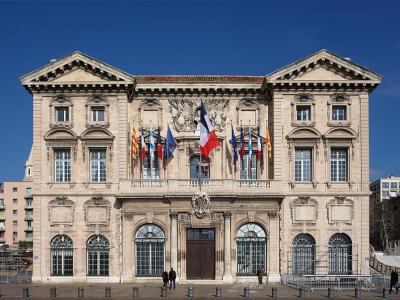
Built in 1656, the City Hall has served as Marseille’s civic centre ever since, replacing the earlier Town Hall that had fulfilled the same role since the 13th century. Often referred to as “The Lodge”, derived from the Italian loggia for its Baroque style, it was designed by Gaspard Puget.
The pink stone building, is richly decorated with sculptures and flags, reflecting the prosperity of 17th-century Marseille, then a thriving maritime republic under French influence. Above the main entrance is the city’s seal, created by Gaspard’s brother, Pierre Puget, a favourite artist of King Louis XIV. Appropriately, a bust of the Sun King crowns the façade, gazing over the bustling harbour and boulevard below.
Though monarchs fell from power in the 18th century, the City Hall endured. It survived multiple regimes, revolutions, and even the devastation of World War II-standing as a rare witness to the city’s turbulent history. Remarkably, despite wartime bombings that destroyed much of the surrounding district in 1943, the building itself escaped major damage. Inside, several ceremonial rooms still preserve period furnishings, portraits of former mayors, and historical archives that document centuries of municipal life.
The building’s rear features a covered bridge connecting its two main levels, symbolically reuniting the upper floor-once reserved for the nobility-with the ground floor, which was occupied by merchants and tradesmen in the 18th century. The City Hall continues to house the mayor’s office and serves as a venue for civic ceremonies, making it both a working institution and a living monument to the city’s storied past.
The pink stone building, is richly decorated with sculptures and flags, reflecting the prosperity of 17th-century Marseille, then a thriving maritime republic under French influence. Above the main entrance is the city’s seal, created by Gaspard’s brother, Pierre Puget, a favourite artist of King Louis XIV. Appropriately, a bust of the Sun King crowns the façade, gazing over the bustling harbour and boulevard below.
Though monarchs fell from power in the 18th century, the City Hall endured. It survived multiple regimes, revolutions, and even the devastation of World War II-standing as a rare witness to the city’s turbulent history. Remarkably, despite wartime bombings that destroyed much of the surrounding district in 1943, the building itself escaped major damage. Inside, several ceremonial rooms still preserve period furnishings, portraits of former mayors, and historical archives that document centuries of municipal life.
The building’s rear features a covered bridge connecting its two main levels, symbolically reuniting the upper floor-once reserved for the nobility-with the ground floor, which was occupied by merchants and tradesmen in the 18th century. The City Hall continues to house the mayor’s office and serves as a venue for civic ceremonies, making it both a working institution and a living monument to the city’s storied past.
6) Château d'If (must see)
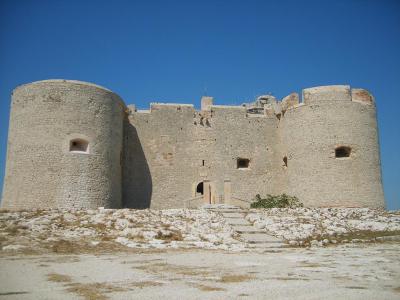
Perched on the Île d'If, the smallest island in the Frioul archipelago just 1.5 kilometers off the coast of Marseille, stands the Château d'If-a formidable fortress with a rich history. Constructed in the 16th century, this stronghold once served as a prison, confining inmates until the late 19th century. In 1890, it underwent demilitarization and welcomed the public, swiftly becoming one of Marseille's most frequented attractions.
The architecture of the Château d'If showcases a square structure with three stories, each side measuring 28 meters (92 feet) in length, flanked by three towers that housed imposing gun embrasures. The brainchild of King Francis I, this fortress was conceived during a visit in 1516 when the island's strategic significance for coastal defense against sea attacks became apparent.
Given its remote location and treacherous offshore currents, the Château d'If was deemed an inescapable prison. Over time, it gained infamy as a place where political and religious detainees were banished, instilling fear throughout France.
In the 19th century, the fortress gained fame due to Alexandre Dumas' novel "The Count of Monte Cristo" (1844). The protagonist, Edmond Dantès, and his mentor, Abbé Faria, were imprisoned there. The gripping tale depicts Dantès' daring escape after fourteen years, but the real history of such an escape is unknown.
As the 19th century came to a close, the Château d'If retired from its role as a prison and opened its gates to the public on September 23, 1890. Accessible by boat from Marseille's old port, it quickly garnered popularity as the famed setting for Dumas' literary masterpiece.
In July 1867, the famous writer Mark Twain visited the captivating fortress during a leisurely journey. In his book, "The Innocents Abroad," he recalls his guided exploration of the prison, which was not yet open to the public. Inside, he saw cells, with one believed to have held the mysterious "Iron Mask." However, this remains a mere legend, as history has no records of the "Man in the Iron Mask" being held at Château d'If.
Today, the Château d'If holds the distinction of being designated a "Historical Monument" by the French Ministry of Culture.
Why You Should Visit:
Terrific boat ride from the Old Port, peaceful grounds, and great fun walking through all the prison cells, especially related to the story of Monte Cristo.
If you have time then you can even have a beer, coffee or meal at the bar with outdoor seating. Toilets are clean and easily accessible off the boat ride.
Tip:
While you get great views of Marseille from the upper levels, take the time to also walk around the base of the Château.
You may use the Marseille City Pass for the trip, but note that the island remains closed in bad weather or rough sea conditions.
The architecture of the Château d'If showcases a square structure with three stories, each side measuring 28 meters (92 feet) in length, flanked by three towers that housed imposing gun embrasures. The brainchild of King Francis I, this fortress was conceived during a visit in 1516 when the island's strategic significance for coastal defense against sea attacks became apparent.
Given its remote location and treacherous offshore currents, the Château d'If was deemed an inescapable prison. Over time, it gained infamy as a place where political and religious detainees were banished, instilling fear throughout France.
In the 19th century, the fortress gained fame due to Alexandre Dumas' novel "The Count of Monte Cristo" (1844). The protagonist, Edmond Dantès, and his mentor, Abbé Faria, were imprisoned there. The gripping tale depicts Dantès' daring escape after fourteen years, but the real history of such an escape is unknown.
As the 19th century came to a close, the Château d'If retired from its role as a prison and opened its gates to the public on September 23, 1890. Accessible by boat from Marseille's old port, it quickly garnered popularity as the famed setting for Dumas' literary masterpiece.
In July 1867, the famous writer Mark Twain visited the captivating fortress during a leisurely journey. In his book, "The Innocents Abroad," he recalls his guided exploration of the prison, which was not yet open to the public. Inside, he saw cells, with one believed to have held the mysterious "Iron Mask." However, this remains a mere legend, as history has no records of the "Man in the Iron Mask" being held at Château d'If.
Today, the Château d'If holds the distinction of being designated a "Historical Monument" by the French Ministry of Culture.
Why You Should Visit:
Terrific boat ride from the Old Port, peaceful grounds, and great fun walking through all the prison cells, especially related to the story of Monte Cristo.
If you have time then you can even have a beer, coffee or meal at the bar with outdoor seating. Toilets are clean and easily accessible off the boat ride.
Tip:
While you get great views of Marseille from the upper levels, take the time to also walk around the base of the Château.
You may use the Marseille City Pass for the trip, but note that the island remains closed in bad weather or rough sea conditions.
7) Vieux-Port (Old Port) (must see)
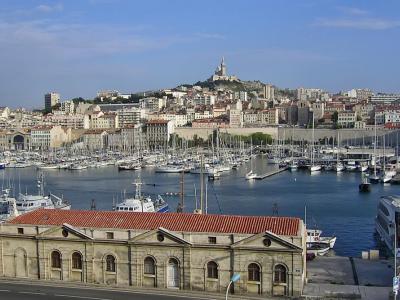
The Old Port is the city’s historic heart and one of the most evocative harbours in Europe, being a centre of maritime life for over 2,600 years. The site was first used as a trading post by the Phoenicians, long before the Greek settlers from Phocaea officially established it in 600 BCE as the port of Massalia, making it the birthplace of the city itself.
Through the centuries, the Old Port became a hub of Mediterranean commerce and naval activity. Kings Louis XII and Louis XIII expanded the shipyards in the 15th and 16th centuries, while King Louis XIV added the imposing Fort Saint John and Fort Saint Nicholas to defend the entrance of the harbour. The port reached its commercial peak in the 19th century, when up to 18,000 merchant vessels docked here annually, rivaling the activity of major ports such as Liverpool and Le Havre. However, with the arrival of large steamships that required deeper waters, Marseille shifted much of its industrial trade to the Port of La Joliette, located farther north.
The Old Port suffered immense damage during World War II, when German forces, assisted by French police, demolished much of the area to block access to Allied troops. Postwar reconstruction reshaped the district, and by the late 20th century, major urban renewal projects restored the port’s vitality. Architect Norman Foster’s redesign, featuring the The Shade Pavilion, a mirrored canopy that reflects the harbour below, marked a new era of pedestrian-friendly space and modern elegance.
Today, the Port serves as a marina for yachts, ferries, and fishing boats, as well as the site of a daily fish market that preserves centuries-old local tradition. Lined with cafés, restaurants, and open-air terraces, it remains a favourite gathering place for both locals and visitors.
Through the centuries, the Old Port became a hub of Mediterranean commerce and naval activity. Kings Louis XII and Louis XIII expanded the shipyards in the 15th and 16th centuries, while King Louis XIV added the imposing Fort Saint John and Fort Saint Nicholas to defend the entrance of the harbour. The port reached its commercial peak in the 19th century, when up to 18,000 merchant vessels docked here annually, rivaling the activity of major ports such as Liverpool and Le Havre. However, with the arrival of large steamships that required deeper waters, Marseille shifted much of its industrial trade to the Port of La Joliette, located farther north.
The Old Port suffered immense damage during World War II, when German forces, assisted by French police, demolished much of the area to block access to Allied troops. Postwar reconstruction reshaped the district, and by the late 20th century, major urban renewal projects restored the port’s vitality. Architect Norman Foster’s redesign, featuring the The Shade Pavilion, a mirrored canopy that reflects the harbour below, marked a new era of pedestrian-friendly space and modern elegance.
Today, the Port serves as a marina for yachts, ferries, and fishing boats, as well as the site of a daily fish market that preserves centuries-old local tradition. Lined with cafés, restaurants, and open-air terraces, it remains a favourite gathering place for both locals and visitors.
8) Rue Paradis (Paradise Street)
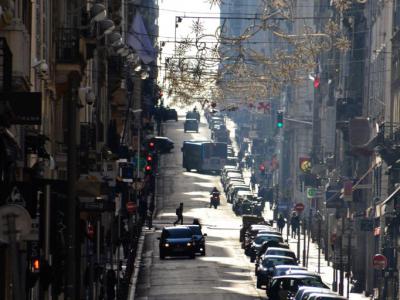
Yes, it is well named. Shoppers will think they have died and gone to heaven, shoppers' heaven, that is. Rue Paradis (Paradise Street) is located between the squares of Estrangin and General de Gaulle on the way to La Canebiere. In the 15th century the street name was changed to rue Paradis, as it held the parish of Saint Pierre de Paradis.
Rue Paradis, rue Rome and rue Saint Ferreol are the three most famous shopping streets in Marseille. One may shop from the city center to the old Port, to the Canebiere and the markets. This shoppers' paradise street is the third longest street in Marseille. It crosses the first, sixth and eighth arrondissements of the city.
The street has had many changes since it was established around 1044. The first urbanization took place in 1666, during the reign of Louis XIV. In 2018 it had a major overhaul. Sidewalks were were widened, trees planted, parking and delivery areas created. All of this was done between the squares of Estrangin and General de Gaulle.
Rue Paradis, rue Rome and rue Saint Ferreol are the three most famous shopping streets in Marseille. One may shop from the city center to the old Port, to the Canebiere and the markets. This shoppers' paradise street is the third longest street in Marseille. It crosses the first, sixth and eighth arrondissements of the city.
The street has had many changes since it was established around 1044. The first urbanization took place in 1666, during the reign of Louis XIV. In 2018 it had a major overhaul. Sidewalks were were widened, trees planted, parking and delivery areas created. All of this was done between the squares of Estrangin and General de Gaulle.
9) Place aux Huiles (Olive Oil Square)
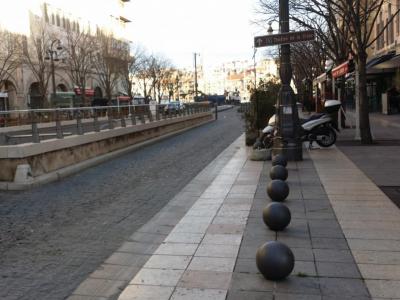
The Olive Oil Square lives up to its name, It is a great place for olive oil. You can sample every kind of olive oil, some are flavored with a variety of herbs. Just dip a piece of bread into the oil you fancy and enjoy. If you like it, you can buy it. It will be bottled especially for you.
The square is located on the west bank of the old canal de la Douane (the Customs canal). In the time of the kings of France the canal enabled galleys to access the arsenals, a military facility. After the military left, the canal was reserved for commercial use.
Barrels of olive oil were shipped up and down the canal. That's how the square got its name. The canal was filled in between 1927 and 1929. A big canal, it took a lot of filling. Today the plaza is used mostly by factories along the rue Sainte and the old arsenals have been turned into cafes, galleries and shops, including of course olive oil dispensaries.
The square is located on the west bank of the old canal de la Douane (the Customs canal). In the time of the kings of France the canal enabled galleys to access the arsenals, a military facility. After the military left, the canal was reserved for commercial use.
Barrels of olive oil were shipped up and down the canal. That's how the square got its name. The canal was filled in between 1927 and 1929. A big canal, it took a lot of filling. Today the plaza is used mostly by factories along the rue Sainte and the old arsenals have been turned into cafes, galleries and shops, including of course olive oil dispensaries.
10) Notre-Dame de la Garde (must see)
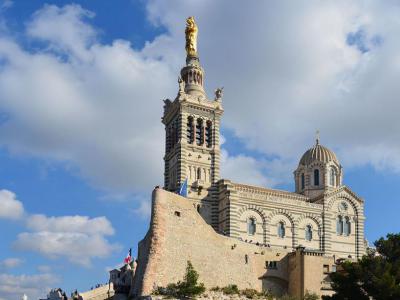
Notre-Dame de la Garde stands proudly as an opulent Neo-Byzantine church situated atop the highest natural point in Marseille, perched upon a 532 feet limestone outcrop on the south side of the Old Port. This majestic site has become a cherished destination for an annual pilgrimage on Assumption Day.
Conceived by the talented architect Henri-Jacques Espérandieu, the basilica received its consecration on the 5th of June in 1864. Its origins trace back to a church with the same name, first erected in 1214 and later reconstructed during the 15th century. Remarkably, the basilica's foundations rest upon a 16th-century fortress built by Francis I of France to fend off Emperor Charles V's siege of the city in 1536.
The basilica comprises two distinct sections: a lower church or crypt, artistically carved into the rock in the Romanesque style, and an upper church boasting Neo-Byzantine elegance adorned with breathtaking mosaics. Towering above is a square bell-tower, reaching a height of 135 feet, crowned with a belfry standing at 42 feet. At its peak, a monumental statue of the Madonna and Child, crafted from copper gilded with gold leaf, soars to an impressive 27 feet.
During its history, the basilica encountered challenges, particularly regarding the stone used in its construction, which proved susceptible to atmospheric corrosion. In response, extensive restoration work took place from 2001 to 2008. This effort encompassed the meticulous repair of the mosaics, damaged by candle smoke over the years, as well as by bullets during the Liberation of France at the end of World War II.
Conceived by the talented architect Henri-Jacques Espérandieu, the basilica received its consecration on the 5th of June in 1864. Its origins trace back to a church with the same name, first erected in 1214 and later reconstructed during the 15th century. Remarkably, the basilica's foundations rest upon a 16th-century fortress built by Francis I of France to fend off Emperor Charles V's siege of the city in 1536.
The basilica comprises two distinct sections: a lower church or crypt, artistically carved into the rock in the Romanesque style, and an upper church boasting Neo-Byzantine elegance adorned with breathtaking mosaics. Towering above is a square bell-tower, reaching a height of 135 feet, crowned with a belfry standing at 42 feet. At its peak, a monumental statue of the Madonna and Child, crafted from copper gilded with gold leaf, soars to an impressive 27 feet.
During its history, the basilica encountered challenges, particularly regarding the stone used in its construction, which proved susceptible to atmospheric corrosion. In response, extensive restoration work took place from 2001 to 2008. This effort encompassed the meticulous repair of the mosaics, damaged by candle smoke over the years, as well as by bullets during the Liberation of France at the end of World War II.
11) Abbaye Saint-Victor (Saint-Victor Abbey) (must see)
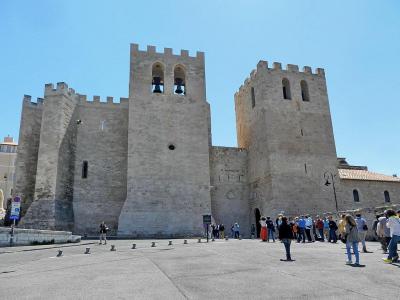
Overlooking the sea stands the Saint-Victor Abbey, a historic monastery that has occupied this site since around 415 CE, being among the first Christian sanctuaries established in Provence. Tradition holds that it was founded by the monk John Cassian, and some believe the crypt contains relics of Saint Victor himself-or even traces of an ancient Greek quarry.
Cassian originally established two monasteries here, one for men and one for women, on opposite sides of the old harbor. Both were destroyed by Saracen raiders in the 8th or 9th centuries, but monastic life resumed in 977. The abbey flourished for several centuries before being stripped of its treasures during the French Revolution in 1794. At various times it served as a warehouse, prison, and barracks, before being restored under Napoleon. In 1934, Pope Pius XI elevated it to the rank of minor basilica following extensive renovation.
Visitors find tombs of saints and bishops, alongside pagan sarcophagi from the early Christian period. Above, the abbey’s crenelated towers offer panoramic views over the harbor and the Mediterranean. Its elevated position near Fort Saint Nicholas once allowed monks to watch for approaching Saracen or Viking ships. Each year on Candlemas, a traditional pilgrimage takes place from the Old Port to the abbey. The Black Madonna, normally kept in the crypt, is wrapped in a green cloak and carried to the square before the church, where she receives a blessing from the bishop.
Tip: It’s worth paying the small entrance fee to visit the crypt-it truly feels like entering another world.
Cassian originally established two monasteries here, one for men and one for women, on opposite sides of the old harbor. Both were destroyed by Saracen raiders in the 8th or 9th centuries, but monastic life resumed in 977. The abbey flourished for several centuries before being stripped of its treasures during the French Revolution in 1794. At various times it served as a warehouse, prison, and barracks, before being restored under Napoleon. In 1934, Pope Pius XI elevated it to the rank of minor basilica following extensive renovation.
Visitors find tombs of saints and bishops, alongside pagan sarcophagi from the early Christian period. Above, the abbey’s crenelated towers offer panoramic views over the harbor and the Mediterranean. Its elevated position near Fort Saint Nicholas once allowed monks to watch for approaching Saracen or Viking ships. Each year on Candlemas, a traditional pilgrimage takes place from the Old Port to the abbey. The Black Madonna, normally kept in the crypt, is wrapped in a green cloak and carried to the square before the church, where she receives a blessing from the bishop.
Tip: It’s worth paying the small entrance fee to visit the crypt-it truly feels like entering another world.
12) Vallon des Auffes (must see)
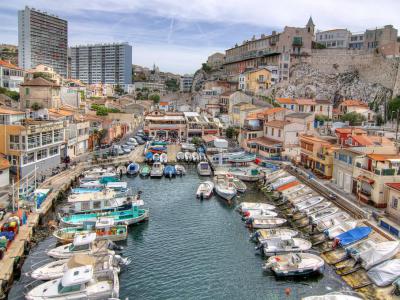
The Vallon des Auffes, located in the 7th arrondissement of Marseille, is a charming traditional fishing haven. Situated approximately 2.5 kilometers southwest of the Old Port, it lies between the Catalans Beach and Malmousque Bay, accessible via the Corniche Kennedy.
This quaint valley houses around fifty fishermen's cabins and small traditional fishing boats, including the iconic pointu boats. The fishermen's catch is primarily reserved for local restaurants, adding to the authentic experience of the place. The name "Vallon des Auffes" originates from "l'auffe" or "alfa" in the Provençal dialect, referring to a type of grass used in the production of ropes, braids, and fishing nets.
A striking feature of the area is the reinforced concrete arched bridge, constructed with stone masonry, which spans the port with three semicircular arches, each towering 17 meters (56 feet) high. The bridge stretches a total length of 60 meters (200 feet) and was built as part of the Corniche of President John F. Kennedy.
In 1927, the monument to the fallen soldiers of the East Army and distant lands was inaugurated by President of France, Gaston Doumergue. This monument features a 5-meter-tall bronze statue of a woman with her arms raised to the sky, gazing towards the Mediterranean Sea. It was later designated as a Historic Monument on July 23, 2009.
Over the years, the Vallon des Auffes has witnessed various murals adorning its landscape. From 1998 to 2006, a large painted mural of the renowned Marseille footballer, Zinedine Zidane, was displayed by Adidas, boasting the phrase "Made in Marseille." This was later replaced by a Coca-Cola advertisement.
In 2013, during Marseille's stint as the European capital of culture, the artist JR unveiled a poster featuring an unidentified woman from Marseille, Annick Perrot-Bishop, as a tribute to the famous footballer, symbolizing Marseille's connection to the world. Subsequently, this portrait made way for an advertisement showcasing a well-known brand of sunglasses.
This quaint valley houses around fifty fishermen's cabins and small traditional fishing boats, including the iconic pointu boats. The fishermen's catch is primarily reserved for local restaurants, adding to the authentic experience of the place. The name "Vallon des Auffes" originates from "l'auffe" or "alfa" in the Provençal dialect, referring to a type of grass used in the production of ropes, braids, and fishing nets.
A striking feature of the area is the reinforced concrete arched bridge, constructed with stone masonry, which spans the port with three semicircular arches, each towering 17 meters (56 feet) high. The bridge stretches a total length of 60 meters (200 feet) and was built as part of the Corniche of President John F. Kennedy.
In 1927, the monument to the fallen soldiers of the East Army and distant lands was inaugurated by President of France, Gaston Doumergue. This monument features a 5-meter-tall bronze statue of a woman with her arms raised to the sky, gazing towards the Mediterranean Sea. It was later designated as a Historic Monument on July 23, 2009.
Over the years, the Vallon des Auffes has witnessed various murals adorning its landscape. From 1998 to 2006, a large painted mural of the renowned Marseille footballer, Zinedine Zidane, was displayed by Adidas, boasting the phrase "Made in Marseille." This was later replaced by a Coca-Cola advertisement.
In 2013, during Marseille's stint as the European capital of culture, the artist JR unveiled a poster featuring an unidentified woman from Marseille, Annick Perrot-Bishop, as a tribute to the famous footballer, symbolizing Marseille's connection to the world. Subsequently, this portrait made way for an advertisement showcasing a well-known brand of sunglasses.
13) Parc Borély (must see)
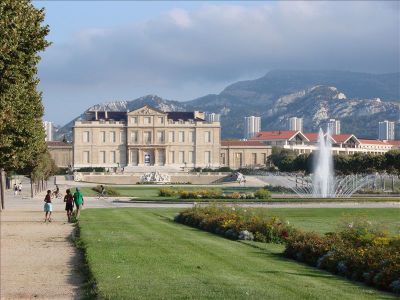
Borély Park, a public municipal park, holds the prestigious title of being one of the Notable Gardens of France, designated by the French Ministry of Culture. This exquisite park spans an impressive 17 hectares and comprises three distinct and enchanting gardens.
Its origins trace back to the 17th century when Joseph Borely, a French ship owner and merchant, purchased land in the picturesque area of Bonneveine, Marseille, with the intention of establishing a country house. Eventually, the domain was inherited by Louis-Joseph Borély in 1770, who then enlisted the renowned landscape architect Embry to create a magnificent Garden à la française.
In the 19th century, the property changed hands, passing first to Paulin Talabot, the director of the pioneering PLM railroad that connected Paris to Marseille, before being acquired by the city of Marseille.
Under the city's guidance, the eminent landscape architect Adolphe Alphande was entrusted to design a park with three distinct sections: a charming French garden, an idyllic English landscape park, and a horse racing track along the seaside. Several wooden pavilions were skillfully erected, with one remaining today - the former pavilion by the lake, which once served as the botanical laboratory of the Institut Colonial.
During the late 19th and early 20th centuries, Borély Park also served as a botanical garden, a role later moved to an adjacent site. In 2002, a splendid two-hectare promenade was added, beautifully linking the park with the nearby sea.
Its origins trace back to the 17th century when Joseph Borely, a French ship owner and merchant, purchased land in the picturesque area of Bonneveine, Marseille, with the intention of establishing a country house. Eventually, the domain was inherited by Louis-Joseph Borély in 1770, who then enlisted the renowned landscape architect Embry to create a magnificent Garden à la française.
In the 19th century, the property changed hands, passing first to Paulin Talabot, the director of the pioneering PLM railroad that connected Paris to Marseille, before being acquired by the city of Marseille.
Under the city's guidance, the eminent landscape architect Adolphe Alphande was entrusted to design a park with three distinct sections: a charming French garden, an idyllic English landscape park, and a horse racing track along the seaside. Several wooden pavilions were skillfully erected, with one remaining today - the former pavilion by the lake, which once served as the botanical laboratory of the Institut Colonial.
During the late 19th and early 20th centuries, Borély Park also served as a botanical garden, a role later moved to an adjacent site. In 2002, a splendid two-hectare promenade was added, beautifully linking the park with the nearby sea.
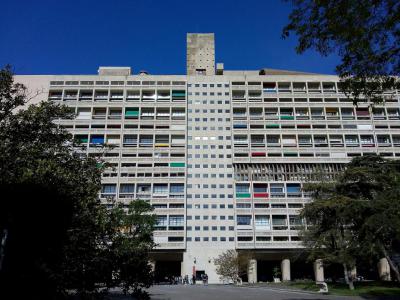
14) La Cité Radieuse (must see)
The first and most renowned among the Housing Unit (Unités d'Habitation) buildings is situated in Marseille. Commonly known as The Radiant City (La Cité Radieuse) and informally referred to as La Maison du Fada (French – Provençal, "The Madman's House"), it was constructed from 1947 to 1952.
This iconic work by Le Corbusier has had a profound impact on architecture, often considered the initial inspiration for the Brutalist style and philosophy. The building's construction primarily utilizes béton brut (rough-cast concrete) due to the post-war steel shortage, as the intended steel frame turned out to be too expensive.
Le Corbusier collaborated with designers Shadrach Woods and George Candilis to develop the Marseille building. It boasts 337 apartments with 23 diverse layouts, spread across twelve stories, all supported by large pilotis. In addition to housing, the building includes various amenities such as shops, an architectural bookshop, a rooftop gallery, educational facilities, a public hotel, and the restaurant "Le Ventre de l'Architecte" ("The Belly of the Architect").
Inside the building, wide corridors are designed as "streets in the sky" running along the central long axis of every third floor. Each apartment spans two levels, with rooms on one side of the corridor belonging to the apartment below it, and those on the opposite side to the apartment above. Apartments on floors without corridors stretch from one side of the building to the other, each featuring a balcony on the western side.
The flat roof of the building is ingeniously designed as a communal terrace, featuring sculptural ventilation stacks, a running track, and a shallow paddling pool for children. Moreover, an atelier hosts a children's art school. Renovated in 2010, the roof has become a venue for various theatrical performances and, since 2013, has served as an exhibition center called the MaMo. Its unobstructed views of the Mediterranean and Marseille make it a remarkable space.
In recognition of its architectural significance, the Housing Unit in Marseille, along with other works by Le Corbusier, was designated as a UNESCO World Heritage Site in July 2016.
This iconic work by Le Corbusier has had a profound impact on architecture, often considered the initial inspiration for the Brutalist style and philosophy. The building's construction primarily utilizes béton brut (rough-cast concrete) due to the post-war steel shortage, as the intended steel frame turned out to be too expensive.
Le Corbusier collaborated with designers Shadrach Woods and George Candilis to develop the Marseille building. It boasts 337 apartments with 23 diverse layouts, spread across twelve stories, all supported by large pilotis. In addition to housing, the building includes various amenities such as shops, an architectural bookshop, a rooftop gallery, educational facilities, a public hotel, and the restaurant "Le Ventre de l'Architecte" ("The Belly of the Architect").
Inside the building, wide corridors are designed as "streets in the sky" running along the central long axis of every third floor. Each apartment spans two levels, with rooms on one side of the corridor belonging to the apartment below it, and those on the opposite side to the apartment above. Apartments on floors without corridors stretch from one side of the building to the other, each featuring a balcony on the western side.
The flat roof of the building is ingeniously designed as a communal terrace, featuring sculptural ventilation stacks, a running track, and a shallow paddling pool for children. Moreover, an atelier hosts a children's art school. Renovated in 2010, the roof has become a venue for various theatrical performances and, since 2013, has served as an exhibition center called the MaMo. Its unobstructed views of the Mediterranean and Marseille make it a remarkable space.
In recognition of its architectural significance, the Housing Unit in Marseille, along with other works by Le Corbusier, was designated as a UNESCO World Heritage Site in July 2016.
