Custom Walk in Bristol, England by sklough1984_9652b7 created on 2026-02-28
Guide Location: England » Bristol
Guide Type: Custom Walk
# of Sights: 13
Tour Duration: 5 Hour(s)
Travel Distance: 10.3 Km or 6.4 Miles
Share Key: NMTX4
Guide Type: Custom Walk
# of Sights: 13
Tour Duration: 5 Hour(s)
Travel Distance: 10.3 Km or 6.4 Miles
Share Key: NMTX4
How It Works
Please retrieve this walk in the GPSmyCity app. Once done, the app will guide you from one tour stop to the next as if you had a personal tour guide. If you created the walk on this website or come to the page via a link, please follow the instructions below to retrieve the walk in the app.
Retrieve This Walk in App
Step 1. Download the app "GPSmyCity: Walks in 1K+ Cities" on Apple App Store or Google Play Store.



Step 2. In the GPSmyCity app, download(or launch) the guide "Bristol Map and Walking Tours".
Step 3. Tap the menu button located at upper right corner of the "Walks" screen and select "Retrieve custom walk". Enter the share key: NMTX4
1) Temple Meads Train Station
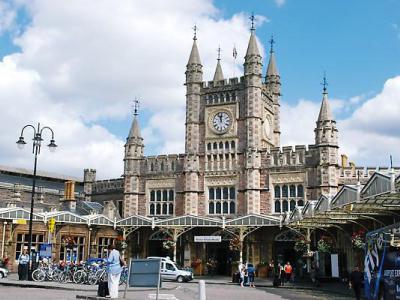
Temple Meads Train Station, located in Bristol, holds a significant place in railway history as the oldest and largest railway station in the city. It has served as a crucial transport hub, connecting various parts of Bristol and its surrounding districts. With its extensive bus services and even a ferry to the city center, Temple Meads plays a vital role in facilitating public transportation in the area. While Bristol Parkway is another major station in the city, Temple Meads boasts a rich heritage that sets it apart.
Temple Meads, opened in 1840, was the western terminus of the Great Western Railway, connecting Bristol and London. Designed by English civil engineer Isambard Kingdom Brunel, it later served other railway companies. Expansion occurred in the 1870s under Francis Fox and in the 1930s under Percy Emerson Culverhouse.
The station encompasses thirteen platforms, numbered from 1 to 15. However, passenger trains are primarily limited to eight tracks. The platform numbering system is distinct, with odd numbers at the east end and even numbers at the west end. Notably, Platform 2 serves as a bay platform at the west end but is not utilized for passenger trains. Additionally, there is no Platform 14 at Temple Meads.
As the oldest and largest railway station in Bristol, Temple Meads stands as a testament to the city's rich railway heritage. Its grand architecture, historical significance, and vital role in public transportation make it an iconic landmark in Bristol and an essential part of the city's identity.
Temple Meads, opened in 1840, was the western terminus of the Great Western Railway, connecting Bristol and London. Designed by English civil engineer Isambard Kingdom Brunel, it later served other railway companies. Expansion occurred in the 1870s under Francis Fox and in the 1930s under Percy Emerson Culverhouse.
The station encompasses thirteen platforms, numbered from 1 to 15. However, passenger trains are primarily limited to eight tracks. The platform numbering system is distinct, with odd numbers at the east end and even numbers at the west end. Notably, Platform 2 serves as a bay platform at the west end but is not utilized for passenger trains. Additionally, there is no Platform 14 at Temple Meads.
As the oldest and largest railway station in Bristol, Temple Meads stands as a testament to the city's rich railway heritage. Its grand architecture, historical significance, and vital role in public transportation make it an iconic landmark in Bristol and an essential part of the city's identity.
2) Queen Square
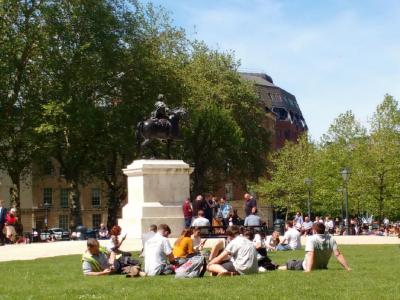
Queen Square may look serene today, but its past is anything but silent. Laid out in 1699 and named for Queen Anne, it quickly became prime real estate for Bristol’s merchant elite-close to the harbour, perfect for keeping an eye on both ships and fortunes. Grand Georgian townhouses framed a well-kept garden at the centre, a statement of prosperity that didn’t last uninterrupted. In 1831, political reform riots tore through the city, leaving parts of the square charred and battered. The polished façade had been well and truly cracked.
Skipping to the 20th century, and the square took on a new, less glamorous role: traffic island. A dual carriageway cut right through its heart, and by the early ’90s, some 20,000 vehicles a day rumbled across it. The place was more exhaust fumes than evening strolls. In 1999, Bristol reclaimed the space for people, diverting cars and restoring the square to something closer to its 18th-century glory.
Now, the lawns are broad, the trees mature, and the Georgian fronts have had a careful facelift. At the centre, William III sits on horseback, surveying the scene from a plinth he’s occupied since 1736. The square hosts everything from food festivals to open-air concerts, and when it’s not buzzing with events, it’s a favourite spot for a picnic or a pause in the middle of a city wander.
And location? Spot on-right between the Harbourside and Old City, making it an easy detour for anyone who likes their history served with a side of fresh air.
Skipping to the 20th century, and the square took on a new, less glamorous role: traffic island. A dual carriageway cut right through its heart, and by the early ’90s, some 20,000 vehicles a day rumbled across it. The place was more exhaust fumes than evening strolls. In 1999, Bristol reclaimed the space for people, diverting cars and restoring the square to something closer to its 18th-century glory.
Now, the lawns are broad, the trees mature, and the Georgian fronts have had a careful facelift. At the centre, William III sits on horseback, surveying the scene from a plinth he’s occupied since 1736. The square hosts everything from food festivals to open-air concerts, and when it’s not buzzing with events, it’s a favourite spot for a picnic or a pause in the middle of a city wander.
And location? Spot on-right between the Harbourside and Old City, making it an easy detour for anyone who likes their history served with a side of fresh air.
3) Bristol Harbourside (must see)
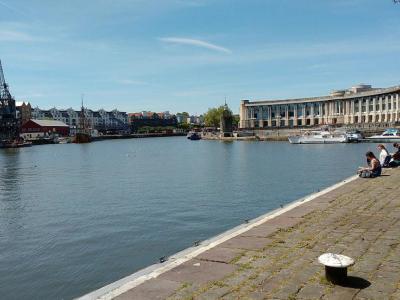
Bristol Harbourside didn’t always deal in flat whites, gallery openings, and paddleboard rentals. For centuries, this was the city’s commercial heart-a dockland buzzing with ships hauling West Country goods out and exotic cargo in. Then, in the late 20th century, the big ships moved downstream to Avonmouth, and the old docks were left high and dry-perfect for reinvention. Now, 19th-century cranes and warehouses share the space with glass-fronted apartments, theatres, and museums, living proof that Bristol can turn its hand from industry to artistry without missing a beat.
There’s no shortage of ways to fill your day here. Take to the water by rowing, paddleboarding, or hitching a ride on a harbour cruise. Stick to dry land and you can cycle the harbourside paths or wander between museums, galleries, and Banksy sightings-the Arnolfini Art Center caters to the contemporary crowd, while M Shed Museum tells Bristol’s story in dockside detail. For a deeper dive into maritime history, step aboard Brunel’s SS Great Britain and see how Victorian engineering took on the Atlantic.
The food scene is as international as the cargo once unloaded here-think Caribbean roti, Middle Eastern mezze, or a solid British pie, all within a few steps of each other. And when the light fades, the waterside opts for a softer glow, as the harbour lights flicker in the ripples.
Just a short walk from Bristol Cathedral, Queen Square, or the Old City, the Harbourside works as a full day out or a leisurely detour. Stick around long enough and you’ll hear buskers, seagulls, and laughter all competing for the same bit of airspace.
There’s no shortage of ways to fill your day here. Take to the water by rowing, paddleboarding, or hitching a ride on a harbour cruise. Stick to dry land and you can cycle the harbourside paths or wander between museums, galleries, and Banksy sightings-the Arnolfini Art Center caters to the contemporary crowd, while M Shed Museum tells Bristol’s story in dockside detail. For a deeper dive into maritime history, step aboard Brunel’s SS Great Britain and see how Victorian engineering took on the Atlantic.
The food scene is as international as the cargo once unloaded here-think Caribbean roti, Middle Eastern mezze, or a solid British pie, all within a few steps of each other. And when the light fades, the waterside opts for a softer glow, as the harbour lights flicker in the ripples.
Just a short walk from Bristol Cathedral, Queen Square, or the Old City, the Harbourside works as a full day out or a leisurely detour. Stick around long enough and you’ll hear buskers, seagulls, and laughter all competing for the same bit of airspace.
4) M Shed Museum (must see)
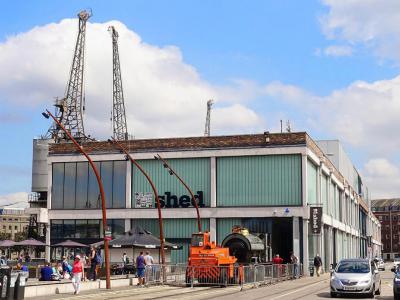
M Shed is a museum located on Prince's Wharf in Bristol, housed in a dockside transit shed that was formerly occupied by Bristol Industrial Museum. The museum is named after the way the port identified each of its sheds. The exhibits at M Shed showcase 3,000 artifacts and stories of Bristol's history, including its role in the slave trade, as well as items related to transport, people, and the arts. Admission to the museum is free, and it opened in June 2011. In its first year, it had 700,000 visitors.
The museum also has a collection of historic vessels moored in front of it, including a fireboat, two tugboats, and a replica caravel. Visitors can also see four electrically powered cargo cranes on the quayside, three of which are operational. The museum contains a shop, a learning space, and a cafe.
M Shed has three main galleries, each showcasing a different aspect of Bristol's history. There are also newspaper clippings, political episodes, and a temporary gallery displaying changing exhibitions throughout the year.
In June 2021, the statue of slave trader Edward Colston, which was toppled during the George Floyd protests in 2020, went on display at M Shed to spark a city-wide conversation about its future. The museum also hosted an exhibition of Nick Park's Wallace and Gromit models and a mural painted by local artists Andy Council and Luke Palmer.
The museum also has a collection of historic vessels moored in front of it, including a fireboat, two tugboats, and a replica caravel. Visitors can also see four electrically powered cargo cranes on the quayside, three of which are operational. The museum contains a shop, a learning space, and a cafe.
M Shed has three main galleries, each showcasing a different aspect of Bristol's history. There are also newspaper clippings, political episodes, and a temporary gallery displaying changing exhibitions throughout the year.
In June 2021, the statue of slave trader Edward Colston, which was toppled during the George Floyd protests in 2020, went on display at M Shed to spark a city-wide conversation about its future. The museum also hosted an exhibition of Nick Park's Wallace and Gromit models and a mural painted by local artists Andy Council and Luke Palmer.
5) Brunel's SS Great Britain (must see)
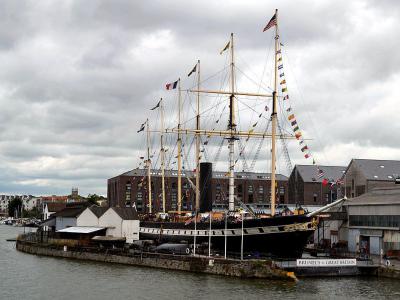
The SS Great Britain is a former passenger steamship that was designed by Isambard Kingdom Brunel for the Great Western Steamship Company's transatlantic service between Bristol and New York City. The ship was launched in 1843 and was one of the most advanced vessels of her time, as well as the largest passenger ship in the world from 1845 to 1854. Great Britain was a significant milestone in the development of shipping technology, being the first iron steamer to cross the Atlantic Ocean in 1845.
The ship had a long and expensive construction process that lasted six years, leaving her owners in a difficult financial position. Great Britain was powered by two inclined two-cylinder engines and equipped with secondary masts for sail power. Her four decks provided accommodation for a crew of 120 and 360 passengers.
Great Britain's owners were forced out of business in 1846 after the ship ran aground at Dundrum Bay, Northern Ireland. She was sold for salvage and repaired, carrying thousands of emigrants to Australia before being converted to all-sail in 1881. She was scuttled in 1937 in the Falkland Islands.
After 33 years of abandonment, the ship was raised and repaired enough to be towed back to the UK by businessman Sir Jack Arnold Hayward. The ship is now a museum and popular attraction in Bristol Harbour, where visitors can explore the ship's interior, view exhibits on her history and technological innovations, and experience what life was like on board for passengers and crew alike. Great Britain is listed as part of the National Historic Fleet and attracts between 150,000 and 200,000 visitors annually.
The ship had a long and expensive construction process that lasted six years, leaving her owners in a difficult financial position. Great Britain was powered by two inclined two-cylinder engines and equipped with secondary masts for sail power. Her four decks provided accommodation for a crew of 120 and 360 passengers.
Great Britain's owners were forced out of business in 1846 after the ship ran aground at Dundrum Bay, Northern Ireland. She was sold for salvage and repaired, carrying thousands of emigrants to Australia before being converted to all-sail in 1881. She was scuttled in 1937 in the Falkland Islands.
After 33 years of abandonment, the ship was raised and repaired enough to be towed back to the UK by businessman Sir Jack Arnold Hayward. The ship is now a museum and popular attraction in Bristol Harbour, where visitors can explore the ship's interior, view exhibits on her history and technological innovations, and experience what life was like on board for passengers and crew alike. Great Britain is listed as part of the National Historic Fleet and attracts between 150,000 and 200,000 visitors annually.
6) Girl with a Pierced Eardrum
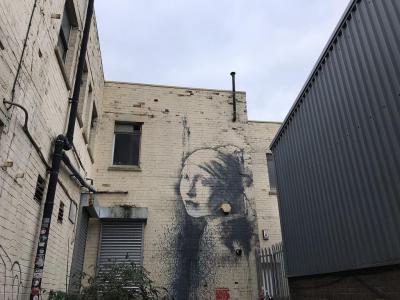
If you’re wandering along Bristol’s Harbourside and spot a classic gone rogue, you’ve found Banksy’s Girl with a Pierced Eardrum. Painted in October 2014 on the side of a Hanover Place building-handily located between the clock tower and a burger van-it takes the Dutch master’s Girl with a Pearl Earring and swaps the jewel for… a security alarm. It’s Banksy doing what he does best: blending fine art references with a sly jab at modern surveillance culture, all in sharp-edged stencil form.
Its arrival was perfectly timed, appearing just after breathless headlines claimed the artist had been arrested and unmasked. Within a day, someone treated it to a splash of black paint-street art’s version of a handshake. Far from spoiling it, the drips arguably gave the piece another layer of texture.
True to Bristol’s habit of letting its art evolve with the times, the girl gained a blue surgical mask in 2020, a low-key nod to the pandemic years. Like much of the city’s street art, it wears its history in layers: paint, politics, and passing moments.
Part of the fun is that it’s exactly where it was painted-no gallery glass, no neat labels-just a building wall by the docks, framed by old warehouses, cafés, and other murals. Whether you’re a Banksy devotee or just someone with a coffee in hand, it’s worth the short detour to see how a single security alarm, in the right hands, can upstage an Old Master.
Its arrival was perfectly timed, appearing just after breathless headlines claimed the artist had been arrested and unmasked. Within a day, someone treated it to a splash of black paint-street art’s version of a handshake. Far from spoiling it, the drips arguably gave the piece another layer of texture.
True to Bristol’s habit of letting its art evolve with the times, the girl gained a blue surgical mask in 2020, a low-key nod to the pandemic years. Like much of the city’s street art, it wears its history in layers: paint, politics, and passing moments.
Part of the fun is that it’s exactly where it was painted-no gallery glass, no neat labels-just a building wall by the docks, framed by old warehouses, cafés, and other murals. Whether you’re a Banksy devotee or just someone with a coffee in hand, it’s worth the short detour to see how a single security alarm, in the right hands, can upstage an Old Master.
7) The Clifton Suspension Bridge (must see)
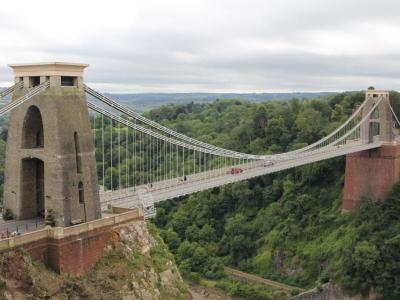
The Clifton Suspension Bridge is an iconic landmark in Bristol spanning the picturesque Avon Gorge and the River Avon. It serves as a vital link between Clifton in Bristol and Leigh Woods in North Somerset. Designed by William Henry Barlow and John Hawkshaw, with inspiration from an earlier design by the legendary engineer Isambard Kingdom Brunel, the bridge has stood as a testament to engineering brilliance since its opening in 1864. The bridge's importance and historical significance are recognized by its Grade I listed building status.
The idea of constructing a bridge across the Avon Gorge was first conceived in 1753. Initial plans called for a stone bridge, but subsequent iterations envisioned a wrought iron structure. However, construction attempts based on Brunel's design were met with setbacks, including the Bristol riots of 1831. The revised version of Brunel's plans was ultimately completed after his death.
The Clifton and Leigh towers of the bridge are similar in size but have distinct designs. Clifton Tower has side cut-outs, while Leigh Tower has pointed arches on a red sandstone abutment. The bridge's functionality depends on roller-mounted "saddles" on each tower, allowing movement of the wrought iron chains when loads pass. The bridge deck is suspended by 162 vertical wrought-iron rods arranged in matching pairs.
The Clifton Suspension Bridge in Bristol is not just a bridge, but also a symbol of the city. It appears on postcards, promotional materials, and websites. It is often featured in films, ads, and TV shows due to its impressive architecture. The bridge has witnessed significant cultural events, including the first modern bungee jump in 1979, the farewell flight of the Concorde in 2003, and the handover of the Olympic Torch Relay in 2012, highlighting its role in the city's heritage.
The idea of constructing a bridge across the Avon Gorge was first conceived in 1753. Initial plans called for a stone bridge, but subsequent iterations envisioned a wrought iron structure. However, construction attempts based on Brunel's design were met with setbacks, including the Bristol riots of 1831. The revised version of Brunel's plans was ultimately completed after his death.
The Clifton and Leigh towers of the bridge are similar in size but have distinct designs. Clifton Tower has side cut-outs, while Leigh Tower has pointed arches on a red sandstone abutment. The bridge's functionality depends on roller-mounted "saddles" on each tower, allowing movement of the wrought iron chains when loads pass. The bridge deck is suspended by 162 vertical wrought-iron rods arranged in matching pairs.
The Clifton Suspension Bridge in Bristol is not just a bridge, but also a symbol of the city. It appears on postcards, promotional materials, and websites. It is often featured in films, ads, and TV shows due to its impressive architecture. The bridge has witnessed significant cultural events, including the first modern bungee jump in 1979, the farewell flight of the Concorde in 2003, and the handover of the Olympic Torch Relay in 2012, highlighting its role in the city's heritage.
8) Clifton Observatory and Caves (must see)
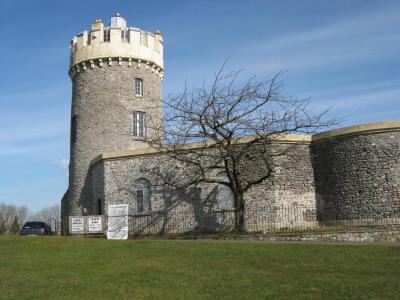
The Clifton Observatory in Bristol is a historic site with a rich and fascinating history. The building, which is now used as an observatory, was originally erected in 1766 as a windmill for corn. It later became known as the Snuff Mill after being converted to the grinding of snuff. Unfortunately, it was damaged by fire in 1777 and remained derelict for over 50 years until it was rented by artist William West in 1828.
West transformed the old mill into a studio, installing telescopes and a camera obscura, which were used by artists of the Bristol School to draw the Avon Gorge and Leigh Woods. He called his photographic technique 'photogenic drawing' and it was based on the work of William Fox Talbot. Today, many examples of these paintings can be seen in the Bristol City Museum and Art Gallery.
The Observatory is now home to a 5 inches (13 cm) convex lens and sloping mirror which projects a panoramic view vertically downward into the darkened room below. Visitors can view the true image (not a mirror image) on a fixed circular table 5 feet (1.5 meters) in diameter with a concave metal surface and can turn the mirror by hand to change the direction of view. This unique attraction has been on top of Clifton Tower since 1828.
In addition to the observatory, West also built a tunnel from the Observatory to Saint Vincent's Cave (also known as Ghyston's Cave or Giants' Cave), which opens onto Saint Vincent's Rocks on the cliff face, 250 feet (76 meters) above the floor of the Avon gorge and 90 feet (27 meters) below the cliff top. The tunnel, which took two years to build, was first opened to the public in 1837.
Saint Vincent's Cave has an interesting history of its own. It was first mentioned as a chapel in AD 305 and has been used as a holy place and a place of refuge throughout history. Although the cave is in limestone, there are few formations in the natural passages.
The Clifton Observatory has been designated by English Heritage as a grade II* listed building and is on the Buildings at Risk Register.
West transformed the old mill into a studio, installing telescopes and a camera obscura, which were used by artists of the Bristol School to draw the Avon Gorge and Leigh Woods. He called his photographic technique 'photogenic drawing' and it was based on the work of William Fox Talbot. Today, many examples of these paintings can be seen in the Bristol City Museum and Art Gallery.
The Observatory is now home to a 5 inches (13 cm) convex lens and sloping mirror which projects a panoramic view vertically downward into the darkened room below. Visitors can view the true image (not a mirror image) on a fixed circular table 5 feet (1.5 meters) in diameter with a concave metal surface and can turn the mirror by hand to change the direction of view. This unique attraction has been on top of Clifton Tower since 1828.
In addition to the observatory, West also built a tunnel from the Observatory to Saint Vincent's Cave (also known as Ghyston's Cave or Giants' Cave), which opens onto Saint Vincent's Rocks on the cliff face, 250 feet (76 meters) above the floor of the Avon gorge and 90 feet (27 meters) below the cliff top. The tunnel, which took two years to build, was first opened to the public in 1837.
Saint Vincent's Cave has an interesting history of its own. It was first mentioned as a chapel in AD 305 and has been used as a holy place and a place of refuge throughout history. Although the cave is in limestone, there are few formations in the natural passages.
The Clifton Observatory has been designated by English Heritage as a grade II* listed building and is on the Buildings at Risk Register.
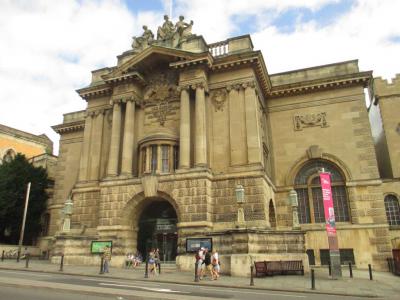
9) Bristol City Museum & Art Gallery (must see)
The Bristol City Museum & Art Gallery has been holding court in its ornate Edwardian Baroque home since 1905, all carved stone, sweeping staircases, and a sense of civic grandeur that feels worlds away from the city’s gritty industrial past. Built as a temple to learning and culture, it remains free to enter-meaning you can wander past Egyptian mummies, Assyrian reliefs, taxidermy, glittering ceramics, and paintings by the likes of the Pre-Raphaelites, which were a group of painters founded in 1848. The collections pull you through centuries and continents, pausing for a good dose of Bristol’s own story, from maritime exploits to the less-than-glorious sides of global trade.
And then there’s Banksy. The museum is home to his Paint Pot Angel, a classical figure with a splash of pink rebellion across its head, scandalizing the sculpture hall. Back in 2009, Banksy staged his infamous “Banksy vs. Bristol Museum” takeover here-an all-out, tongue-in-cheek hijacking that saw the galleries filled with irreverent surprises, and the queues stretching halfway across the city. The show may have packed up long ago, but its echoes still rattle through the building.
Today, the museum continues to shuffle the old with the new, giving you a straight path from ancient tombs to contemporary provocation-no time machine required.
And then there’s Banksy. The museum is home to his Paint Pot Angel, a classical figure with a splash of pink rebellion across its head, scandalizing the sculpture hall. Back in 2009, Banksy staged his infamous “Banksy vs. Bristol Museum” takeover here-an all-out, tongue-in-cheek hijacking that saw the galleries filled with irreverent surprises, and the queues stretching halfway across the city. The show may have packed up long ago, but its echoes still rattle through the building.
Today, the museum continues to shuffle the old with the new, giving you a straight path from ancient tombs to contemporary provocation-no time machine required.
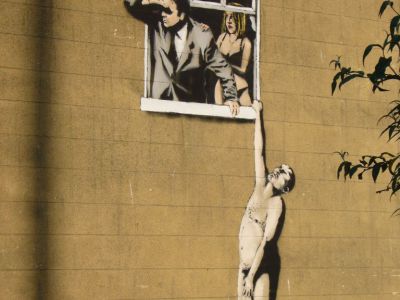
10) Banksy - Well Hung Lover
On the wall of a former sexual health clinic, five metres above Frogmore Street, a naked man hangs by one arm from a windowsill, his free hand strategically placed. Above him, a suited figure leans out, scanning the street for the lover he can’t see. Beside him, a woman in lingerie rests her hand on his shoulder, a picture of guilty calm. The scene is Banksy at full voltage – sly, economical, and loaded with visual innuendo.
The mural appeared in 2006, after three days behind tarpaulin-wrapped scaffolding. When the cover came off, Bristol found itself staring at a home-grown scandal in spray paint. The Council had been on a mission to scrub graffiti from the city, but this one hit a nerve. The building’s owner at the time – a member of Massive Attack music group – had commissioned it, and when the Council later bought the property, they put it to the people. Ninety-seven percent voted to let it stay.
That vote made Well Hung Lover the first street piece in the UK to receive official blessing after the fact. The clinic moved on, the mural stayed put, and its survival became part of Bristol’s civic identity – cheeky, defiant. Even paintball vandals couldn’t take that away; they just added another layer to the story.
The mural appeared in 2006, after three days behind tarpaulin-wrapped scaffolding. When the cover came off, Bristol found itself staring at a home-grown scandal in spray paint. The Council had been on a mission to scrub graffiti from the city, but this one hit a nerve. The building’s owner at the time – a member of Massive Attack music group – had commissioned it, and when the Council later bought the property, they put it to the people. Ninety-seven percent voted to let it stay.
That vote made Well Hung Lover the first street piece in the UK to receive official blessing after the fact. The clinic moved on, the mural stayed put, and its survival became part of Bristol’s civic identity – cheeky, defiant. Even paintball vandals couldn’t take that away; they just added another layer to the story.
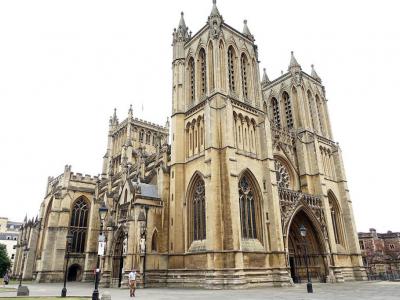
11) Bristol Cathedral (must see)
Bristol Cathedral – officially the Cathedral Church of the Holy and Undivided Trinity – has been part of the city’s skyline since the 12th century, though its story has had more twists than a medieval manuscript. It began in 1140, when Robert Fitzharding, a wealthy merchant decided the city could do with a grand abbey. By 1148, Saint Augustine’s Abbey was complete, but very little of that first church has survived the centuries. When King Henry VIII dissolved the monasteries in 1542, the abbey found itself promoted to cathedral status – a silver lining to an otherwise turbulent chapter.
The building you see today is the product of construction spurts from the 13th to the 19th century, giving it a layered look: Norman foundations, Gothic vaults, and a Gothic Revival facelift courtesy of the Victorian era, particularly its impressive west front. Its “hall church” layout means the nave and aisles are the same height, so the interior feels light, spacious, and less like a tunnel and more like an open-plan masterpiece – centuries before open-plan was trendy.
Inside, it’s a showcase of craftsmanship: soaring rib-vaulted ceilings, stonework fine enough to make a stonemason weep, and stained glass ranging from medieval survivors to panels replaced after wartime damage during the Blitz, in 1941. The Lady Chapel glows with intricate carvings and delicate window tracery, while the Chapter House still sports the original stone seating from the abbey days – sometimes not everything changes with the times.
The cathedral also doubles as a historical who’s-who gallery, with monuments to abbots, bishops, and local figures who shaped Bristol’s story. One highlight is the Renatus Harris organ, installed in 1685 and still perfectly capable of filling the space with a spine-tingling soundtrack. Maritime links also ripple through the memorial plaques, nodding to Bristol’s seafaring past.
Step outside and the cathedral keeps giving – a peaceful garden, a backdrop of College Green, and the occasional art installation or concert that proves history and modern culture can share the same roof. Bristol Cathedral isn’t just a relic of the past; it’s a living, breathing part of the city’s daily rhythm.
The building you see today is the product of construction spurts from the 13th to the 19th century, giving it a layered look: Norman foundations, Gothic vaults, and a Gothic Revival facelift courtesy of the Victorian era, particularly its impressive west front. Its “hall church” layout means the nave and aisles are the same height, so the interior feels light, spacious, and less like a tunnel and more like an open-plan masterpiece – centuries before open-plan was trendy.
Inside, it’s a showcase of craftsmanship: soaring rib-vaulted ceilings, stonework fine enough to make a stonemason weep, and stained glass ranging from medieval survivors to panels replaced after wartime damage during the Blitz, in 1941. The Lady Chapel glows with intricate carvings and delicate window tracery, while the Chapter House still sports the original stone seating from the abbey days – sometimes not everything changes with the times.
The cathedral also doubles as a historical who’s-who gallery, with monuments to abbots, bishops, and local figures who shaped Bristol’s story. One highlight is the Renatus Harris organ, installed in 1685 and still perfectly capable of filling the space with a spine-tingling soundtrack. Maritime links also ripple through the memorial plaques, nodding to Bristol’s seafaring past.
Step outside and the cathedral keeps giving – a peaceful garden, a backdrop of College Green, and the occasional art installation or concert that proves history and modern culture can share the same roof. Bristol Cathedral isn’t just a relic of the past; it’s a living, breathing part of the city’s daily rhythm.
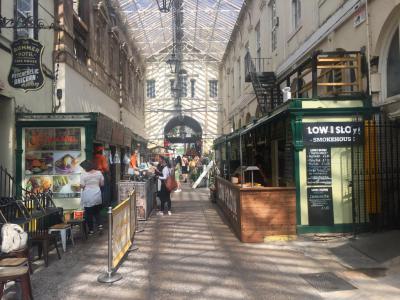
12) Saint Nicholas Market
Locals call it St. Nick’s, but this is no cosy Christmas pop-up. Saint Nicholas Market has been dealing in the real stuff since 1743, making it the oldest market in Bristol and still a bustling knot of trade. It all unfolds inside the Exchange, an 18th-century showpiece by John Wood the Elder, dressed in an ornate exterior and fronted by a clock with plenty of attitude. Out on Corn Street, you’ll spot the famous “nails” – solid bronze-topped tables where merchants once thumped down deals on the spot. Allegedly, that is where the idiom “pay on the nail” comes from.
Inside, the market breaks into three personalities: the grand Exchange Hall, the bright Glass Arcade, and the maze-like Covered Market. Between them, you’ll wander past racks of vintage jackets, stacks of vinyl, handmade jewellery, and piles of well-thumbed books. The Glass Arcade turns the tempo up for your taste buds – a fragrant tangle of global street food where Moroccan tagines face off against jerk chicken, falafel, and good old steak-and-ale pies.
It’s still fiercely independent, still in the thick of the Old City, and still very much part of Bristol’s pulse. A few years back, The Guardian put it among the UK’s top ten markets, and in 2016 it bagged Britain’s Best Large Indoor Market.
Awards aside, it’s the sort of place that pulls you in for “just a look” and somehow keeps you there until you’re leaving with a bag of baklava, a second-hand novel, and possibly a vintage lampshade you didn’t know you needed.
Inside, the market breaks into three personalities: the grand Exchange Hall, the bright Glass Arcade, and the maze-like Covered Market. Between them, you’ll wander past racks of vintage jackets, stacks of vinyl, handmade jewellery, and piles of well-thumbed books. The Glass Arcade turns the tempo up for your taste buds – a fragrant tangle of global street food where Moroccan tagines face off against jerk chicken, falafel, and good old steak-and-ale pies.
It’s still fiercely independent, still in the thick of the Old City, and still very much part of Bristol’s pulse. A few years back, The Guardian put it among the UK’s top ten markets, and in 2016 it bagged Britain’s Best Large Indoor Market.
Awards aside, it’s the sort of place that pulls you in for “just a look” and somehow keeps you there until you’re leaving with a bag of baklava, a second-hand novel, and possibly a vintage lampshade you didn’t know you needed.
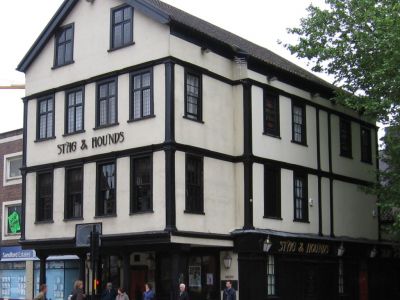
13) Stag and Hounds
The Stag and Hounds hold the distinction of being a grade II listed pub located in Old Market, Bristol. Its origins can be traced back to 1483 when it likely served as a private residence. Over time, the building underwent significant transformations and predominantly took its current form in the early 18th century when it transformed into a pub. In the 1960s, a partial reconstruction took place, followed by a renovation in 1987.
Within the premises, there exists a well in the former rear court featuring a 19th-century iron hand pump equipped with a flywheel and pump rods. This installation, which facilitated water extraction from the well, serves as an early example of its kind. Remarkably, the old iron pump remains in excellent condition, with all its components still operational. Its uniqueness in Bristol adds to its historical significance.
Moreover, the pub features a small room situated between floors, accessible solely through a trap door within what now functions as a bathroom. From this confined space, a minute window overlooks the courtyard. It is speculated that this peculiar arrangement may have served as a hiding place during the era of priest-hunting.
In the present day, the Stag and Hounds have gained renown as a vibrant music venue, hosting a diverse range of bands spanning various genres.
Within the premises, there exists a well in the former rear court featuring a 19th-century iron hand pump equipped with a flywheel and pump rods. This installation, which facilitated water extraction from the well, serves as an early example of its kind. Remarkably, the old iron pump remains in excellent condition, with all its components still operational. Its uniqueness in Bristol adds to its historical significance.
Moreover, the pub features a small room situated between floors, accessible solely through a trap door within what now functions as a bathroom. From this confined space, a minute window overlooks the courtyard. It is speculated that this peculiar arrangement may have served as a hiding place during the era of priest-hunting.
In the present day, the Stag and Hounds have gained renown as a vibrant music venue, hosting a diverse range of bands spanning various genres.
