Custom Walk in Porto, Portugal by dkm_34ad8 created on 2026-03-02
Guide Location: Portugal » Porto
Guide Type: Custom Walk
# of Sights: 9
Tour Duration: 1 Hour
Travel Distance: 2 Km or 1.2 Miles
Share Key: PJ9HC
Guide Type: Custom Walk
# of Sights: 9
Tour Duration: 1 Hour
Travel Distance: 2 Km or 1.2 Miles
Share Key: PJ9HC
How It Works
Please retrieve this walk in the GPSmyCity app. Once done, the app will guide you from one tour stop to the next as if you had a personal tour guide. If you created the walk on this website or come to the page via a link, please follow the instructions below to retrieve the walk in the app.
Retrieve This Walk in App
Step 1. Download the app "GPSmyCity: Walks in 1K+ Cities" on Apple App Store or Google Play Store.



Step 2. In the GPSmyCity app, download(or launch) the guide "Porto Map and Walking Tours".
Step 3. Tap the menu button located at upper right corner of the "Walks" screen and select "Retrieve custom walk". Enter the share key: PJ9HC
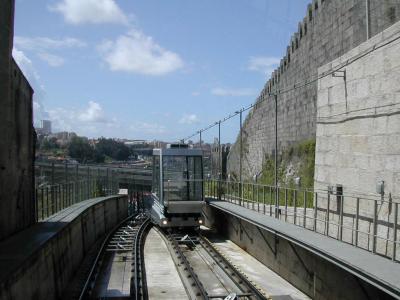
1) Funicular dos Guindais (Guindais Funicular)
The Guindais Funicular (Funicular dos Guindais) is a unique railway located in Porto, within the civil parish of Cedofeita, Santo Ildefonso, Sé, Miragaia, São Nicolau e Vitória. Originally opened on June 3, 1891, this funicular had a rocky start, with an accident caused by excessive speed leading to its decommissioning just two years later, on June 5, 1893. After the original line closed, the funicular’s station was repurposed several times, notably serving as an atelier for sculptor Henrique Moreira and later as a meeting hall for local Jehovah’s Witnesses.
A new funicular following the original line was inaugurated on February 19, 2004. The funicular descends the cliff along the Freiras Wall, connecting the Guindais quay to Rua da Batalha, near the Civil Governor’s building. Owned and operated by Porto Metro, the funicular features a single track with a central loop system, spanning 281 meters (922 feet) and descending 61 meters (200 feet). A key feature is the self-leveling platforms in the cars, which keep the floor horizontal regardless of the steep gradient, particularly noticeable in the lower section below the passing loop.
Two cars, each accommodating up to 25 passengers, run the line at a maximum speed of 5 meters per second (16 feet/second). The brief journey lasts about three minutes, and as the funicular emerges from the upper tunnel, passengers are treated to panoramic views of the Dom Luís I Bridge, the scenic river margins, Porto’s Ribeira quay, Cais de Gaia, and the iconic Port wine warehouses along the Douro River. The Guindais Funicular serves as a convenient mode of transport for locals and commuters, linking the riverside with metro services, including connections at São Bento station.
A new funicular following the original line was inaugurated on February 19, 2004. The funicular descends the cliff along the Freiras Wall, connecting the Guindais quay to Rua da Batalha, near the Civil Governor’s building. Owned and operated by Porto Metro, the funicular features a single track with a central loop system, spanning 281 meters (922 feet) and descending 61 meters (200 feet). A key feature is the self-leveling platforms in the cars, which keep the floor horizontal regardless of the steep gradient, particularly noticeable in the lower section below the passing loop.
Two cars, each accommodating up to 25 passengers, run the line at a maximum speed of 5 meters per second (16 feet/second). The brief journey lasts about three minutes, and as the funicular emerges from the upper tunnel, passengers are treated to panoramic views of the Dom Luís I Bridge, the scenic river margins, Porto’s Ribeira quay, Cais de Gaia, and the iconic Port wine warehouses along the Douro River. The Guindais Funicular serves as a convenient mode of transport for locals and commuters, linking the riverside with metro services, including connections at São Bento station.
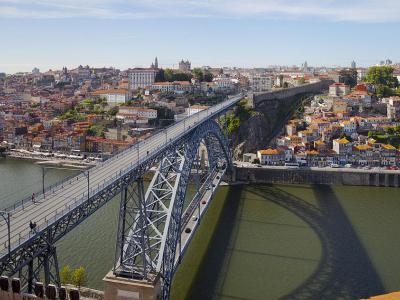
2) Ponte de Dom Luís I (Luís I Bridge) (must see)
The Douro river doesn’t do soft edges-its banks are carved in granite, and the bridges that cross it seem to rise straight out of that stone. Within less than a mile, you’ll spot two iron giants: the Dom Luís I Bridge and its close relative, the Dona Maria Pia Bridge. At first glance, they look almost like twins-same sweeping arches, same intricate ironwork stretched across the river like a web.
That resemblance isn’t a coincidence. The Dona Maria Pia Bridge was designed by Gustave Eiffel, the very same mind behind the Eiffel Tower in Paris. The Dom Luís I Bridge came from Teophile Seyrig, who had worked alongside Eiffel before going solo. So, what you’re looking at here is less of a copy and more of a friendly rivalry in iron. The Dom Luís I stretches 564 feet across and rises about 146 feet above the river, holding its own with quiet confidence.
Now here’s where things get interesting. This isn’t just a bridge but a two-tier experience. One level runs high across the top of the arch, while the other hangs below it. Originally, both were built for road traffic. Today, the upper deck belongs to the metro and pedestrians, while the lower level handles cars. And if you’re deciding where to walk, there’s really no debate-the top is where the magic happens.
Up there, the city opens up. The skyline of old Porto spreads out in front of you, with the cathedral and the Clergymen’s Tower rising above the rooftops like they’re keeping watch. The river curves below, boats drifting past, and for a moment, you’re not just crossing a bridge-you’re suspended between two sides of the city and two centuries of engineering ambition.
So, yes, Porto has more than one bridge. But if you’re picking just one to walk, make it this one. Come for the structure, stay for the view-and leave with just enough adrenaline to say you’ve done it properly.
That resemblance isn’t a coincidence. The Dona Maria Pia Bridge was designed by Gustave Eiffel, the very same mind behind the Eiffel Tower in Paris. The Dom Luís I Bridge came from Teophile Seyrig, who had worked alongside Eiffel before going solo. So, what you’re looking at here is less of a copy and more of a friendly rivalry in iron. The Dom Luís I stretches 564 feet across and rises about 146 feet above the river, holding its own with quiet confidence.
Now here’s where things get interesting. This isn’t just a bridge but a two-tier experience. One level runs high across the top of the arch, while the other hangs below it. Originally, both were built for road traffic. Today, the upper deck belongs to the metro and pedestrians, while the lower level handles cars. And if you’re deciding where to walk, there’s really no debate-the top is where the magic happens.
Up there, the city opens up. The skyline of old Porto spreads out in front of you, with the cathedral and the Clergymen’s Tower rising above the rooftops like they’re keeping watch. The river curves below, boats drifting past, and for a moment, you’re not just crossing a bridge-you’re suspended between two sides of the city and two centuries of engineering ambition.
So, yes, Porto has more than one bridge. But if you’re picking just one to walk, make it this one. Come for the structure, stay for the view-and leave with just enough adrenaline to say you’ve done it properly.
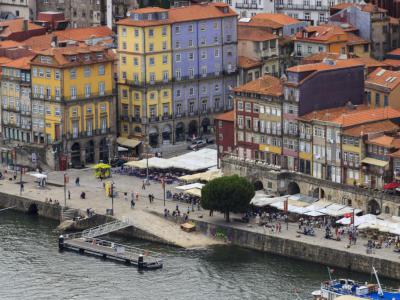
3) Cais da Ribeira (Ribeira Waterfront) (must see)
The exact beginnings of the Ribeira are a bit hazy-history here prefers suggestion over certainty. What we do know is that a riverside settlement took shape where the Vila River meets the Douro, the kind of spot traders tend to notice early. Roman mosaics dating back to the fourth century quietly confirm that people have been settling, building, and leaving traces here for a very long time. By the 13th century, as Porto expanded, Ribeira grew with it-spilling across the slopes below Penaventosa Hill and clustering along the river’s edge.
At one point, there were essentially two worlds: one above, gathered around the cathedral on the heights, and another below, pressed against the Douro. Connecting them was a bit of a puzzle-a tight web of narrow, winding streets that made moving around an exercise in patience. Eventually, they felt a drastic solution was needed.
So, King John I of Portugal decided to pierce the labyrinth with a street carved right through it. With admirable simplicity, it was named Rua Nova or “New Street.” And, indeed, new it was: straight, unusually wide for its time, and refreshingly easy to navigate. It quickly became the address of choice for Porto’s well-to-do-merchants, clergy, and anyone keen to swap medieval maze for a bit of urban order.
Down by the river, though, Ribeira kept its personality. And it still does. The district draws you in with its layered streets and uneven alleys that eventually spill into the lively Ribeira Square. Along the waterfront, fragments of the 14th-century walls remain, while just beyond, the steep, twisting lanes of the Barredo neighborhood remind you that Porto never fully gave up its labyrinthine instincts.
By day, the square hums with cafés and small shops, anchored by a large fountain at its northern edge. The Ribeira Wharf stretches out beside the river, beginning near the Dom Luís I Bridge and following the curve of the Douro. There’s also an upper walkway-once part of the old defensive walls-where medieval guards kept watch. Today, the only thing under surveillance is the view.
By evening, the riverside shifts gears. Lights flicker on, music drifts out from bars, and the whole area settles into a relaxed but lively rhythm. So, find yourself a seat, order something local, and watch the river slide past-because in Ribeira, time doesn’t rush. It drifts...
At one point, there were essentially two worlds: one above, gathered around the cathedral on the heights, and another below, pressed against the Douro. Connecting them was a bit of a puzzle-a tight web of narrow, winding streets that made moving around an exercise in patience. Eventually, they felt a drastic solution was needed.
So, King John I of Portugal decided to pierce the labyrinth with a street carved right through it. With admirable simplicity, it was named Rua Nova or “New Street.” And, indeed, new it was: straight, unusually wide for its time, and refreshingly easy to navigate. It quickly became the address of choice for Porto’s well-to-do-merchants, clergy, and anyone keen to swap medieval maze for a bit of urban order.
Down by the river, though, Ribeira kept its personality. And it still does. The district draws you in with its layered streets and uneven alleys that eventually spill into the lively Ribeira Square. Along the waterfront, fragments of the 14th-century walls remain, while just beyond, the steep, twisting lanes of the Barredo neighborhood remind you that Porto never fully gave up its labyrinthine instincts.
By day, the square hums with cafés and small shops, anchored by a large fountain at its northern edge. The Ribeira Wharf stretches out beside the river, beginning near the Dom Luís I Bridge and following the curve of the Douro. There’s also an upper walkway-once part of the old defensive walls-where medieval guards kept watch. Today, the only thing under surveillance is the view.
By evening, the riverside shifts gears. Lights flicker on, music drifts out from bars, and the whole area settles into a relaxed but lively rhythm. So, find yourself a seat, order something local, and watch the river slide past-because in Ribeira, time doesn’t rush. It drifts...
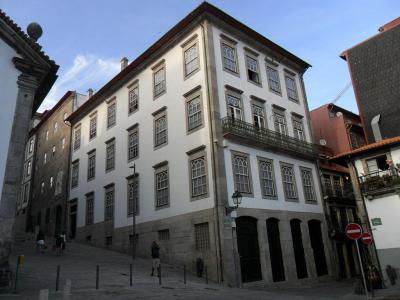
4) Casa do Infante (Prince Henry's House)
Prince Henry’s House-formally the old customs house, but with a name that sounds far more adventurous-was first built in the 14th century. Reshaped in the 1600s, it once handled the city’s trade, minted its coins, and kept a close eye on everything moving along the Douro. According to local tradition, it also happens to be the birthplace of Henry the Navigator in 1394-so yes, this modest-looking building has a surprisingly impressive track record.
Its story began in 1325, when a royal decree ordered a customs house to rise here, right over the remains of a Roman villa. By 1327, it was already up and running. A few decades later, tensions between King Afonso IV and the Bishop of Porto over river taxes led to the construction of a new, more imposing medieval complex. Positioned right by the water, the building pulled quadruple duty: customs office, mint, warehouse, and, for good measure, living quarters for staff.
Architecturally, it’s less about symmetry and more about layers. Four interconnected spaces unfold under different ceiling styles, while the façade stacks four levels of windows above a grand arched entrance marked with the royal coat of arms and a 1677 inscription. Inside, a central courtyard links the structure together, with arcades dividing the main hall into three naves and a staircase threading its way upward. At the back, tall windows flood the stone floors with light, tying the various sections into one continuous, slightly labyrinthine whole.
Over time, each new use left its mark, turning the building into a patchwork of styles rather than a single, clean statement. More recently, archaeology took action and went even deeper-literally-uncovering Roman foundations and mosaics now displayed on-site. Today, the space functions as a compact museum, where interactive exhibits trace Porto’s evolution from Roman outpost to maritime powerhouse.
It’s not a sprawling attraction, and that’s part of the appeal. You get history without the marathon, context without the overload-and a rare chance to stand in a place where trade, power, and exploration once quietly intersected.
Its story began in 1325, when a royal decree ordered a customs house to rise here, right over the remains of a Roman villa. By 1327, it was already up and running. A few decades later, tensions between King Afonso IV and the Bishop of Porto over river taxes led to the construction of a new, more imposing medieval complex. Positioned right by the water, the building pulled quadruple duty: customs office, mint, warehouse, and, for good measure, living quarters for staff.
Architecturally, it’s less about symmetry and more about layers. Four interconnected spaces unfold under different ceiling styles, while the façade stacks four levels of windows above a grand arched entrance marked with the royal coat of arms and a 1677 inscription. Inside, a central courtyard links the structure together, with arcades dividing the main hall into three naves and a staircase threading its way upward. At the back, tall windows flood the stone floors with light, tying the various sections into one continuous, slightly labyrinthine whole.
Over time, each new use left its mark, turning the building into a patchwork of styles rather than a single, clean statement. More recently, archaeology took action and went even deeper-literally-uncovering Roman foundations and mosaics now displayed on-site. Today, the space functions as a compact museum, where interactive exhibits trace Porto’s evolution from Roman outpost to maritime powerhouse.
It’s not a sprawling attraction, and that’s part of the appeal. You get history without the marathon, context without the overload-and a rare chance to stand in a place where trade, power, and exploration once quietly intersected.
5) Statue of Prince Henry the Navigator
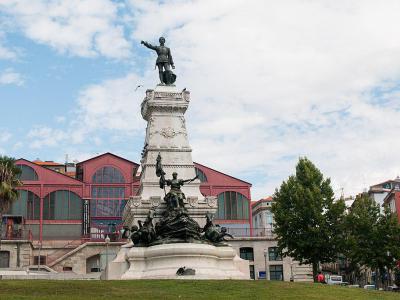
The Statue of Prince Henry the Navigator in Porto stands as a tribute to one of the country's most renowned maritime pioneers. Unveiled in 1894 and crafted by sculptor Tomás Costa, this monument honors the 14th-century prince who played a pivotal role in establishing Portugal as a global economic powerhouse through his numerous maritime discoveries.
Prince Henry, born in 1394 as the fifth son of King John I, the founder of the Dynasty of Avis, was a visionary master seaman. His expeditions secured vital trade routes and opened the doors to the vast riches of Africa, notably gold from the Ivory Coast. His achievements earned him prestigious titles, including the leadership of the Order of Christ.
Located near the Ribeira section of Porto, the statue is prominently positioned on a tall pedestal, with Prince Henry depicted turning towards the ocean, his posture commanding and directive, as if issuing orders to his crew. The pedestal is adorned with intricate relief sculptures that narrate significant moments from Prince Henry's life, encapsulating his legacy as a trailblazer of Portugal’s maritime dominance in the Age of Discovery.
Prince Henry, born in 1394 as the fifth son of King John I, the founder of the Dynasty of Avis, was a visionary master seaman. His expeditions secured vital trade routes and opened the doors to the vast riches of Africa, notably gold from the Ivory Coast. His achievements earned him prestigious titles, including the leadership of the Order of Christ.
Located near the Ribeira section of Porto, the statue is prominently positioned on a tall pedestal, with Prince Henry depicted turning towards the ocean, his posture commanding and directive, as if issuing orders to his crew. The pedestal is adorned with intricate relief sculptures that narrate significant moments from Prince Henry's life, encapsulating his legacy as a trailblazer of Portugal’s maritime dominance in the Age of Discovery.
6) Igreja de São Francisco (St. Francis Church) (must see)
Back in 1244, the Franciscans in Porto found themselves in what might be called a less-than-warm welcome situation. The local bishop didn't quite like them, and other clergy didn't mind pushing them around either. So, the Franciscans did what any determined medieval order would do-they went straight to the top. Pope Innocent V promptly issued a papal bull, which firmly scolded the bishop and handed back the land that the bishop had taken from them. With that settled, the Franciscans wasted no time-they got to work, establishing their convent and laying the foundations of their church.
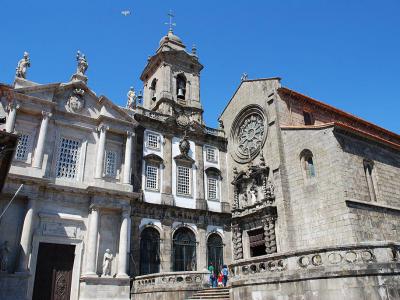
But staying modest wasn’t entirely their long-term plan. By 1383, with support from King Ferdinand I of Portugal, the Franciscans decided to go bigger. The new church, completed in 1425, followed the restrained Gothic style typical of mendicant orders-simple, functional, and focused. Even today, the Church of Saint Francis stands as one of the finest Gothic structures in Porto… at least on the outside.
On the inside, things take a dramatic turn.
From the 15th century onward, Porto’s elite families began adopting the church as their own. Chapels were added, like the Manueline-style Chapel of Saint John the Baptist, commissioned by the Carneiro family in the 1530s. Then came the 18th century, when subtlety officially left the building. The interior was covered-quite literally-in gilded woodcarving. Walls, columns, arches, ceilings… if it could be carved, it was carved, and then covered in gold. Lots of it.
Not everything survived intact, though. During the Siege of Porto in the 1830s, the cloisters were destroyed. In their place rose the Stock Exchange Palace, shifting the site’s role from spiritual to commercial.
Indeed, this place is where craftsmanship goes all in-an immersive display of intricate woodwork layered in gold, the kind that quietly suggests someone, somewhere, had both time and resources to spare.
And before you leave, take a few extra minutes. The small museum and the catacombs are included in your ticket-and they add just enough shadow and context to balance all that gold...
But staying modest wasn’t entirely their long-term plan. By 1383, with support from King Ferdinand I of Portugal, the Franciscans decided to go bigger. The new church, completed in 1425, followed the restrained Gothic style typical of mendicant orders-simple, functional, and focused. Even today, the Church of Saint Francis stands as one of the finest Gothic structures in Porto… at least on the outside.
On the inside, things take a dramatic turn.
From the 15th century onward, Porto’s elite families began adopting the church as their own. Chapels were added, like the Manueline-style Chapel of Saint John the Baptist, commissioned by the Carneiro family in the 1530s. Then came the 18th century, when subtlety officially left the building. The interior was covered-quite literally-in gilded woodcarving. Walls, columns, arches, ceilings… if it could be carved, it was carved, and then covered in gold. Lots of it.
Not everything survived intact, though. During the Siege of Porto in the 1830s, the cloisters were destroyed. In their place rose the Stock Exchange Palace, shifting the site’s role from spiritual to commercial.
Indeed, this place is where craftsmanship goes all in-an immersive display of intricate woodwork layered in gold, the kind that quietly suggests someone, somewhere, had both time and resources to spare.
And before you leave, take a few extra minutes. The small museum and the catacombs are included in your ticket-and they add just enough shadow and context to balance all that gold...
7) Museu do Vinho (Museum of Wine)
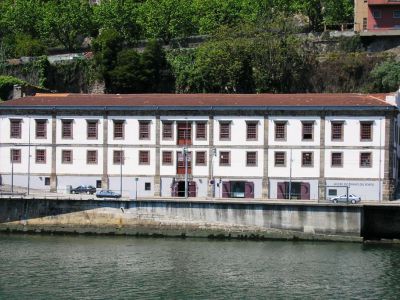
The Museum of Wine in Porto offers a deep dive into the history of Port wine and its integral role in the city’s development. Originally inaugurated in 2004 in the Cais Novo Warehouse, the museum moved to its current location in 2019. This new site, housed in a rehabilitated six-story building, brings a fresh approach to exploring the history of Port wine, focusing not just on the wine itself, but on the broader control and circulation of food products in Porto.
The museum’s collection spans models of Rabelo boats used to transport wine on the Douro River, metrology devices, and archival documents, paintings, sculptures, and furniture. These pieces, gathered from various municipal sources like the Soares dos Reis Museum and Porto’s Public Library, tell the story of how Port wine production led to the establishment of trade regulations that guaranteed the quality of this renowned product.
Visitors will find the first floor dedicated to the history of wine transportation by boat, with never-before-seen diagrams and models from the 1960s. Higher floors feature metrology instruments, some dating back to the reign of King João V, which were used to measure and regulate wine. The museum will also include a wine bar, offering tastings that complement the historical narratives displayed.
Currently closed for renovations since January 2024, the museum also features a multimedia exhibition titled The City Government and Wine, which delves into the governance of wine in Porto. It traces centuries of documentation and showcases how municipal officials managed the supply, quality, and pricing of wine. This aspect emphasizes the crucial role that local governance played in ensuring the reliability of Port wine-a product that proudly bears the city’s name on every label.
The museum’s collection spans models of Rabelo boats used to transport wine on the Douro River, metrology devices, and archival documents, paintings, sculptures, and furniture. These pieces, gathered from various municipal sources like the Soares dos Reis Museum and Porto’s Public Library, tell the story of how Port wine production led to the establishment of trade regulations that guaranteed the quality of this renowned product.
Visitors will find the first floor dedicated to the history of wine transportation by boat, with never-before-seen diagrams and models from the 1960s. Higher floors feature metrology instruments, some dating back to the reign of King João V, which were used to measure and regulate wine. The museum will also include a wine bar, offering tastings that complement the historical narratives displayed.
Currently closed for renovations since January 2024, the museum also features a multimedia exhibition titled The City Government and Wine, which delves into the governance of wine in Porto. It traces centuries of documentation and showcases how municipal officials managed the supply, quality, and pricing of wine. This aspect emphasizes the crucial role that local governance played in ensuring the reliability of Port wine-a product that proudly bears the city’s name on every label.
8) World of Discoveries
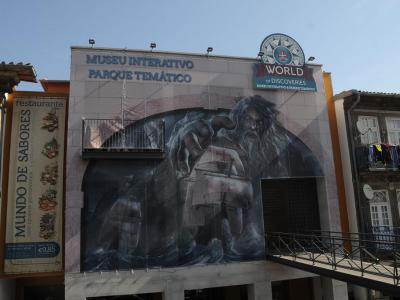
World of Discoveries in Porto offers a captivating journey through the history of Portuguese exploration, blending the allure of a theme park with the depth of a museum. Located in the Miragaia neighborhood, this interactive exhibition immerses visitors in the Age of Discoveries, showcasing the grand voyages and conquests of Portuguese navigators from the 13th to the 19th century.
Full-scale replicas, 3-dimensional terrestrial globes, and interactive touchscreens transport visitors to key moments in history, offering insights into the lives of famous explorers such as Dom Henrique, Gil Eanes, Bartolomeu Dias, Christopher Columbus, Vasco da Gama, Pedro Álvares Cabral, and Fernão de Magalhães.
The museum’s carefully designed scenarios depict the diverse regions reached by Portuguese explorers, including Africa, India, China, Timor, Japan, Macau, and Brazil. The journey begins in a room dedicated to the evolution of Portuguese ships, featuring scale models of iconic vessels, from rowboats to caravels, illustrating their adaptation for longer and more perilous voyages. Interactive screens provide detailed glimpses into the lives of sailors and the historical context of the discoveries.
Further along, visitors can explore a recreated cargo area of a large ship, showcasing the daily life of crew members, the storage of merchandise, and the living conditions aboard. The tour concludes in a meticulously reconstructed old naval shipyard, offering a behind-the-scenes look at shipbuilding and repair processes.
Designed with inclusivity in mind, World of Discoveries caters to visitors of all ages and abilities, with content available in six languages (Portuguese, Spanish, English, French, German, and Italian) and adaptations for individuals with special sensory and cognitive needs. This self-guided adventure, typically lasting about an hour, makes World of Discoveries an ideal destination for families exploring Porto, merging education with entertainment in a uniquely immersive setting.
Full-scale replicas, 3-dimensional terrestrial globes, and interactive touchscreens transport visitors to key moments in history, offering insights into the lives of famous explorers such as Dom Henrique, Gil Eanes, Bartolomeu Dias, Christopher Columbus, Vasco da Gama, Pedro Álvares Cabral, and Fernão de Magalhães.
The museum’s carefully designed scenarios depict the diverse regions reached by Portuguese explorers, including Africa, India, China, Timor, Japan, Macau, and Brazil. The journey begins in a room dedicated to the evolution of Portuguese ships, featuring scale models of iconic vessels, from rowboats to caravels, illustrating their adaptation for longer and more perilous voyages. Interactive screens provide detailed glimpses into the lives of sailors and the historical context of the discoveries.
Further along, visitors can explore a recreated cargo area of a large ship, showcasing the daily life of crew members, the storage of merchandise, and the living conditions aboard. The tour concludes in a meticulously reconstructed old naval shipyard, offering a behind-the-scenes look at shipbuilding and repair processes.
Designed with inclusivity in mind, World of Discoveries caters to visitors of all ages and abilities, with content available in six languages (Portuguese, Spanish, English, French, German, and Italian) and adaptations for individuals with special sensory and cognitive needs. This self-guided adventure, typically lasting about an hour, makes World of Discoveries an ideal destination for families exploring Porto, merging education with entertainment in a uniquely immersive setting.
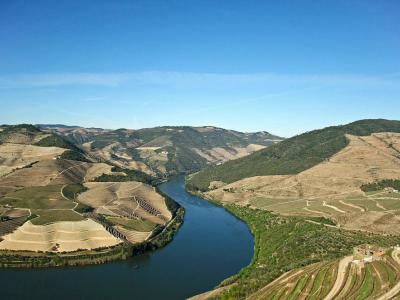
9) Douro River
The Douro River, the largest river of the Iberian Peninsula by discharge, is a vital and picturesque waterway that spans Spain and Portugal. It originates near Duruelo de la Sierra in Spain’s Soria Province and flows westward through the Meseta Central of Castile and León, eventually reaching northern Portugal and emptying into the Atlantic Ocean at Porto, Portugal’s second-largest city. Along its journey, the Douro is joined by several tributaries, including the significant right-bank Esla River, which carries more water than the Douro at their confluence.
In Portugal, the Douro Valley is celebrated for its stunning landscapes and rich winemaking traditions. The valley, recognized as a UNESCO World Heritage Site, is renowned for its vineyards that produce port wine, a mildly fortified wine historically transported downriver in traditional boats called rabelos to Vila Nova de Gaia for storage. Today, the transport has modernized with the use of tanker trucks. The scenic Douro railway line runs parallel to the river, offering a breathtaking route that draws tourists eager to explore the region's natural beauty and heritage.
Historically, the Douro was personified as the god Durius during Roman times and played a significant role in the area's development. In the 8th century, the region experienced deliberate depopulation under Alfonso I of Asturias for defensive reasons, an event known as "Repoblación." The river's importance continued to evolve, with the construction of dams and locks in the 1960s and 1970s enhancing river traffic and enabling better navigation.
Additionally, the Douro's basin includes other significant sites such as the Côa Valley, where a small tributary of the river hosts Paleolithic rock art, another UNESCO World Heritage Site, emphasizing the area’s rich archaeological patrimony. The river also flows through Spain’s Ribera del Duero DOP, a prominent wine-producing area in Castile and León.
In Portugal, the Douro Valley is celebrated for its stunning landscapes and rich winemaking traditions. The valley, recognized as a UNESCO World Heritage Site, is renowned for its vineyards that produce port wine, a mildly fortified wine historically transported downriver in traditional boats called rabelos to Vila Nova de Gaia for storage. Today, the transport has modernized with the use of tanker trucks. The scenic Douro railway line runs parallel to the river, offering a breathtaking route that draws tourists eager to explore the region's natural beauty and heritage.
Historically, the Douro was personified as the god Durius during Roman times and played a significant role in the area's development. In the 8th century, the region experienced deliberate depopulation under Alfonso I of Asturias for defensive reasons, an event known as "Repoblación." The river's importance continued to evolve, with the construction of dams and locks in the 1960s and 1970s enhancing river traffic and enabling better navigation.
Additionally, the Douro's basin includes other significant sites such as the Côa Valley, where a small tributary of the river hosts Paleolithic rock art, another UNESCO World Heritage Site, emphasizing the area’s rich archaeological patrimony. The river also flows through Spain’s Ribera del Duero DOP, a prominent wine-producing area in Castile and León.
